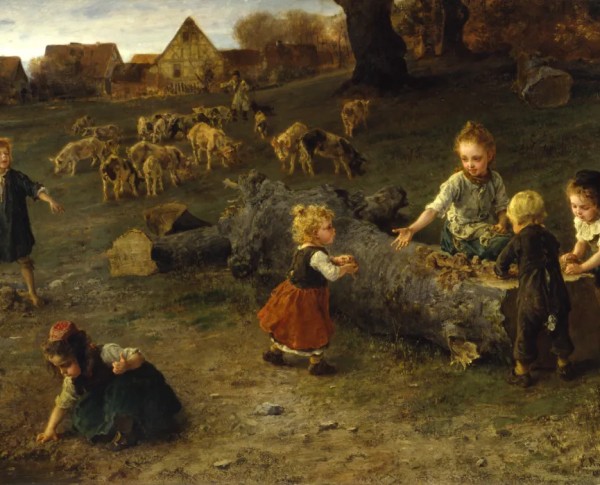
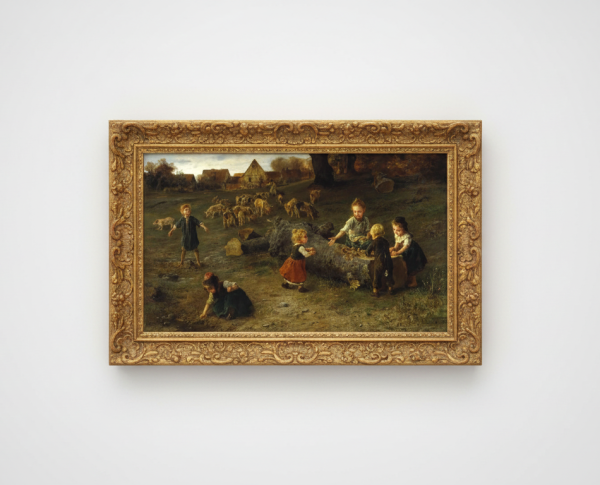
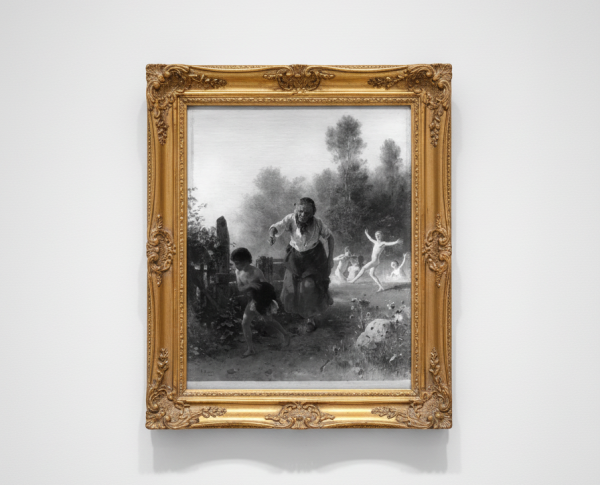
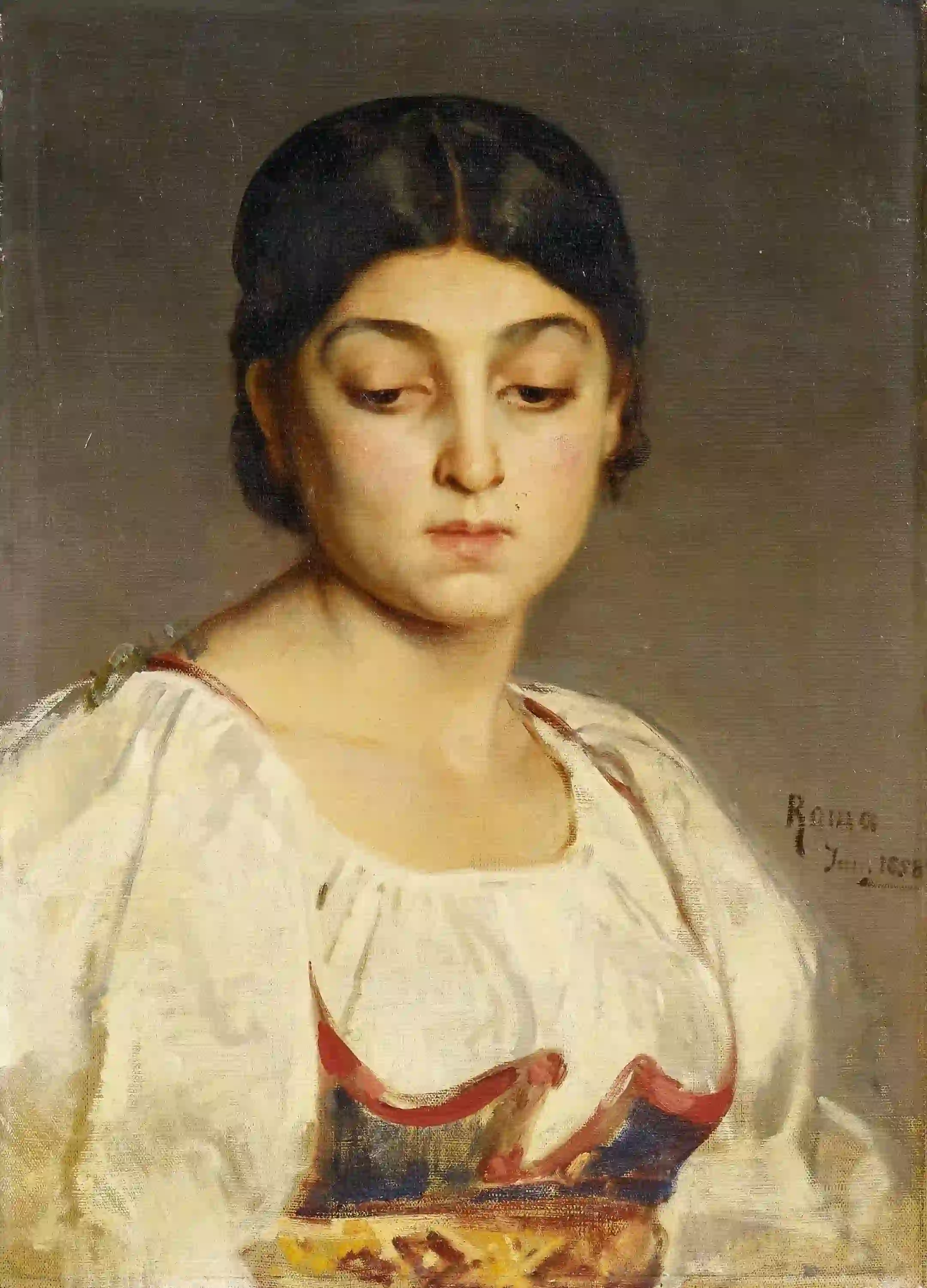
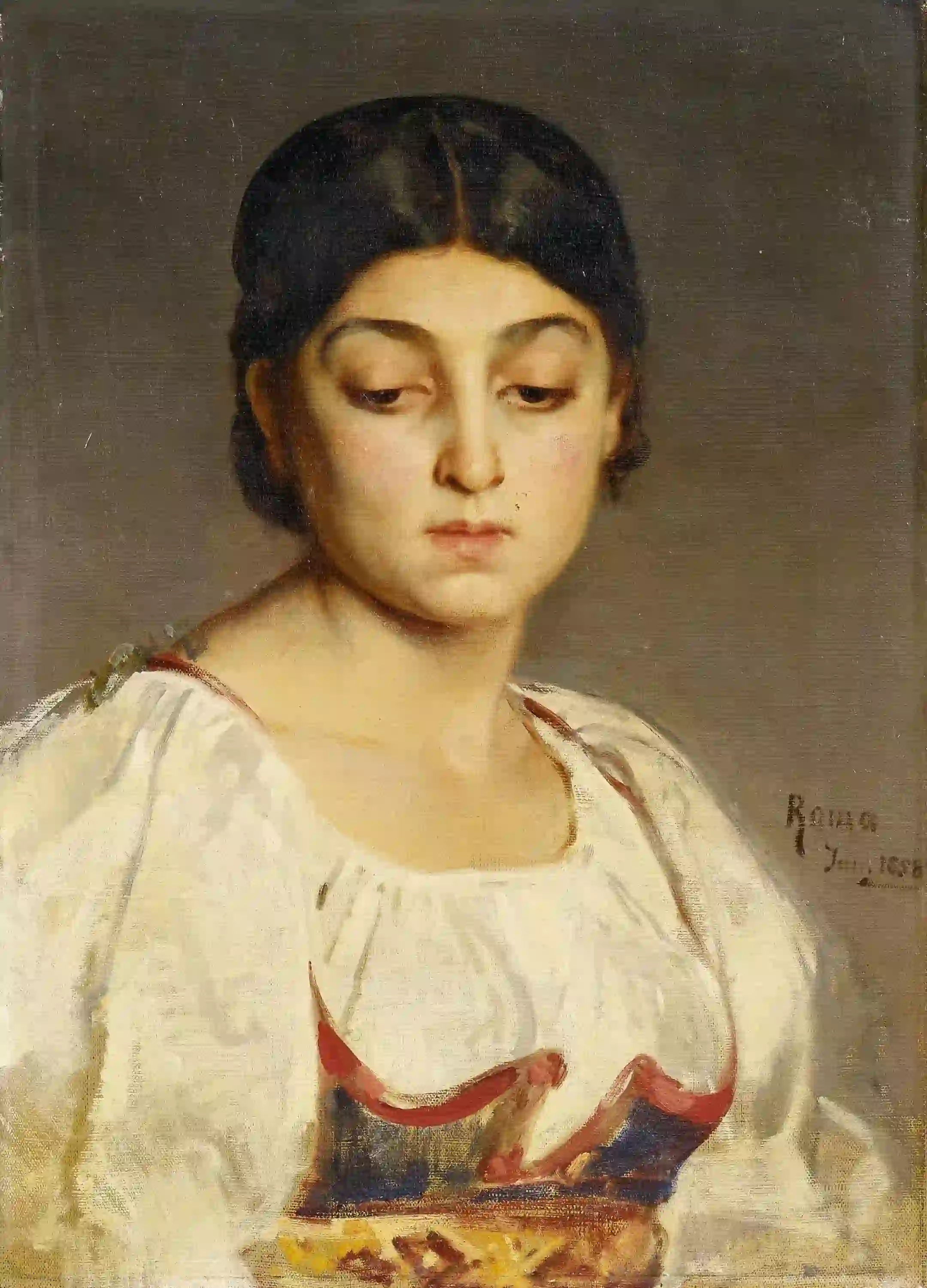
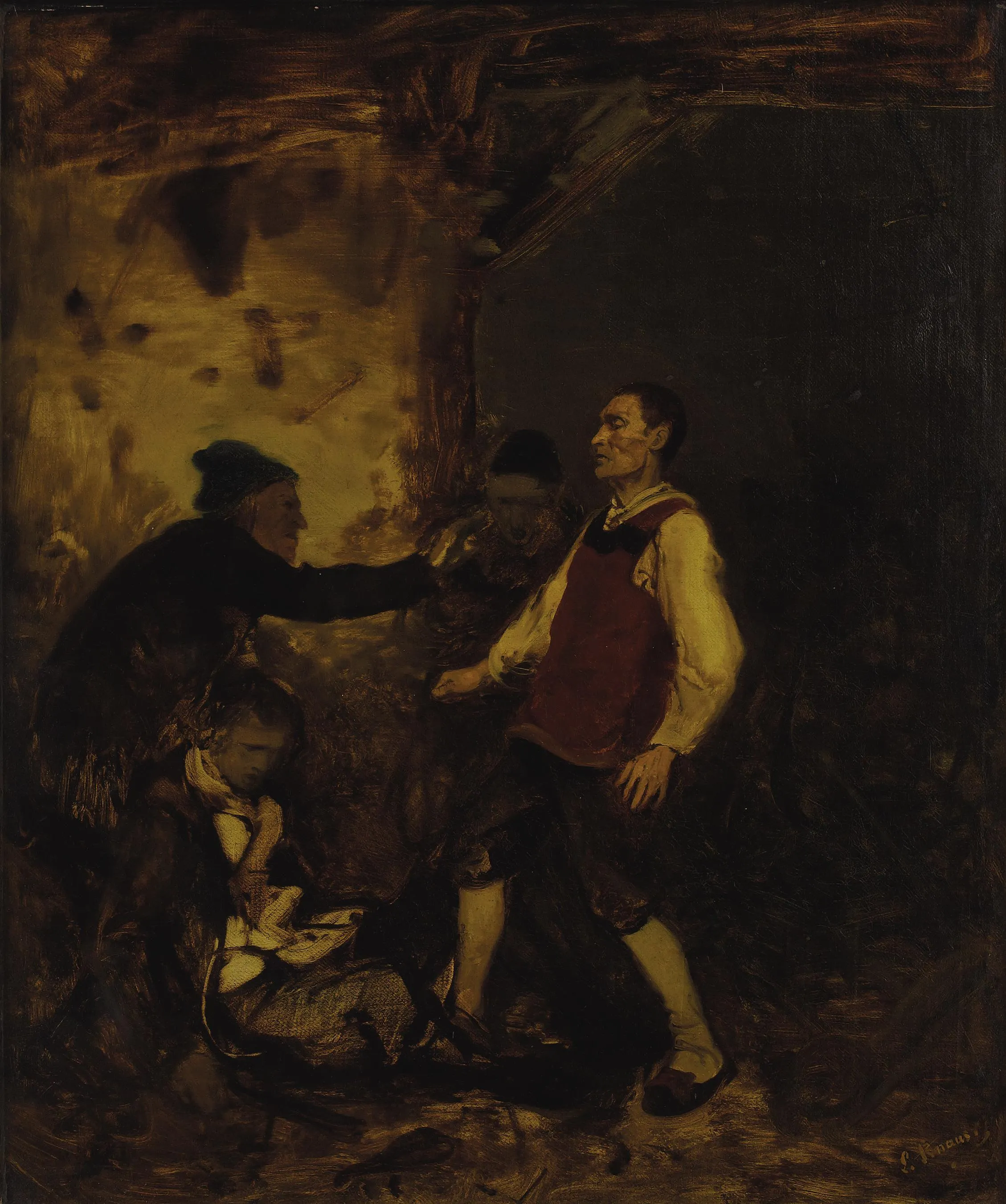
Ludwig Knaus’s technique in "Portrait of a young Roman woman" showcases his expertise with oil on canvas, a medium favored by Academic Art masters. Each brushstroke reveals his dedication to realism and subtle emotion. This painting exemplifies the refined aesthetics of the period, making it a valuable addition to any art collection. Art lovers also appreciate his other works, including "Boy in Hessian costume from the Schwalm area near Ziegenhain" and "Drunken peasants."
In "Portrait of a young Roman woman," Knaus weaves stories through delicate expressions and symbolic elements, a hallmark of Academic Art. The subject’s attire and posture hint at Roman heritage, inviting viewers to interpret her narrative. This fine art painting for sale resonates with collectors who appreciate subtle storytelling. Related products like "On lake Brienz" and "Portrait of Gustav Friedrich Waagen" similarly blend symbolism and portraiture, enriching the viewer’s experience.
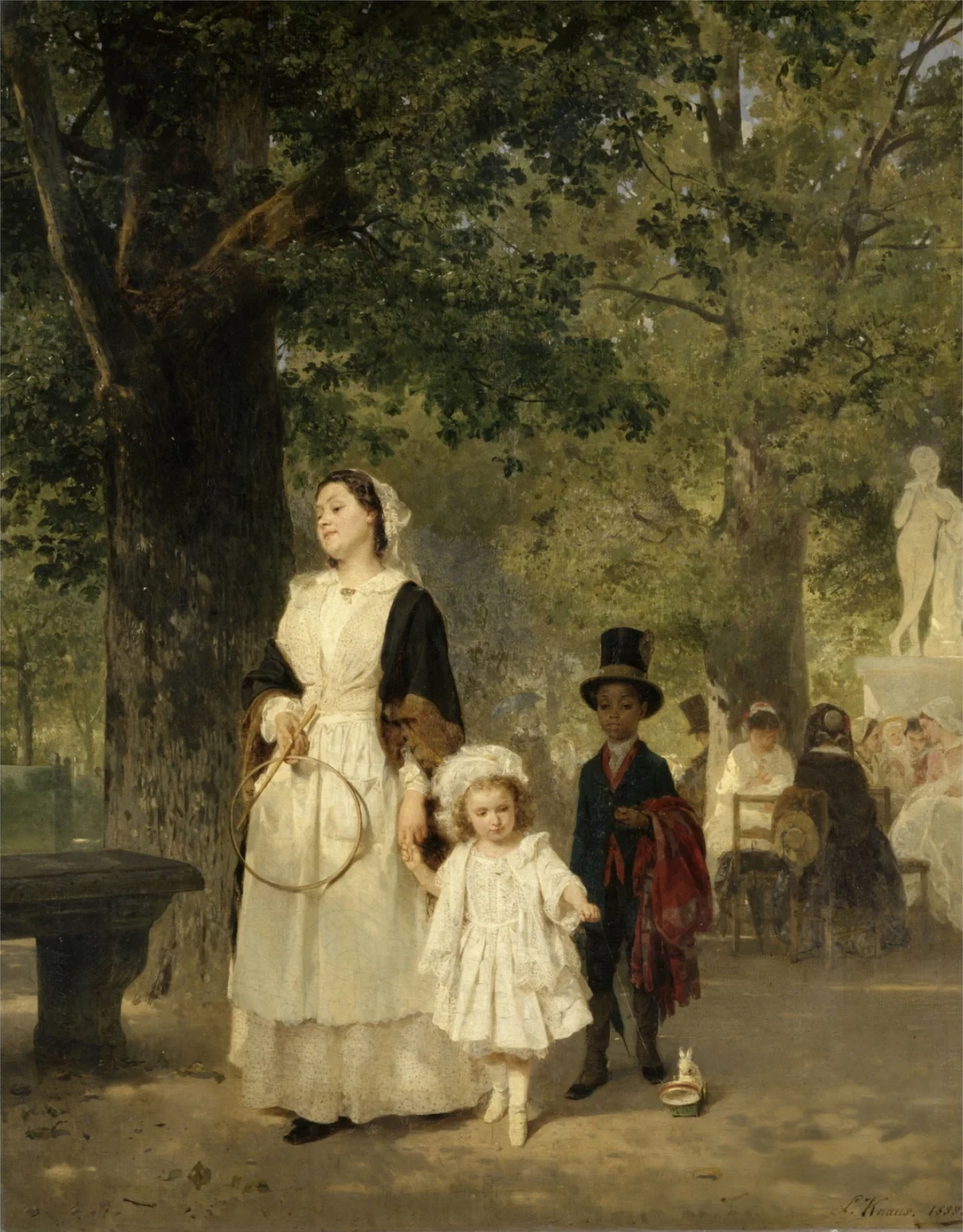
For those seeking a distinguished piece, "Portrait of a young Roman woman" by Ludwig Knaus is a prime example of a fine art painting for sale from the Academic Art movement. Its historical significance and masterful execution make it a prized acquisition. Collectors often explore similar works, such as "Promenade" and "Drunken peasants," to build a comprehensive collection that celebrates Knaus’s artistic legacy and the refined traditions of Academic Art.
When Art Meets History
"Portrait of a young Roman woman" by Ludwig Knaus is a remarkable example of the Academic Art movement, capturing the essence of ancient Roman beauty through a masterful hand-painted oil painting. Knaus’s work stands alongside other celebrated pieces like "General Gaston de Sonis" and "Vercingetorix Throwing down His Weapons at the feet of Julius Caesar," blending historical narrative with artistic finesse. This portrait not only preserves history but also showcases the refined techniques characteristic of 19th-century academic painters.
Techniques That Speak
Ludwig Knaus’s "Portrait of a young Roman woman" is rendered with meticulous detail, demonstrating the mastery of oil on canvas that defines the Academic Art movement. His brushwork and layered glazes create lifelike textures, much like those seen in "The Wave" and "Reflections." Through careful composition and lighting, Knaus brings out the subject’s delicate features, making this portrait a testament to his technical prowess and the enduring appeal of classical oil painting methods.
Emotions on Display
In this fine art painting for sale, Ludwig Knaus captures the subtle emotions and inner world of his subject, a young Roman woman. The gentle expression and thoughtful gaze evoke a sense of timeless grace, reminiscent of the emotional depth found in works like "La Bataille De Conte La Prusse" and "Champ De Bataille D'Auvours." Knaus’s ability to convey complex feelings makes his portraits highly sought after among admirers of Academic Art and emotional realism.
Coveted by Collectors
Collectors and art enthusiasts are drawn to "Portrait of a young Roman woman" by Ludwig Knaus, not only for its historical significance but also for its exceptional artistry. As with masterpieces such as "À Quelques Kilomètres Du Mans," this hand-painted oil painting exemplifies the finest qualities of Academic Art. Its rarity and exquisite detail make it a prized addition to any collection, ensuring its place among the most desirable fine art painting for sale today.
Related Academic Art Hand-Painted Oil Paintings by Other Artists
Other Famous Academic Art Artists:
Frequently Asked Questions About Portrait of a young Roman woman
What is the historical context of "Portrait of a young Roman woman"?
This painting reflects the 19th-century fascination with classical antiquity, particularly the Roman era, showcasing the artist's interest in portraying the ideals of beauty and virtue associated with that time.
Who was Ludwig Knaus and what is his significance in art history?
Ludwig Knaus was a prominent German painter known for his genre scenes and portraits. His work often combined realism with romanticism, making significant contributions to the portrayal of everyday life and classical themes in art.
What artistic techniques are employed in this painting?
Knaus utilized oil on canvas to achieve a rich texture and depth in the portrayal of the subject. His use of light and shadow enhances the three-dimensionality of the figure, creating a lifelike representation.
What does the attire of the young Roman woman symbolize?
The attire, reminiscent of Roman dress, symbolizes purity and virtue. It reflects the cultural ideals of femininity during the classical period, emphasizing grace and modesty.
How does the expression of the young woman contribute to the painting's overall message?
The serene and contemplative expression of the young woman conveys a sense of inner strength and dignity, suggesting the timeless qualities of wisdom and grace that transcend the ages.
What role does color play in "Portrait of a young Roman woman"?
The color palette is characterized by soft, muted tones that evoke a sense of calm and harmony. This choice enhances the subject's ethereal quality and aligns with the themes of beauty and tranquility.
In what ways does this painting reflect the ideals of Romanticism?
The painting embodies Romantic ideals through its emphasis on emotion, individualism, and a connection to classical heritage. Knaus captures the essence of beauty and nostalgia for the past, hallmarks of the Romantic movement.
What influence did classical art have on Knaus's work?
Knaus was heavily influenced by classical art, particularly the emphasis on idealized forms and the portrayal of human emotion. This influence is evident in the graceful posture and dignified expression of the young woman.
How does this painting compare to other portraits of women from the same period?
Compared to other portraits of women from the 19th century, Knaus's work stands out for its classical inspiration and the depth of character portrayed, moving beyond mere representation to evoke a narrative about the subject's identity.
What is the significance of the background in the painting?
The background is intentionally subdued, allowing the viewer's focus to remain on the subject. This choice emphasizes the woman's presence and character, reinforcing the themes of introspection and timeless beauty.























_GFM_Painting_(1).webp)


 100% Hand-Painted: Finished in 3-6 Weeks

.png)
















_(1).webp)