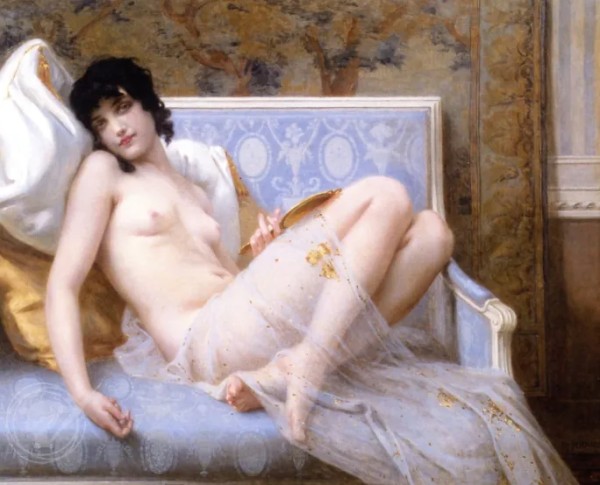
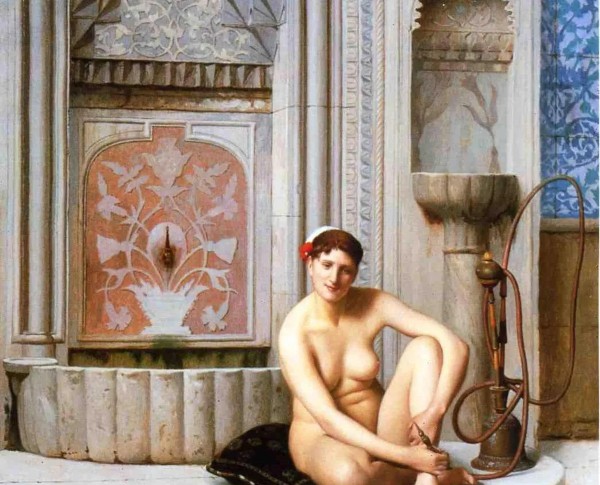
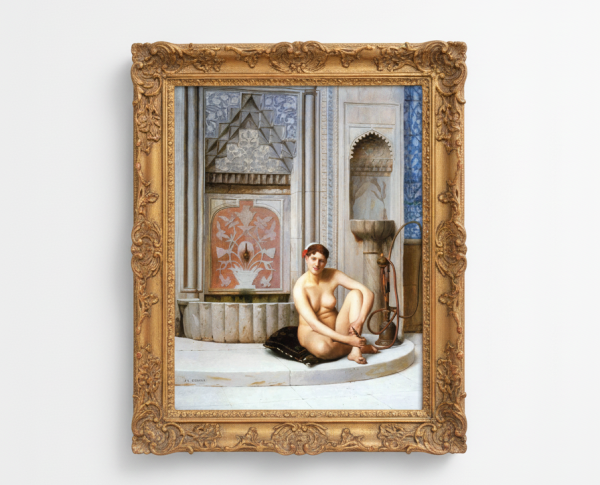
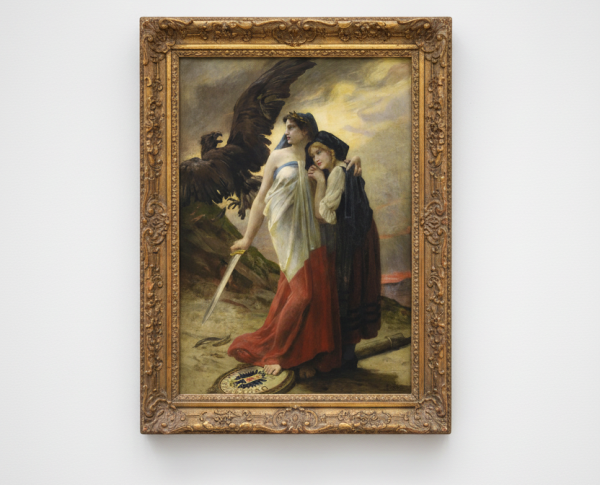
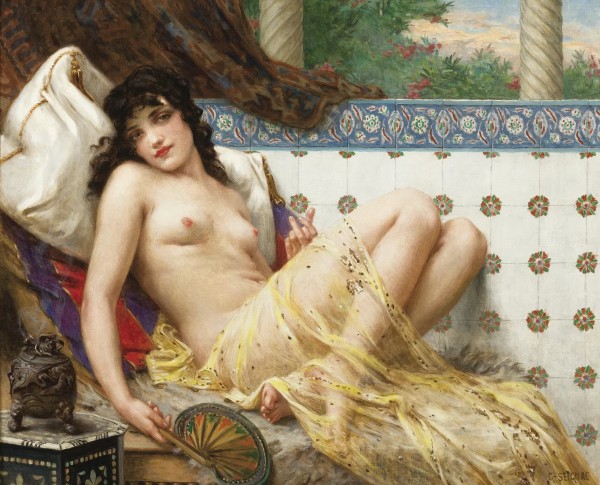
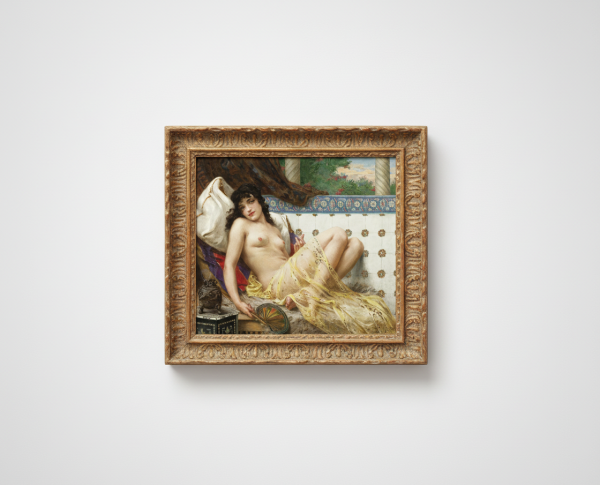
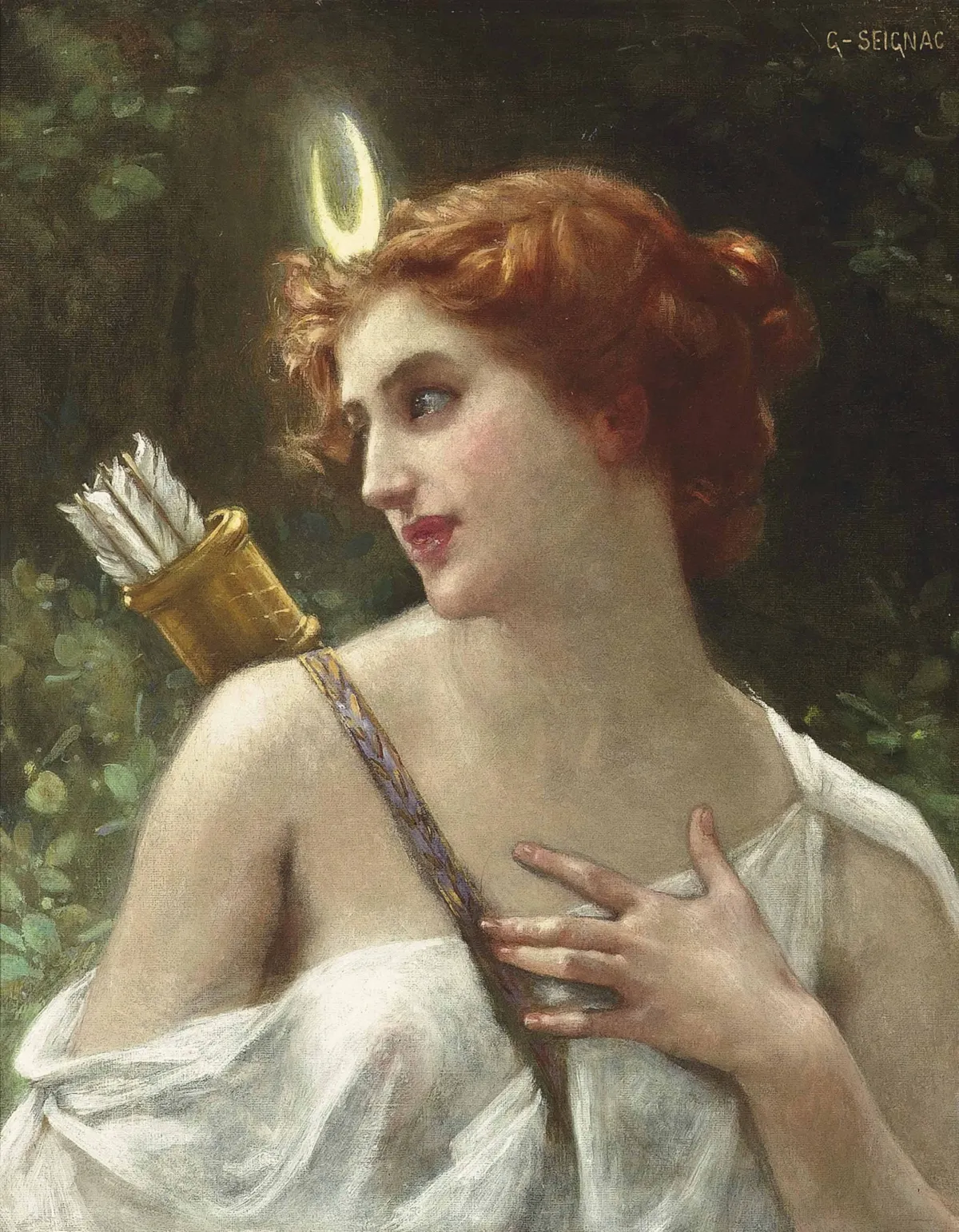
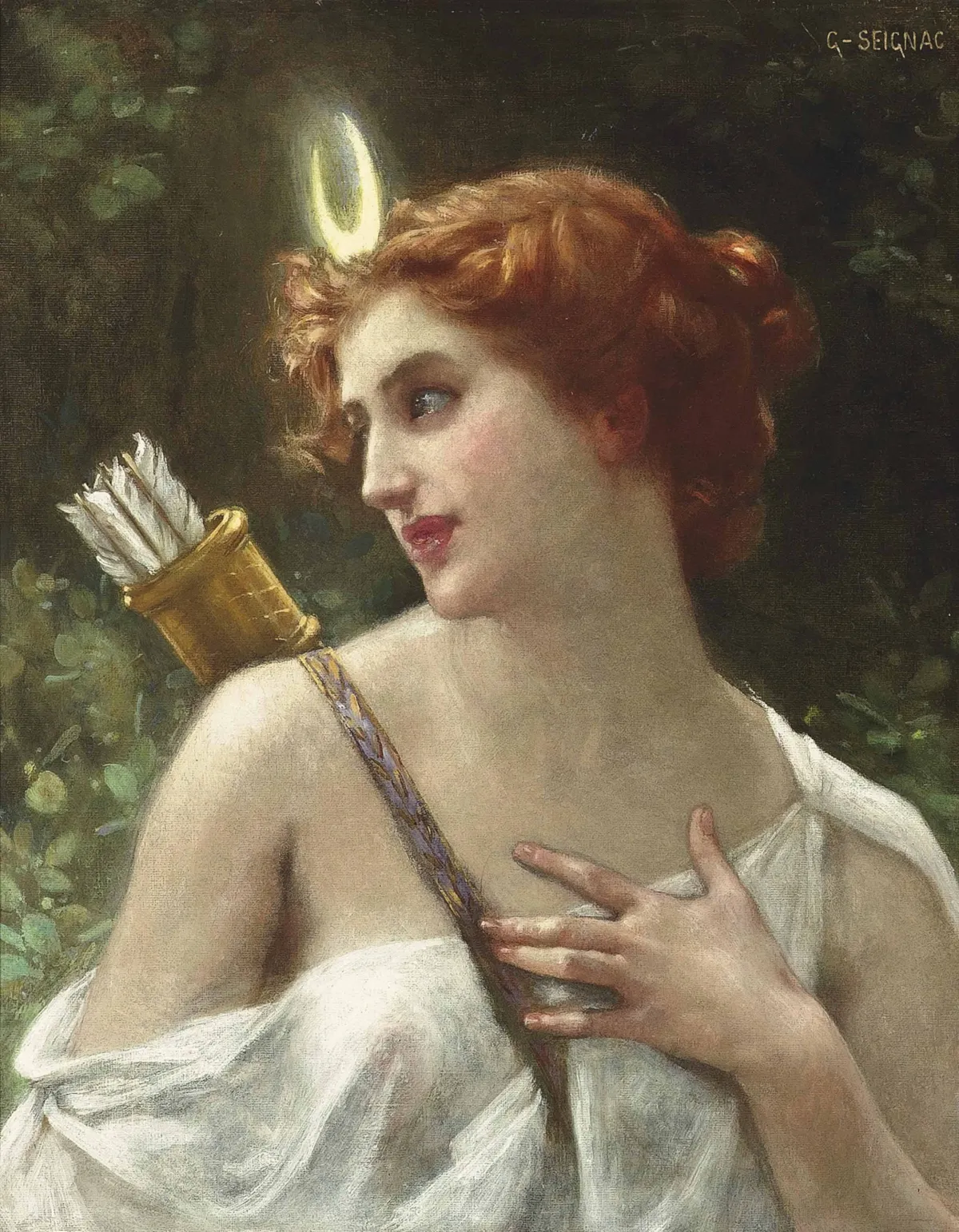
The meticulous detail in Guillaume Seignac’s "Q133830678" showcases his exceptional skill with oil on canvas. Each brushstroke demonstrates the technical precision characteristic of the Academic Art movement, blending realism with idealized beauty. The painting’s refined textures and lifelike forms reflect Seignac’s unwavering commitment to his craft. Collectors seeking this level of artistry should also explore "Reclining Odalisque" and "Jeune femme denudée sur canape (Young woman naked on a settee)" for more examples of his masterful technique.
Every element in "Q133830678" by Guillaume Seignac tells a story, echoing the narrative tradition of Academic Art. The composition’s graceful figures and thoughtful symbolism invite viewers to interpret its deeper meanings, making it more than just a fine art painting for sale. Seignac’s ability to weave emotion and allegory into his work places this piece among the finest. For further narrative-rich works, consider "A Beauty of Nature" and "Diana the Huntress" as companion pieces.
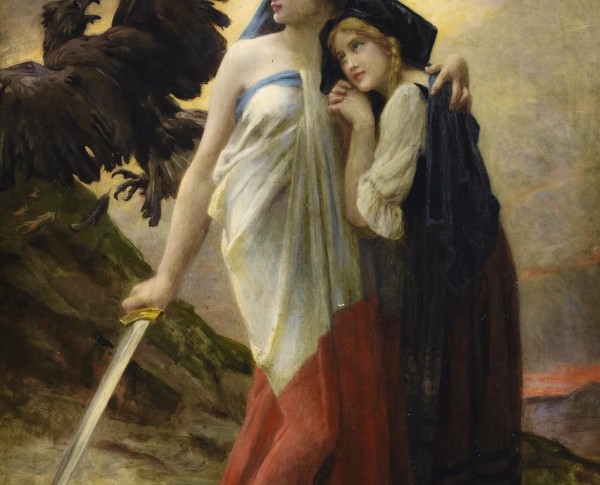
Owning "Q133830678" by Guillaume Seignac is a privilege for any connoisseur of Academic Art, as each hand-painted oil painting is a testament to refined taste. Its timeless appeal makes it a standout choice among fine art painting for sale. Collectors can enhance their galleries with related works like "Reunited," "The Wave," and "Jeune femme denudée sur canape (Young woman naked on a settee)," each offering a unique glimpse into Seignac’s artistic legacy.
When Art Meets History
Guillaume Seignac’s "Q133830678" stands as a testament to the enduring legacy of the Academic Art movement. This hand-painted oil painting reflects Seignac’s dedication to classical themes and techniques, much like his contemporaries who created works such as "Battle of Auvours, 10 January 1871" and "Christ in Majesty in Basilique du Sacré-Cœur de Montmartre." Through this masterpiece, viewers are transported to an era where tradition and innovation coexisted harmoniously within the world of fine art.
Techniques That Speak
The mastery of oil on canvas is evident in Guillaume Seignac’s "Q133830678," where each brushstroke reveals the artist’s meticulous attention to detail. Characteristic of Academic Art, Seignac’s techniques echo those seen in related paintings like "Promenade" and "Mud Pies," emphasizing refined draftsmanship and smooth blending. The painting’s luminous skin tones and rich textures demonstrate the timeless appeal of oil on canvas, a medium that continues to captivate art enthusiasts and collectors alike.
Emotions on Display
Guillaume Seignac’s "Q133830678" is more than just a fine art painting for sale; it is a window into the artist’s sensitive portrayal of human emotion. Drawing on the traditions of Academic Art, Seignac captures the subtleties of expression and gesture, much like the evocative scenes in "Drunken peasants" and "Promenade." The viewer is invited to experience the inner world of the subject, making this painting a compelling addition to any art lover’s collection.
Coveted by Collectors
As with many masterpieces of the Academic Art movement, "Q133830678" by Guillaume Seignac is highly sought after by collectors who appreciate the elegance of a hand-painted oil painting. Works like this, alongside renowned pieces such as "Mud Pies" and "Christ in Majesty in Basilique du Sacré-Cœur de Montmartre," are prized for their historical significance and visual beauty. Owning such a painting is not only an investment but also a celebration of timeless artistic achievement.
Related Academic Art Hand-Painted Oil Paintings by Other Artists
Other Famous Academic Art Artists:
Frequently Asked Questions About Q133830678
What is the historical context of "Q133830678"?
"Q133830678" was created during the early 20th century, a period marked by significant artistic movements such as Impressionism and Symbolism. This era saw a shift towards exploring emotional depth and the human experience through art.
Who is the artist behind "Q133830678"?
The painting is by Guillaume Seignac, a French painter known for his neoclassical style and depictions of the female form, often infused with a sense of romanticism and idealism.
What artistic techniques are employed in "Q133830678"?
Seignac utilizes oil on canvas to create rich textures and vibrant colors. His brushwork is characterized by smooth, flowing lines that enhance the sensuality of the figures depicted.
What themes are explored in "Q133830678"?
The painting explores themes of beauty, femininity, and the idealized human form. It reflects the artist's fascination with the classical ideals of beauty and the emotional resonance of the female figure.
What symbolism can be found in "Q133830678"?
The elements within the painting often symbolize purity and grace. The poses and expressions of the figures convey a sense of serenity and introspection, inviting viewers to reflect on the nature of beauty.
How does "Q133830678" reflect the neoclassical style?
"Q133830678" embodies neoclassical ideals through its emphasis on harmony, proportion, and the representation of mythological or historical themes, aligning with the movement's focus on classical antiquity.
In what ways does "Q133830678" connect to the Symbolist movement?
The painting connects to the Symbolist movement through its emotional depth and the use of allegorical figures. It seeks to evoke feelings and ideas rather than simply depict reality, aligning with Symbolist ideals.
What influence did Guillaume Seignac have on later artists?
Seignac's work influenced later artists by popularizing the depiction of the female form in a romanticized manner. His approach to color and form paved the way for future explorations of beauty in modern art.
How does "Q133830678" fit into the broader narrative of art history?
"Q133830678" fits into art history as a representation of the transition from traditional academic painting to more modern interpretations of beauty and emotional expression, bridging the gap between classical and contemporary art.
What can viewers learn from "Q133830678"?
Viewers can learn about the interplay between beauty, emotion, and artistic technique. The painting invites contemplation of the ideals of femininity and the cultural values of the time in which it was created.
















_GFM_Painting_(1).webp)


 100% Hand-Painted: Finished in 3-6 Weeks

.png)















_(1).webp)