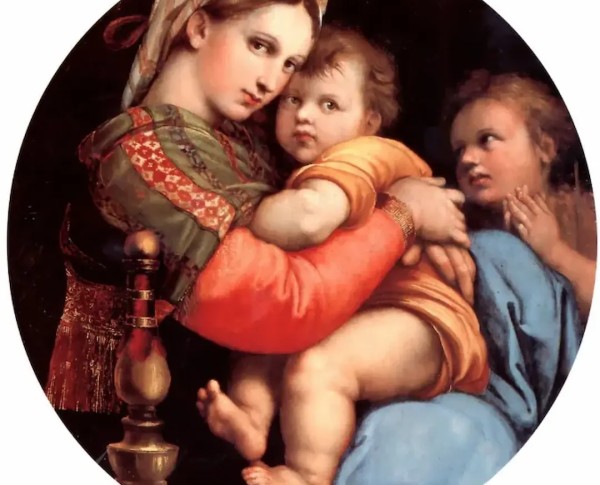
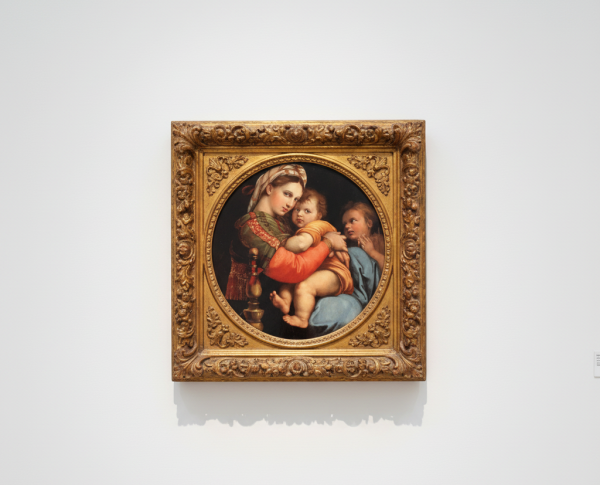
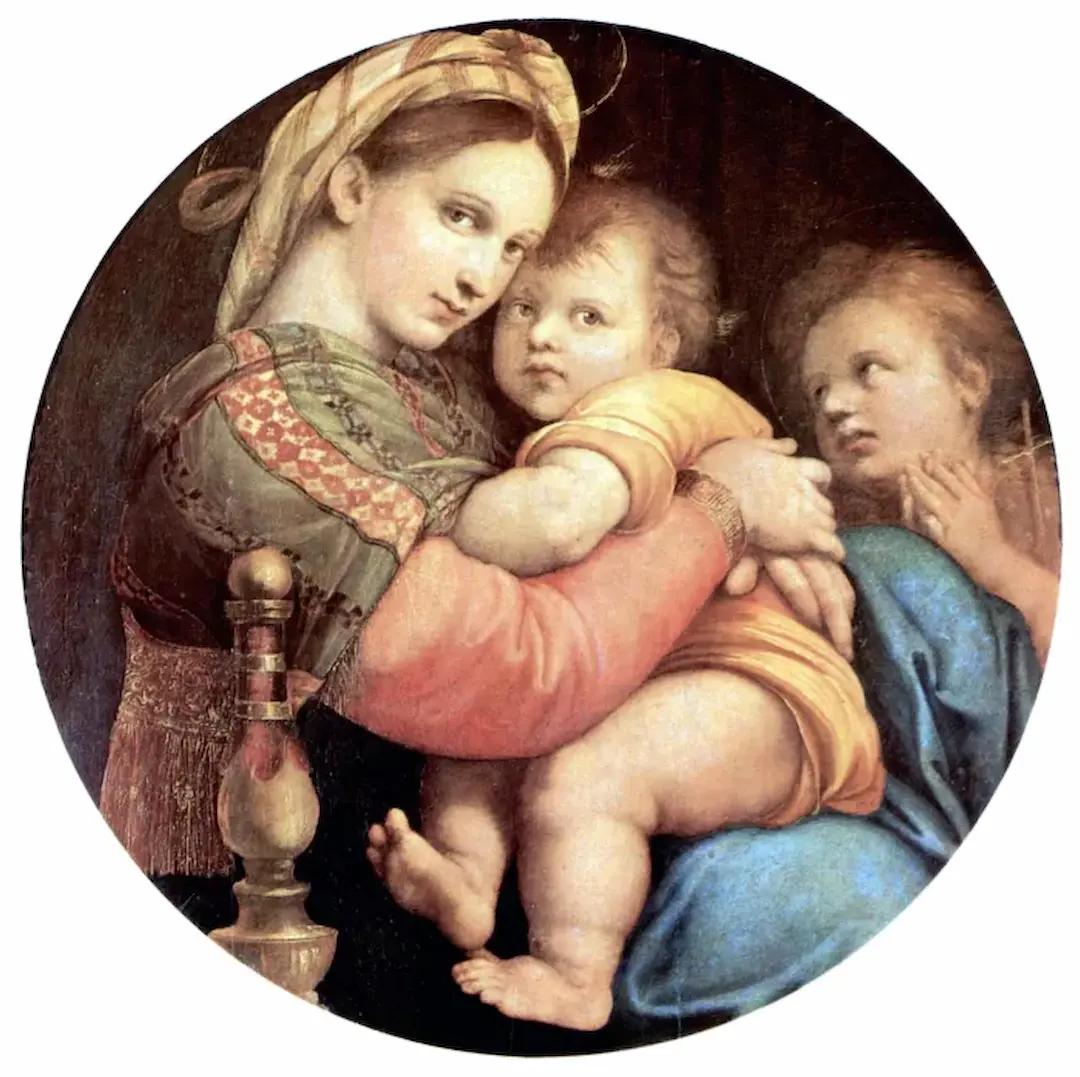
Raffaello Sanzio’s technique in "Madonna & Child (Madonna del Granduca) 1505" demonstrates unparalleled skill with oil on canvas. The subtle blending of colors and delicate play of light showcase the artist’s command of the High Renaissance style. This painting, alongside works like "Self Portrait" and "The Stanza Della Segnatura Ceiling Justice," exemplifies mastery in composition and form, making it a coveted piece for any connoisseur of classic oil on canvas treasures.
Within "Madonna & Child (Madonna del Granduca) 1505," Raffaello Sanzio weaves layers of symbolism reflective of the High Renaissance spirit. The gentle embrace between Madonna and Christ Child radiates serenity and divine love, common themes in fine art painting for sale from this period. Similar narrative richness can be found in Raffaello’s "La Donna Velata" and "The Triumph Of Galatea," each painting inviting viewers to explore the profound stories behind the brushwork.
Owning "Madonna & Child (Madonna del Granduca) 1505" is a testament to appreciating the finest hand-painted oil painting from the High Renaissance. Raffaello Sanzio’s timeless artistry makes this piece a highlight in any collection. Collectors often pair this work with other Raffaello masterpieces, such as "The Vision of Ezekiel" and "La Donna Velata," enriching their galleries with exquisite fine art painting for sale that celebrates the legacy of Renaissance genius.
When Art Meets History
"Madonna & Child (Madonna del Granduca) 1505" by Raffaello Sanzio stands as a testament to the High Renaissance, a period renowned for its artistic mastery. This hand-painted oil painting reflects the era’s fascination with humanism and divine beauty. Raffaello’s work, alongside iconic masterpieces like "Mona Lisa (La Gioconda)" and "The Last Supper," captures the spiritual and cultural essence of the time, making it a cherished example for collectors and art lovers alike.
Techniques That Speak
The artist’s use of oil on canvas in "Madonna & Child (Madonna del Granduca)" showcases Raphael’s extraordinary skill in color blending and soft transitions. The delicate interplay of light and shadow gives the figures a lifelike presence, reminiscent of Leonardo da Vinci’s "Female head (La Scapigliata)" and Michelangelo’s "Creation of Adam." This oil on canvas masterpiece highlights the technical advancements that defined the High Renaissance and set new standards for future generations of artists.
Emotions on Display
Raffaello Sanzio’s "Madonna & Child (Madonna del Granduca)" radiates serene tenderness and maternal warmth, hallmarks of the High Renaissance. The gentle expressions and intimate composition evoke a sense of peace, similar to the emotional depth found in "Portrait of Cecilia Gallerani (Lady with an Ermine)." This fine art painting for sale continues to inspire viewers, inviting them to experience the profound connection between mother and child that Raffaello so masterfully captured.
Coveted by Collectors
As a renowned example of High Renaissance artistry, "Madonna & Child (Madonna del Granduca)" by Raffaello Sanzio remains highly sought after by art collectors worldwide. Its historical significance and exquisite technique place it alongside revered works like "The Last Supper" and "Creation of Adam." The enduring appeal of this hand-painted oil painting ensures its place among the most valuable and admired pieces in the world of fine art painting for sale.
Related High Renaissance Hand-Painted Oil Paintings by Other Artists
Other Famous High Renaissance Artists:
Frequently Asked Questions About Madonna & Child (Madonna del Granduca) 1505
What is the historical significance of Madonna & Child (Madonna del Granduca)?
This painting, created in 1505 by Raffaello Sanzio, is significant as it exemplifies the High Renaissance style, showcasing the harmonious balance and serene beauty characteristic of this period in art history.
What artistic techniques did Raffaello Sanzio employ in this painting?
Raffaello utilized techniques such as chiaroscuro to create depth, sfumato for soft transitions between colors, and a balanced composition that draws the viewer's eye towards the figures of the Madonna and Child.
What symbols are present in Madonna & Child (Madonna del Granduca)?
The painting features several symbols, including the Madonna's blue robe, representing her purity, and the Child's gesture, which signifies both innocence and divinity.
How does this painting reflect Raffaello's artistic influences?
Raffaello was influenced by both Leonardo da Vinci and Michelangelo. The serene expressions and idealized forms in Madonna & Child reflect Leonardo's influence, while the compositional clarity echoes Michelangelo's work.
What is the significance of the title "Madonna del Granduca"?
The title "Madonna del Granduca" translates to "Madonna of the Grand Duke," indicating that the painting was commissioned by the Grand Duke of Tuscany, which highlights its importance in the context of patronage during the Renaissance.
What materials were used in the creation of Madonna & Child (Madonna del Granduca)?
The painting was executed in oil on wood, a common medium during the Renaissance, allowing for rich color and detail that enhances the emotional impact of the work.
What is the current location of Madonna & Child (Madonna del Granduca)?
Currently, the painting is housed in the Palazzo Pitti in Florence, Italy, where it remains a significant part of the collection, attracting art enthusiasts and historians alike.
How does the composition of the painting contribute to its overall impact?
The composition is centered around the figures of the Madonna and Child, creating a triangular arrangement that conveys stability and harmony, while the soft background enhances the focus on the subjects.
What emotions are conveyed through the expressions of the figures in the painting?
The expressions of the Madonna and Child evoke feelings of tenderness and serenity, inviting the viewer to reflect on the themes of maternal love and divine grace.
How does Madonna & Child (Madonna del Granduca) compare to other works by Raffaello?
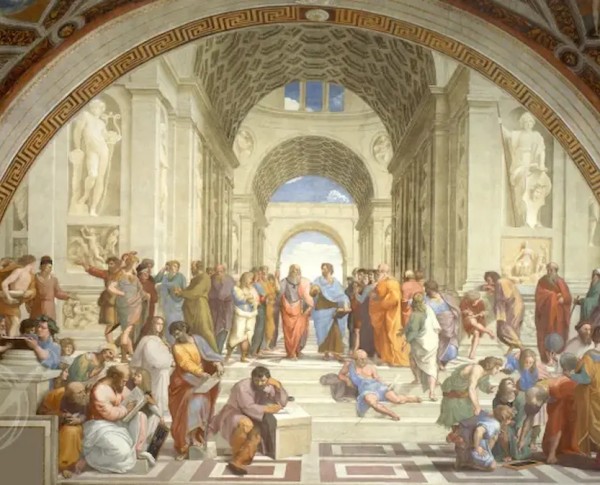
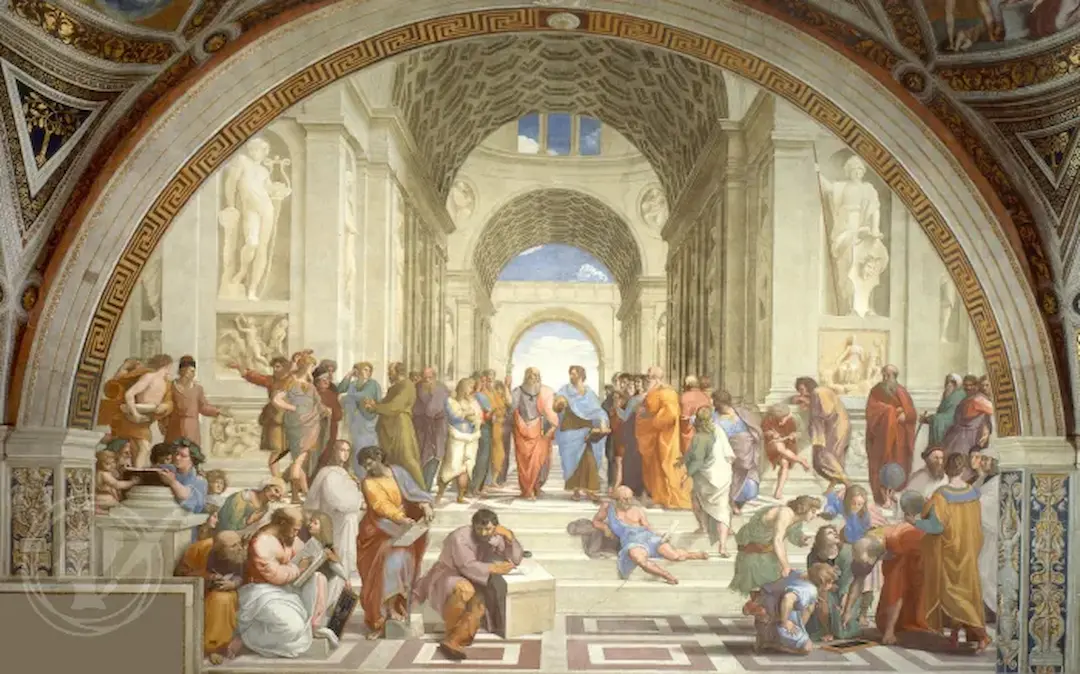
Compared to other works by Raffaello, such as "The School of Athens," Madonna & Child focuses more on intimate, spiritual themes rather than grand historical narratives, showcasing his versatility as an artist.






















_GFM_Painting_(1).webp)

_1505.webp)

 100% Hand-Painted: Finished in 3-6 Weeks
_1505.webp)

.png)
















_(1).webp)