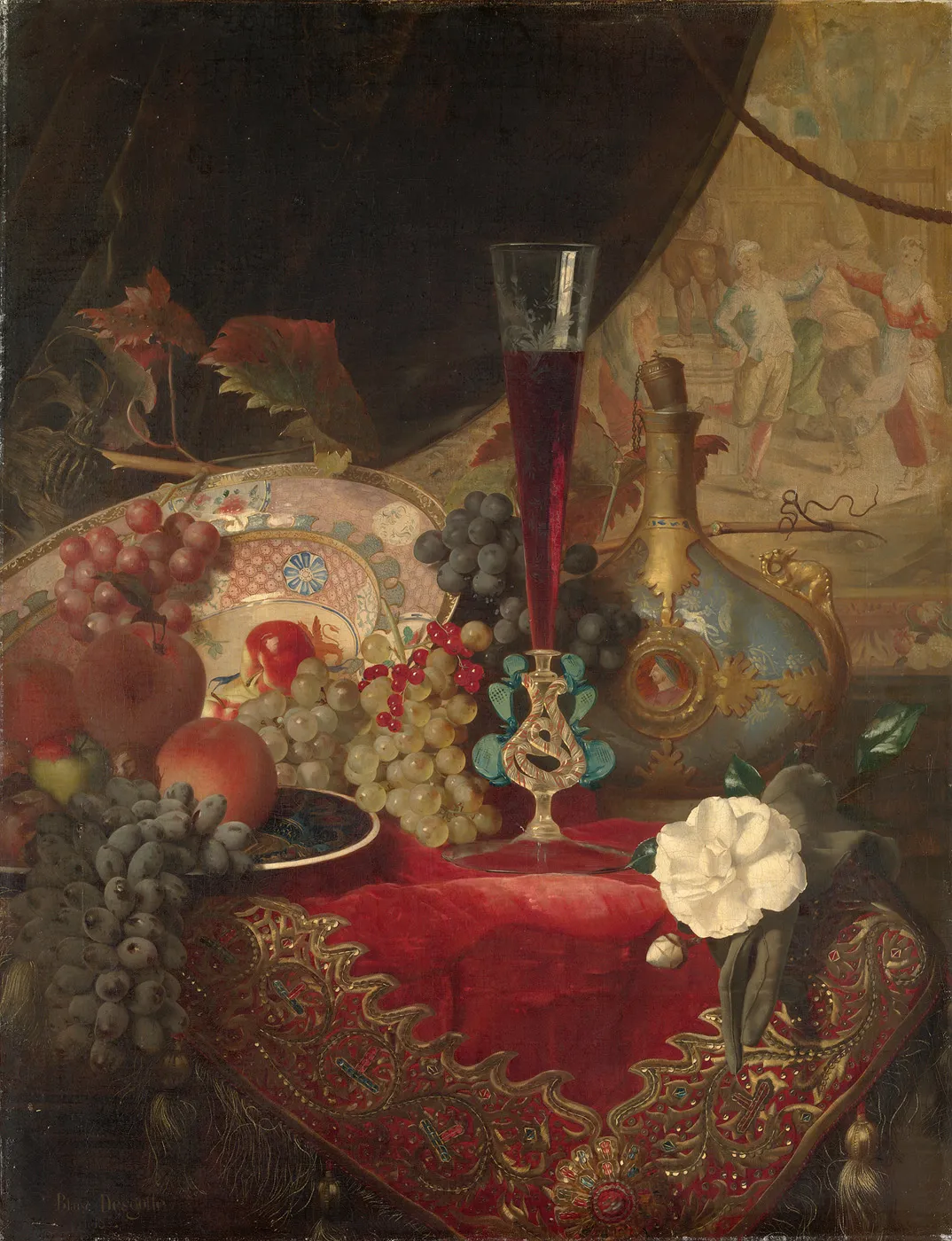
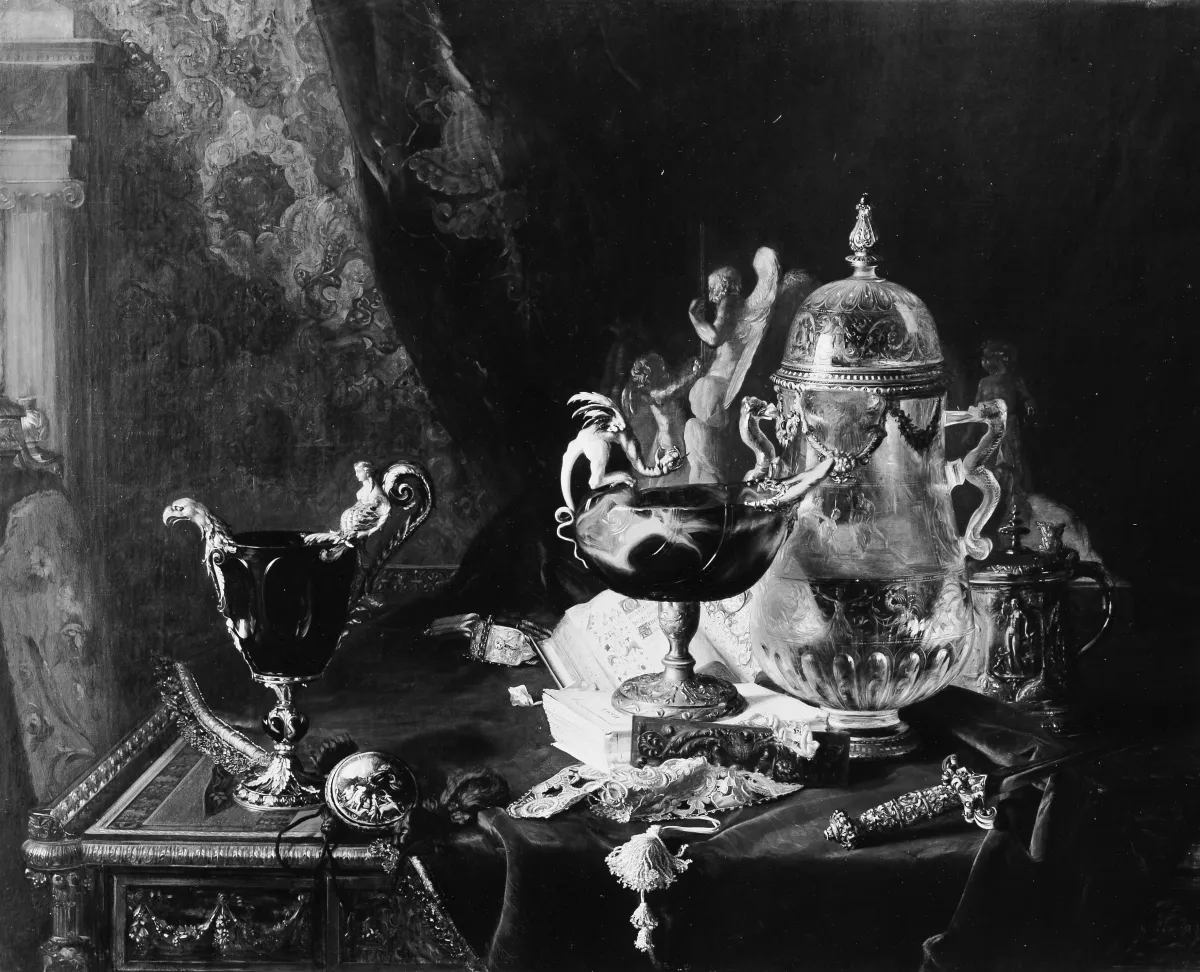
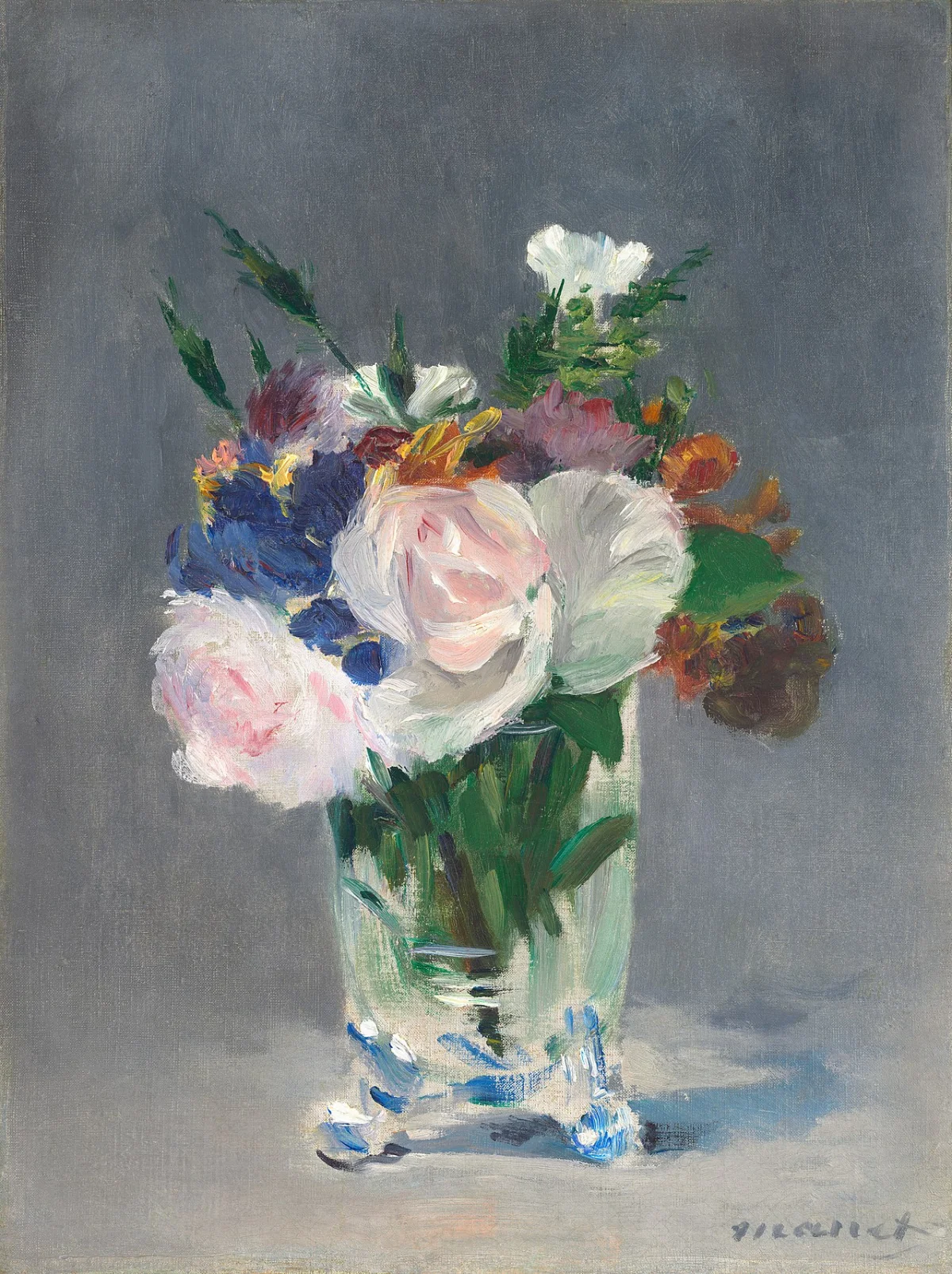
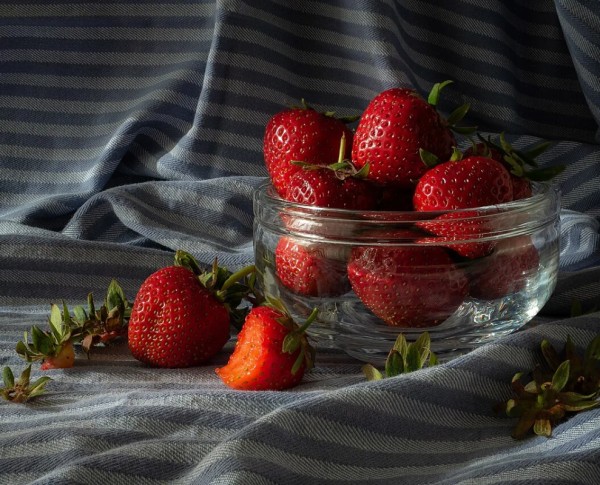
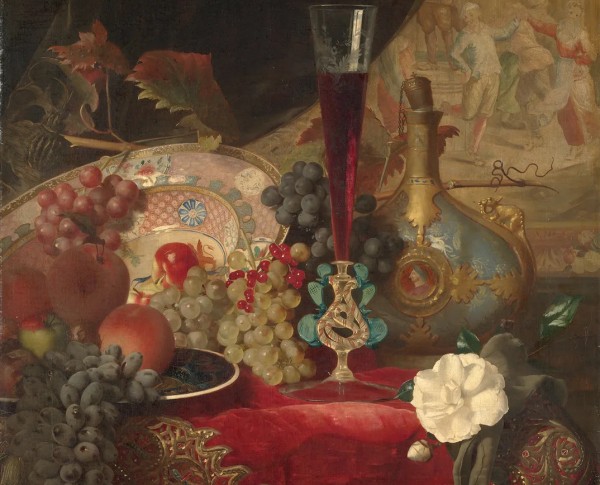
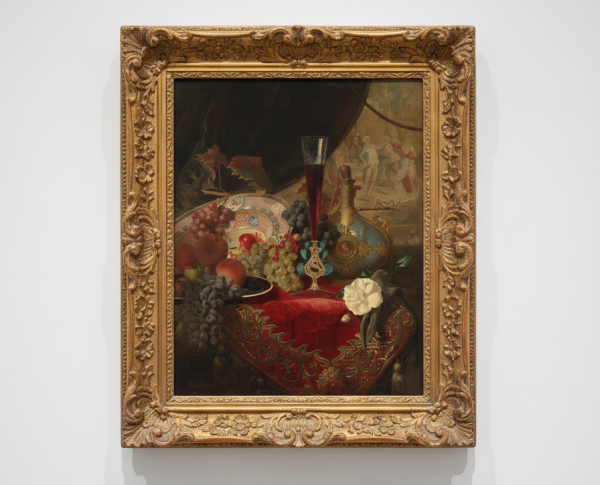
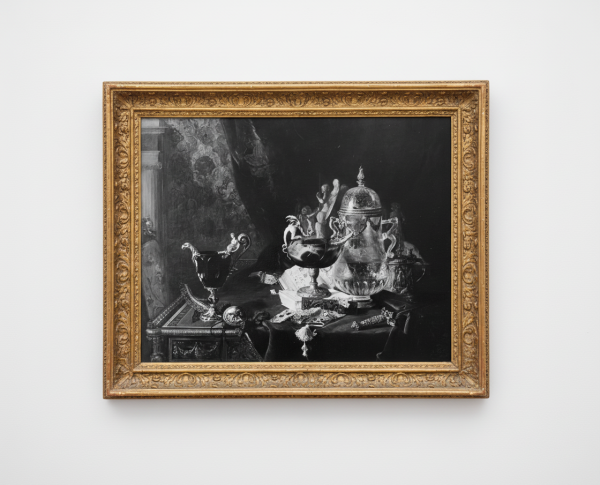
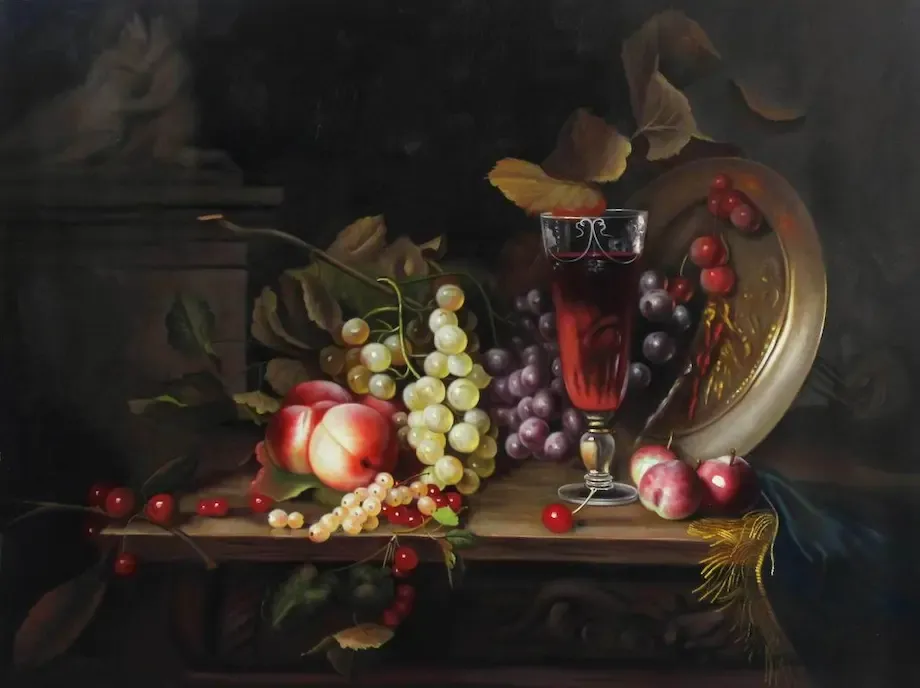
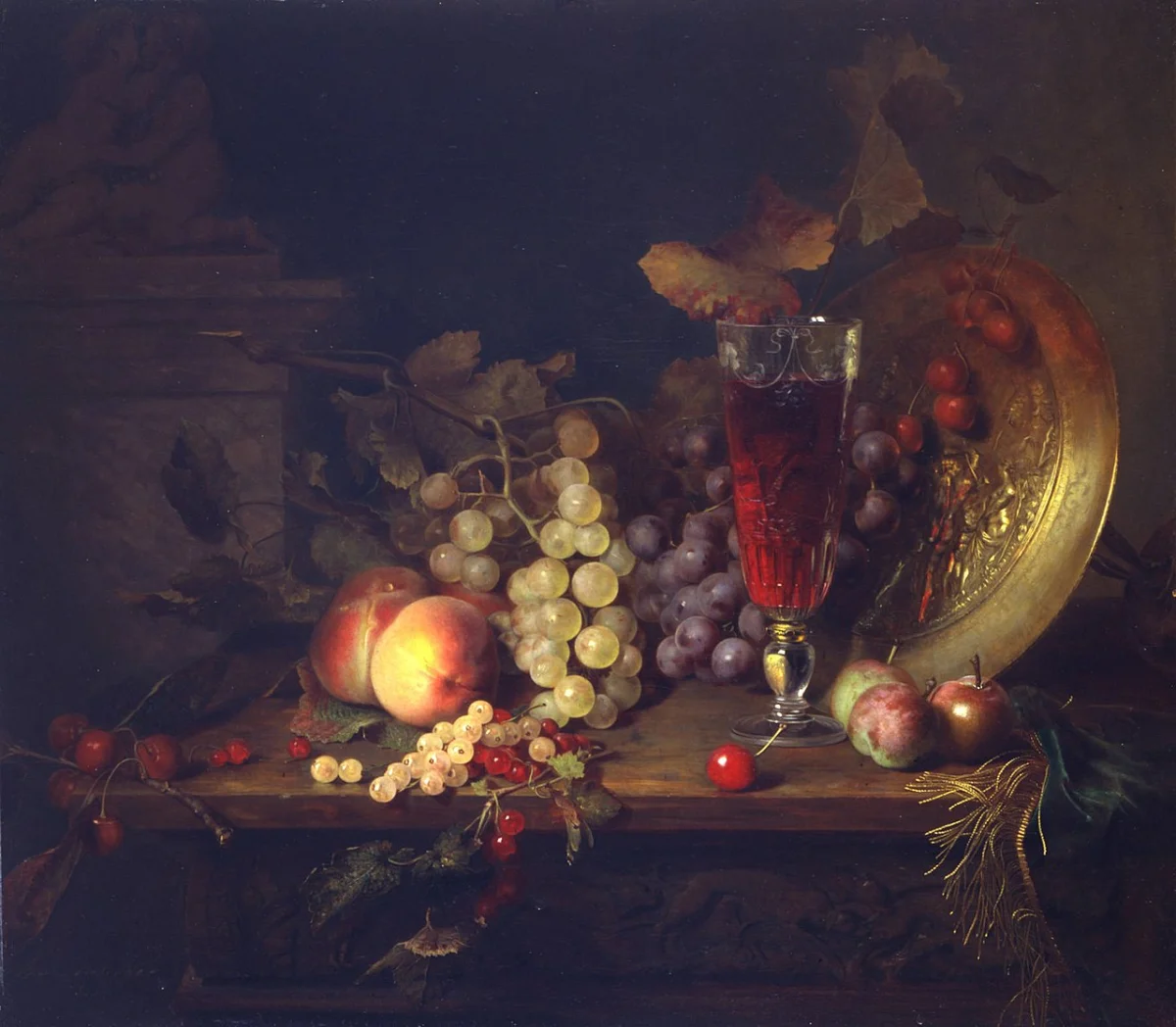
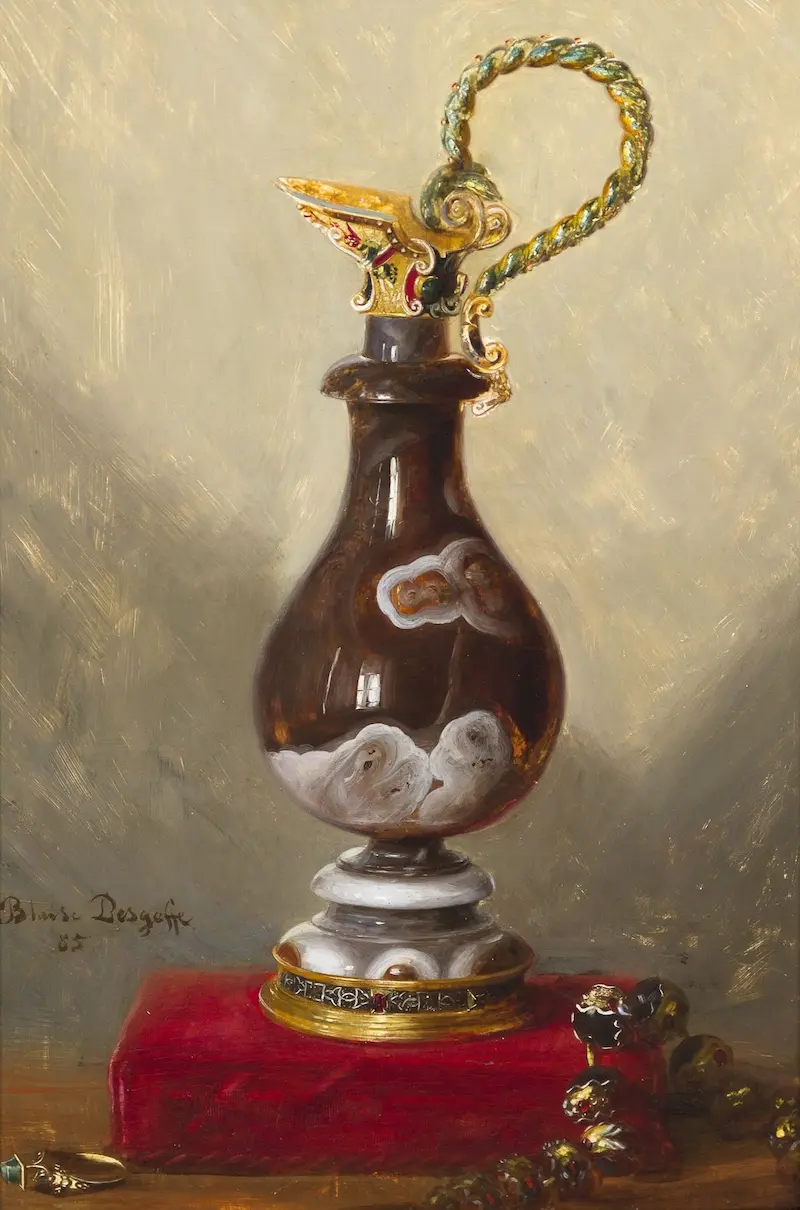
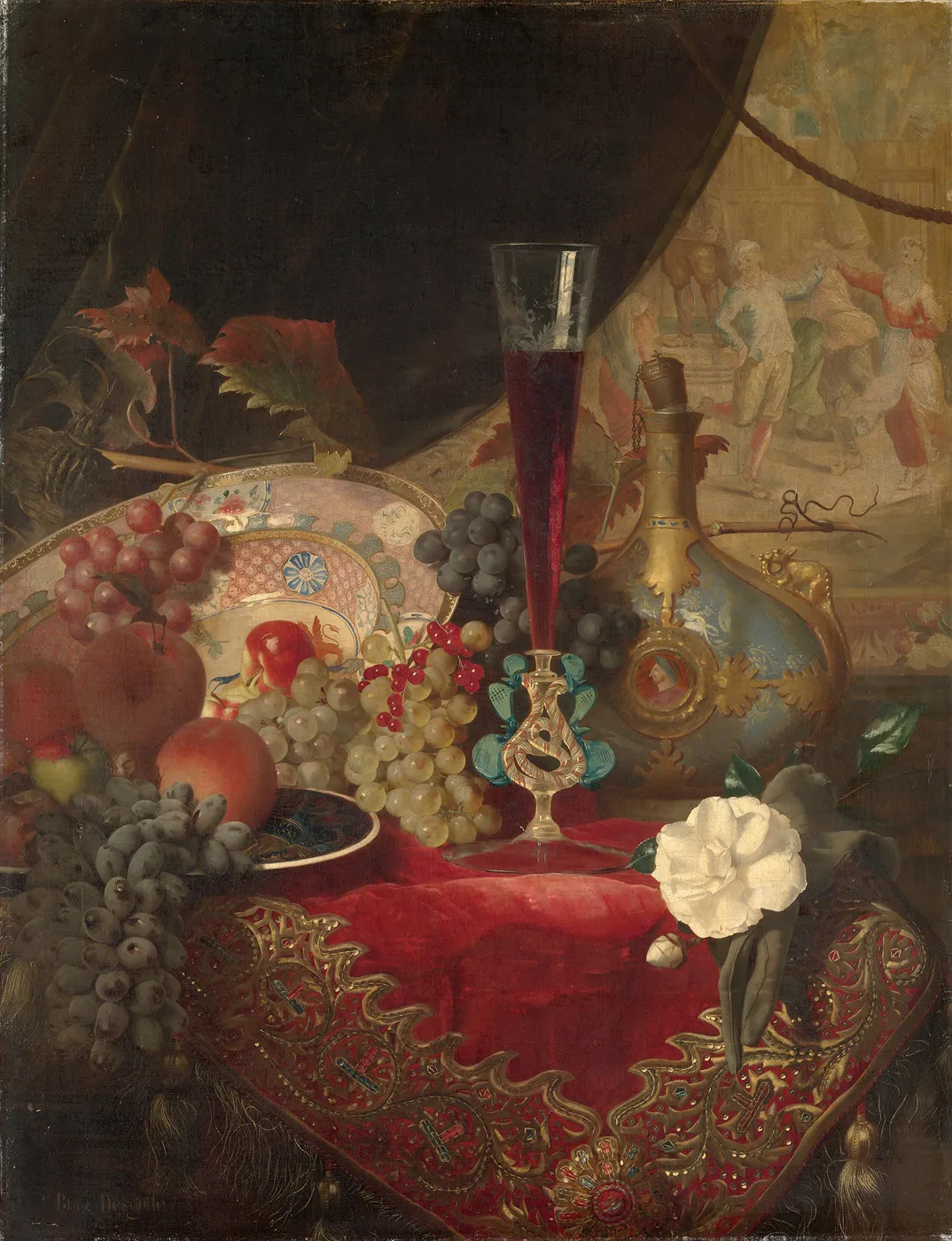
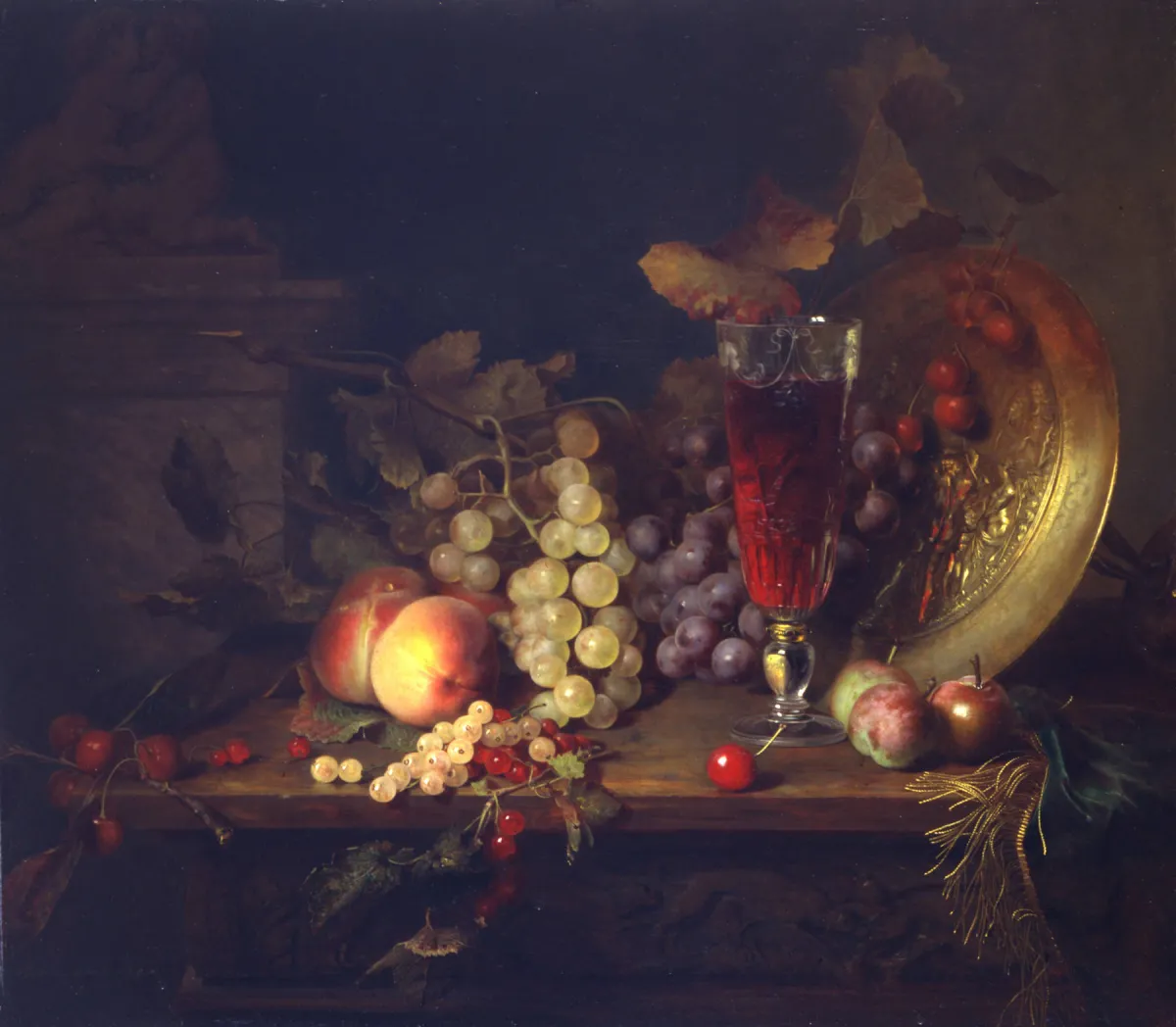
Blaise Alexandre Desgoffe’s meticulous approach to oil on canvas is evident in every detail of “Still Life with Fruit, Glass of Wine, 1863.” The artist’s ability to render textures and reflections demonstrates the precision valued in Academic Art. Similar to the “Vase of améthyste from the 16th-century” and “Q115674038,” Desgoffe’s composition harmonizes light, color, and form, making this painting a testament to the masterful techniques that define the movement.
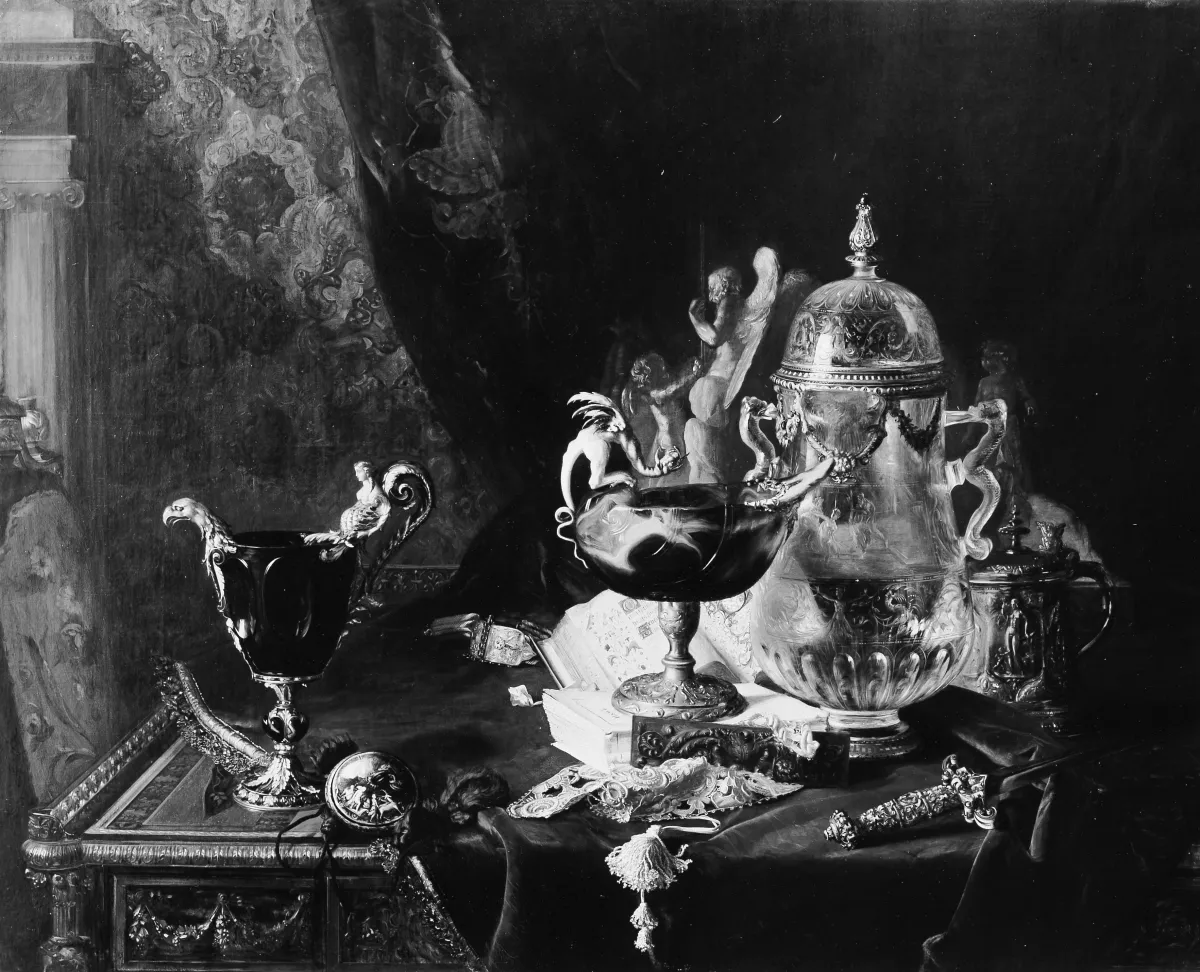
In “Still Life with Fruit, Glass of Wine, 1863,” Desgoffe weaves a narrative rich with symbolism, inviting viewers to contemplate themes of abundance and transience. As with other fine art painting for sale from the Academic Art era, such as “Q95949684” and “Objects of Art from the Louvre,” each object depicted carries meaning. The carefully arranged fruit and glassware reflect both the prosperity and fleeting nature of life, echoing motifs beloved by collectors and historians alike.
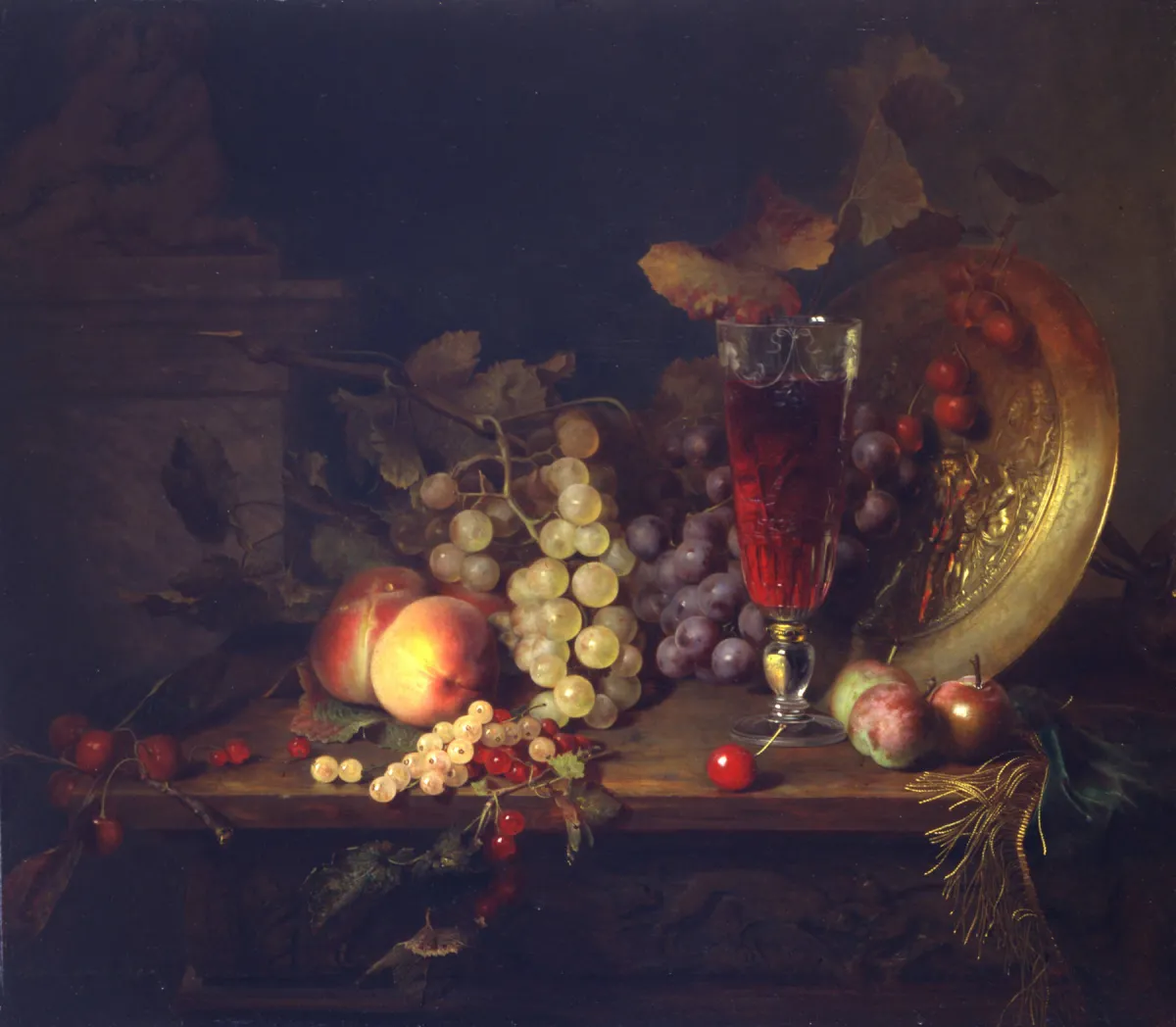
For art connoisseurs, owning “Still Life with Fruit, Glass of Wine, 1863” by Blaise Alexandre Desgoffe is a privilege. This hand-painted oil painting is a prized example of Academic Art, often displayed with related masterpieces like “Still Life with Fruit and Venetian Glass on a Table” and “Vase of améthyste from the 16th-century.” Its exquisite detail and historic significance make it a sought-after fine art painting for sale, elevating any private or public collection.
When Art Meets History
"Still Life with Fruit, Glass of Wine, 1863" by Blaise Alexandre Desgoffe is a remarkable example of the Academic Art movement, capturing a moment of refined elegance. This hand-painted oil painting brings to life the 19th-century fascination with realism and detail. Desgoffe’s mastery is evident, echoing the sophistication seen in related paintings like "Promenade" and "By the Well." Collectors and enthusiasts cherish such works for their historic charm and artistic excellence.
Techniques That Speak
Blaise Alexandre Desgoffe utilizes the classic oil on canvas technique to create stunning depth and texture in "Still Life with Fruit, Glass of Wine, 1863." The Academic Art movement emphasized meticulous brushwork and lifelike representation, traits evident in every detail of this composition. The painting’s luminous quality and intricate realism are shared by related works such as "The Wave" and "The Wolf of Agubbio," showcasing Desgoffe’s technical prowess and dedication to traditional artistry.
Emotions on Display
Through "Still Life with Fruit, Glass of Wine, 1863," Desgoffe evokes a sense of tranquility and abundance, hallmarks of fine art painting for sale from the Academic Art era. The harmonious arrangement of fruit and glassware stirs feelings of serenity and appreciation for life’s simple pleasures. This emotional resonance links Desgoffe’s masterpiece with related paintings like "Q17494002," inviting viewers to connect deeply with the scene and the artist’s vision.
Coveted by Collectors
Collectors prize "Still Life with Fruit, Glass of Wine, 1863" for its exquisite hand-painted oil painting technique and its place within the Academic Art movement. The artwork’s timeless elegance and historical significance make it a sought-after addition to any collection, standing alongside related paintings such as "By the Well" and "The Wave." Blaise Alexandre Desgoffe’s attention to detail ensures that this masterpiece continues to captivate art lovers and collectors alike.
Related Academic Art Hand-Painted Oil Paintings by Other Artists
Other Famous Academic Art Artists:
Frequently Asked Questions About Still Life with Fruit, Glass of Wine, 1863
What is the historical context of "Still Life with Fruit, Glass of Wine"?
This painting was created in 1863, a period marked by significant artistic movements such as Realism and Impressionism. It reflects the transition in art from traditional techniques to more modern approaches, emphasizing everyday subjects.
Who is Blaise Alexandre Desgoffe and what is his significance in art history?
Blaise Alexandre Desgoffe was a French painter known for his still life compositions. His work is significant for its attention to detail and the use of light, contributing to the evolution of still life painting in the 19th century.
What artistic techniques are employed in this painting?
Desgoffe utilizes chiaroscuro to create depth and volume, along with a meticulous attention to texture that brings the fruit and glass of wine to life. The composition is balanced, drawing the viewer's eye across the canvas.
What symbolism can be found in the painting?
The fruit and glass of wine symbolize abundance and the pleasures of life. Additionally, the choice of fruits may represent the seasons, while the wine glass can signify celebration and the transience of life.
How does this painting reflect the still life genre?
This work exemplifies the still life genre by focusing on inanimate objects, capturing their beauty and form. It invites contemplation of the everyday, elevating simple subjects to a level of artistic significance.
What influences can be seen in Desgoffe's style?
Desgoffe's style shows influences from the Dutch Golden Age of painting, particularly in his use of light and shadow, as well as the careful arrangement of objects, reminiscent of the works of artists like Pieter Claesz and Willem Claeszoon Heda.
What role does color play in "Still Life with Fruit, Glass of Wine"?
Color is crucial in this painting, as it enhances the vibrancy of the fruits and the transparency of the glass. The warm tones create a sense of warmth and intimacy, inviting viewers to appreciate the beauty of the composition.
How does this painting compare to other still life works of its time?
Compared to other still life works of the 19th century, Desgoffe's painting stands out for its realism and the emotional resonance it evokes. While many artists focused on idealized forms, Desgoffe captures the fleeting beauty of everyday objects.
What is the significance of the glass of wine in the composition?
The glass of wine serves as a focal point that contrasts with the fruit, symbolizing indulgence and the ephemeral nature of pleasure. It invites the viewer to reflect on themes of enjoyment and the passage of time.
In what ways does this painting reflect the cultural values of the 19th century?
This painting reflects the 19th-century cultural values of appreciation for nature, the celebration of domestic life, and the enjoyment of simple pleasures. It embodies the era's fascination with realism and the beauty found in everyday objects.






















_GFM_Painting_(1).webp)


 100% Hand-Painted: Finished in 3-6 Weeks

.png)















_(1).webp)