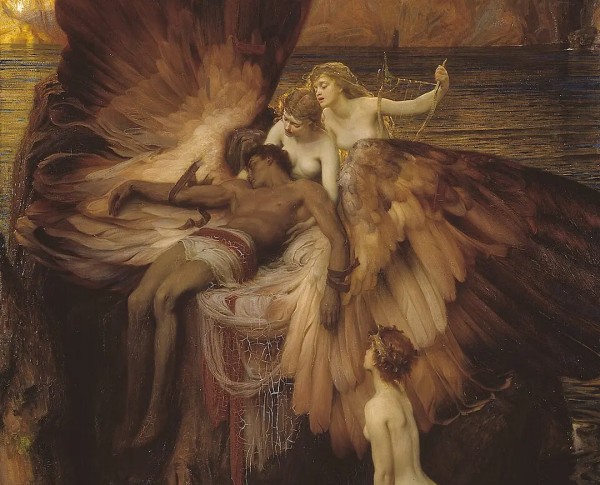
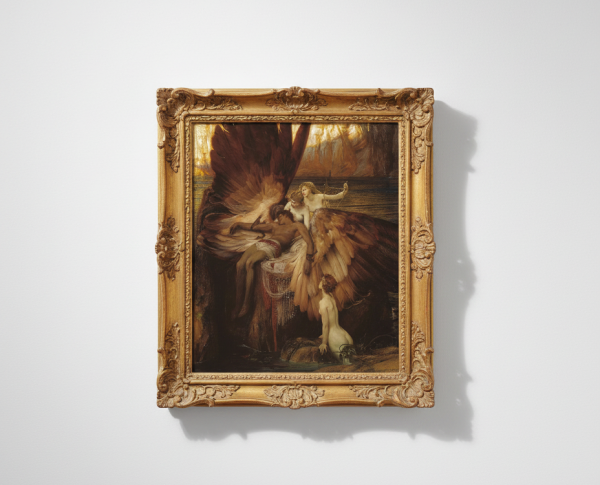
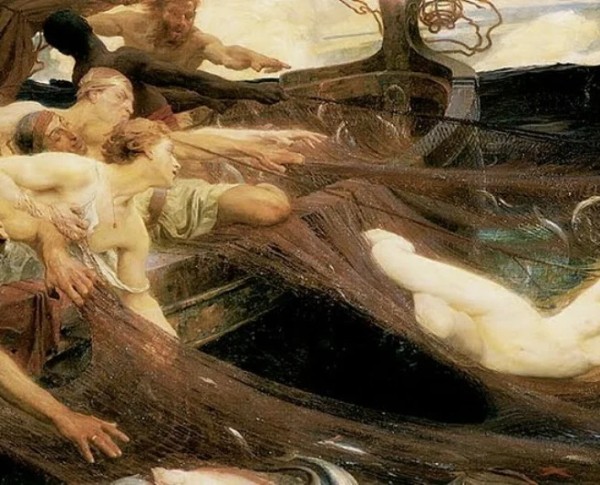
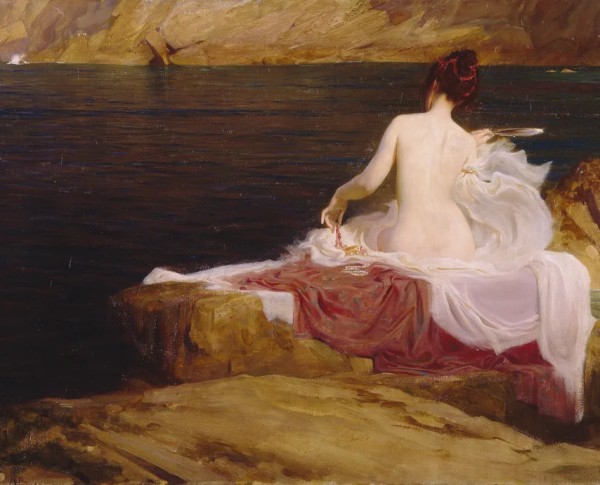
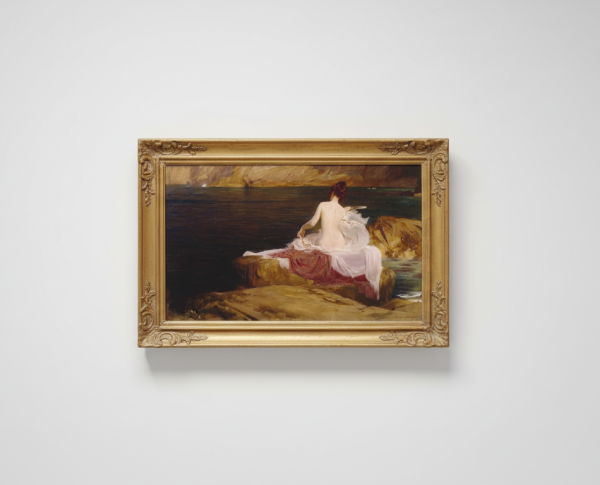
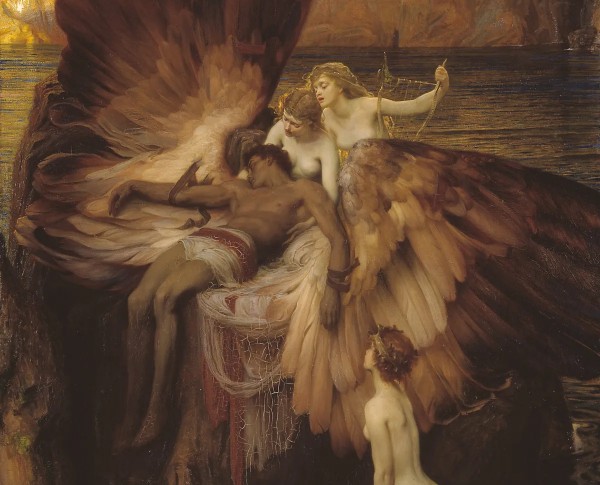
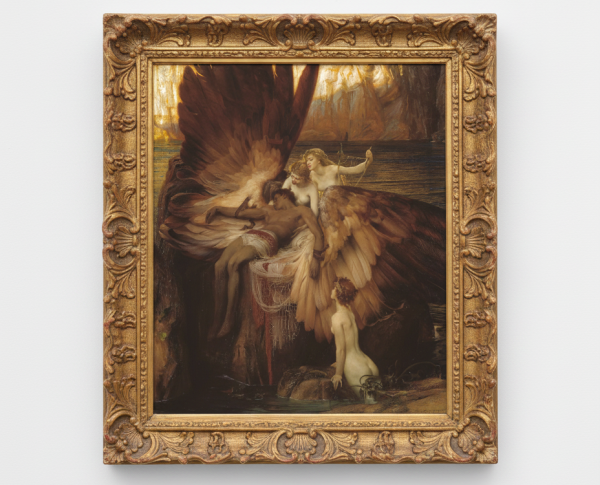
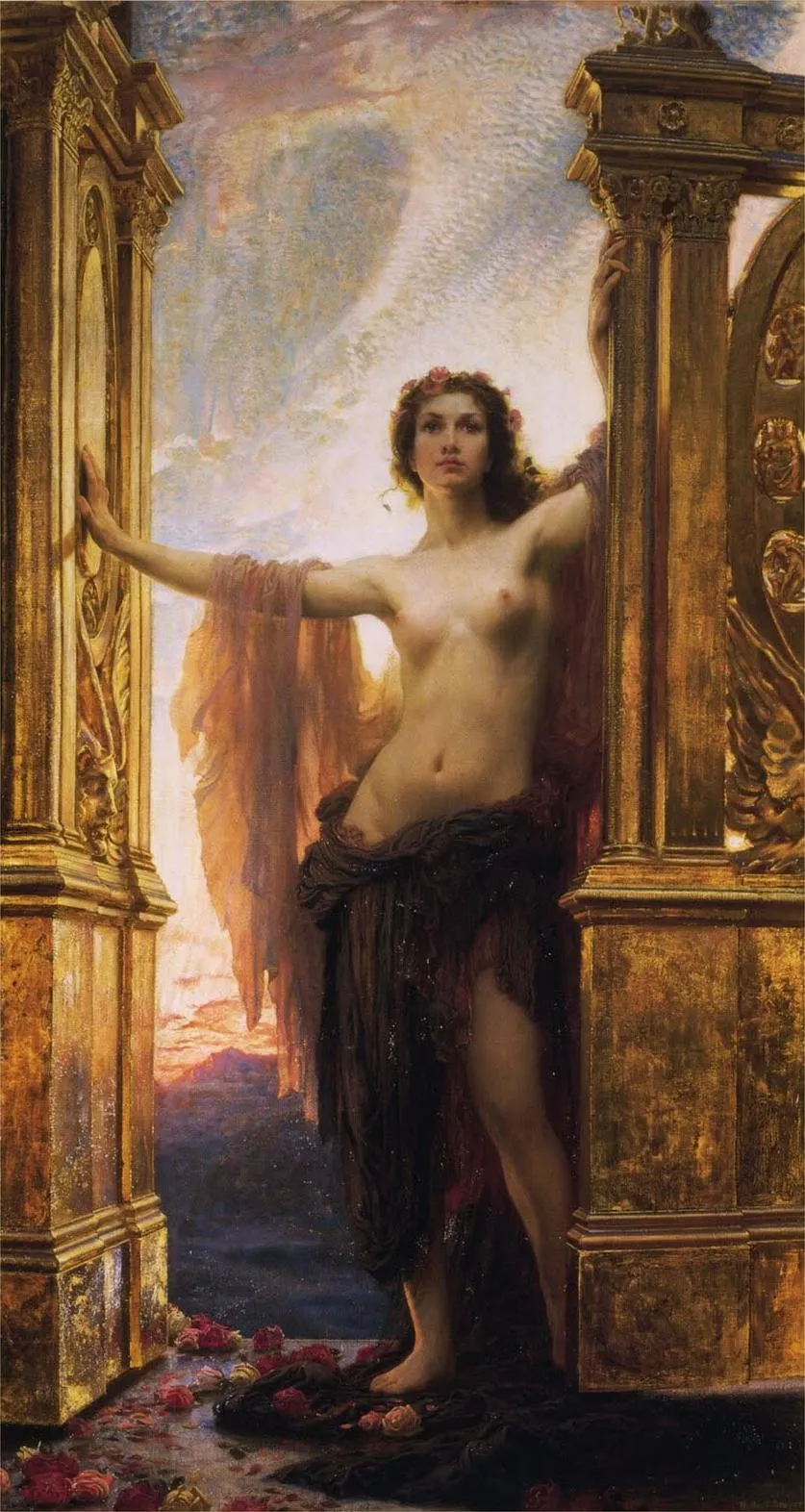
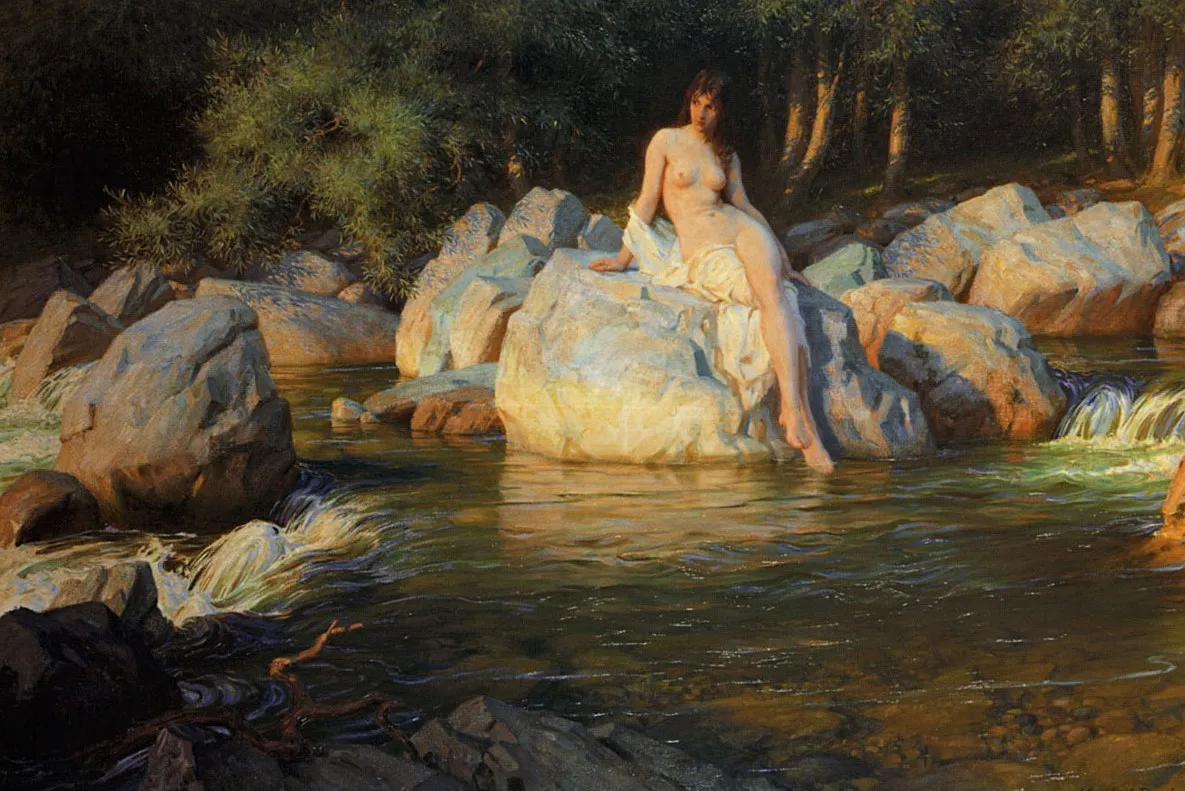
Herbert James Draper’s technique in "The Gates of Dawn" showcases impeccable skill in oil on canvas, characteristic of Neo-Classical artistry. Each brushstroke reveals his expertise in rendering light, texture, and the human form, much like his other works "The Sea Maiden" and "Wrath of the Sea God." This painting exemplifies the mastery and attention to detail that defines Draper’s contributions to the world of classical art.
"The Gates of Dawn" unfolds a narrative steeped in mythology, inviting viewers to interpret its rich symbolism. Draper weaves timeless stories into every element, drawing parallels with his other works such as "Lancelot and Guinevere" and "L'île De Calypso." This fine art painting for sale not only enchants with its visual beauty but also intrigues with layers of meaning, making it a captivating centerpiece for any art lover.
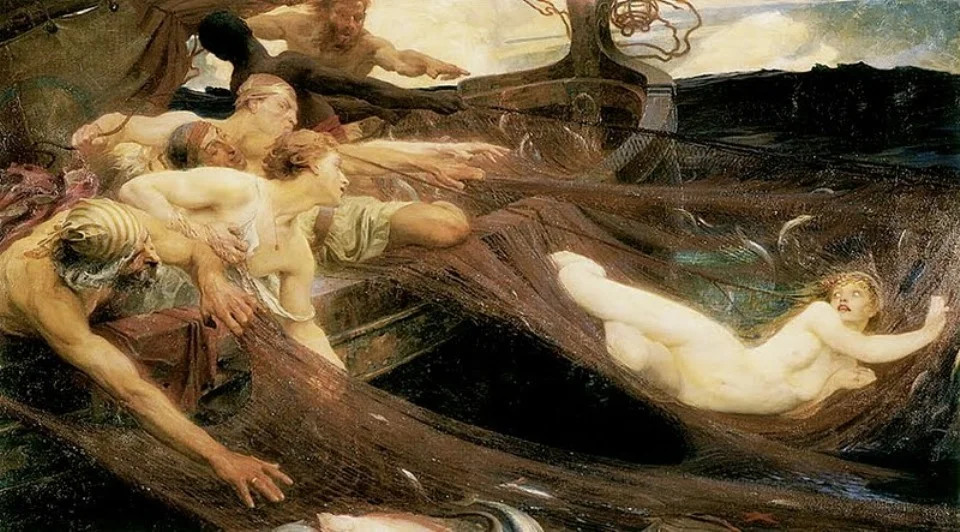
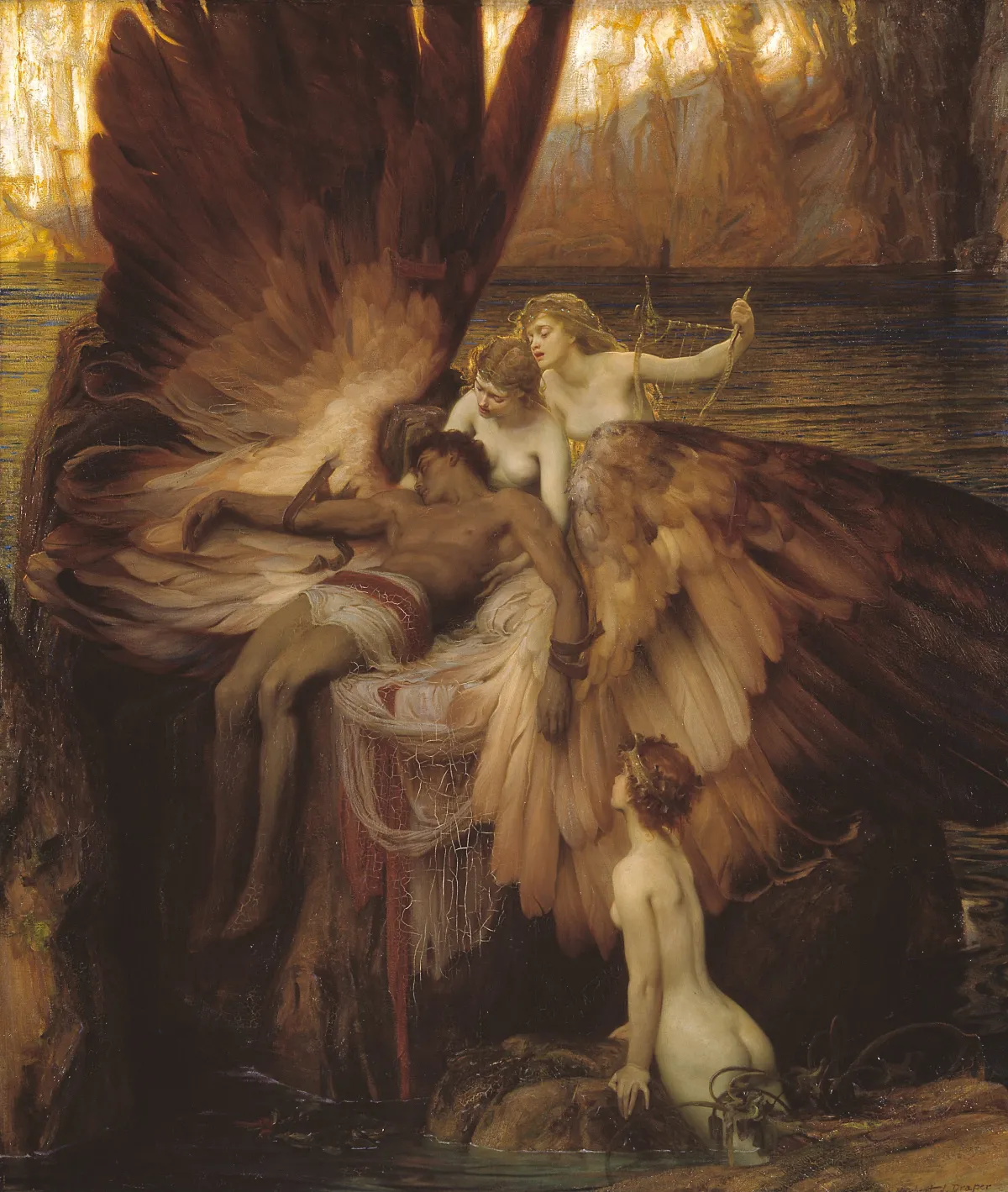
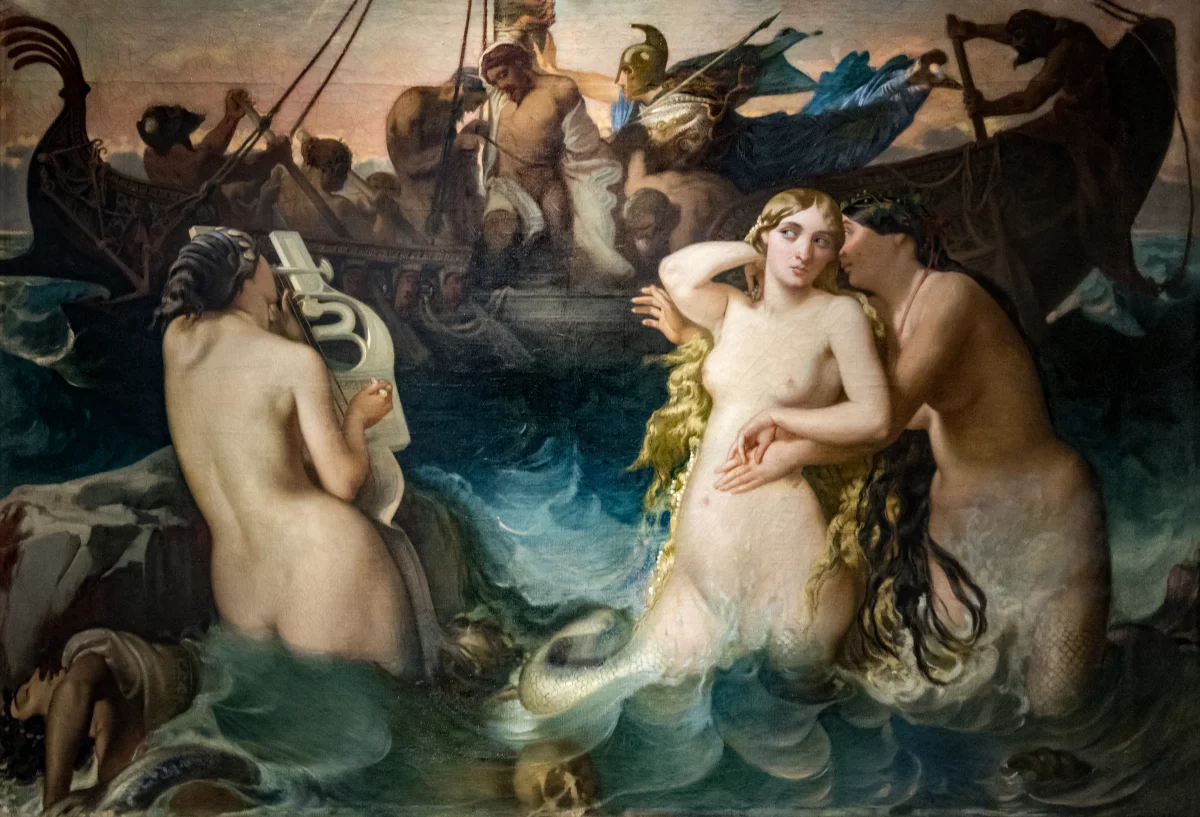
Owning "The Gates of Dawn" is a unique opportunity for collectors seeking a hand-painted oil painting by Herbert James Draper, a master of the Neo-Classical movement. Its allure is rivaled only by related works like "Ulysses and the Sirens" and "The Sea Maiden." As a fine art painting for sale, it offers both aesthetic pleasure and investment value, making it a prized treasure for discerning art collectors worldwide.
When Art Meets History
"The Gates of Dawn" by Herbert James Draper is a remarkable example of the Neo-Classical movement, blending mythological themes with historical grandeur. Draper, celebrated for his evocative hand-painted oil paintings, draws inspiration from both classical antiquity and his contemporaries. This masterpiece stands alongside related works like "The Park at Mortefontaine" and "Gorge at Cività Castellana," offering a glimpse into an era where art and history seamlessly merged to create timeless visual narratives.
Techniques That Speak
Herbert James Draper’s "The Gates of Dawn" showcases his mastery of oil on canvas, a medium favored by Neo-Classical artists for its depth and vibrancy. Draper’s technique involves meticulous layering and subtle gradations of light, reminiscent of works such as "Surrender of General Burgoyne." His attention to anatomical accuracy and flowing drapery highlights the technical prowess that defines both this painting and other legendary Neo-Classical compositions.
Emotions on Display
"The Gates of Dawn" evokes a sense of serene awakening, characteristic of Draper’s emotive style within the Neo-Classical movement. The figures, painted with exquisite sensitivity, invite viewers to experience the dawn’s promise. Like "Portrait of Burchard Ch. Richter" and "Basilius Von Ramdohr," this fine art painting for sale captures deep human emotions, making it a cherished addition to any collection that appreciates the power of artistic storytelling.
Coveted by Collectors
Collectors worldwide seek "The Gates of Dawn" for its historical significance and aesthetic beauty. As a hand-painted oil painting, Draper’s work captures the essence of the Neo-Classical era, much like related masterpieces. The painting’s enduring appeal, comparable to works such as "Gorge at Cività Castellana," ensures its status as a prized fine art painting for sale, attracting both seasoned connoisseurs and new admirers of Draper’s legacy.
Related Neo-Classical Hand-Painted Oil Paintings by Other Artists
Other Famous Neo-Classical Artists:
Frequently Asked Questions About The Gates of Dawn
What is the historical context of "The Gates of Dawn"?
"The Gates of Dawn" was created during the early 20th century, a period marked by significant changes in artistic expression and the rise of symbolism. Herbert James Draper, the artist, was influenced by the Pre-Raphaelite movement and the broader Symbolist movement, which sought to convey deeper meanings through allegorical imagery.
What themes are explored in "The Gates of Dawn"?
The painting explores themes of rebirth, hope, and the transition from darkness to light. The imagery of dawn symbolizes new beginnings and the promise of a brighter future, reflecting the artist's fascination with the interplay between light and shadow.
Who is the central figure in "The Gates of Dawn" and what does she represent?
The central figure in the painting is often interpreted as a personification of Dawn or Aurora. She represents the arrival of light and the dispelling of darkness, embodying the themes of renewal and the cyclical nature of time.
What artistic techniques did Draper employ in "The Gates of Dawn"?
Draper utilized a combination of rich color palettes, intricate details, and dramatic lighting to create a sense of depth and movement. His use of chiaroscuro enhances the contrast between light and shadow, drawing the viewer's eye to the central figure and the ethereal quality of the scene.
How does "The Gates of Dawn" reflect the Symbolist movement?
The painting embodies the Symbolist movement through its emphasis on emotional expression and the use of allegorical imagery. Draper's work invites viewers to interpret the scene beyond its literal representation, encouraging a personal connection to the themes of transformation and enlightenment.
What influences can be seen in Draper's style in this painting?
Draper's style in "The Gates of Dawn" reflects influences from the Pre-Raphaelite Brotherhood, particularly in his attention to detail and vibrant colors. Additionally, his work shows the influence of classical mythology, as seen in the depiction of the figure and the overall composition.
What symbolism is present in the colors used in "The Gates of Dawn"?
The colors in "The Gates of Dawn" carry significant symbolic weight. Warm hues of gold and orange represent hope and renewal, while cooler tones may suggest the remnants of night. This contrast emphasizes the transition from darkness to light, reinforcing the painting's central theme.
How does the composition of "The Gates of Dawn" contribute to its meaning?
The composition of the painting, with the figure positioned centrally and framed by the gates, creates a focal point that draws the viewer's attention. The open gates symbolize opportunity and the passage into a new phase, enhancing the narrative of transformation inherent in the work.
What impact did "The Gates of Dawn" have on contemporary artists?
"The Gates of Dawn" has been influential in shaping the visual language of subsequent artists who explore themes of light, nature, and symbolism. Its blend of realism and allegory continues to inspire modern interpretations of these concepts in contemporary art.
Where can I view "The Gates of Dawn" today?
"The Gates of Dawn" is housed in a prominent art collection, where it can be appreciated by the public. For specific location details, please refer to the gallery's current exhibition schedule or contact our visitor services.























_GFM_Painting_(1).webp)


 100% Hand-Painted: Finished in 3-6 Weeks

.png)
















_(1).webp)