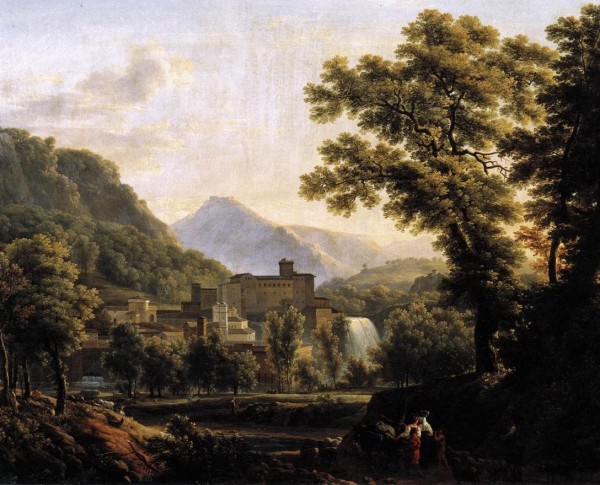
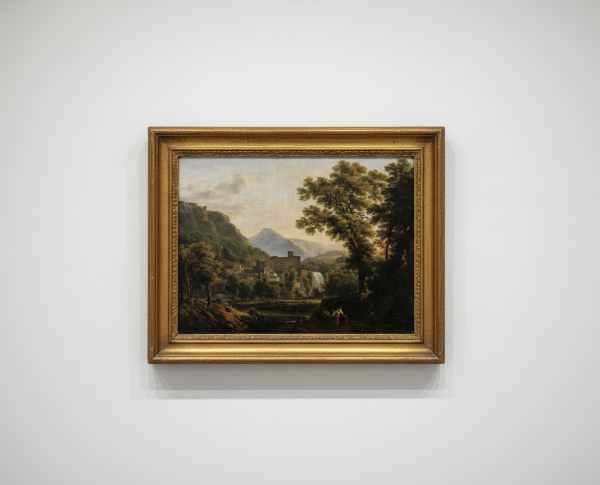
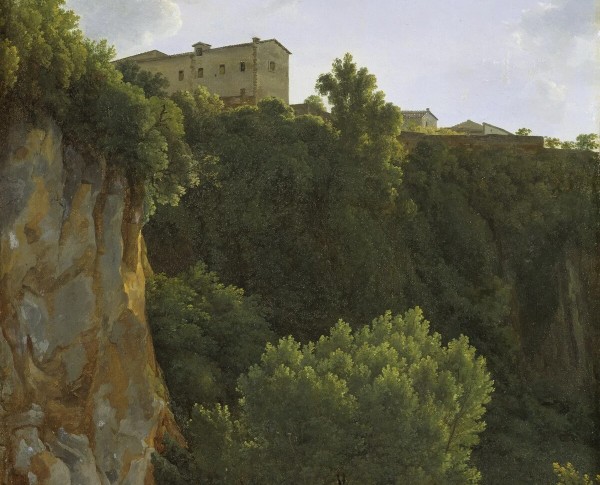
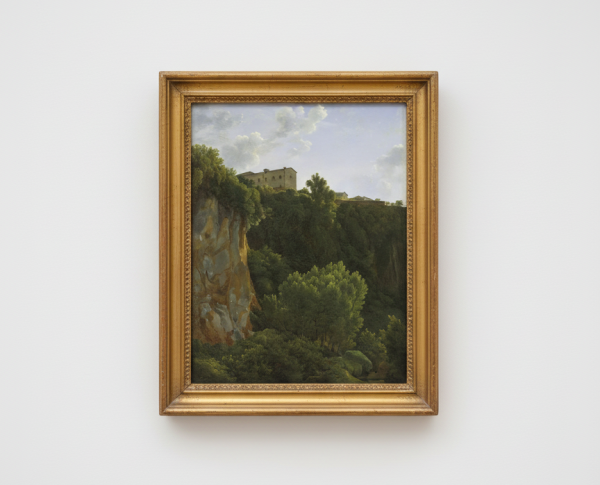
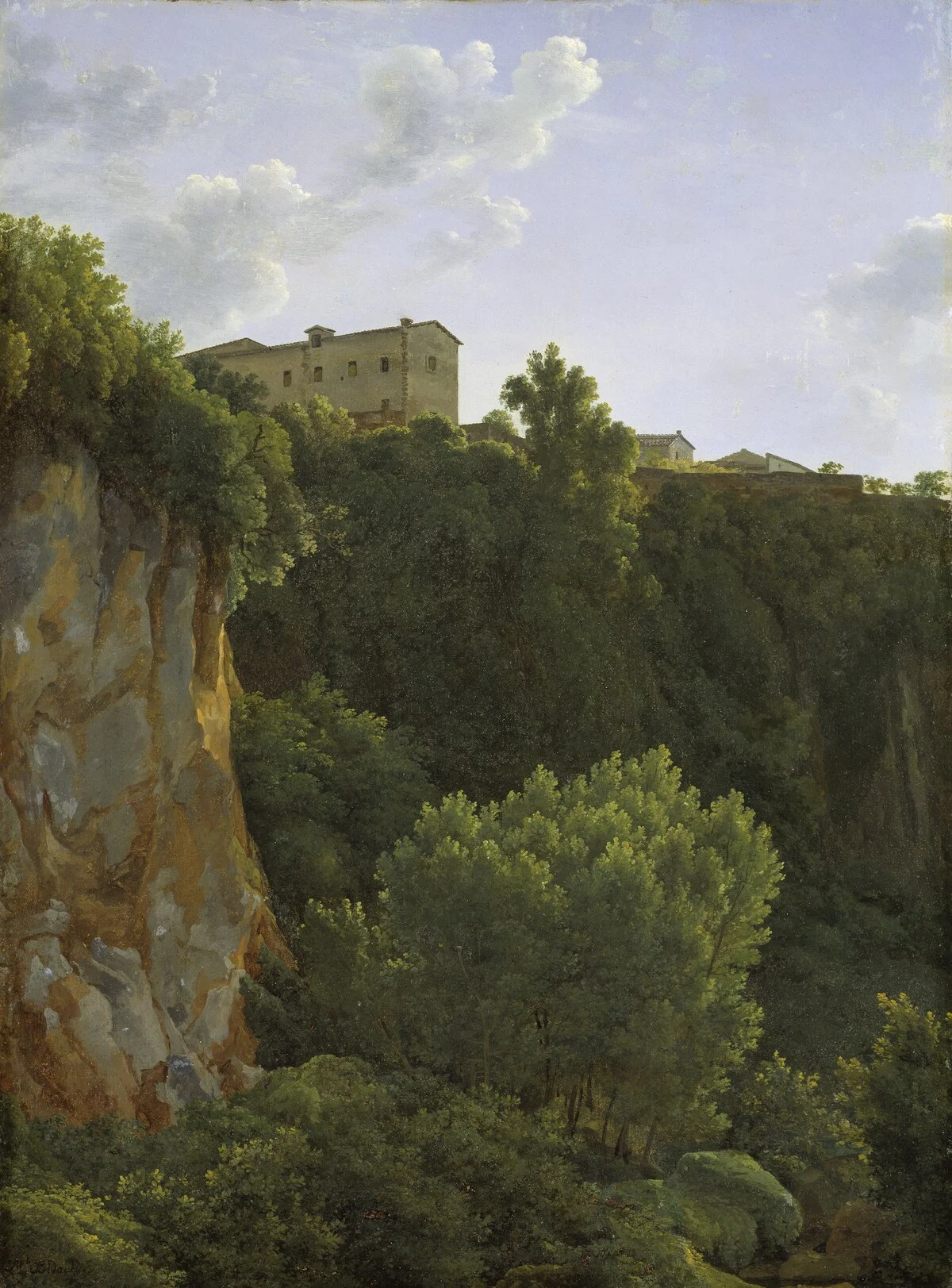
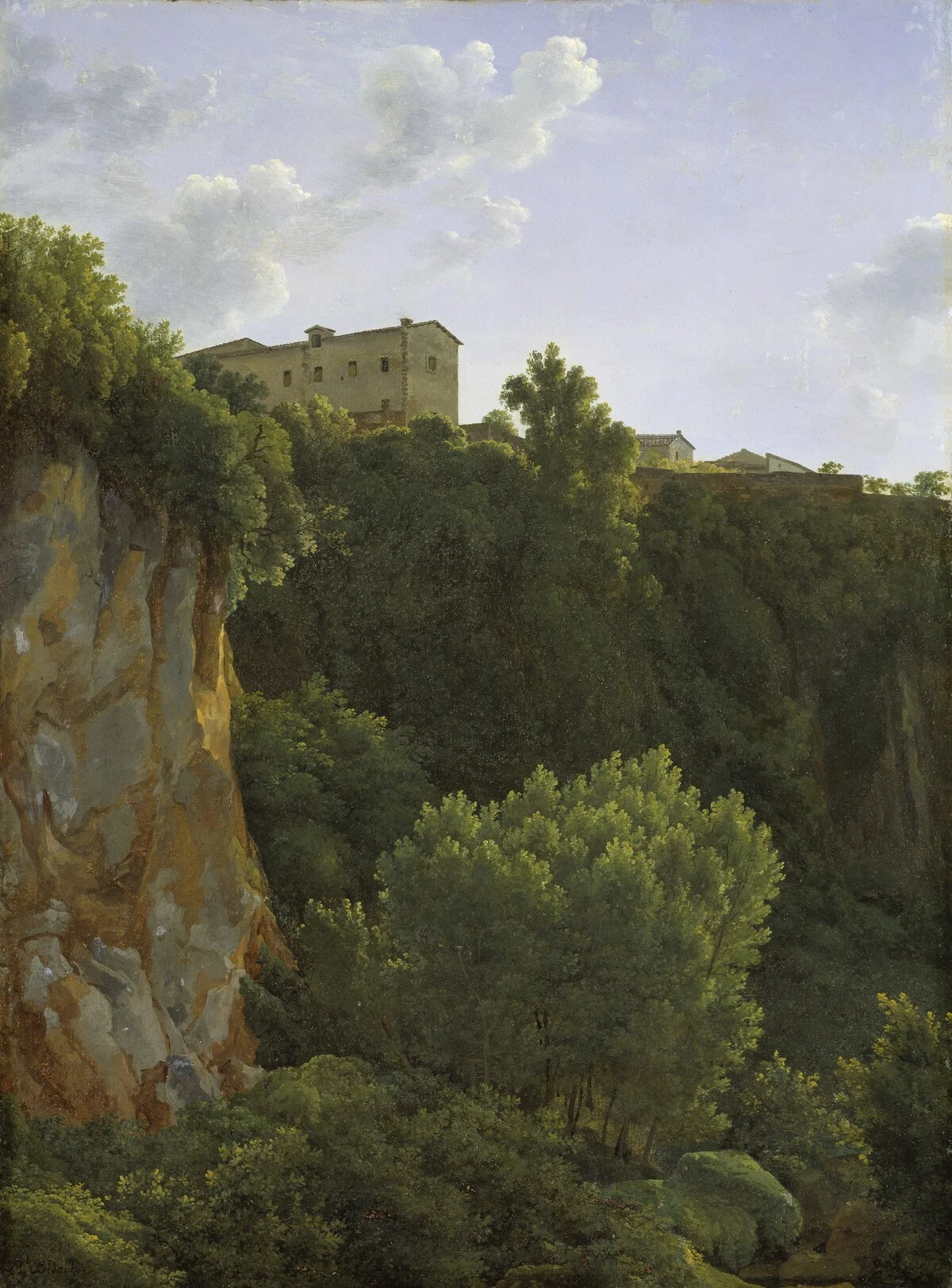
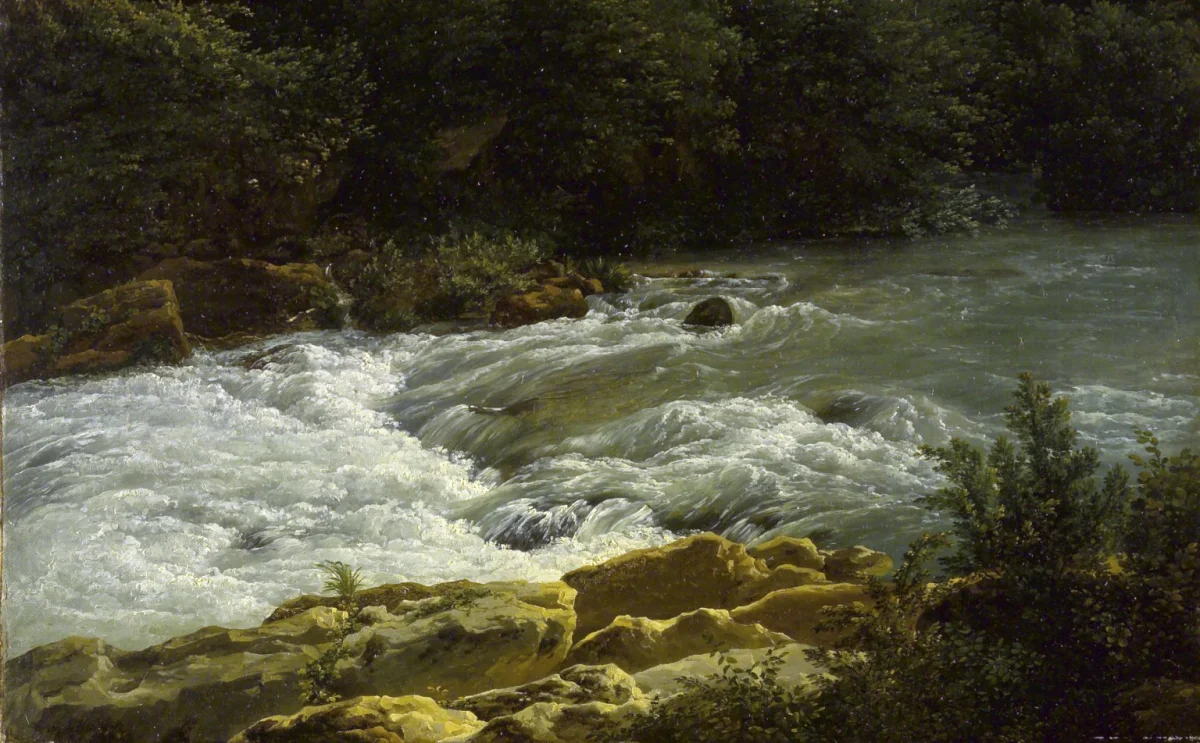
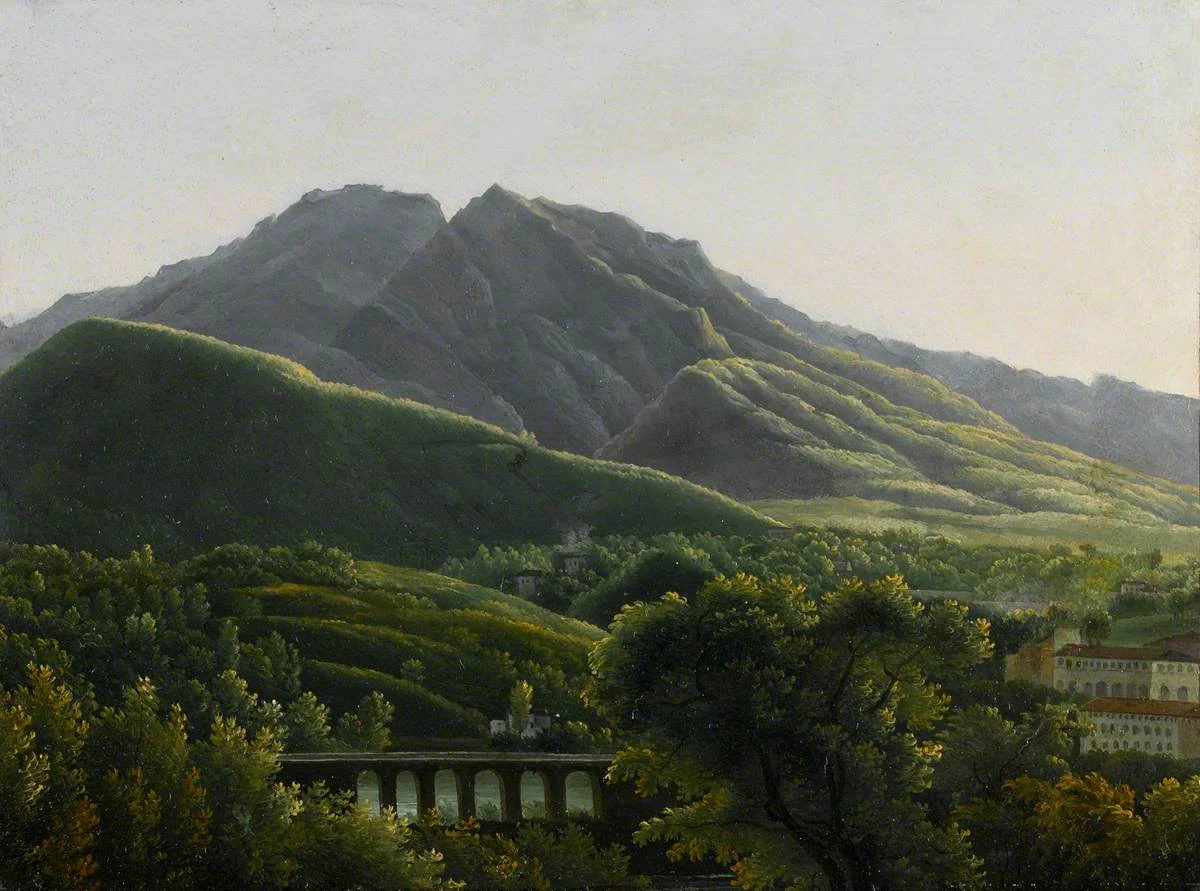
Jean-Joseph-Xavier Bidauld’s technique shines in "Gorge at Cività Castellana," where every brushstroke reflects his training and precision in oil on canvas. The painting’s luminous atmosphere and meticulous detail are hallmarks of Neo-Classical artistry. Comparable to his other works, like "The Bridge at La Cava" and "Running Stream at San Cosimato," this painting demonstrates Bidauld's expertise in capturing nature’s essence, making it a prized addition to any art lover’s collection.
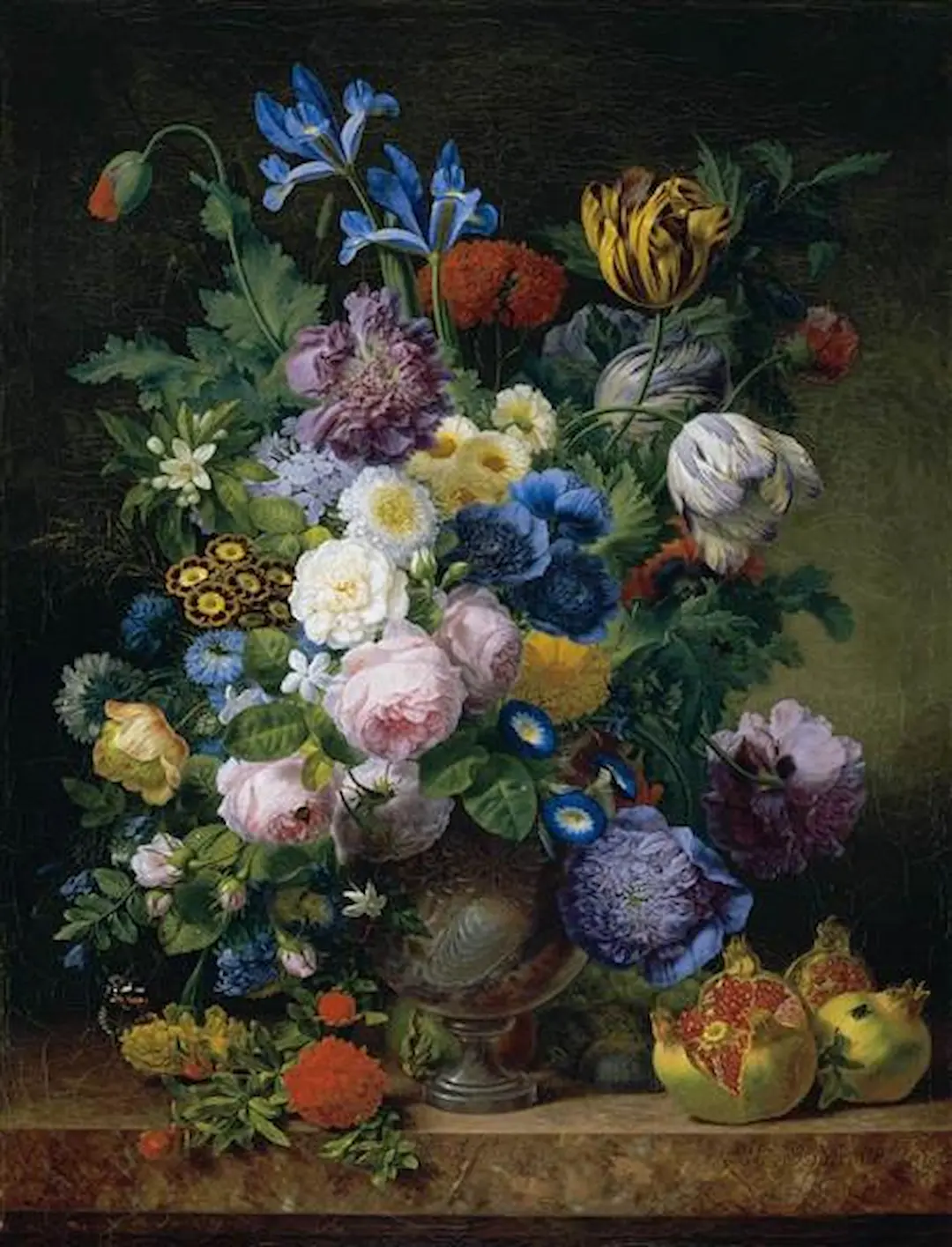
In "Gorge at Cività Castellana," Bidauld weaves stories of nature’s majesty and human presence within the landscape. The gorge, rendered in oil on canvas, symbolizes both the power and serenity of the natural world, a common theme in Neo-Classical art. This narrative echoes through related works such as "Still-Life 1810" and "Kingdom of Naples," offering collectors a window into the symbolic richness that defines this era of fine art painting for sale.
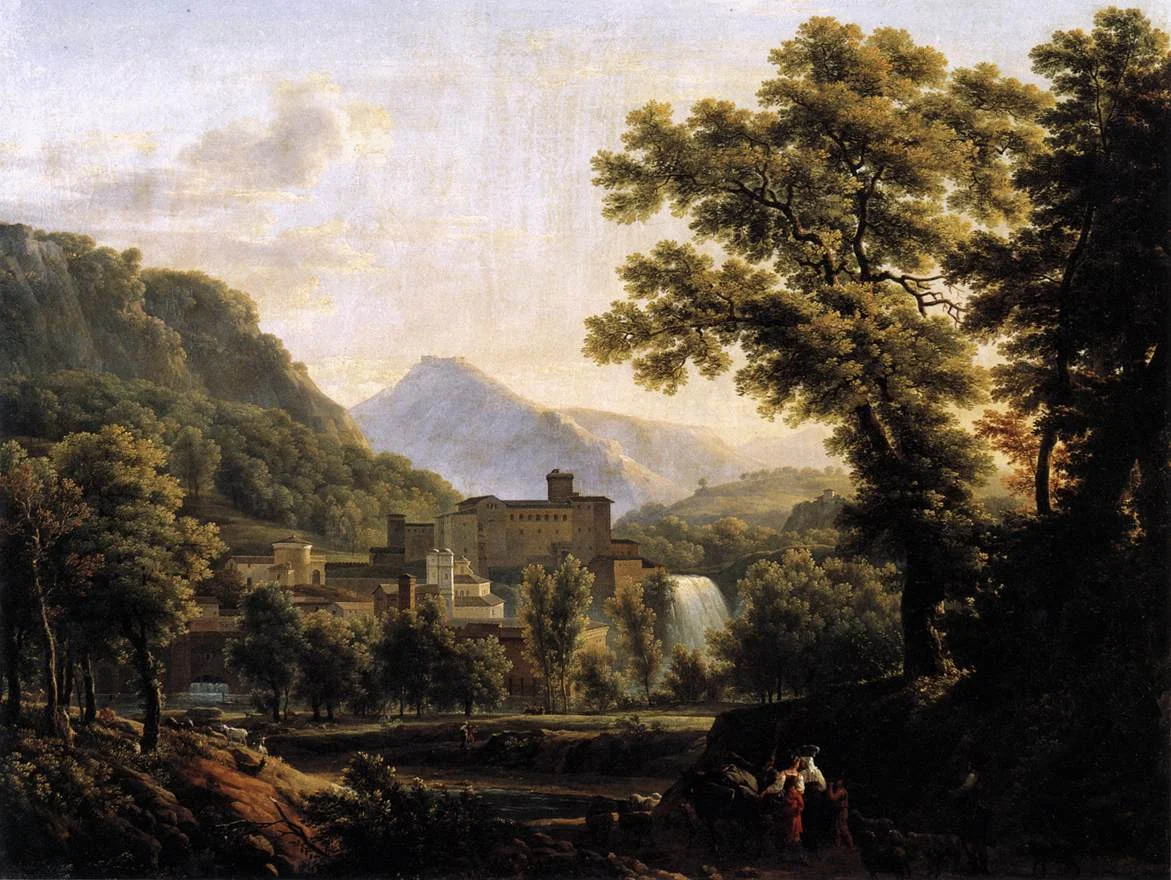
Owning "Gorge at Cività Castellana" by Jean-Joseph-Xavier Bidauld means possessing a piece of Neo-Classical history. This hand-painted oil painting, like "View of the Isle of Sora" and "The Bridge at La Cava," represents the pinnacle of 19th-century landscape art. Collectors seeking a fine art painting for sale will find this masterpiece a timeless investment, its beauty and historical value enduring through generations and inspiring admiration in any refined setting.
When Art Meets History
"Gorge at Cività Castellana" by Jean-Joseph-Xavier Bidauld is a remarkable example of the Neo-Classical movement, reflecting the era's fascination with history and nature. This hand-painted oil painting transports viewers to the Italian countryside, much like related works such as "Lament for Icarus" and "The Sea Maiden." Bidauld’s attention to historical context and landscape detail makes this piece a significant addition to any collection celebrating Neo-Classical art and its enduring legacy.
Techniques That Speak
Bidauld’s mastery shines through in every brushstroke of this oil on canvas masterpiece. The artist utilizes light and shadow to emphasize the depth and grandeur of the gorge, reminiscent of the techniques seen in "Portrait of Thomas Jefferson" and "Timothy Matlack." The Neo-Classical movement’s emphasis on clarity and form is evident, demonstrating why "Gorge at Cività Castellana" stands out as a superb example of technical skill in landscape painting.
Emotions on Display
The tranquil yet dramatic scenery of "Gorge at Cività Castellana" evokes a sense of awe and contemplation, hallmarks of Jean-Joseph-Xavier Bidauld’s approach. This fine art painting for sale captures the emotional resonance found in Neo-Classical works such as "Caroline Louisa Pratt Bartlett" and "The Sea Maiden." The interplay of light and the serene landscape invite viewers to experience the timeless beauty and introspective mood characteristic of Bidauld’s artistry.
Coveted by Collectors
Collectors prize "Gorge at Cività Castellana" not only for its historical significance but also for its exquisite execution as a hand-painted oil painting. As a standout piece in the Neo-Classical movement, this work by Jean-Joseph-Xavier Bidauld is often compared to sought-after paintings like "Lament for Icarus" and "Portrait of Thomas Jefferson." Owning such a painting means possessing a slice of art history and a testament to the enduring appeal of masterful landscape art.
Related Neo-Classical Hand-Painted Oil Paintings by Other Artists
Other Famous Neo-Classical Artists:
Frequently Asked Questions About Gorge at Cività Castellana
What is the historical context of "Gorge at Cività Castellana"?
"Gorge at Cività Castellana" was painted during the late 18th century, a period marked by the Romantic movement in art, which emphasized emotion and nature. This work reflects the growing interest in the sublime aspects of landscape, characteristic of this era.
Who is the artist behind "Gorge at Cività Castellana"?
The painting was created by Jean-Joseph-Xavier Bidauld, a French landscape painter known for his detailed and atmospheric depictions of nature. Bidauld was associated with the Romantic movement and contributed significantly to the genre of landscape painting.
What techniques did Bidauld use in this painting?
Bidauld employed a combination of oil painting techniques, utilizing rich colors and intricate brushwork to capture the natural beauty of the gorge. His attention to light and shadow enhances the three-dimensionality of the landscape.
What themes are explored in "Gorge at Cività Castellana"?
The painting explores themes of nature's grandeur and the sublime, highlighting the relationship between humanity and the natural world. It evokes feelings of awe and contemplation, inviting viewers to reflect on the beauty and power of nature.
What is the significance of the location depicted in the painting?
Cività Castellana, located in Italy, is known for its dramatic landscapes and historical significance. The gorge depicted in the painting serves as a symbol of the natural beauty and cultural heritage of the region, making it a fitting subject for Bidauld's work.
How does "Gorge at Cività Castellana" reflect Romantic ideals?
The painting embodies Romantic ideals by emphasizing the emotional response to nature. The dramatic composition and the depiction of rugged terrain evoke a sense of wonder and introspection, central to Romantic philosophy.
What role does light play in this painting?
Light plays a crucial role in "Gorge at Cività Castellana," as Bidauld skillfully uses it to create depth and atmosphere. The interplay of light and shadow enhances the dramatic effect of the landscape, drawing the viewer's eye through the composition.
Are there any symbolic elements in the painting?
Yes, the gorge itself can be seen as a symbol of nature's power and the passage of time. The rugged cliffs and flowing water suggest both permanence and transience, reflecting the duality of nature's beauty and its potential for destruction.
In what ways did Bidauld influence later landscape artists?
Bidauld's emphasis on emotional expression and the sublime in nature influenced subsequent generations of landscape artists. His techniques and thematic explorations paved the way for the development of Romantic and later Impressionist landscape painting.
Where can I view "Gorge at Cività Castellana" today?
"Gorge at Cività Castellana" is part of various museum collections. Please check the specific art gallery or museum's website for current exhibitions and availability to view this significant work.






















_GFM_Painting_(1).webp)


 100% Hand-Painted: Finished in 3-6 Weeks

.png)















_(1).webp)