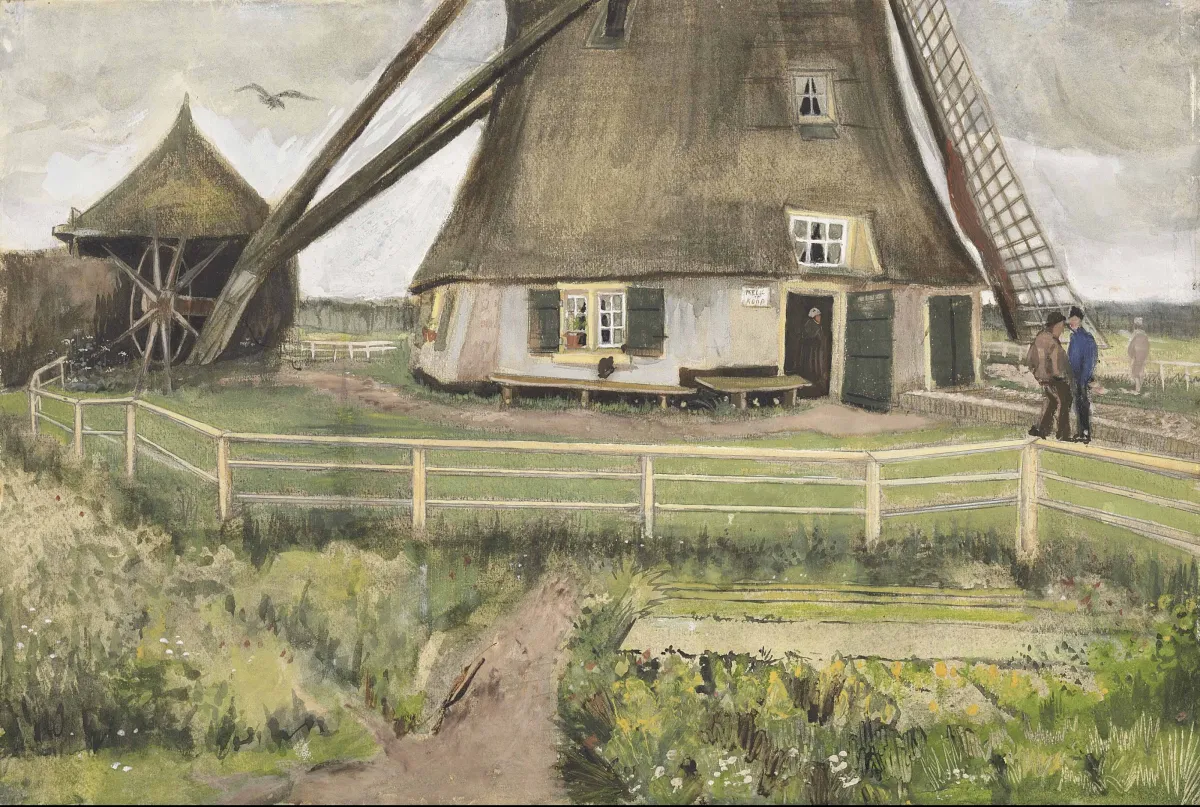
Vincent Van Gogh’s technique in "The 'Laakmolen' near The Hague" demonstrates his exceptional ability to convey emotion through oil on canvas. The textured brushwork and vibrant color palette are hallmarks of Post-Impressionism, making this piece a study in artistic mastery. Van Gogh’s approach to landscape painting influences countless modern artists. Those interested in similar works should explore "Drawbridge in Nieuw-Amsterdam" and "Vase With Twelve Sunflowers II" for more inspiration.
"The 'Laakmolen' near The Hague" is more than a fine art painting for sale—it is a window into Van Gogh’s world. The scene is rich with symbolism, reflecting the artist’s fascination with rural life and the beauty of everyday surroundings. As a key work in the Post-Impressionism movement, it invites viewers to interpret its subtle narratives. Fans of Van Gogh will also enjoy "Boats on the Beach of Saintes-Maries" and "The Potato Eaters" for their storytelling depth.
Owning "The 'Laakmolen' near The Hague" by Vincent Van Gogh means possessing a piece of art history. This oil on canvas is highly sought after by collectors who value the legacy of the Post-Impressionism movement. Its unique composition and emotional resonance make it a prized addition to any collection. Complement your art collection with related products like "Vase With Twelve Sunflowers II" and "Olive Trees With Yellow Sky And Sun" for a truly distinguished gallery.
When Art Meets History
"The 'Laakmolen' near The Hague" by Vincent Van Gogh is an exquisite hand-painted oil painting that captures a moment in Dutch history. Created during the artist’s early period, this work is a remarkable example of the Post-Impressionism movement. Set against the backdrop of The Hague, the painting connects with other notable works such as "Morning Mist on the Orwell" and "A Sunday Afternoon on the Island of La Grande Jatte," illustrating how art preserves the essence of a time and place.
Techniques That Speak
Van Gogh's masterful use of oil on canvas in "The 'Laakmolen' near The Hague" highlights the distinctive brushwork and vibrant palette characteristic of Post-Impressionism. Through dynamic strokes and subtle color transitions, Van Gogh brings the scene to life, much like in his contemporaries’ works such as "Nave Nave Mahana" and "One Of The Family." This oil on canvas technique allows for expressive textures, making the painting stand out among fine art masterpieces of its era.
Emotions on Display
The emotional resonance of "The 'Laakmolen' near The Hague" is palpable, with Van Gogh infusing the landscape with a sense of tranquility and longing. This fine art painting for sale evokes a contemplative mood similar to that found in "Christ Church Ferry" and "Morning Mist on the Orwell." The gentle interplay of light and shadow in this Post-Impressionist piece invites viewers to connect deeply with the artist’s inner world and the serene Dutch countryside.
Coveted by Collectors
Vincent Van Gogh’s "The 'Laakmolen' near The Hague" remains highly sought after by collectors, not only for its historical significance but also for its masterful execution within the Post-Impressionism movement. As with other hand-painted oil paintings like "A Sunday Afternoon on the Island of La Grande Jatte," this work’s rarity and artistry make it a prized addition to any collection. Its enduring appeal ensures it remains one of the most admired fine art painting for sale today.
Related Post-Impressionism Hand-Painted Oil Paintings by Other Artists
Other Famous Post-Impressionism Artists:
Frequently Asked Questions About The 'Laakmolen' near The Hague
What is the historical significance of 'The Laakmolen' near The Hague?
'The Laakmolen' is significant as it reflects Vincent Van Gogh's fascination with rural landscapes and his ability to capture the essence of Dutch culture during the late 19th century. Painted in 1882, it showcases his early exploration of color and form, setting the stage for his later masterpieces.
What artistic techniques did Van Gogh employ in this painting?
In 'The Laakmolen,' Van Gogh utilized bold brushstrokes and a vibrant color palette to convey movement and emotion. His technique of impasto, where paint is laid on the canvas thickly, adds texture and depth, enhancing the overall visual impact of the scene.
What does the Laakmolen symbolize in Van Gogh's work?
The Laakmolen, or windmill, symbolizes the connection between nature and human industry. It represents the harmony of rural life and the enduring spirit of the Dutch landscape, reflecting Van Gogh's admiration for the simplicity and beauty of everyday life.
How does this painting reflect Van Gogh's artistic evolution?
This painting marks a pivotal point in Van Gogh's artistic journey, showcasing his transition from traditional techniques to a more expressive style. The use of color and form in 'The Laakmolen' foreshadows his later works, where he would further develop his unique approach to capturing emotion through landscape.
What influences can be seen in 'The Laakmolen' from other artists?
Van Gogh was influenced by the Impressionists, particularly in his use of light and color. The emphasis on capturing the momentary effects of light on the landscape can be seen as a nod to the techniques of artists like Claude Monet, while still maintaining his distinctive style.
What elements of composition are notable in this painting?
The composition of 'The Laakmolen' is characterized by a balanced arrangement of elements, with the windmill positioned prominently against the sky. The use of diagonal lines leads the viewer's eye through the landscape, creating a sense of depth and inviting exploration of the scene.
How does the color palette contribute to the painting's mood?
Van Gogh's color palette in 'The Laakmolen' is dominated by earthy tones and vibrant blues, which evoke a sense of tranquility and connection to nature. The contrasting colors enhance the emotional resonance of the scene, reflecting both the beauty and the simplicity of rural life.
What role does light play in 'The Laakmolen'?
Light is a crucial element in 'The Laakmolen,' as it not only illuminates the landscape but also adds a dynamic quality to the painting. Van Gogh's treatment of light creates a sense of time and atmosphere, capturing the fleeting moments of a day in the countryside.
In what ways does this painting connect to Van Gogh's personal experiences?
'The Laakmolen' reflects Van Gogh's personal experiences during his time in the Netherlands, where he sought solace in the rural environment. The painting embodies his longing for connection to nature and his desire to express the emotional weight of his surroundings.
How has 'The Laakmolen' been received by critics and art historians?
Critics and art historians have praised 'The Laakmolen' for its innovative use of color and brushwork, recognizing it as an important work in Van Gogh's oeuvre. It is often discussed in the context of his early development as an artist and his ability to convey deep emotional narratives through landscape painting.






















_GFM_Painting_(1).webp)


 100% Hand-Painted: Finished in 3-6 Weeks

.png)
















_(1).webp)