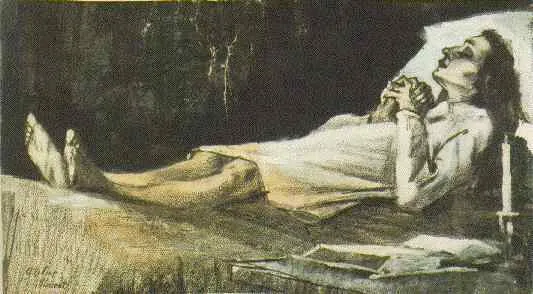
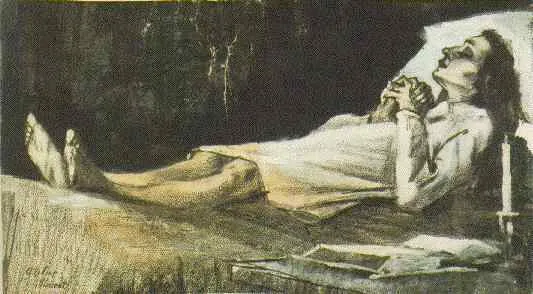
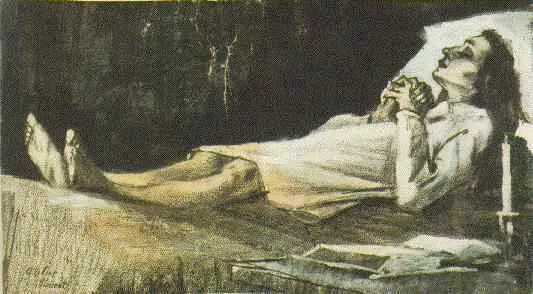
Van Gogh's "Woman on Her Deathbed" stands out for its expressive brushwork and use of color, hallmarks of oil on canvas techniques of the Post-Impressionism era. The artist’s mastery is evident in every stroke, conveying vulnerability and raw emotion. Those interested in the unique style of Van Gogh often explore related products like "Old Woman Seen from Behind" or "The Red Vineyard," both of which showcase his innovative approach to oil on canvas.
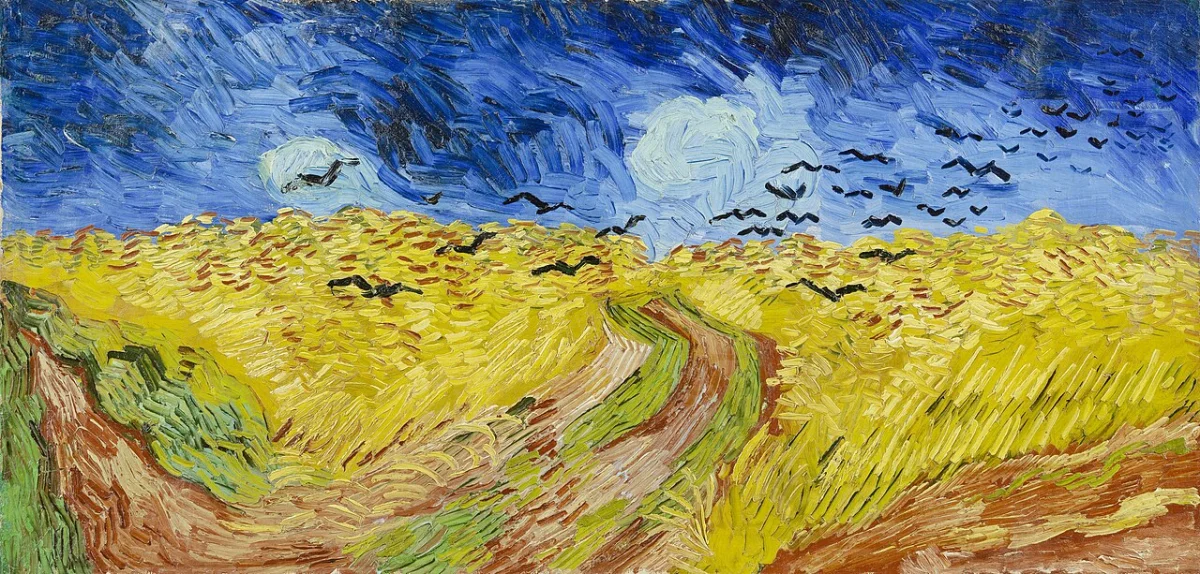
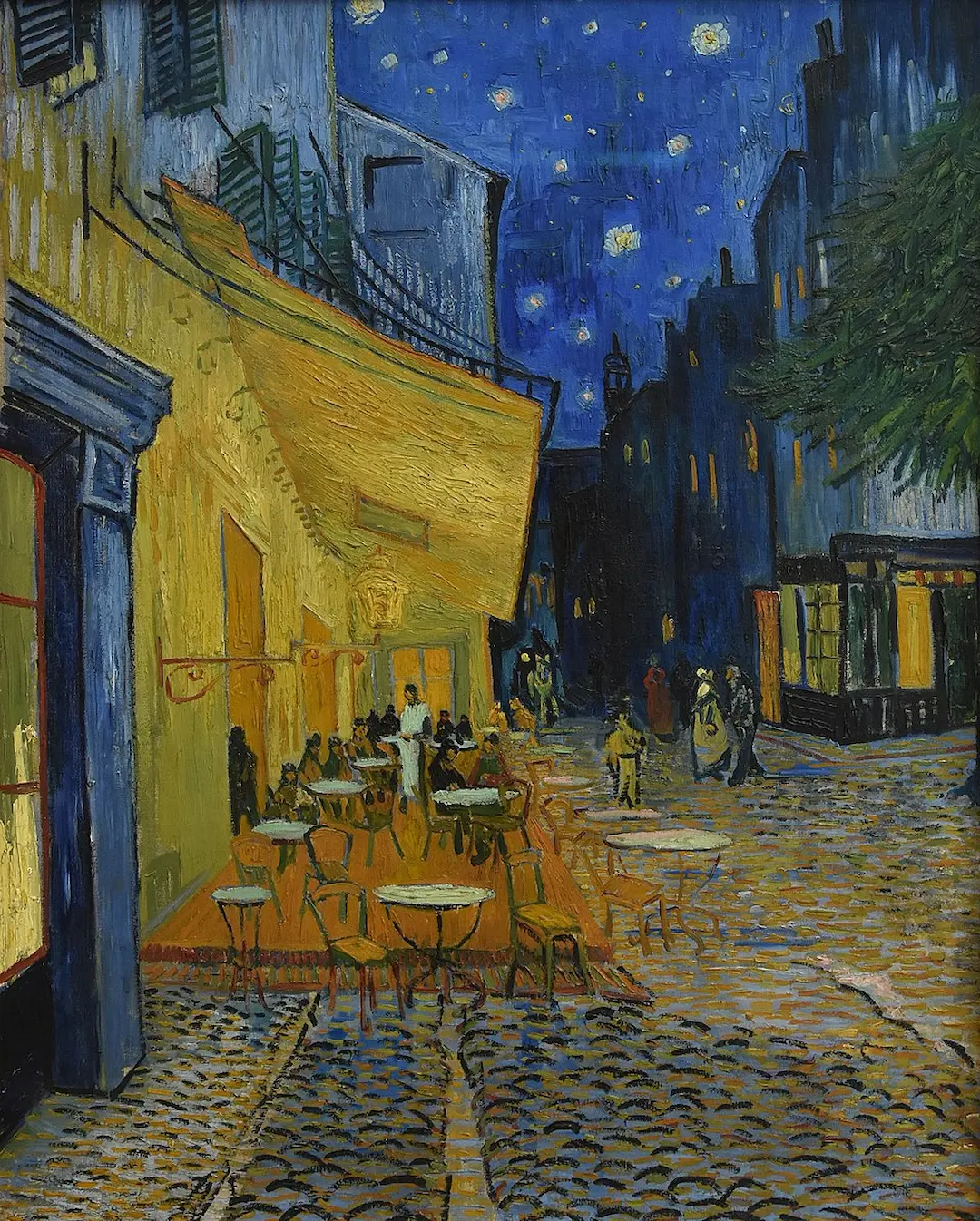
This hand-painted oil painting delves into themes of mortality and compassion, with Van Gogh using symbolic elements to evoke empathy from the viewer. "Woman on Her Deathbed" shares a narrative depth with works like "Wheat Field With Crows" and "Cafe Terrace on the Place du Forum." The painting’s emotional resonance makes it a sought-after fine art painting for sale, appealing to those who appreciate stories told through art.
Owning "Woman on Her Deathbed" by Vincent Van Gogh is a dream for many art collectors, especially those passionate about the Post-Impressionism movement. This oil on canvas masterpiece is often mentioned alongside other significant works such as "Olive Trees With Yellow Sky And Sun." Collectors searching for a fine art painting for sale value the historical importance and emotional power present in Van Gogh’s original creations.
When Art Meets History
"Woman on Her Deathbed" by Vincent Van Gogh stands as a poignant example of the Post-Impressionism movement, capturing a moment rich in both personal and historical significance. This hand-painted oil painting reflects Van Gogh's affinity for emotional depth and realism, much like his contemporaries in the movement. Related works such as "Christ Church Ferry" and "The Night Café in Arles" further demonstrate the artist's evolving style and the era's influence on his unique approach to storytelling through art.
Techniques That Speak
Van Gogh’s mastery is evident in the expressive brushwork and vivid palette of "Woman on Her Deathbed," a striking oil on canvas. His technique—layering thick, swirling strokes—evokes intense emotion and movement, reminiscent of other Post-Impressionist masterpieces like "The Green Christ" and "Two Tahitian Women." The interplay of light and shadow on the canvas underscores Van Gogh’s innovative approach, making this oil on canvas a testament to the artist’s technical brilliance and his dedication to capturing the human spirit.
Emotions on Display
"Woman on Her Deathbed" powerfully conveys sorrow and compassion, using color and composition to evoke empathy in viewers. Van Gogh’s fine art painting for sale draws parallels to the emotionally charged scenes in "Vase of Flowers" and "The Night Café in Arles." Through the subject’s delicate features and the somber atmosphere, Van Gogh invites the audience to reflect on the fragility of life, a recurring theme in both his own work and the broader Post-Impressionism movement.
Coveted by Collectors
As with many of Van Gogh’s masterpieces, "Woman on Her Deathbed" is highly sought after by collectors and enthusiasts of hand-painted oil paintings. The painting’s historical significance and connection to related works like "Two Tahitian Women" and "Christ Church Ferry" enhance its desirability. Its status within the Post-Impressionism movement ensures that this fine art painting for sale remains a treasured piece, admired for both its artistic merit and its emotional resonance.
Related Post-Impressionism Hand-Painted Oil Paintings by Other Artists
Other Famous Post-Impressionism Artists:
Frequently Asked Questions About Woman on Her Deathbed
What is the historical context of "Woman on Her Deathbed"?
"Woman on Her Deathbed" was painted in July 1890, during Vincent Van Gogh's final months in Auvers-sur-Oise, France. This period was marked by intense emotional turmoil and declining mental health, which significantly influenced his artistic output.
Who is the subject of the painting?
The painting depicts a woman lying on her deathbed, believed to be a representation of Van Gogh's deep empathy for suffering and mortality. While the identity of the specific woman is not confirmed, she symbolizes the universal experience of death.
What artistic techniques did Van Gogh employ in this painting?
Van Gogh utilized bold brushstrokes and a vibrant color palette to convey emotion and depth. The use of impasto technique adds texture, allowing the viewer to feel the weight of the subject's condition and the gravity of the moment.
How does "Woman on Her Deathbed" reflect Van Gogh's mental state?
The painting is imbued with a sense of sorrow and resignation, reflecting Van Gogh's own struggles with mental illness. The somber tones and the depiction of a vulnerable figure resonate with his feelings of despair and isolation during his final days.
What symbolism can be found in the painting?
The figure on the deathbed symbolizes the fragility of life and the inevitability of death. The stark contrast between the vibrant colors of the background and the subdued tones of the figure emphasizes the tension between life and mortality.
In what way does this painting connect to Van Gogh's other works?
"Woman on Her Deathbed" shares thematic elements with other works by Van Gogh that explore human suffering and emotional depth. It complements his series of portraits and still lifes that reflect his fascination with the human condition and the transient nature of life.
What was the public's reaction to this painting during Van Gogh's lifetime?
During Van Gogh's lifetime, "Woman on Her Deathbed" was not widely recognized or appreciated. His work often faced criticism, and it was only posthumously that his paintings gained the acclaim they deserved, highlighting the tragic irony of his artistic legacy.
What influence did "Woman on Her Deathbed" have on later artists?
The emotional intensity and raw honesty of "Woman on Her Deathbed" have influenced numerous artists and movements, particularly Expressionism. Its exploration of human vulnerability paved the way for future artists to address themes of mortality and suffering in their work.
Where is "Woman on Her Deathbed" currently housed?
The painting is part of the collection at the Van Gogh Museum in Amsterdam, which is dedicated to the works and life of Vincent Van Gogh, allowing visitors to explore his artistic journey and legacy.
What can visitors learn from "Woman on Her Deathbed"?
Visitors can gain insights into Van Gogh's emotional landscape and the profound themes of life and death that permeate his work. The painting serves as a poignant reminder of the fragility of existence and the power of art to express complex human experiences.






















_GFM_Painting_(1).webp)


 100% Hand-Painted: Finished in 3-6 Weeks

.png)
















_(1).webp)