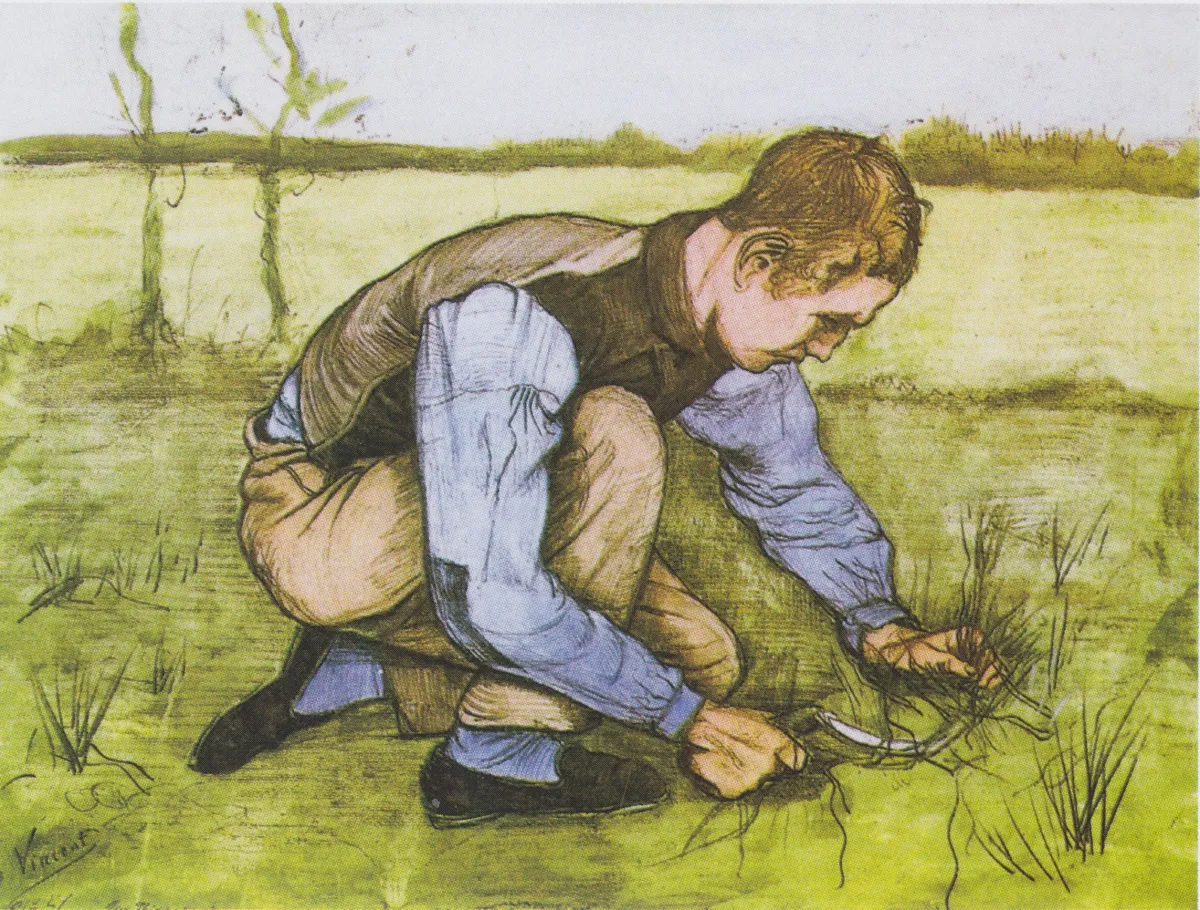
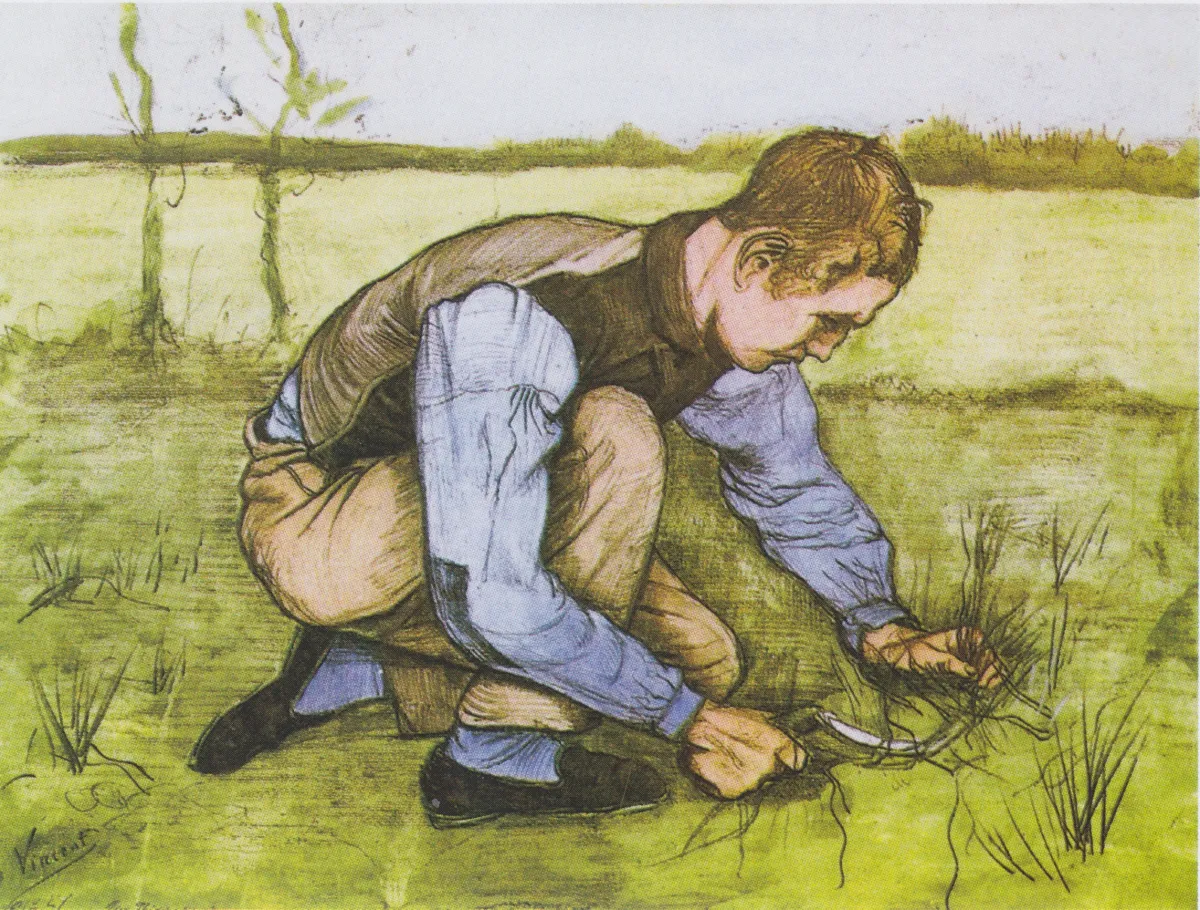
"Boy Cutting Grass with a Sickle" is a remarkable hand-painted oil painting by the legendary Vincent Van Gogh, an icon of the Post-Impressionism movement. This evocative work captures Van Gogh’s fascination with rural life and labor. As with many of his pieces, including "The Potato Eaters" and "Peach Trees in Blossom," this painting reflects his deep empathy for everyday people. The enduring legacy of Van Gogh’s art continues to inspire collectors and art enthusiasts worldwide.
Vincent Van Gogh’s "Boy Cutting Grass with a Sickle" exemplifies his mastery of oil on canvas, a technique that allowed him to convey intense emotion and movement. The textured brushwork and vibrant color palette, characteristic of Post-Impressionism, are evident in every stroke. This painting shares a kinship with works like "Peatery in Drenthe" and "Drawbridge in Nieuw-Amsterdam," showcasing Van Gogh’s unique approach to light and composition in rural scenes.
Every fine art painting for sale by Van Gogh tells a story, and "Boy Cutting Grass with a Sickle" is no exception. The young laborer, depicted with humility and strength, symbolizes resilience and the nobility of work. This narrative is echoed in related Van Gogh masterpieces such as "The Potato Eaters" and "The 'Laakmolen' near The Hague." Through symbolism and storytelling, Van Gogh’s Post-Impressionist vision invites viewers to connect with the human experience.
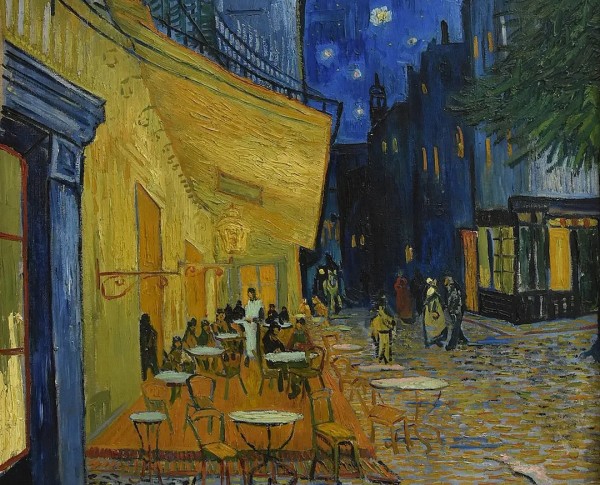
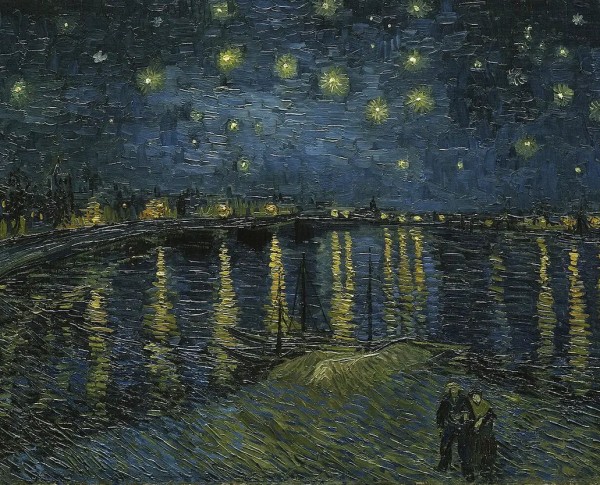
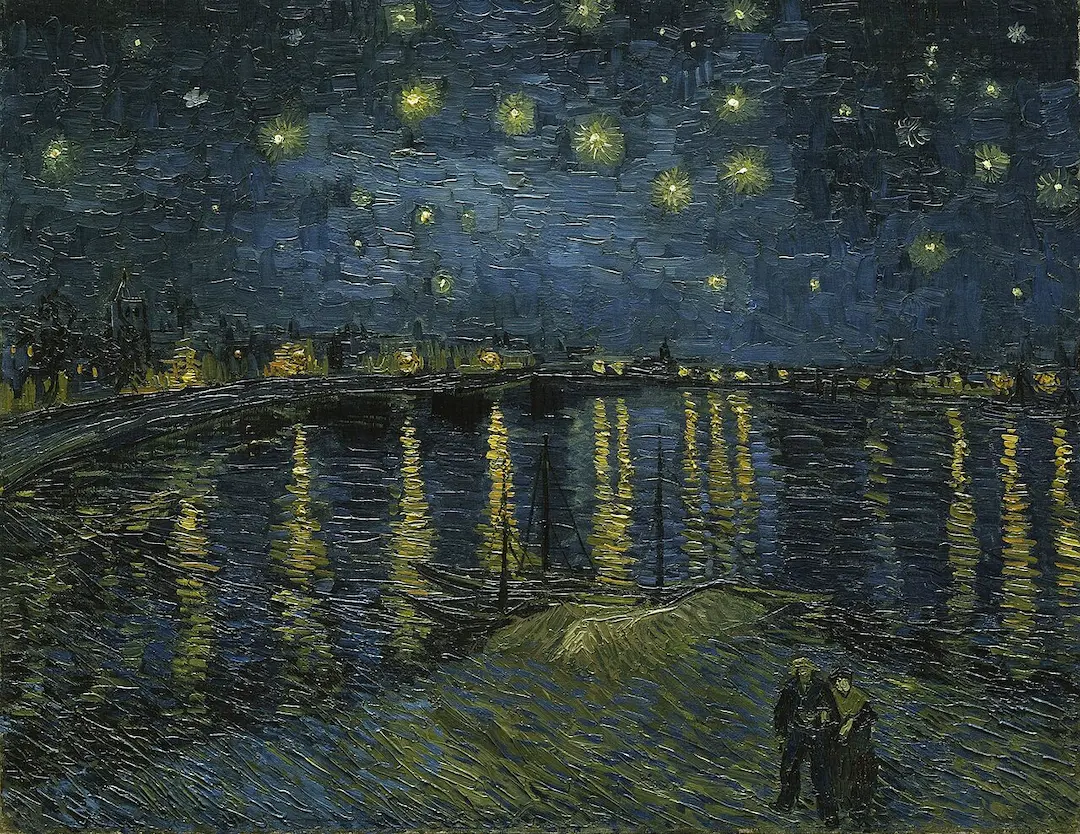
For collectors seeking a hand-painted oil painting that embodies the spirit of Post-Impressionism, "Boy Cutting Grass with a Sickle" by Vincent Van Gogh is a coveted choice. Its historical significance and artistic mastery make it a standout among fine art painting for sale. Collectors often pair it with iconic works like "Starry Night Over The Rhone" to enhance their collections with the timeless beauty and emotion that define Van Gogh’s celebrated oeuvre.
When Art Meets History
"Boy Cutting Grass with a Sickle" by Vincent Van Gogh stands as a testament to the dynamic era of Post-Impressionism. Painted in 1881, this hand-painted oil painting captures a fleeting moment of rural life. Van Gogh’s work, alongside masterpieces like "Self-portrait with hat" and "Fields with trees in Barbizon," reflects the changing landscapes of the late 19th century. The movement’s historical context enriches the depth found in each brushstroke and subject choice.
Techniques That Speak
Van Gogh’s "Boy Cutting Grass with a Sickle" showcases his signature style through expressive brushwork and vivid color palettes characteristic of oil on canvas. The painting’s texture and movement are reminiscent of other Post-Impressionist works, such as "A Sunday Afternoon on the Island of La Grande Jatte" and "The Models." Through his innovative techniques, Van Gogh transforms a simple rural scene into a vibrant narrative, highlighting the power and versatility of oil on canvas in fine art.
Emotions on Display
In "Boy Cutting Grass with a Sickle," Van Gogh channels deep emotion into the everyday, inviting viewers to sense the solitude and diligence of rural labor. This fine art painting for sale resonates with emotional intensity similar to "End of the pier, Honfleur." The expressive strokes and subtle color gradations evoke empathy and contemplation, hallmarks of the Post-Impressionism movement. Van Gogh’s ability to capture raw feeling elevates the ordinary to the extraordinary in his artistic legacy.
Coveted by Collectors
As a celebrated work within the Post-Impressionism movement, "Boy Cutting Grass with a Sickle" remains highly sought after by art enthusiasts and collectors alike. Its status as a hand-painted oil painting by Vincent Van Gogh, alongside related pieces like "Fields with trees in Barbizon," makes it a prized addition to any collection. The enduring popularity and rarity of such works ensure they remain cornerstones in the world of fine art painting for sale.
Related Post-Impressionism Hand-Painted Oil Paintings by Other Artists
Other Famous Post-Impressionism Artists:
Frequently Asked Questions About Boy Cutting Grass with a Sickle
What is the historical context of "Boy Cutting Grass with a Sickle"?
Created in 1881, "Boy Cutting Grass with a Sickle" reflects Van Gogh's early artistic development during his time in the Netherlands, where he sought to capture the essence of rural life and labor.
What artistic techniques did Van Gogh employ in this painting?
Van Gogh utilized bold brushstrokes and a vibrant color palette to convey emotion and movement, emphasizing the physicality of the boy's labor and the lushness of the grass.
What themes are explored in "Boy Cutting Grass with a Sickle"?
The painting explores themes of childhood, labor, and the connection between humans and nature, highlighting the dignity of work and the simplicity of rural life.
How does this painting reflect Van Gogh's view of rural life?
Van Gogh's portrayal of the boy cutting grass symbolizes the beauty and importance of agrarian life, showcasing the harmony between the individual and the natural world.
What symbolism is present in the sickle depicted in the painting?
The sickle serves as a symbol of agricultural labor and the cyclical nature of life, representing both the toil involved in farming and the harvest that sustains communities.
In what ways does this painting differ from Van Gogh's later works?
Unlike his later works characterized by emotional intensity and swirling forms, "Boy Cutting Grass with a Sickle" displays a more subdued palette and a focus on realism, indicative of his early style.
What influence did Dutch art have on Van Gogh's creation of this piece?
Van Gogh was influenced by the Dutch Masters, particularly in his use of light and shadow, as well as his focus on everyday subjects, which can be seen in the grounded portrayal of the boy.
How does the composition of the painting contribute to its overall message?
The composition, with the boy centrally positioned against a backdrop of vibrant grass, emphasizes the importance of labor and the intimate relationship between the worker and the land.
What can we learn about Van Gogh's artistic philosophy from this work?
This painting reflects Van Gogh's belief in the beauty of everyday life and the significance of manual labor, showcasing his desire to elevate ordinary subjects to the level of fine art.
How has "Boy Cutting Grass with a Sickle" influenced modern interpretations of rural life in art?
The painting has inspired contemporary artists to explore themes of labor and nature, encouraging a deeper appreciation for the simplicity and beauty found in rural existence.






















_GFM_Painting_(1).webp)


 100% Hand-Painted: Finished in 3-6 Weeks

.png)
















_(1).webp)