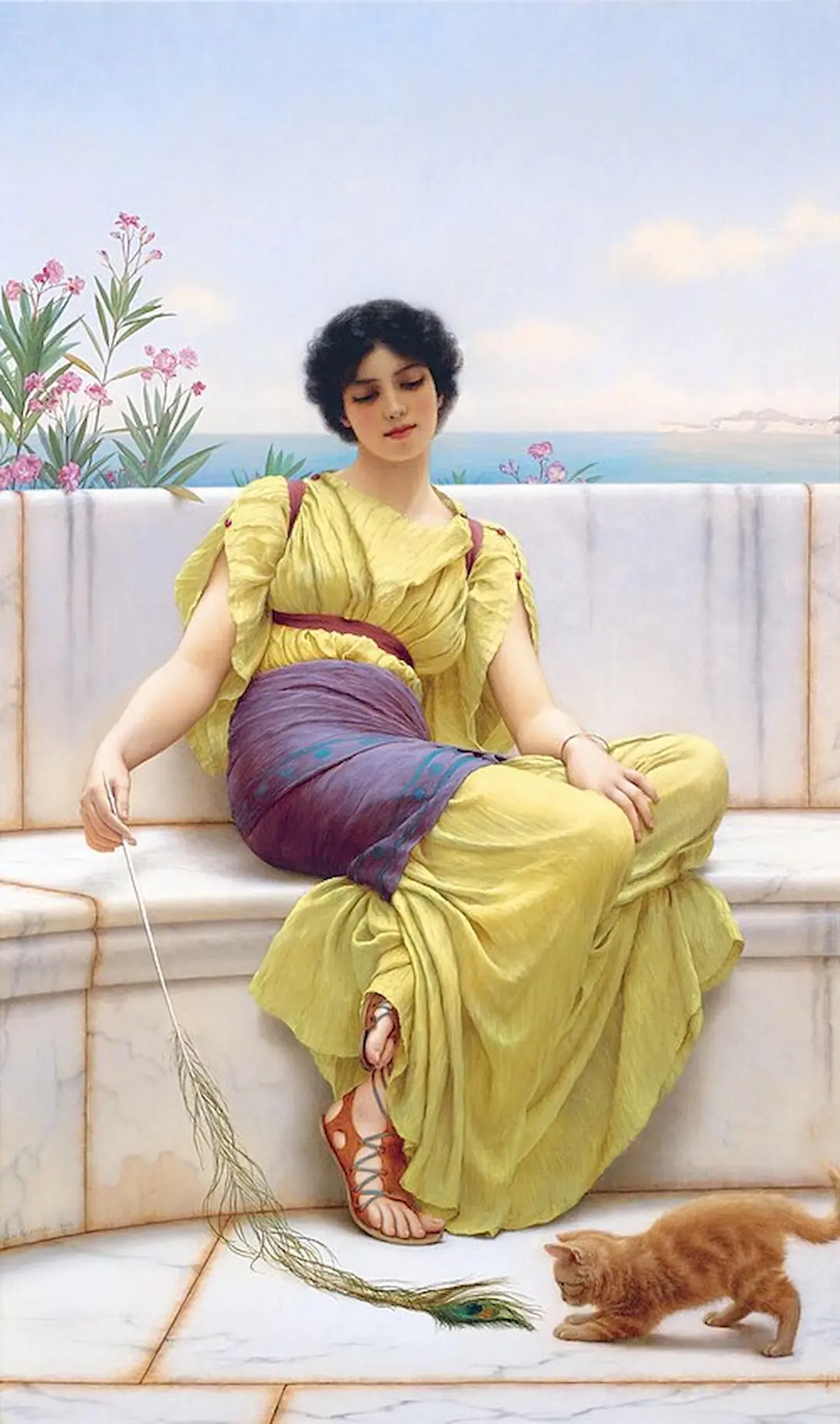
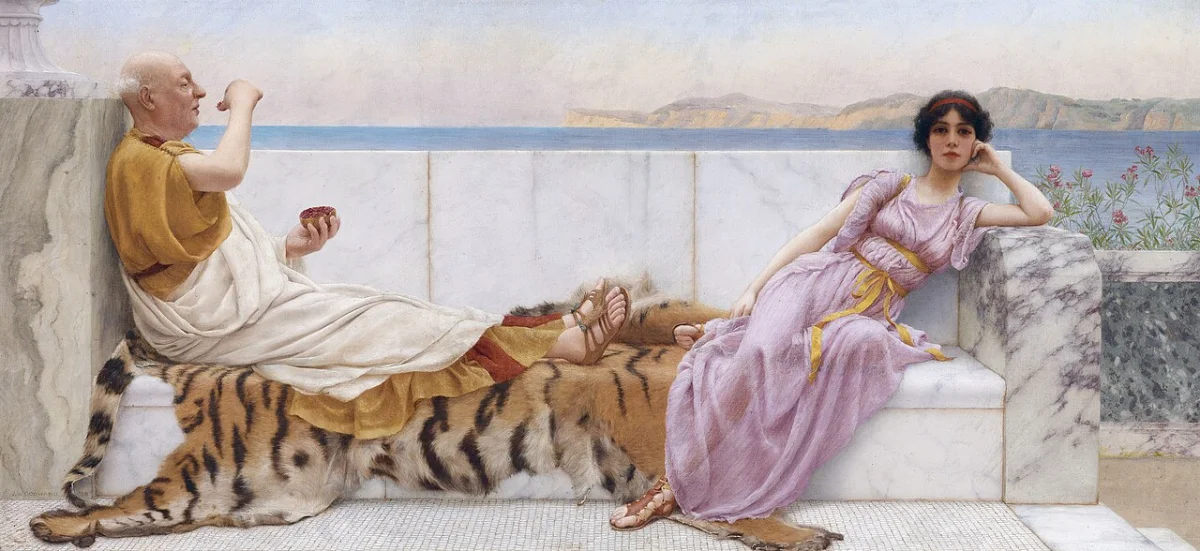
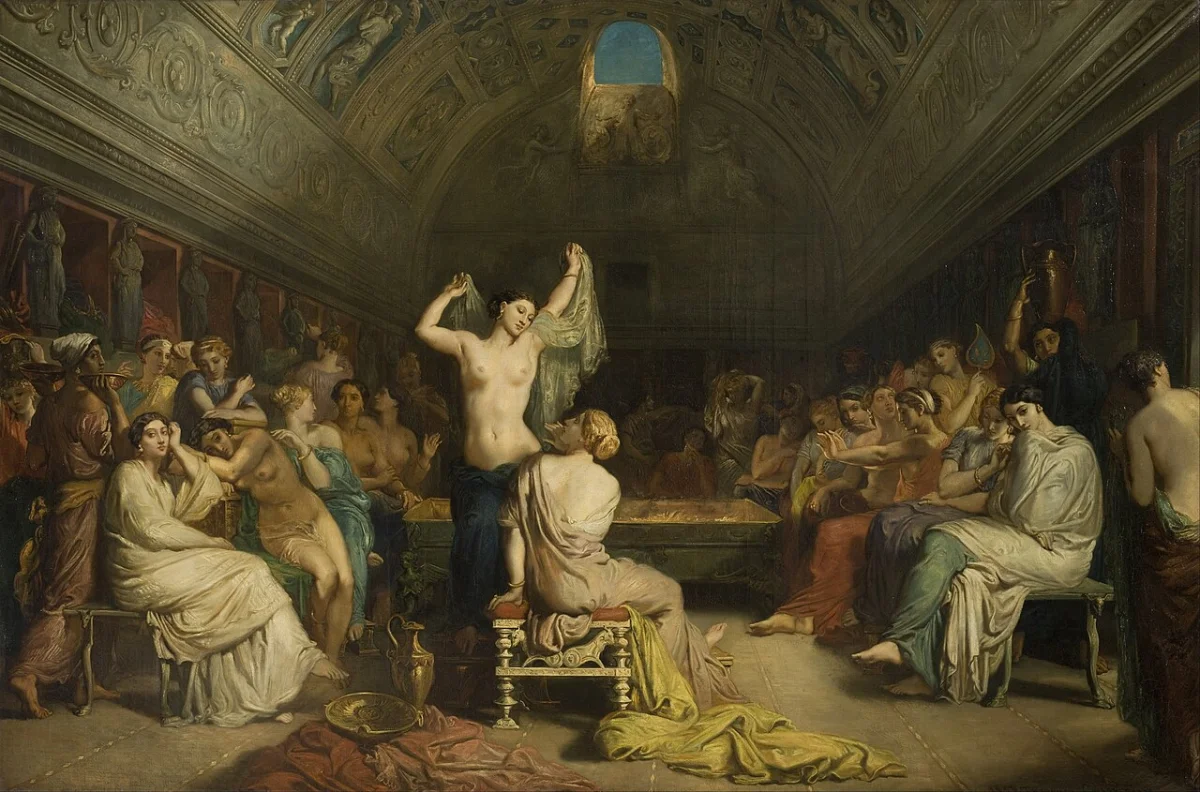
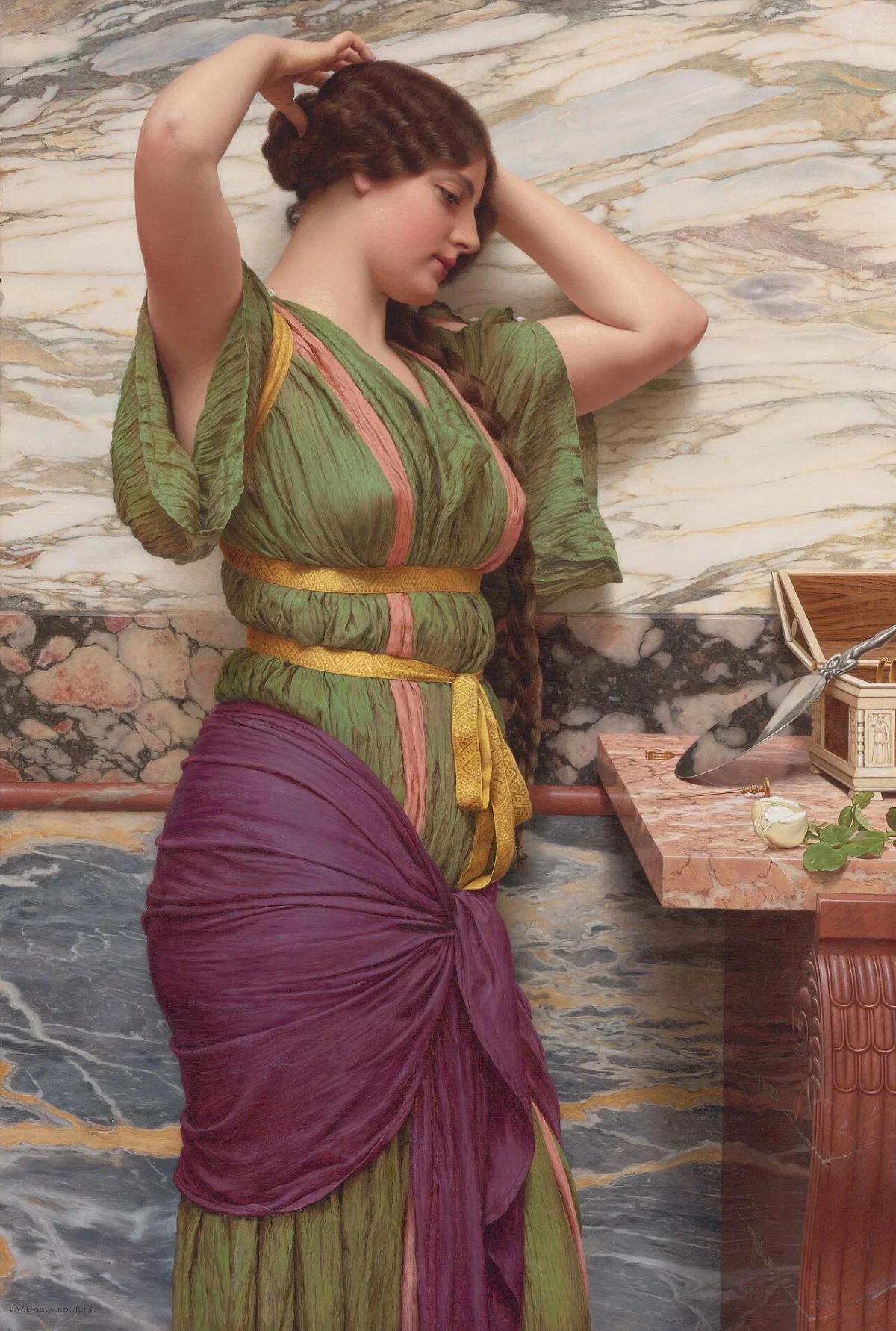
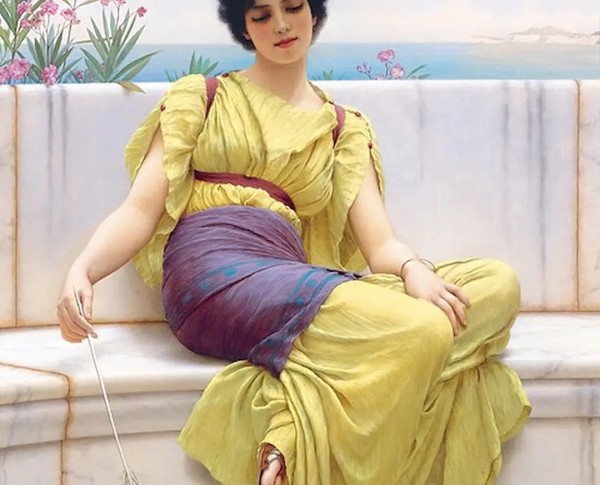
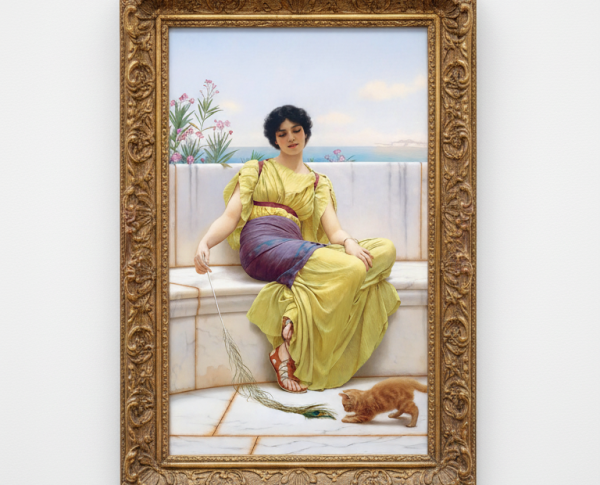
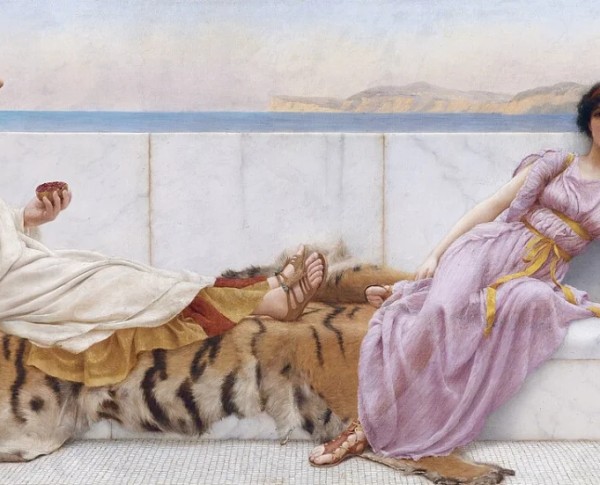
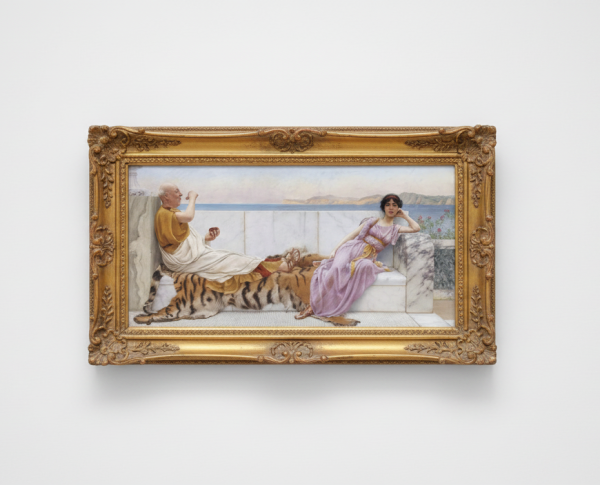
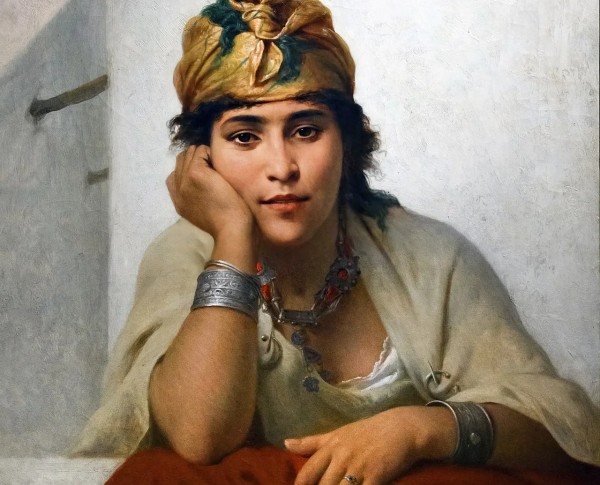
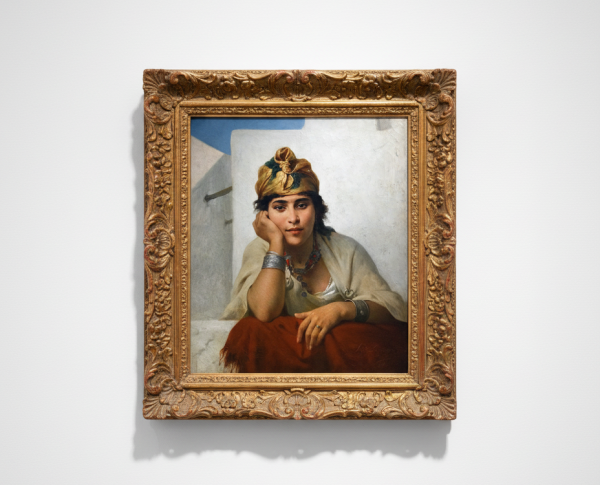
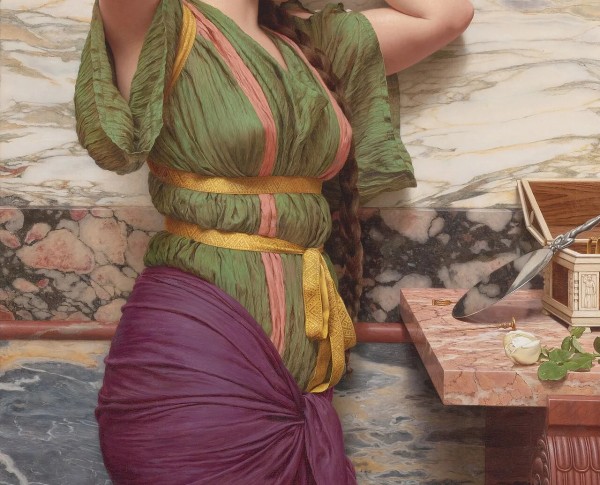
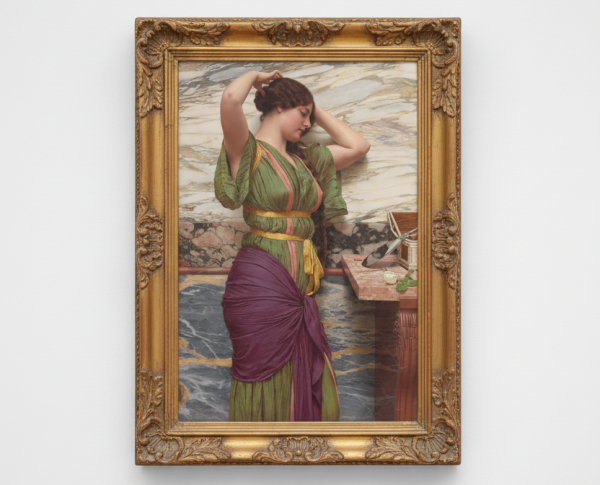
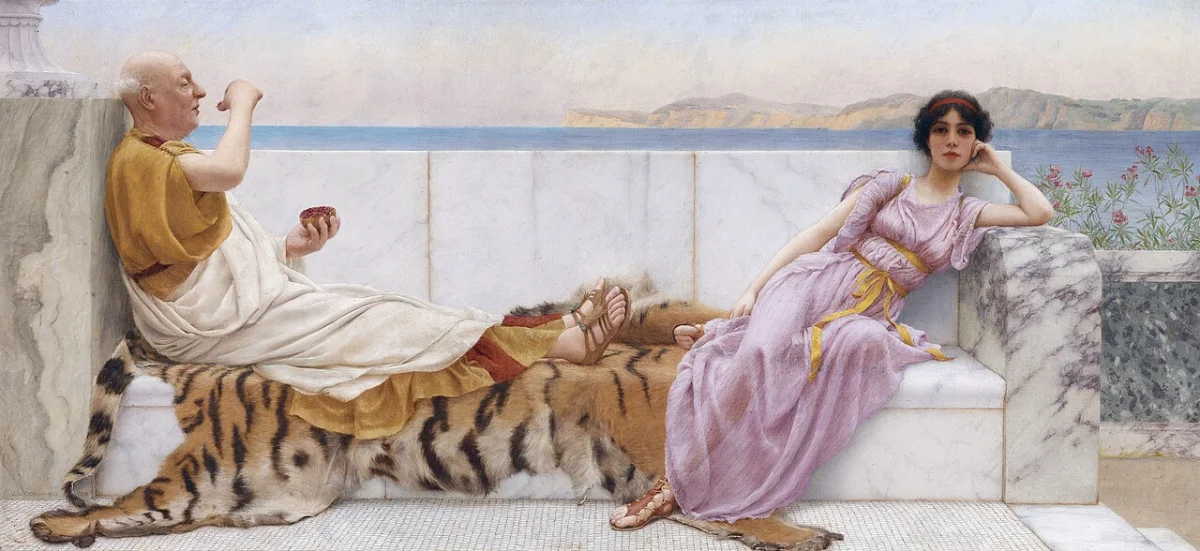
With "The Melody," Godward demonstrates unmatched technical skill in oil on canvas, utilizing delicate brushwork to evoke lifelike textures and radiant color. His attention to detail is reminiscent of his celebrated pieces such as "The Quiet Pet" and "In the Tepidarium." The Neoclassical Academic Realism movement is brilliantly reflected in every aspect, showcasing the artist’s dedication to classical themes and refined technique, making this oil on canvas a true visual delight for art connoisseurs.
"The Melody" by John William Godward is rich with symbolism, portraying serene beauty and contemplative mood that echo the Neoclassical Academic Realism movement. The subject’s tranquil pose and musical motif invite viewers to imagine stories of love, longing, or inspiration, much like the narrative depth found in "The Mirror" and "The Quiet Pet." This hand-painted oil painting is more than a visual feast—it’s a portal into a world of timeless stories and emotional resonance.
For those seeking a fine art painting for sale, "The Melody" offers a unique opportunity to own a piece by John William Godward, a master of Neoclassical Academic Realism. Its exquisite oil on canvas execution and thematic kinship with works like "In the Tepidarium" and "When the Heart is Young" make it a standout addition to any art collection. This hand-painted oil painting is celebrated for its elegance and collectible value among discerning art lovers.
When Art Meets History
"The Melody" by John William Godward stands as a testament to the Neoclassical Academic Realism movement, capturing the timeless elegance of antiquity. This hand-painted oil painting beautifully connects viewers to the era’s fascination with classical themes and refined technique. Godward’s work aligns with masterpieces like "The Death of Socrates" and "Consecration of the Emperor Napoleon I and Coronation of the Empress Josephine 1805-07," enriching the tradition of historical storytelling through art.
Techniques That Speak
John William Godward’s "The Melody" showcases the meticulous craftsmanship found in oil on canvas works of the Neoclassical Academic Realism movement. His delicate brushwork and attention to detail echo the mastery seen in "Portrait of Antoine-Laurent Lavoisier and his wife" and "Napoleon Crossing the Alps." Godward’s technique emphasizes smooth textures and harmonious color palettes, inviting viewers to appreciate the technical prowess and artistic vision behind each fine art painting for sale from this period.
Emotions on Display
In "The Melody," Godward skillfully captures the serene introspection of his subject, a hallmark of Neoclassical Academic Realism. The painting’s tranquil mood and graceful composition evoke a sense of calm, much like the atmosphere in "Calm on a Fiery Steed, Crossing the Alps 1801." Collectors and enthusiasts are drawn to the genuine emotion conveyed in this hand-painted oil painting, as it resonates deeply with those who value the expressive power of historical fine art.
Coveted by Collectors
As a prime example of Neoclassical Academic Realism, "The Melody" by John William Godward is highly sought after by art collectors worldwide. Its exquisite oil on canvas execution and classical inspiration make it a fine art painting for sale that stands alongside iconic works like "Bonaparte, Calm on a Fiery Steed" and "The Death of Socrates." Godward’s ability to blend beauty with historical depth ensures this masterpiece remains a coveted addition to any prestigious collection.
Related Neoclassical Academic Realism Hand-Painted Oil Paintings by Other Artists
Other Famous Neoclassical Academic Realism Artists:
Frequently Asked Questions About The Melody
What is the historical context of "The Melody"?
"The Melody," created by John William Godward in the early 20th century, reflects the Neoclassical revival that characterized much of Victorian art. This period emphasized classical themes and aesthetics, which Godward masterfully incorporated into his work.
What artistic techniques did John William Godward use in "The Melody"?
Godward employed a meticulous approach to detail, utilizing oil paints to create rich textures and vibrant colors. His use of light and shadow enhances the three-dimensional quality of the figures, drawing the viewer's eye to the central theme of the painting.
What themes are explored in "The Melody"?
The painting explores themes of beauty, harmony, and the idealization of femininity. It captures a serene moment of musical contemplation, suggesting a connection between art and emotion.
Who are the figures depicted in "The Melody"?
The figures in "The Melody" are often interpreted as representations of muses, embodying inspiration and creativity. Their poses and expressions convey a sense of tranquility and introspection, inviting the viewer to reflect on the nature of art.
What symbolism can be found in "The Melody"?
The musical instruments in the painting symbolize the harmony of art and life. The presence of flowers may represent beauty and transience, further emphasizing the fleeting nature of inspiration and creativity.
How does "The Melody" reflect Godward's artistic philosophy?
Godward believed in the pursuit of beauty as a primary goal of art. "The Melody" exemplifies this philosophy through its idealized figures and harmonious composition, showcasing his dedication to aesthetic perfection.
What influences can be seen in "The Melody"?
Godward was influenced by the works of classical artists such as Raphael and the Pre-Raphaelites. This influence is evident in the painting's emphasis on beauty, detail, and the serene portrayal of its subjects.
What is the significance of the color palette used in "The Melody"?
The color palette of "The Melody" features soft pastels and rich earth tones, creating a harmonious atmosphere. This choice enhances the emotional impact of the painting, evoking feelings of calm and serenity.
In what ways does "The Melody" reflect the ideals of the Edwardian era?
The painting reflects the Edwardian era's fascination with classical themes and the celebration of beauty and femininity. It captures the era's cultural values, emphasizing grace and elegance in its portrayal of women.
How has "The Melody" been received in the art community over time?























_GFM_Painting_(1).webp)


 100% Hand-Painted: Finished in 3-6 Weeks

.png)
















_(1).webp)