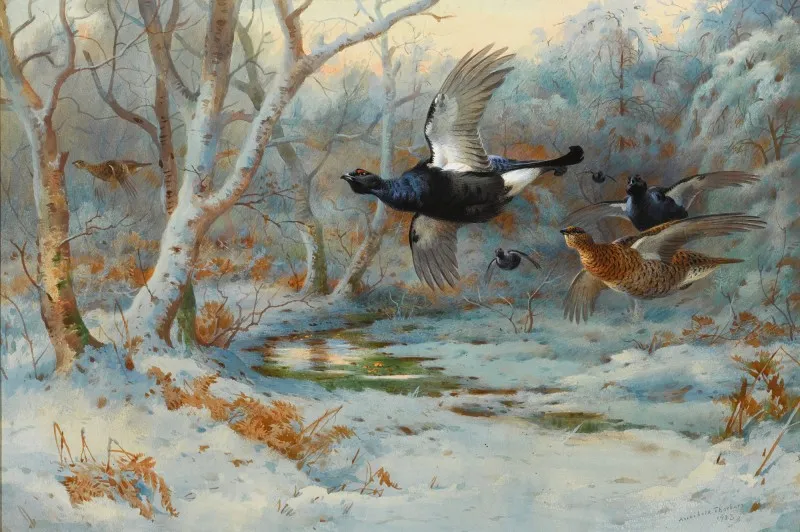
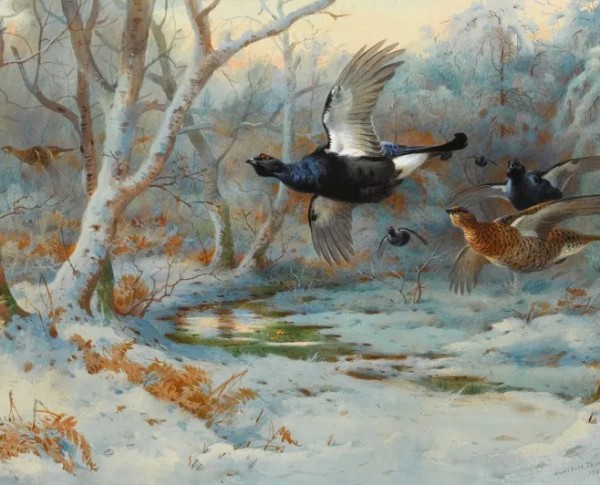
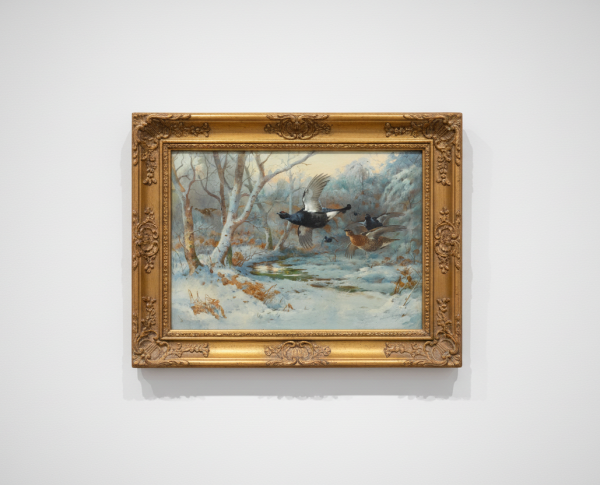
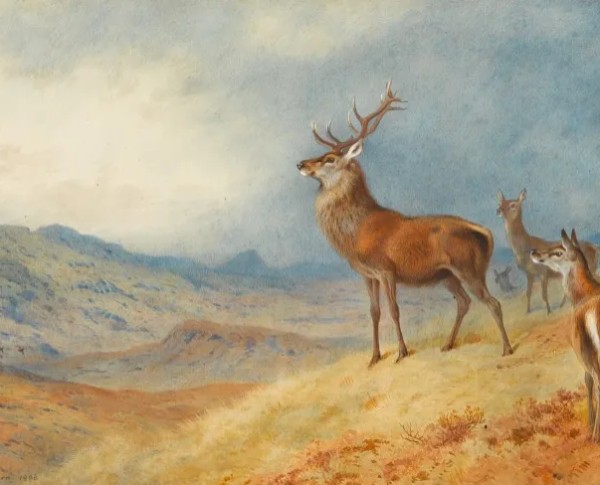
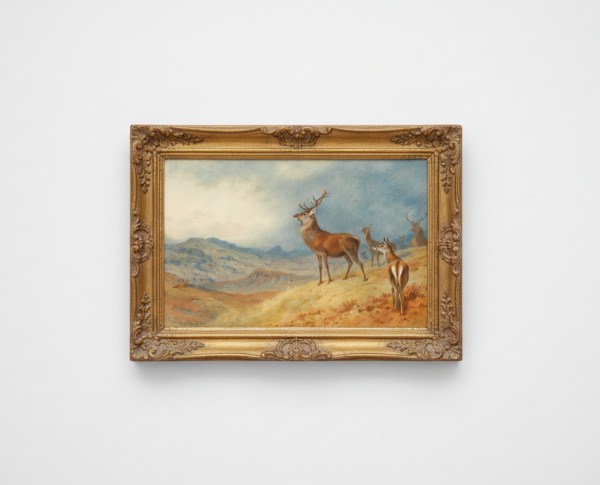
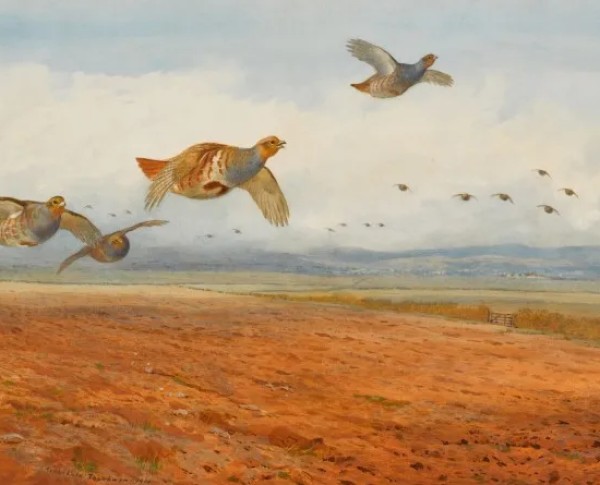
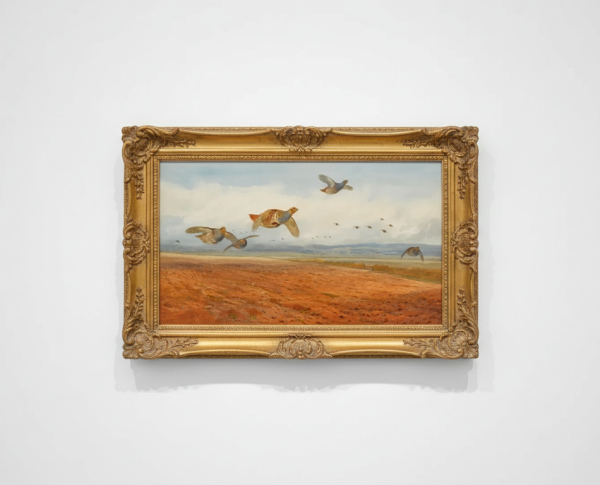
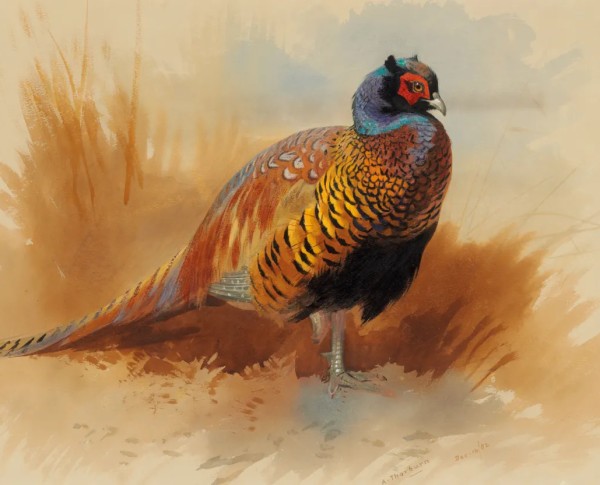
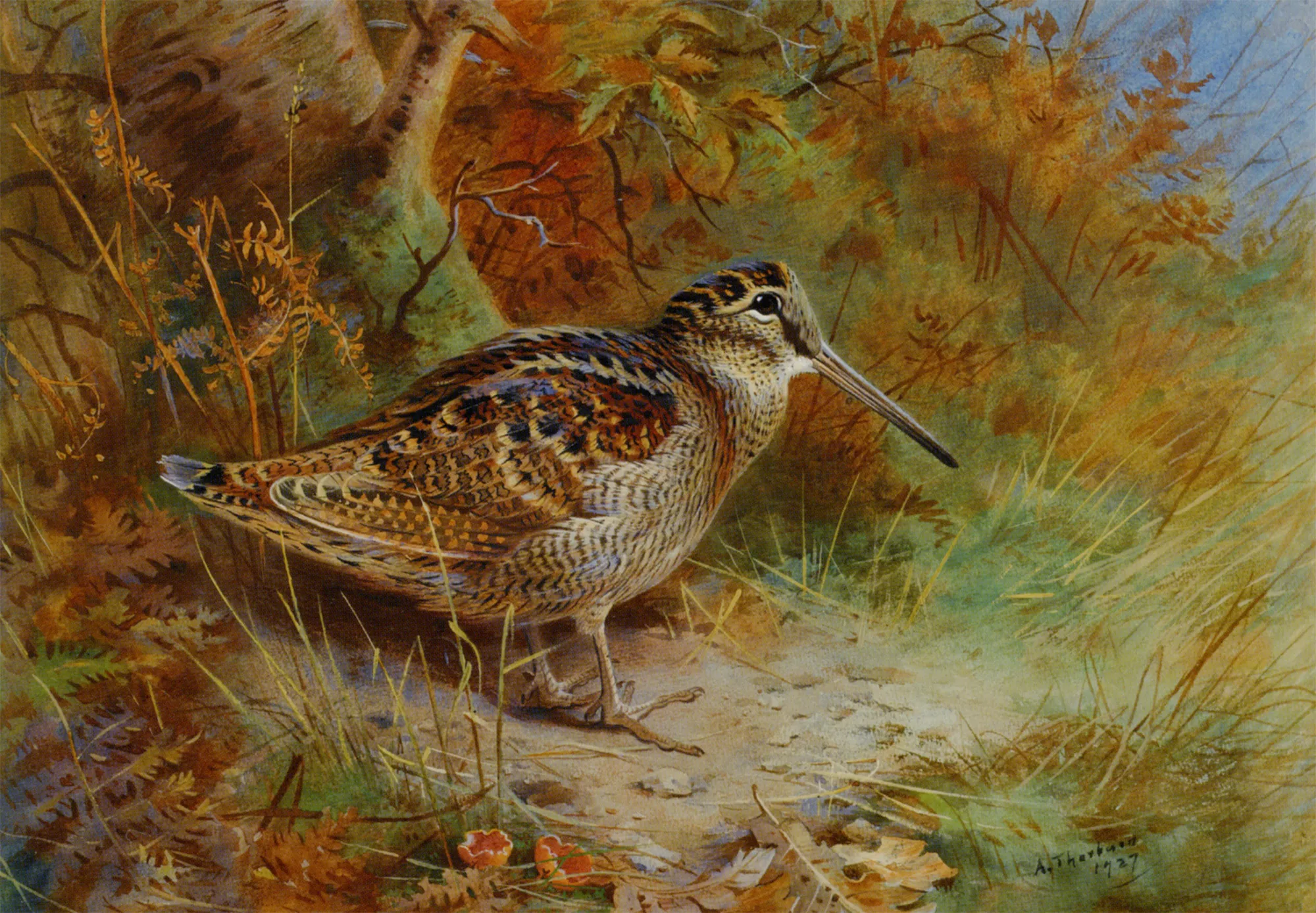
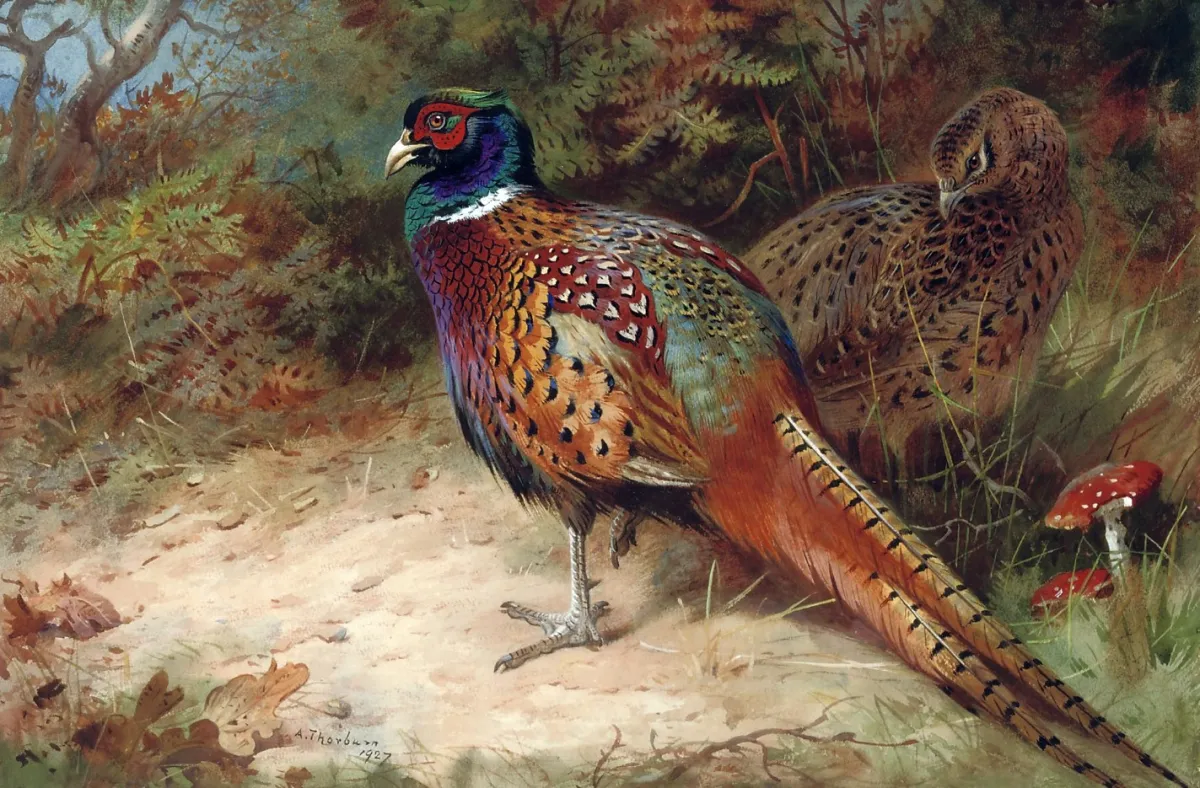
With "A Woodcock," Thorburn showcases his extraordinary talent in oil on canvas, illustrating the delicate textures of feathers and the subtle play of light in the undergrowth. Each stroke reveals his meticulous observation and deep appreciation for wildlife. This painting, along with related works like "Blackgame" and "Cock and hen pheasant in the undergrowth," demonstrates his ability to blend technical precision with the emotive qualities that define the Naturalism movement.
In "A Woodcock," Archibald Thorburn weaves stories of the wild, symbolizing the harmonious relationship between creatures and their habitats. The woodcock itself, rendered in this fine art painting for sale, represents adaptability and the quiet mysteries of the forest. Thorburn’s narrative approach is echoed in related paintings such as "Pair of Golden Eagles," where each animal is not just depicted, but celebrated for its role in the natural world, enriching the viewer’s imagination.
Owning "A Woodcock" by Archibald Thorburn is more than acquiring an oil on canvas; it is an investment in a piece of Naturalism history. Collectors value this hand-painted oil painting for its authenticity and the artist’s dedication to wildlife. This work, along with sought-after pieces like "Winter Woodcock" and "Great bustards," stands as a testament to Thorburn’s enduring influence and is a prized addition to any fine art painting for sale collection.
When Art Meets History
Archibald Thorburn’s "A Woodcock" stands as a testament to the Naturalism movement, capturing the delicate beauty of wildlife in its natural habitat. This hand-painted oil painting showcases Thorburn’s deep appreciation for nature, much like his other works such as "The artist's grandfather" and "The artist's father." Through meticulous detail, "A Woodcock" connects viewers to a historical era when artists sought to represent the world as faithfully as possible.
Techniques That Speak
In "A Woodcock," Thorburn employs masterful oil on canvas techniques to render the bird’s intricate plumage and the forest’s subtle hues. His brushwork, reminiscent of related pieces like "Portrait of Sarah Bernhardt" and "Portrait of the artist's mother," demonstrates a commitment to lifelike representation. The use of oil on canvas allows for rich textures and vibrant colors, making this painting a prime example of the technical brilliance found within the Naturalism movement.
Emotions on Display
Thorburn’s "A Woodcock" evokes a sense of tranquility and admiration for the quiet moments in nature. The serene setting and lifelike depiction draw viewers into a world of peaceful observation, a hallmark of fine art painting for sale from the Naturalism era. This emotional resonance connects "A Woodcock" to other contemplative works by Thorburn and his contemporaries, inviting art lovers to appreciate the subtle beauty in everyday wildlife scenes.
Coveted by Collectors
As a celebrated piece within the Naturalism movement, "A Woodcock" by Archibald Thorburn remains highly sought after among art enthusiasts. Collectors prize this hand-painted oil painting for its authenticity and historical significance, much like related masterpieces such as "Pas Mèche." The enduring appeal of Thorburn’s work ensures that "A Woodcock" continues to be a fine art painting for sale that captivates and inspires generations of admirers.
Related Naturalism Hand-Painted Oil Paintings by Other Artists
Other Famous Naturalism Artists:
Frequently Asked Questions About A Woodcock
Who is the artist of "A Woodcock"?
The painting "A Woodcock" was created by the renowned British artist Archibald Thorburn, known for his exceptional depictions of wildlife and nature.
What is the significance of the woodcock in this painting?
The woodcock is a symbol of the natural beauty and complexity of wildlife, representing the delicate balance of ecosystems that Thorburn sought to capture in his work.
What artistic techniques did Archibald Thorburn use in "A Woodcock"?
Thorburn employed detailed brushwork and a keen eye for color to create a lifelike representation of the woodcock, showcasing his mastery of naturalistic painting.
In what artistic period was "A Woodcock" created?
"A Woodcock" was created during the late 19th to early 20th century, a period characterized by a growing interest in natural history and wildlife art.
What themes are explored in "A Woodcock"?
The painting explores themes of nature, wildlife conservation, and the intricate relationship between humans and the natural world.
How does "A Woodcock" reflect Archibald Thorburn's artistic philosophy?
Thorburn's philosophy emphasized the importance of observing nature closely, and "A Woodcock" reflects his commitment to portraying wildlife with authenticity and respect.
What materials were likely used in the creation of "A Woodcock"?
Thorburn typically used oil paints on canvas, a medium that allowed him to achieve rich colors and intricate details in his wildlife studies.
What impact did "A Woodcock" have on wildlife art?
"A Woodcock" contributed to the elevation of wildlife art as a respected genre, influencing future artists to focus on the beauty and intricacies of animal life.
Where can I find more information about Archibald Thorburn's work?
Additional information about Archibald Thorburn's work can be found in art history books, museum catalogs, and dedicated exhibitions focusing on wildlife art.
What is the historical context of wildlife painting during Thorburn's time?
During Thorburn's era, there was a growing appreciation for nature and wildlife, spurred by advances in natural sciences and a burgeoning conservation movement, which influenced artists to depict animals in their natural habitats.























_GFM_Painting_(1).webp)


 100% Hand-Painted: Finished in 3-6 Weeks

.png)















_(1).webp)