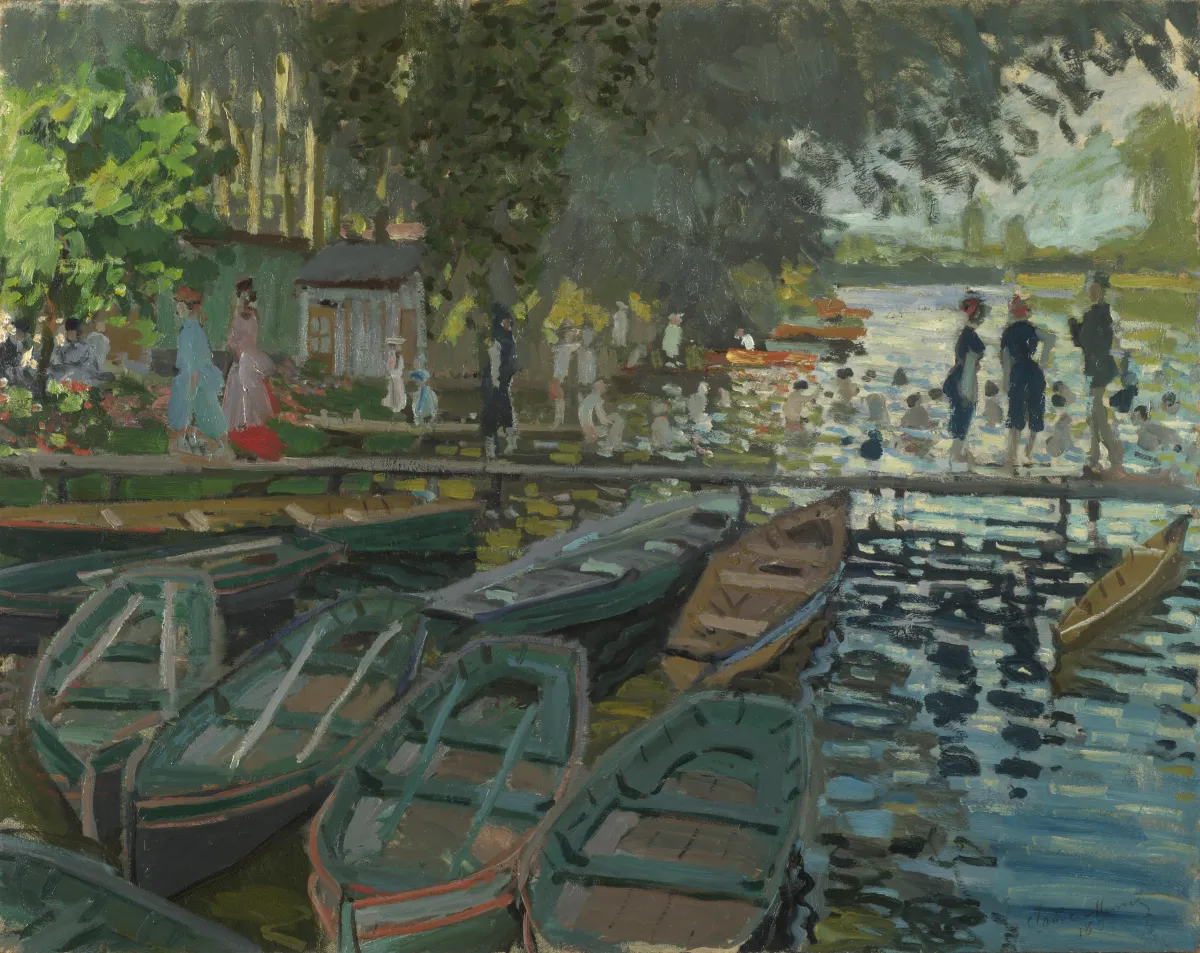
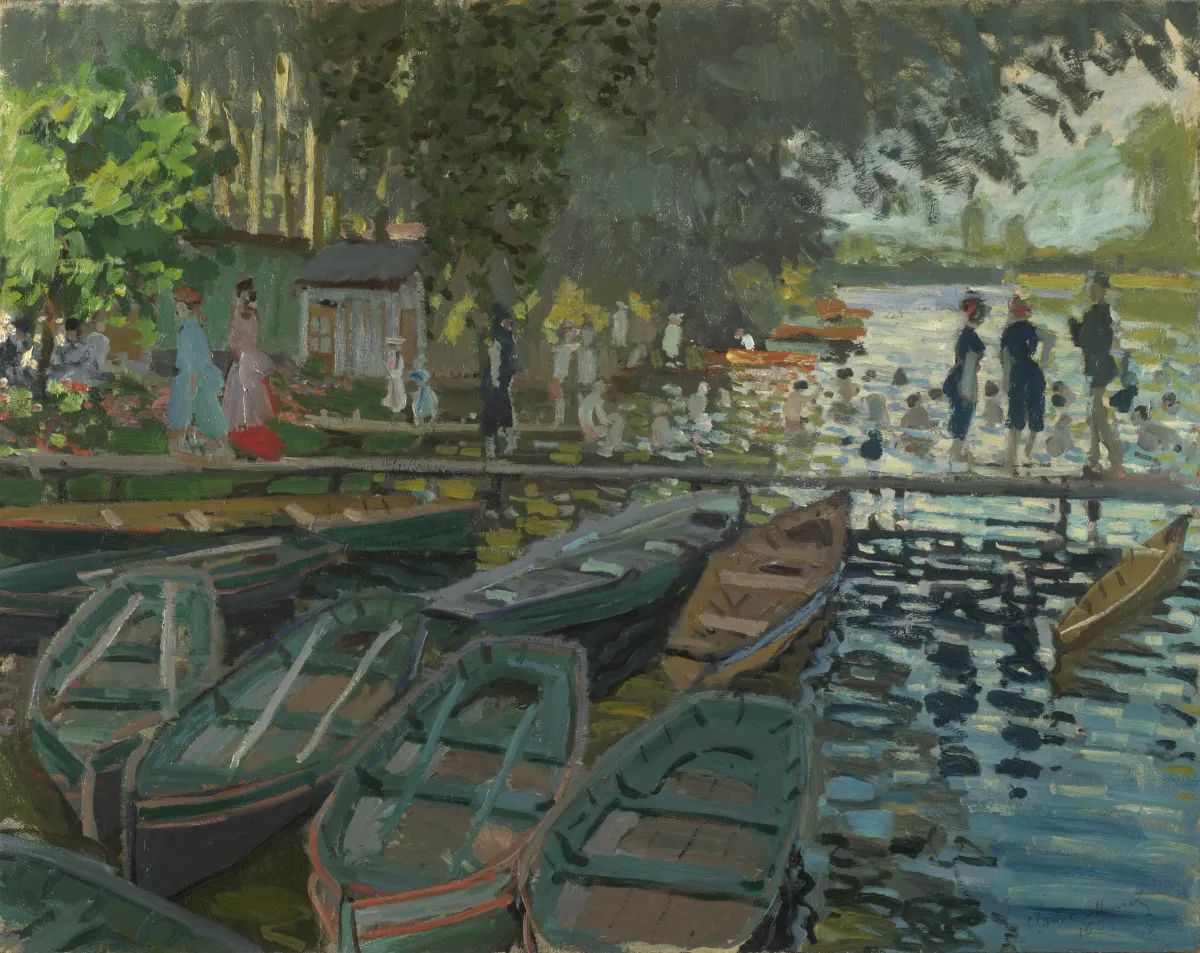
Monet’s "Bathers at La Grenouillère" demonstrates his exceptional skill with oil on canvas, using quick brushwork and vibrant hues to evoke the lively atmosphere of the riverside. The artist’s technique in this fine art painting for sale showcases the spontaneity and fluidity that define Impressionism. Complementary pieces such as "Camille" and "Le Pont D’Argenteuil" also reveal Monet’s mastery of capturing fleeting moments in nature and society.
Every element in "Bathers at La Grenouillère" tells a story, from the shimmering water to the relaxed figures basking in sunlight. This oil on canvas painting encapsulates the spirit of leisure that emerged in late 19th-century France. Monet’s choice of setting and subject matter resonates with themes found in his "Houses of Parliament" series and "Bemberg Fondation Toulouse Portrait De Son Fils Jean En Bonnet à Pompon 42x33 Inv.," inviting viewers to reflect on modern life.
Owning "Bathers at La Grenouillère" as a hand-painted oil painting is a unique opportunity to experience the genius of Claude Monet within the Impressionism movement. This fine art painting for sale is highly sought after by collectors who appreciate the historical significance and beauty of Monet’s creations. Enhance your collection with related masterpieces such as "Le Grand Canal, Venice" or "Camille" to celebrate the enduring legacy of Impressionist art.
When Art Meets History
"Bathers at La Grenouillère" by Claude Monet stands as a pivotal masterpiece within the Impressionism movement. Painted in 1869, this hand-painted oil painting captures a lively riverside scene near Paris, reflecting a moment in French leisure culture. Monet’s work, alongside related paintings like "A Girl with a Watering Can" and "Children in the Sea, 1909," documents the shift towards modernity in art. The painting immerses viewers in a vibrant, atmospheric slice of 19th-century life.
Techniques That Speak
Monet’s "Bathers at La Grenouillère" utilizes rapid brushstrokes and a vivid palette, hallmark techniques of Impressionism. The artist’s mastery of oil on canvas enables him to depict light shimmering on water and the fleeting movement of bathers. This approach can also be seen in related works such as "La loge" and "After a Bath. Woman Drying the Back of her Neck." Monet’s innovative style continues to inspire those seeking dynamic and expressive fine art painting for sale.
Emotions on Display
Through "Bathers at La Grenouillère," Monet evokes a sense of joy and leisure, inviting viewers to experience the carefree spirit of the era. The painting’s lively brushwork and luminous color palette convey the delight of a summer day by the river. As with "Paris Street; Rainy Day" and other Impressionist pieces, this oil on canvas draws out the emotions of both artist and audience, making each viewing a personal and immersive encounter with fine art.
Coveted by Collectors
Today, "Bathers at La Grenouillère" is highly sought after by art enthusiasts and collectors worldwide. Its significance within the Impressionism movement and connection to Monet’s other masterpieces, including "A Girl with a Watering Can" and "La loge," heighten its desirability. Owning such a hand-painted oil painting is a dream for many, as it represents not only a piece of art history but also a timeless example of fine art painting for sale.
Related Impressionism Hand-Painted Oil Paintings by Other Artists
Other Famous Impressionism Artists:
Frequently Asked Questions About Bathers at La Grenouillère
What is the historical context of "Bathers at La Grenouillère"?
"Bathers at La Grenouillère" was painted in 1869 during a period when the Impressionist movement was beginning to take shape. The painting captures a popular leisure spot on the Seine River, reflecting the social changes in France during the late 19th century.
What artistic techniques did Monet use in this painting?
Monet employed loose brushwork and a vibrant color palette to convey the effects of light on water and figures. His technique of capturing fleeting moments is characteristic of Impressionism, emphasizing the play of sunlight and reflections.
What themes are explored in "Bathers at La Grenouillère"?
The painting explores themes of leisure and modernity, showcasing the burgeoning middle class's desire for recreation. It also reflects the harmony between nature and human activity, a common theme in Monet's work.
How does "Bathers at La Grenouillère" reflect Impressionist principles?
The painting exemplifies Impressionist principles through its focus on capturing a moment in time, the use of light and color over detail, and the depiction of everyday life. Monet's emphasis on atmosphere rather than precise form is a hallmark of the movement.
What is the significance of the setting in "Bathers at La Grenouillère"?
The setting at La Grenouillère, a popular bathing spot, symbolizes the social and cultural shifts of the time. It serves as a backdrop for the exploration of leisure activities, highlighting the growing importance of recreational spaces in urban life.
Who were the other artists associated with the La Grenouillère scene?
Besides Monet, Pierre-Auguste Renoir also painted scenes at La Grenouillère, capturing similar themes of leisure and social interaction. Their works collectively contributed to the development of Impressionism.
What role does color play in "Bathers at La Grenouillère"?
Color plays a crucial role in conveying the vibrancy of the scene. Monet's use of bright, contrasting colors enhances the sense of movement and light, creating an immersive experience that draws viewers into the moment.
How did "Bathers at La Grenouillère" influence future artists?
The painting influenced future generations of artists by demonstrating the power of color and light in capturing emotion and atmosphere. Its innovative approach to composition and subject matter paved the way for modern art movements.
What is the current location of "Bathers at La Grenouillère"?
"Bathers at La Grenouillère" is housed in the Musée d'Orsay in Paris, France. The museum is renowned for its extensive collection of Impressionist and Post-Impressionist masterpieces.
What is the overall impact of "Bathers at La Grenouillère" on art history?
The painting is considered a pivotal work in the Impressionist movement, marking a departure from traditional artistic conventions. Its impact on art history lies in its innovative techniques and the way it captures the essence of modern life, influencing countless artists thereafter.






















_GFM_Painting_(1).webp)


 100% Hand-Painted: Finished in 3-6 Weeks

.png)















_(1).webp)