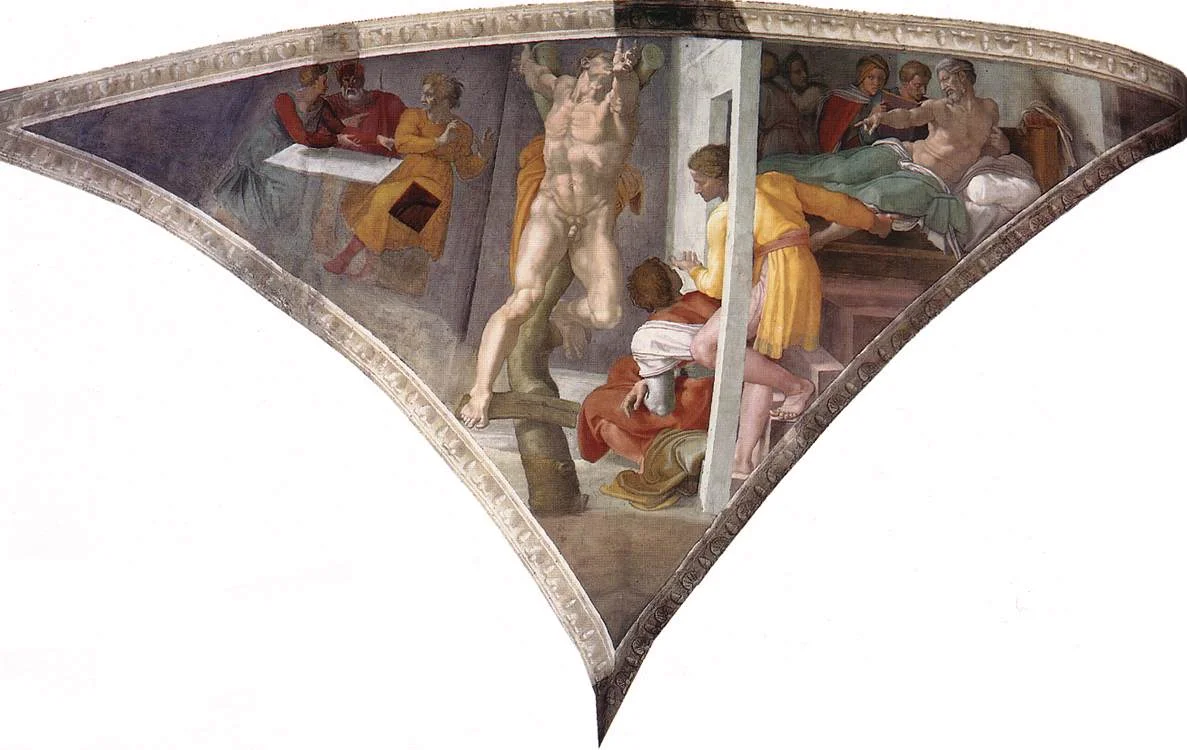
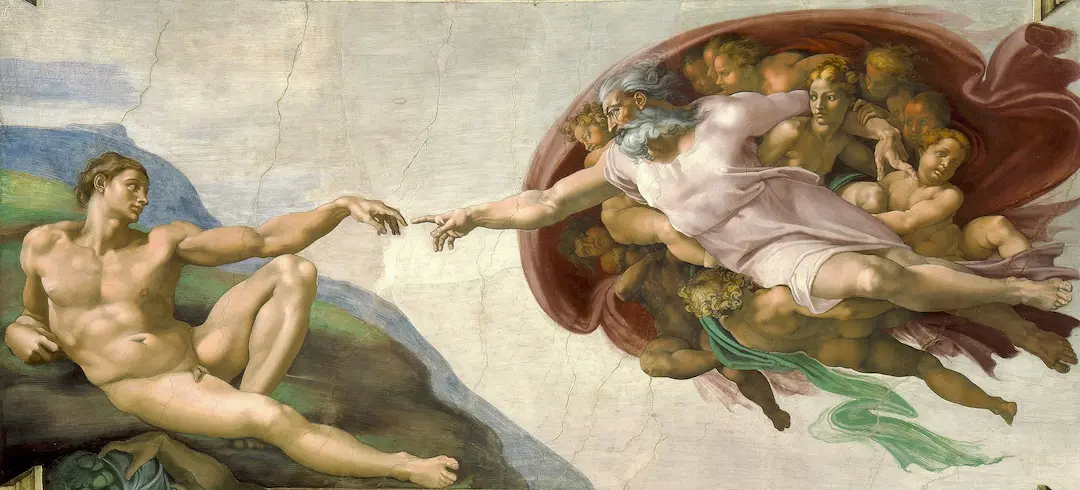
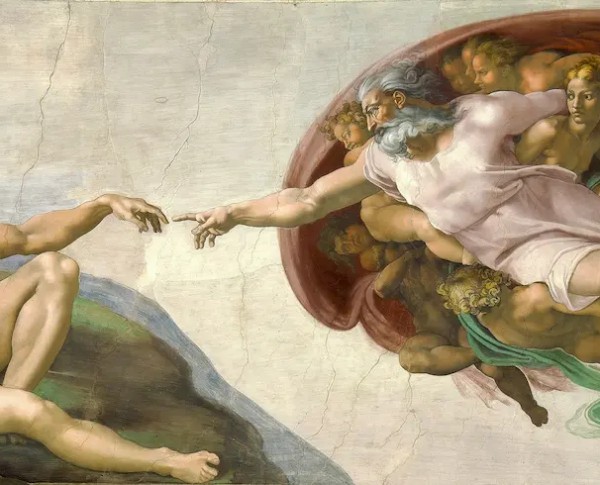
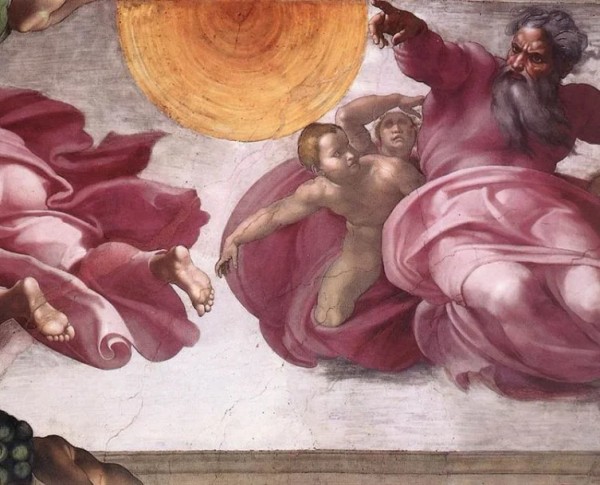
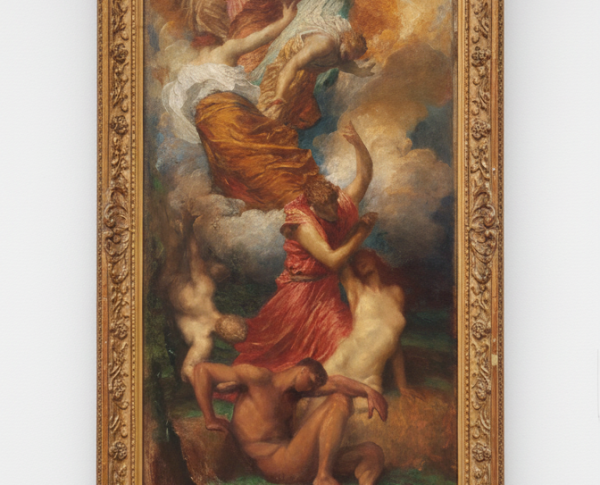
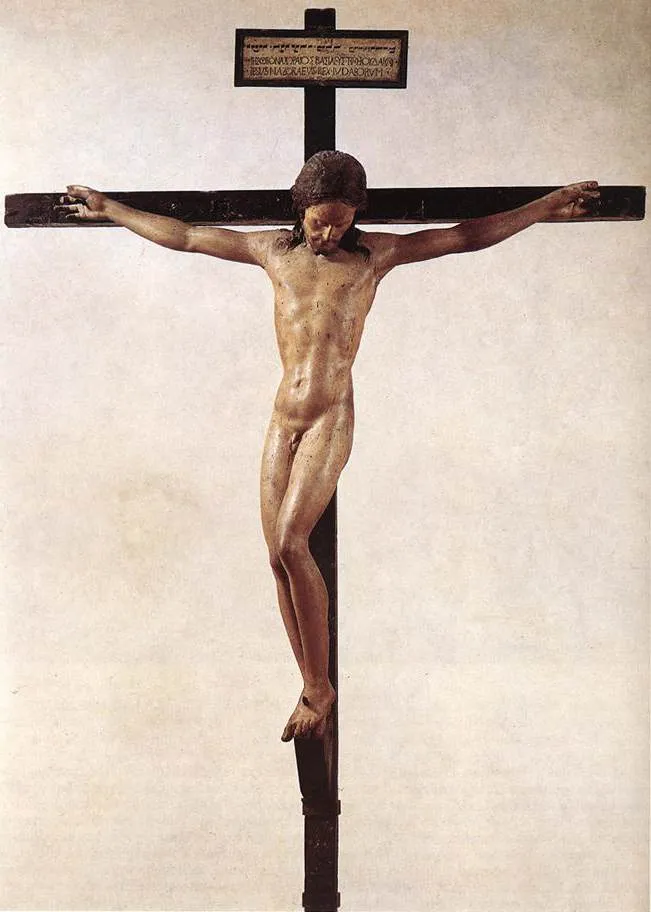
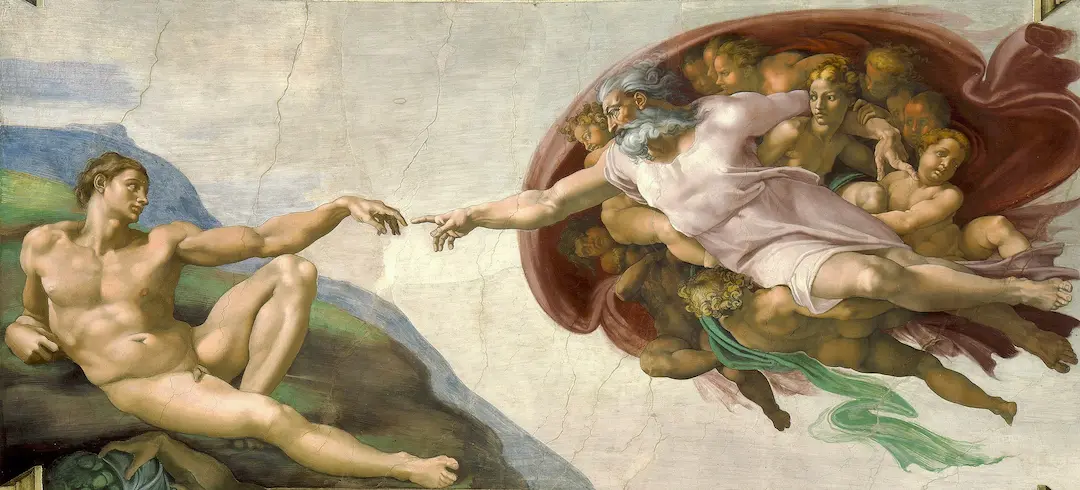
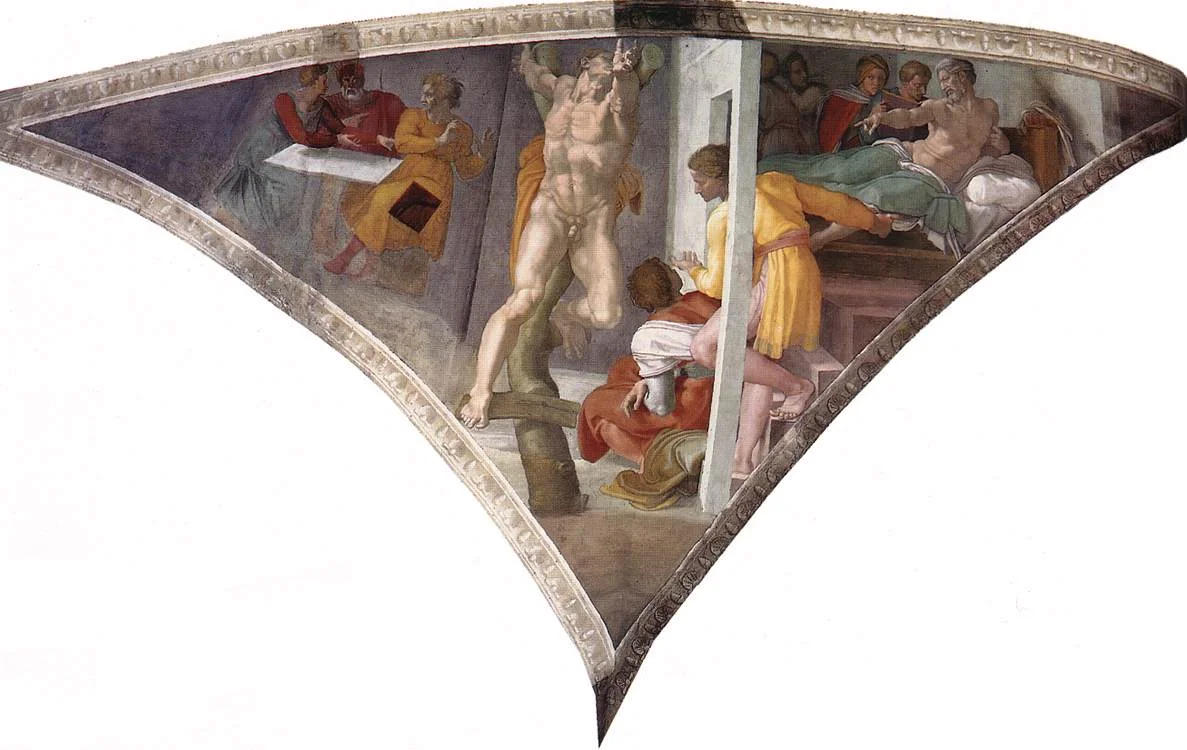
Every inch of Michelangelo’s “Crucifixion” reveals his unparalleled skill in oil on canvas, a medium he elevated with his dynamic compositions and lifelike forms. As a pinnacle of the High Renaissance, this painting demonstrates the artist’s ability to convey profound emotion through intricate detail and bold contrasts. Collectors and art enthusiasts often compare it to other renowned works like “The Torment of Saint Anthony” and “Creation of Adam 1510,” which showcase similar mastery.
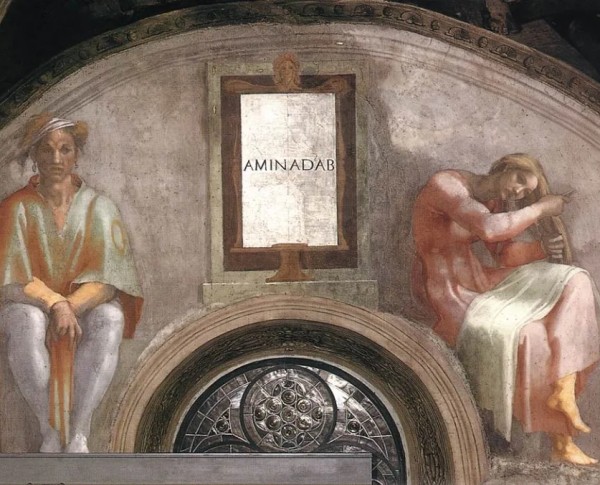
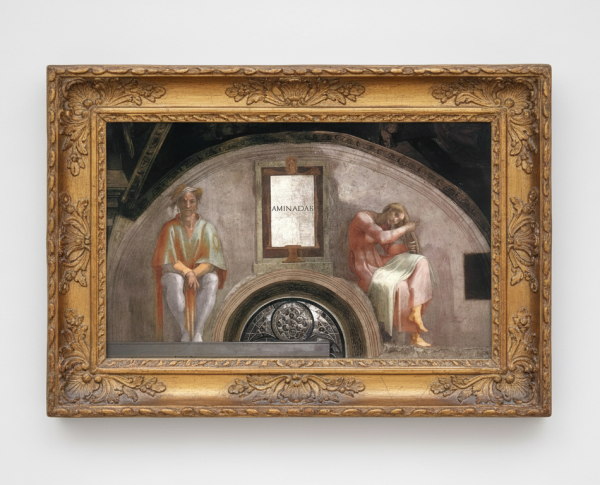
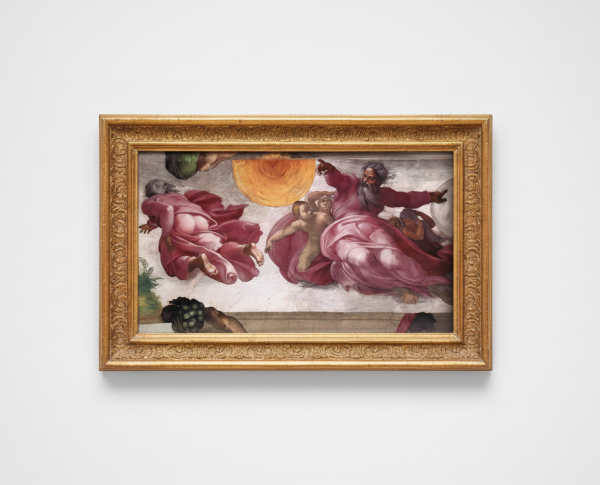
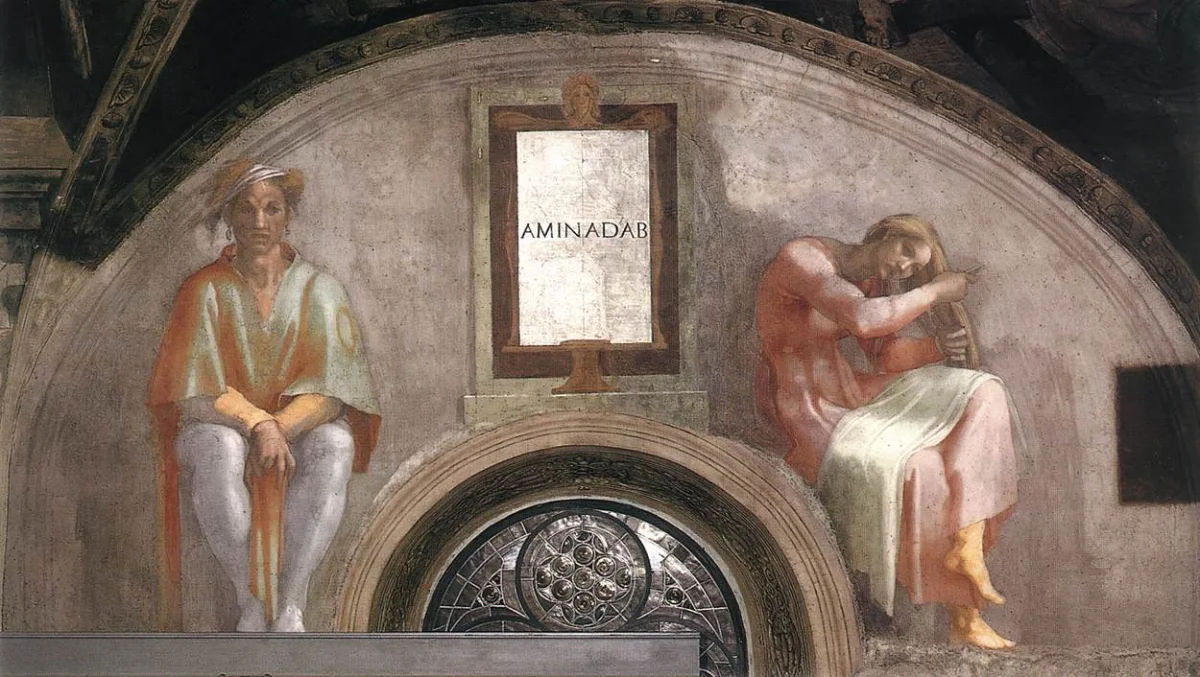
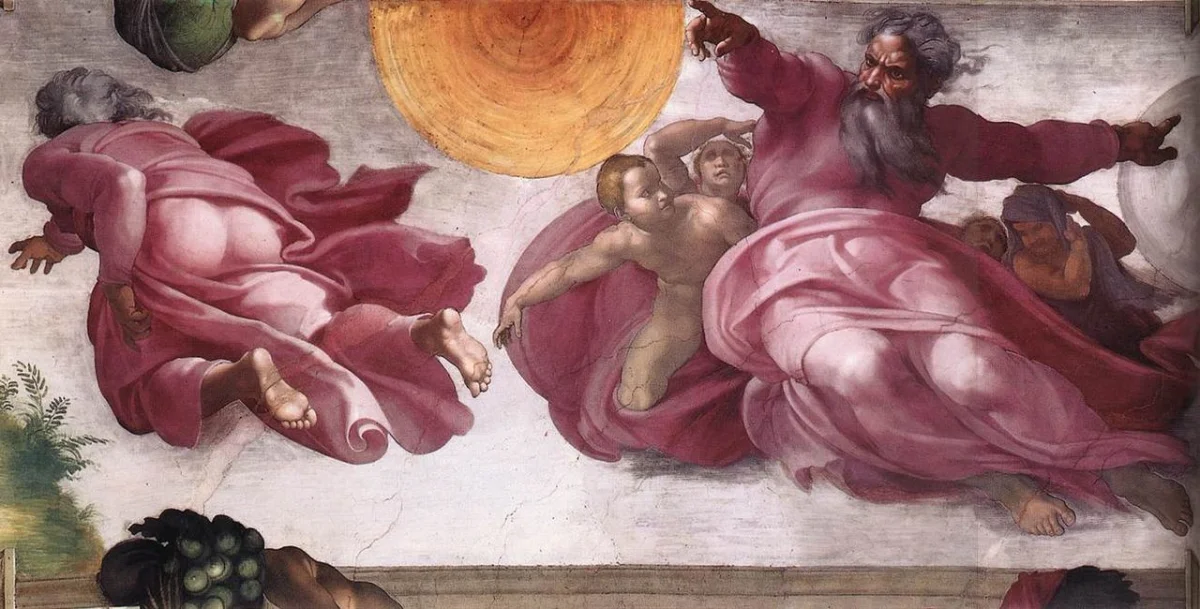
The “Crucifixion” by Michelangelo Buonarroti is imbued with powerful symbolism, typical of a fine art painting for sale from the High Renaissance. The figures’ expressions and gestures invite viewers to contemplate themes of sacrifice, redemption, and spiritual awakening. This narrative depth aligns it with related works such as “Aminadab” and “The Creation of the Sun, Moon and Planets,” both rich in allegory and spiritual meaning, making it a profound piece for any art collection.
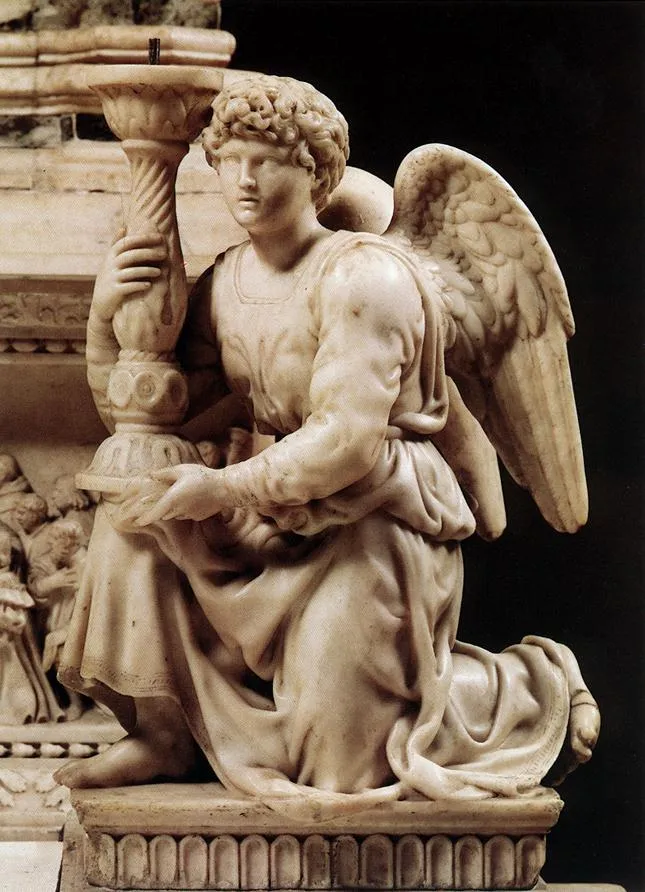
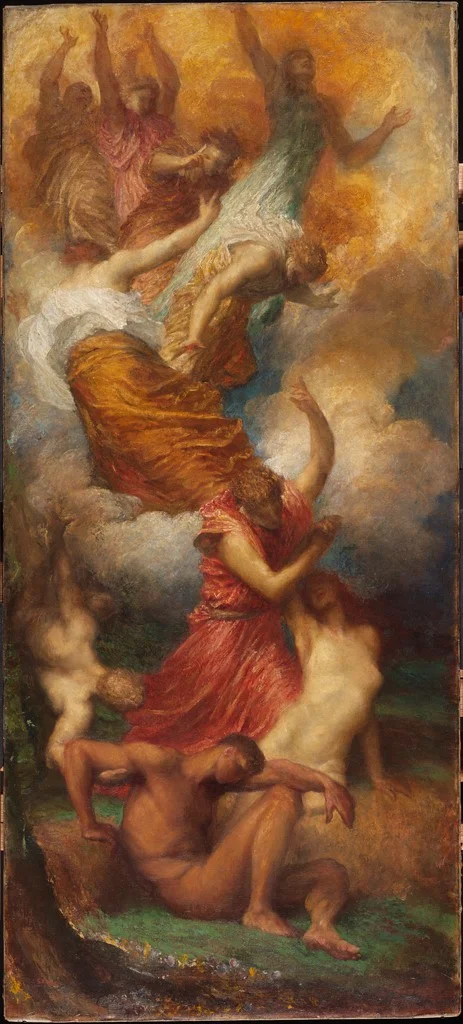
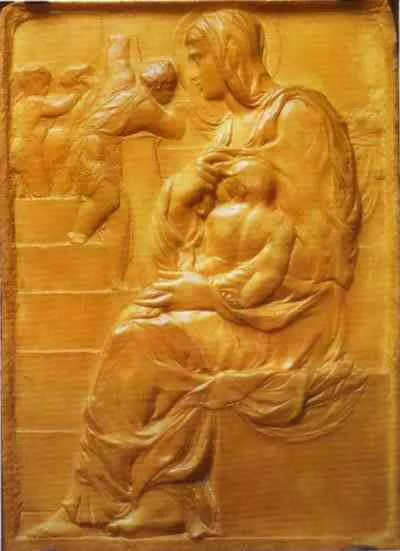
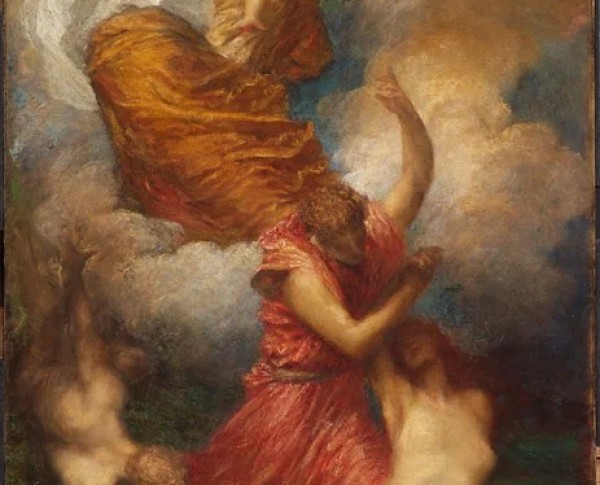
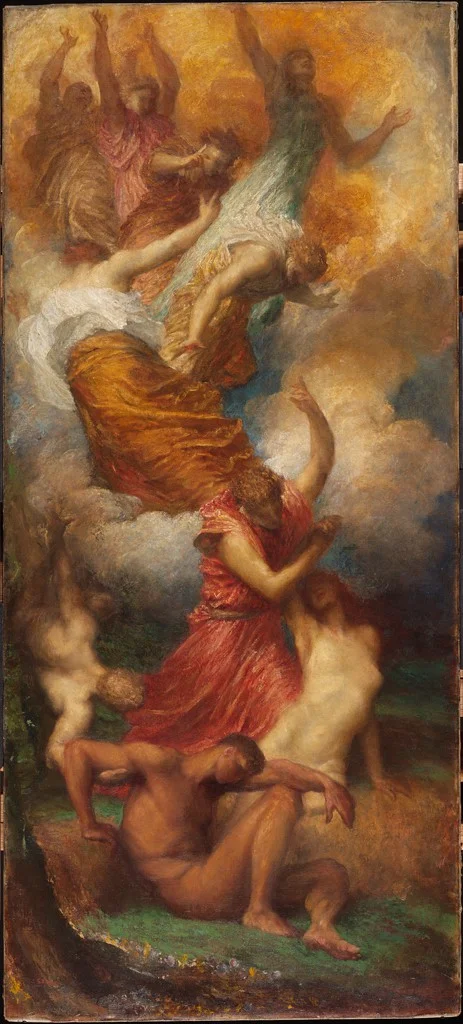
Owning a hand-painted oil painting like Michelangelo’s “Crucifixion” connects collectors to the genius of the High Renaissance. This artwork not only enhances any space but also serves as a conversation piece alongside related products such as “The Creation of Eve” and “Madonna of the Stairs.” For those seeking a fine art painting for sale, “Crucifixion” represents an investment in timeless beauty and historical significance, embodying the enduring allure of Michelangelo’s masterpieces.
When Art Meets History
"Crucifixion" by Michelangelo Buonarroti stands as a remarkable example of the High Renaissance movement, reflecting an era when art and history intertwined seamlessly. This hand-painted oil painting captures the spiritual intensity and drama of its subject, echoing the mastery seen in related works like "Madonna & Child (Madonna del Granduca)" and "Disputation of the Holy Sacrament (La Disputa)". Michelangelo’s contribution to religious art continues to inspire, making this piece a pivotal chapter in fine art history.
Techniques That Speak
Michelangelo’s "Crucifixion" showcases his unparalleled skill in oil on canvas, a medium favored during the High Renaissance. The artist’s technique includes meticulous layering and dynamic brushwork, which brings depth and realism to the figures. Drawing comparisons to masterpieces such as "Portrait of Cecilia Gallerani (Lady with an Ermine)" and "The Stanza Della Segnatura Ceiling Justice", Michelangelo’s approach to oil on canvas set new standards for expressive and lifelike representation in Renaissance art.
Emotions on Display
In "Crucifixion", Michelangelo Buonarroti masterfully conveys a spectrum of human emotion, from sorrow to hope, through his dynamic composition and use of color. This fine art painting for sale resonates with viewers, reminiscent of the emotive power found in "Portrait of Ginevra Benci" and "Madonna & Child (Madonna del Granduca)". The intensity of the figures and the dramatic lighting exemplify the emotional depth that defines the High Renaissance movement.
Coveted by Collectors
Collectors and art enthusiasts highly value Michelangelo’s "Crucifixion" as a quintessential hand-painted oil painting from the High Renaissance era. Alongside celebrated works like "Disputation of the Holy Sacrament (La Disputa)" and "Portrait of Cecilia Gallerani (Lady with an Ermine)", this masterpiece remains in demand for its historic significance and artistic excellence. Its enduring appeal ensures that "Crucifixion" continues to be a sought-after treasure in the world of fine art painting for sale.
Related High Renaissance Hand-Painted Oil Paintings by Other Artists
Other Famous High Renaissance Artists:
Frequently Asked Questions About Crucifixion
What is the historical context of Michelangelo's "Crucifixion"?
Michelangelo's "Crucifixion" was created during the High Renaissance, a period characterized by a renewed interest in classical antiquity and humanism. The painting reflects the religious fervor of the time, as well as the artist's deep engagement with Christian themes.
What artistic techniques did Michelangelo use in "Crucifixion"?
Michelangelo employed a combination of chiaroscuro and anatomical precision to convey the emotional intensity of the scene. His mastery of human form and movement is evident in the depiction of Christ and the surrounding figures.
What is the significance of the figures surrounding Christ in the painting?
The figures surrounding Christ in "Crucifixion" represent various responses to his sacrifice, ranging from despair to reverence. This diversity of emotion enhances the painting's dramatic impact and invites viewers to reflect on their own interpretations of the event.
How does Michelangelo's "Crucifixion" reflect Renaissance ideals?
The painting embodies Renaissance ideals through its focus on human emotion, the beauty of the human body, and the exploration of spiritual themes. Michelangelo's ability to blend the divine with the human experience is a hallmark of Renaissance art.
What symbolism is present in the "Crucifixion"?
Symbolism in "Crucifixion" includes the cross, representing sacrifice and redemption, and the figures that symbolize faith, doubt, and the human condition. These elements work together to convey a profound message about suffering and salvation.
In what ways did Michelangelo's personal beliefs influence "Crucifixion"?
Michelangelo's deep Christian faith profoundly influenced his work. His interpretation of the "Crucifixion" reflects his understanding of suffering and redemption, as well as his belief in the transformative power of divine love.
What role did "Crucifixion" play in Michelangelo's overall body of work?
"Crucifixion" is a significant piece within Michelangelo's oeuvre, showcasing his ability to convey complex emotions and themes. It complements his other works by reinforcing his exploration of spirituality and the human experience.
How has "Crucifixion" been received by critics throughout history?
Critics have praised "Crucifixion" for its emotional depth and technical mastery. Over the centuries, it has been regarded as a pivotal work that encapsulates the essence of Michelangelo's artistic vision and the spiritual concerns of the Renaissance.
What impact did "Crucifixion" have on later artists?
The "Crucifixion" has influenced countless artists, inspiring them to explore similar themes of sacrifice and redemption. Michelangelo's innovative techniques and emotional depth set a standard for future generations in both religious and secular art.
Where can I see Michelangelo's "Crucifixion" today?
Michelangelo's "Crucifixion" is housed in [insert location], where it continues to be a focal point for visitors interested in Renaissance art and the profound themes it represents.






















_GFM_Painting_(1).webp)


 100% Hand-Painted: Finished in 3-6 Weeks

.png)















_(1).webp)