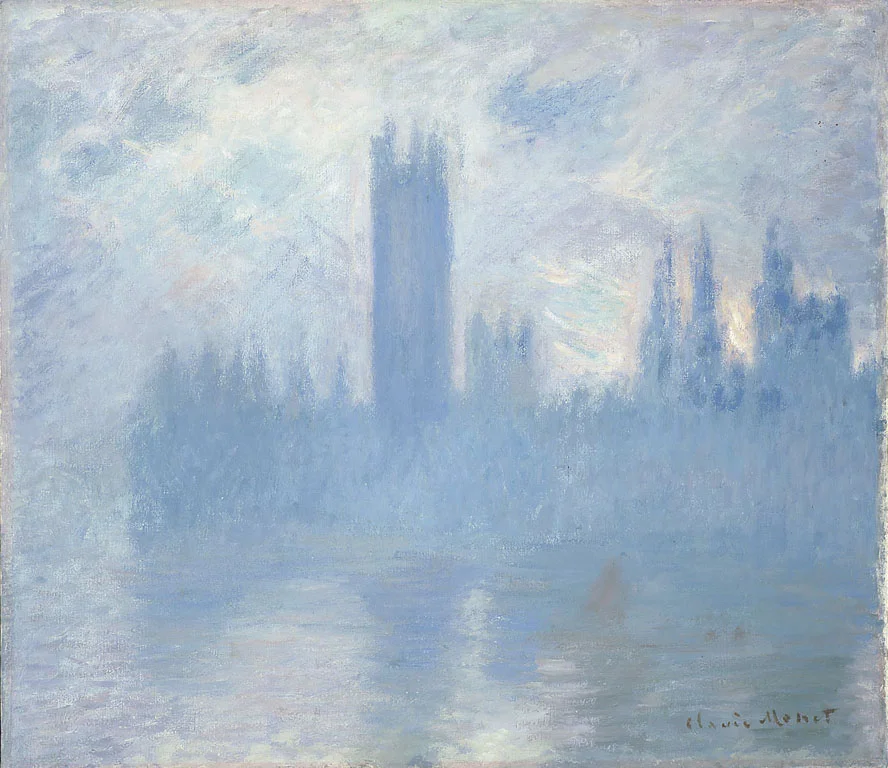
Monet’s "Houses of Parliament series" showcases his exceptional skill with oil on canvas, blending vibrant colors and delicate brushwork to evoke the fleeting moods of the Thames. The artist’s meticulous layering and subtle gradations define the Impressionism movement, illustrating his unique approach to light and atmosphere. This series, along with paintings like "Poppy Field near Vétheuil" and "Sainte-Adresse," exemplifies Monet’s innovative techniques and mastery in capturing the world’s transient beauty.
The "Houses of Parliament series" by Claude Monet is more than a fine art painting for sale; it is a visual narrative of history and emotion. Each canvas tells a story of London’s grandeur and the interplay between nature and architecture. Monet’s Impressionist perspective invites viewers to interpret the shifting scenes, much like in "Woman in the Garden" and "Les Tilleuls à Poissy." These works inspire reflection on the symbolism of time, light, and national identity.
Owning a piece from Monet’s "Houses of Parliament series" is a rare opportunity for collectors seeking a hand-painted oil painting with rich heritage. As a cornerstone of the Impressionism movement, this series, alongside related masterpieces such as "Still Life with Eggs" and "End of the Day," represents a pinnacle of artistic achievement. These fine art paintings for sale continue to captivate audiences, making them prized additions to any distinguished collection.
When Art Meets History
Claude Monet’s "Houses of Parliament series" stands as a remarkable testament to the Impressionism movement, capturing the grandeur of London’s iconic landmark through the lens of a master. Painted during Monet’s visits to England, this hand-painted oil painting immortalizes a historic era, blending architecture and atmosphere. Similar in spirit to related works like "Girls At The Piano2" and "Young Spartans Exercising," Monet’s series documents a dynamic relationship between art and the unfolding history of its time.
Techniques That Speak
Monet’s "Houses of Parliament series" exemplifies the Impressionist technique, with its skillful use of oil on canvas to depict the fleeting effects of light and weather. The artist’s brushwork, characterized by loose, vibrant strokes, brings the Thames and the Parliament building to life. Techniques seen in related paintings such as "Blue Dancers, c.1899" and "Woman in her Bath Sponging her Leg" further demonstrate Monet’s influence on contemporaries and the enduring appeal of oil on canvas in fine art.
Emotions on Display
The "Houses of Parliament series" by Claude Monet masterfully conveys mood and atmosphere, imbuing each canvas with a sense of mystery and awe. The shifting fog, glowing sunsets, and reflections evoke emotions that are central to the Impressionism movement. Like "Le champ de courses. Jockeys amateurs près d'une voiture," Monet’s fine art painting for sale resonates with viewers, inviting them to experience the emotional depth and transient beauty captured within every brushstroke.
Coveted by Collectors
Claude Monet’s "Houses of Parliament series" remains highly sought after by collectors and museums worldwide, celebrated for its artistic innovation and historical significance. As a fine art painting for sale, it stands alongside masterpieces like "Young Spartans Exercising" and "Blue Dancers, c.1899," drawing admiration from art enthusiasts. The Impressionism movement’s focus on light, color, and perception ensures that Monet’s work continues to hold a prominent place in the art market and in collectors’ hearts.
Related Impressionism Hand-Painted Oil Paintings by Other Artists
Other Famous Impressionism Artists:
Frequently Asked Questions About Houses of Parliament series
What inspired Claude Monet to create the Houses of Parliament series?
Monet was inspired by the view of the Houses of Parliament from his studio in London, particularly the way the changing light and weather conditions affected the appearance of the iconic building.
How many paintings are in the Houses of Parliament series?
The series consists of approximately 19 paintings, each capturing different times of day and atmospheric conditions, showcasing Monet's fascination with light and color.
What artistic techniques did Monet use in the Houses of Parliament series?
Monet employed loose brushwork and a vibrant palette to convey the effects of light and atmosphere, utilizing techniques such as plein air painting to capture the scene in real-time.
What does the Houses of Parliament series symbolize in Monet's work?
The series symbolizes the transient nature of light and time, reflecting Monet's impressionist ideals and his belief in capturing the ephemeral qualities of the natural world.
How did the Houses of Parliament series contribute to the Impressionist movement?
This series exemplifies the core principles of Impressionism, particularly the focus on light, color, and the artist's perception, influencing future generations of artists to explore similar themes.
What historical context surrounds the creation of the Houses of Parliament series?
Created during the late 19th century, the series reflects the industrial and political changes in London, as well as Monet's personal experiences during his time in the city.
How did Monet's style evolve through the Houses of Parliament series?
Throughout the series, Monet's style evolved to embrace more abstract forms and expressive colors, moving away from realistic representation towards a more subjective interpretation of the scene.
What role did light play in the Houses of Parliament series?
Light is a central theme in the series, as Monet meticulously captured its changing qualities, demonstrating how it transforms the landscape and the perception of the architectural structure.
Are there any notable exhibitions featuring the Houses of Parliament series?
Yes, the series has been featured in numerous prestigious exhibitions worldwide, highlighting its significance in art history and its enduring appeal to audiences.
What impact did the Houses of Parliament series have on modern art?
The series had a profound impact on modern art, inspiring movements such as Abstract Expressionism and encouraging artists to explore perception, abstraction, and the interplay of color and light.






















_GFM_Painting_(1).webp)


 100% Hand-Painted: Finished in 3-6 Weeks

.png)















_(1).webp)