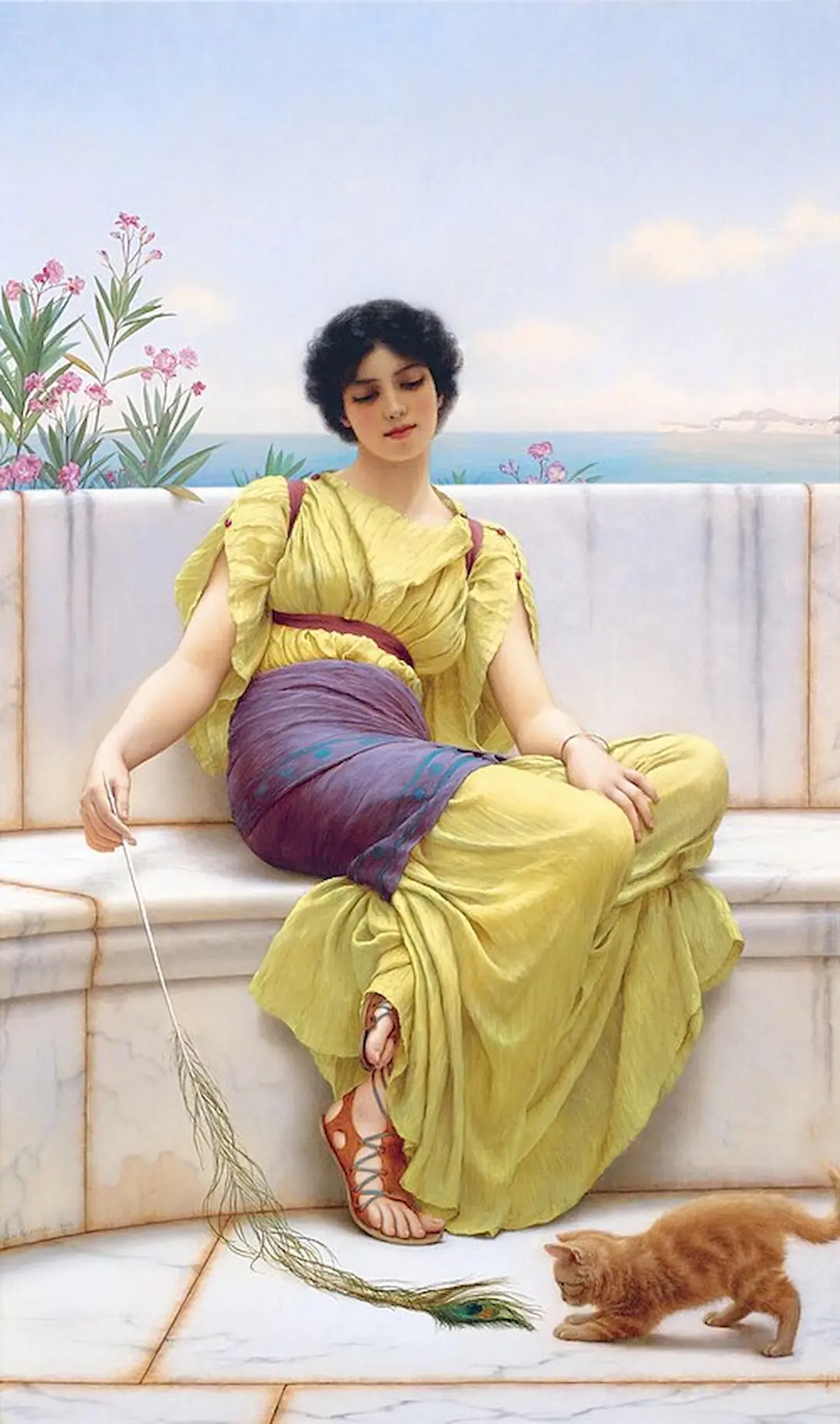
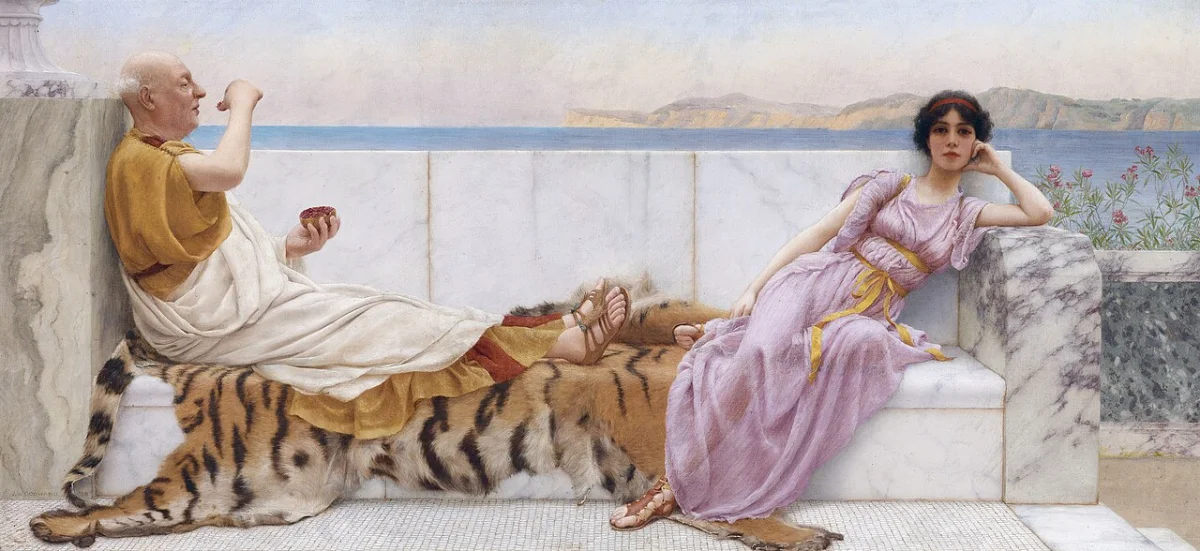
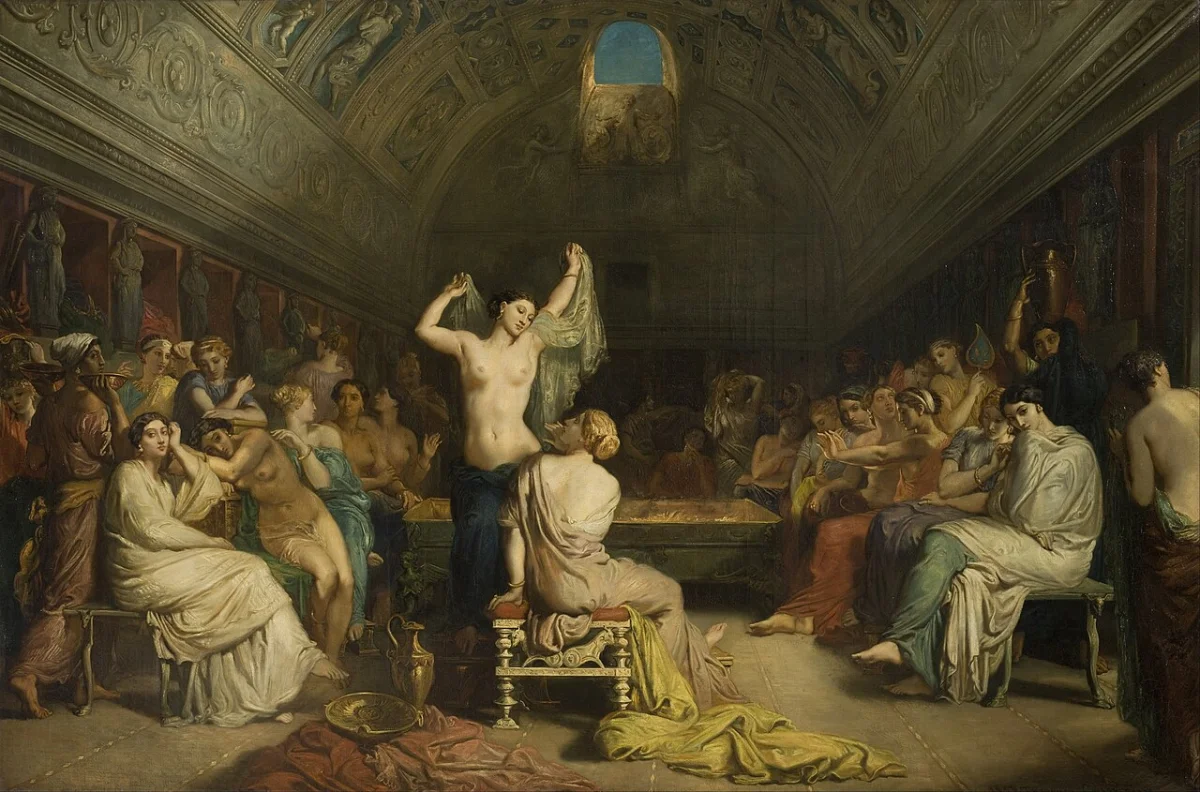
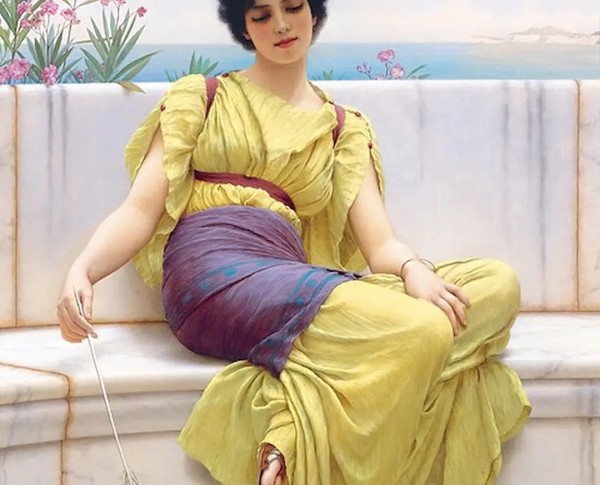
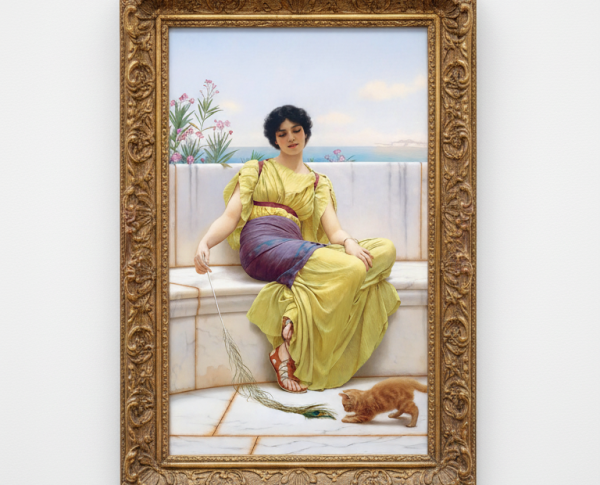
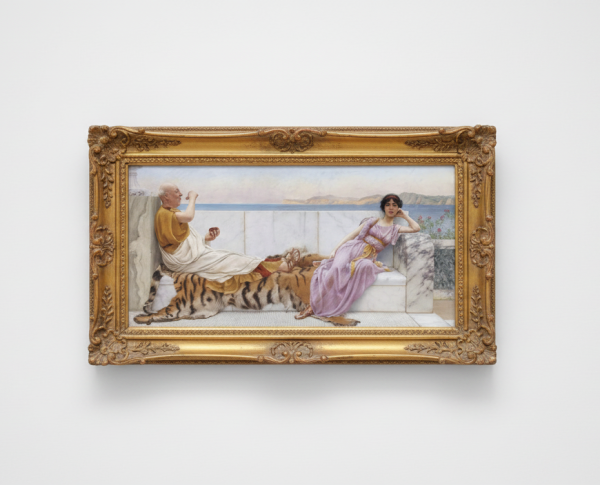
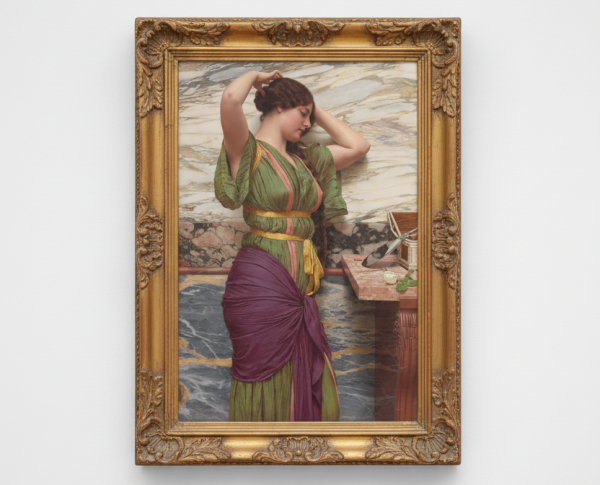
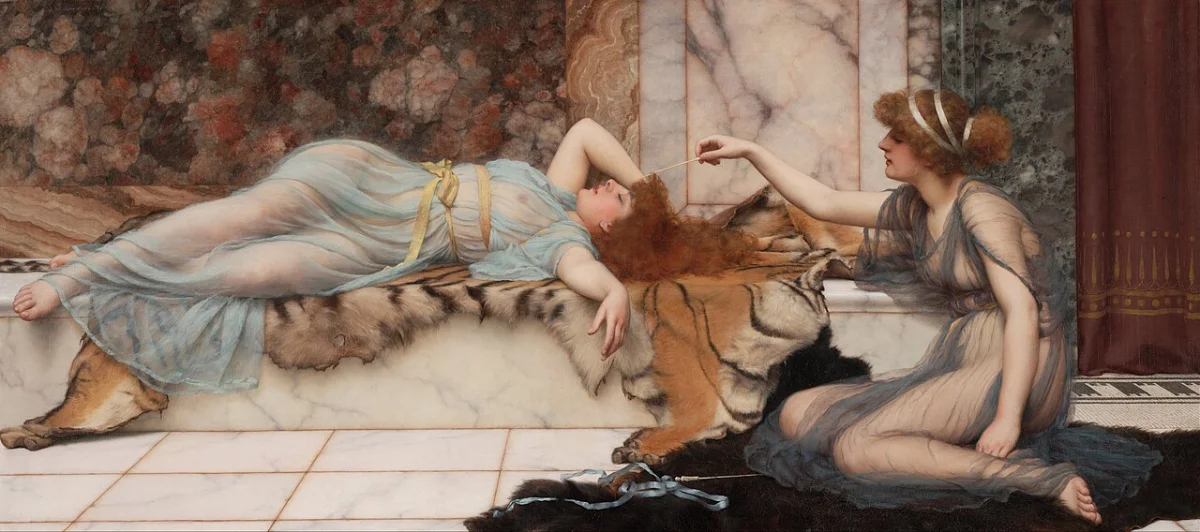
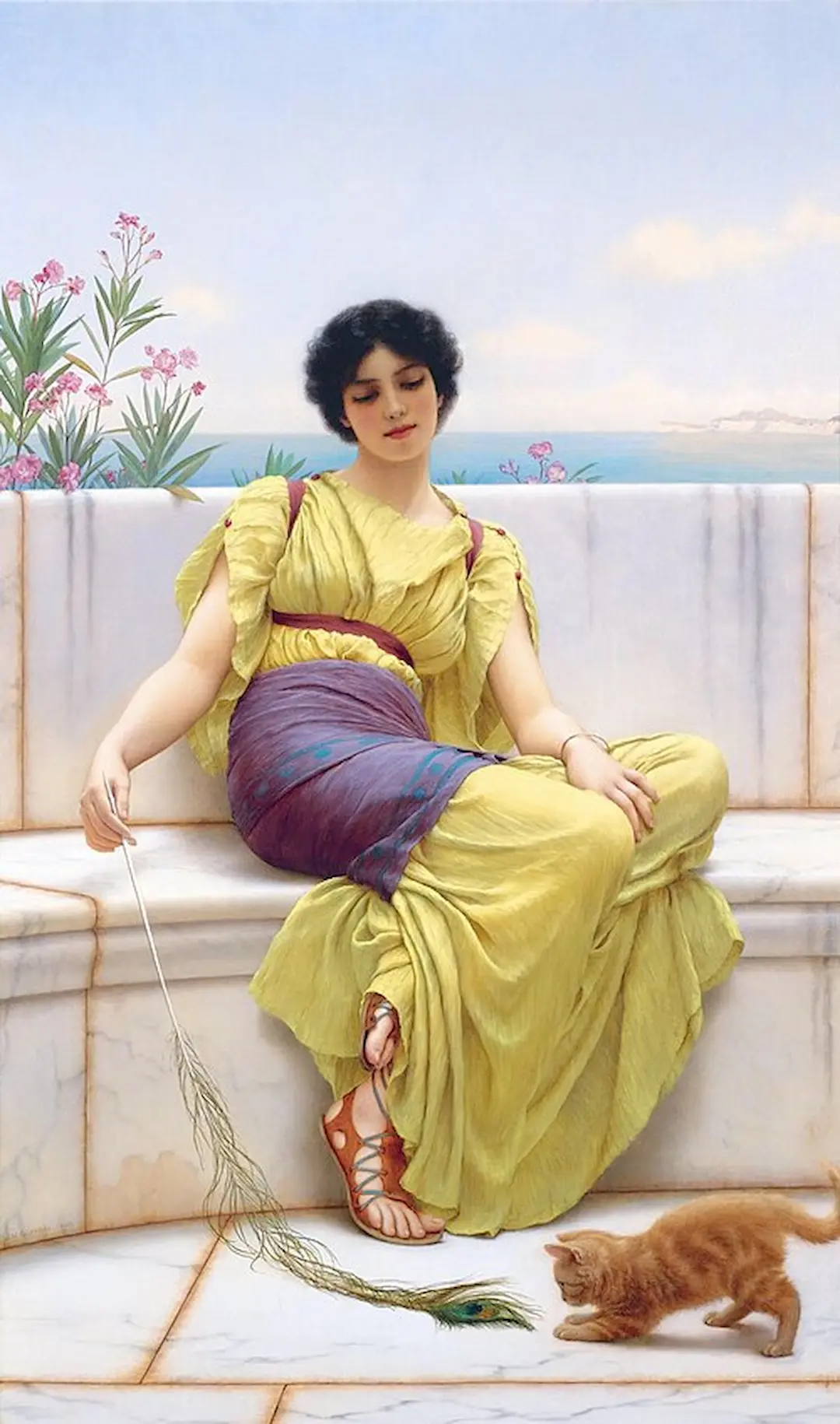
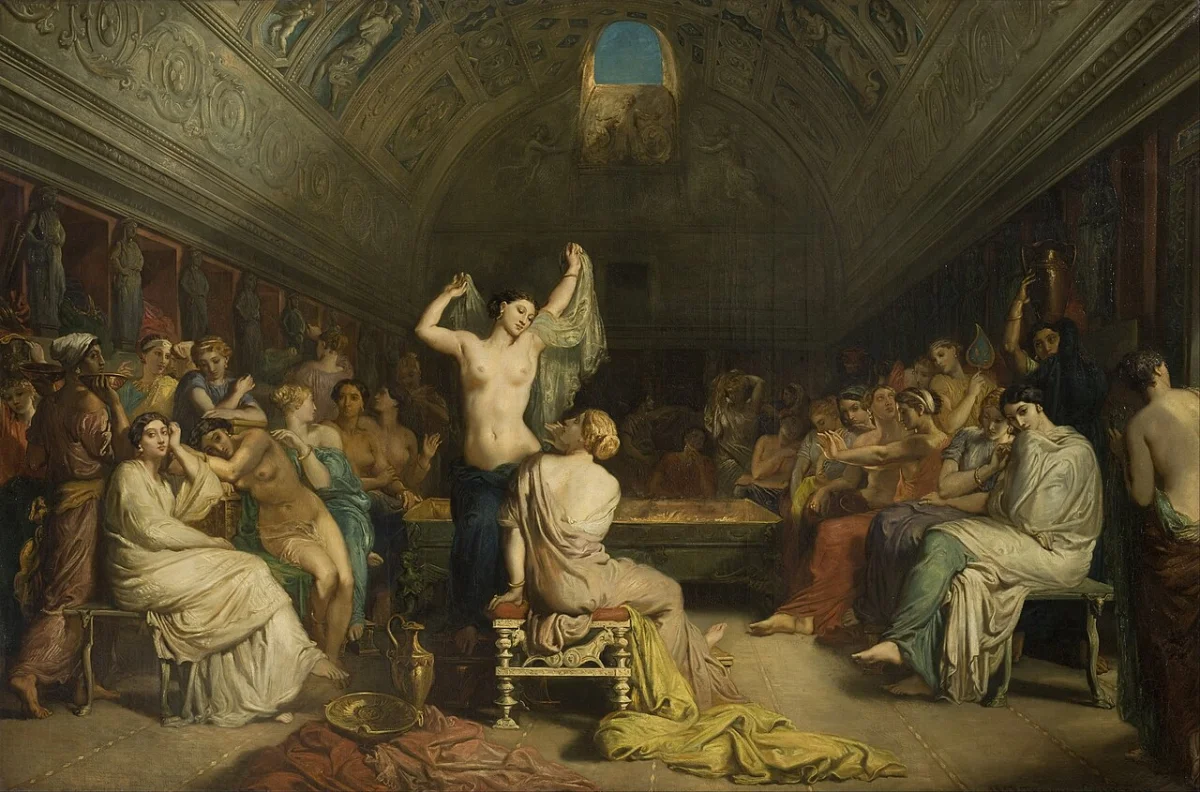
With exceptional attention to detail, Godward’s “Mischief and Repose” highlights the artist’s incredible skill using oil on canvas. The lifelike textures and harmonious color palette are hallmarks of Neoclassical Academic Realism, drawing viewers into a tranquil, classical world. This painting, alongside masterpieces like “In the Tepidarium” and “Idleness,” showcases Godward’s ability to breathe life into every brushstroke, making each oil on canvas a testament to his artistic mastery.
“Mischief and Repose” invites viewers to interpret the subtle narrative woven between its two central figures. Godward’s fine art painting for sale often features symbolic gestures and classical motifs, reflecting the ideals of the Neoclassical Academic Realism movement. The juxtaposition of playfulness and calmness in this piece is echoed in related works such as “Nude on the Beach” and “When the Heart is Young,” offering a deeper understanding of the artist’s storytelling prowess.
Owning a hand-painted oil painting like “Mischief and Repose” by John William Godward is a prestigious addition to any fine art collection. As a leading figure in the Neoclassical Academic Realism movement, Godward’s works are highly sought after, making them a sound investment. Art lovers seeking fine art painting for sale should also consider his related masterpieces, including “The Quiet Pet” and “Idleness,” to enhance the elegance and value of their collections.
When Art Meets History
John William Godward’s "Mischief and Repose" beautifully captures the essence of the Neoclassical Academic Realism movement. This hand-painted oil painting stands as a testament to Godward’s dedication to classical themes and meticulous technique. The painting draws inspiration from the grand tradition of ancient Roman and Greek aesthetics, much like related masterpieces such as "Bonaparte, Calm on a Fiery Steed" and "The Death of Socrates." Through its historical references, the artwork bridges the gap between antiquity and early twentieth-century fine art.
Techniques That Speak
Godward’s mastery of oil on canvas is evident in "Mischief and Repose." The artist’s delicate brushwork and refined color palette highlight the sensuous textures of marble, drapery, and skin. This painting reflects the same technical prowess found in works like "Napoleon Crossing the Alps" and "Portrait of Antoine-Laurent Lavoisier and his wife." The Neoclassical Academic Realism movement prized precision and clarity, and Godward’s techniques make this oil on canvas a prime example of the genre’s enduring appeal.
Emotions on Display
In "Mischief and Repose," John William Godward skillfully conveys a nuanced emotional narrative between two figures. The subtle interplay of glances and gestures creates an atmosphere of quiet tension and intimacy, hallmarks of his approach to the Neoclassical Academic Realism movement. Similar emotional depth can be found in "Consecration of the Emperor Napoleon I and Coronation of the Empress Josephine 1805-07." Collectors and admirers value this fine art painting for sale for its evocative storytelling and timeless beauty.
Coveted by Collectors
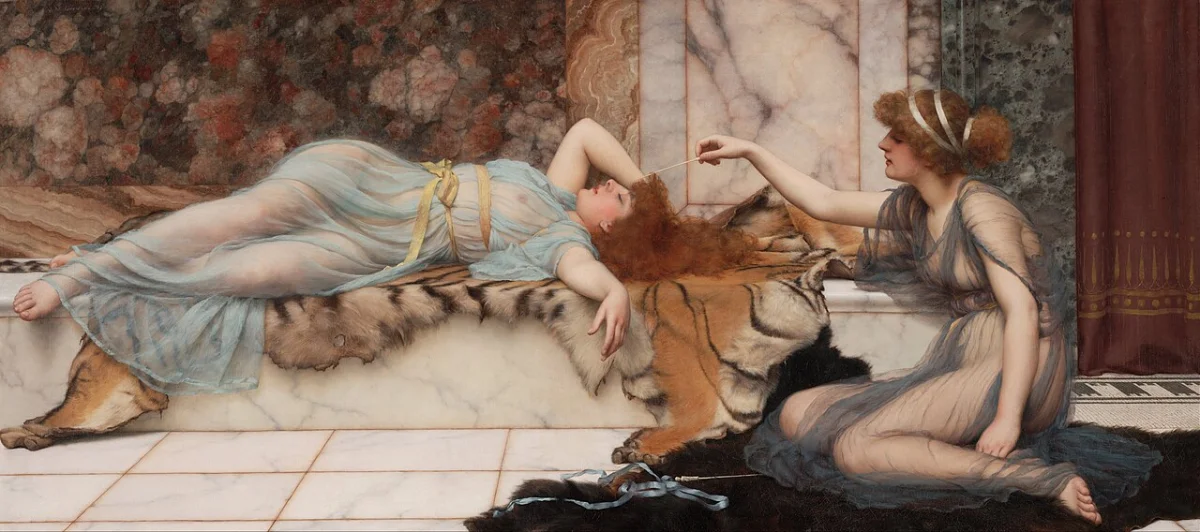
"Mischief and Repose" remains a coveted masterpiece among collectors of Neoclassical Academic Realism. As a hand-painted oil painting by John William Godward, it stands alongside celebrated works like "Bonaparte, Calm on a Fiery Steed" and "The Death of Socrates." The painting’s exquisite detail and historical resonance contribute to its desirability, making it a prime example of a fine art painting for sale that continues to inspire admiration and scholarly interest worldwide.
Related Neoclassical Academic Realism Hand-Painted Oil Paintings by Other Artists
Other Famous Neoclassical Academic Realism Artists:
Frequently Asked Questions About Mischief and Repose
What is the historical context of "Mischief and Repose"?
"Mischief and Repose" was painted by John William Godward in 1910, during the late Victorian and Edwardian periods, a time characterized by a revival of classical themes and aesthetics in art. Godward, associated with the Neoclassical movement, sought to capture the beauty and elegance of ancient Rome and Greece.
What artistic techniques did Godward employ in this painting?
Godward utilized a combination of classical composition, vibrant color palettes, and meticulous attention to detail. His use of light and shadow enhances the three-dimensionality of the figures and the lush surroundings, creating a sense of depth and realism.
What themes are explored in "Mischief and Repose"?
The painting explores themes of leisure, beauty, and the tension between innocence and mischief. The juxtaposition of the serene figure and the playful elements in the composition invites viewers to reflect on the complexities of human emotions and relationships.
Who are the figures depicted in "Mischief and Repose"?
The central figure is a young woman, embodying classical beauty and grace, while the playful cat symbolizes mischief and curiosity. Together, they represent the dualities of repose and playful chaos, inviting interpretation of their relationship.
What symbolism is present in "Mischief and Repose"?
The cat in the painting serves as a symbol of mischief and unpredictability, contrasting with the calm demeanor of the woman. This duality reflects the balance between tranquility and chaos in life, suggesting that both elements coexist harmoniously.
How does "Mischief and Repose" reflect Godward's artistic style?
Godward's style is characterized by a focus on idealized beauty, classical references, and a meticulous approach to detail. "Mischief and Repose" exemplifies these traits through its elegant figures, lush settings, and the harmonious integration of color and form.
What influences can be seen in Godward's work?
Godward was influenced by the works of earlier artists such as Sir Lawrence Alma-Tadema and the Pre-Raphaelites. Their emphasis on classical themes, rich colors, and intricate details can be observed in "Mischief and Repose," showcasing a blend of inspiration and originality.
What is the significance of the title "Mischief and Repose"?
The title encapsulates the central themes of the painting, highlighting the contrast between the playful nature of the cat (mischief) and the serene presence of the woman (repose). This duality invites viewers to contemplate the balance of these opposing forces in life.
How does "Mischief and Repose" fit into the broader context of Godward's oeuvre?
"Mischief and Repose" is representative of Godward's later works, where he increasingly focused on the themes of beauty and femininity. It showcases his mastery of color and form, solidifying his reputation as a significant figure in the Neoclassical revival of the early 20th century.
What impact did "Mischief and Repose" have on contemporary art?
The painting contributed to the appreciation of classical themes in modern art, influencing both contemporaries and later artists who sought to blend traditional aesthetics with contemporary ideas. Godward's work remains a testament to the enduring allure of classical beauty in art.























_GFM_Painting_(1).webp)


 100% Hand-Painted: Finished in 3-6 Weeks

.png)
















_(1).webp)