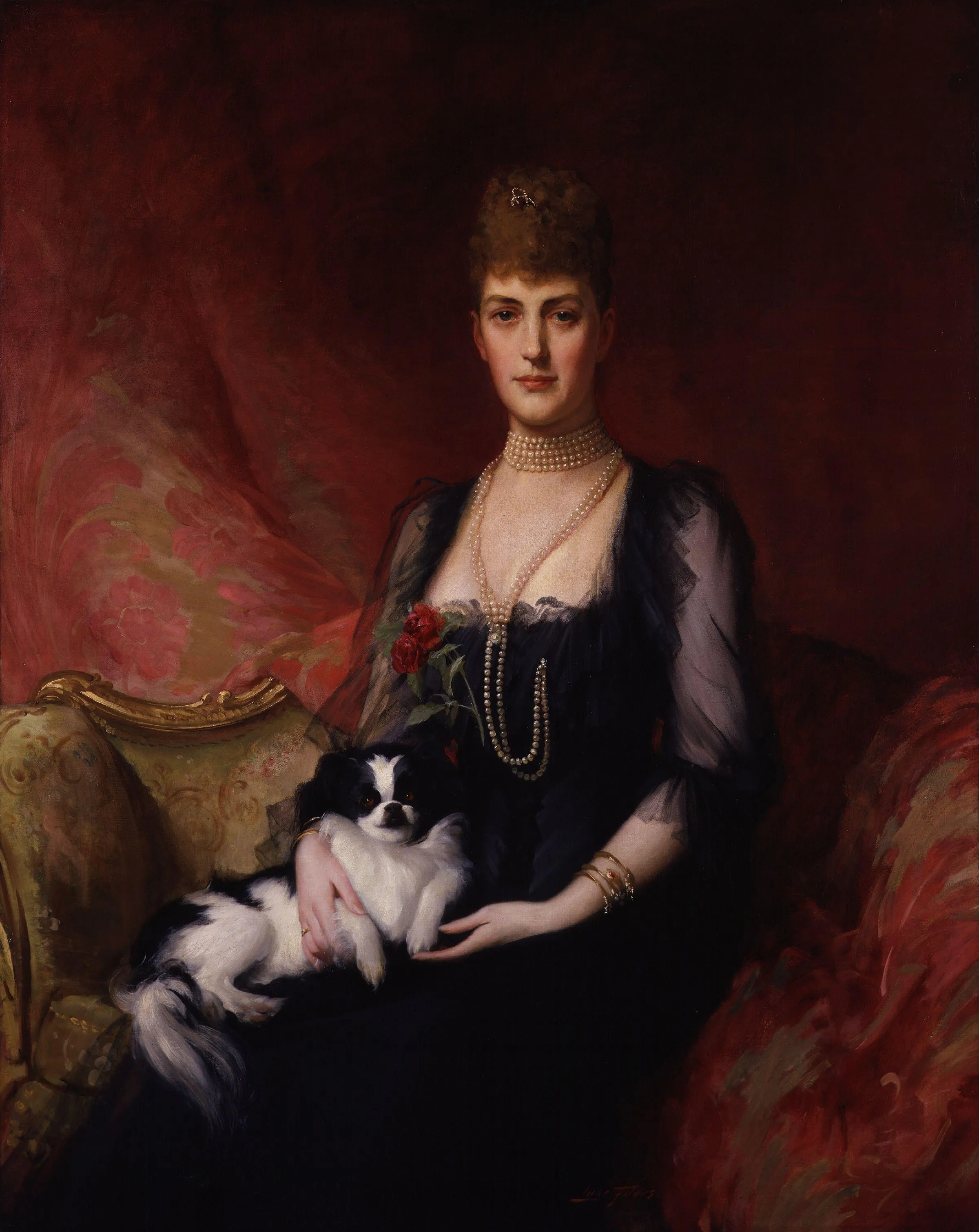
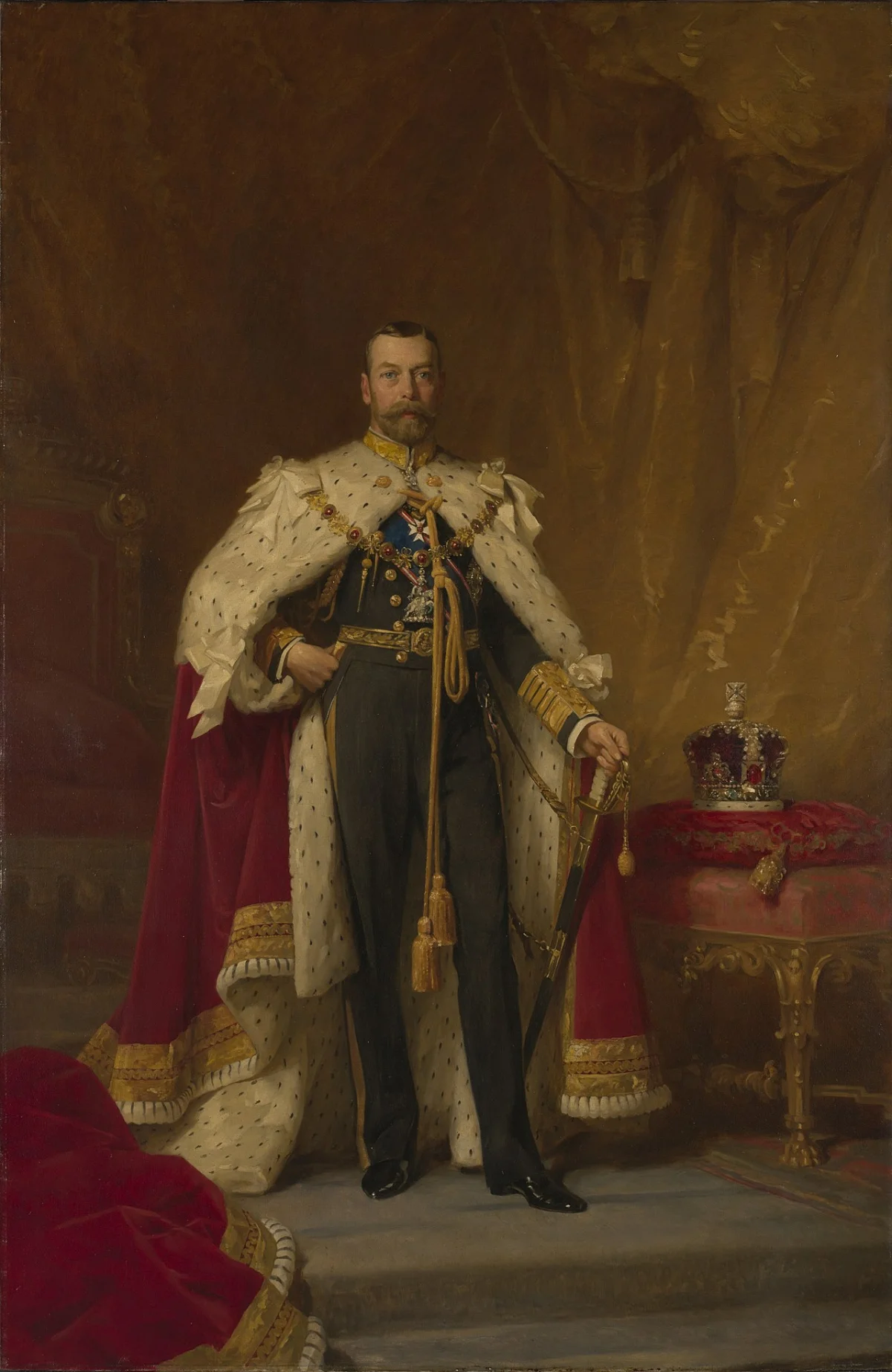
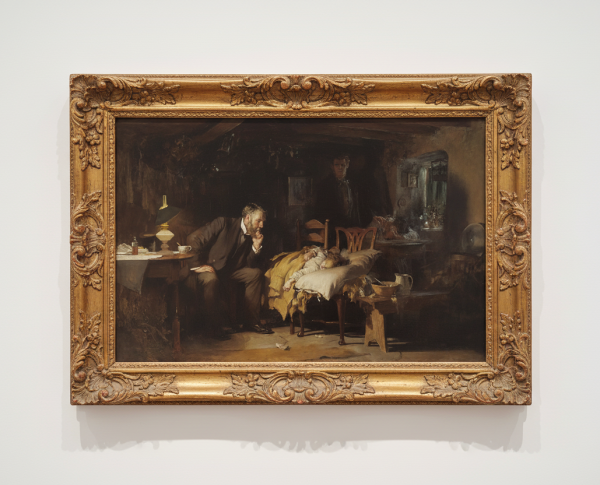
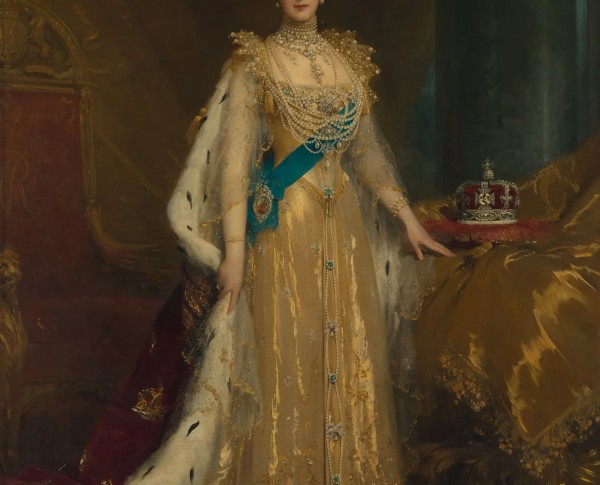
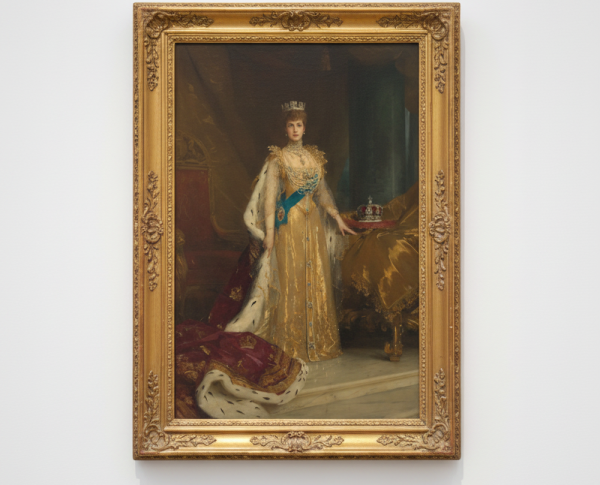
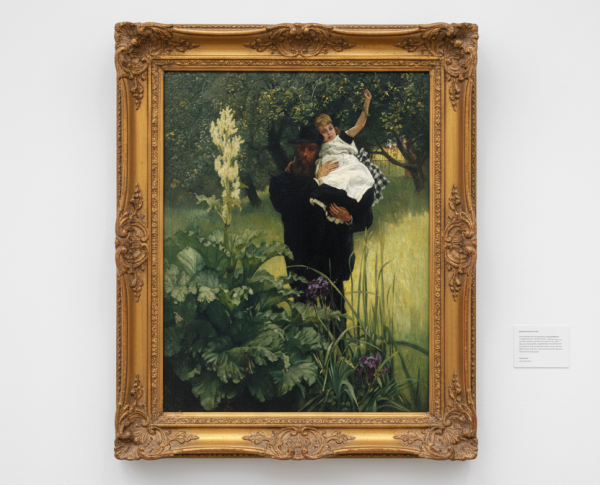
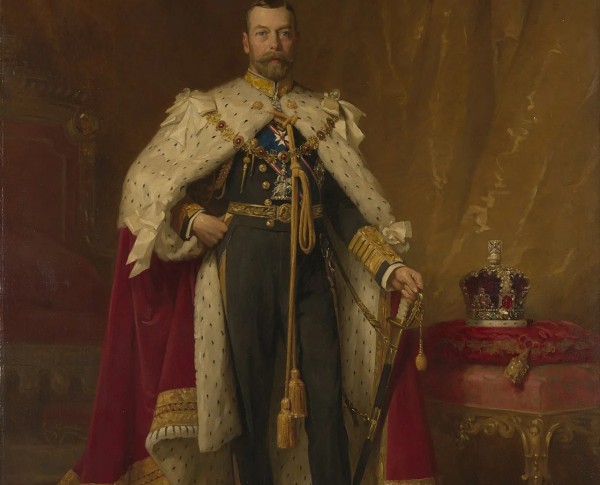
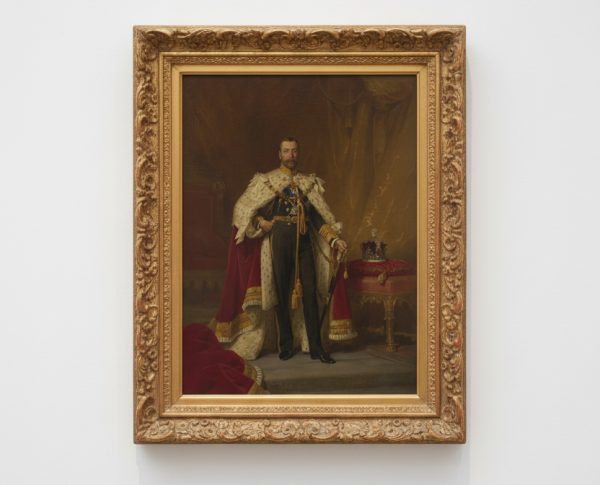
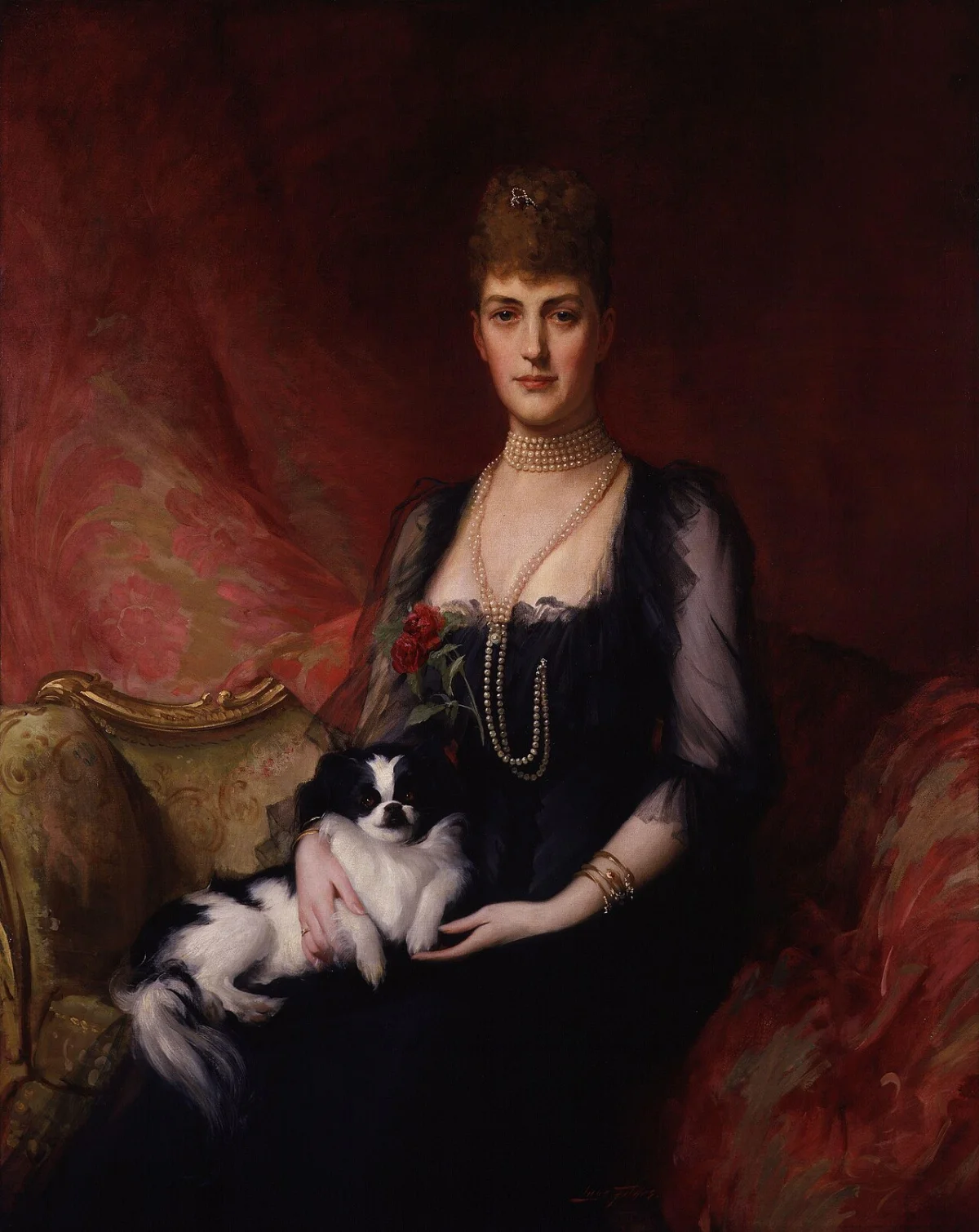
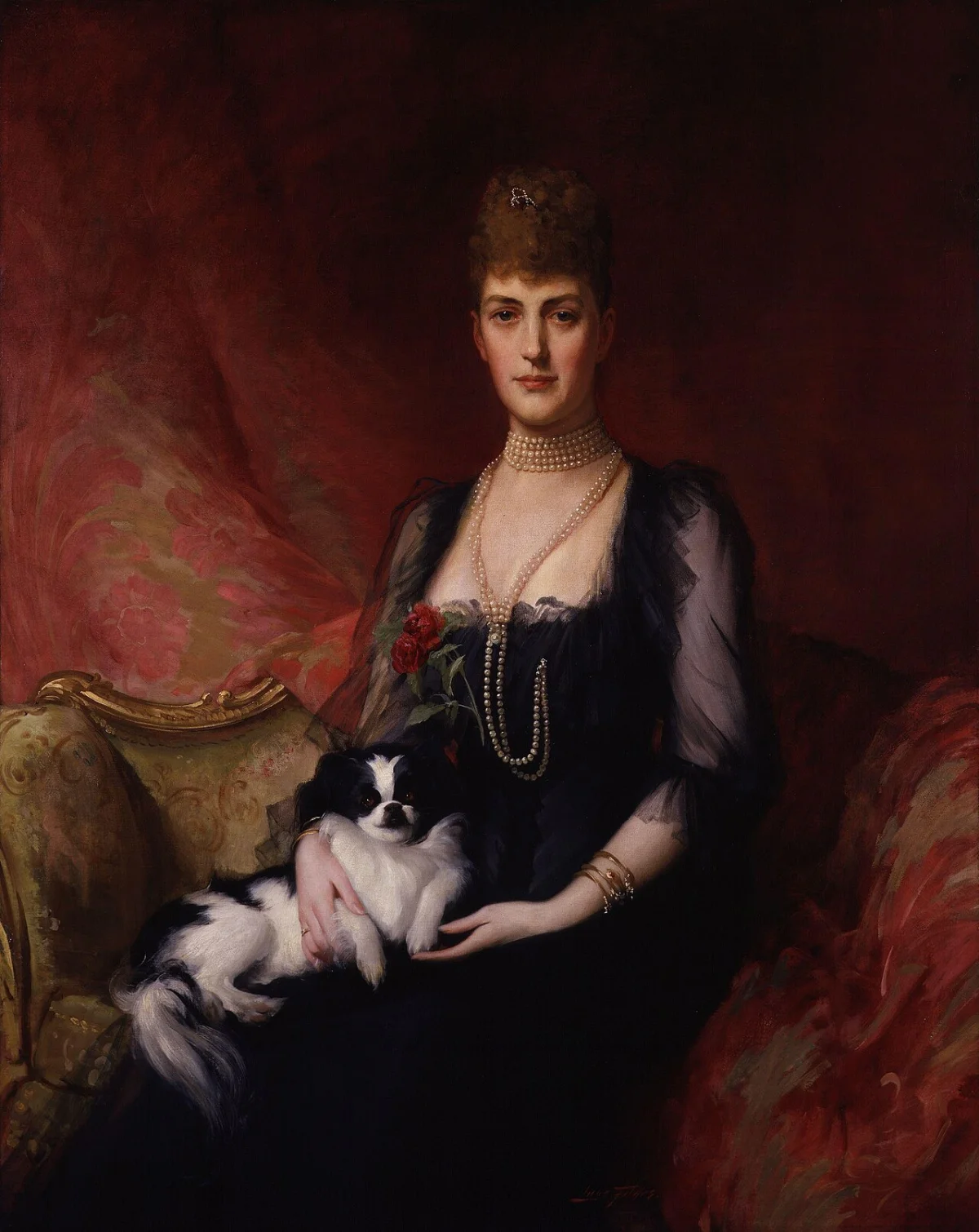
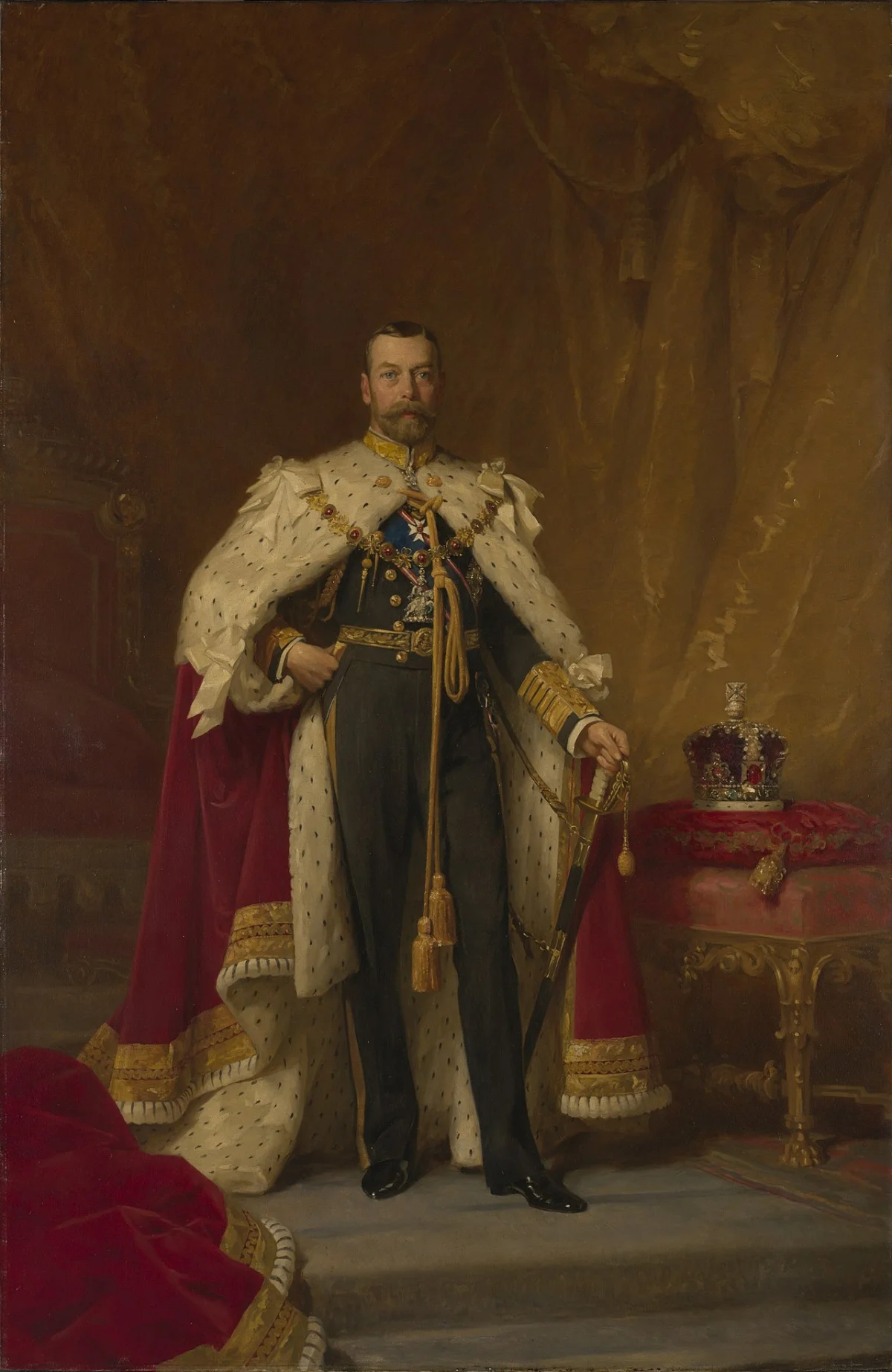
"Portrait of Alexandra of Denmark the Dog is Thought to Be a Japanese Chin Called Punch" by Samuel Luke Fildes is a remarkable example from the Social Realism movement. This hand-painted oil painting captures the regal presence of Alexandra of Denmark alongside her beloved pet. Fildes, renowned for his attention to social detail, immortalizes both subject and era. Collectors and art enthusiasts may also appreciate related works like "Prince George of Wales, later King George V" and "The return of the penitent."
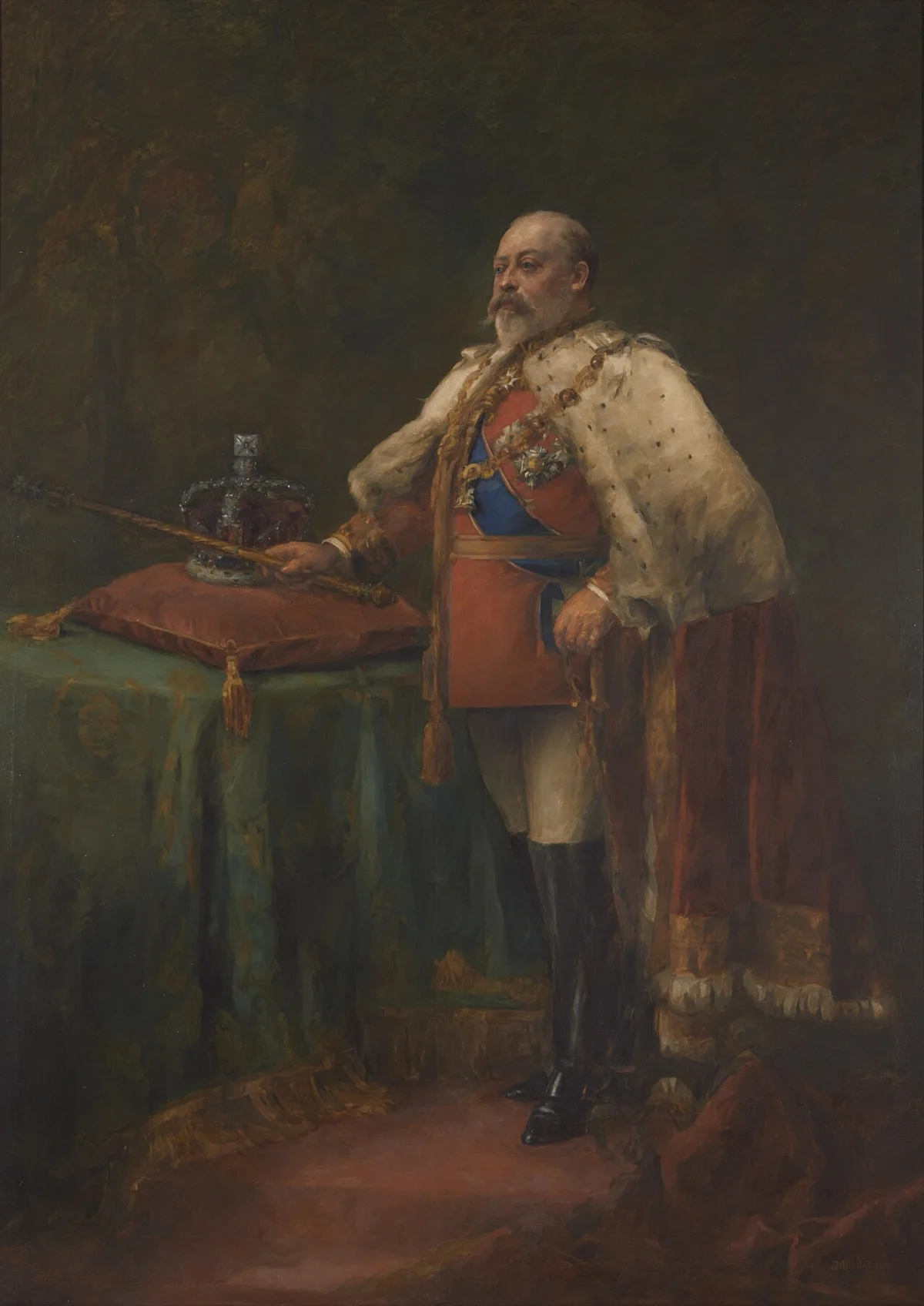
Samuel Luke Fildes' expertise shines through in this oil on canvas masterpiece. His deft brushwork and keen eye for realism bring both Alexandra and her Japanese Chin, Punch, to vivid life. The Social Realism movement’s focus on authenticity is evident in every nuance. Fildes’ other notable paintings, such as "Hm King Edward Vii, Protector Of The Craft" and "the Empty Chair," further showcase his technical brilliance in the fine art tradition.
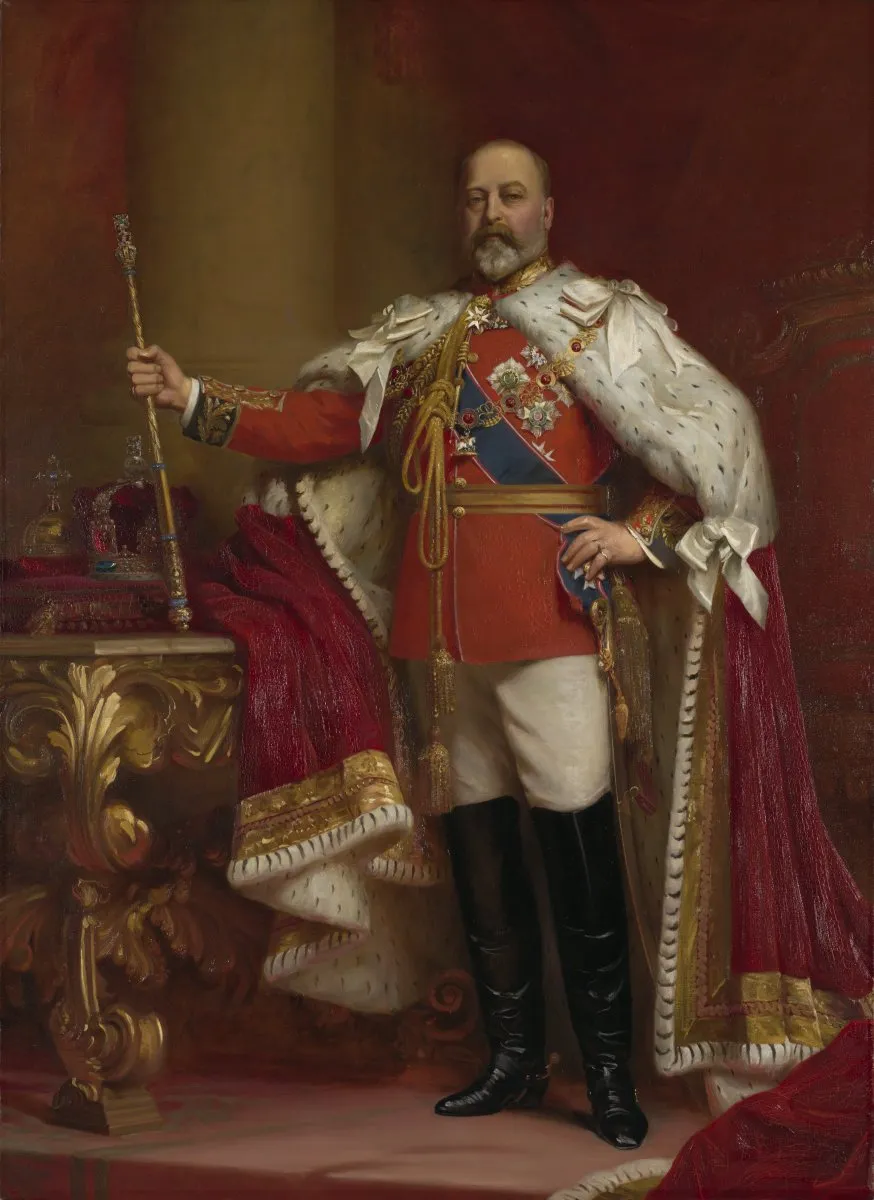
This fine art painting for sale is rich with narrative and symbolism. Alexandra of Denmark’s poise and the presence of her cherished dog, Punch, reflect both personal affection and the social status of the era. The Social Realism movement’s themes of everyday life are evident here. Collectors interested in royal portraits might also explore companion pieces like "King Edward Vii," "Queen Alexandra (1844-1925)," and other works by Samuel Luke Fildes.
For discerning collectors, "Portrait of Alexandra of Denmark the Dog is Thought to Be a Japanese Chin Called Punch" is a prized oil on canvas by Samuel Luke Fildes. As a leading figure in Social Realism, Fildes’ works are highly sought after. This painting, along with related pieces such as "the Empty Chair" and "Hm King Edward Vii, Protector Of The Craft," represents an exceptional opportunity to own a piece of art history.
When Art Meets History
Samuel Luke Fildes’s “Portrait of Alexandra of Denmark the Dog is Thought to Be a Japanese Chin Called Punch” stands as a remarkable hand-painted oil painting from the Social Realism movement. This artwork captures the elegance of Alexandra of Denmark, reflecting not only her status but also the intimate companionship represented by the Japanese Chin, Punch. Fildes’s attention to historical detail connects this piece to other fine works of the era, making it a significant moment where art and history intertwine.
Techniques That Speak
Fildes employs masterful oil on canvas techniques in his depiction of Alexandra of Denmark and her cherished dog. The artist’s brushwork and subtle use of light highlight the delicate features of the subject while conveying the texture of luxurious fabrics and fur. As with other Social Realism paintings by Fildes, this piece showcases the artist’s dedication to realism, providing a glimpse into the lives of his subjects through the enduring medium of oil on canvas.
Emotions on Display
This fine art painting for sale radiates with the emotional depth characteristic of Samuel Luke Fildes’s work. The gentle gaze of Alexandra of Denmark and the serene presence of Punch evoke a sense of warmth and affection. Through Social Realism, Fildes captures not only the likeness but also the inner life of his subjects, inviting viewers to connect emotionally with this touching scene, much like his other celebrated portraits of the period.
Coveted by Collectors
Collectors highly value “Portrait of Alexandra of Denmark the Dog is Thought to Be a Japanese Chin Called Punch” for its exquisite craftsmanship and historical significance. As a hand-painted oil painting by Samuel Luke Fildes, it represents a prized addition to any collection focused on Social Realism. The painting’s blend of royal portraiture and personal intimacy ensures its ongoing appeal, making it a sought-after fine art painting for sale in prestigious galleries and private collections alike.
Frequently Asked Questions About Portrait of Alexandra of Denmark the Dog is Thought to Be a Japanese Chin Called Punch
Who was Alexandra of Denmark?
Alexandra of Denmark was the Queen Consort of the United Kingdom, married to King Edward VII. She was known for her grace and charm, and her influence extended into fashion and social reforms during her time.
What is the significance of the dog in the painting?
The dog, believed to be a Japanese Chin named Punch, symbolizes loyalty and companionship, reflecting the close bond between Alexandra and her pet. Dogs often represent fidelity in art, enhancing the emotional depth of the portrait.
What artistic style is Samuel Luke Fildes known for?
Samuel Luke Fildes is recognized for his realistic and detailed portrayal of subjects, often capturing intimate moments and emotions. His work is associated with the Victorian era's emphasis on realism and narrative in art.
When was this painting created?
This painting was created in the late 19th century, a time when portraiture was a popular means of documenting the lives of prominent figures, particularly within royal circles.
What materials did Fildes use for this painting?
Fildes typically used oil on canvas for his portraits, a medium that allows for rich color and detailed textures, enhancing the lifelike quality of his subjects.
What does the composition of the painting convey?
The composition, featuring Alexandra and her dog in a relaxed yet dignified pose, conveys a sense of intimacy and warmth, highlighting the personal side of a public figure.
How does this painting reflect the social context of its time?
The painting reflects the Victorian era's fascination with domestic life and the importance of pets in the lives of the upper class, showcasing the blend of personal and public identities.
What is the historical importance of this artwork?
This artwork is significant as it captures a moment in royal history, providing insight into the personal life of Queen Alexandra, an influential figure during a transformative period in British history.
Are there any notable exhibitions featuring this painting?
While specific exhibitions may vary, this painting has been featured in various art galleries focusing on Victorian art and royal portraiture, showcasing Fildes' contributions to the genre.
What themes are explored in this portrait?
The themes of companionship, loyalty, and the intersection of public and private life are central to this portrait, reflecting the emotional connections that define human relationships.























_GFM_Painting_(1).webp)


 100% Hand-Painted: Finished in 3-6 Weeks

.png)















_(1).webp)