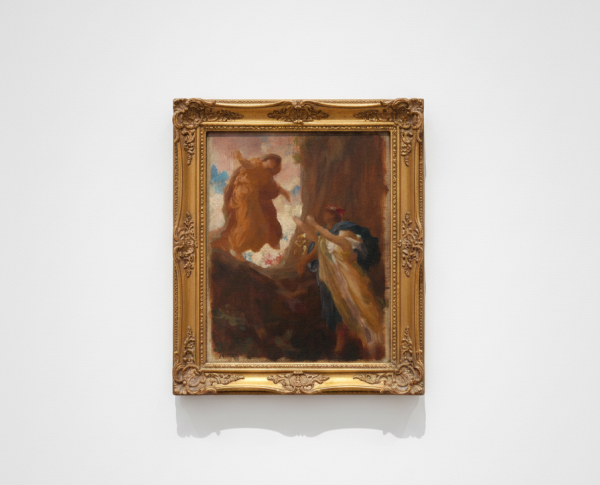
Lord Frederick Leighton’s "The Fisherman and the Siren" showcases his unparalleled skill in oil on canvas. The delicate interplay of light and shadow, combined with realistic anatomical detail, exemplifies the Academic Classicism movement. Collectors seeking a fine art painting for sale will appreciate the meticulous attention to every brushstroke. For those drawn to Leighton’s technique, other masterpieces like "The Villa Malta, Rome" and "The Death of Brunelleschi" are excellent companion pieces in any art collection.
In "The Fisherman and the Siren," Leighton weaves a narrative rich with mythological symbolism, a hallmark of Academic Classicism. The oil on canvas composition invites viewers to explore themes of temptation and fate through the interaction of the fisherman and the alluring siren. This hand-painted oil painting resonates with the same storytelling power as "The Return of Persephone" and "Actaea, the Nymph of the Shore," making it a captivating addition for collectors of narrative-driven artworks.
For those seeking a fine art painting for sale, "The Fisherman and the Siren" by Lord Frederick Leighton is an exquisite choice. This masterpiece of Academic Classicism stands alongside other notable works, such as "Cimabue's Celebrated Madonna" and "The Reconciliation of the Montagues and Capulets," as a collector’s dream. Owning this hand-painted oil painting not only enriches an art collection but also preserves the timeless beauty and craftsmanship of Leighton’s celebrated legacy.
When Art Meets History
"The Fisherman and the Siren" by Lord Frederick Leighton exemplifies the grandeur of the Academic Classicism movement. This hand-painted oil painting immerses viewers in a mythological narrative, reminiscent of Leighton's other masterpieces such as "Springtime" and "Venus Rising." Created during the late 19th century, the artwork reflects the era’s fascination with classical themes and meticulous technique, making it a significant piece for collectors and historians interested in the evolution of fine art painting for sale.
Techniques That Speak
Leighton's exceptional mastery of oil on canvas shines through in "The Fisherman and the Siren." Through delicate brushwork and a harmonious color palette, he brings the mythic encounter to life. The artist's approach is consistent with Academic Classicism, which emphasized precise anatomy and refined composition, as seen in related paintings like "Portrait of Marie-Célina Brieu" and "Song of the Angels." This oil on canvas work stands as a testament to Leighton's technical prowess and artistic vision.
Emotions on Display
"The Fisherman and the Siren" captures intense emotion, drawing viewers into a moment of tension and allure. The siren’s enigmatic gaze and the fisherman’s captivated expression evoke a sense of longing and danger. Lord Frederick Leighton, known for works like "St. Peter, after his delivery from prison by the angel," masterfully conveys complex feelings in this fine art painting for sale, making it a compelling addition to any collection of Academic Classicism artworks.
Coveted by Collectors
Collectors highly seek "The Fisherman and the Siren" for its rich narrative and exquisite artistry. As a hand-painted oil painting by Lord Frederick Leighton, it stands alongside renowned pieces such as "Springtime" and "Venus Rising" in desirability. The painting’s Academic Classicism roots and its intricate depiction of mythological themes make it a prized fine art painting for sale, appealing to those passionate about historical and artistic excellence in oil on canvas masterpieces.
Related Academic Classicism Hand-Painted Oil Paintings by Other Artists
Other Famous Academic Classicism Artists:
Frequently Asked Questions About The Fisherman and the Siren
What is the historical context of "The Fisherman and the Siren"?
"The Fisherman and the Siren" was painted by Lord Frederick Leighton in 1856, during the Victorian era, a time characterized by a fascination with classical themes, mythology, and the exploration of human emotions through art.
What artistic techniques did Leighton employ in this painting?
Leighton utilized a combination of classical composition and dramatic lighting, employing a rich color palette and intricate details to convey both the beauty and the peril of the siren's allure.
What themes are explored in "The Fisherman and the Siren"?
The painting explores themes of temptation, danger, and the duality of beauty and destruction, as represented by the siren's enchanting song that lures the fisherman into peril.
How does Leighton depict the relationship between the fisherman and the siren?
Leighton captures a moment of tension between the fisherman and the siren, illustrating the seductive power of the siren while simultaneously highlighting the vulnerability of the fisherman, thus embodying the struggle between desire and caution.
What symbolism is present in the figures of the fisherman and the siren?
The fisherman represents humanity and its quest for knowledge and experience, while the siren symbolizes temptation and the unknown, reflecting the eternal conflict between aspiration and the risks that accompany it.
What influences can be seen in Leighton's style in this painting?
Leighton's style in "The Fisherman and the Siren" is influenced by the Pre-Raphaelite movement, evident in the detailed naturalism and the emphasis on emotional expression, as well as classical themes reminiscent of ancient mythology.
How does the composition of the painting enhance its narrative?
The composition draws the viewer's eye towards the central figures, with the dynamic poses and flowing lines creating a sense of movement and drama, effectively enhancing the narrative of temptation and impending danger.
What role does color play in "The Fisherman and the Siren"?
Color plays a crucial role in establishing mood and emotion; the vibrant hues of the siren contrast with the more subdued tones of the fisherman, symbolizing the clash between the enchanting and the mundane.
In what ways does this painting reflect Victorian attitudes towards women?
The siren in the painting can be interpreted as a reflection of Victorian attitudes towards women, embodying both allure and danger, which mirrors societal views of femininity as both captivating and potentially destructive.
What is the significance of the setting in "The Fisherman and the Siren"?
The setting, with its tumultuous sea and rocky shore, serves as a metaphor for the unpredictable nature of desire and the emotional turmoil that accompanies the pursuit of beauty and love, reinforcing the painting's overarching themes.























_GFM_Painting_(1).webp)



 100% Hand-Painted: Finished in 3-6 Weeks


.png)




















_(1).webp)