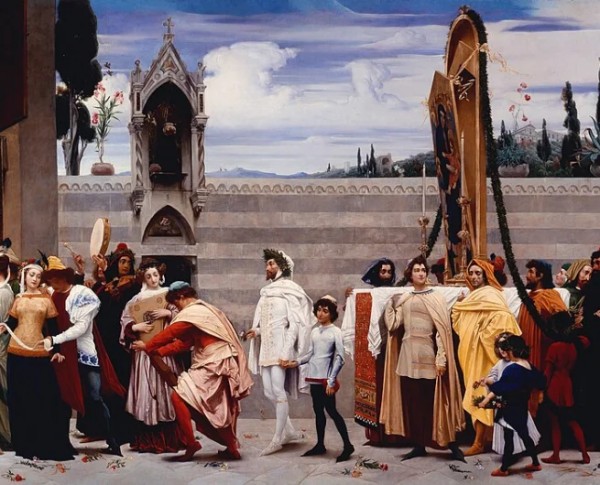
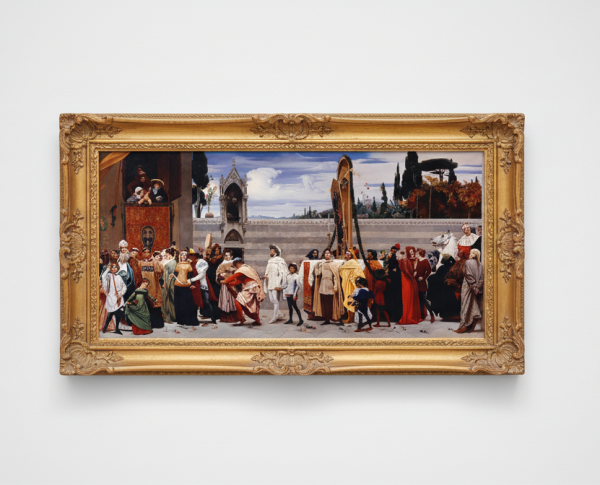
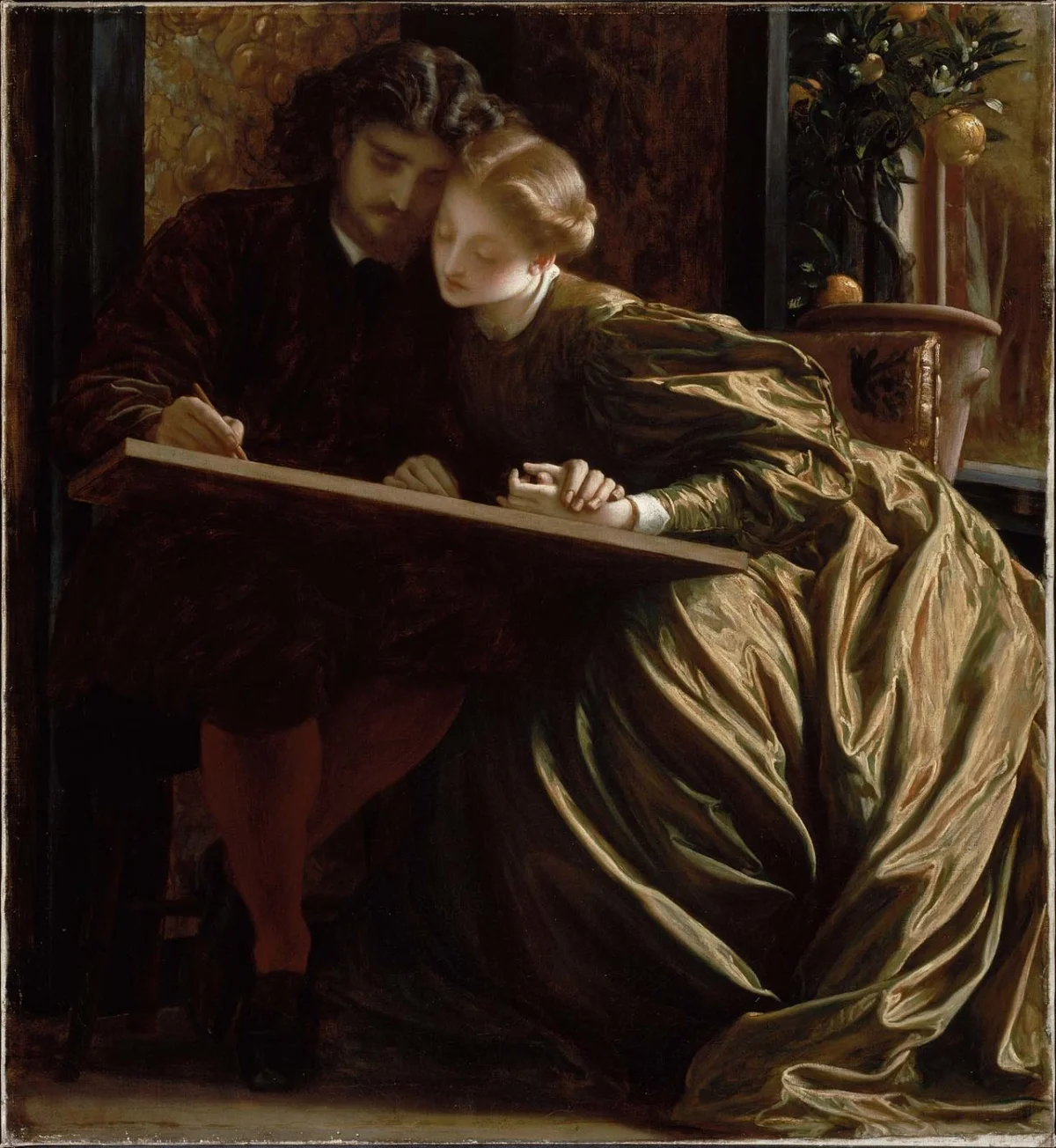
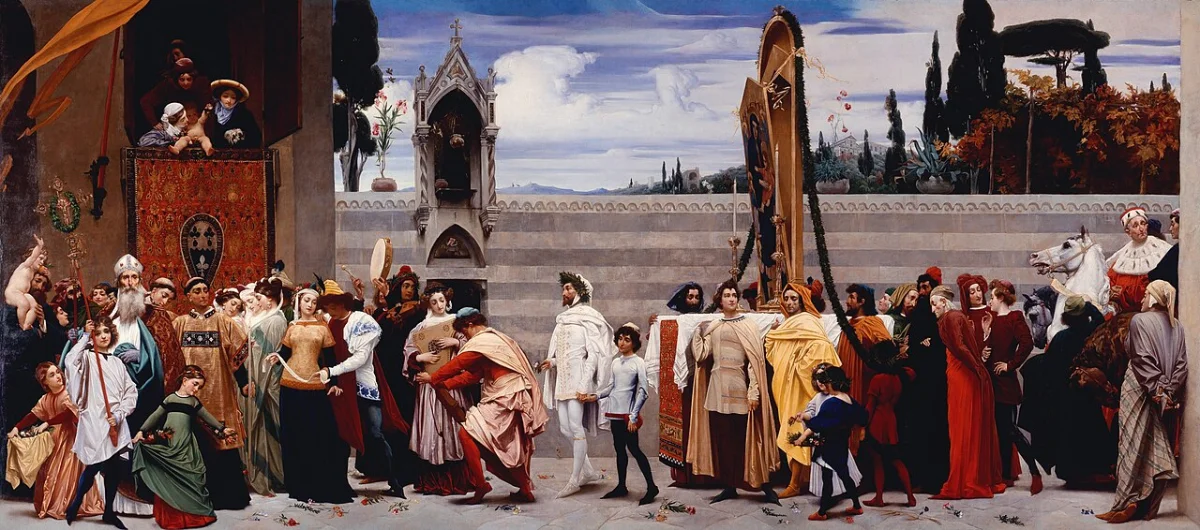
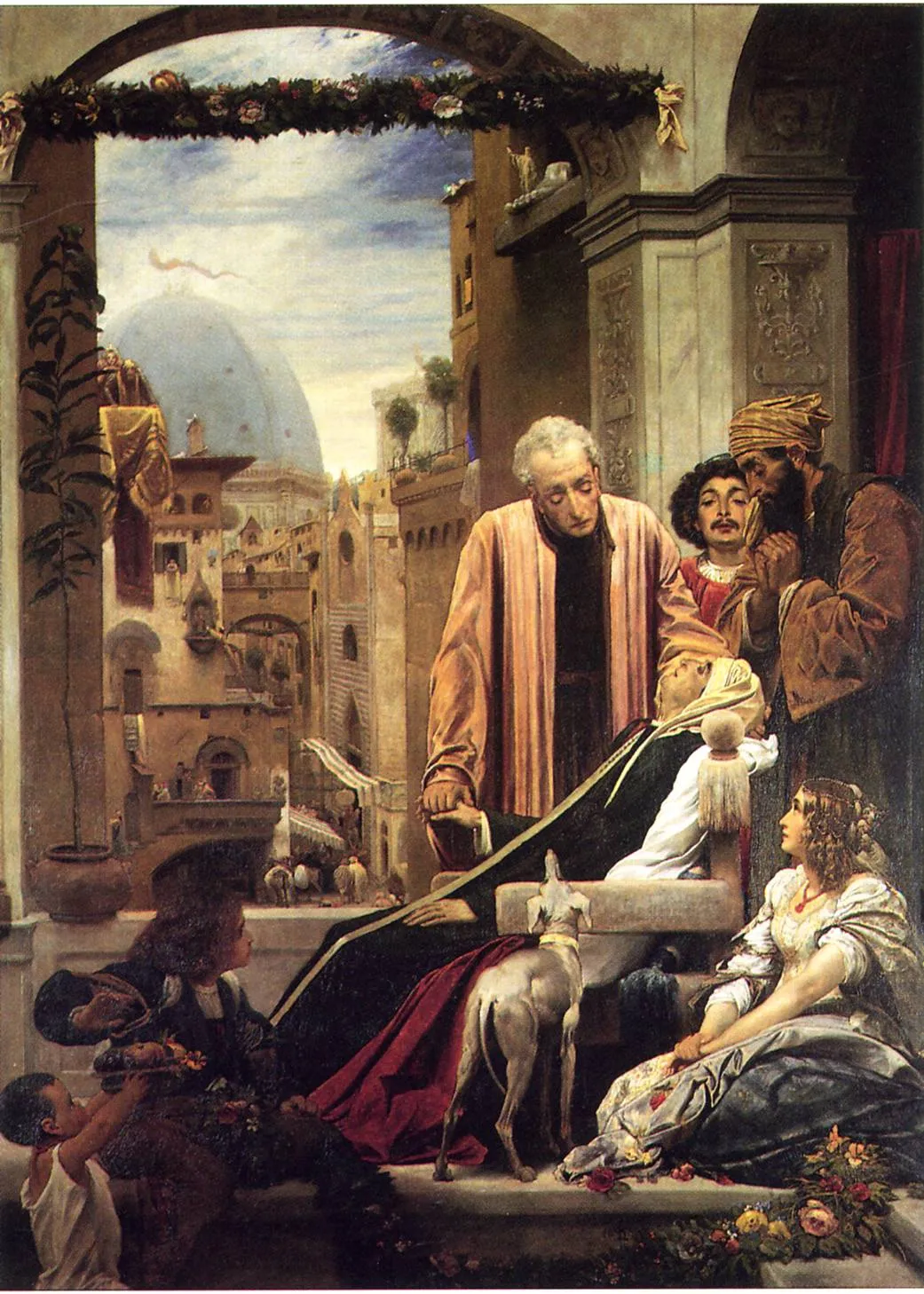
Lord Frederick Leighton’s "The Painter's Honeymoon" demonstrates exceptional skill in oil on canvas, showcasing his signature attention to detail and lifelike textures. The Academic Classicism movement prized technical precision, and Leighton’s brushwork in this piece rivals that of his other masterpieces like "Cimabue's Celebrated Madonna." The harmonious composition and subtle color palette make this painting a coveted example for enthusiasts searching for a fine art painting for sale.
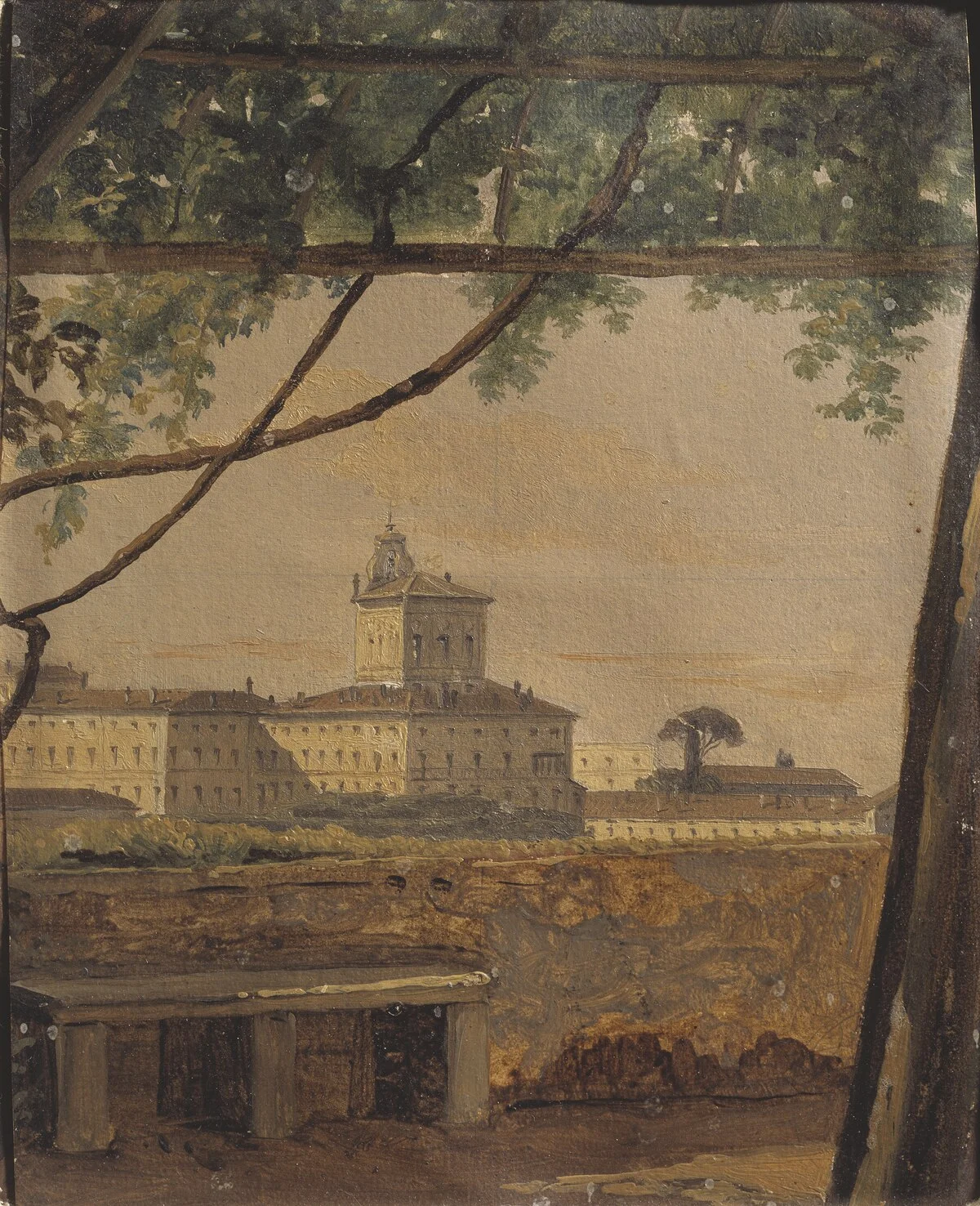
Every element in "The Painter's Honeymoon" reveals layers of meaning, from the gentle touch between the figures to the symbolic use of light. Lord Frederick Leighton infused his hand-painted oil painting with narrative depth, much like he did in "The Villa Malta, Rome." Collectors of Academic Classicism appreciate these hidden stories, which elevate each fine art painting for sale into a masterpiece worthy of contemplation and admiration.
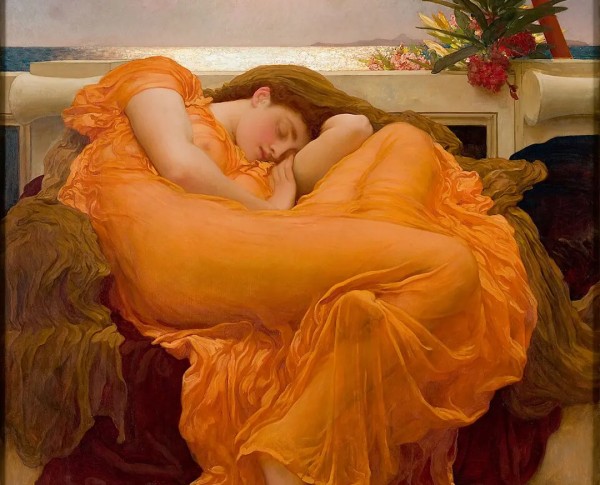
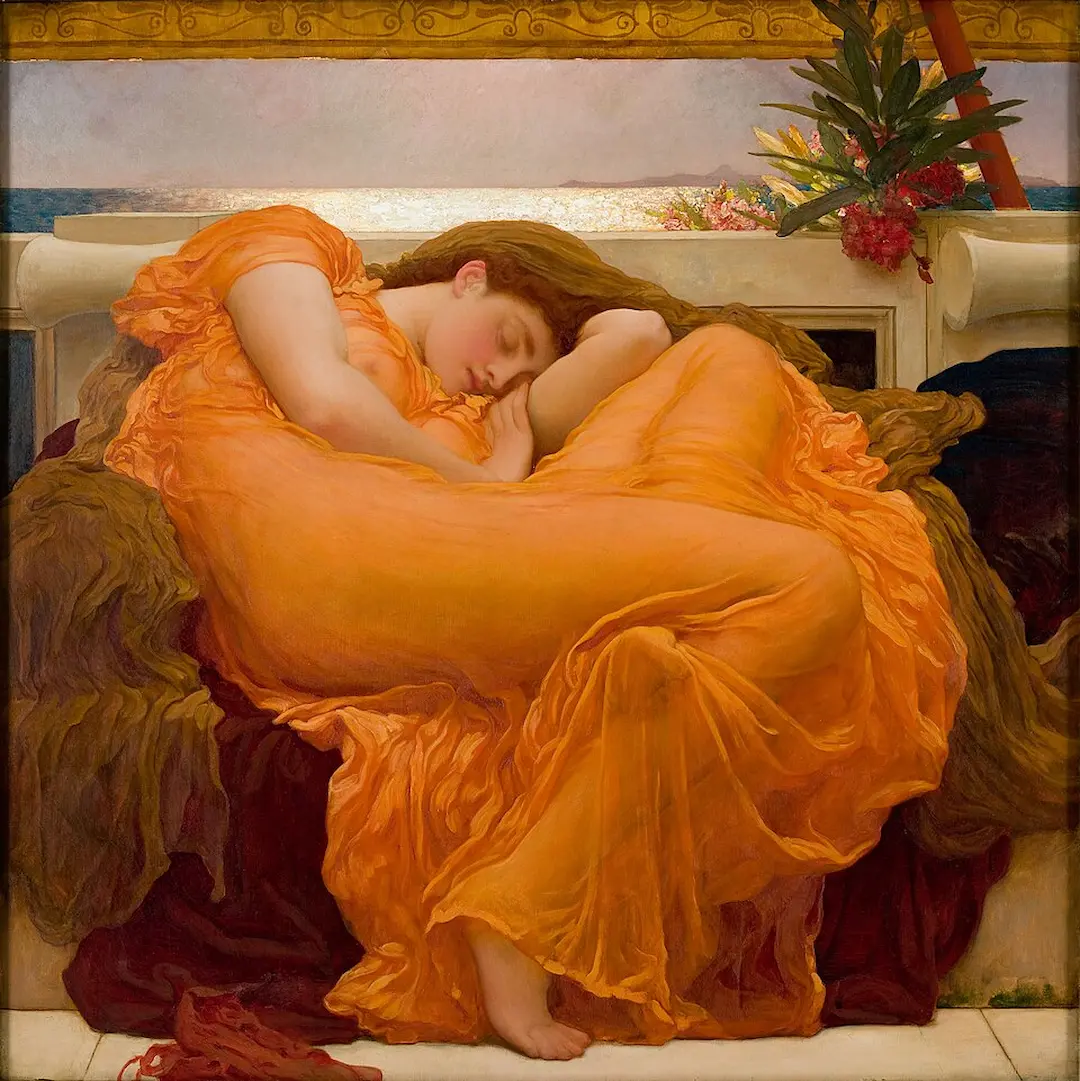
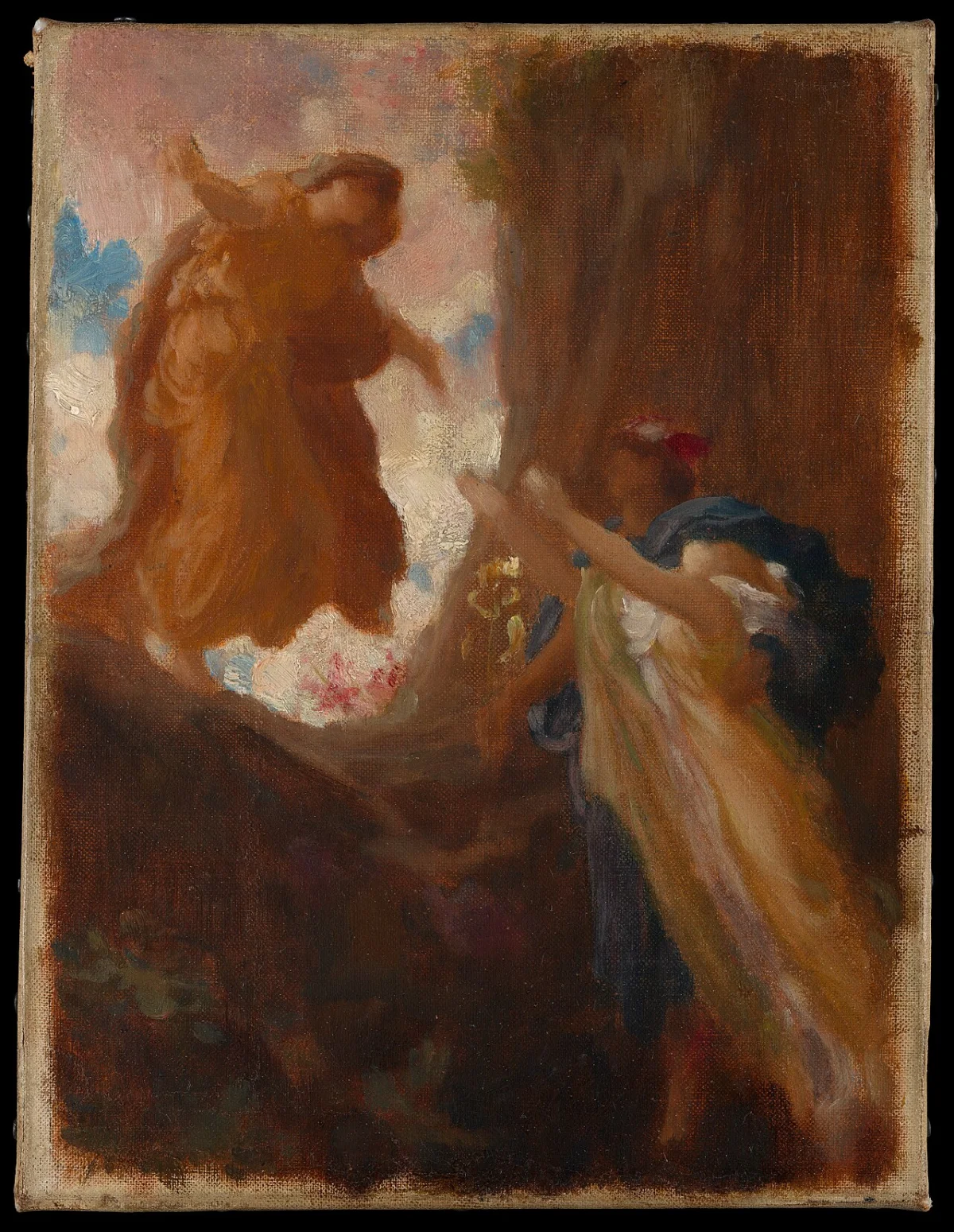
Acquiring "The Painter's Honeymoon" by Lord Frederick Leighton is a rare opportunity for any serious collector of Academic Classicism. This oil on canvas piece, alongside related works like "Flaming June" and "The Return of Persephone," represents the pinnacle of 19th-century artistry. For those in search of a fine art painting for sale, Leighton’s legacy ensures each acquisition is both an investment and a celebration of timeless beauty.
When Art Meets History
"The Painter's Honeymoon" by Lord Frederick Leighton stands as a remarkable example of the Academic Classicism movement. This hand-painted oil painting, completed in 1864, captures an intimate moment of an artist and his bride, blending personal narrative with the grandeur of classical art. Leighton, also known for works like "L'innocence (Innocence)" and "Springtime," excelled at weaving historical context and emotional depth, making each canvas a timeless window into the past.
Techniques That Speak
Lord Frederick Leighton’s masterful use of oil on canvas is evident in "The Painter's Honeymoon," where meticulous brushwork and luminous color palettes define the figures and their surroundings. As a key figure in Academic Classicism, Leighton’s attention to anatomical accuracy and soft lighting echoes throughout related paintings such as "Young Girl Defending Herself against Eros 1880" and "The Slave Market." Each stroke in this artwork showcases the technical prowess of traditional European painting.
Emotions on Display
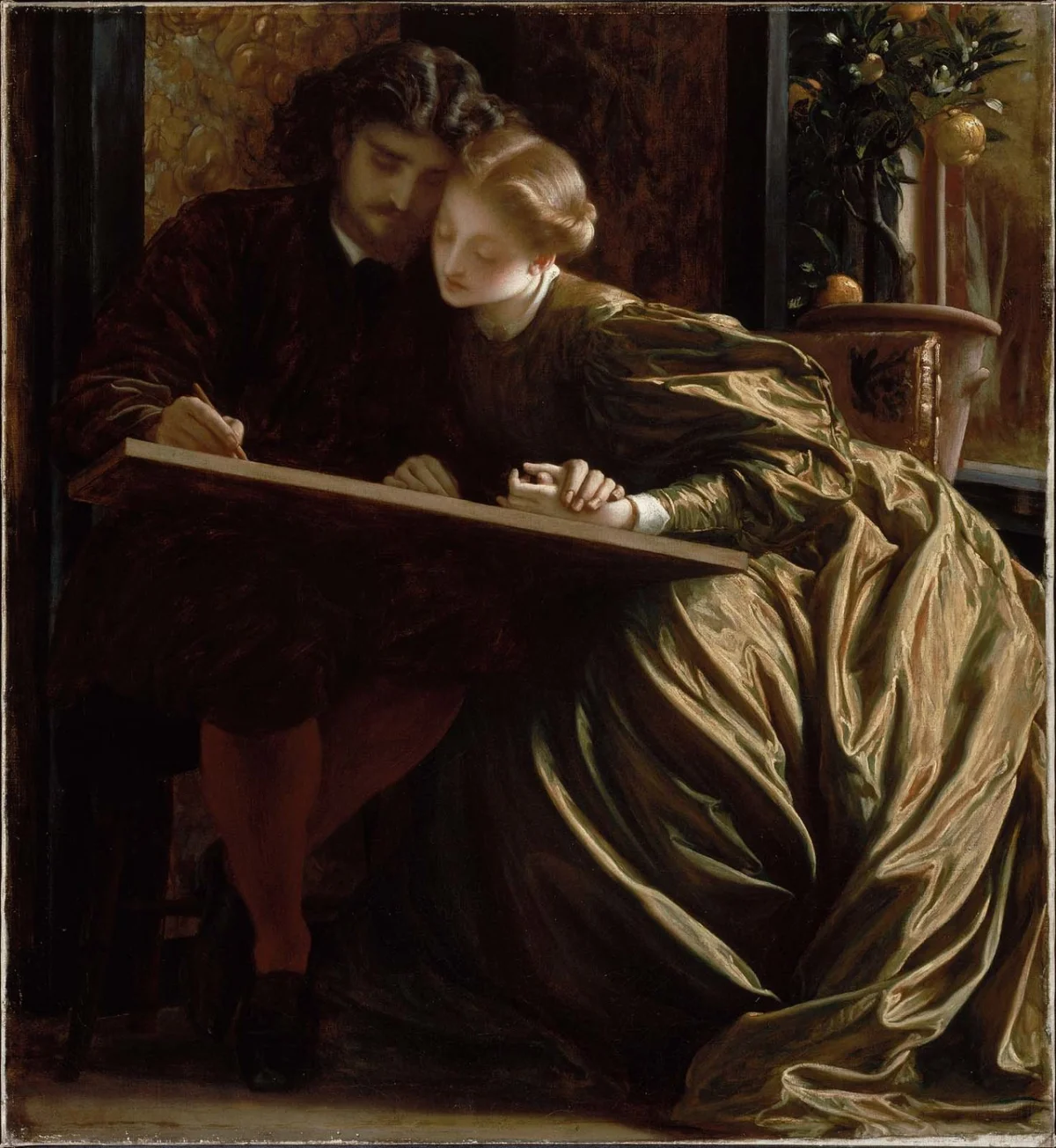
In "The Painter's Honeymoon," Lord Frederick Leighton delicately renders the gentle affection between husband and wife, making this fine art painting for sale a testament to human tenderness. The serene expressions and intertwined hands evoke a sense of calm intimacy, a hallmark of the Academic Classicism movement. Similar emotional resonance can be found in Leighton’s "Pieta" and "Springtime," where nuanced gestures and gazes convey profound stories beyond the canvas.
Coveted by Collectors
As a prime example of Academic Classicism, "The Painter's Honeymoon" by Lord Frederick Leighton remains highly sought after among collectors and art enthusiasts. This hand-painted oil painting, along with related masterpieces like "The Slave Market" and "L'innocence (Innocence)," continues to command admiration in galleries and auctions alike. The enduring appeal of Leighton’s work ensures that each piece, especially those in oil on canvas, remains a coveted treasure in the world of fine art.
Related Academic Classicism Hand-Painted Oil Paintings by Other Artists
Other Famous Academic Classicism Artists:
Frequently Asked Questions About The Painter's Honeymoon
What is the historical context of "The Painter's Honeymoon"?
"The Painter's Honeymoon," created by Lord Frederick Leighton in 1891, reflects the Victorian era's fascination with romanticism and idealized beauty. This period was marked by a revival of classical themes and a focus on the emotional experiences of individuals.
What artistic techniques did Leighton employ in this painting?
Leighton utilized a combination of classical composition and vibrant color palettes, employing techniques such as chiaroscuro to create depth and dimension. His attention to detail in the figures and drapery showcases his mastery of the human form and texture.
What themes are explored in "The Painter's Honeymoon"?
The painting explores themes of love, intimacy, and the creative process. It captures a moment of connection between the couple, symbolizing the union of personal and artistic passions.
How does "The Painter's Honeymoon" reflect Leighton's artistic style?
Leighton's style is characterized by a blend of classical influences and a focus on the human figure. This painting exemplifies his ability to merge narrative with aesthetic beauty, showcasing his unique approach to storytelling through art.
What symbolism is present in the painting?
The painting is rich in symbolism, with the couple representing the harmony between love and art. The setting and the objects within the composition, such as the palette and brushes, symbolize the intertwining of personal relationships and artistic expression.
What is the significance of the couple's pose in the artwork?
The couple's pose conveys a sense of tenderness and mutual admiration, illustrating the deep emotional bond between them. Their intimate positioning suggests a shared journey, both personal and artistic, reinforcing the theme of collaboration in love and creativity.
How does the color palette contribute to the painting's mood?
The warm and rich color palette enhances the romantic atmosphere of the painting. The use of soft, glowing hues evokes feelings of warmth and intimacy, drawing the viewer into the emotional landscape of the scene.
In what ways does "The Painter's Honeymoon" reflect the ideals of the Aesthetic Movement?
The painting embodies the Aesthetic Movement's principle of "art for art's sake," emphasizing beauty and sensory experience over moral or narrative content. It celebrates the visual pleasure derived from the harmonious composition and exquisite detail.
How has "The Painter's Honeymoon" influenced modern interpretations of art and love?
This painting has inspired modern interpretations of the relationship between art and love, encouraging contemporary artists to explore similar themes of intimacy and creativity. Its enduring appeal lies in its ability to resonate with universal human experiences.
Where can I view "The Painter's Honeymoon" today?
"The Painter's Honeymoon" is housed in the collection of the Leighton House Museum in London, which celebrates the life and work of Lord Frederick Leighton, providing an opportunity to appreciate this masterpiece in person.






















_GFM_Painting_(1).webp)


 100% Hand-Painted: Finished in 3-6 Weeks

.png)















_(1).webp)