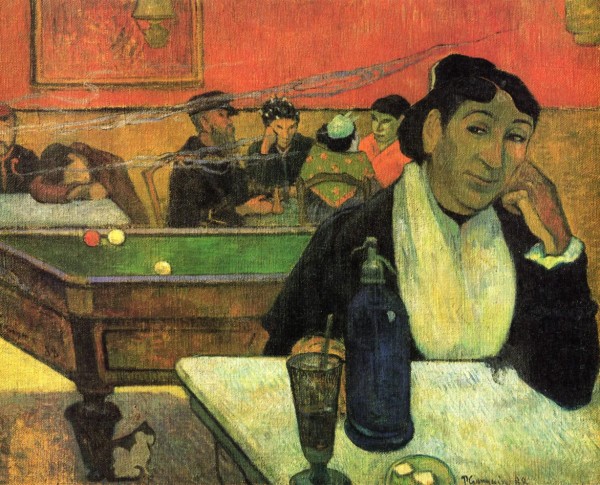
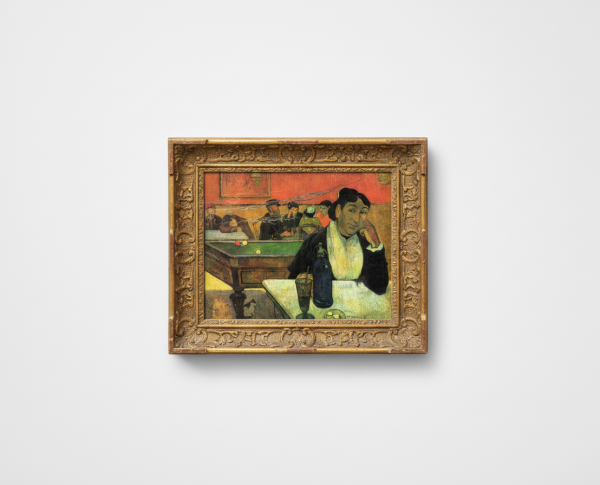
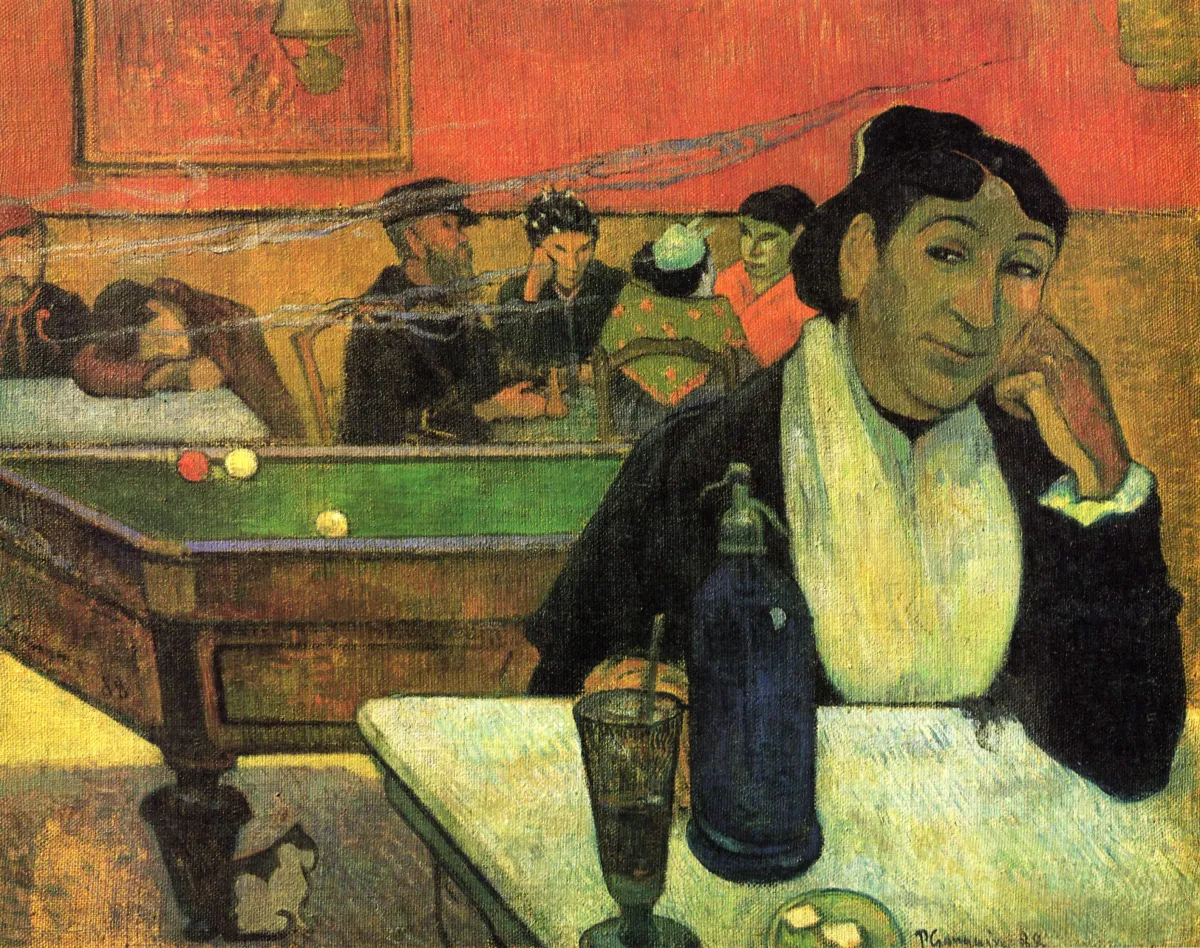
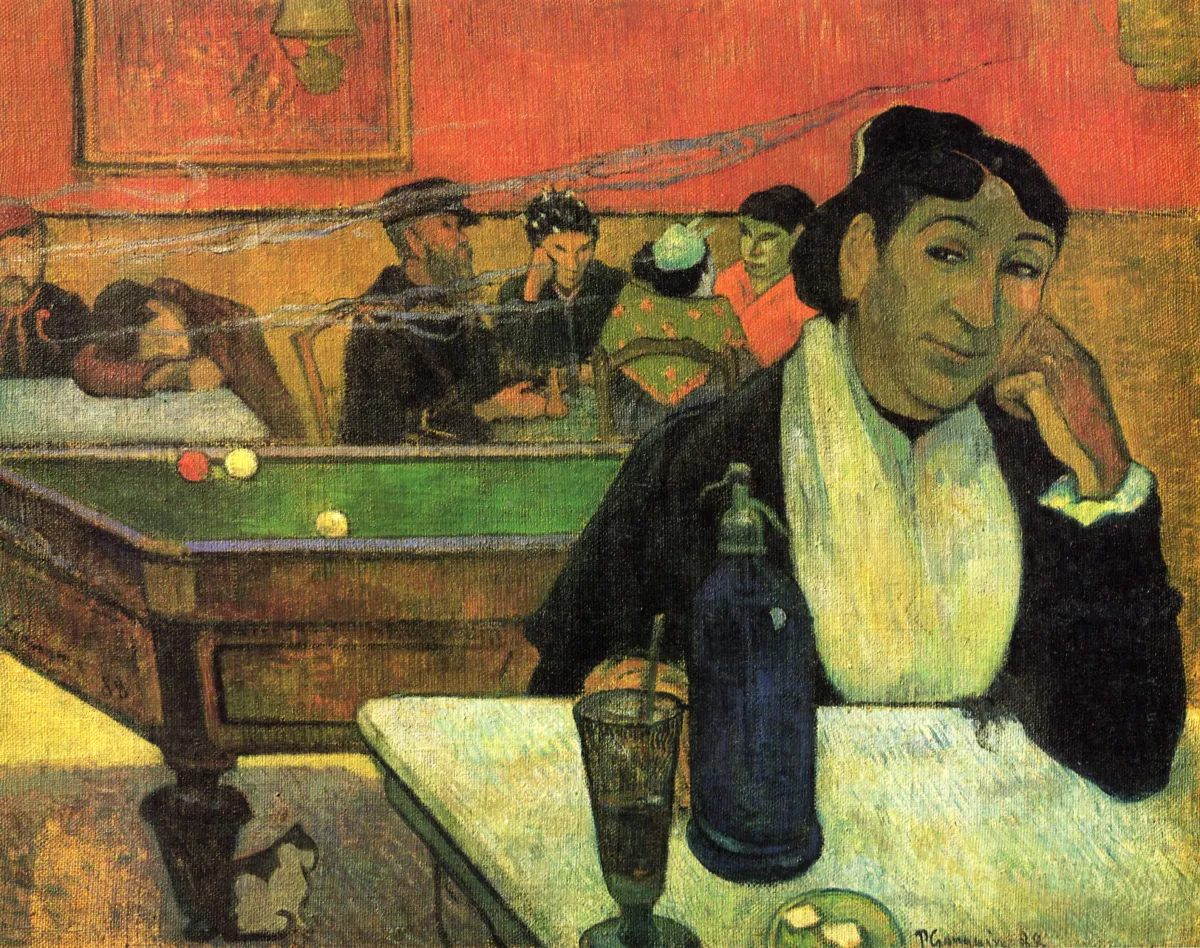
Paul Gauguin’s "The Night Café in Arles" exemplifies his mastery of oil on canvas techniques. The composition features striking contrasts and dynamic forms, hallmarks of Post-Impressionism. Each brushstroke reveals Gauguin’s innovative approach to light and color. For those interested in expanding their art collection, other notable works include "Where Do We Come From? What Are We? Where Are We Going?" and "Ia Orana Maria," both showcasing Gauguin’s exceptional artistry.
Every element in "The Night Café in Arles" tells a story, reflecting Paul Gauguin’s fascination with symbolism in the Post-Impressionism era. The painting’s vivid colors and intriguing figures invite viewers to interpret its deeper meanings. As a fine art painting for sale, it appeals to those who appreciate art’s narrative power. Collectors may also find interest in related Gauguin pieces such as "The Royal End" and "Self-portrait with hat," each rich in symbolic detail.
Owning "The Night Café in Arles" by Paul Gauguin means acquiring a piece of art history from the Post-Impressionism movement. This hand-painted oil painting is a prized addition for any collector seeking authenticity and artistic legacy. For those wishing to expand their collection, related products like "Ia Orana Maria" and "The Royal End" offer further insight into Gauguin’s creative journey and enduring influence in the world of fine art.
When Art Meets History
"The Night Café in Arles" by Paul Gauguin stands as a remarkable testament to the Post-Impressionism movement. Created during a vibrant period of artistic collaboration, this hand-painted oil painting reflects the dynamic exchanges between Gauguin and his contemporaries. Works like "Harvest At La Crau With Montmajour In The Background" and "Cafe Terrace on the Place du Forum" echo similar themes and moods, highlighting the historical significance of Arles as a hub of creativity and innovation in late 19th-century art.
Techniques That Speak
Paul Gauguin’s mastery of oil on canvas is evident in "The Night Café in Arles," where bold brushstrokes and vivid colors merge to form a striking visual narrative. The Post-Impressionist approach is clear, with expressive techniques that set his work apart from traditional Impressionism. Gauguin’s method can be compared to his other pieces, such as "Mulberry Tree" and "Cypresses," where he employs a similar textured vibrancy, inviting viewers to appreciate the tactile beauty of each composition.
Emotions on Display
"The Night Café in Arles" radiates intense emotions through its evocative use of color and composition. Paul Gauguin captures the atmosphere of nocturnal life, immersing the viewer in a world of solitude and contemplation. This fine art painting for sale resonates with the emotional depth found in works like "Branches with Almond Blossom," as both paintings reveal the artist’s ability to translate mood and feeling into powerful visual statements characteristic of Post-Impressionism.
Coveted by Collectors
As a celebrated example of Post-Impressionism, "The Night Café in Arles" by Paul Gauguin is highly sought after by art collectors worldwide. The allure of owning a hand-painted oil painting of such historical and artistic significance is undeniable. Its connection to other masterpieces like "Cafe Terrace on the Place du Forum" and "Cypresses" only increases its desirability, making it a prized addition to any collection of fine art from this transformative era.
Related Post-Impressionism Hand-Painted Oil Paintings by Other Artists
Other Famous Post-Impressionism Artists:
Frequently Asked Questions About The Night Café in Arles
What is the historical context of The Night Café in Arles?
The Night Café in Arles was painted by Vincent van Gogh in September 1888 during his time in Arles, France. This period was marked by his pursuit of color and emotional expression, as he sought to capture the essence of life in the vibrant café culture of the time.
What artistic techniques did Van Gogh use in this painting?
Van Gogh employed bold colors and dynamic brushstrokes to convey emotion and atmosphere. The use of complementary colors, particularly the contrasting reds and greens, enhances the intensity of the scene, while his impasto technique adds texture and depth.
What is the significance of the color palette in The Night Café?
The color palette of The Night Café is significant as it reflects Van Gogh's emotional state and his desire to evoke feelings of isolation and anxiety. The vivid reds and yellows create a sense of warmth but also contribute to a feeling of unease, mirroring the duality of the café environment.
What themes are explored in The Night Café in Arles?
The painting explores themes of loneliness, social interaction, and the human condition. The café serves as a microcosm of society, highlighting the contrast between the lively atmosphere and the underlying sense of alienation experienced by individuals.
How does Van Gogh depict the figures in the café?
Van Gogh's figures in The Night Café are portrayed with exaggerated features and distorted forms, emphasizing their emotional states. The lack of detailed facial expressions suggests a sense of detachment, reinforcing the theme of isolation amidst social settings.
What role does light play in The Night Café?
Light in The Night Café is used to create a dramatic contrast between the illuminated interior and the dark exterior. This interplay of light and shadow not only enhances the mood but also symbolizes the duality of comfort and discomfort found within social spaces.
How does The Night Café reflect Van Gogh's personal experiences?
The Night Café reflects Van Gogh's personal struggles with mental health and his feelings of loneliness. His choice of subject matter and the emotional intensity of the painting serve as a window into his psyche during a tumultuous period in his life.
What is the significance of the café setting in the painting?
The café setting is significant as it represents a social hub where individuals gather yet often remain disconnected. It serves as a backdrop for exploring the complexities of human relationships, highlighting both community and isolation.
How did The Night Café influence later art movements?
The Night Café influenced later art movements, particularly Expressionism, by demonstrating how color and form can be used to convey emotional depth. Its bold use of color and emotive brushwork paved the way for artists seeking to express subjective experiences through their work.
What is the legacy of The Night Café in Arles today?
The legacy of The Night Café endures as a quintessential example of Van Gogh's innovative approach to color and emotion. It continues to inspire artists and captivates audiences, serving as a testament to the power of art to reflect the complexities of human experience.






















_GFM_Painting_(1).webp)


 100% Hand-Painted: Finished in 3-6 Weeks

.png)















_(1).webp)