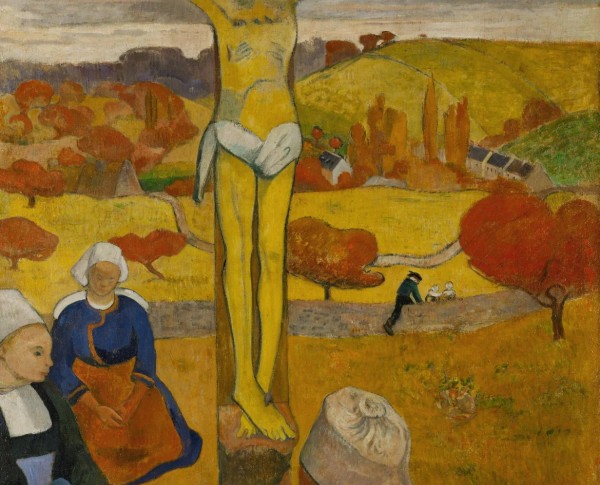
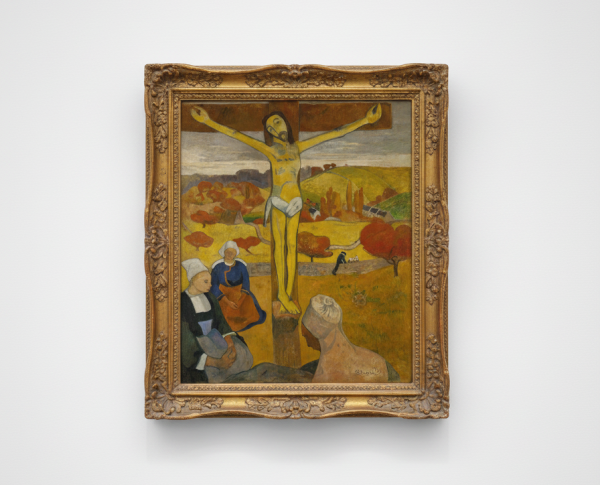
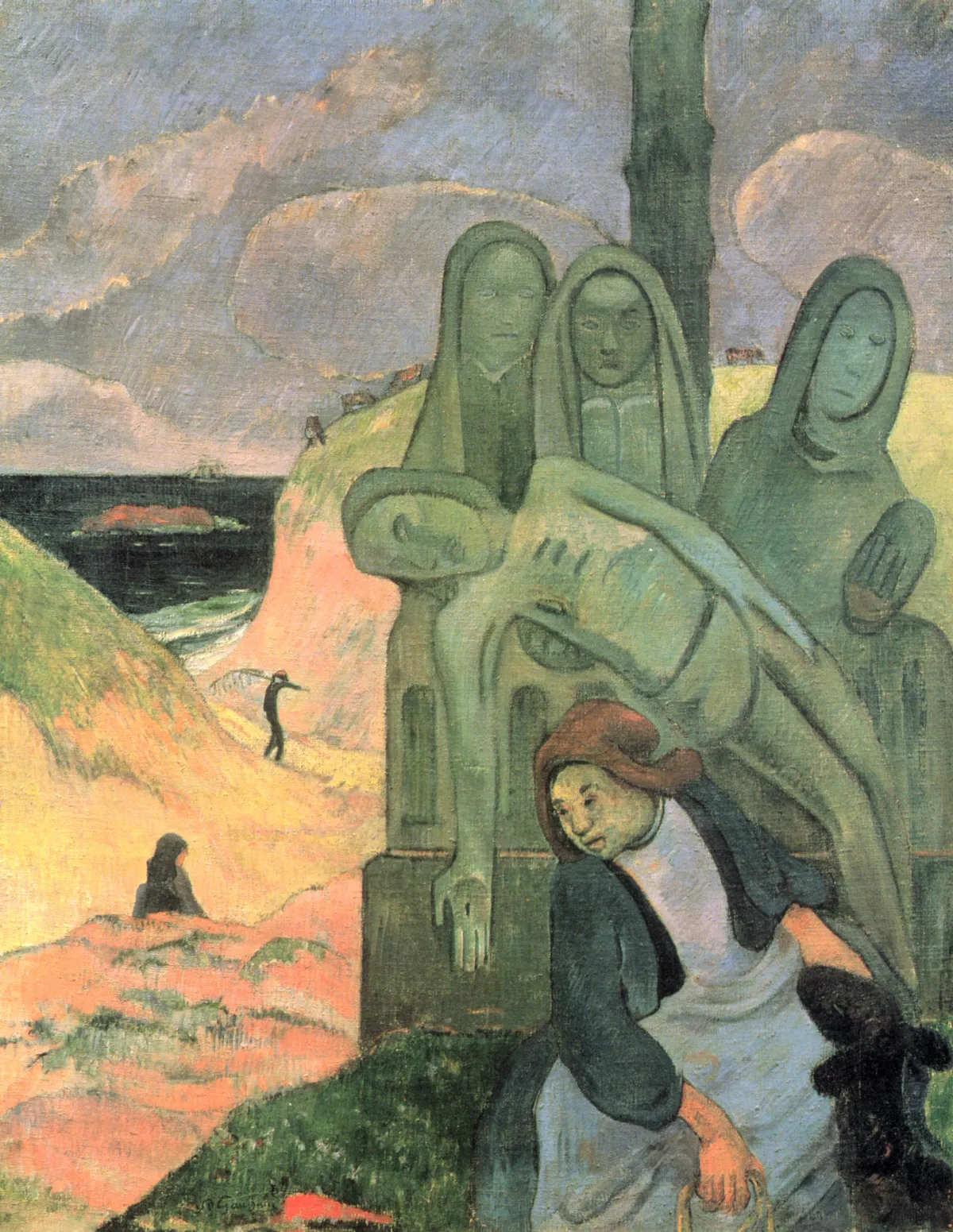
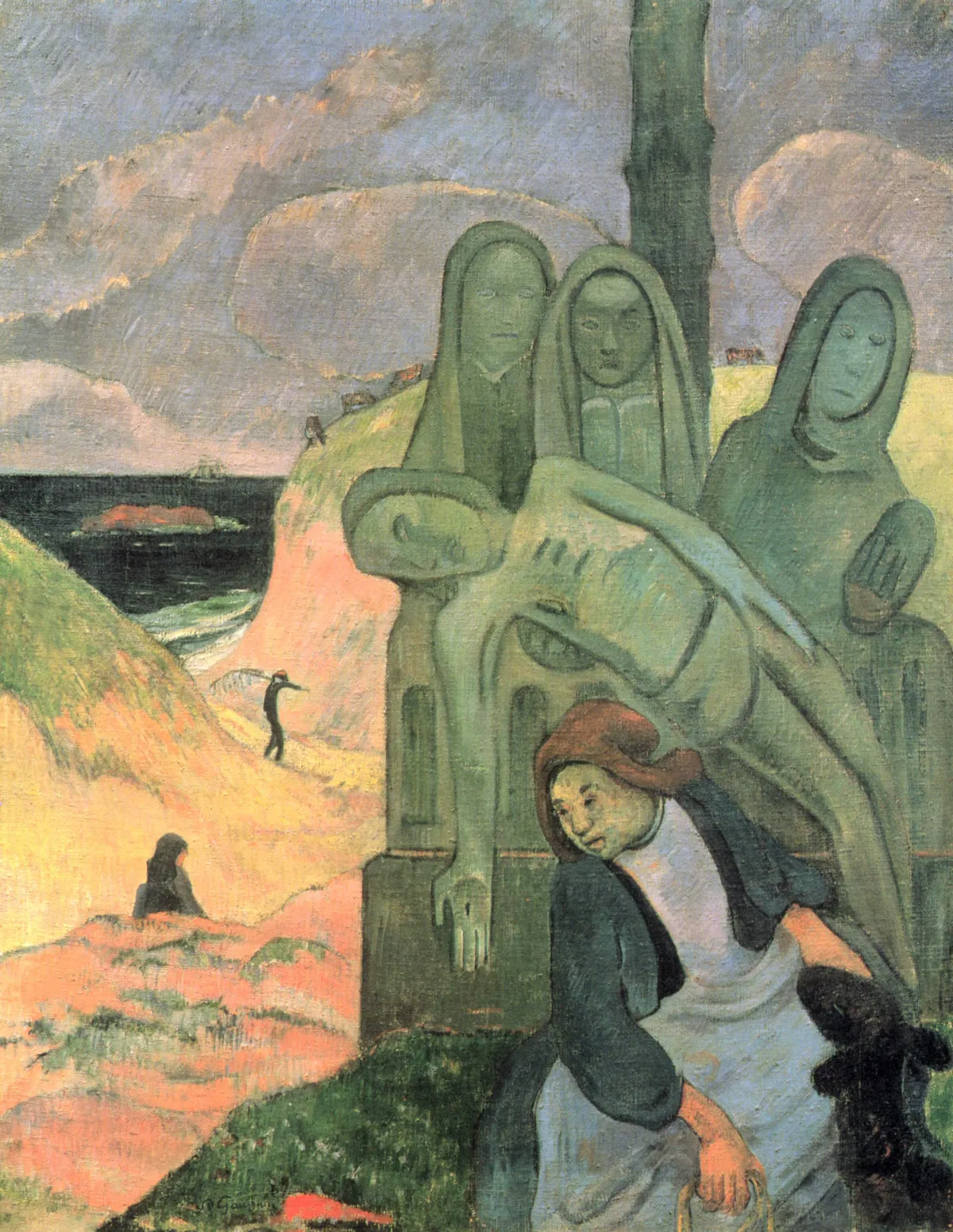
Gauguin’s technique in "The Green Christ" exemplifies the mastery of oil on canvas that defined the Post-Impressionism era. Each brushstroke reveals his ability to blend color and symbolism, creating a powerful narrative within the painting. Collectors seeking a fine art painting for sale often admire this work alongside related pieces such as "Where Do We Come From? What Are We? Where Are We Going?" and "Manaò tupapaú," all showcasing Gauguin’s visionary style.
"The Green Christ" by Paul Gauguin is rich in symbolism, reflecting the artist’s fascination with spirituality and cultural identity. This hand-painted oil painting weaves together religious iconography and bold color contrasts, hallmarks of the Post-Impressionism movement. Similar themes can be found in Gauguin’s works like "The Painter of Sunflowers" and "Vairumati," inviting viewers to explore deeper meanings and stories within each masterpiece.
For art collectors, "The Green Christ" remains a coveted oil on canvas masterpiece that embodies the spirit of Post-Impressionism. Its availability as a fine art painting for sale enhances its allure, especially when considered alongside related works by Paul Gauguin. Whether displayed with "Te Poipoi" or "Manaò tupapaú," this painting is a centerpiece that elevates any collection, celebrating the enduring influence of Gauguin’s artistic legacy.
When Art Meets History
"The Green Christ" by Paul Gauguin is a striking example of the Post-Impressionism movement, reflecting the era's fascination with symbolism and spirituality. Created in 1889, this hand-painted oil painting captures the unique blend of Breton folklore and religious iconography. Gauguin, renowned for works like "Bowl With Peonies And Roses" and "Cypress against a Starry Sky," brings history to life by merging local culture with universal themes, making this masterpiece a cornerstone of fine art history.
Techniques That Speak
Paul Gauguin’s "The Green Christ" showcases his mastery of oil on canvas, using bold colors and expressive brushstrokes to convey emotion and depth. The Post-Impressionism style is evident in his use of flat areas of vivid color, a technique also seen in "Boy Cutting Grass with a Sickle" and "Wheat Field With Crows." Gauguin’s innovative approach to layering and texture gives the painting a unique vibrancy, inviting viewers to explore every detail.
Emotions on Display
"The Green Christ" evokes a profound sense of spirituality and introspection, hallmarks of Post-Impressionist fine art painting for sale. Gauguin’s depiction of a sorrowful Christ figure resonates with viewers, much like the emotive power found in "Dog" and his other works. The painting’s somber tones and symbolic imagery invite contemplation, making it a deeply moving piece that connects on both personal and universal levels.
Coveted by Collectors
Collectors highly value "The Green Christ" by Paul Gauguin, not only for its historical significance but also for its exceptional artistry as a hand-painted oil painting. As a celebrated work of the Post-Impressionism movement, it stands alongside masterpieces such as "Bowl With Peonies And Roses" and "Wheat Field With Crows." Its rarity and powerful imagery make it a sought-after treasure for those seeking a truly unique and meaningful addition to their collection.
Related Post-Impressionism Hand-Painted Oil Paintings by Other Artists
Other Famous Post-Impressionism Artists:
Frequently Asked Questions About The Green Christ
What is the historical context of The Green Christ?
The Green Christ was painted by Paul Gauguin in 1889 during his time in Tahiti, a period marked by his exploration of non-Western cultures and a desire to escape European civilization.
What artistic techniques did Gauguin use in The Green Christ?
Gauguin employed bold colors, simplified forms, and strong outlines in The Green Christ, reflecting his Post-Impressionist style and his interest in symbolism and emotional expression.
What is the significance of the color green in The Green Christ?
The color green in the painting symbolizes life, renewal, and nature, contrasting with the traditional representations of Christ, which often utilize more subdued or somber tones.
How does The Green Christ reflect Gauguin's interest in spirituality?
The Green Christ illustrates Gauguin's fascination with spirituality and the divine, merging Christian iconography with indigenous Tahitian elements, thereby creating a unique narrative that challenges Western religious conventions.
What themes are explored in The Green Christ?
The painting explores themes of faith, sacrifice, and the intersection of cultures, as it juxtaposes Western religious imagery with the vibrant, spiritual life of the Tahitian people.
How does The Green Christ compare to other works by Gauguin?
Unlike many of his earlier works that focused on Impressionism, The Green Christ showcases Gauguin's shift towards Symbolism, emphasizing emotional depth and cultural commentary through its vivid color palette and stylized forms.
What is the significance of the figures depicted in The Green Christ?
The figures in The Green Christ represent a blend of Christian and indigenous Tahitian beliefs, highlighting Gauguin's intent to create a dialogue between different spiritual traditions and cultural identities.
How did The Green Christ influence later art movements?
The Green Christ influenced later art movements such as Fauvism and Expressionism, as artists were inspired by Gauguin's use of color and form to convey emotional and spiritual experiences.
What was Gauguin's intention behind creating The Green Christ?
Gauguin intended to challenge traditional representations of Christ and to express his personal interpretation of spirituality, drawing from his experiences in Tahiti and his desire for a more profound connection with nature and the divine.
Where can The Green Christ be viewed today?
The Green Christ is part of the collection at the Musée d'Orsay in Paris, where it continues to be a significant piece for understanding Gauguin's artistic evolution and the cultural exchanges of the late 19th century.






















_GFM_Painting_(1).webp)


 100% Hand-Painted: Finished in 3-6 Weeks

.png)















_(1).webp)