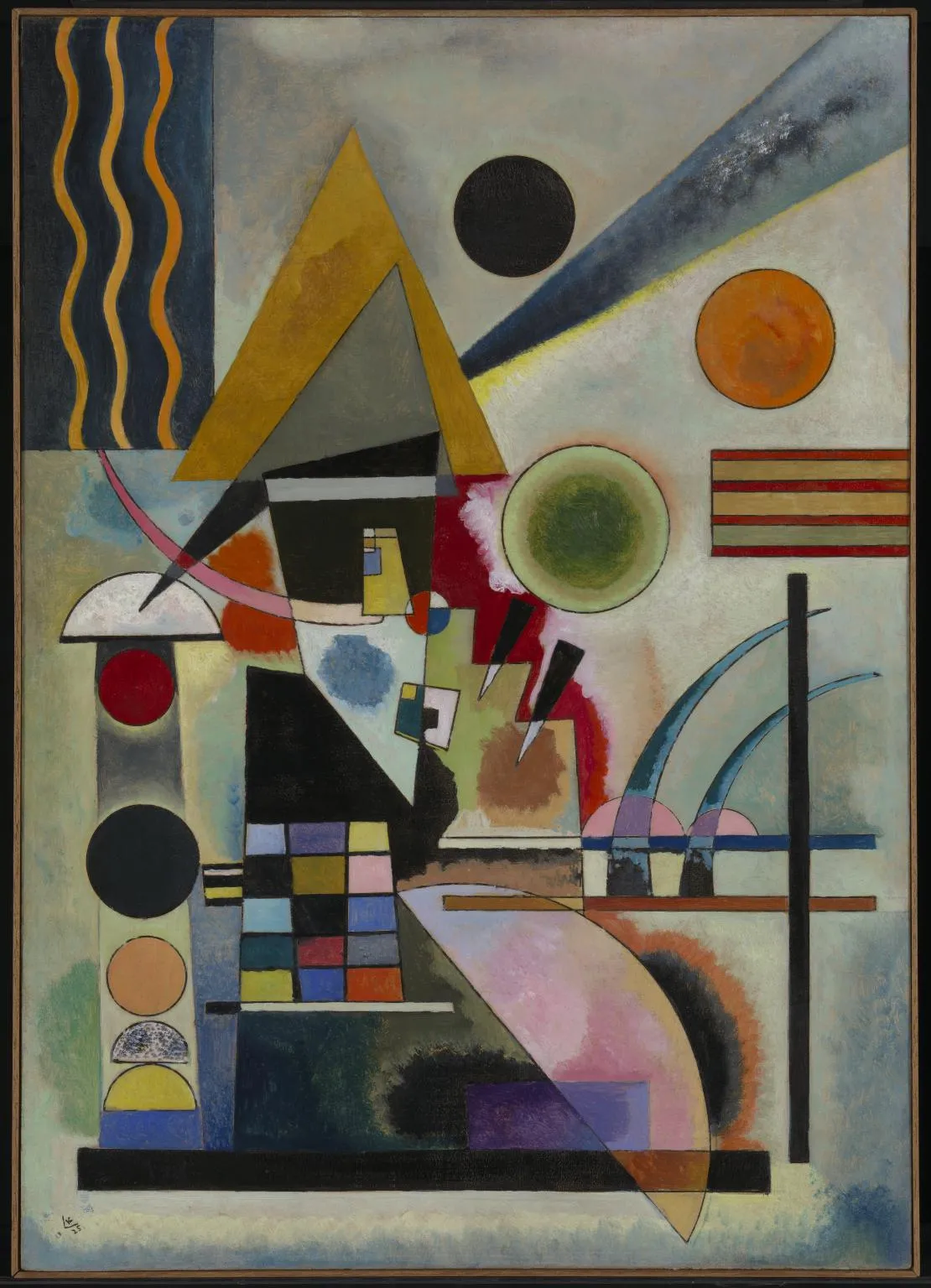
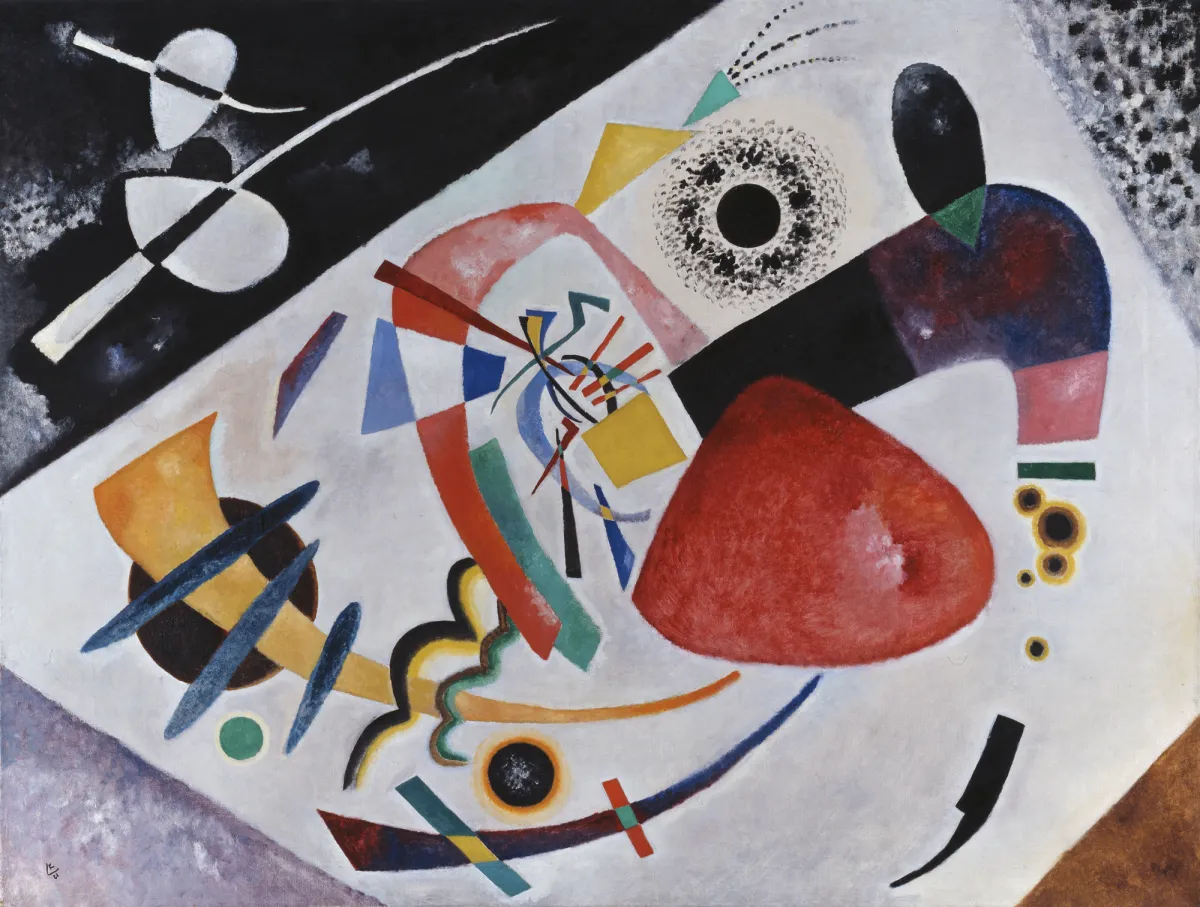
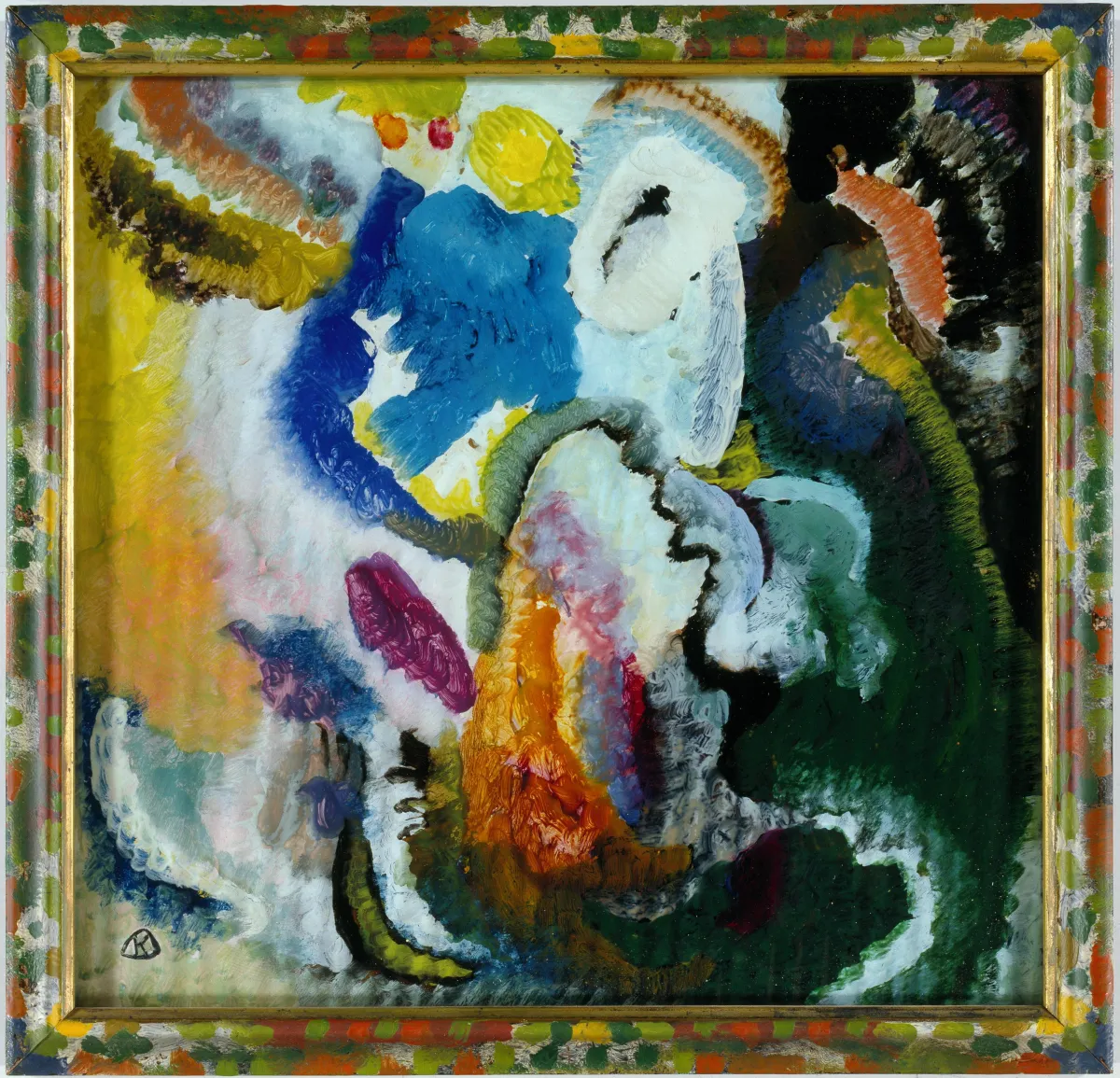
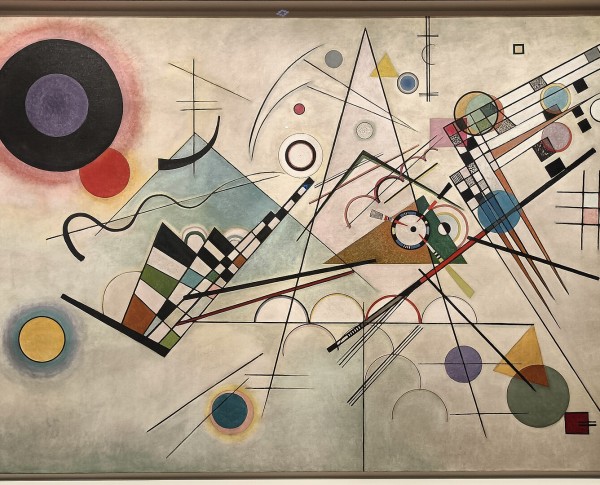
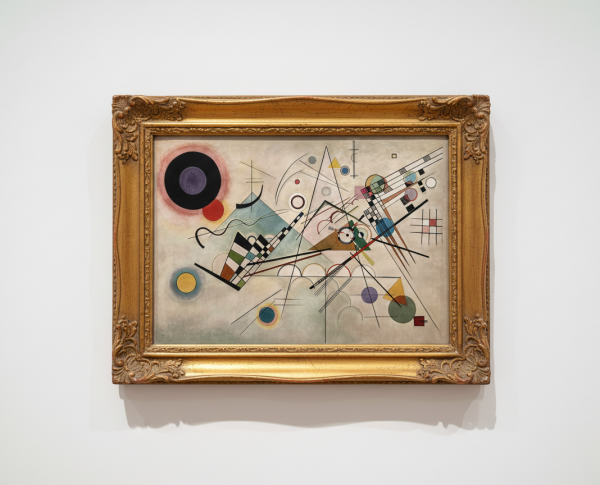
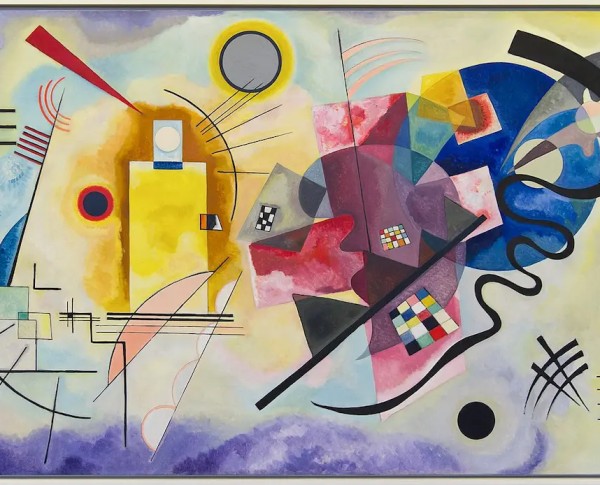
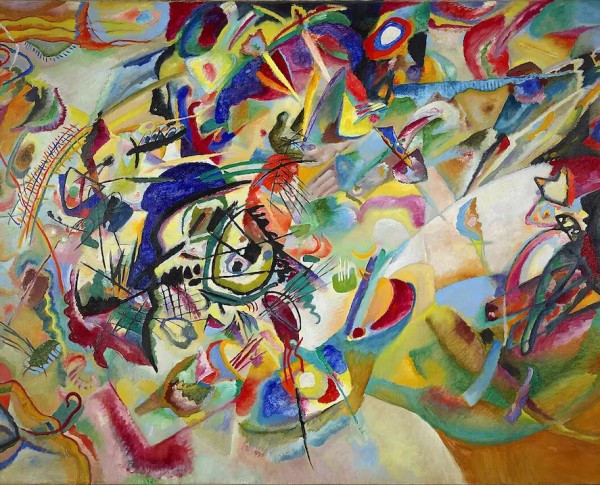
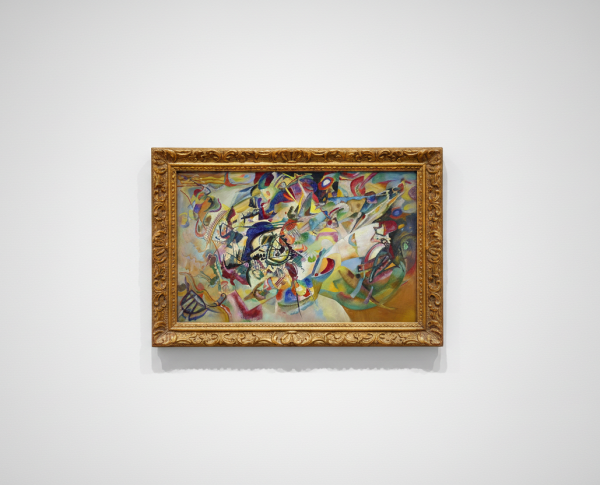
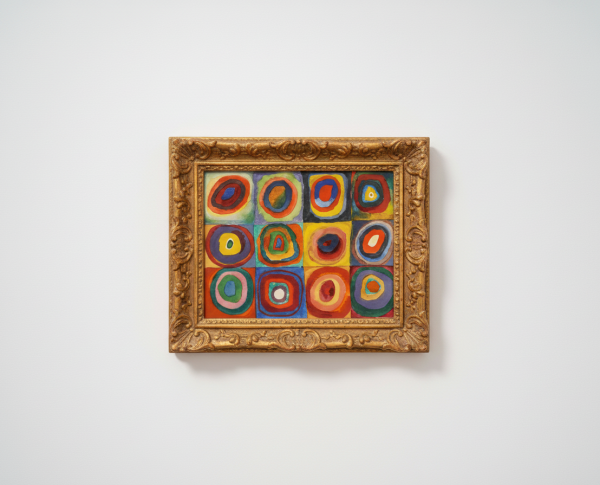
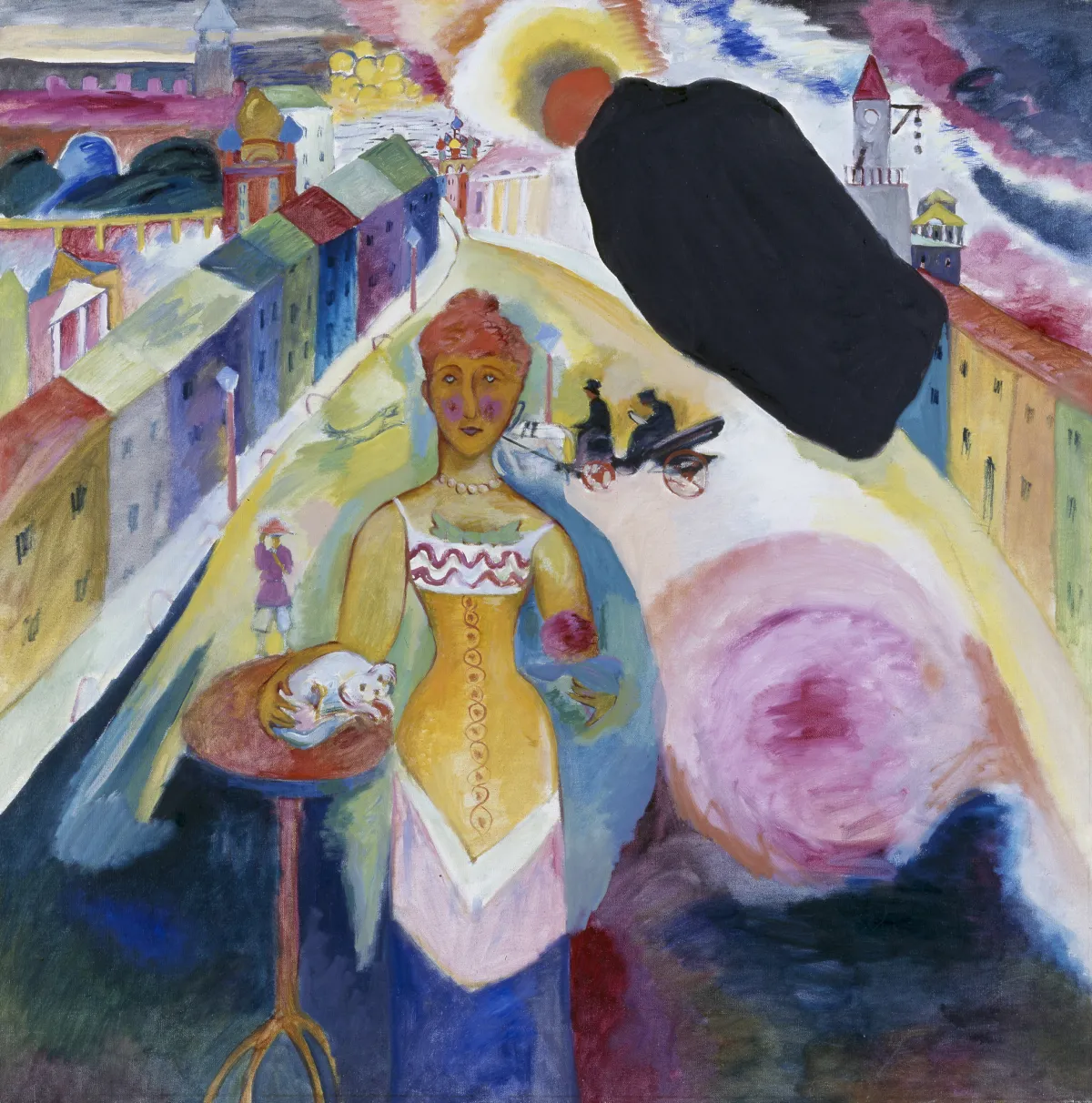
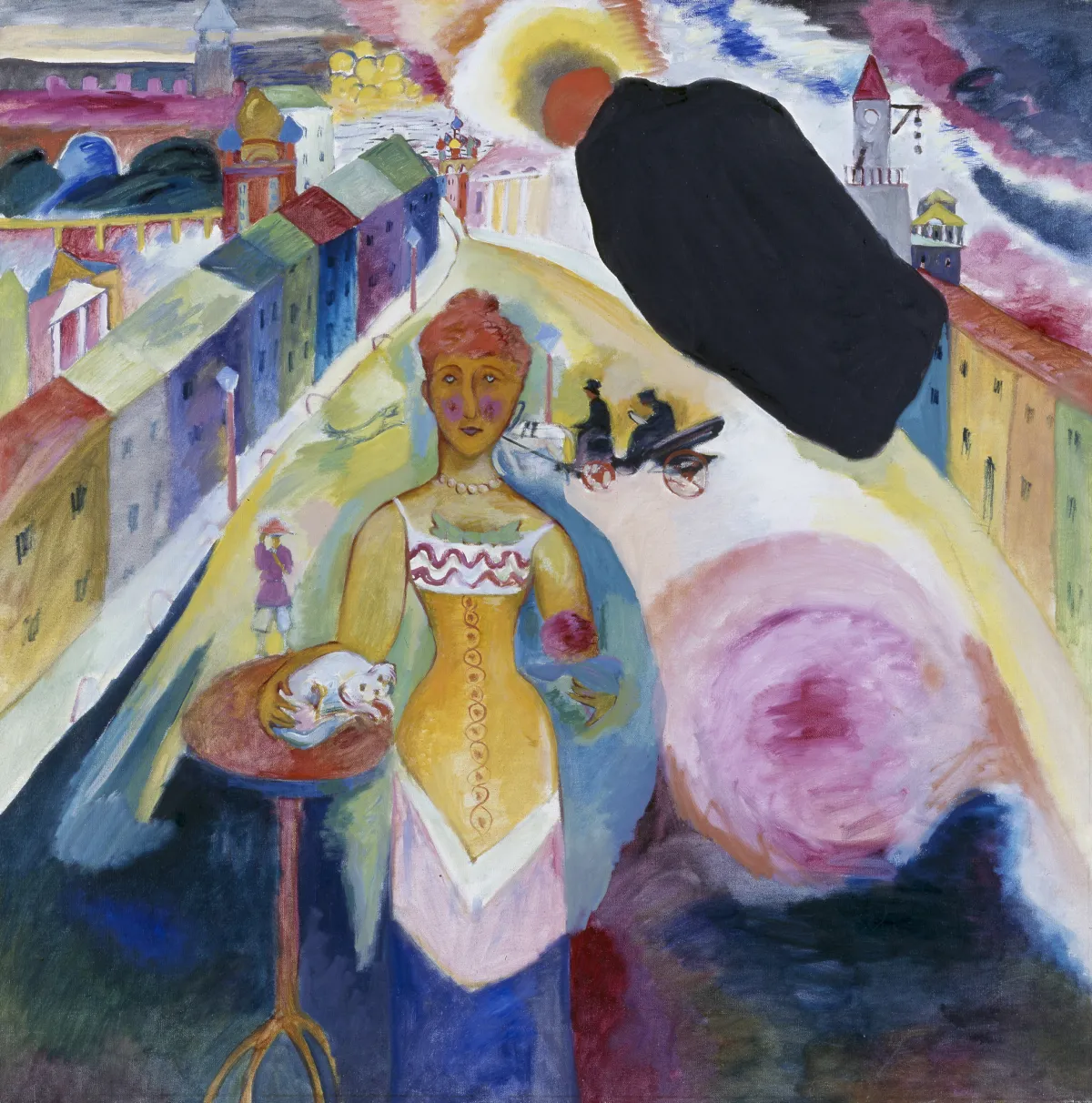
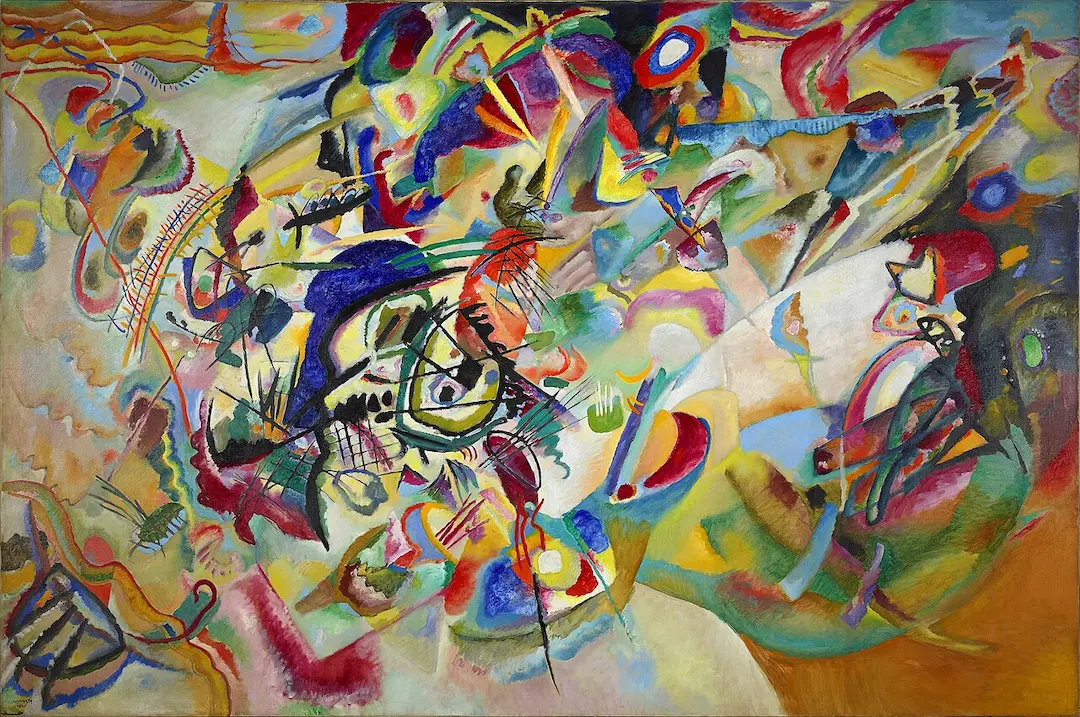
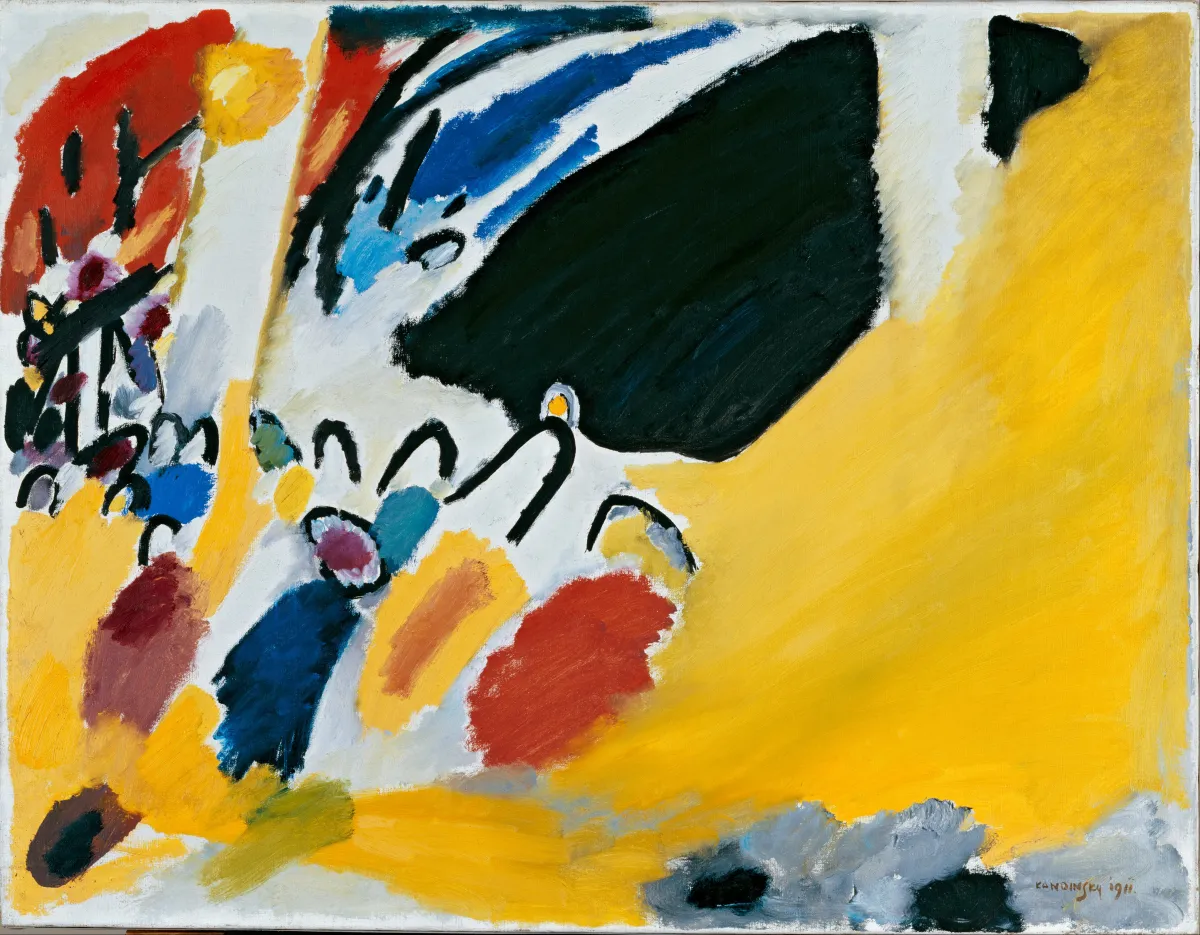
Kandinsky’s "Woman in Moscow" is celebrated for its dynamic composition and vibrant color palette, meticulously rendered in oil on canvas. Every brushstroke reveals the artist’s mastery, blending emotion and abstraction seamlessly. This fine art painting for sale is often compared with Kandinsky’s other iconic works, such as "Improvisation 26" and "Improvisation 19." The painting’s energetic forms invite viewers to explore the expressive potential of Abstract Expressionism, making it a true testament to Kandinsky’s genius.
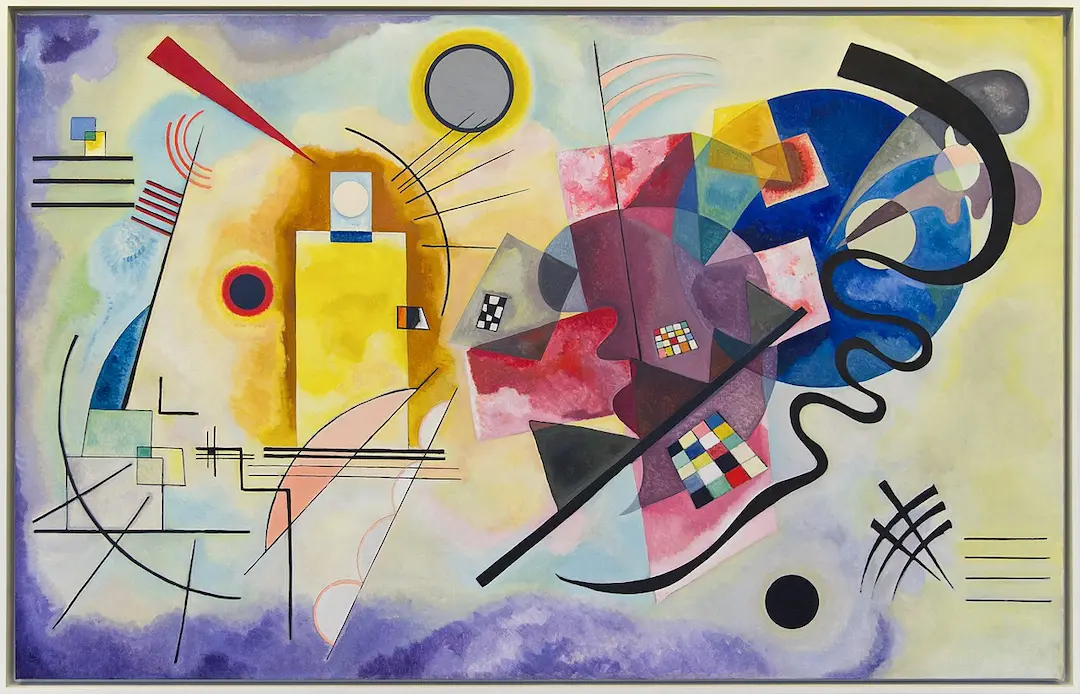
Within "Woman in Moscow," Kandinsky weaves a tapestry of stories and symbols that reflect the transformative power of Abstract Expressionism. The painting’s abstract forms and colors evoke feelings and narratives unique to each viewer, much like "Yellow Red Blue" and "Church at Murnau." As a hand-painted oil painting, it embodies the artist’s exploration of spiritual and emotional depth, encouraging collectors to seek meaning beneath its surface and cherish its enigmatic allure.
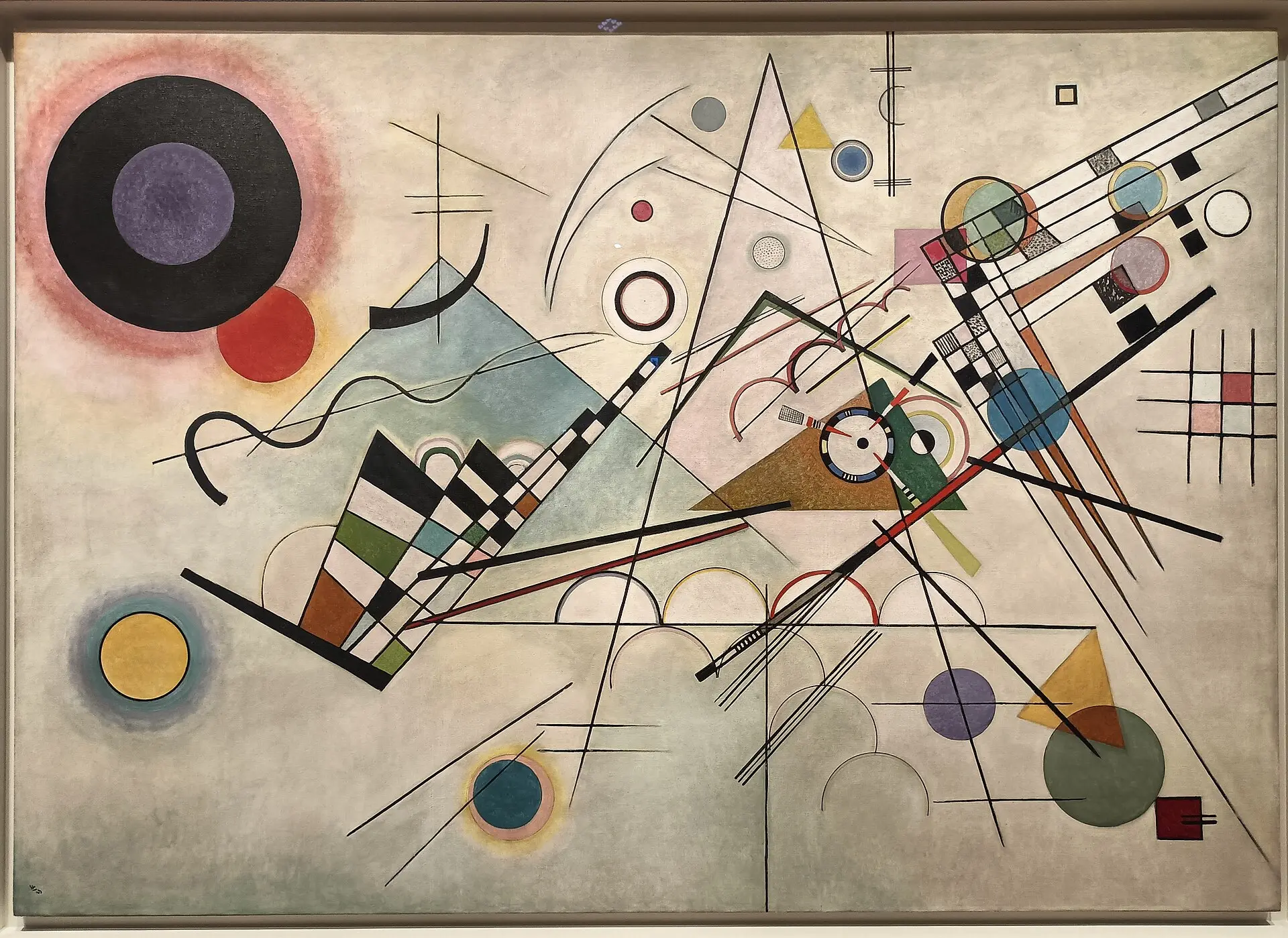
For art collectors, "Woman in Moscow" by Wassily Kandinsky is a coveted fine art painting for sale. Its place within the Abstract Expressionism movement and its connection to related masterpieces like "Improvisation 11" and "Squares with Concentric Rings" enhance its desirability. Owning this oil on canvas artwork is not just an investment in beauty but a celebration of Kandinsky’s pioneering vision, offering a unique opportunity to possess a piece of modern art history.
When Art Meets History
"Woman in Moscow" by Wassily Kandinsky stands as a testament to the innovative spirit of the Abstract Expressionism movement. Created during a transformative era, this hand-painted oil painting captures the dynamic intersection of history and artistic evolution. Kandinsky, renowned for his bold experimentation, channels the energy of post-revolutionary Moscow into abstract forms. Similar to "Untitled (Violet, Black, Orange, Yellow on White and Red), 1949," this work reflects a period where art broke free from traditional constraints.
Techniques That Speak
Kandinsky’s mastery is evident in his use of oil on canvas, expertly layering vibrant hues and geometric shapes to evoke movement and emotion. The textured brushwork and spontaneous composition found in "Woman in Moscow" are hallmarks of Abstract Expressionism, echoing the creative freedom explored in related paintings like "Untitled (Violet, Black, Orange, Yellow on White and Red), 1949." Kandinsky’s innovative techniques continue to inspire artists and admirers of modern art worldwide.
Emotions on Display
"Woman in Moscow" is a fine art painting for sale that radiates emotional intensity through its bold color palette and abstract forms. Kandinsky’s ability to translate inner feelings onto the canvas aligns with the core of Abstract Expressionism, inviting viewers to interpret and connect with the work personally. Like "Untitled (Violet, Black, Orange, Yellow on White and Red), 1949," this painting offers a deeply personal experience, making it a coveted centerpiece for any art enthusiast.
Coveted by Collectors
Collectors highly prize "Woman in Moscow" by Wassily Kandinsky for its historical significance and artistic brilliance within the Abstract Expressionism movement. As a hand-painted oil painting, it represents both a unique investment and a piece of art history. Alongside related masterpieces like "Untitled (Violet, Black, Orange, Yellow on White and Red), 1949," "Woman in Moscow" continues to attract discerning buyers who seek exceptional works for their collections.
Related Abstract Expressionism Hand-Painted Oil Paintings by Other Artists
Other Famous Abstract Expressionism Artists:
Frequently Asked Questions About Woman in Moscow
What is the historical context of "Woman in Moscow"?
"Woman in Moscow" was created during a time of significant social and political change in Russia, reflecting the tumultuous atmosphere following the Russian Revolution of 1917. Kandinsky, a key figure in the abstract art movement, sought to capture the essence of modern life in his work.
What artistic movement does "Woman in Moscow" belong to?
The painting is associated with the Abstract Expressionism movement, which emphasizes the use of color, form, and line to convey emotions and ideas rather than representational forms. Kandinsky is often regarded as a pioneer of abstract art.
What are the predominant colors used in "Woman in Moscow" and their significance?
Kandinsky employs a vibrant palette, utilizing bold colors such as red, blue, and yellow. These colors are not merely aesthetic choices; they symbolize various emotions and concepts, with red often representing passion and energy, while blue conveys tranquility and depth.
How does "Woman in Moscow" reflect Kandinsky's artistic philosophy?
Kandinsky believed that art should express the inner feelings of the artist. "Woman in Moscow" embodies this philosophy through its abstract forms and dynamic composition, allowing viewers to interpret the emotional resonance of the piece personally.
What is the significance of the figure depicted in "Woman in Moscow"?
The figure in the painting represents the modern woman of the early 20th century, embodying both strength and independence. This reflects the changing roles of women in society during Kandinsky's time, particularly in the wake of the revolution.
How does "Woman in Moscow" relate to Kandinsky's other works?
This painting shares thematic and stylistic elements with Kandinsky's other works, particularly his exploration of abstraction and spirituality. It serves as a bridge between his earlier figurative works and his later, more abstract compositions.
What techniques did Kandinsky use in "Woman in Moscow"?
Kandinsky employed a combination of oil painting techniques, layering colors and shapes to create depth and movement. His use of geometric forms and expressive brushstrokes contributes to the overall dynamism of the piece.
What themes are explored in "Woman in Moscow"?
The painting explores themes of identity, modernity, and the intersection of personal and collective experiences. Kandinsky's abstraction invites viewers to contemplate the complexities of life in a rapidly changing world.
How was "Woman in Moscow" received by contemporary audiences?
Upon its release, "Woman in Moscow" was met with a mix of admiration and criticism, typical for avant-garde works of the time. It challenged traditional notions of art and paved the way for future explorations in abstraction.
What impact did "Woman in Moscow" have on future art movements?
The painting significantly influenced the development of modern art, inspiring subsequent movements such as Surrealism and Color Field painting. Kandinsky's innovative approach to abstraction opened new avenues for artistic expression.























_GFM_Painting_(1).webp)


 100% Hand-Painted: Finished in 3-6 Weeks

.png)

















_(1).webp)