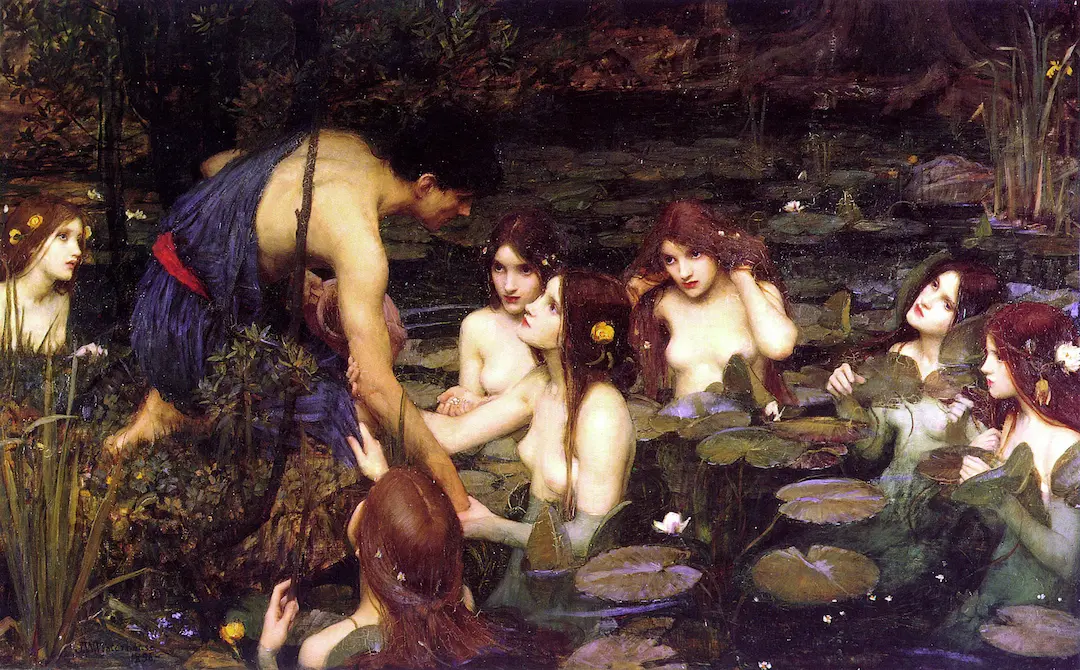
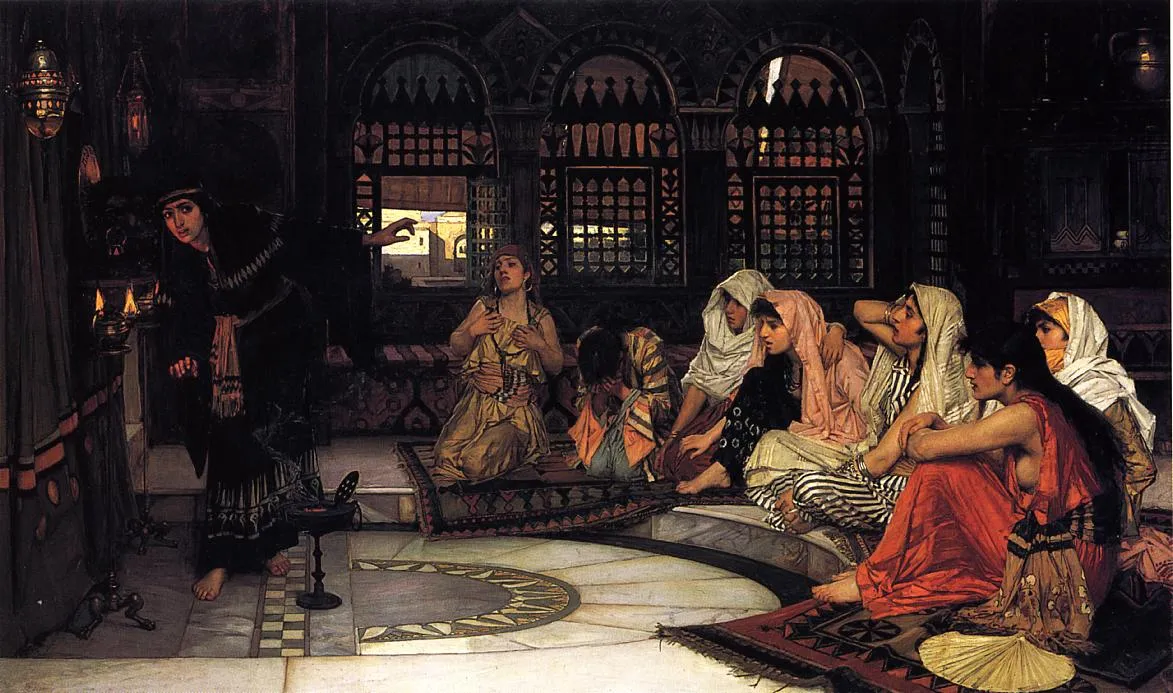
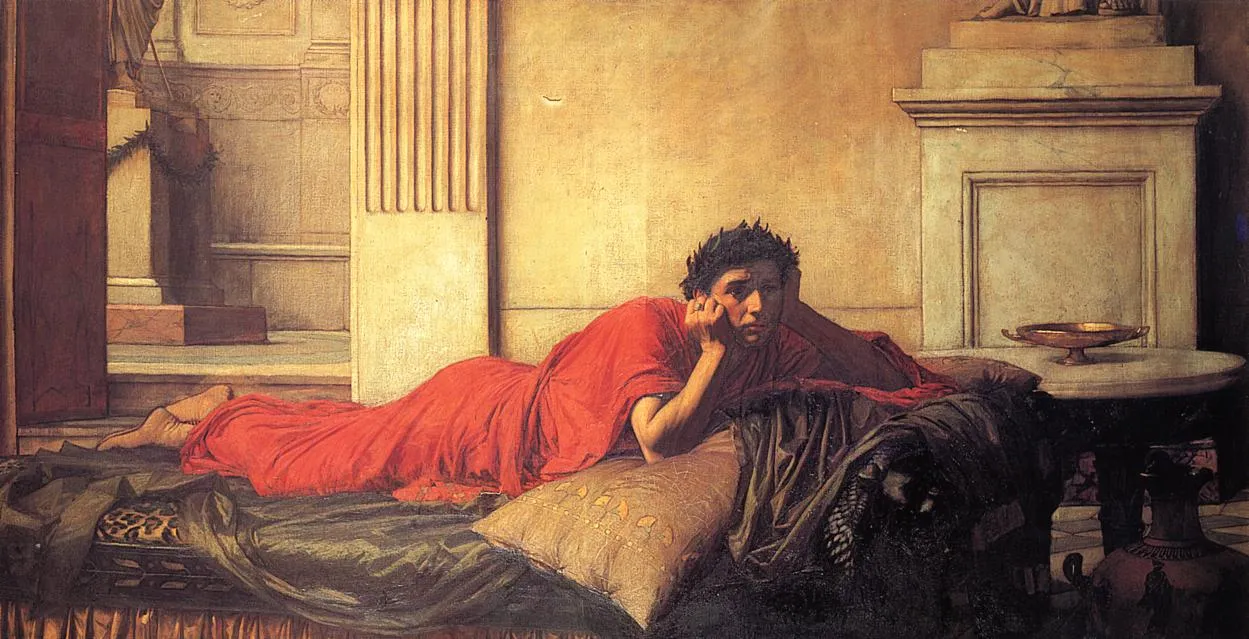
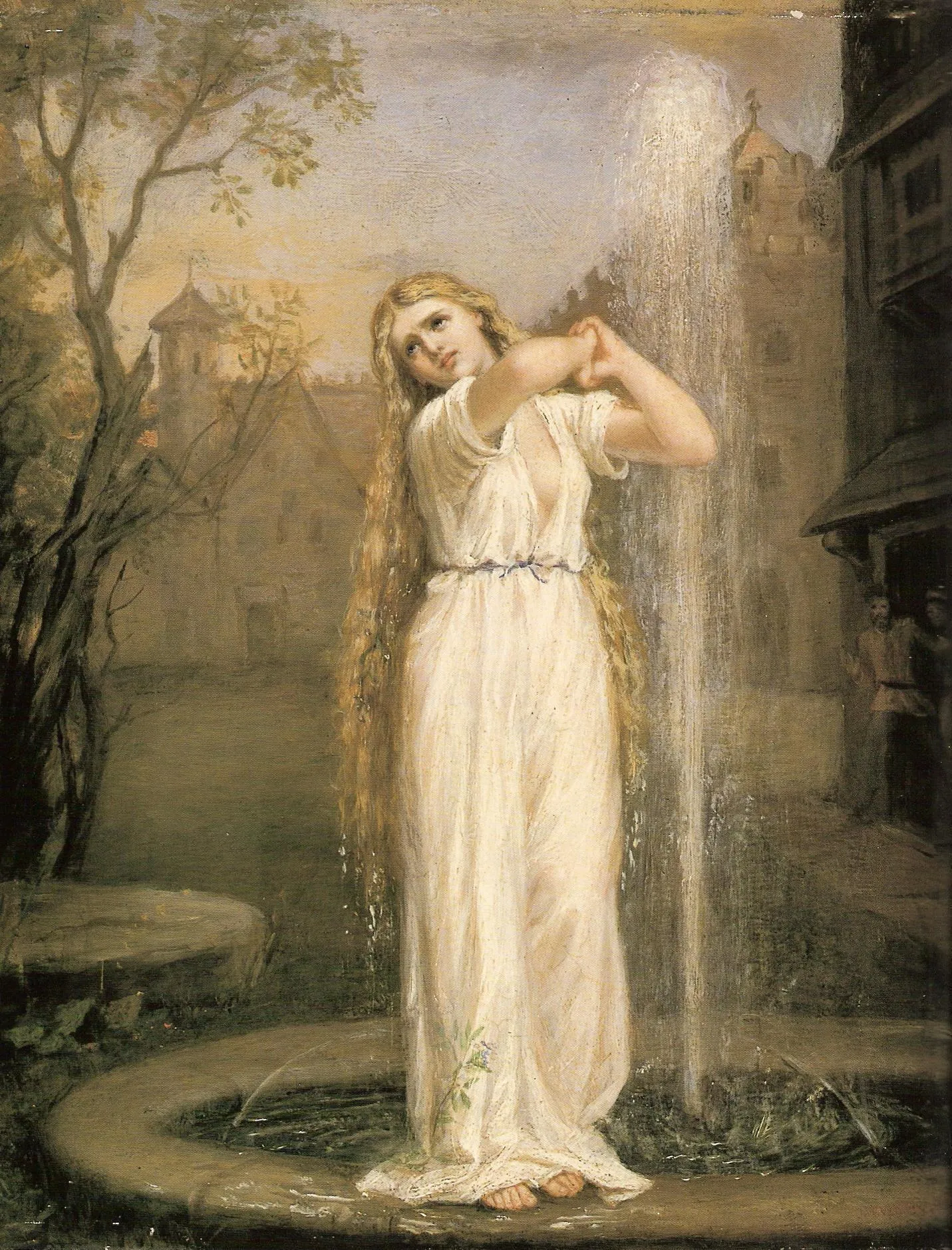
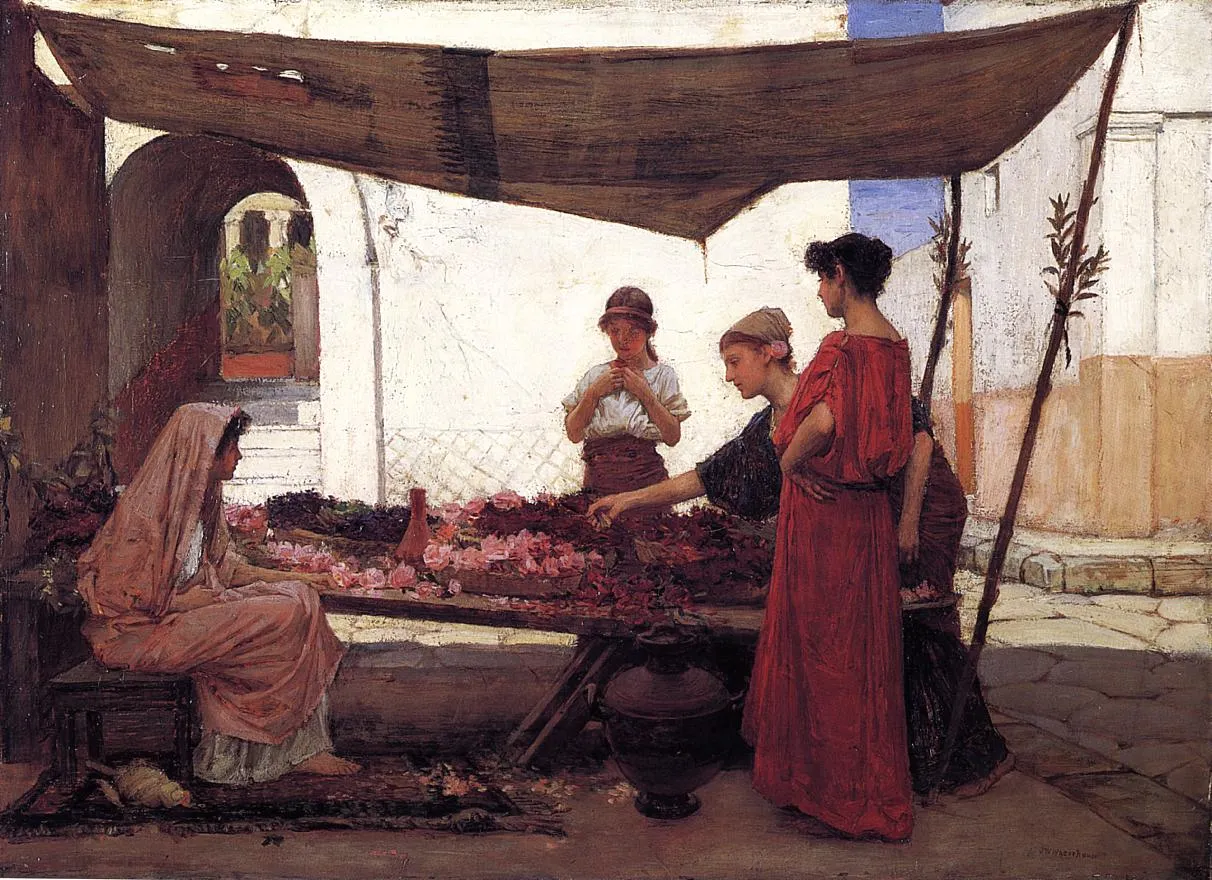
With "A Flower Stall," John William Waterhouse demonstrates his exceptional skill in oil on canvas, a medium favored by many Pre-Raphaelites. Each brushstroke reveals his meticulous attention to detail and deep understanding of light and texture. The painting’s lifelike depiction of flowers and figures reflects Waterhouse’s mastery, making it a standout piece alongside related works like "It's Sweet Doing Nothing" and "Undine," both celebrated for their technical brilliance.
In "A Flower Stall," Waterhouse weaves subtle narratives and symbols into his composition, a hallmark of Pre-Raphaelite art. This fine art painting for sale invites viewers to interpret the significance of the flowers and the interactions of the characters. Like "Miranda" and "After the Dance," the work encourages reflection on beauty, innocence, and the passage of time, making it a captivating addition to any collection of narrative-rich paintings.
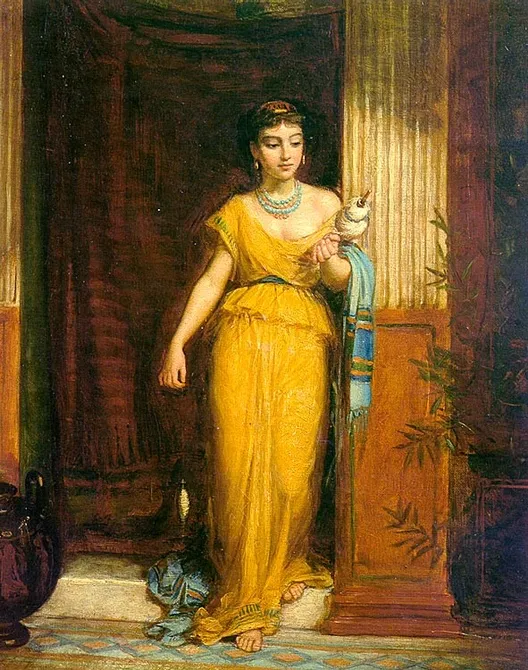
For collectors seeking a distinguished piece, "A Flower Stall" by John William Waterhouse is an exquisite choice. This hand-painted oil painting embodies the spirit of the Pre-Raphaelites, combining historical significance with aesthetic brilliance. Collectors often pair it with related products such as "Undine" and "The Spinner" to create a cohesive display of Waterhouse’s artistry, ensuring a collection that is both valuable and visually striking for years to come.
When Art Meets History
"A Flower Stall" by John William Waterhouse is a captivating hand-painted oil painting that beautifully encapsulates the spirit of the Pre-Raphaelites movement. Waterhouse, renowned for his evocative storytelling, brings the Victorian era to life, drawing inspiration from both history and everyday scenes. Like related works such as "William Boxall, Alfred and Charles" and "Eve," this painting bridges the gap between past and present, inviting viewers to immerse themselves in the rich tapestry of 19th-century culture and artistry.
Techniques That Speak
John William Waterhouse's mastery in oil on canvas is evident in "A Flower Stall," where delicate brushwork and vivid color harmonies reflect the Pre-Raphaelites' dedication to realism and detail. The painting’s luminous textures and intricate floral arrangements echo the technical brilliance seen in "Portrait of the Artist's Husband Henry with a Pipe" and "Night with her Train of Stars." Waterhouse's techniques transform ordinary scenes into extraordinary visual experiences, captivating both art lovers and collectors.
Emotions on Display
In "A Flower Stall," Waterhouse captures a poignant moment, infusing his fine art painting for sale with emotion and narrative depth. The expressions and gestures of the figures evoke a sense of longing and quiet beauty, much like the emotional resonance found in "Eve" and "William Boxall, Alfred and Charles." Through subtle use of light and composition, Waterhouse invites viewers to connect with the characters' inner worlds, making this piece a timeless testament to human feeling.
Coveted by Collectors
As a hallmark of the Pre-Raphaelites movement, "A Flower Stall" by John William Waterhouse remains highly sought-after among collectors of hand-painted oil paintings. Its rarity and historical significance, alongside related works like "Night with her Train of Stars," contribute to its enduring appeal. Collectors appreciate the combination of artistic mastery and emotional storytelling, making this fine art painting for sale a prized addition to any discerning collection of 19th-century masterpieces.
Related Pre-Raphaelites Hand-Painted Oil Paintings by Other Artists
Other Famous Pre-Raphaelites Artists:
Frequently Asked Questions About A Flower Stall
What is the historical context of "A Flower Stall"?
"A Flower Stall," painted by John William Waterhouse in 1900, reflects the late Victorian era's fascination with beauty and nature, as well as the emerging Art Nouveau movement that celebrated organic forms and decorative arts.
What artistic techniques did Waterhouse employ in "A Flower Stall"?
Waterhouse utilized a combination of realistic detail and impressionistic brushwork to create a vibrant depiction of flowers, emphasizing their colors and textures while maintaining a soft, atmospheric quality in the background.
What symbolism can be found in "A Flower Stall"?
The flowers in the painting symbolize beauty, transience, and the cycle of life. Each flower type carries its own meaning, contributing to the overall theme of nature's ephemeral beauty.
How does "A Flower Stall" reflect Waterhouse's artistic style?
Waterhouse is known for his romantic and mythological themes. In "A Flower Stall," he merges these elements with everyday life, showcasing his ability to elevate ordinary scenes to the level of fine art.
What influences can be seen in "A Flower Stall"?
The painting shows influences of Pre-Raphaelitism, particularly in its attention to detail and vibrant color palette, as well as the emphasis on natural beauty and emotional expression.
Who are the figures depicted in "A Flower Stall"?
The central figure is a young woman, representing the idealized beauty often found in Waterhouse's works. She engages with the viewer, inviting them into the scene and symbolizing the connection between humanity and nature.
What role does color play in "A Flower Stall"?
Color plays a crucial role in "A Flower Stall," with the vibrant hues of the flowers contrasting against the softer tones of the background, creating a sense of depth and drawing attention to the subject matter.
How does "A Flower Stall" compare to other works by Waterhouse?
Compared to other works by Waterhouse, "A Flower Stall" is more grounded in everyday life rather than mythological themes, showcasing his versatility and ability to capture both the extraordinary and the mundane.
What is the significance of the setting in "A Flower Stall"?
The setting of a flower stall serves as a metaphor for the beauty and fragility of life, highlighting the transient nature of both flowers and human experiences, which is a recurring theme in Waterhouse's oeuvre.
How has "A Flower Stall" influenced modern perceptions of art?
"A Flower Stall" has contributed to the appreciation of floral subjects in art, influencing contemporary artists to explore themes of beauty, nature, and femininity through similar motifs and techniques.























_GFM_Painting_(1).webp)


 100% Hand-Painted: Finished in 3-6 Weeks

.png)















_(1).webp)