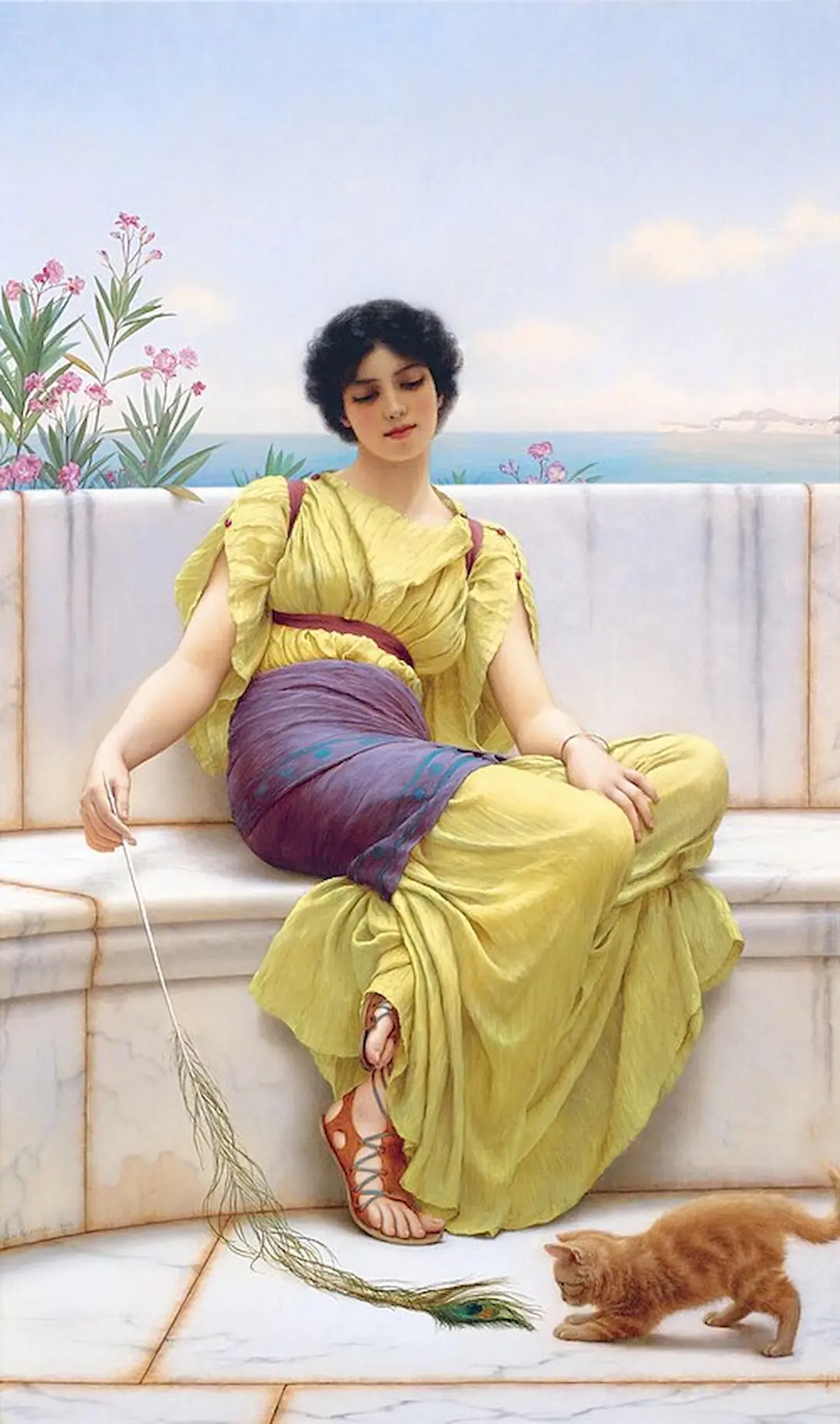
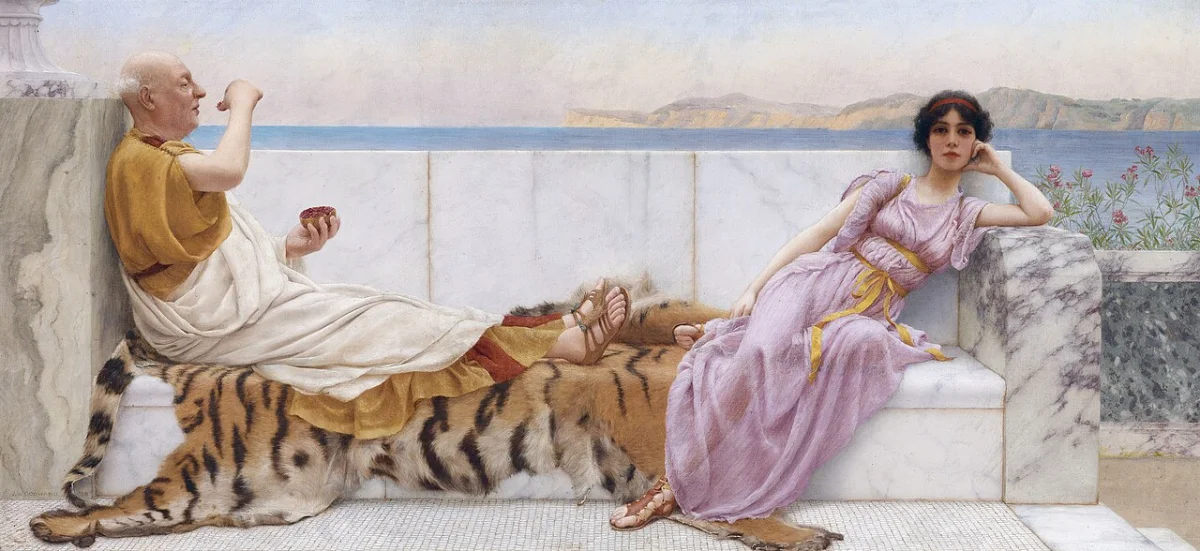
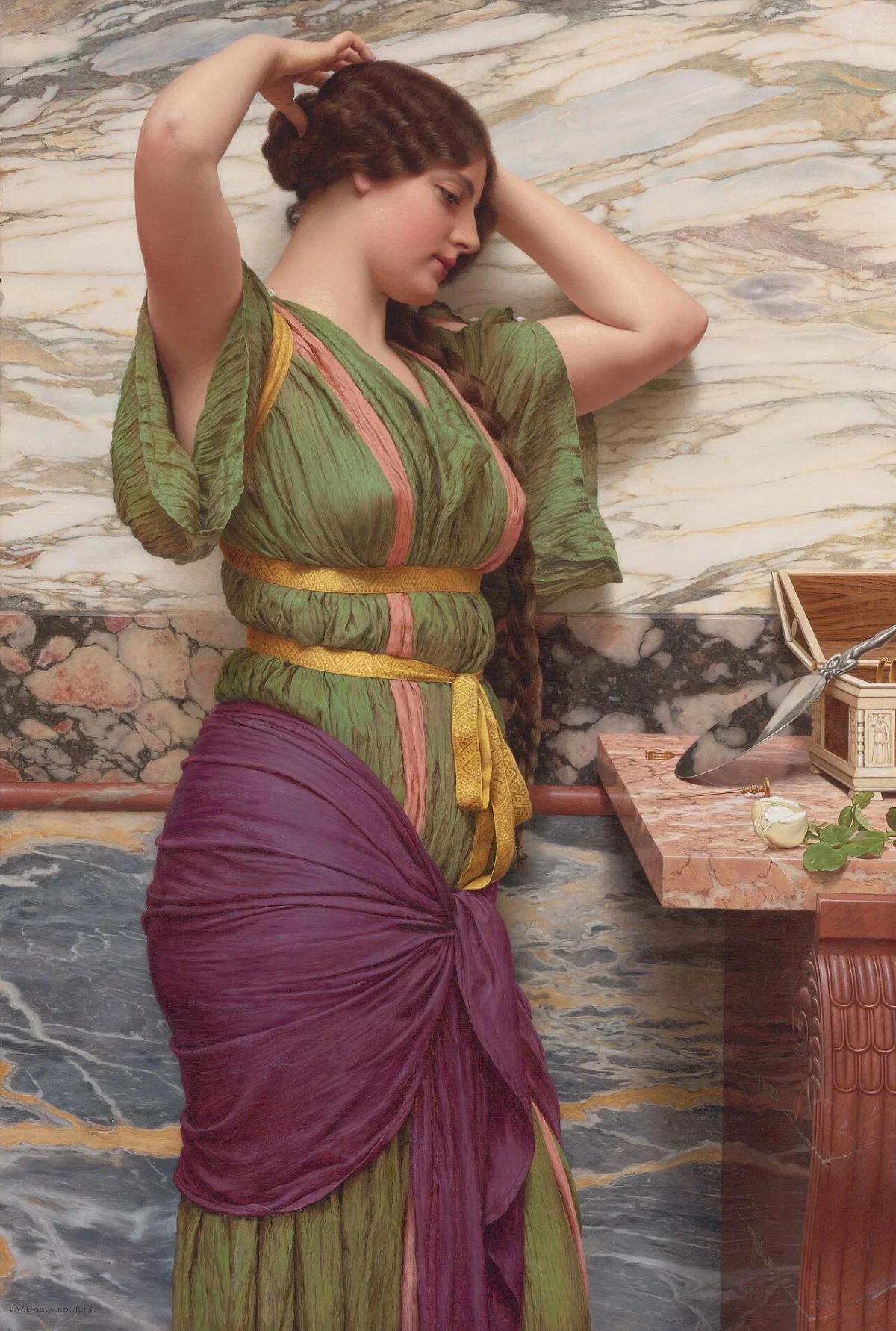
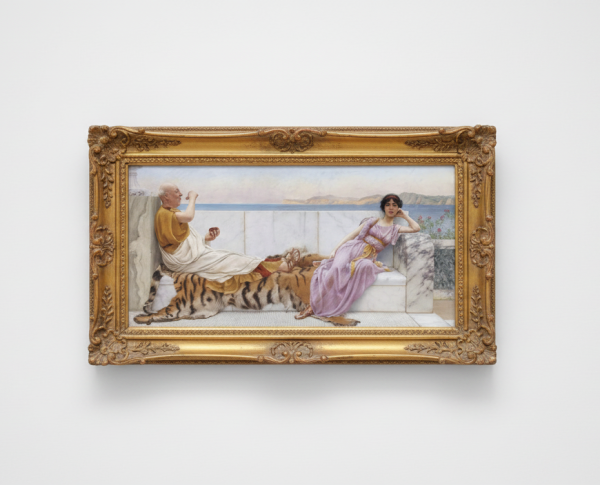
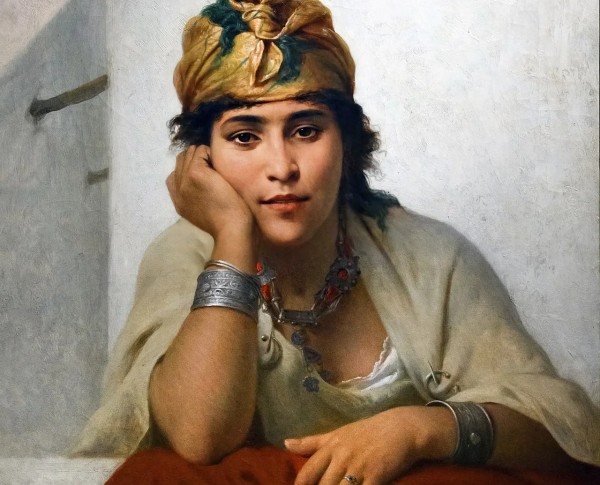
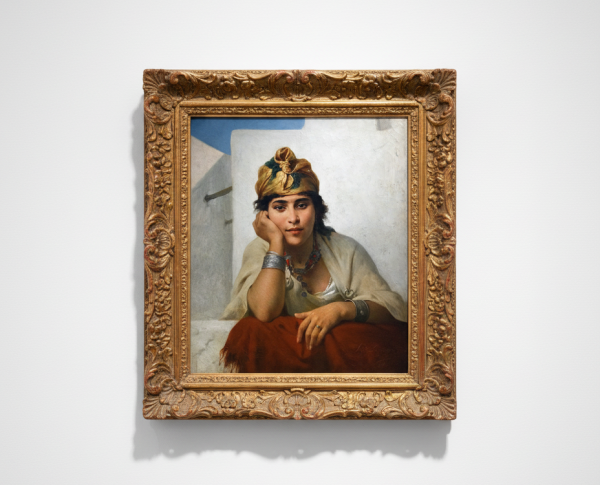
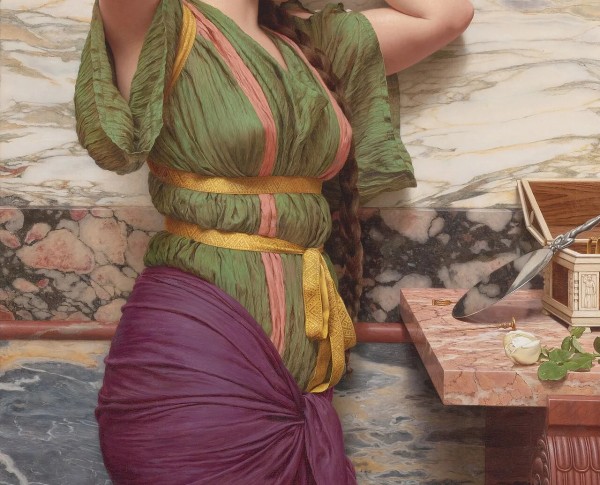
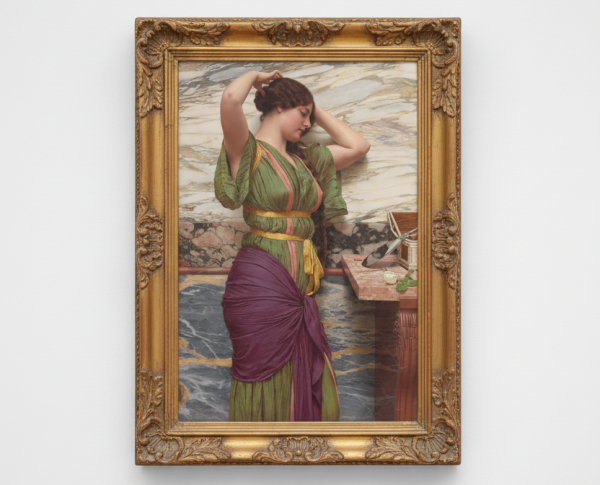
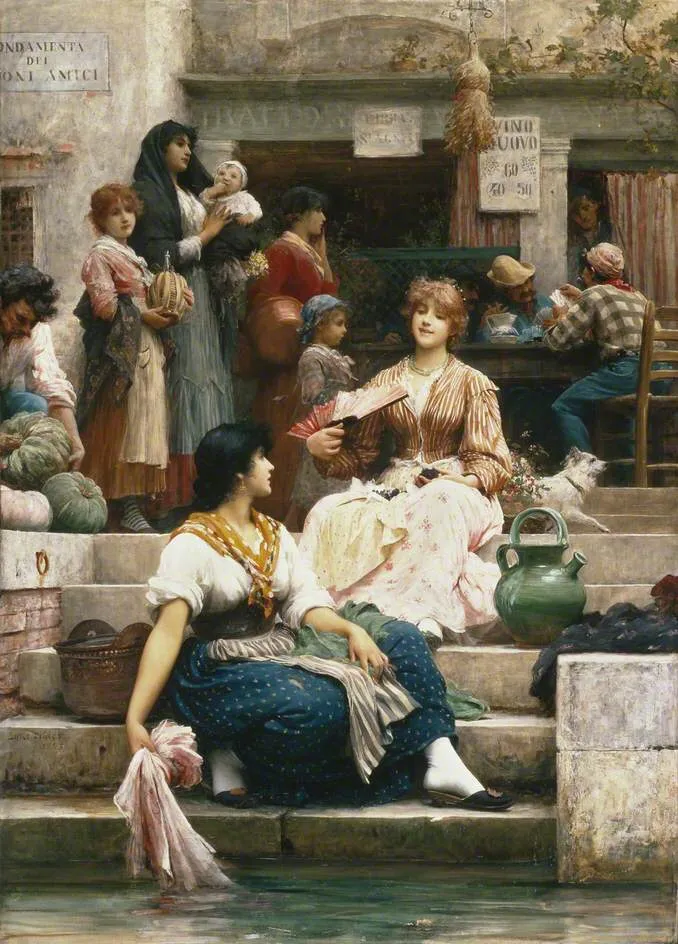
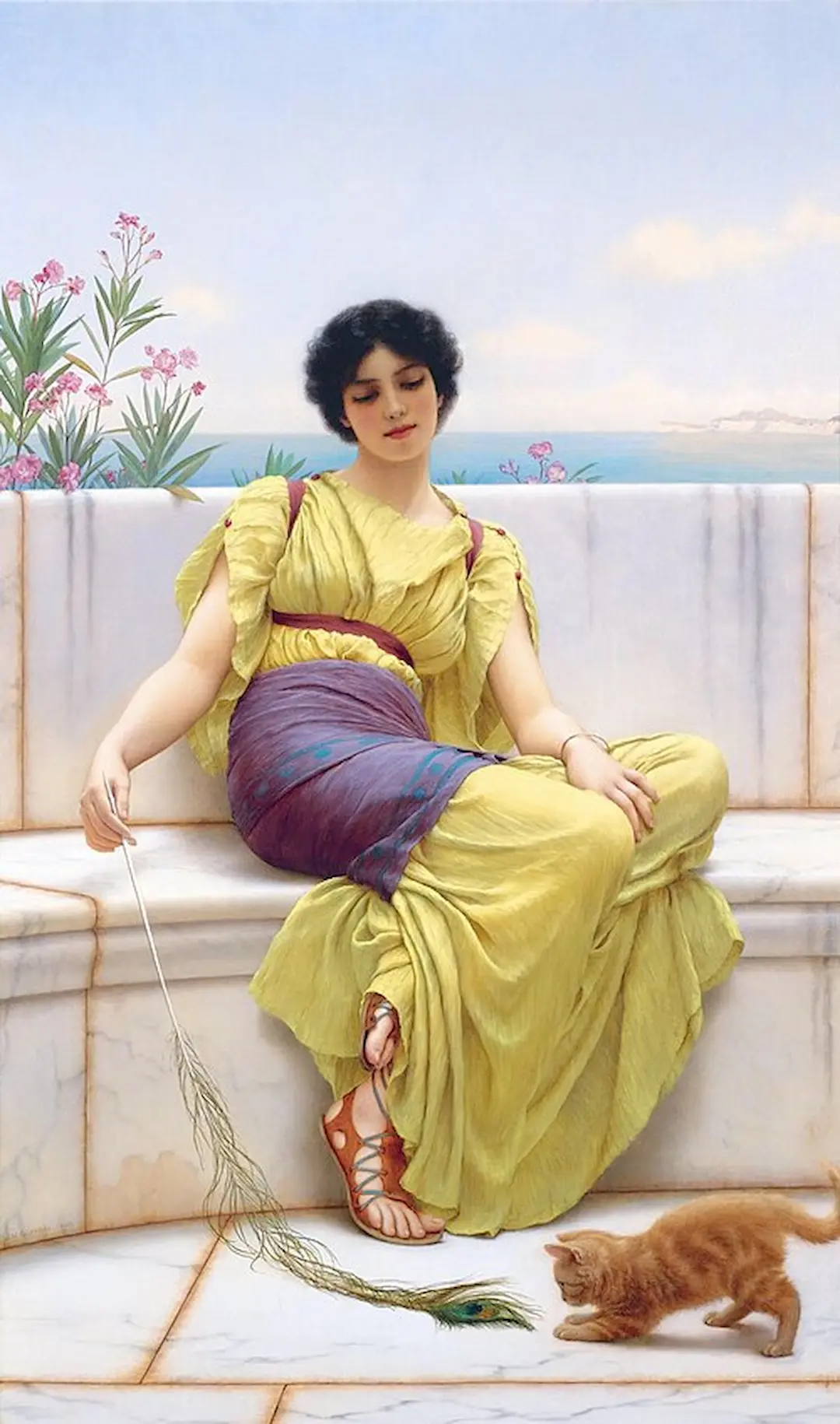
In "A Roman Beauty," Godward’s expert technique in oil on canvas is unmistakable. The artist’s ability to render lifelike textures, from marble columns to flowing fabrics, showcases his commitment to the Neoclassical Academic Realism movement. Each brushstroke brings the subject’s delicate features to life, echoing the mastery seen in works like "Waiting for the procession" and "When the Heart is Young." This painting is a true celebration of classical artistry and precision.
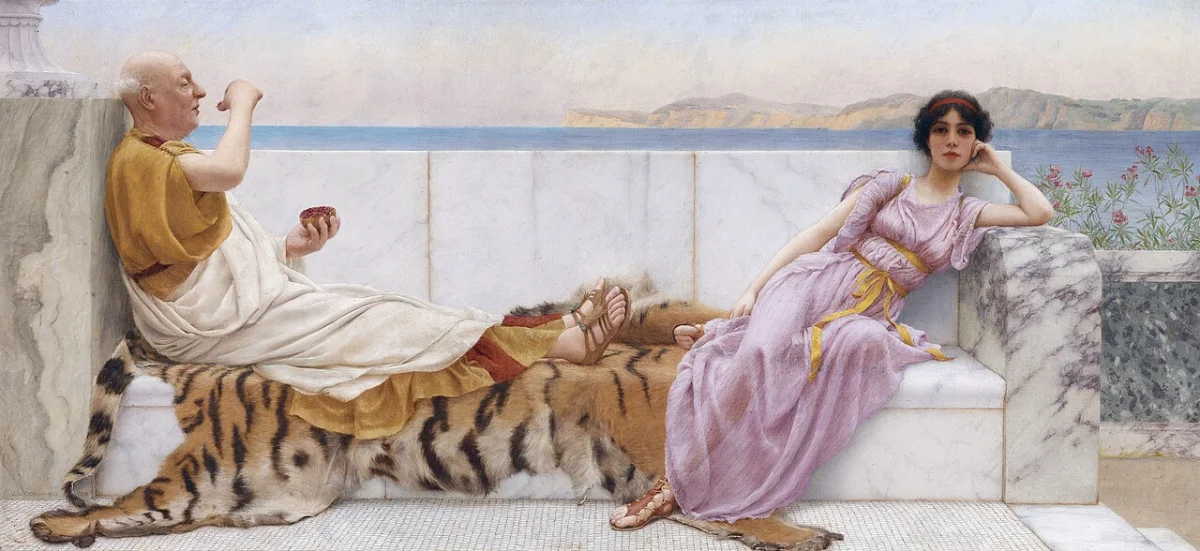
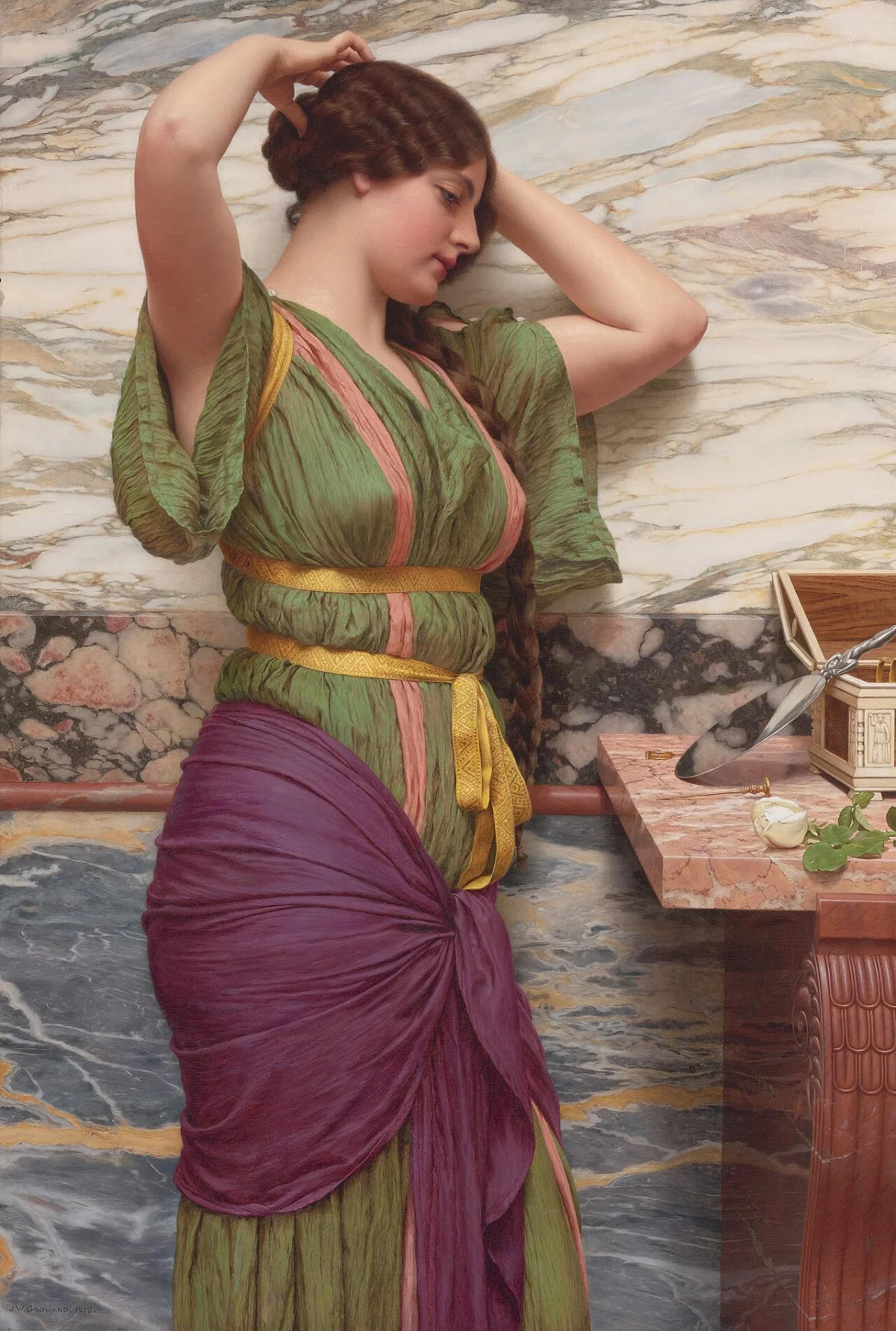
Godward’s "A Roman Beauty" is more than a fine art painting for sale; it is an invitation to explore the symbolism of ancient Rome. The tranquil pose and thoughtful expression evoke stories of grace and dignity, hallmarks of Neoclassical Academic Realism. Collectors will appreciate the narrative depth shared with pieces such as "Eighty and eighteen" and "A Fair Reflection," making this artwork a meaningful addition to any collection inspired by classical beauty.
For art enthusiasts, "A Roman Beauty" by John William Godward represents the pinnacle of hand-painted oil painting in the Neoclassical Academic Realism movement. Its exquisite details and timeless composition make it highly sought after, just like related masterpieces "Mischief and Repose" and "The Melody." Owning this artwork is an opportunity to celebrate Godward’s enduring legacy and to enrich any collection with a piece of classical elegance and historical significance.
When Art Meets History
"A Roman Beauty" by John William Godward is a captivating example of the Neoclassical Academic Realism movement. This hand-painted oil painting transports viewers to ancient Rome, reflecting the era's fascination with classical themes. Godward's attention to historical detail places this work alongside masterpieces like "Napoleon Crossing the Alps" and "The Death of Socrates." The painting stands as both an homage to antiquity and a testament to the enduring allure of classical beauty in fine art.
Techniques That Speak
John William Godward’s mastery in "A Roman Beauty" is evident through his meticulous oil on canvas technique. The soft rendering of textures and the delicate play of light highlight the artist’s dedication to realism, a hallmark of Neoclassical Academic Realism. Similar technical brilliance can be seen in works like "Bonaparte, Calm on a Fiery Steed" and "Crossing the Alps 1801." Godward’s brushwork and color palette transport viewers to the serene world of ancient Rome.
Emotions on Display
In "A Roman Beauty," Godward channels the serene poise and contemplative mood typical of Neoclassical portraiture. The subject’s tranquil gaze and elegant posture evoke a sense of timeless grace, reminiscent of "Portrait of Antoine-Laurent Lavoisier and his wife." This fine art painting for sale captures the subtle emotional depth that defines Godward’s oeuvre, inviting viewers to connect intimately with the sitter’s quiet dignity and inner world.
Coveted by Collectors
As a distinguished example of Neoclassical Academic Realism, "A Roman Beauty" is highly sought after by art collectors. The painting’s refined composition and historical resonance place it among the most desirable works, comparable to "Consecration of the Emperor Napoleon I and Coronation of the Empress Josephine 1805-07." Collectors appreciate this hand-painted oil painting for its exceptional craftsmanship and the unique window it offers into the classical past.
Related Neoclassical Academic Realism Hand-Painted Oil Paintings by Other Artists
Other Famous Neoclassical Academic Realism Artists:
Frequently Asked Questions About A Roman Beauty
What is the historical context of "A Roman Beauty"?
"A Roman Beauty," painted by John William Godward in 1897, reflects the late Victorian fascination with classical antiquity and the idealization of beauty, which were prominent themes in the Pre-Raphaelite and Neoclassical movements.
Who is the artist behind "A Roman Beauty"?
The painting was created by John William Godward, a British painter known for his depictions of classical subjects and his meticulous attention to detail, which exemplifies the aesthetic movement of the late 19th century.
What artistic techniques are employed in "A Roman Beauty"?
Godward utilized techniques such as chiaroscuro to create depth, along with a vibrant color palette and intricate details in the drapery and background, showcasing his skill in rendering textures and forms.
What themes are explored in "A Roman Beauty"?
The painting explores themes of beauty, femininity, and the idealization of the classical world, portraying a serene and contemplative female figure that embodies the virtues associated with ancient Roman culture.
What is the significance of the female figure in "A Roman Beauty"?
The female figure represents the archetype of beauty and grace, drawing inspiration from classical sculptures and emphasizing the era's romanticized view of women as muses and symbols of virtue.
How does "A Roman Beauty" reflect the aesthetic movement?
The painting exemplifies the aesthetic movement's principles by prioritizing beauty and form over narrative content, focusing on the visual experience and the emotional response it evokes in the viewer.
What role does symbolism play in "A Roman Beauty"?
Symbolism in the painting is evident through the use of classical motifs and the serene expression of the figure, which conveys themes of timeless beauty and the connection between art and nature.
How does Godward's work compare to his contemporaries?
Godward's focus on classical themes and his meticulous technique set him apart from many of his contemporaries, who were often more experimental in style. His work is characterized by a romantic nostalgia for the past.
What influences can be seen in "A Roman Beauty"?
The painting shows influences from classical art, particularly the works of ancient Roman and Greek sculptors, as well as the Pre-Raphaelite Brotherhood, known for their vivid colors and attention to detail.
What is the current status of "A Roman Beauty" in art history?
"A Roman Beauty" is regarded as a significant work within Godward's oeuvre and is often studied for its representation of the ideals of beauty and the cultural context of the late 19th century, contributing to discussions of gender and aesthetics in art history.























_GFM_Painting_(1).webp)

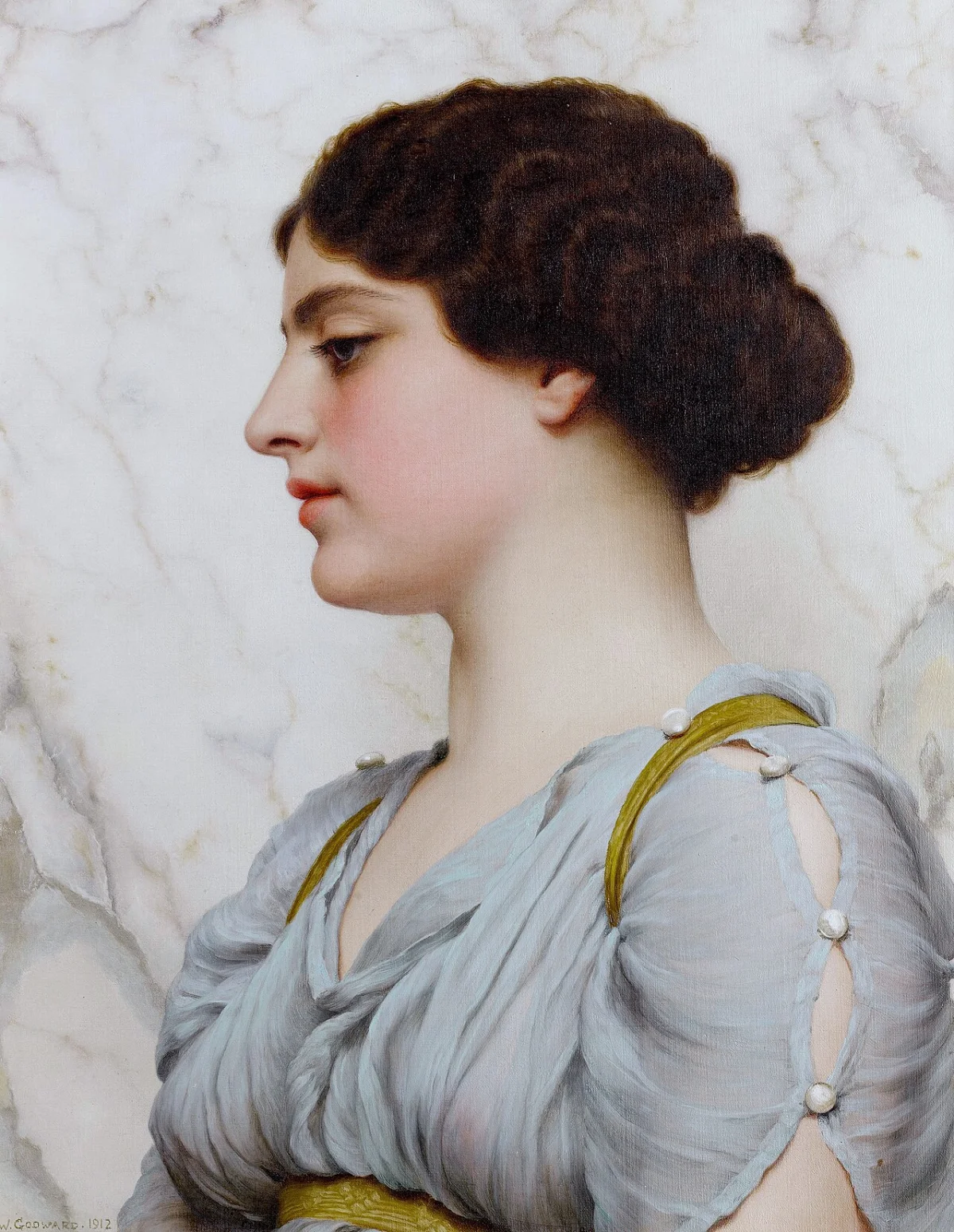

 100% Hand-Painted: Finished in 3-6 Weeks
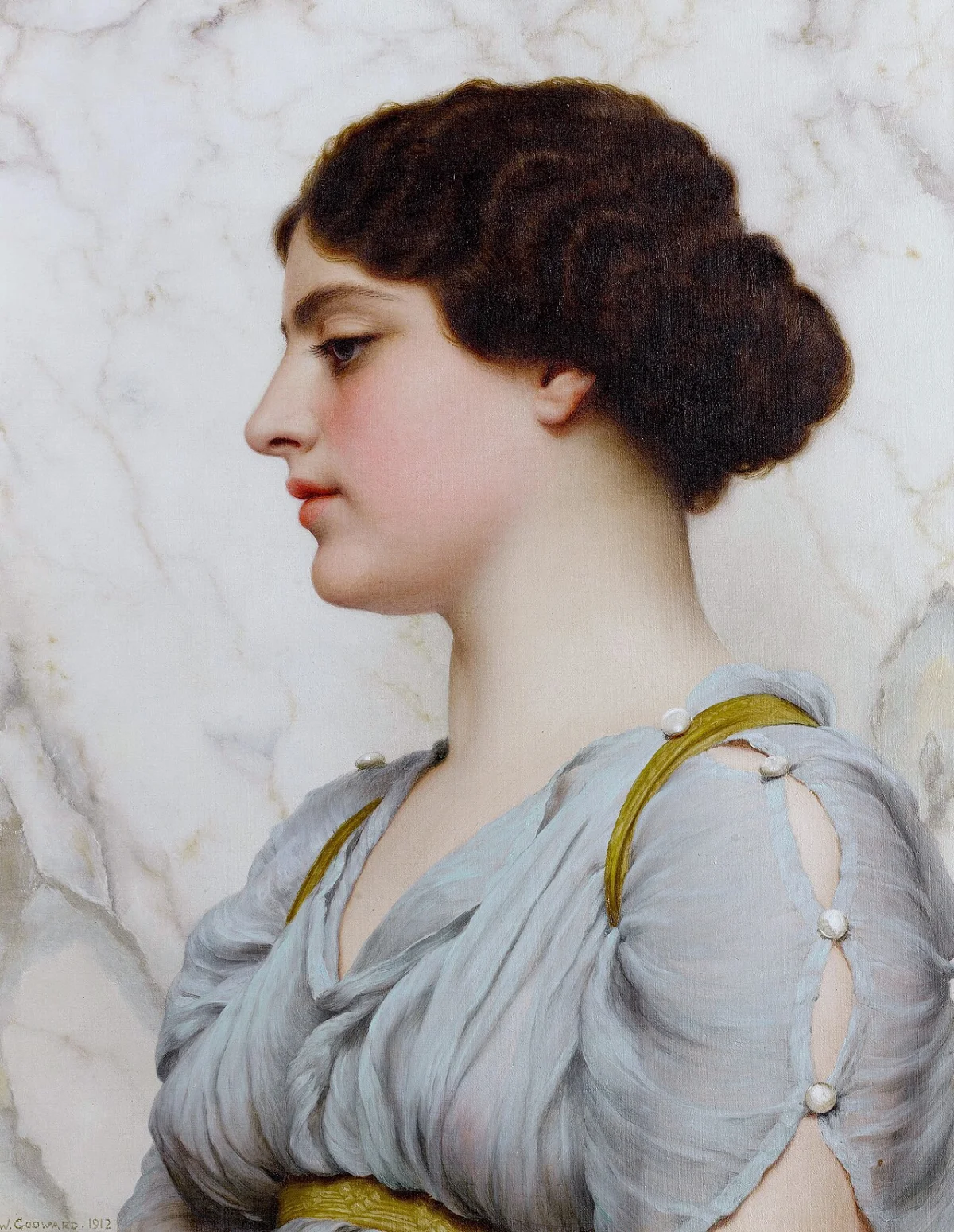

.png)















_(1).webp)