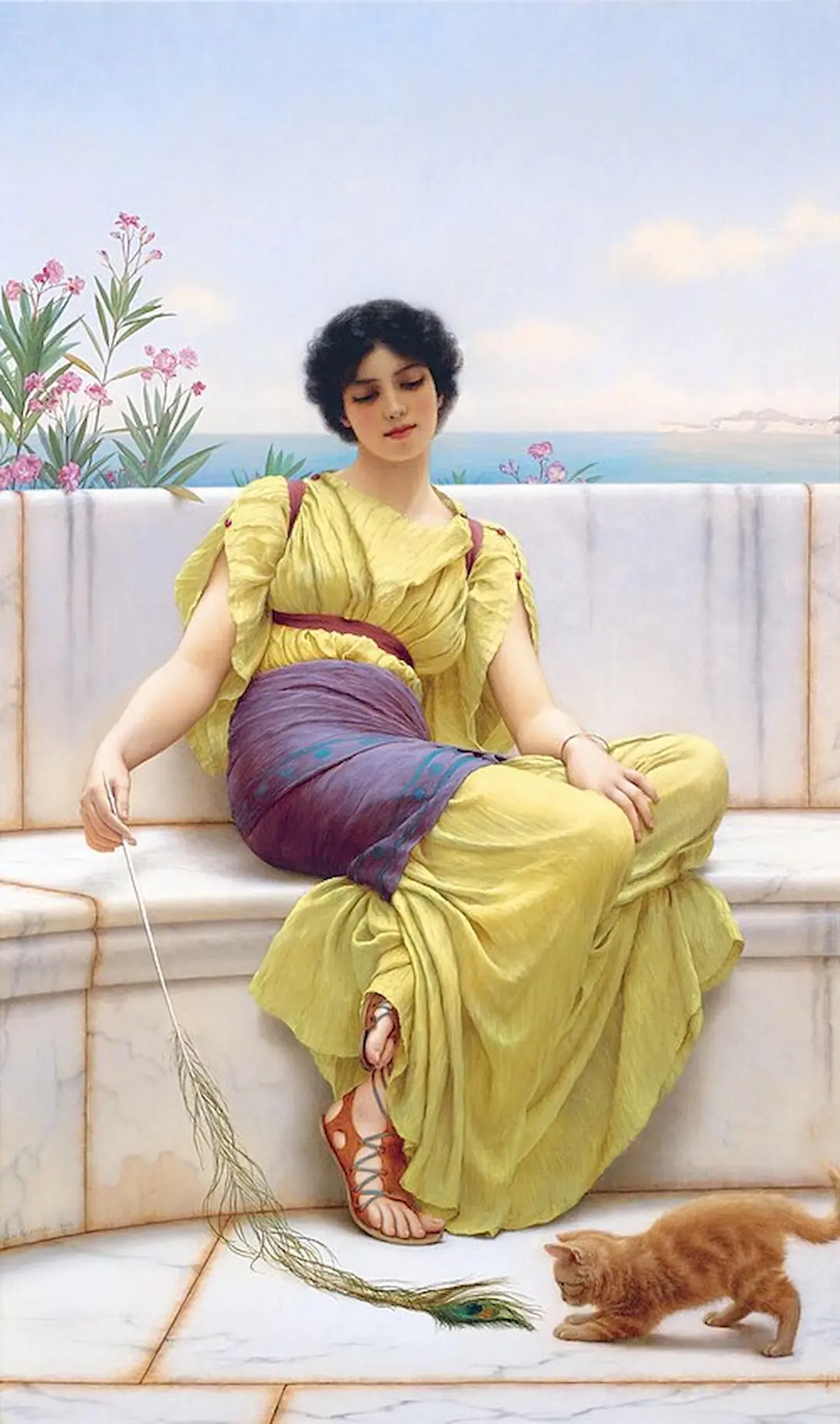
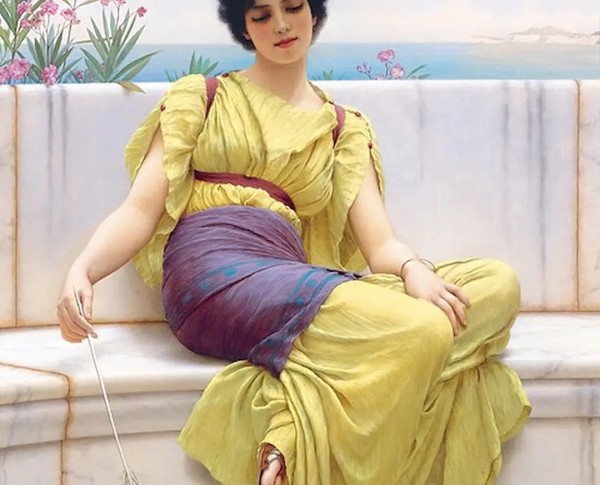
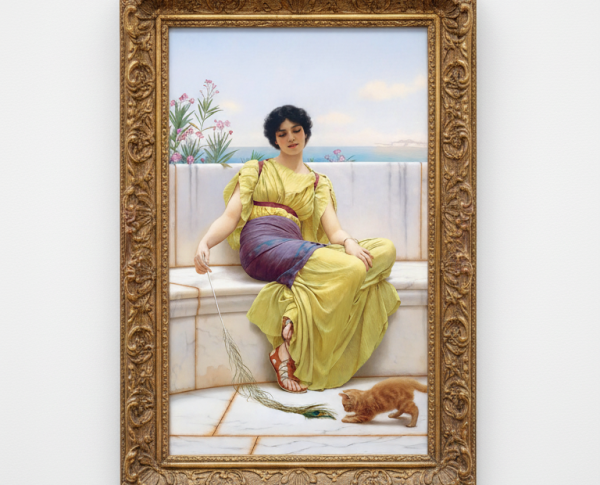
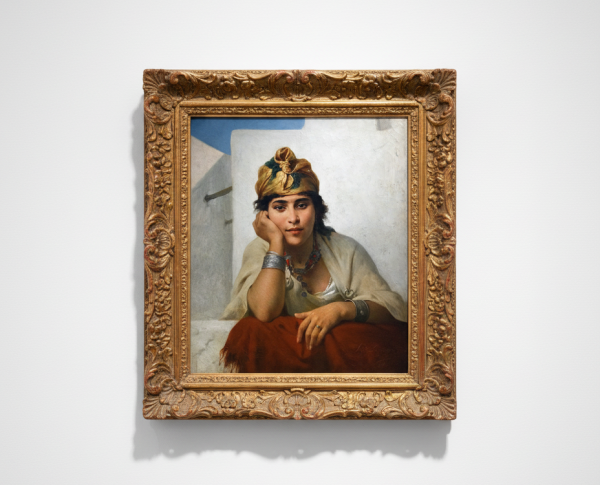
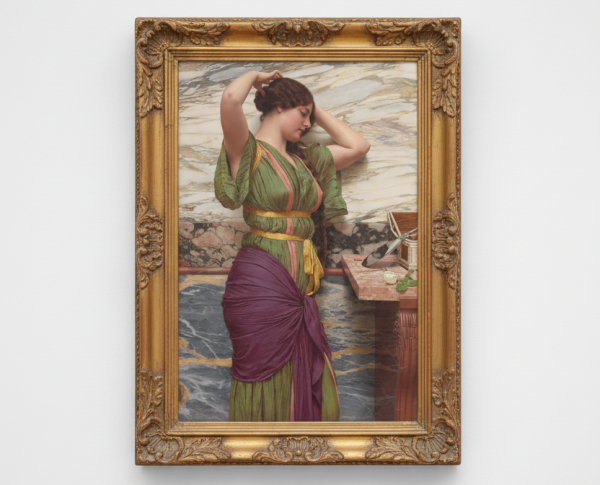
Godward’s "At The Window" reveals his technical prowess and love for the classical form. Each brushstroke is expertly rendered, demonstrating the artist’s commitment to the highest standards of oil on canvas. The delicate interplay of light and texture showcases the essence of Neoclassical Academic Realism, a movement renowned for its precision. Collectors seeking works like "A Priestess Of Bacchus" or "Nude on the Beach" will recognize the same masterful artistry in this exceptional painting.
"At The Window" invites viewers into a world rich with narrative and symbolism, hallmarks of Neoclassical Academic Realism. The subject’s contemplative gaze and the tranquil setting evoke themes of longing and introspection, making this hand-painted oil painting a profound addition to any collection. Art lovers will find echoes of these motifs in Godward’s other works, such as "On the Balcony" and "Ethel Warwick," each offering unique stories within the fine art painting for sale market.
Owning "At The Window" by John William Godward is a privilege for any connoisseur of Neoclassical Academic Realism. This oil on canvas masterpiece not only enhances a collection but also connects the owner to a legacy of refined elegance. With related products like "A Roman Beauty" and "A Priestess Of Bacchus" available, collectors have the opportunity to own a piece of history and enjoy the enduring value of a fine art painting for sale from a celebrated artist.
When Art Meets History
"At The Window" by John William Godward is a remarkable example of Neoclassical Academic Realism, a movement that celebrated the revival of classical ideals. This hand-painted oil painting captures the serene beauty and contemplative atmosphere of its era. Godward, known for his exquisite detail and skill, draws inspiration from ancient Greece and Rome, much like the grand scenes in related paintings such as "The Death of Socrates" and "Napoleon Crossing the Alps."
Techniques That Speak
Employing the meticulous methods characteristic of Neoclassical Academic Realism, John William Godward’s "At The Window" showcases his mastery of oil on canvas. The artist’s delicate brushwork and attention to light create a lifelike presence, echoing the technical brilliance seen in "Consecration of the Emperor Napoleon I and Coronation of the Empress Josephine 1805-07." Godward’s approach ensures every fabric fold and marble surface is rendered with breathtaking realism, making this painting a true masterpiece.
Emotions on Display
In "At The Window," Godward conveys a profound sense of longing and tranquility through the subject’s pose and expression, hallmarks of Neoclassical Academic Realism. The painting’s quiet mood is reminiscent of the introspective moments found in works like "Portrait of Antoine-Laurent Lavoisier and his wife." As a fine art painting for sale, it offers viewers the opportunity to experience the timeless emotions that Godward so expertly brings to life on canvas.
Coveted by Collectors
Collectors are consistently drawn to John William Godward’s "At The Window" for its classical elegance and exceptional craftsmanship. As with masterpieces like "Bonaparte, Calm on a Fiery Steed" and "Crossing the Alps 1801," this hand-painted oil painting is revered for its historical significance and visual appeal. Works from the Neoclassical Academic Realism movement continue to be highly sought after, making this painting a prized addition to any collection.
Related Neoclassical Academic Realism Hand-Painted Oil Paintings by Other Artists
Other Famous Neoclassical Academic Realism Artists:
Frequently Asked Questions About At The Window
What is the historical context of "At The Window"?
"At The Window" was painted by John William Godward in the early 20th century, a period characterized by the decline of the Victorian era and the rise of modernism. Godward, associated with the Neoclassical movement, sought to revive classical themes and aesthetics in a time when such styles were becoming less popular.
What artistic techniques did Godward employ in "At The Window"?
Godward is known for his meticulous attention to detail and use of vibrant colors. In "At The Window," he employs techniques such as chiaroscuro to create depth and realism, as well as a careful arrangement of light and shadow to enhance the three-dimensionality of the figure and the surrounding environment.
What themes are explored in "At The Window"?
The painting explores themes of solitude and contemplation, as the figure gazes out of the window, seemingly lost in thought. This moment captures a sense of introspection and the longing for connection with the outside world, reflecting the emotional depth often found in Godward's works.
What is the significance of the window in the painting?
The window serves as a symbolic barrier between the inner world of the figure and the outer world. It represents both a physical and metaphorical threshold, suggesting themes of isolation, desire, and the contrast between the safety of domestic life and the allure of the outside world.
How does "At The Window" reflect Neoclassical ideals?
"At The Window" embodies Neoclassical ideals through its emphasis on beauty, harmony, and the portrayal of the human figure in a classical manner. Godward’s focus on idealized beauty and the serene expression of the figure aligns with the principles of Neoclassicism, which sought to emulate the art and philosophy of ancient Greece and Rome.
What role does color play in "At The Window"?
Color plays a crucial role in "At The Window," as Godward uses a rich palette to evoke mood and emotion. The warm tones of the figure’s attire contrast with the cooler hues of the background, creating visual interest and enhancing the overall atmosphere of tranquility and contemplation.
How does the figure's posture contribute to the painting's narrative?
The figure's relaxed yet poised posture suggests a moment of quiet reflection. This body language invites viewers to ponder what thoughts occupy her mind, thereby enhancing the narrative quality of the painting and encouraging personal interpretation of her emotional state.
What influences can be seen in Godward's style in this painting?
Godward's style in "At The Window" shows influences from both the Pre-Raphaelite Brotherhood and classical art. His attention to detail, lush color palette, and depiction of female beauty are reminiscent of the Pre-Raphaelites, while his classical themes and forms reflect the influence of ancient art traditions.
What is the significance of the setting in "At The Window"?
The setting, with its lush drapery and ornate architectural elements, enhances the painting's luxurious and serene atmosphere. It reflects the domestic sphere, which was often idealized in Godward's works, and serves to highlight the figure's beauty and grace within a carefully curated environment.
How does "At The Window" fit into Godward's overall body of work?
"At The Window" is representative of Godward's signature style, characterized by his focus on female subjects, classical themes, and an emphasis on beauty. This painting exemplifies his ability to blend technical skill with emotional depth, making it a significant piece within his oeuvre and a testament to his artistic legacy.























_GFM_Painting_(1).webp)


 100% Hand-Painted: Finished in 3-6 Weeks

.png)

















_(1).webp)