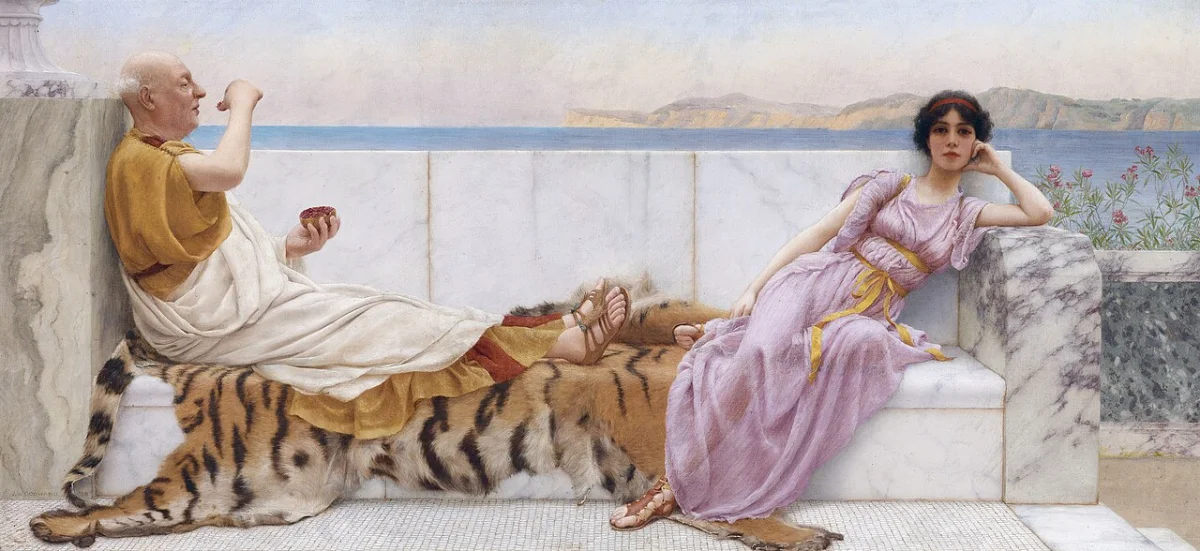
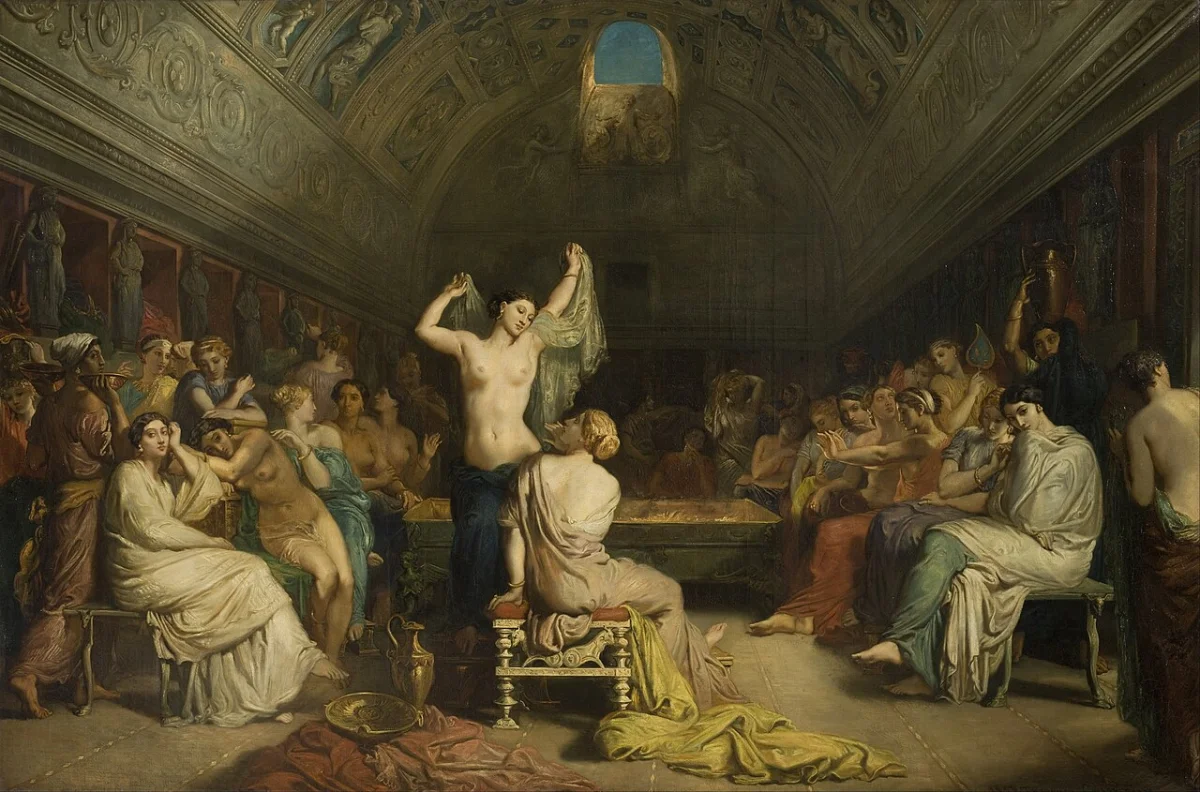
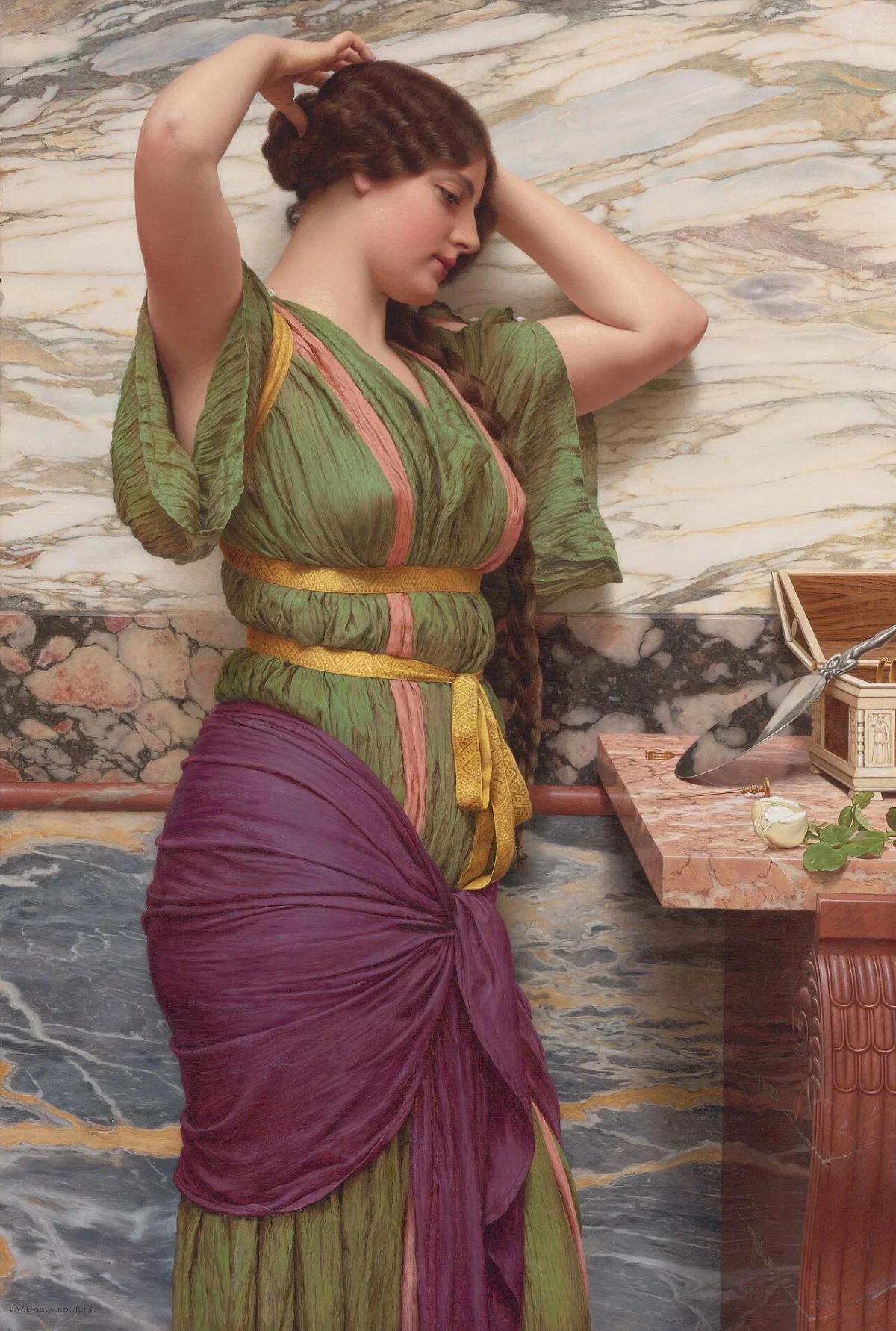
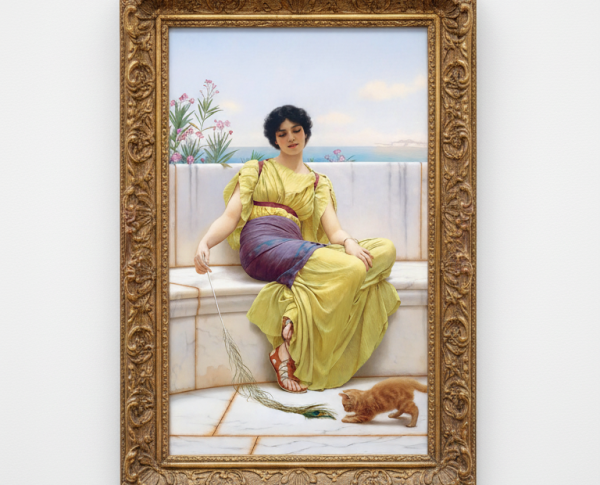
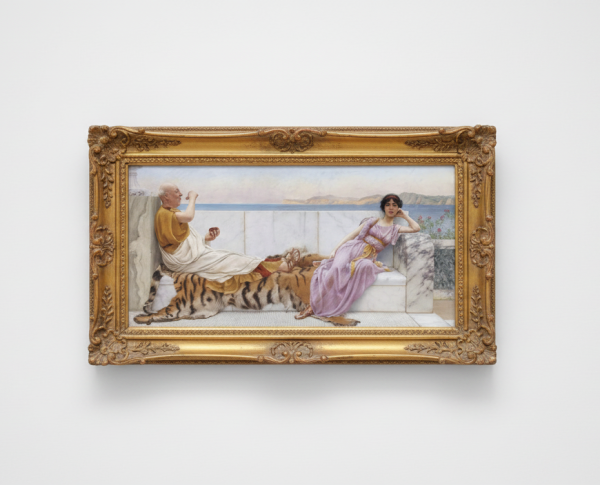
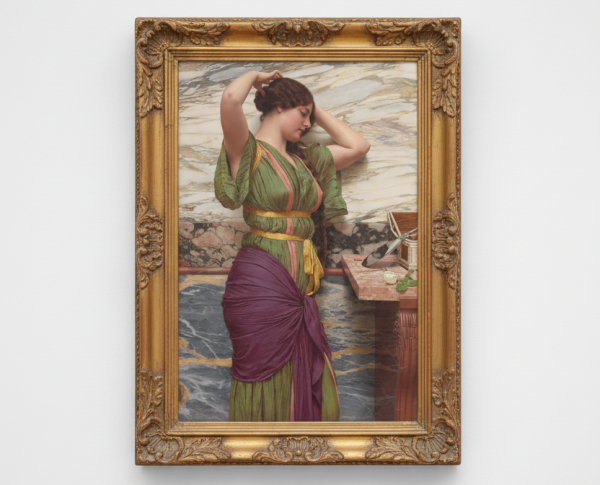
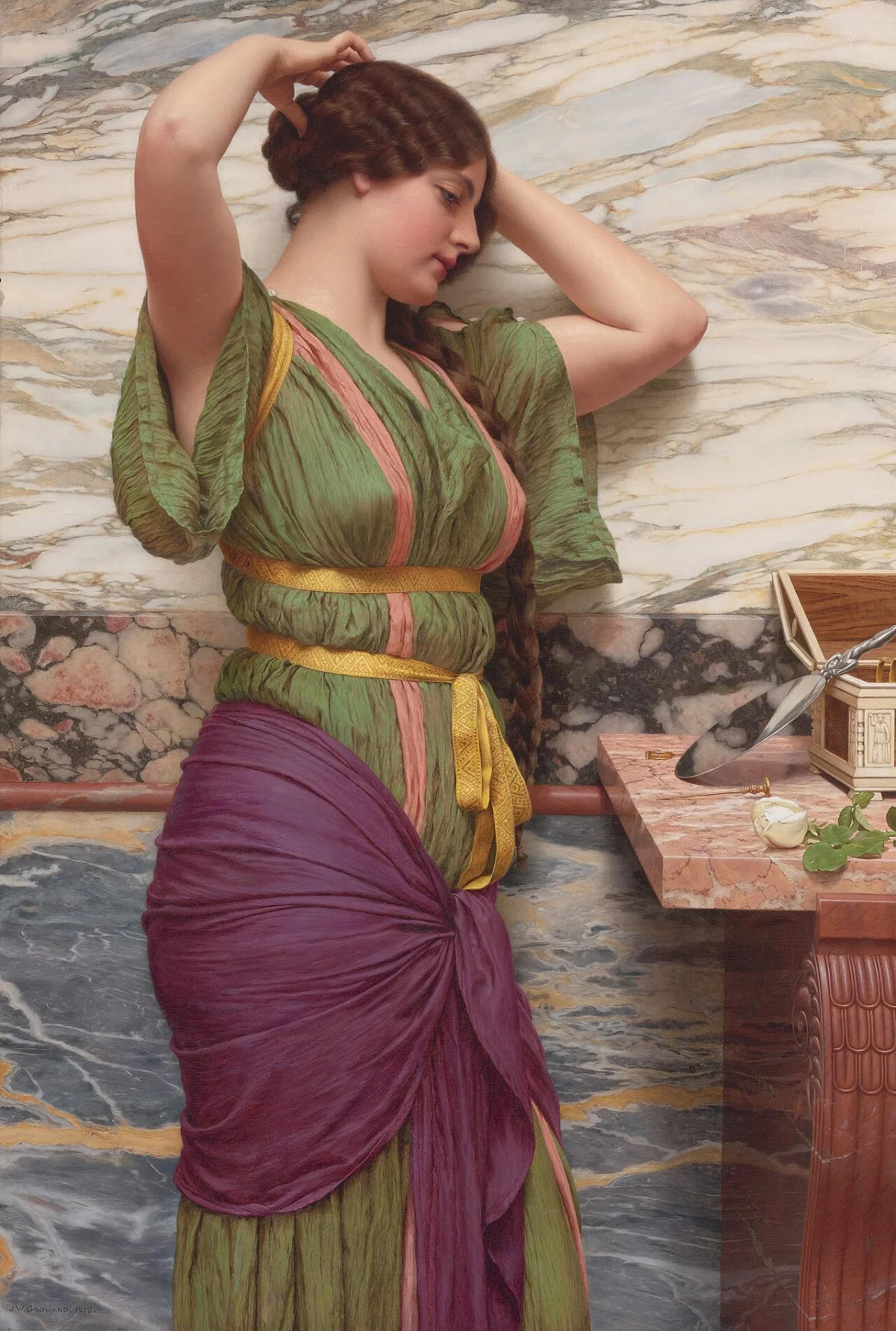
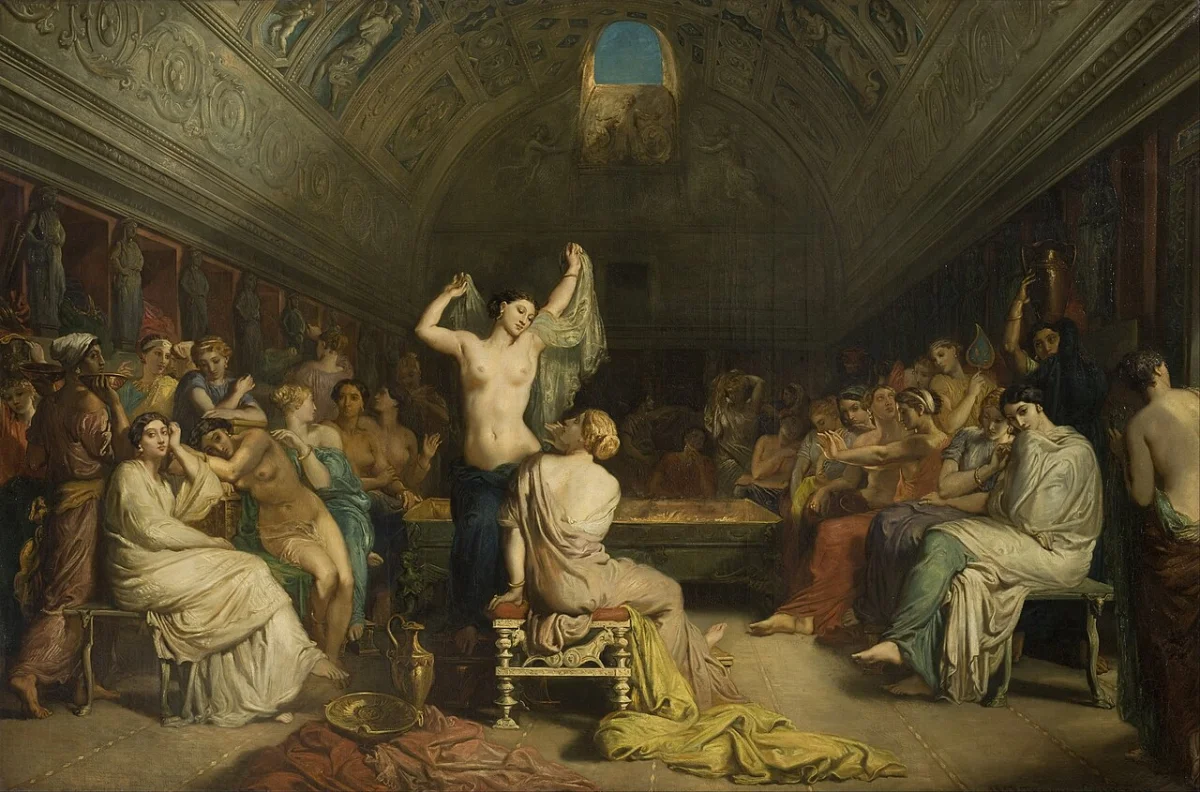
Godward’s "On the Balcony" showcases his incredible skill with oil on canvas, capturing the interplay of light, texture, and color with unmatched precision. Each brushstroke reveals his devotion to the Neoclassical Academic Realism movement, where realism and idealized forms blend seamlessly. The artist’s technique can also be admired in related works like "A Pompeian Bath" and "A Fair Reflection," making these pieces highly desirable among collectors searching for oil on canvas masterpieces.
Within "On the Balcony," John William Godward weaves subtle narratives and classical symbolism, characteristic of the Neoclassical Academic Realism movement. The tranquil figure gazing from the balcony invites viewers to ponder her story, much like in "Mischief and Repose" or "The Quiet Pet." Each fine art painting for sale from this period offers a glimpse into a world of timeless beauty, where every detail contributes to the overall sense of harmony and introspection.
For discerning collectors, "On the Balcony" by John William Godward is more than a decorative piece—it is a hand-painted oil painting that embodies the grace and refinement of Neoclassical Academic Realism. The allure of owning such a work is heightened by the availability of related masterpieces like "Idleness" and "A Pompeian Bath," making each acquisition a true investment in art history. These paintings are celebrated as premier fine art painting for sale worldwide.
Related Neoclassical Academic Realism Hand-Painted Oil Paintings by Other Artists
Other Famous Neoclassical Academic Realism Artists:
Frequently Asked Questions About On the Balcony
What is the historical context of "On the Balcony"?
"On the Balcony," painted by John William Godward in 1910, reflects the late Victorian and Edwardian era's fascination with classical themes and aesthetics. This period was characterized by a revival of interest in ancient cultures, particularly Greco-Roman art and philosophy.
What artistic style does John William Godward employ in "On the Balcony"?
Godward is known for his adherence to the Neoclassical style, which emphasizes idealized beauty, harmony, and a strong connection to classical antiquity. In "On the Balcony," he showcases meticulous attention to detail and a vibrant color palette, hallmarks of his artistic approach.
What symbolism is present in "On the Balcony"?
The balcony in the painting symbolizes a threshold between the private and public spheres, suggesting themes of contemplation and introspection. The figure's pose and expression convey a sense of longing or desire, inviting viewers to ponder her thoughts and emotions.
How does "On the Balcony" reflect the themes of femininity?
In "On the Balcony," Godward portrays the female figure with grace and elegance, embodying the ideals of beauty and virtue prevalent in his time. The depiction of women in such serene and contemplative settings often reflects societal views on femininity and the role of women in Edwardian society.
What techniques did Godward use to create depth in "On the Balcony"?
Godward employed techniques such as chiaroscuro, which contrasts light and shadow, to create depth and dimension in "On the Balcony." Additionally, his use of perspective draws the viewer's eye into the scene, enhancing the three-dimensional quality of the composition.
What role does color play in "On the Balcony"?
Color plays a crucial role in "On the Balcony," as Godward utilizes a vibrant palette to evoke emotion and set the mood. The warm tones of the figure's attire contrast with the cooler hues of the background, creating visual interest and highlighting the subject's prominence in the composition.
How does "On the Balcony" compare to other works by John William Godward?
"On the Balcony" is representative of Godward's signature style, characterized by classical themes and meticulous detail. Compared to his other works, this painting showcases his ability to blend realism with idealism, capturing both the beauty of the subject and the serenity of the setting.
What is the significance of the architectural elements in "On the Balcony"?
The architectural elements in "On the Balcony," such as the balustrade and the surrounding foliage, serve to frame the figure and enhance the overall composition. These elements not only provide context but also reinforce the classical theme, drawing parallels to ancient Greek and Roman architecture.
How does "On the Balcony" reflect the influence of the Pre-Raphaelite movement?
While Godward is not a direct member of the Pre-Raphaelite Brotherhood, "On the Balcony" exhibits influences from their emphasis on detail, vibrant colors, and romanticized subjects. The painting's focus on beauty and nature aligns with the Pre-Raphaelite ideals of portraying a heightened sense of reality.
What impact did "On the Balcony" have on the art community during its time?
"On the Balcony" contributed to the ongoing discourse surrounding the role of women in art and the representation of beauty in the early 20th century. Godward's work was both celebrated and critiqued, reflecting the tensions between traditional artistic values and emerging modernist movements.























_GFM_Painting_(1).webp)


 100% Hand-Painted: Finished in 3-6 Weeks

.png)

















_(1).webp)