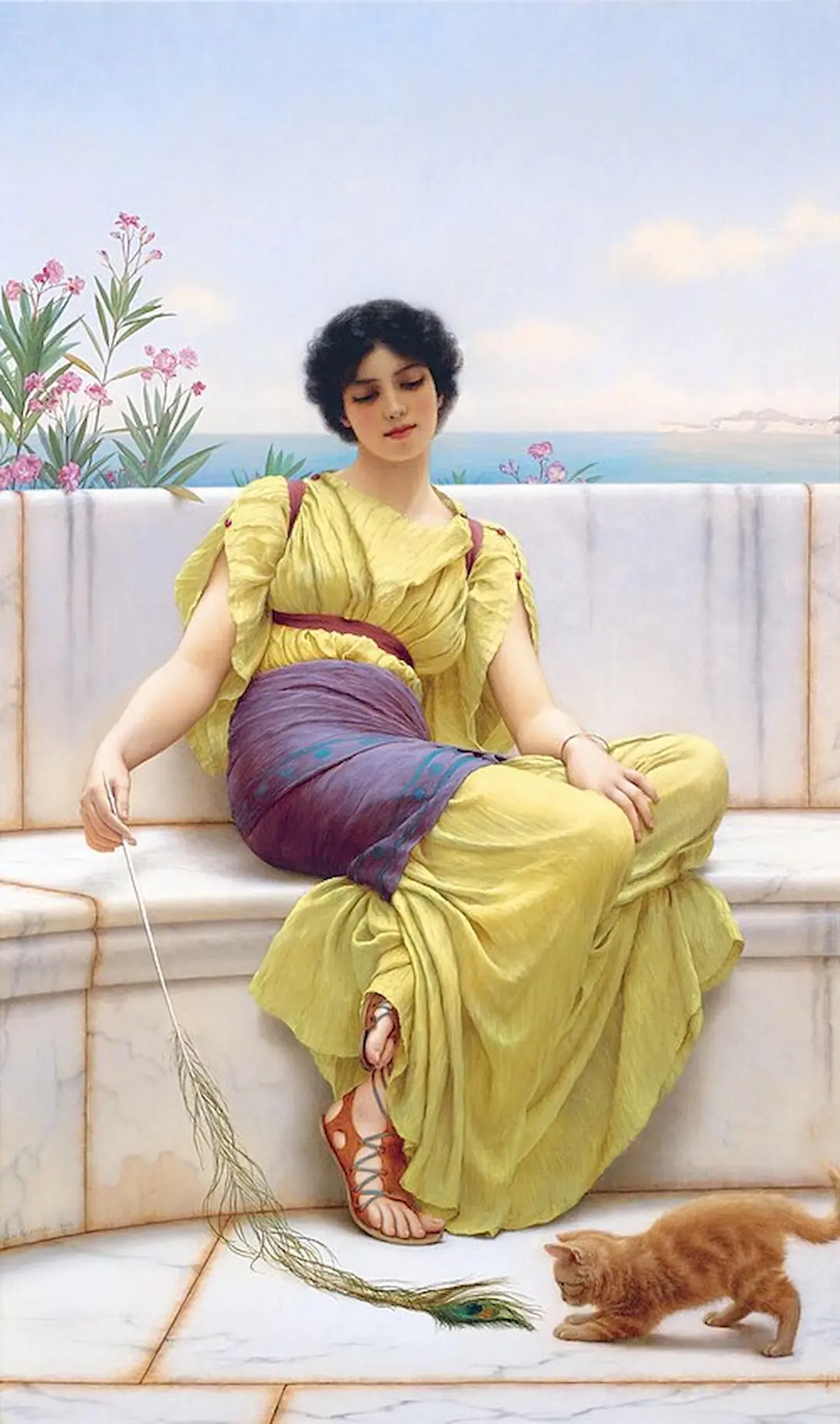
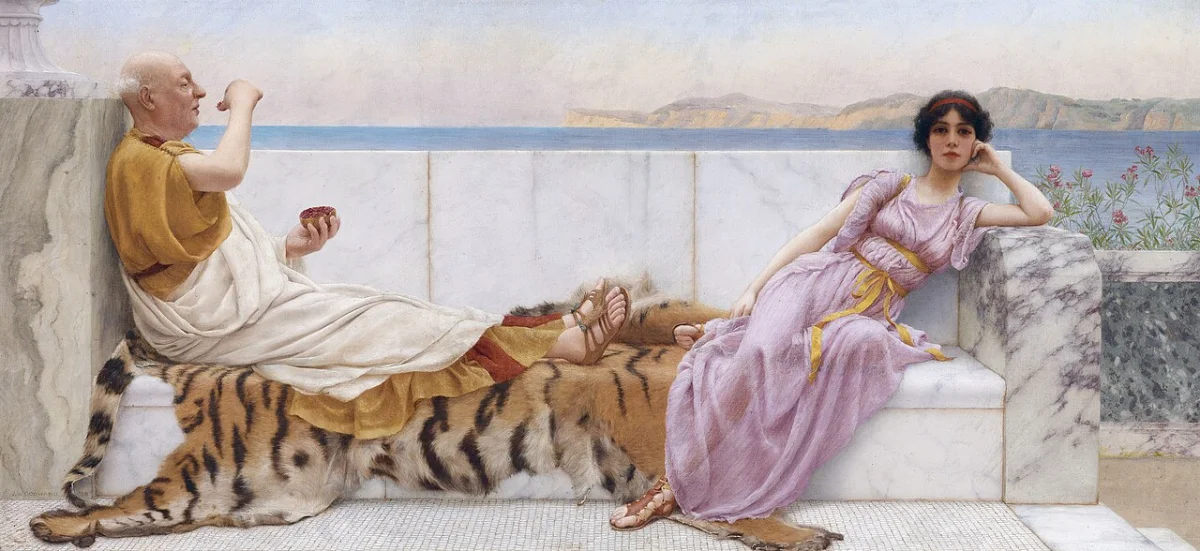
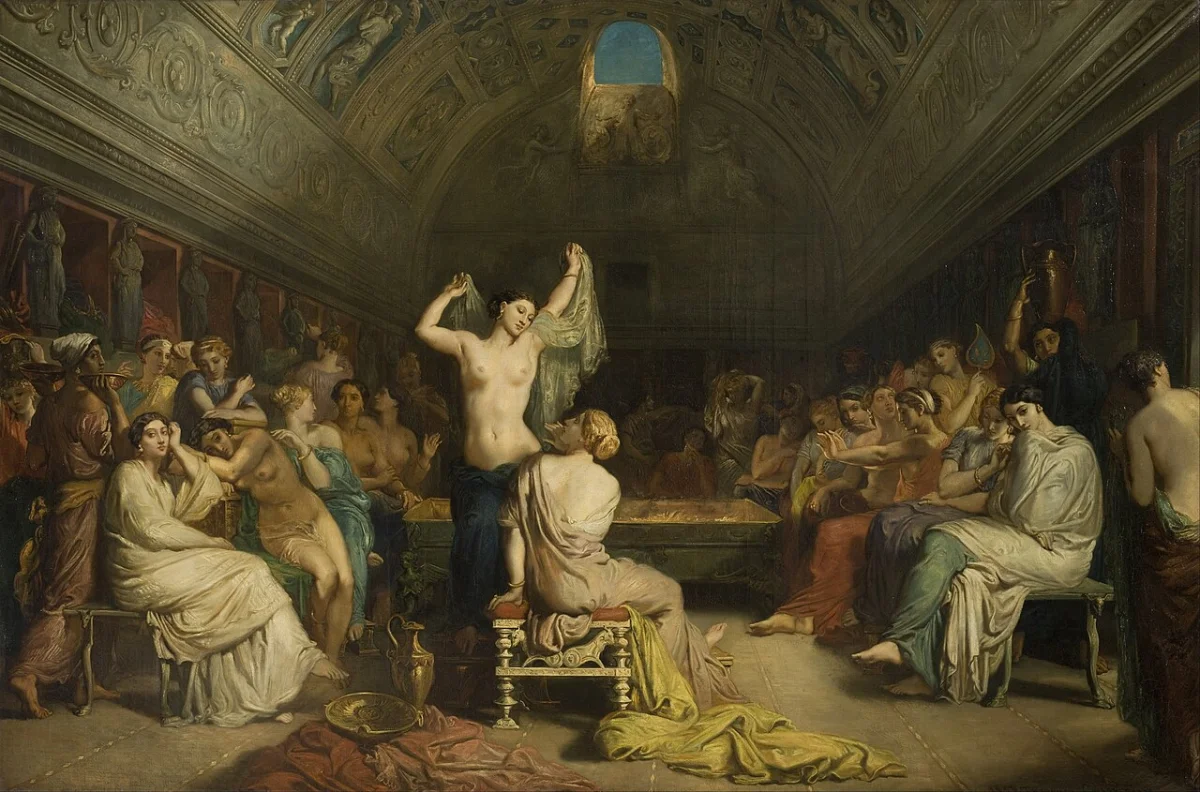
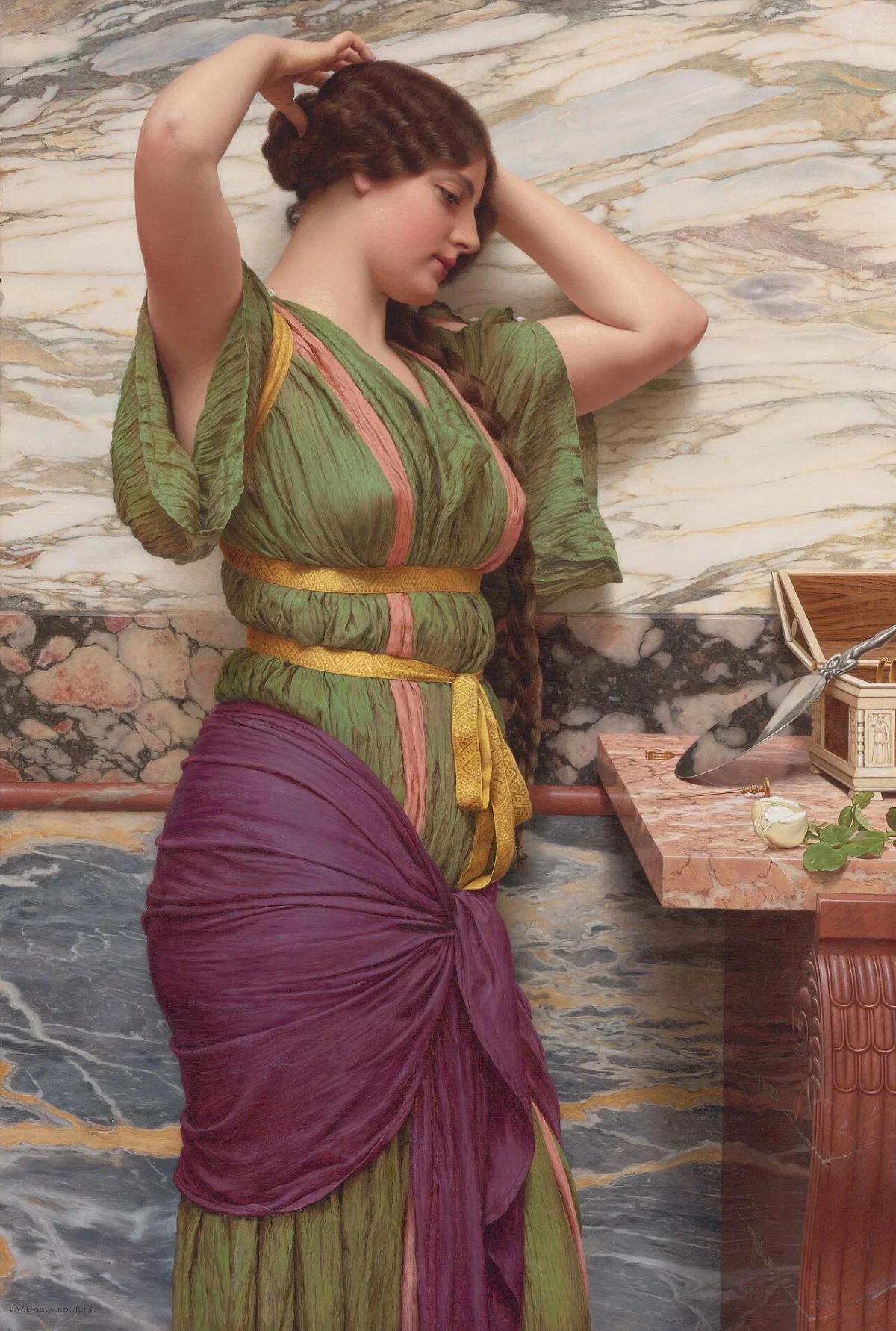
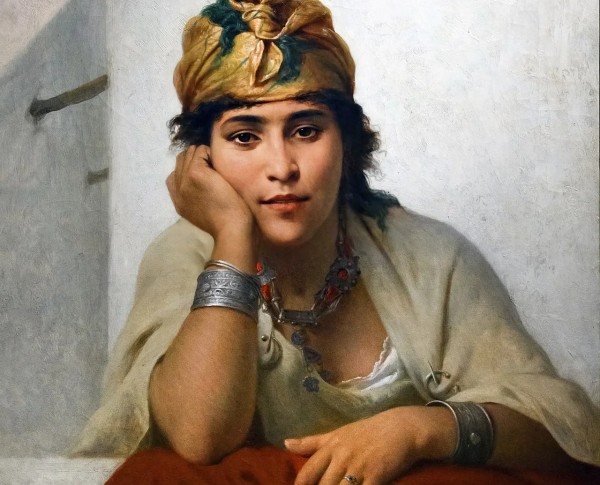
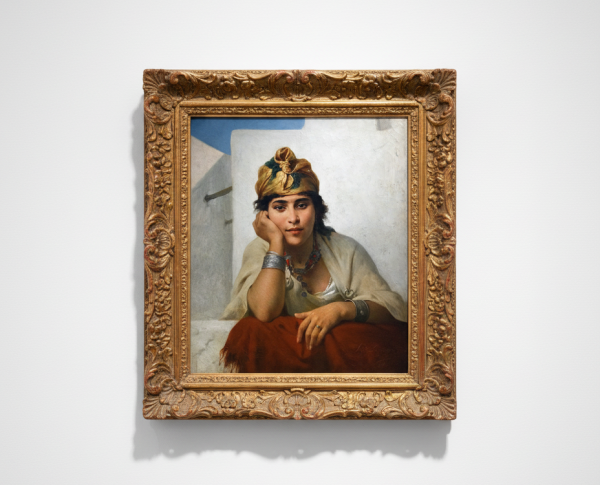
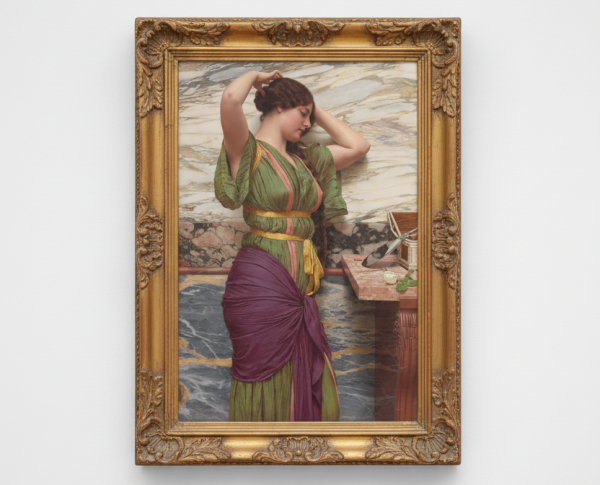
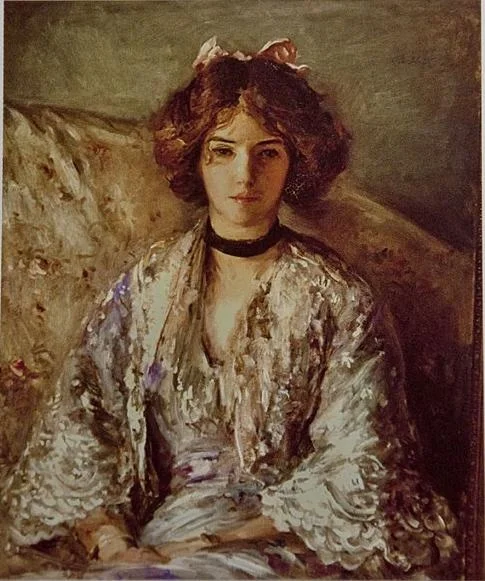
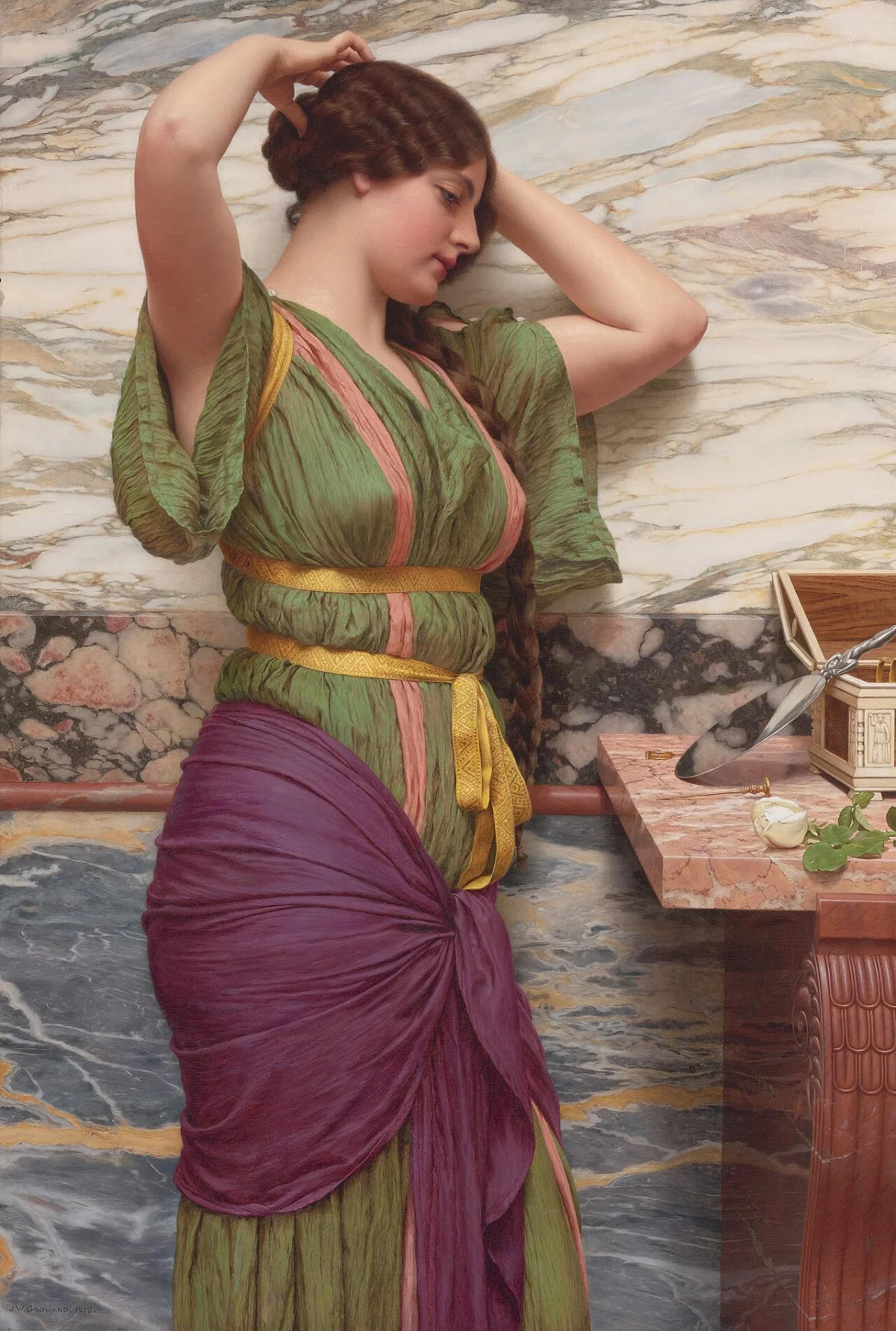
"Oil on canvas" is the chosen medium for "Ethel Warwick," highlighting John William Godward’s remarkable skill and attention to detail. Each brushstroke in this Neoclassical Academic Realism masterpiece demonstrates the artist’s dedication to realism and classical beauty, similar to his other paintings such as "When the Heart is Young" and "In the Tepidarium." Collectors and enthusiasts alike admire Godward's technical precision, which brings the subject to life with vibrant color and exquisite texture.
Within "Ethel Warwick," viewers find subtle stories and symbols woven into the composition, a hallmark of Neoclassical Academic Realism. Godward’s oil on canvas technique invites contemplation of the sitter’s serene expression and elegant pose. This style, also seen in works like "Violets, Sweet Violets" and "The Trysting Place," reflects the artist’s fascination with myth, beauty, and the ideals of ancient civilizations, making each fine art painting for sale a narrative as much as a visual delight.
For art collectors, "Ethel Warwick" by John William Godward represents a fine art painting for sale that embodies the spirit of Neoclassical Academic Realism. Its classic composition and refined brushwork make it a standout piece, much like Godward’s other celebrated works "Mischief and Repose" and "Lycinna." Owning this painting connects collectors to a tradition of artistic excellence, ensuring that the beauty and sophistication of oil on canvas artistry endures for generations.
When Art Meets History
"Ethel Warwick" by John William Godward stands as a testament to the enduring influence of the Neoclassical Academic Realism movement. Created as a hand-painted oil painting, this portrait captures the elegance and poise typical of Godward’s work. Like masterpieces such as "The Death of Socrates" and "Portrait of Antoine-Laurent Lavoisier and his wife," Godward’s painting bridges the gap between art and history, immortalizing its subject while reflecting the refined tastes of the era.
Techniques That Speak
John William Godward’s mastery is evident in his use of oil on canvas, a technique that brings out the luminous textures and nuanced details in "Ethel Warwick." His approach mirrors the technical brilliance seen in related works like "Bonaparte, Calm on a Fiery Steed" and "Napoleon Crossing the Alps." Through controlled brushwork and careful layering, Godward captures every fold of fabric and subtlety of skin tone, making this piece a stunning example of Neoclassical Academic Realism.
Emotions on Display
"Ethel Warwick" radiates a quiet intensity, characteristic of Godward’s portraits within the Neoclassical Academic Realism movement. The subject’s serene gaze and composed posture evoke a sense of inner strength and grace, inviting viewers to contemplate her story. Much like "Consecration of the Emperor Napoleon I and Coronation of the Empress Josephine 1805-07," this fine art painting for sale captures the emotional depth and timeless beauty that define the era’s greatest works.
Coveted by Collectors
Collectors prize "Ethel Warwick" for its exquisite execution and historical significance, making it a standout oil on canvas piece in the world of fine art. The painting’s association with John William Godward and the Neoclassical Academic Realism movement enhances its desirability, much like the celebrated "Crossing the Alps 1801." As with many hand-painted oil paintings from this period, "Ethel Warwick" continues to command admiration and high value among discerning art enthusiasts.
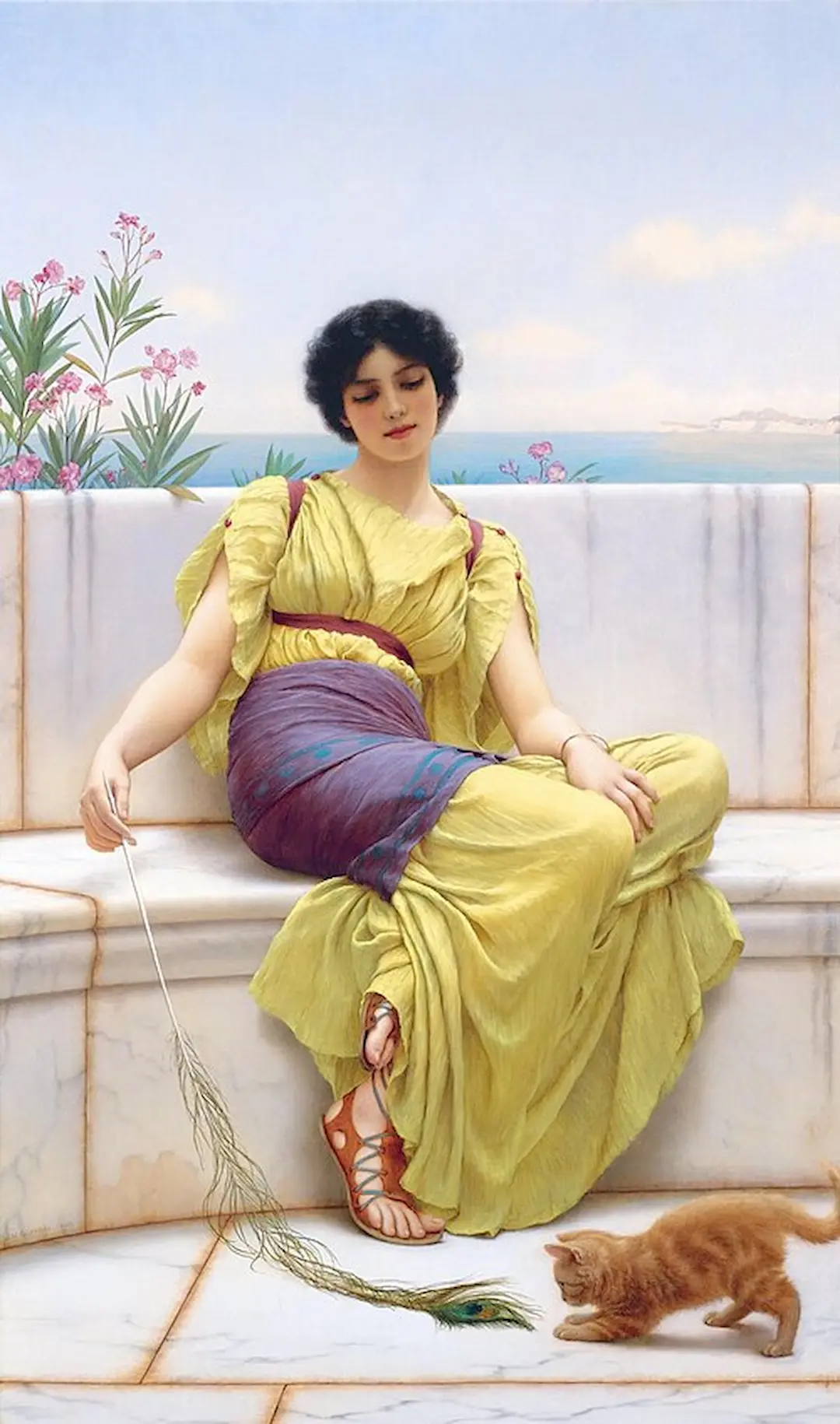
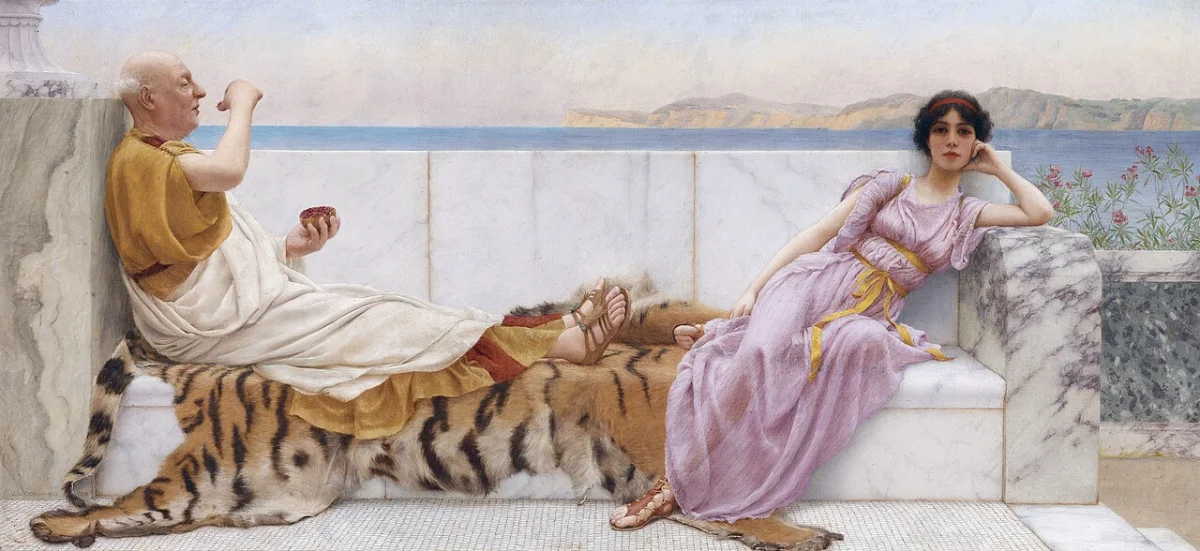
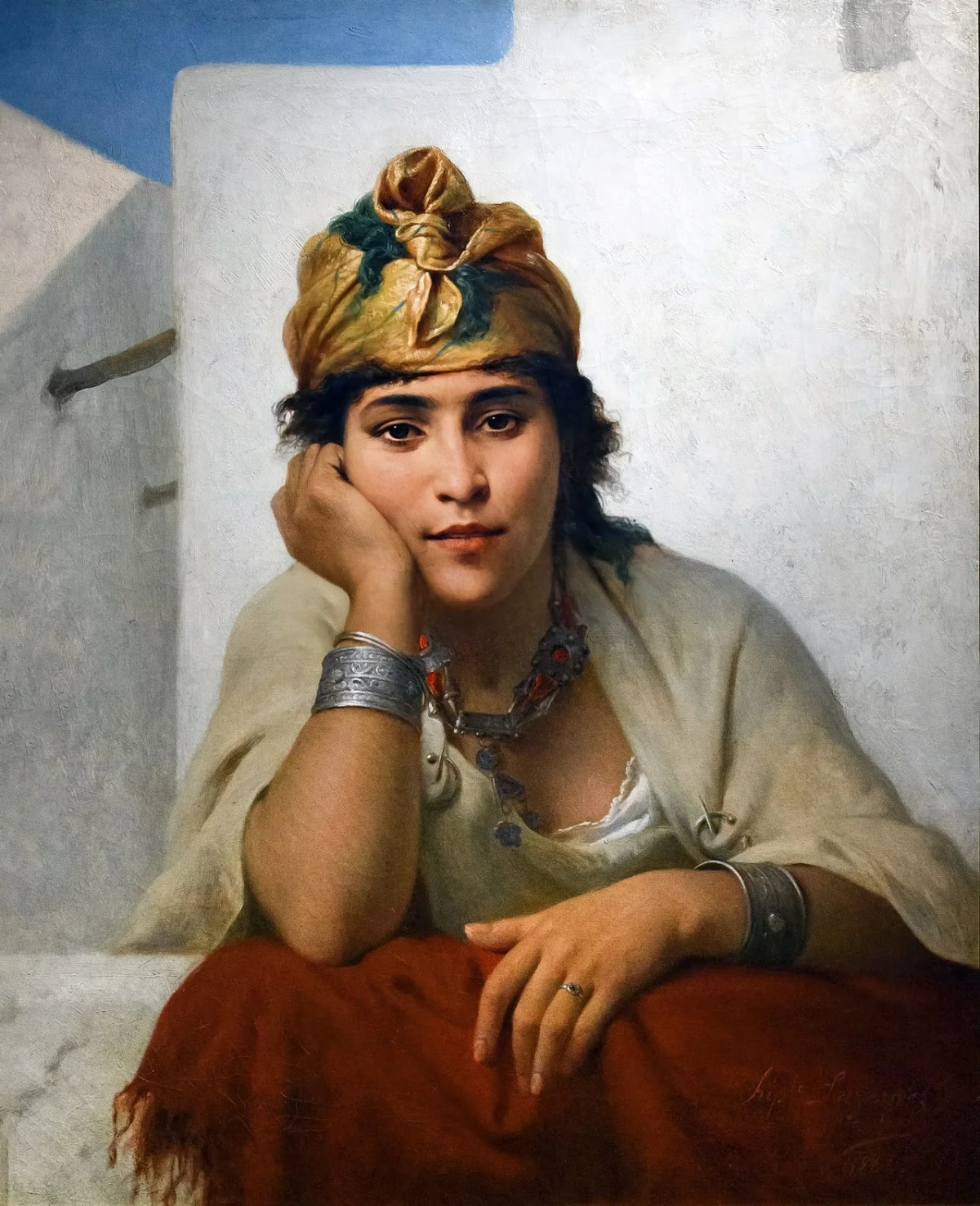
Related Neoclassical Academic Realism Hand-Painted Oil Paintings by Other Artists
Other Famous Neoclassical Academic Realism Artists:
Frequently Asked Questions About Ethel Warwick
Who is the artist of "Ethel Warwick"?
The painting "Ethel Warwick" was created by the renowned British artist John William Godward, known for his exquisite depictions of classical themes and female figures.
What is the historical context of "Ethel Warwick"?
What artistic techniques did Godward employ in "Ethel Warwick"?
Godward utilized a combination of classical composition, meticulous attention to detail, and vibrant color palettes to create a sense of harmony and beauty in "Ethel Warwick," showcasing his mastery of oil painting.
What is the significance of the title "Ethel Warwick"?
The title "Ethel Warwick" refers to the model, Ethel Warwick, who was a prominent figure in Godward's works. Her portrayal reflects both the artist's admiration for her beauty and the idealization of women during the Edwardian era.
What themes are explored in "Ethel Warwick"?
The painting explores themes of beauty, femininity, and the idealized female form, as well as the relationship between the subject and her environment, which is often imbued with classical references.
How does "Ethel Warwick" reflect the influence of classical art?
"Ethel Warwick" reflects the influence of classical art through its composition, use of drapery, and the serene expression of the subject, reminiscent of ancient Greek and Roman sculptures.
What materials were used in the creation of "Ethel Warwick"?
John William Godward created "Ethel Warwick" using oil paints on canvas, a medium that allowed for rich color saturation and fine detail, characteristic of his style.
How does the color palette contribute to the overall mood of the painting?
The color palette in "Ethel Warwick" is dominated by soft pastels and warm tones, which evoke a sense of tranquility and idealized beauty, enhancing the painting's romantic and serene atmosphere.
What role does the background play in "Ethel Warwick"?
The background in "Ethel Warwick" is carefully crafted to complement the figure of Ethel, often featuring classical architecture or lush landscapes that enhance the subject's beauty and the painting's overall theme of harmony.
How has "Ethel Warwick" been received by art critics and historians?























_GFM_Painting_(1).webp)

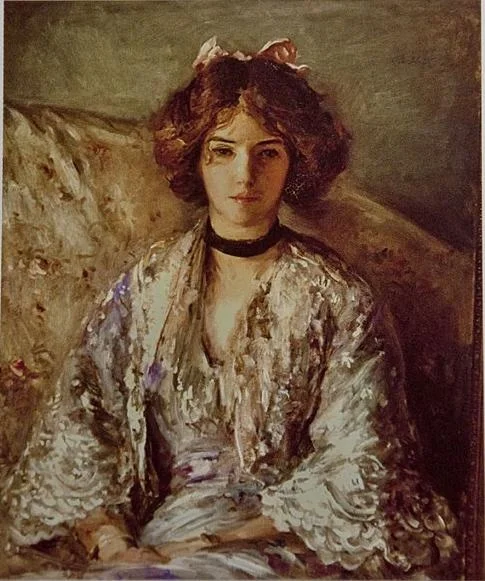

 100% Hand-Painted: Finished in 3-6 Weeks

.png)















_(1).webp)