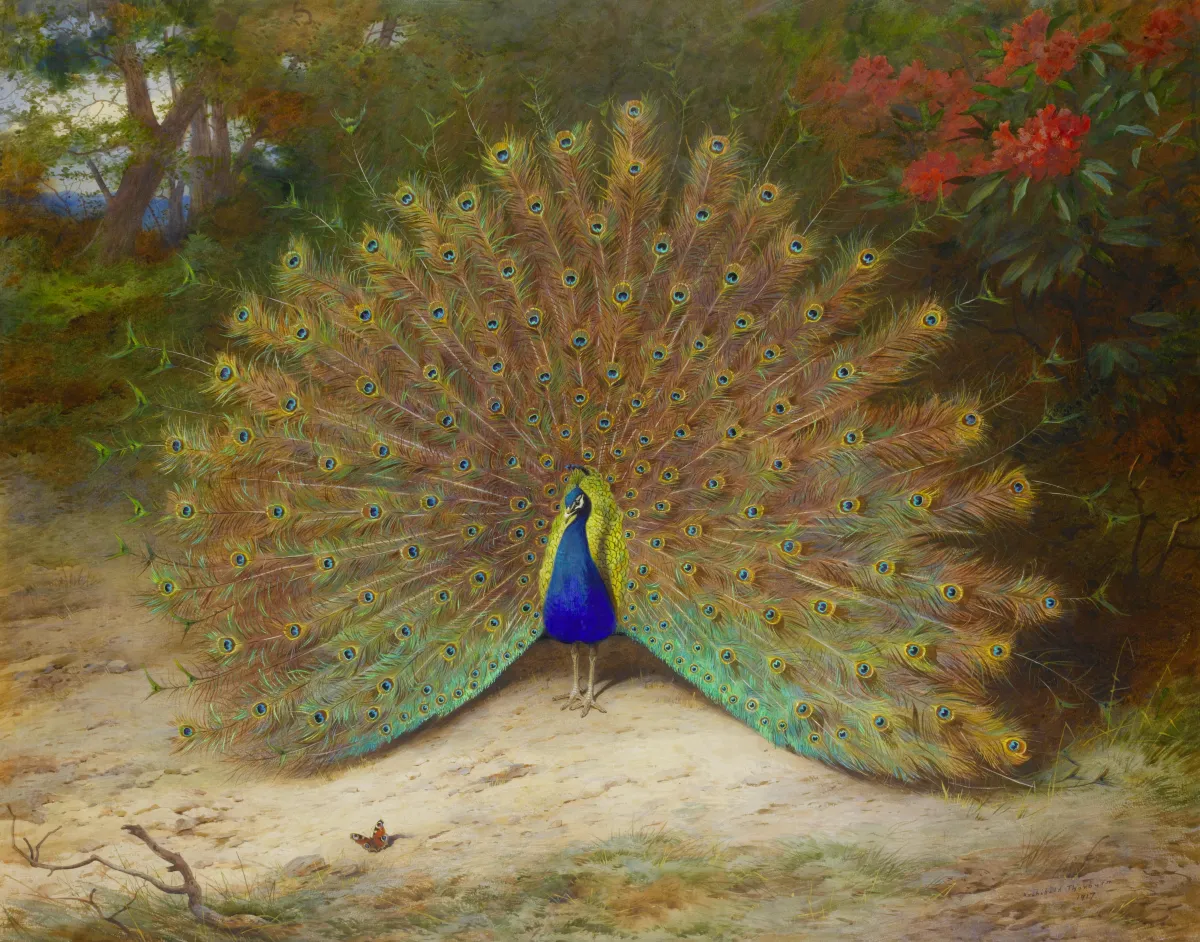
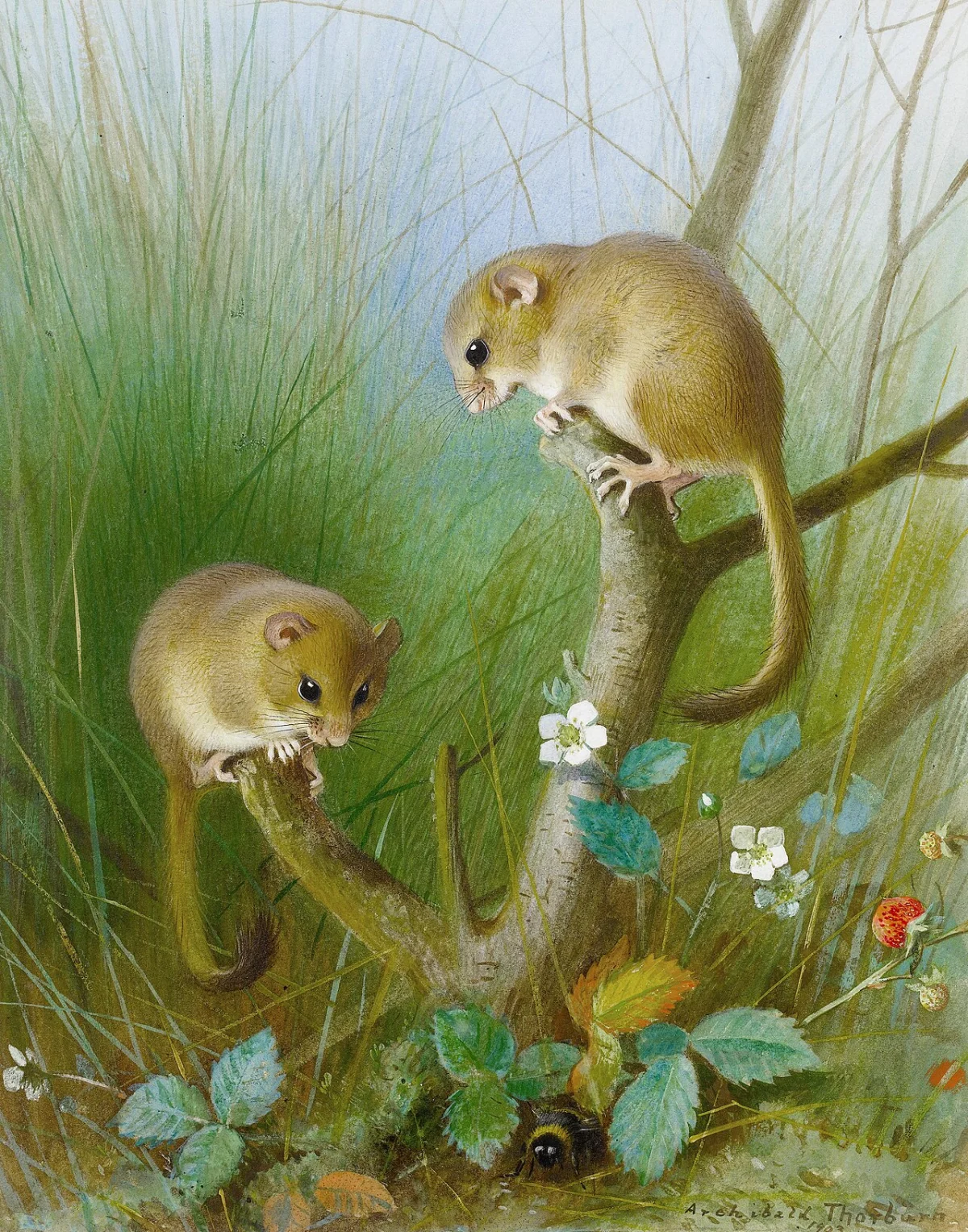
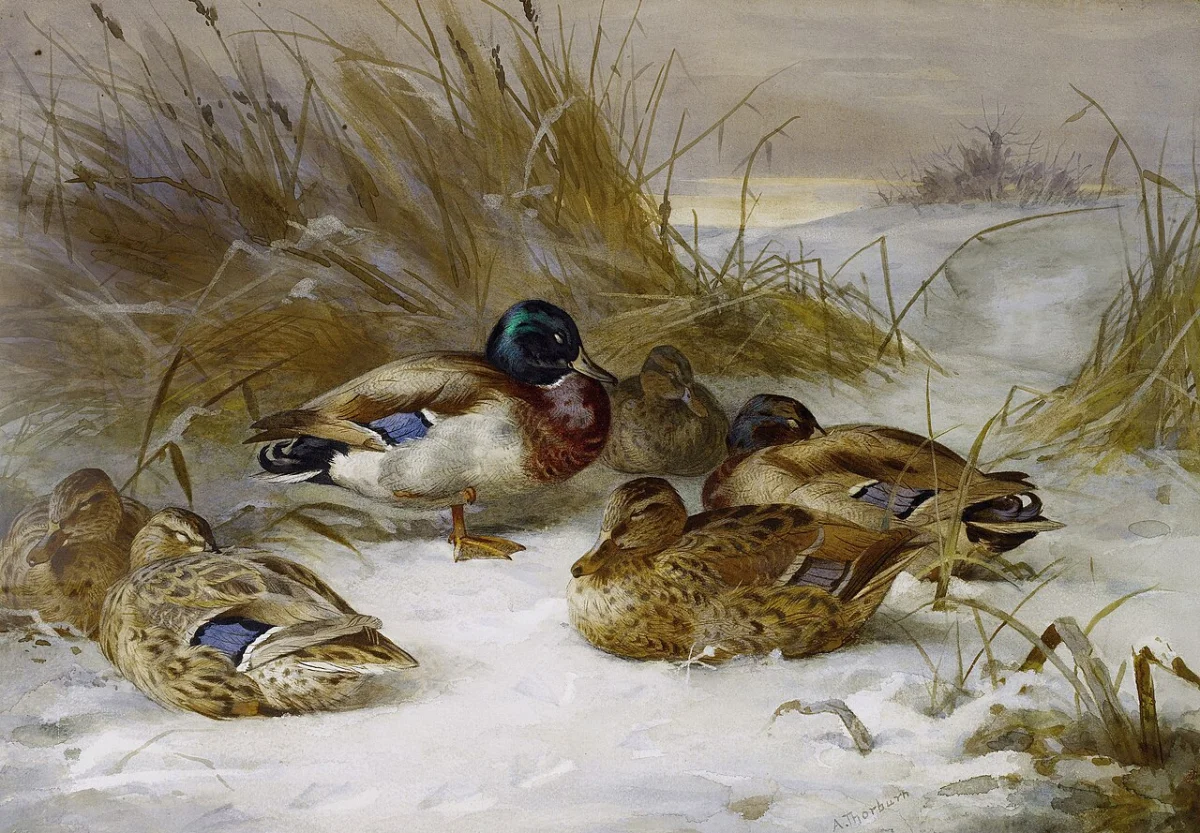
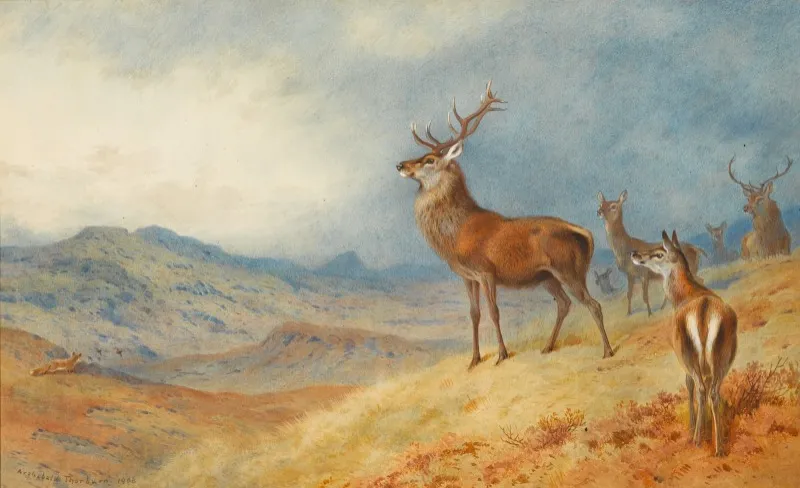
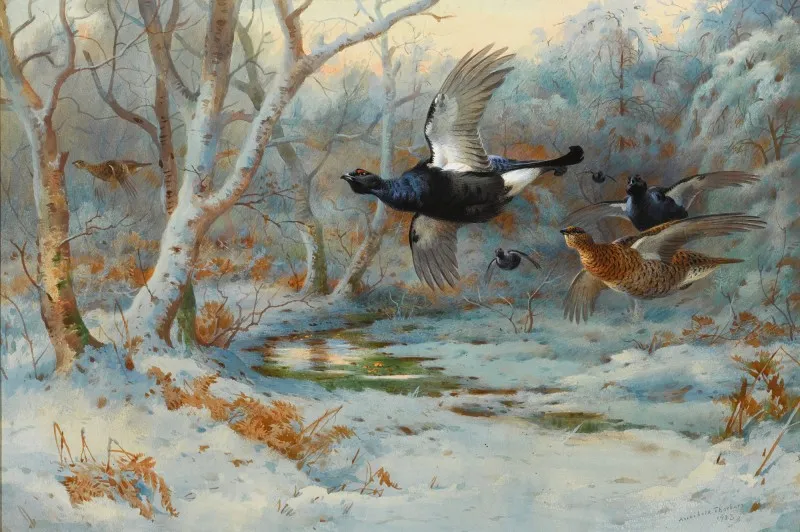
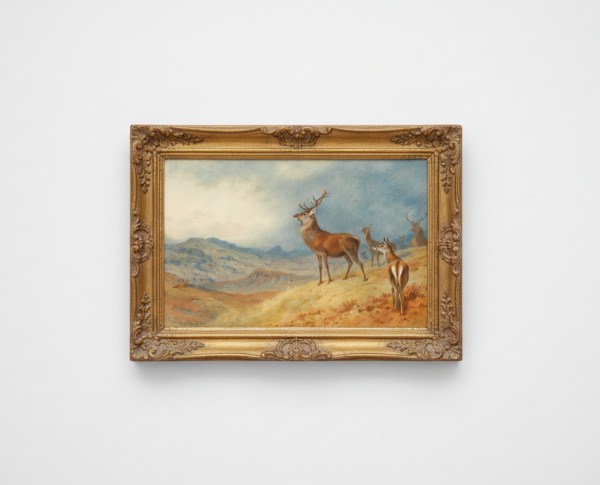
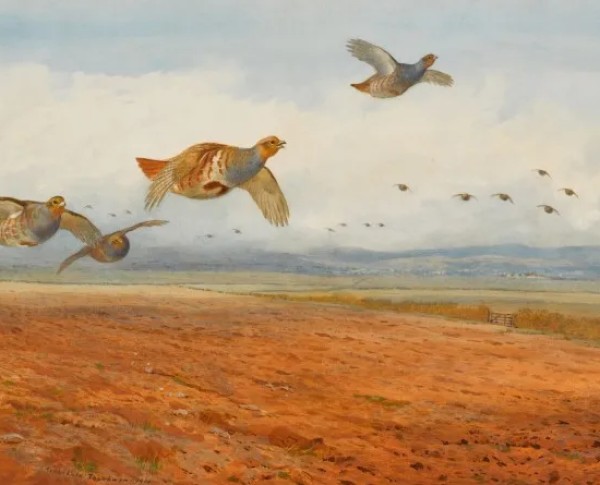
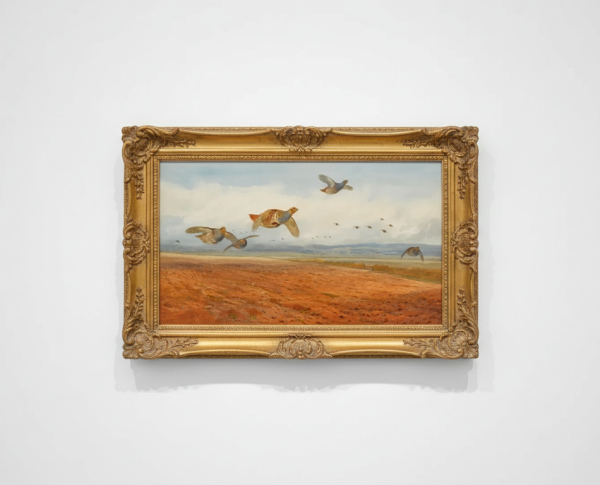
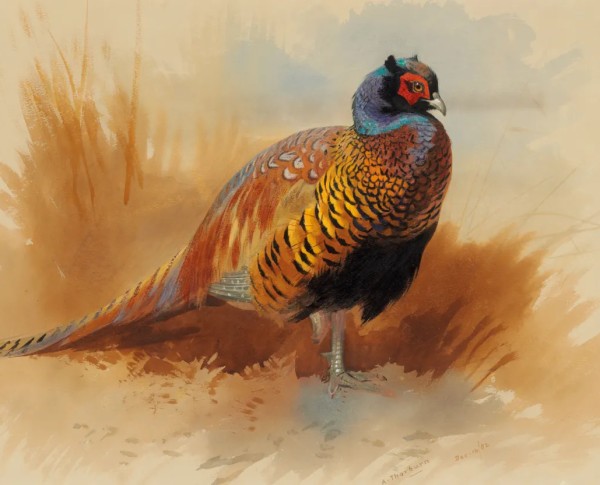
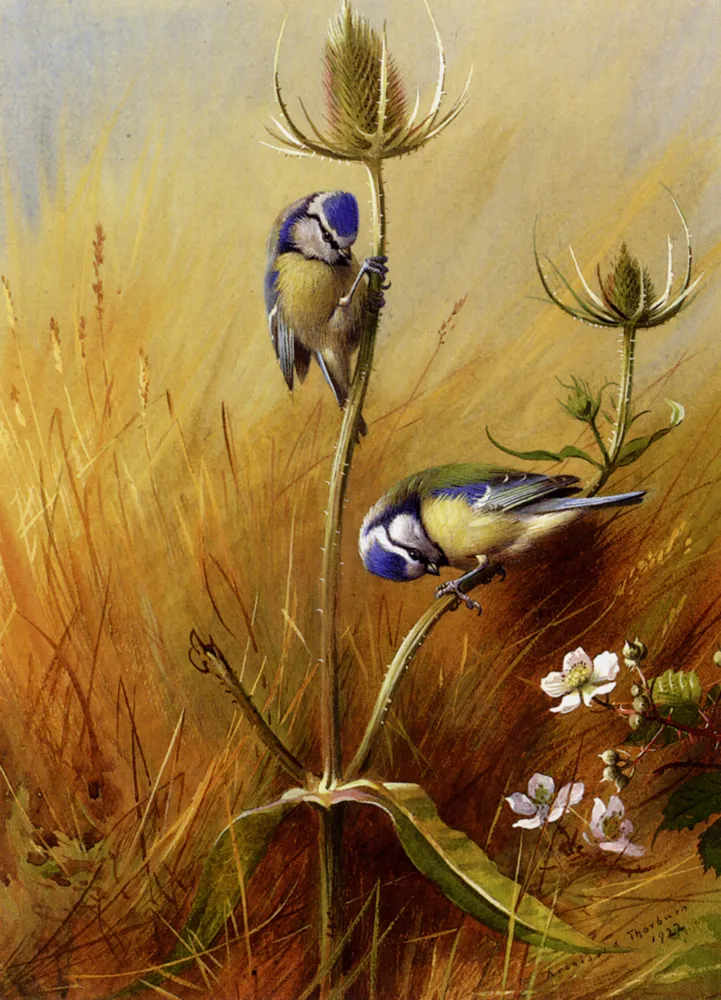
"Oil on canvas" is the medium through which Archibald Thorburn achieved remarkable realism in "Bluetits On A Teasel." Each brushstroke reveals his deep understanding of texture and light, hallmarks of the Naturalism movement. Thorburn’s expertise is also evident in works such as "Woodcock in a sandy hollow." and "King of the roost," further cementing his reputation for lifelike wildlife scenes. This oil on canvas piece exemplifies his meticulous approach to nature’s delicate beauty.
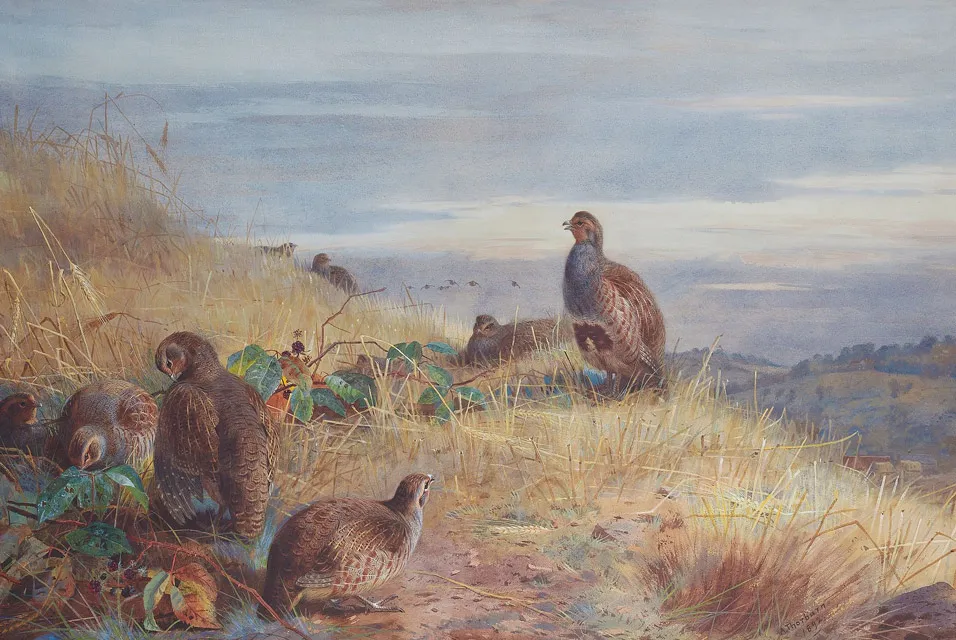
Thorburn’s "Bluetits On A Teasel" brims with subtle narratives and symbolism, hallmarks of the Naturalism movement. The bluetits, perched delicately on the teasel, symbolize resilience and harmony with nature. This hand-painted oil painting invites viewers to reflect on the interconnectedness of wildlife. Thorburn’s storytelling prowess is also seen in related works like "Red Partridges" and "Brambling," making his paintings treasured additions to any fine art collection.
For art collectors, "Bluetits On A Teasel" by Archibald Thorburn represents a true fine art painting for sale. Its exquisite detail and historical significance within the Naturalism movement make it a standout piece. Collectors seeking to expand their portfolio may also appreciate related products such as "Ptarmigan Calling in the Snow" or "King of the roost," each reflecting Thorburn’s unique contribution to the world of oil on canvas masterpieces.
When Art Meets History
"Bluetits On A Teasel" by Archibald Thorburn stands as a testament to the Naturalism movement, capturing nature's beauty with remarkable clarity. This hand-painted oil painting showcases Thorburn's dedication to lifelike detail, much like his other works such as "The artist's grandfather" and "Hay Making." The piece not only reflects the era's fascination with wildlife but also highlights the intersection of art and history, making it a prized example of traditional fine art.
Techniques That Speak
Thorburn’s mastery is evident in his use of oil on canvas, a medium that brings vibrant color and texture to "Bluetits On A Teasel." His brushwork captures the delicate feathers of the bluetits and the intricate structure of the teasel plant with astonishing realism. Comparable to works like "Pas Mèche" and "Village Love," this painting demonstrates the meticulous technique characteristic of Naturalism, elevating every detail to create a living, breathing scene.
Emotions on Display
"Bluetits On A Teasel" evokes a sense of tranquility and admiration for nature, inviting viewers to pause and appreciate the quiet beauty of wildlife. Thorburn’s attention to detail in this fine art painting for sale mirrors the emotional depth found in "Piet-Lataudrie" and "collector," engaging the viewer’s senses and fostering a connection with the serene landscape. The Naturalism movement’s influence shines through, imbuing the scene with authenticity and heartfelt reverence.
Coveted by Collectors
As a stunning example of the Naturalism movement, "Bluetits On A Teasel" by Archibald Thorburn is highly sought after by collectors. The exquisite oil on canvas technique and the hand-painted quality make it a standout piece among fine art enthusiasts. Its connection to related paintings such as "The artist's grandfather" and "Hay Making" further increases its desirability, securing its place as a timeless addition to any distinguished art collection.
Related Naturalism Hand-Painted Oil Paintings by Other Artists
Other Famous Naturalism Artists:
Frequently Asked Questions About Bluetits On A Teasel
What is the historical context of "Bluetits On A Teasel"?
"Bluetits On A Teasel" was created during the early 20th century, a period marked by a growing appreciation for naturalism in art. Archibald Thorburn, known for his detailed depictions of wildlife, contributed to this movement by capturing the beauty of British birds and flora.
What artistic techniques did Archibald Thorburn employ in this painting?
Thorburn utilized meticulous brushwork and a keen eye for detail to render the bluetits and teasel with remarkable realism. His use of color and light enhances the vibrancy of the subjects, creating a lifelike representation that draws viewers into the natural scene.
What symbolism is present in "Bluetits On A Teasel"?
The bluetits symbolize joy and playfulness, often associated with the arrival of spring. The teasel, a plant known for its resilience, represents endurance and the beauty of the natural world, emphasizing the interconnectedness of life.
How does "Bluetits On A Teasel" reflect the characteristics of the British wildlife genre?
This painting exemplifies the British wildlife genre through its focus on native species and their habitats. Thorburn's attention to detail and authenticity captures the essence of the British countryside, celebrating its rich biodiversity.
What influences can be seen in Thorburn's style in this artwork?
Thorburn's style is influenced by the Pre-Raphaelite movement, which emphasized realism and intricate detail. His passion for ornithology and nature also informs his artistic choices, resulting in a harmonious blend of scientific accuracy and aesthetic beauty.
In what ways did Archibald Thorburn contribute to wildlife conservation through his art?
Thorburn's artwork raised public awareness about the beauty and fragility of wildlife, inspiring conservation efforts. His detailed representations of birds and their habitats encouraged viewers to appreciate and protect the natural world.
What materials did Archibald Thorburn typically use for his paintings?
Thorburn predominantly used watercolors and oils, which allowed him to achieve the delicate textures and vibrant colors seen in "Bluetits On A Teasel." His choice of medium contributed to the lifelike quality of his subjects.
How does "Bluetits On A Teasel" compare to other works by Archibald Thorburn?
What role did nature play in Archibald Thorburn's life and work?
Nature was central to Thorburn's life; he was an avid naturalist and ornithologist. His deep understanding and love for the natural world profoundly influenced his artistic vision, leading him to create works that celebrate wildlife and its habitats.
What impact did "Bluetits On A Teasel" have on the art community at the time of its creation?
"Bluetits On A Teasel" was well-received in the art community, contributing to the growing interest in wildlife art. It helped establish Thorburn as a leading figure in this genre, influencing subsequent artists to explore similar themes in their work.























_GFM_Painting_(1).webp)


 100% Hand-Painted: Finished in 3-6 Weeks

.png)















_(1).webp)