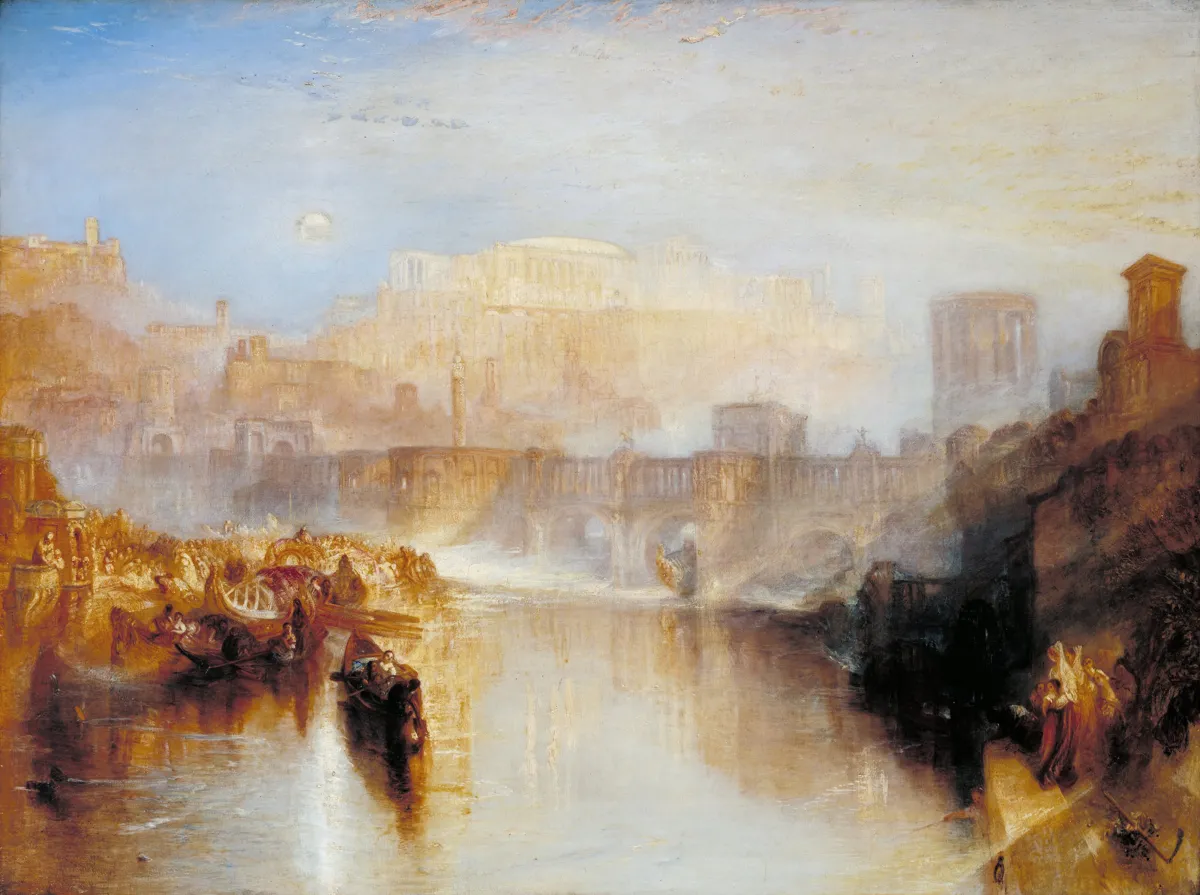
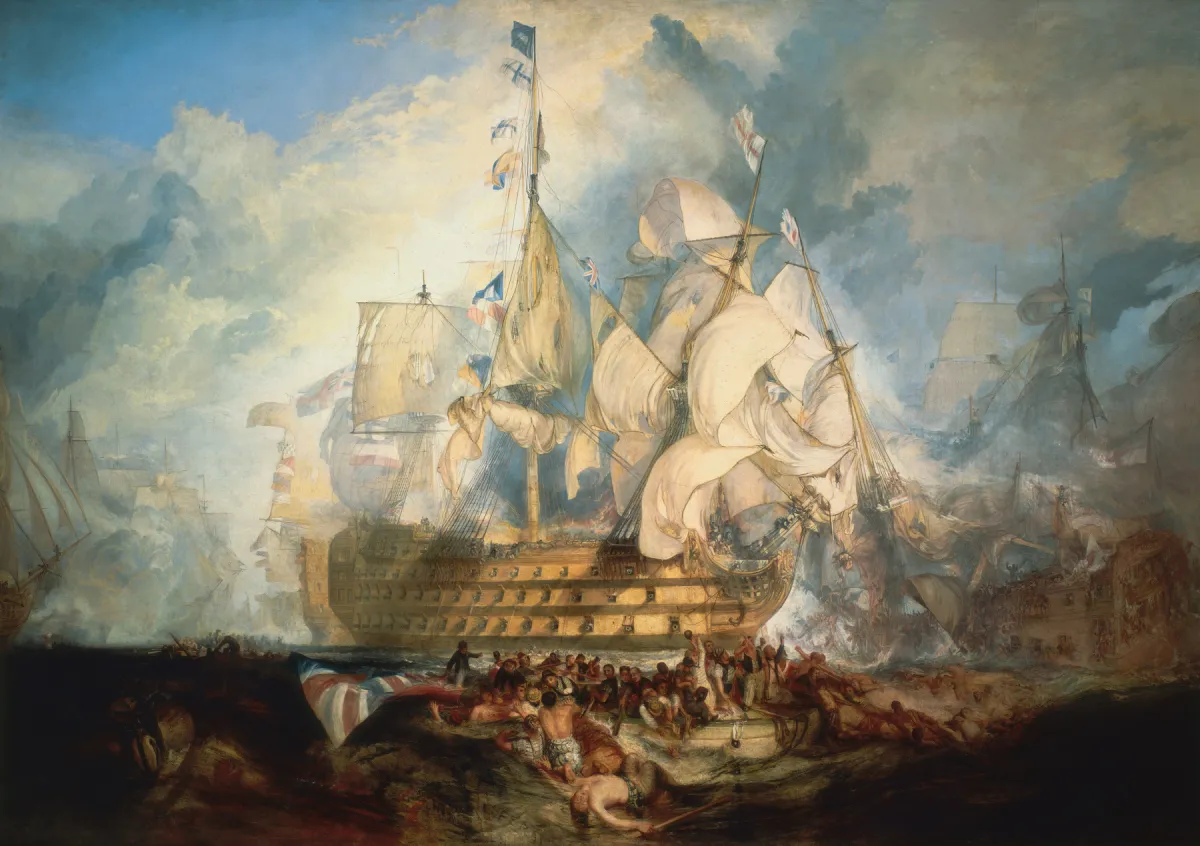
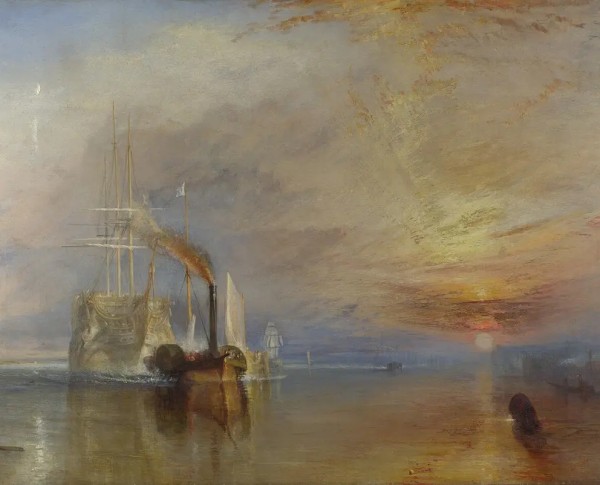
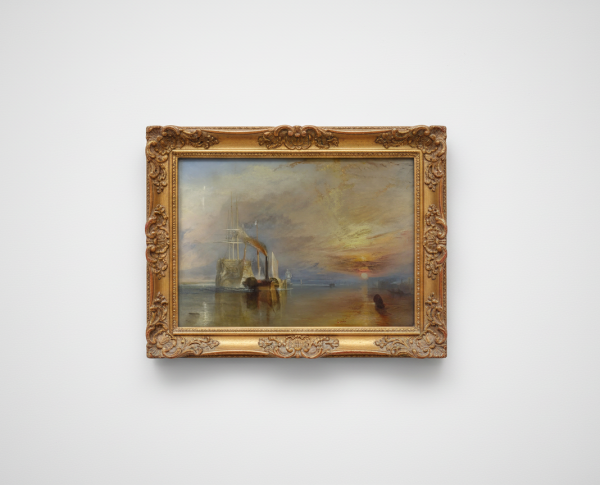
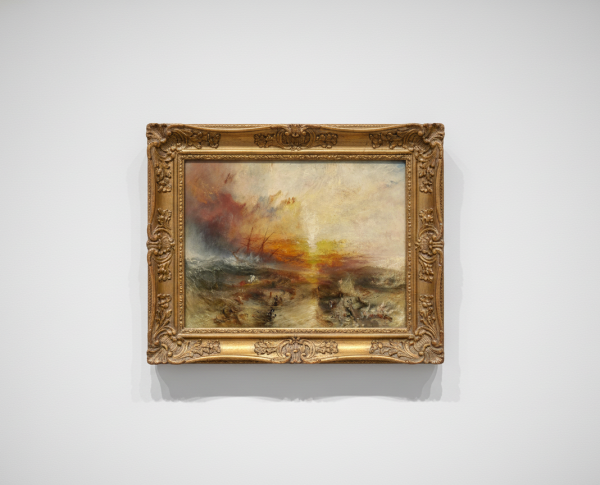
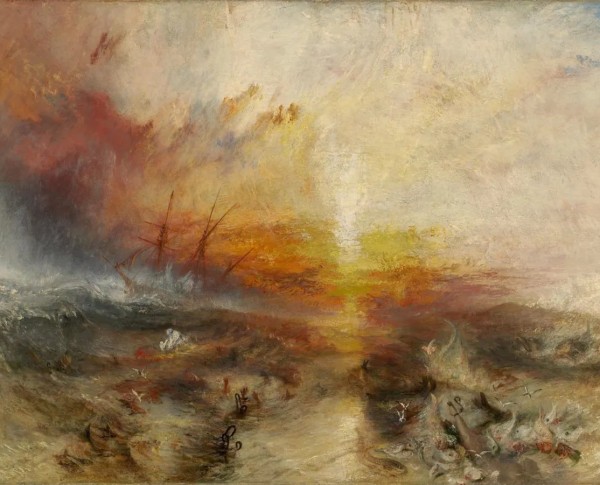
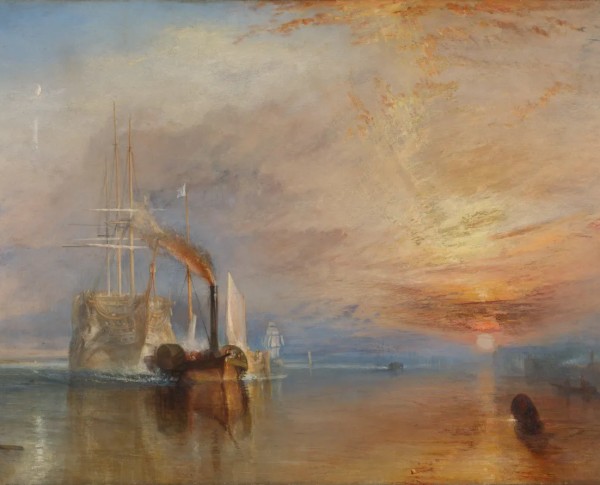
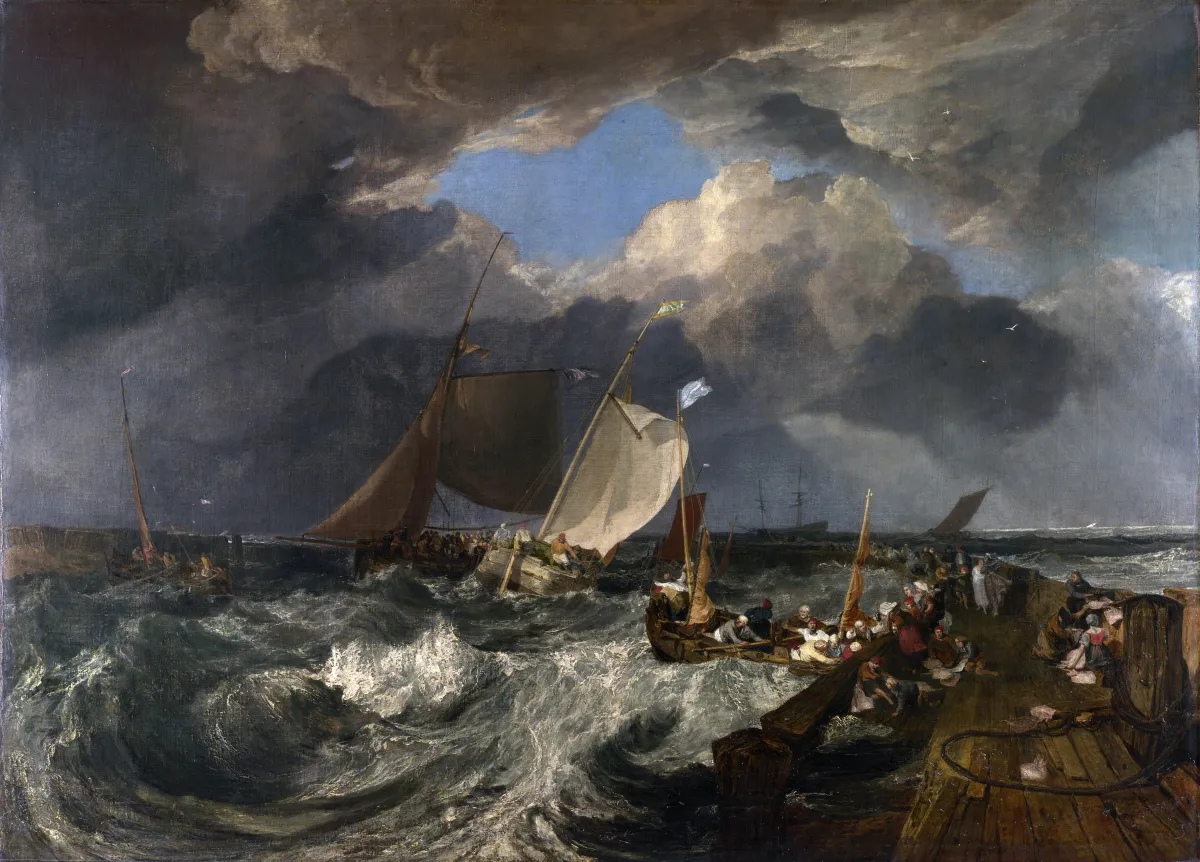
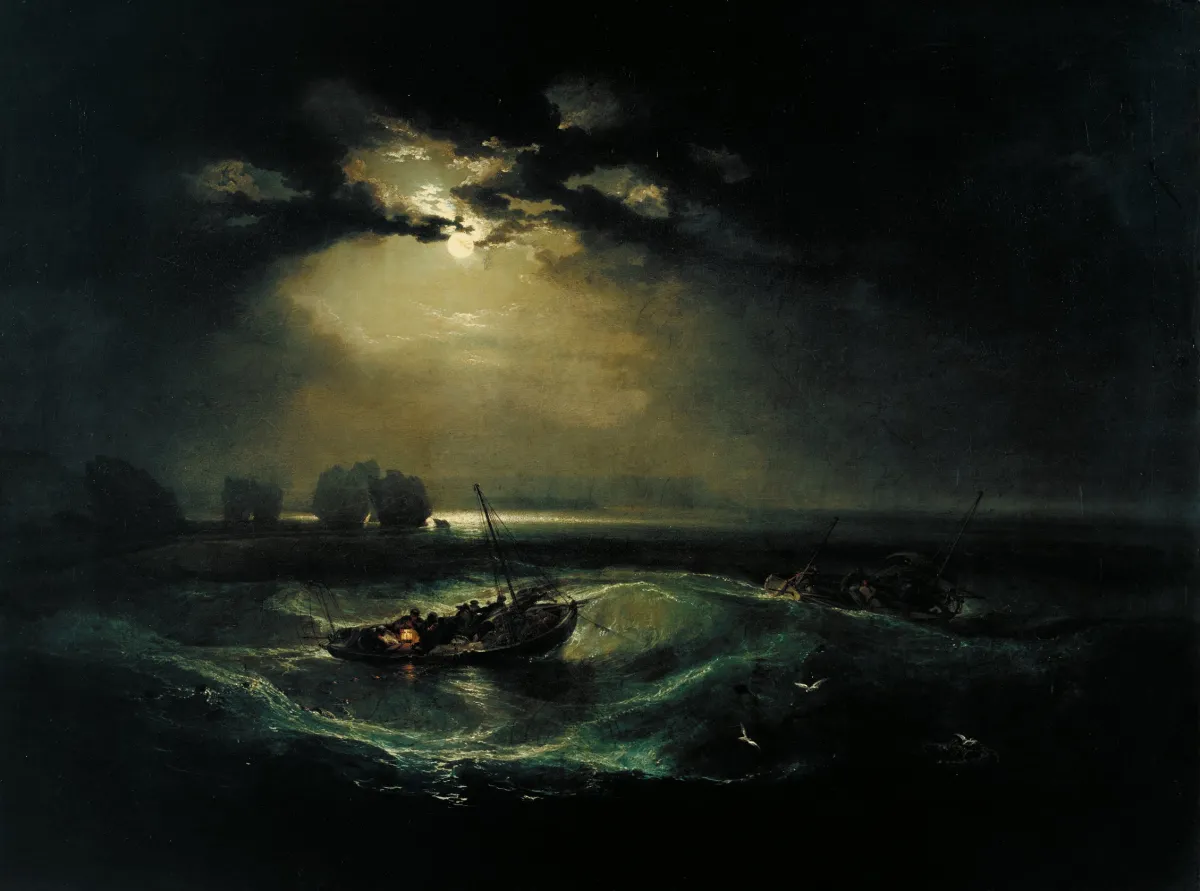
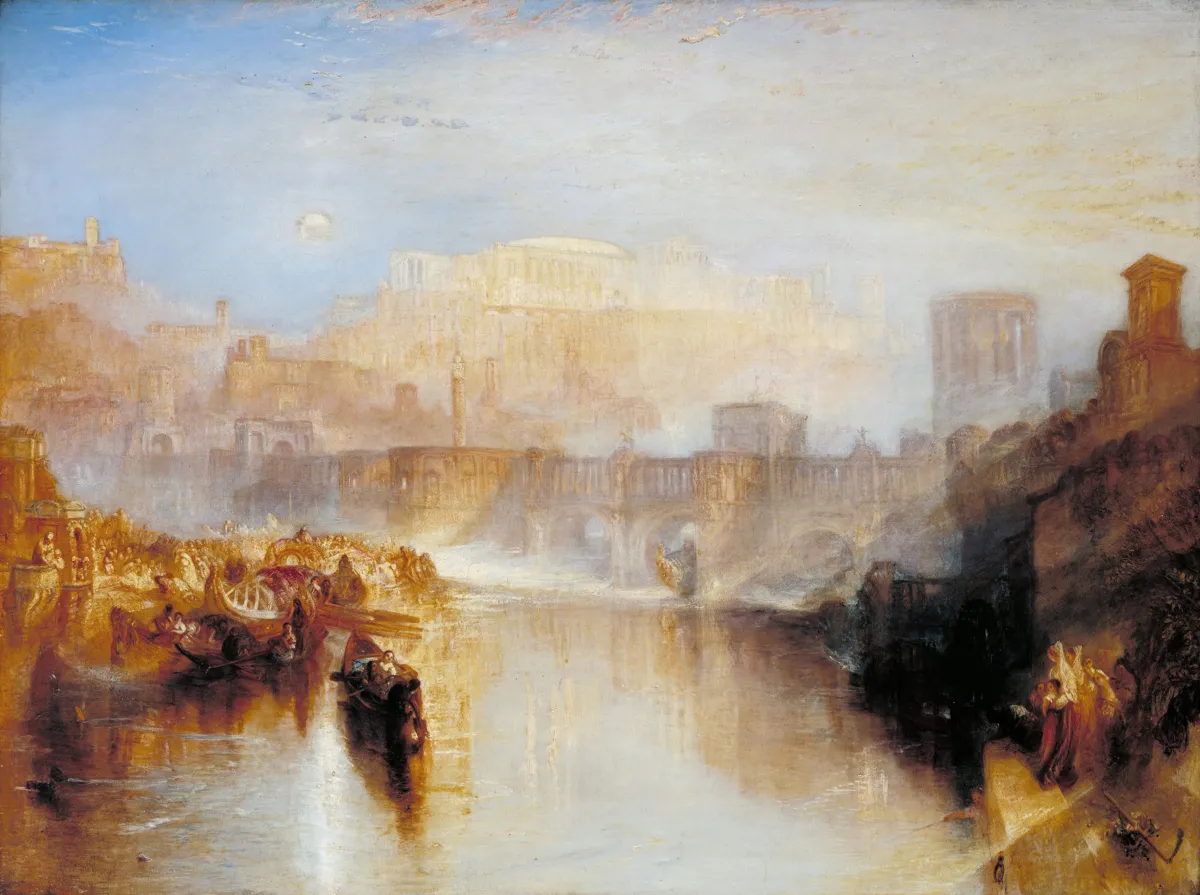
Turner's technique in "Calais Pier" demonstrates his unrivaled skill with oil on canvas. The swirling clouds and churning waves are rendered with energetic, expressive brushwork, emphasizing both chaos and beauty. This painting, along with related pieces such as "The Battle of Trafalgar" and "Ancient Rome; Agrippina Landing with the Ashes of Germanicus," showcases Turner's mastery in capturing movement and emotion, solidifying his reputation as a leading figure in Romanticism and the world of fine art painting for sale.
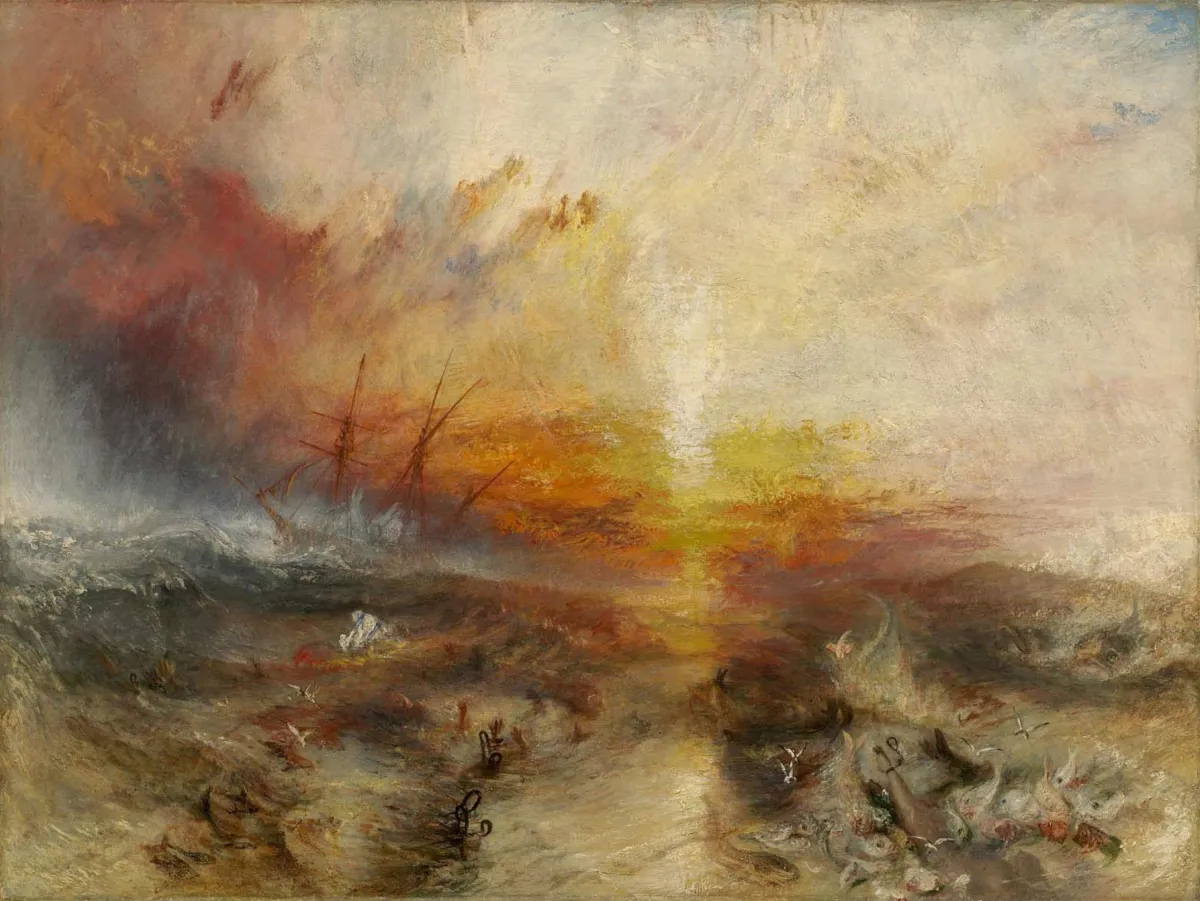
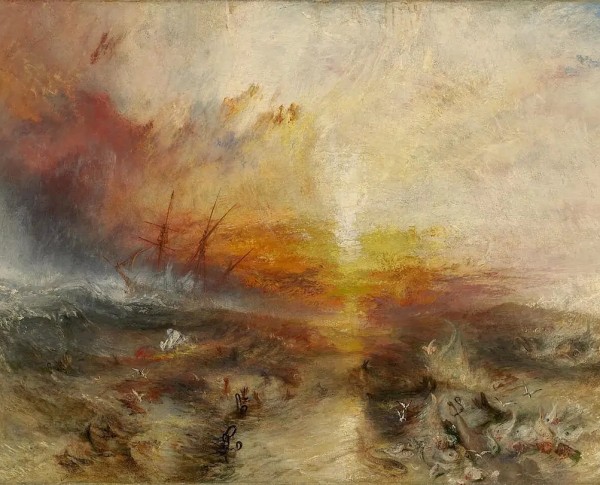
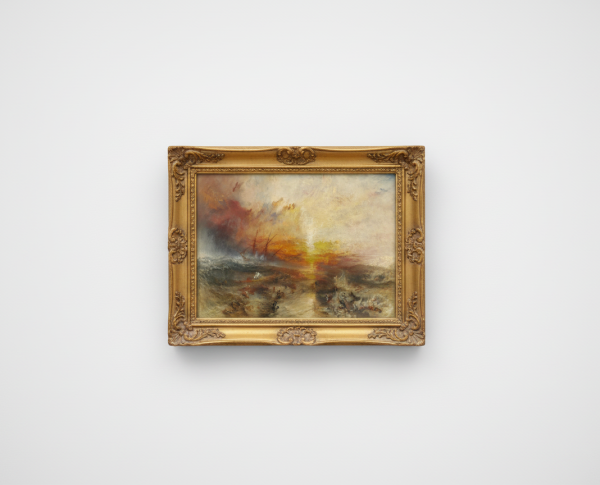
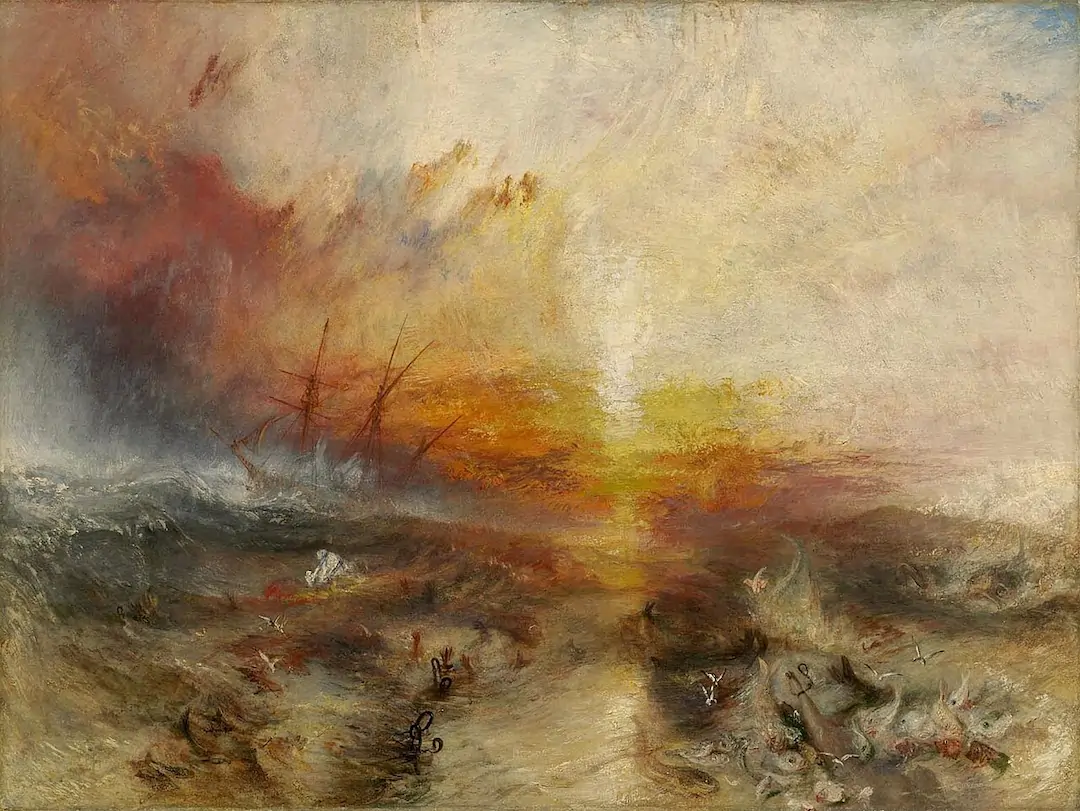
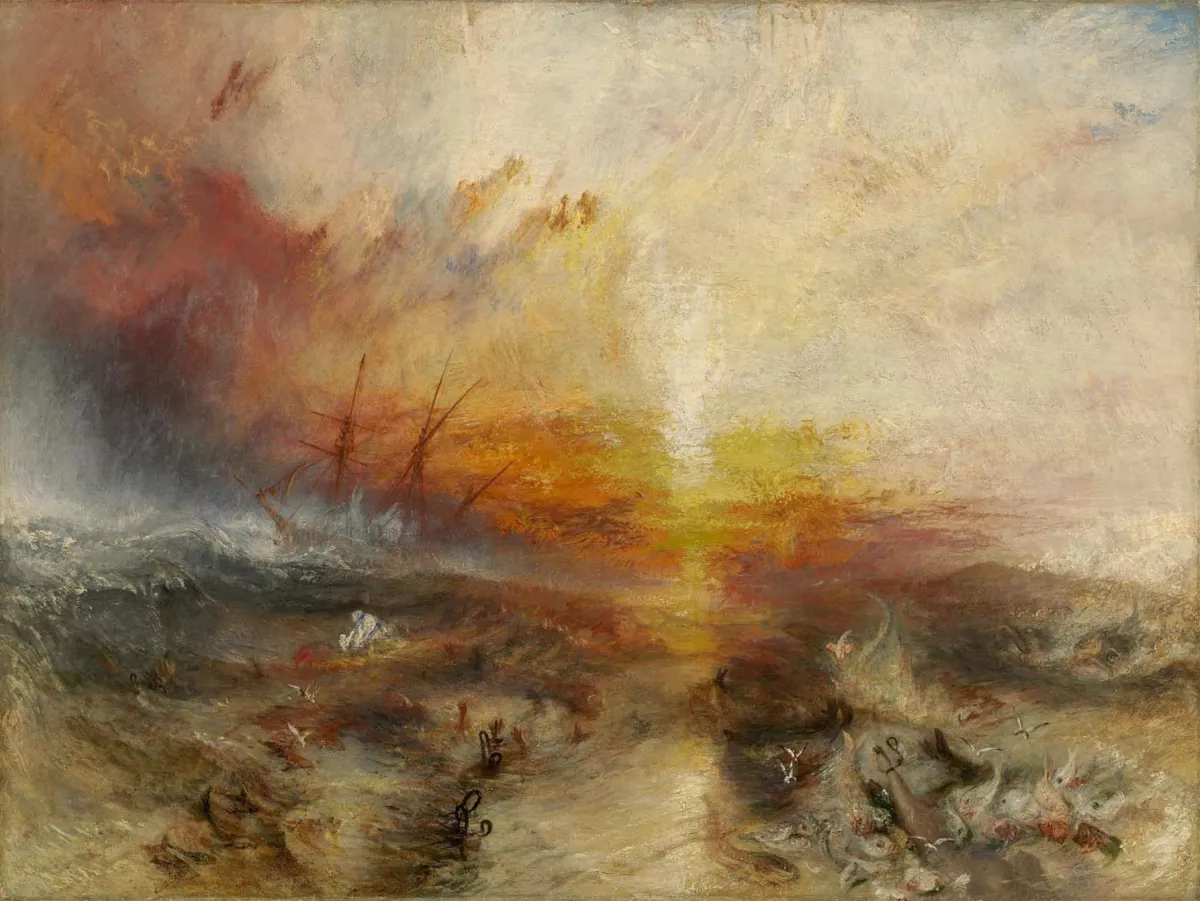
In "Calais Pier," Turner weaves a narrative of human struggle against nature, a recurring theme in Romanticism. The composition’s dramatic sky and battered ships symbolize both peril and hope, resonating with viewers across generations. As with "The Slave Ship 1840" and "Light and Colour (Goethe's Theory) – The Morning after the Deluge – Moses Writing the Book of Genesis," this hand-painted oil painting invites interpretation, making it a fascinating subject for collectors of meaningful fine art painting for sale.
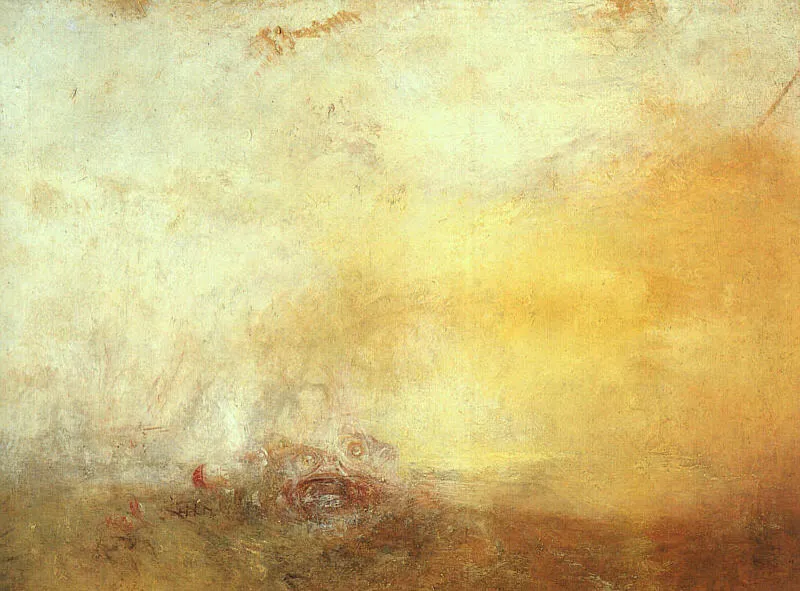
Owning "Calais Pier" or related works by Joseph Mallord William Turner is a dream for many art enthusiasts. These masterpieces, rendered in oil on canvas, are highly sought after in the world of fine art painting for sale. Collectors value Turner's ability to blend vivid storytelling with technical excellence, as seen in works like "Sunrise with Sea Monsters" and "The Slave Ship 1840," making each painting a prized addition to any distinguished art collection.
When Art Meets History
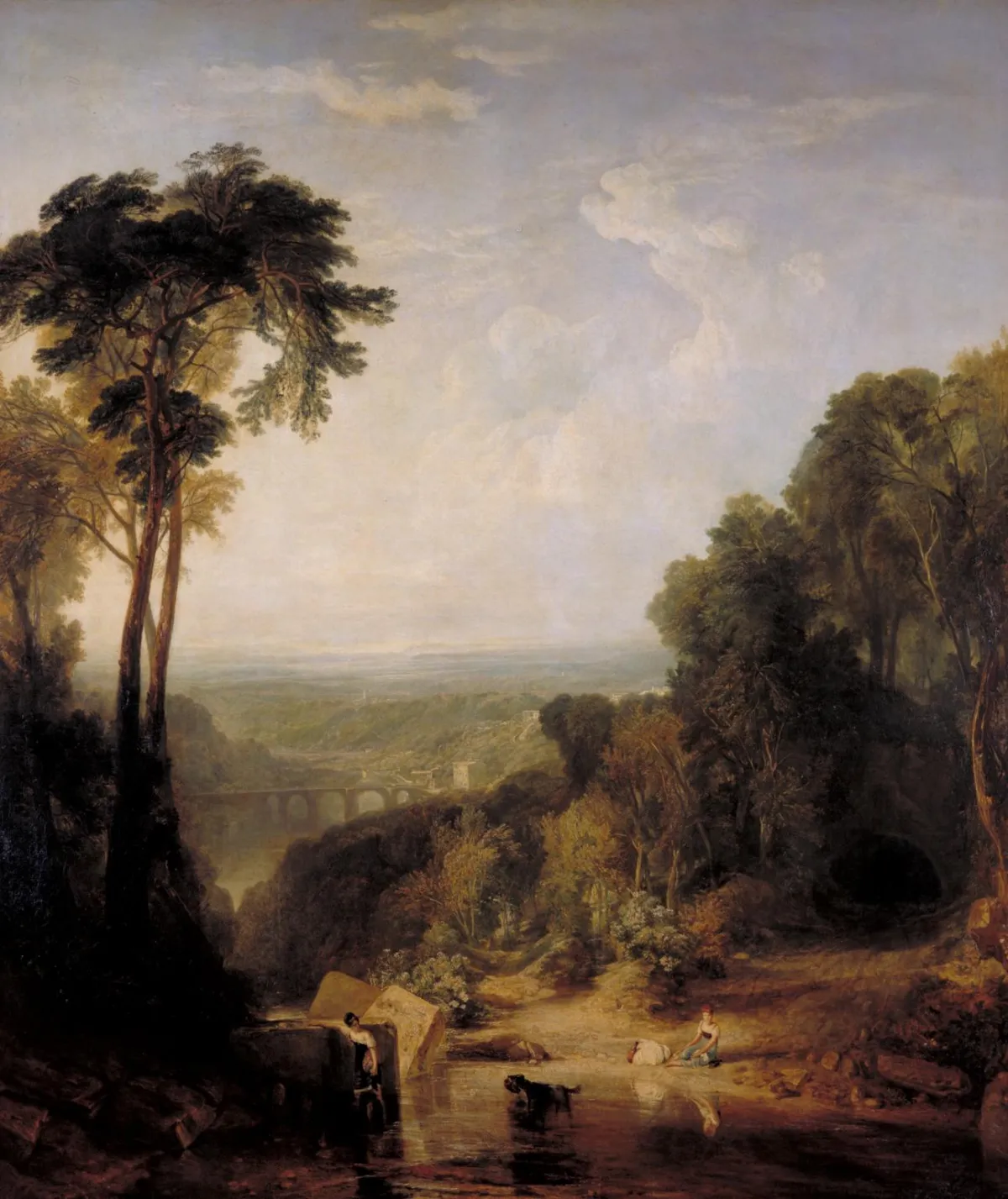
"Calais Pier" by Joseph Mallord William Turner stands as a significant masterpiece in the Romanticism movement, capturing the tumultuous relationship between man and nature. Painted in 1803, this hand-painted oil painting reflects the period’s fascination with dramatic seascapes and historical context. Turner’s work sits alongside related paintings like "Salisbury Cathedral from the Meadows" and "Dedham Lock and Mill," all of which showcase his mastery in blending historical events with breathtaking natural scenes.
Techniques That Speak
Turner’s use of oil on canvas in "Calais Pier" demonstrates his innovative approach to light and atmosphere, hallmarks of the Romanticism movement. Through swift brushstrokes and layered textures, he creates a sense of motion and urgency. This style connects "Calais Pier" to his other works such as "Ship at Sea" and "Sunset," where the interplay of light and water is equally mesmerizing. Turner’s technical prowess has made this oil on canvas a benchmark for future artists.
Emotions on Display
"Calais Pier" evokes a whirlwind of emotions, from awe to trepidation, as viewers witness the fury of the sea and the resilience of humanity. Turner, a leading figure in Romanticism, expertly channels these feelings through his dynamic brushwork. Similar emotional intensity can be found in related pieces like "Hutten Grave" and "The Bear Dance." This fine art painting for sale remains a testament to Turner’s ability to capture the raw power and beauty of nature on canvas.
Coveted by Collectors
Collectors and art enthusiasts prize "Calais Pier" not just for its historical value but also for its enduring appeal as a hand-painted oil painting. Turner’s signature style and the painting’s connection to the Romanticism movement make it highly desirable. Alongside masterpieces like "Salisbury Cathedral from the Meadows" and "Sunset," "Calais Pier" continues to inspire admiration and demand in the world of fine art painting for sale, securing its place in prestigious collections worldwide.
Related Romanticism Hand-Painted Oil Paintings by Other Artists
Other Famous Romanticism Artists:
Frequently Asked Questions About Calais Pier
What is the historical context of "Calais Pier"?
"Calais Pier" was painted by Joseph Mallord William Turner in 1803, during a time when Britain was engaged in the Napoleonic Wars. The painting reflects the importance of maritime trade and travel in the early 19th century, as well as the political tensions of the era.
What artistic techniques did Turner employ in "Calais Pier"?
Turner utilized his signature techniques of loose brushwork and vibrant color palettes to convey the dynamic interplay of light and atmosphere. The painting showcases his innovative use of light to create a sense of movement and depth, characteristic of his later works.
What themes are explored in "Calais Pier"?
The painting explores themes of transition and the relationship between man and nature. The depiction of the pier serves as a metaphor for the connection between England and the continent, highlighting both the beauty and the peril of maritime endeavors.
How does "Calais Pier" reflect Turner's artistic evolution?
"Calais Pier" marks a significant point in Turner's evolution as an artist, showcasing his shift towards more atmospheric and emotive landscapes. This work foreshadows his later explorations of abstraction and the sublime in nature.
What symbolism can be found in "Calais Pier"?
The pier symbolizes not only a physical structure but also the gateway to new experiences and the uncertainties of travel. The figures in the painting, engaged in various activities, represent the human spirit's resilience and the quest for connection across borders.
What is the significance of the color palette in "Calais Pier"?
Turner's use of a muted color palette, dominated by blues and grays, evokes a sense of melancholy and introspection. This choice enhances the mood of the scene, reflecting the tumultuous nature of the sea and the emotional weight of the moment.
How does "Calais Pier" compare to other works by Turner?
Compared to other works by Turner, "Calais Pier" stands out for its focus on a specific location and its narrative quality. While many of his later works emphasize abstraction and light, this painting retains a more representational approach, bridging his earlier and later styles.
What role does light play in "Calais Pier"?
Light is a central element in "Calais Pier," as Turner masterfully captures its effects on the water and sky. The interplay of light and shadow creates a sense of drama and movement, inviting viewers to experience the transient nature of the scene.
What impact did "Calais Pier" have on future artists?
"Calais Pier" had a profound impact on future generations of artists, particularly the Impressionists, who admired Turner's ability to capture light and atmosphere. His innovative techniques paved the way for new approaches to landscape painting and the exploration of color and form.
Where can "Calais Pier" be viewed today?
"Calais Pier" is part of the collection at the National Gallery in London. It remains a key example of Turner's work and is regularly featured in exhibitions that explore his contributions to art and the Romantic movement.























_GFM_Painting_(1).webp)


 100% Hand-Painted: Finished in 3-6 Weeks

.png)















_(1).webp)