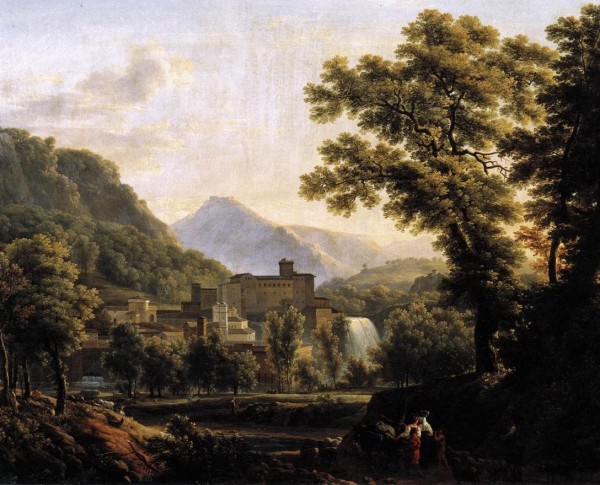
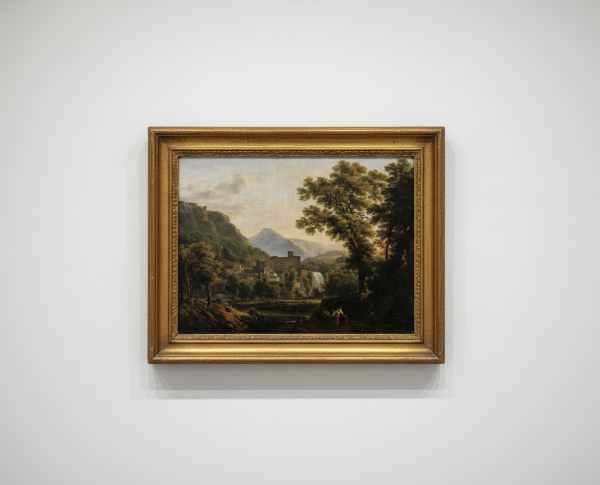
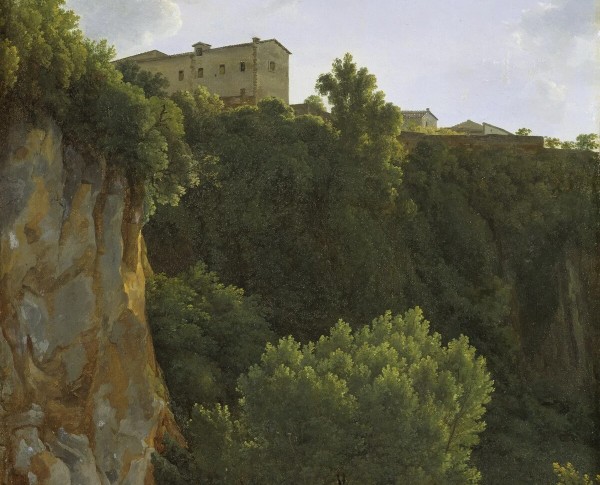
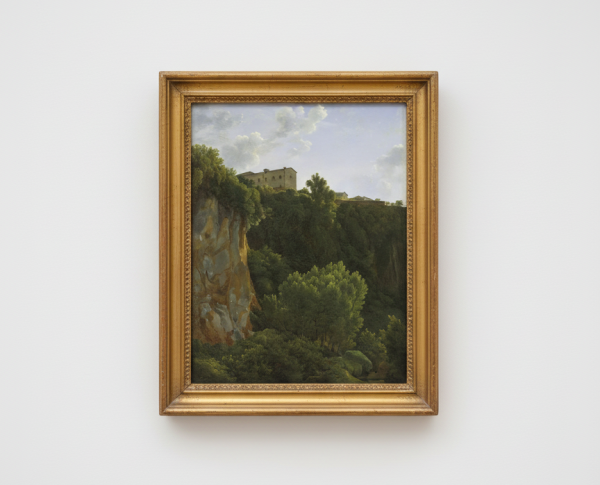
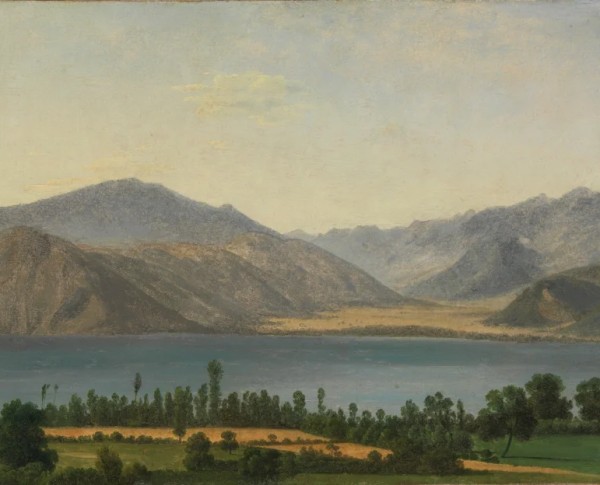
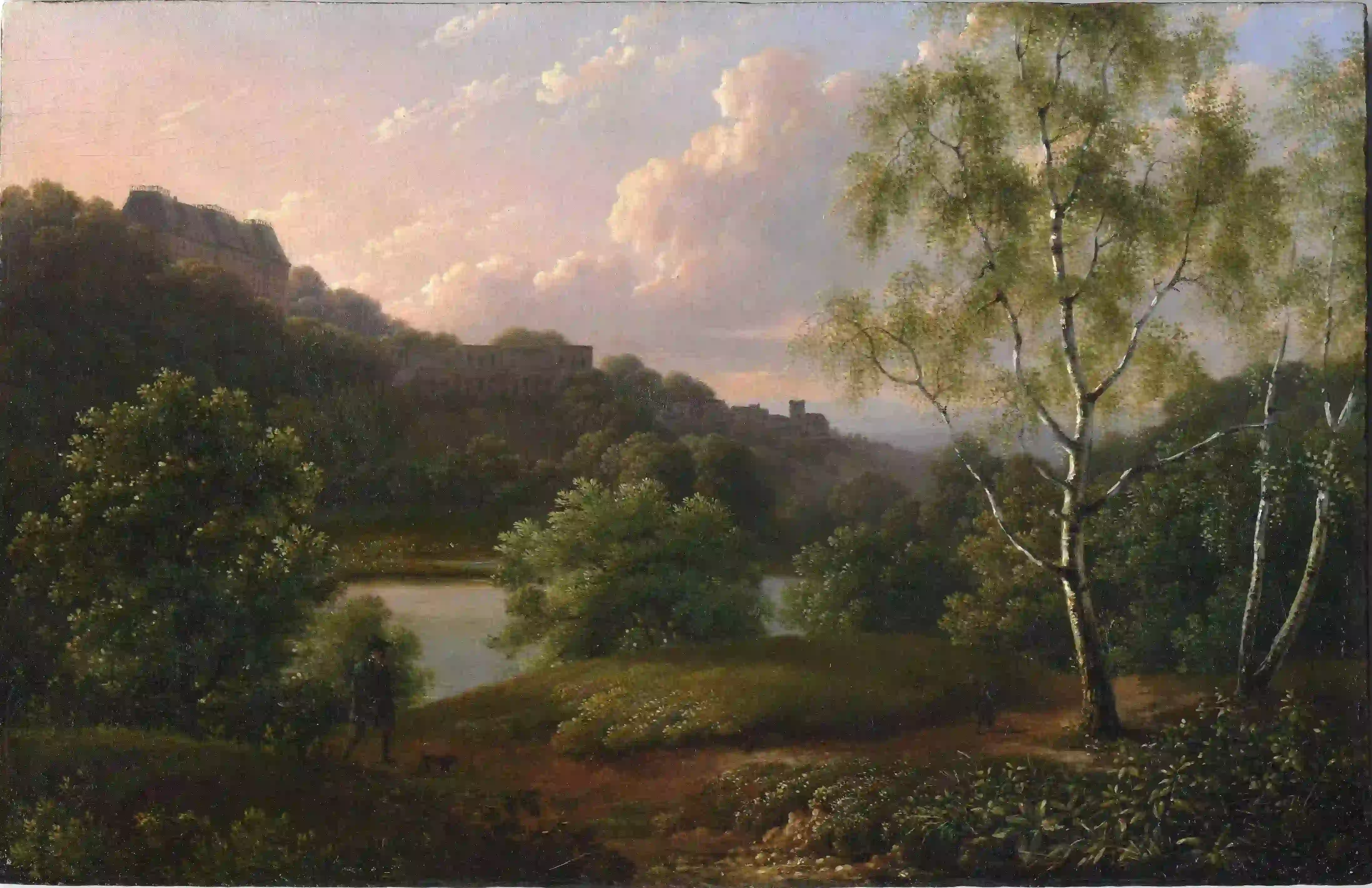
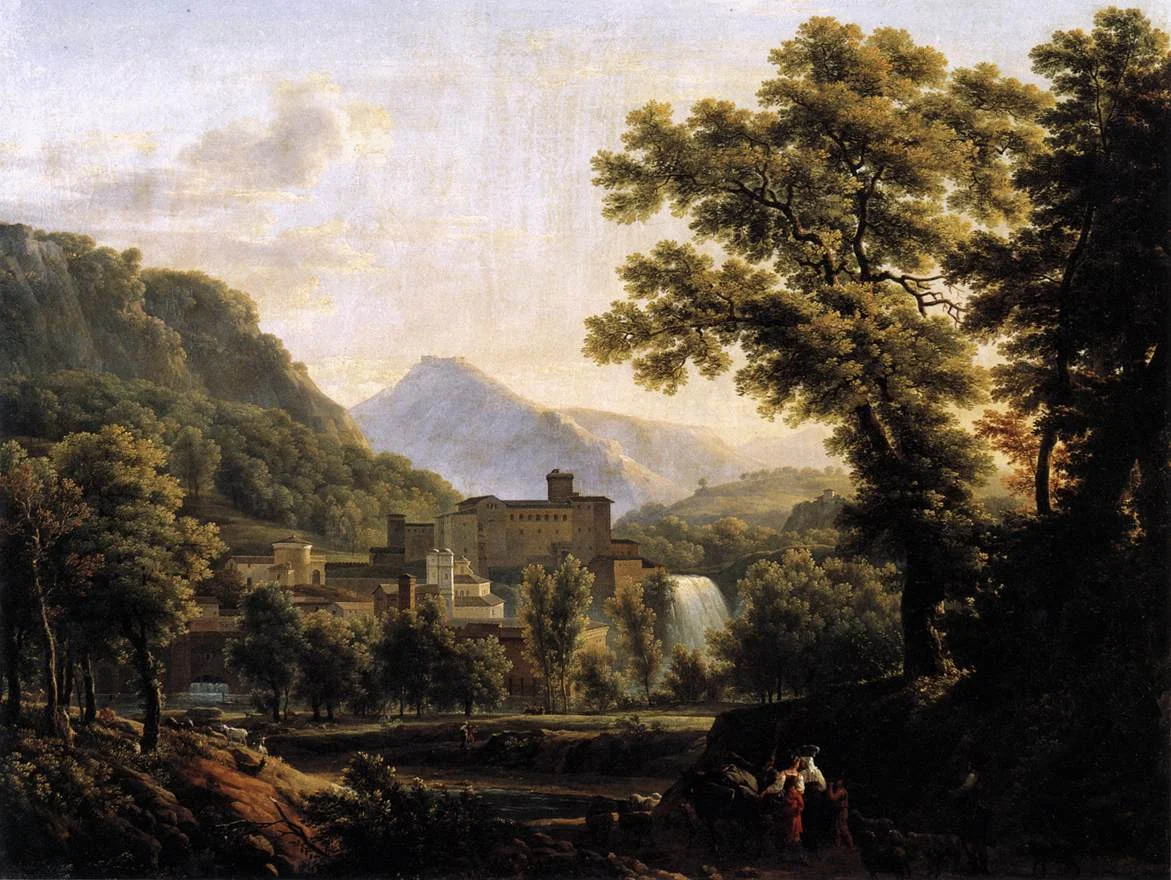
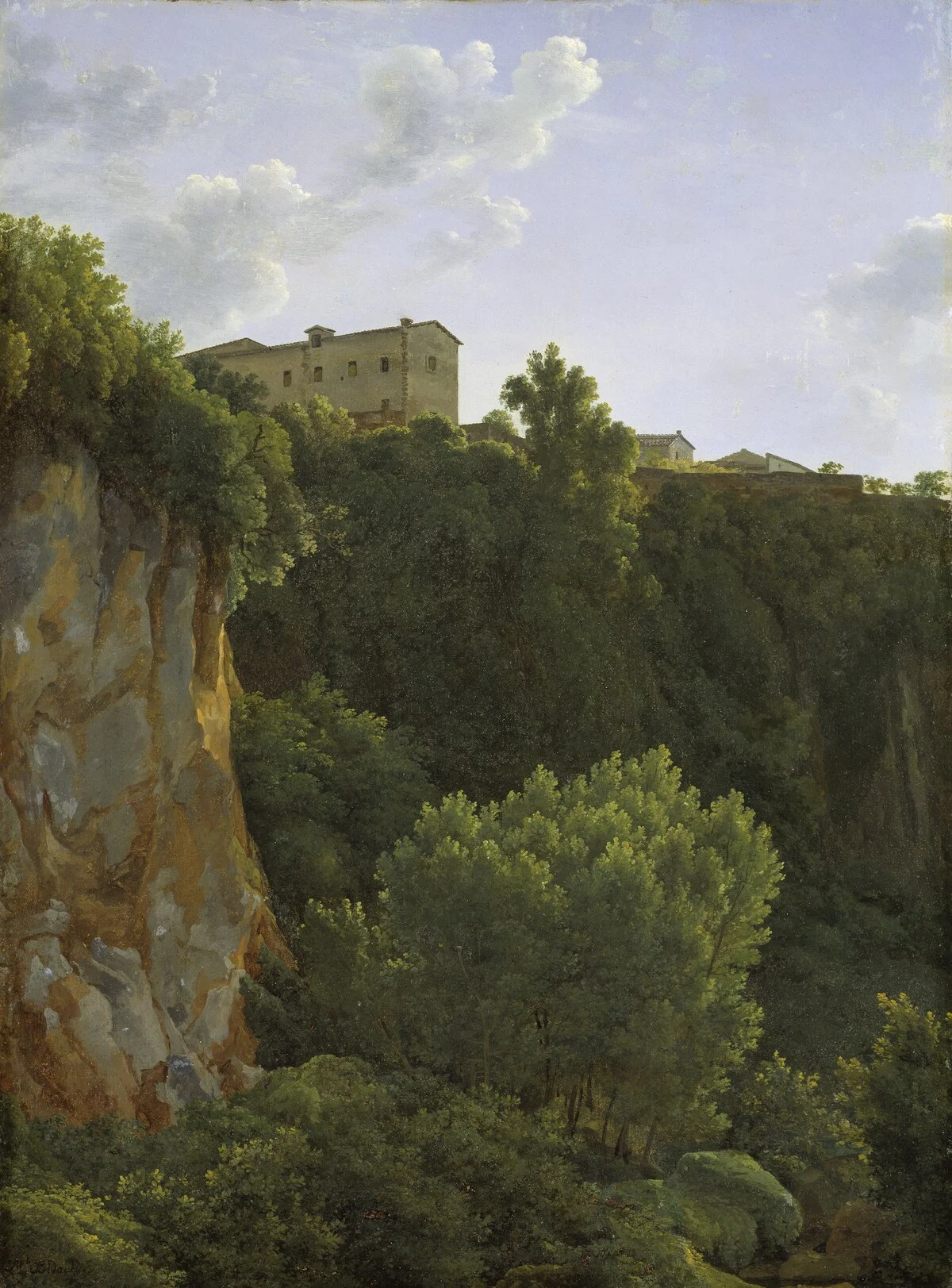
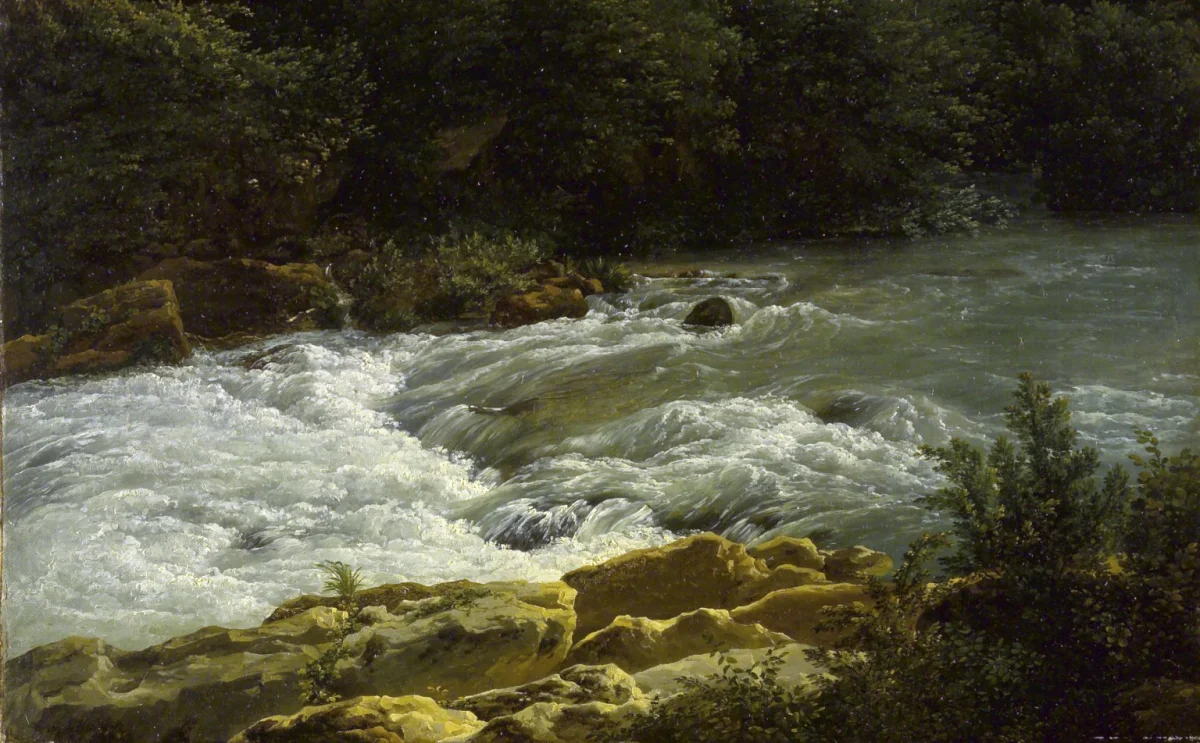
Jean-Joseph-Xavier Bidauld’s meticulous technique in "Chasseur Au Pied Du Château De Meudon" is evident in every detail, showcasing his expertise in oil on canvas. The painting’s luminous landscapes and classical figures evoke the ideals of the Neo-Classical movement. This level of craftsmanship is similarly admired in works like "The park in Mortefontaine" and "Running Stream at San Cosimato," each reflecting Bidauld’s mastery and the enduring allure of his artistic vision.
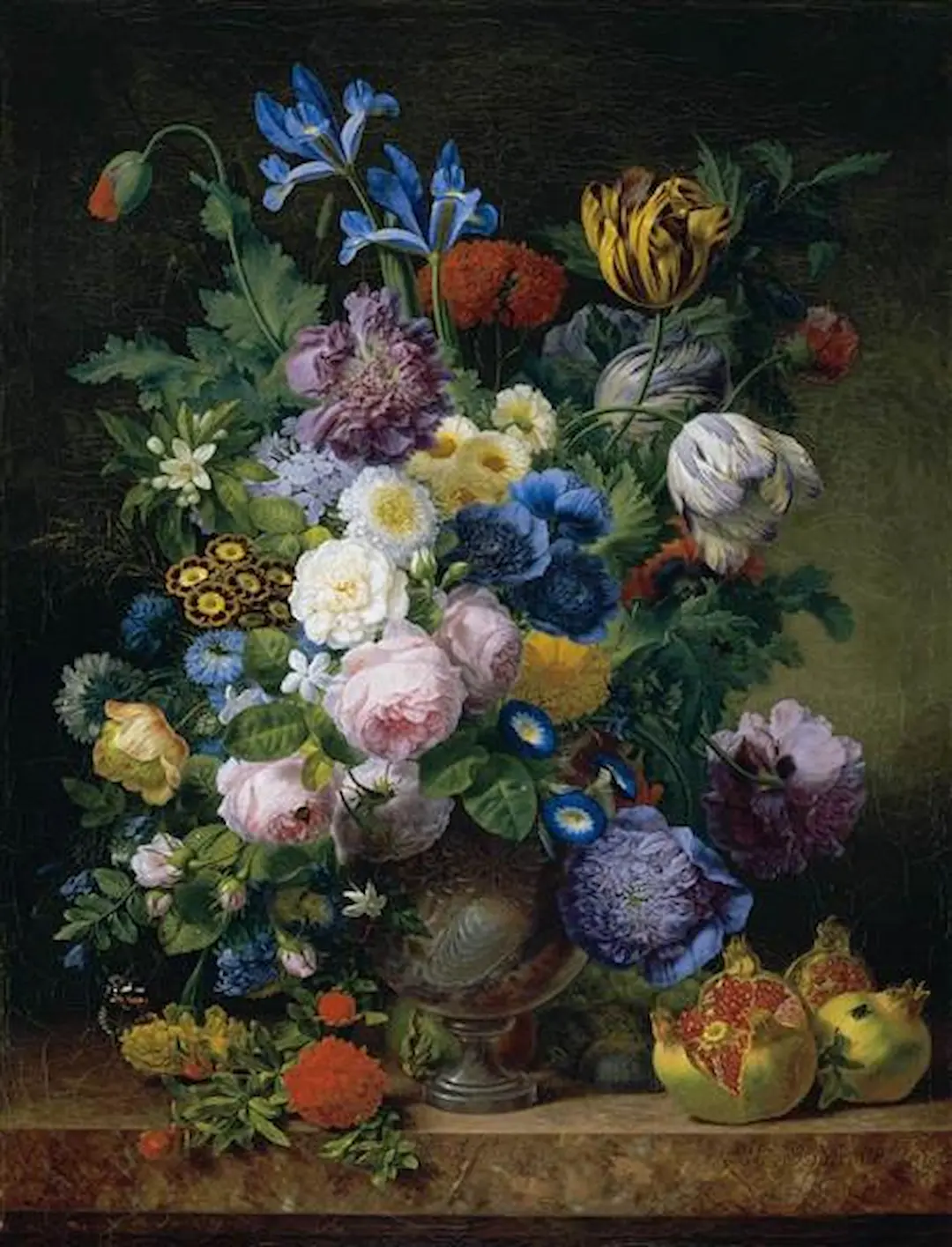
Within "Chasseur Au Pied Du Château De Meudon," Bidauld weaves narrative and symbolism, inviting viewers to explore the interplay between man and nature, a hallmark of Neo-Classical art. The painting’s serene setting and poised figure echo themes found in "View of the Cascade of the Gorge near Allevard" and "Still-Life 1810." Such storytelling depth makes this fine art painting for sale a captivating addition for those seeking works rich in meaning and historical context.
For art collectors, acquiring "Chasseur Au Pied Du Château De Meudon" by Jean-Joseph-Xavier Bidauld is an opportunity to own a piece of Neo-Classical heritage. This hand-painted oil painting not only enhances any gallery but also pairs beautifully with related products like "Grenoble" and "Still-Life 1810." Each piece represents the pinnacle of fine art painting for sale, making them prized assets for discerning collectors and lovers of timeless artistry.
When Art Meets History
Jean-Joseph-Xavier Bidauld’s "Chasseur Au Pied Du Château De Meudon" stands as a testament to the Neo-Classical movement, capturing a unique historical moment through the lens of fine art. This hand-painted oil painting not only immortalizes the majestic Château de Meudon but also reflects the era’s fascination with classical landscapes and figures. Comparable to works like "Clyties of the Mist" and "The Marquis de Lafayette," Bidauld’s creation bridges art and history with remarkable finesse.
Techniques That Speak
Bidauld’s mastery in "Chasseur Au Pied Du Château De Meudon" is evident through his meticulous use of oil on canvas, a medium favored in Neo-Classical art. His technique emphasizes clarity, precision, and harmony, echoing the stylistic traits found in pieces by Basilius Von Ramdohr and Anton, König von Sachsen. The painting’s composition and lighting showcase Bidauld’s ability to breathe life into serene landscapes and figures, making each brushstroke a narrative element.
Emotions on Display
The tranquil atmosphere of "Chasseur Au Pied Du Château De Meudon" evokes a sense of calm and reflection, hallmarks of Neo-Classical expression. Bidauld’s nuanced portrayal of the lone hunter and the stately château invites viewers to contemplate the relationship between humanity and nature. This fine art painting for sale resonates with the emotional depth found in the works of Caroline Louisa Pratt Bartlett, drawing collectors who seek both visual beauty and introspective experience.
Coveted by Collectors
"Chasseur Au Pied Du Château De Meudon" remains highly sought after by art enthusiasts and collectors, thanks to its rich history and exquisite execution. As a distinguished hand-painted oil painting by Jean-Joseph-Xavier Bidauld, it occupies a revered place among Neo-Classical masterpieces. Like related works such as "The Marquis de Lafayette," this painting continues to inspire admiration, making it a prized addition for those who appreciate timeless elegance and historical significance in art.
Related Neo-Classical Hand-Painted Oil Paintings by Other Artists
Other Famous Neo-Classical Artists:
Frequently Asked Questions About Chasseur Au Pied Du Château De Meudon
What is the historical context of "Chasseur Au Pied Du Château De Meudon"?
This painting, created by Jean-Joseph-Xavier Bidauld in the late 18th century, reflects the Romantic movement's fascination with nature and the sublime, as well as the socio-political climate of post-revolutionary France.
Who was Jean-Joseph-Xavier Bidauld?
Jean-Joseph-Xavier Bidauld was a prominent French painter known for his landscapes and historical scenes. He was associated with the Romantic movement and was influenced by the natural beauty of the French countryside.
What does the title "Chasseur Au Pied Du Château De Meudon" signify?
The title translates to "Hunter at the Foot of the Château de Meudon," indicating a scene set near the historic château, which was a popular retreat for the French aristocracy and symbolizes the connection between nature and nobility.
What artistic techniques did Bidauld employ in this painting?
Bidauld utilized a combination of soft brushwork and a harmonious color palette to create a sense of tranquility and realism, effectively capturing the interplay of light and shadow in the natural landscape.
What themes are explored in "Chasseur Au Pied Du Château De Meudon"?
The painting explores themes of nature, leisure, and the relationship between humanity and the environment, reflecting the Romantic ideal of finding beauty and solace in the natural world.
How does this painting reflect the Romantic movement?
"Chasseur Au Pied Du Château De Meudon" embodies the Romantic movement's emphasis on emotion, individualism, and the glorification of nature, showcasing the artist's deep appreciation for the landscape and its serene beauty.
What is the significance of the Château de Meudon in the painting?
The Château de Meudon serves as a historical landmark and a symbol of the aristocratic lifestyle in France, representing the intersection of culture, history, and the natural environment in Bidauld's work.
What role does the figure of the hunter play in the painting?
The hunter symbolizes humanity's interaction with nature, embodying the themes of exploration and adventure while also highlighting the harmony that can exist between man and the natural world.
How has "Chasseur Au Pied Du Château De Meudon" influenced contemporary art?
This painting has influenced contemporary artists by inspiring a renewed interest in landscape painting and the exploration of nature as a subject, encouraging modern interpretations of Romantic ideals.
What can viewers learn from "Chasseur Au Pied Du Château De Meudon"?
Viewers can gain insights into the historical context of the late 18th century, the Romantic movement's values, and the importance of nature in art, as well as an appreciation for the technical skill involved in landscape painting.























_GFM_Painting_(1).webp)

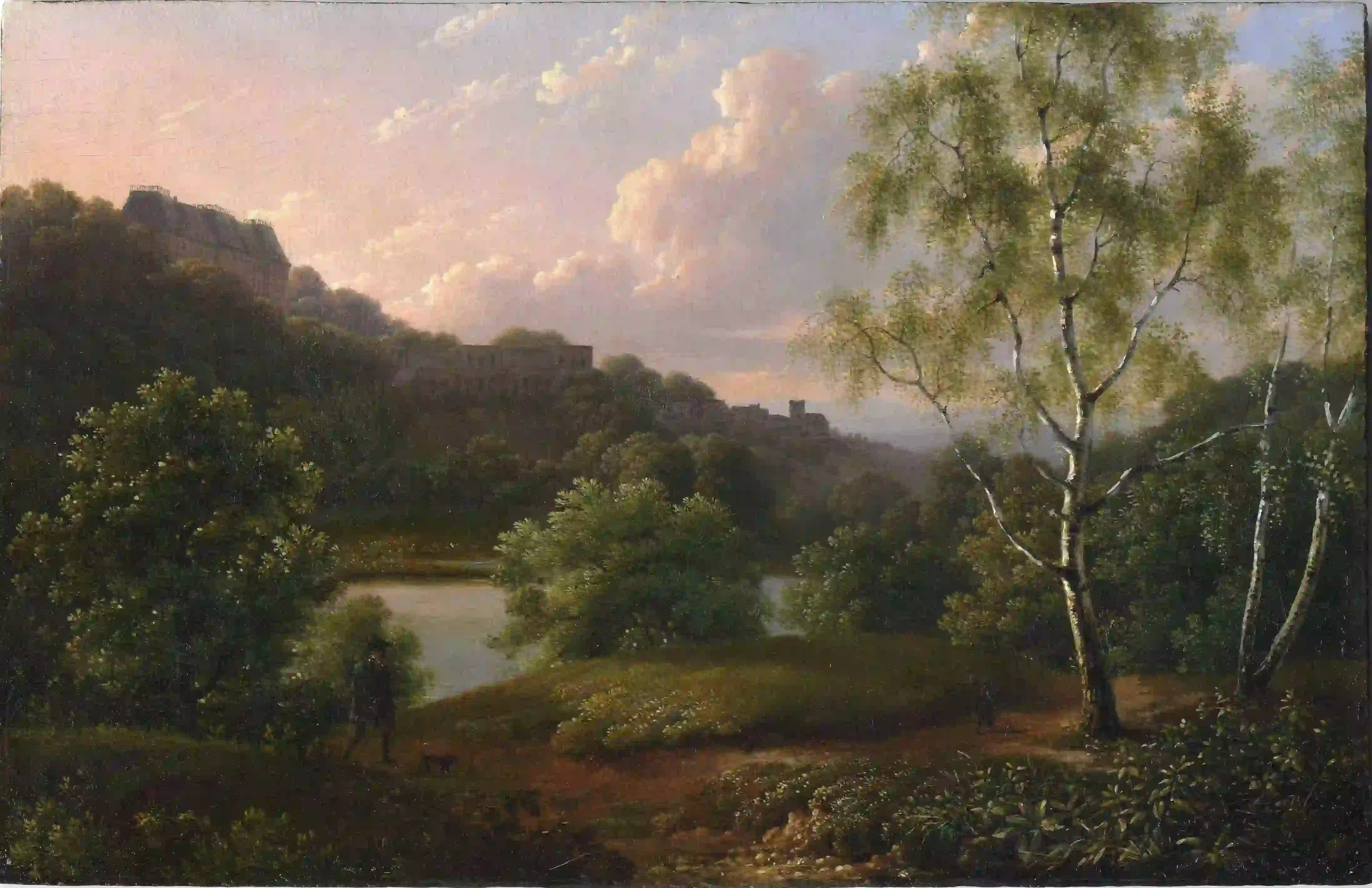

 100% Hand-Painted: Finished in 3-6 Weeks

.png)















_(1).webp)