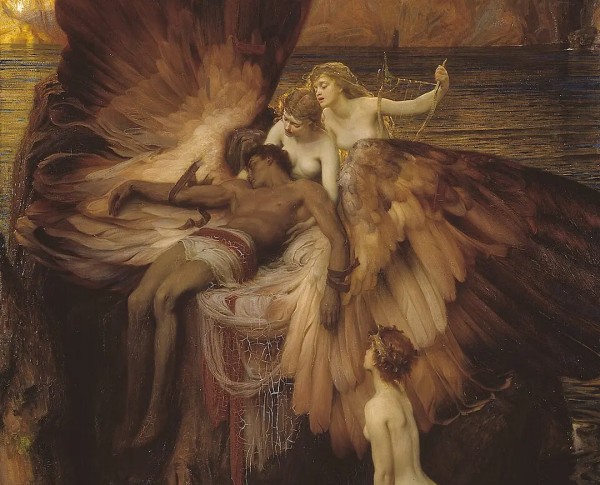
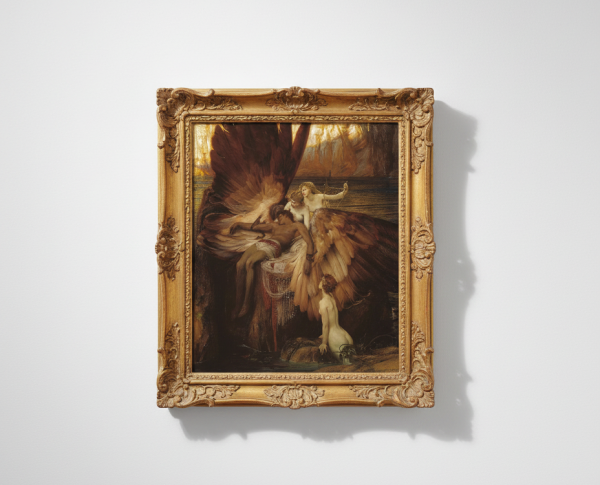
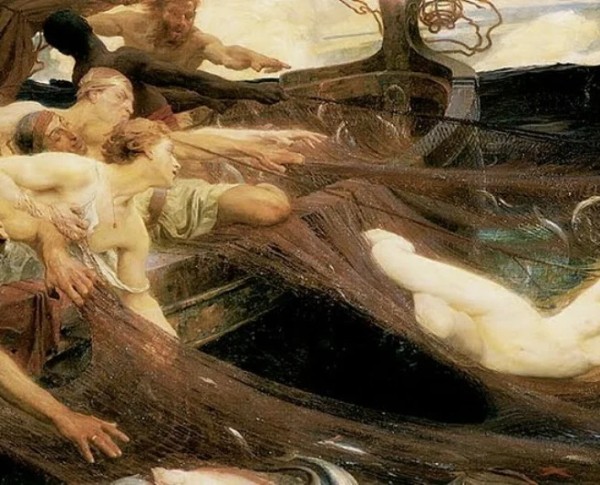
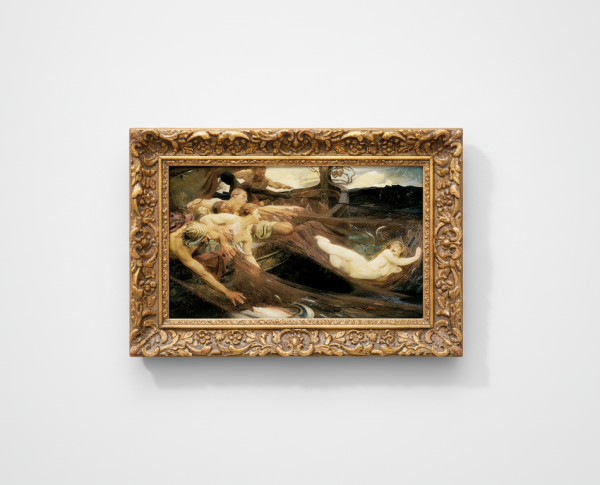
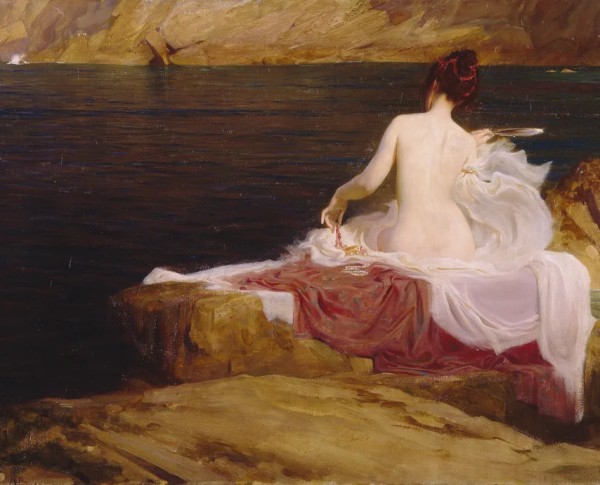
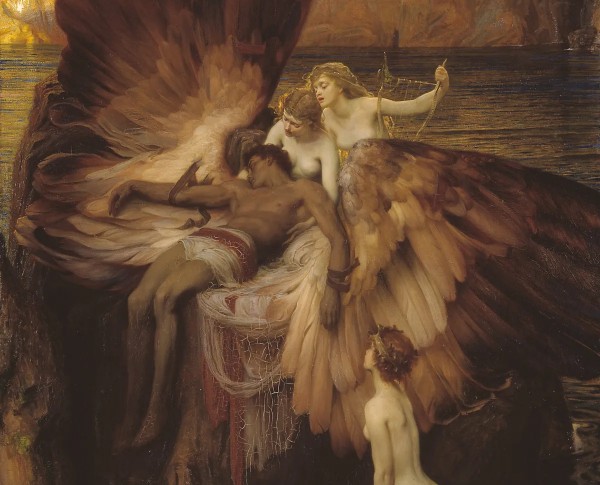
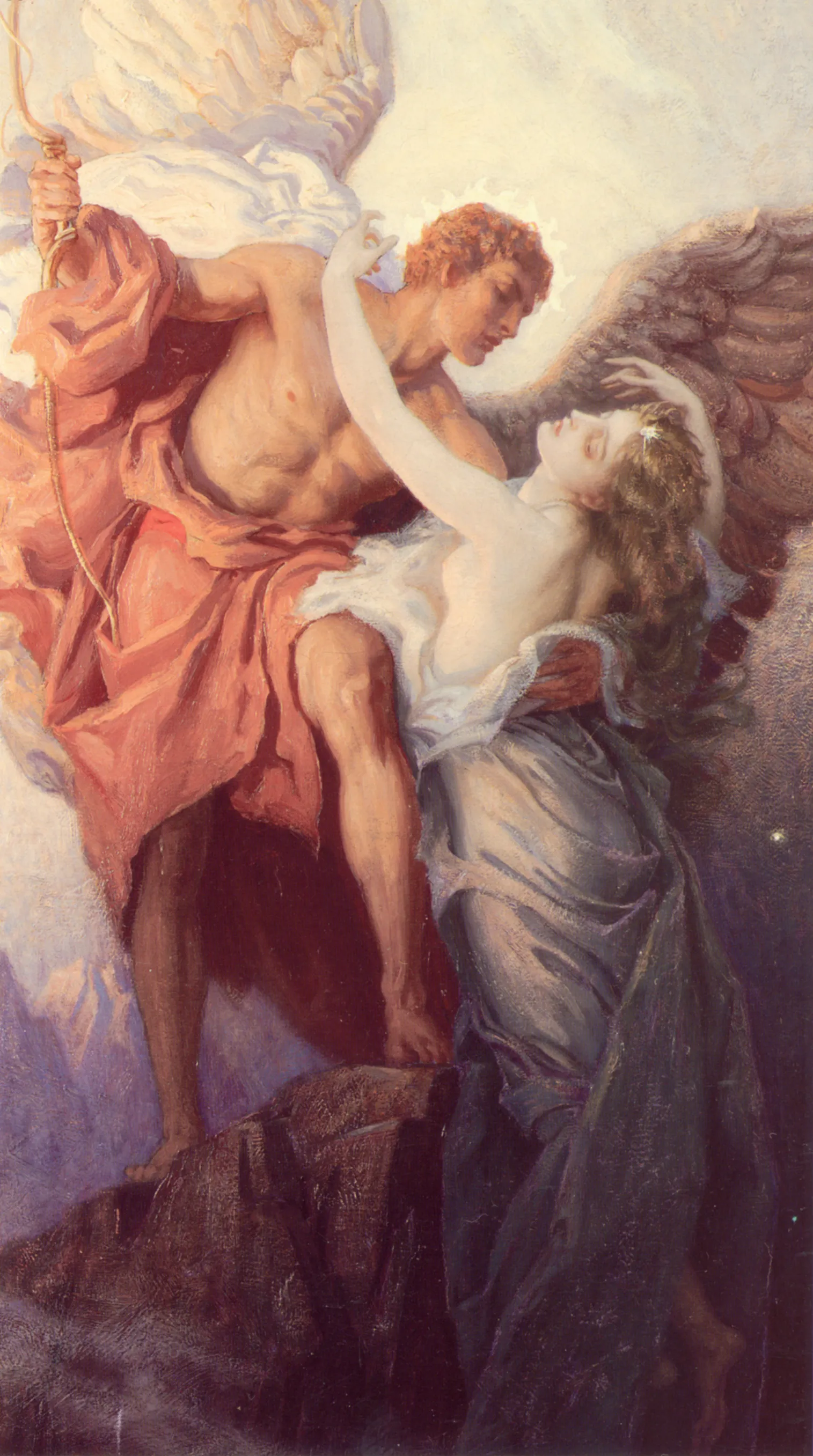
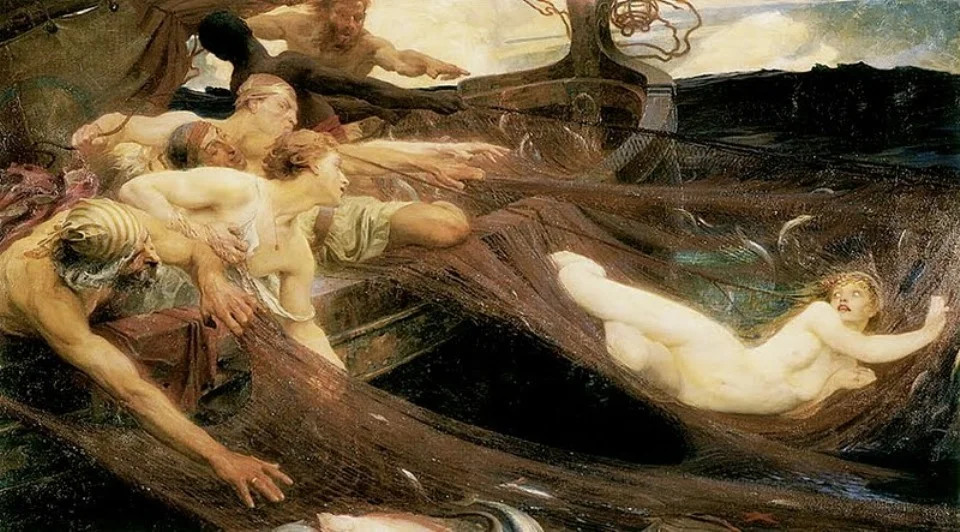
Herbert James Draper’s technique in "Day and the Dawnstar" showcases the refined elegance of oil on canvas. His attention to detail and the subtle interplay of light and shadow evoke the classical ideals of beauty and harmony. The Neo-Classical movement’s influence is evident throughout, echoing in companion works such as "The Gates of Dawn" and "Study for The Sea Maiden," making this an exceptional example of Draper’s skill.
The narrative depth of "Day and the Dawnstar" reveals Draper’s fascination with mythological themes central to the Neo-Classical movement. This fine art painting for sale features symbolic elements that invite viewers into a world of allegory and poetic beauty. Similar motifs are found in related works like "Lancelot and Guinevere" and "The Steering Oar," each offering a glimpse into Draper’s imaginative storytelling and the era’s cultural ideals.
For collectors, "Day and the Dawnstar" by Herbert James Draper represents the pinnacle of Neo-Classical artistry. This hand-painted oil painting is more than a visual masterpiece—it’s an investment in cultural heritage. Collectors often seek related products such as "Study for The Golden Fleece" to complement their collections, underscoring the enduring appeal of Draper’s work and the timeless elegance of oil on canvas in the world of fine art.
When Art Meets History
"Day and the Dawnstar" by Herbert James Draper stands as a masterful example of Neo-Classical art. Painted during a period when tradition and mythology inspired artists, this hand-painted oil painting reflects the era's fascination with allegory and beauty. Draper, renowned for his classical themes, also created works like "Portrait of Margaret Irvine Miller" and "A Southern River Landscape." Collectors and historians alike value this painting as a pivotal piece in the evolution of Neo-Classical aesthetics.
Techniques That Speak
Herbert James Draper's "Day and the Dawnstar" showcases his exceptional skill in oil on canvas, a medium favored by Neo-Classical masters. The artist’s meticulous brushwork and subtle gradations of light bring the ethereal subjects to life. Draper’s technique, evident in related works such as "The Sabine Mountains," demonstrates his command over classical composition and anatomy, making "Day and the Dawnstar" a testament to the enduring appeal of traditional oil on canvas artistry.
Emotions on Display
In "Day and the Dawnstar," Draper captures a poignant narrative through expressive figures and harmonious color palettes. The painting evokes a sense of hope and renewal, themes common in Neo-Classical art. Draper’s ability to convey emotion rivals that seen in "Anton, König von Sachsen" and "Surrender of Lord Cornwallis." This fine art painting for sale resonates with viewers due to its timeless depiction of human longing and the promise of a new day.
Coveted by Collectors
Collectors highly prize "Day and the Dawnstar" for its historical significance and artistic brilliance within the Neo-Classical movement. Herbert James Draper’s reputation, bolstered by paintings like "A Southern River Landscape," ensures continued interest in his hand-painted oil paintings. As a fine art painting for sale, "Day and the Dawnstar" attracts discerning buyers seeking a blend of technical mastery and evocative storytelling, making it a coveted addition to any distinguished collection.
Related Neo-Classical Hand-Painted Oil Paintings by Other Artists
Other Famous Neo-Classical Artists:
Frequently Asked Questions About Day and the Dawnstar
What is the historical context of "Day and the Dawnstar"?
"Day and the Dawnstar" was created by Herbert James Draper in the early 20th century, a period characterized by a revival of classical themes and a fascination with mythology in art. Draper was influenced by the Symbolist movement, which sought to express deeper meanings through allegorical figures and rich symbolism.
What themes are explored in "Day and the Dawnstar"?
The painting explores themes of duality, transition, and the cyclical nature of life. It juxtaposes the concepts of day and night, light and darkness, symbolizing the eternal struggle between opposing forces and the harmony that can arise from their coexistence.
Who are the figures depicted in the painting?
The central figures in "Day and the Dawnstar" represent personifications of day and dawn. The male figure symbolizes the sun and the vitality of day, while the female figure embodies the dawn, signifying new beginnings and the promise of light. Their interaction conveys a narrative of unity and balance.
What artistic techniques did Draper employ in this painting?
Draper utilized a combination of classical painting techniques, including chiaroscuro to create depth and dimension, as well as a rich color palette to evoke emotion. His attention to detail and the fluidity of the figures demonstrate his mastery of the human form and movement.
How does "Day and the Dawnstar" reflect the Symbolist movement?
The painting reflects the Symbolist movement through its emphasis on emotional resonance and the use of allegorical figures. Draper’s work invites viewers to interpret the deeper meanings behind the imagery, aligning with the Symbolist goal of transcending the literal to evoke a more profound experience.
What symbolism is present in the colors used in the painting?
The colors in "Day and the Dawnstar" are rich and vibrant, with warm tones representing the sun and cool tones symbolizing the dawn. This contrast not only enhances the visual appeal but also reinforces the thematic elements of light and darkness, hope and despair, and the transition from night to day.
In what ways does Draper's work connect to classical mythology?
Draper’s painting draws on classical mythology by personifying natural phenomena. The figures can be interpreted as representations of mythological deities associated with the sun and dawn, such as Helios and Eos, linking the artwork to a long tradition of mythological storytelling in art.
What impact did "Day and the Dawnstar" have on contemporary art?
"Day and the Dawnstar" contributed to the early 20th-century revival of interest in classical themes and symbolism, influencing contemporary artists to explore similar motifs. Draper’s blending of traditional techniques with modern themes encouraged a reevaluation of mythological subjects in the context of contemporary life.
How does the composition of the painting enhance its meaning?
The composition of "Day and the Dawnstar" is carefully balanced, with the figures positioned to create a sense of movement and interaction. This dynamic arrangement draws the viewer's eye across the canvas, emphasizing the connection between the two figures and reinforcing the theme of harmony between day and dawn.
What is the significance of the title "Day and the Dawnstar"?
The title "Day and the Dawnstar" signifies the interplay between light and darkness, with "Dawnstar" often referring to the morning star, symbolizing hope and new beginnings. This title encapsulates the essence of the painting, inviting viewers to reflect on the beauty of transitions in nature and life.























_GFM_Painting_(1).webp)


 100% Hand-Painted: Finished in 3-6 Weeks

.png)
















_(1).webp)