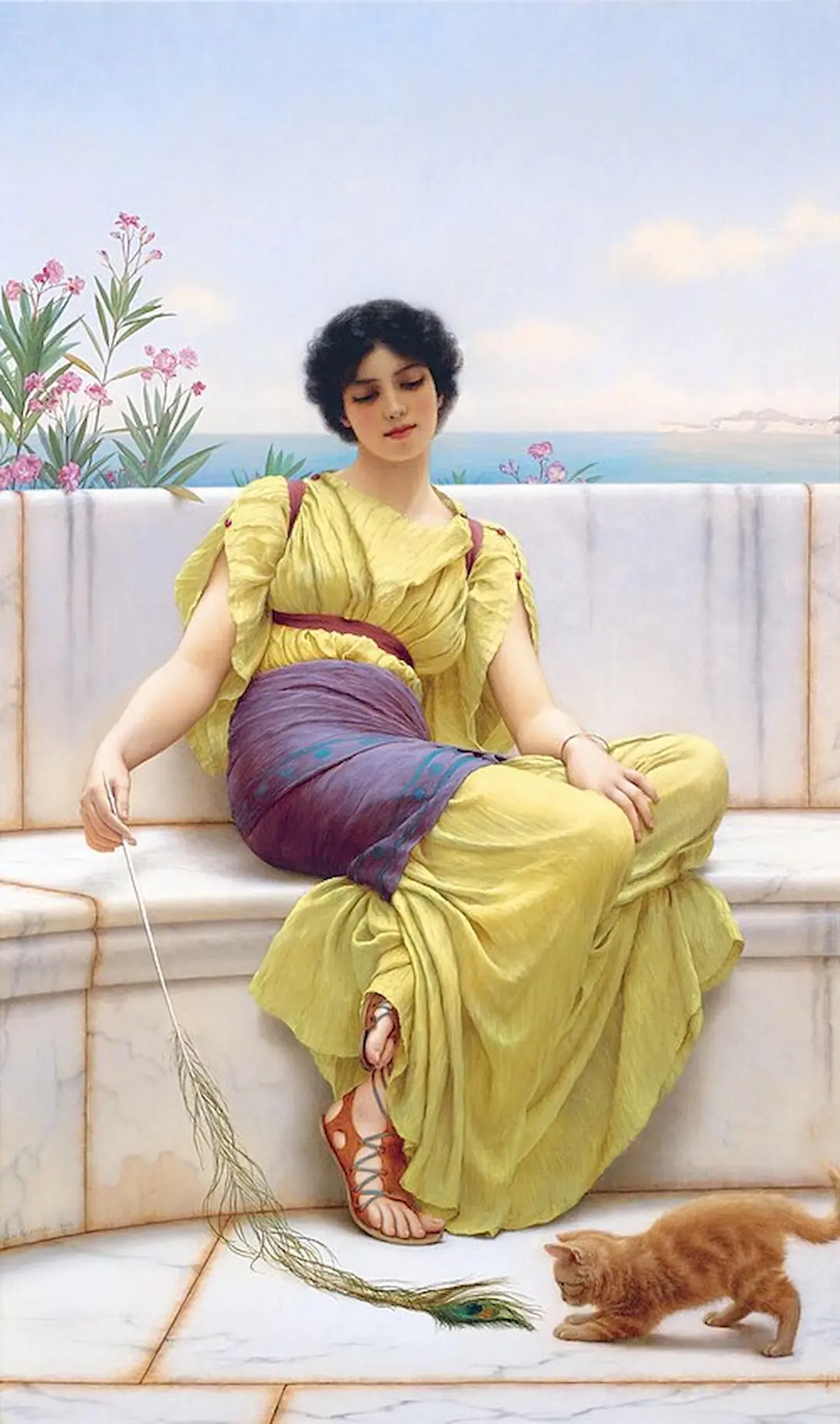
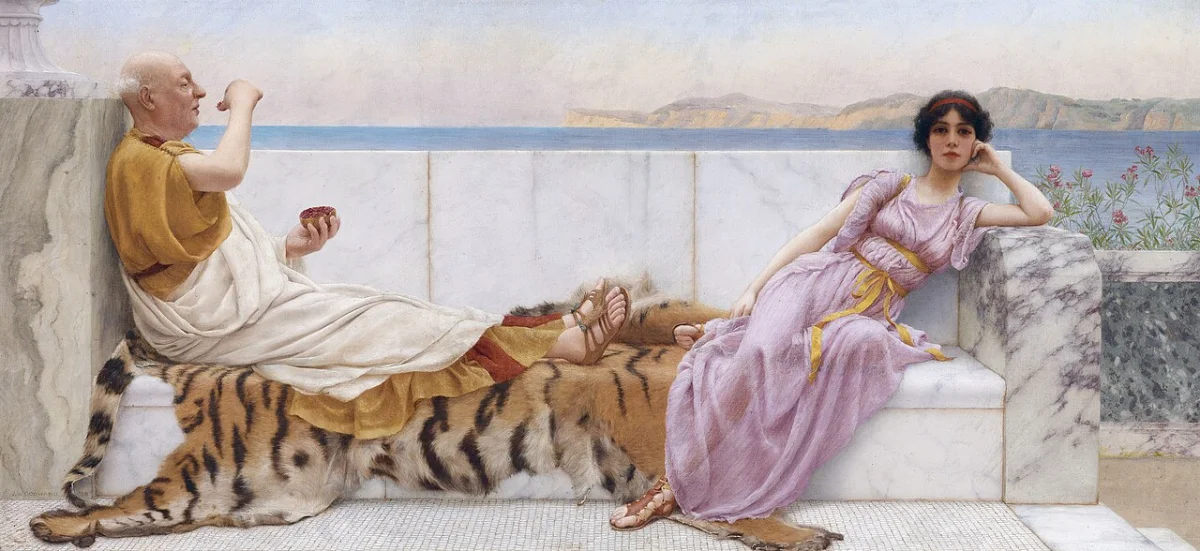
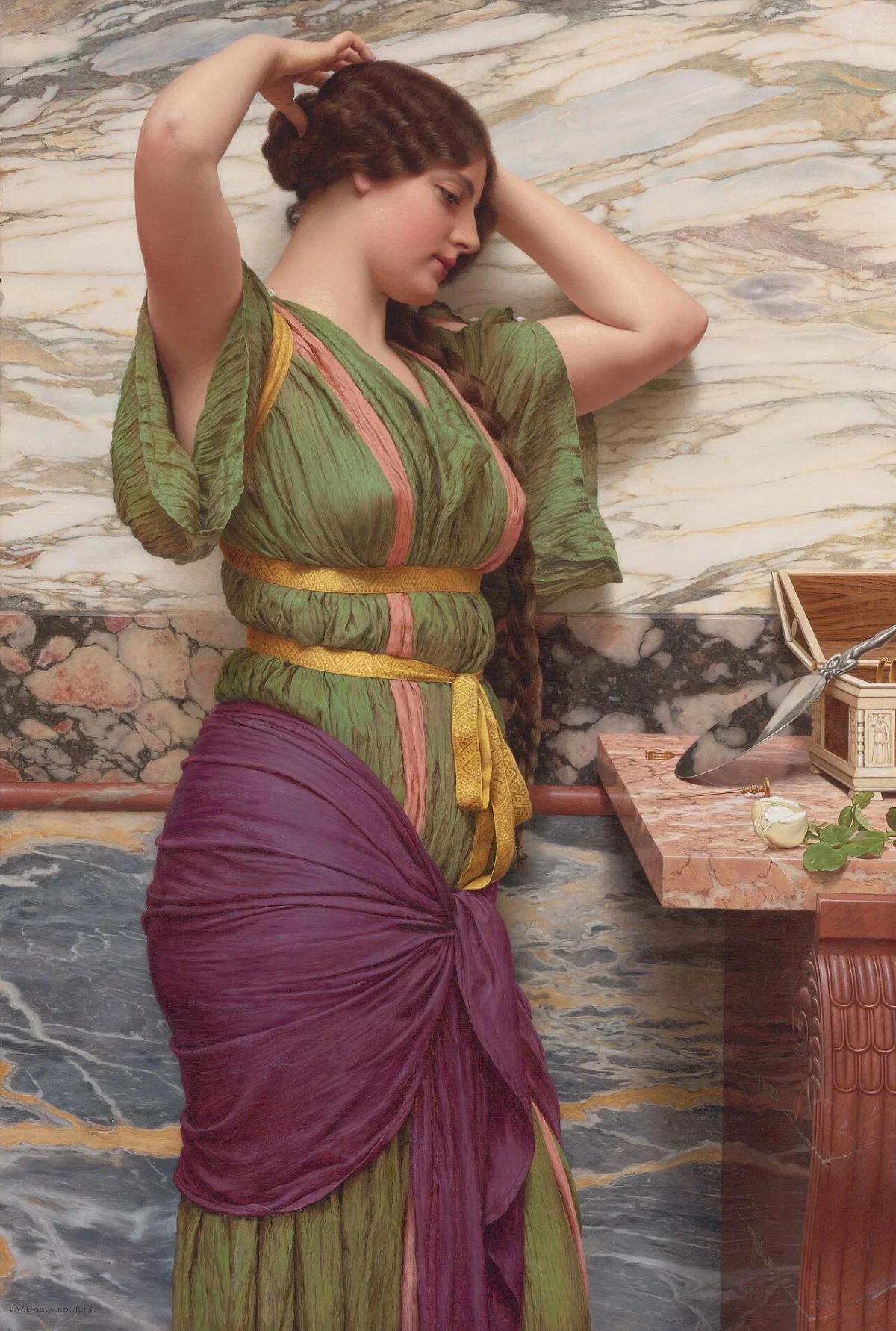
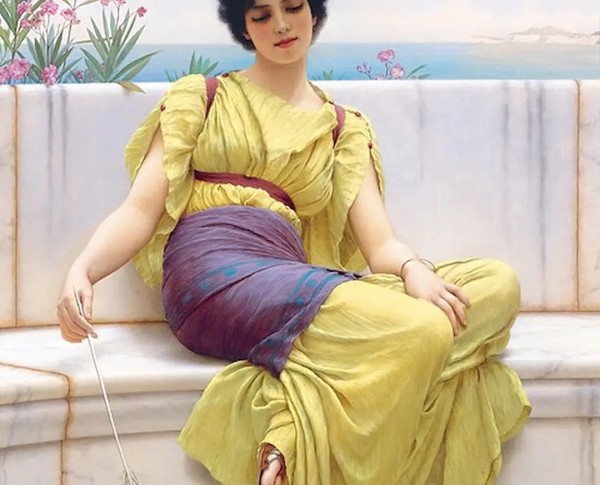
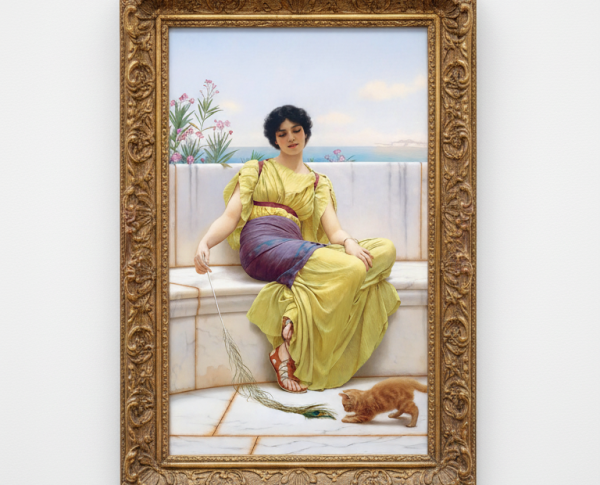
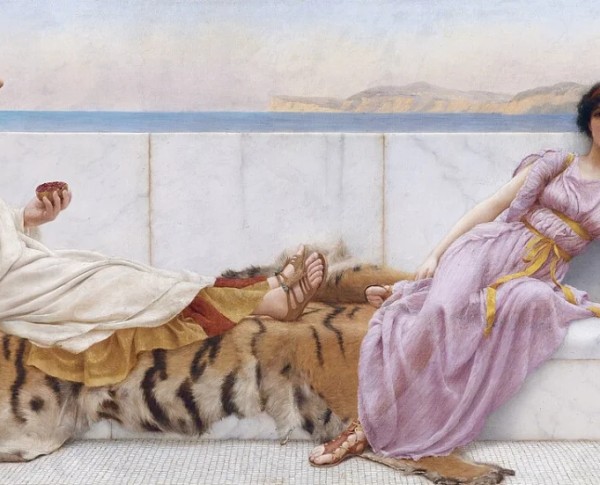
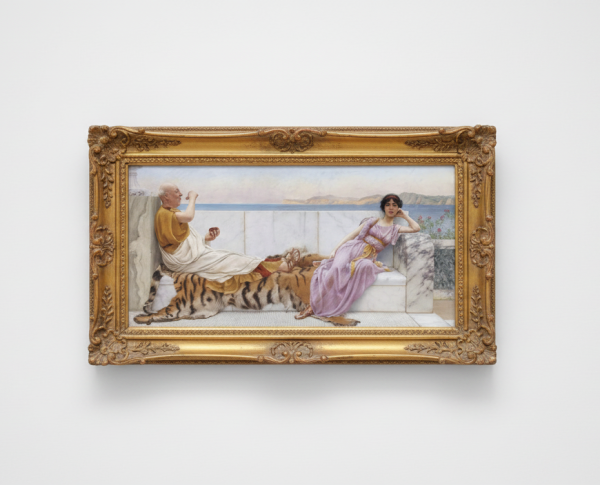
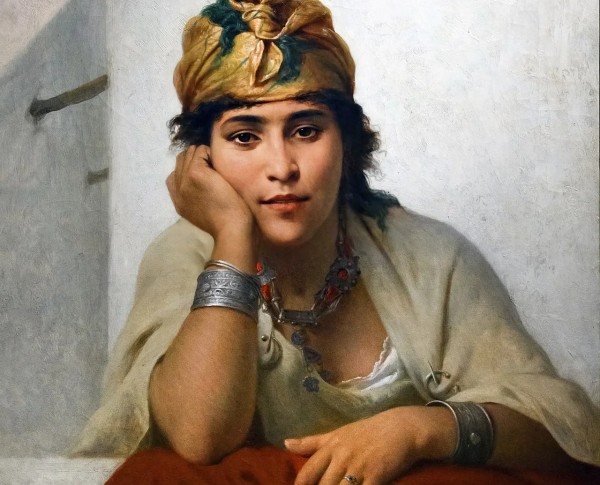
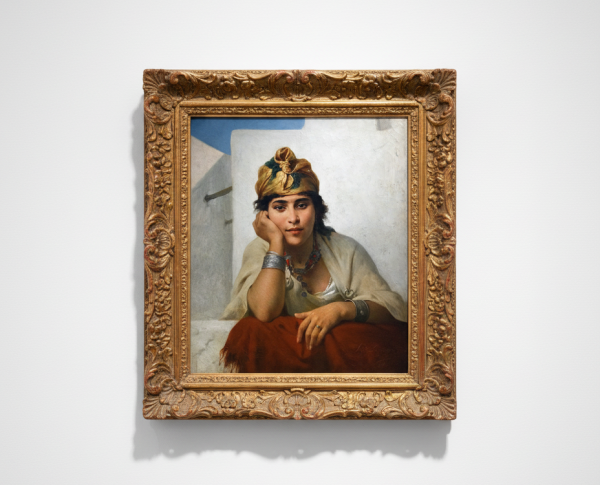
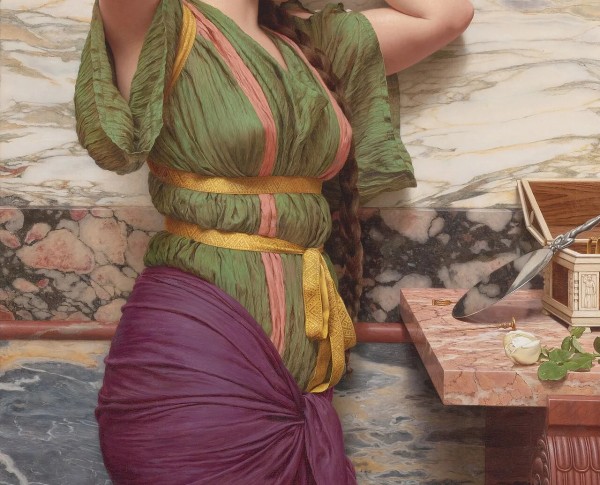
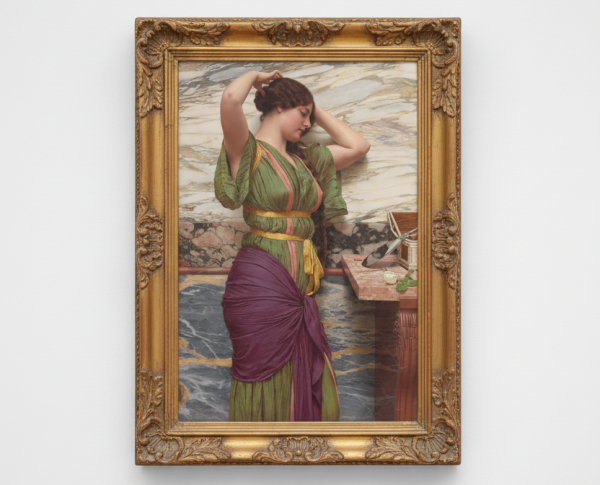
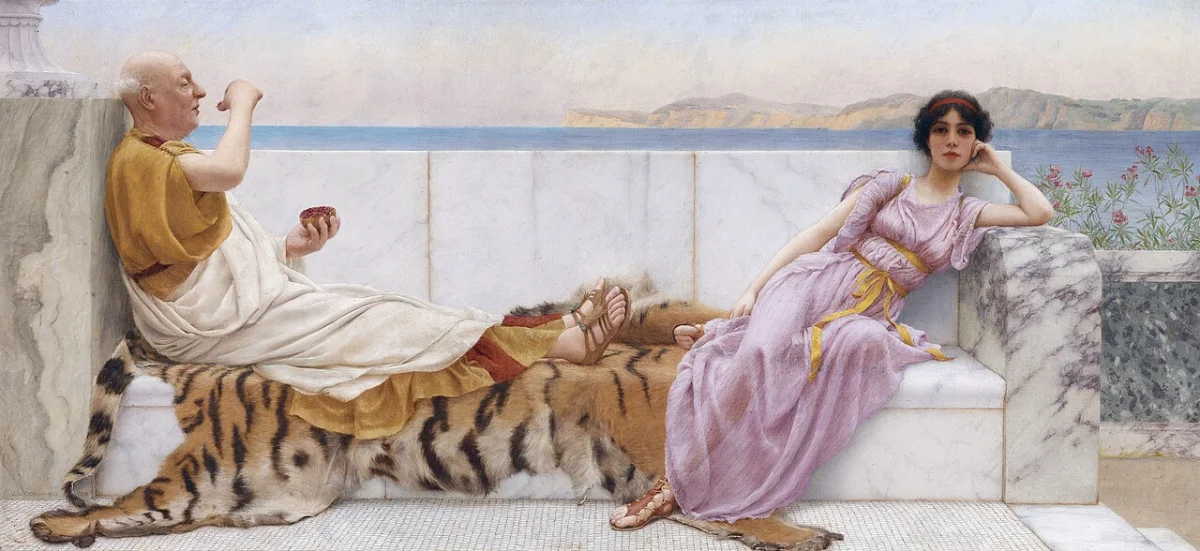
The oil on canvas technique employed by Godward in "Lycinna" showcases his meticulous attention to detail and exquisite command of color and form. Each stroke demonstrates the artist’s devotion to capturing lifelike beauty within the Neoclassical Academic Realism style. This approach is also evident in related works like "The Melody" and "Reverie," where Godward’s technical brilliance elevates each subject to timeless elegance, making these pieces coveted additions for discerning collectors.
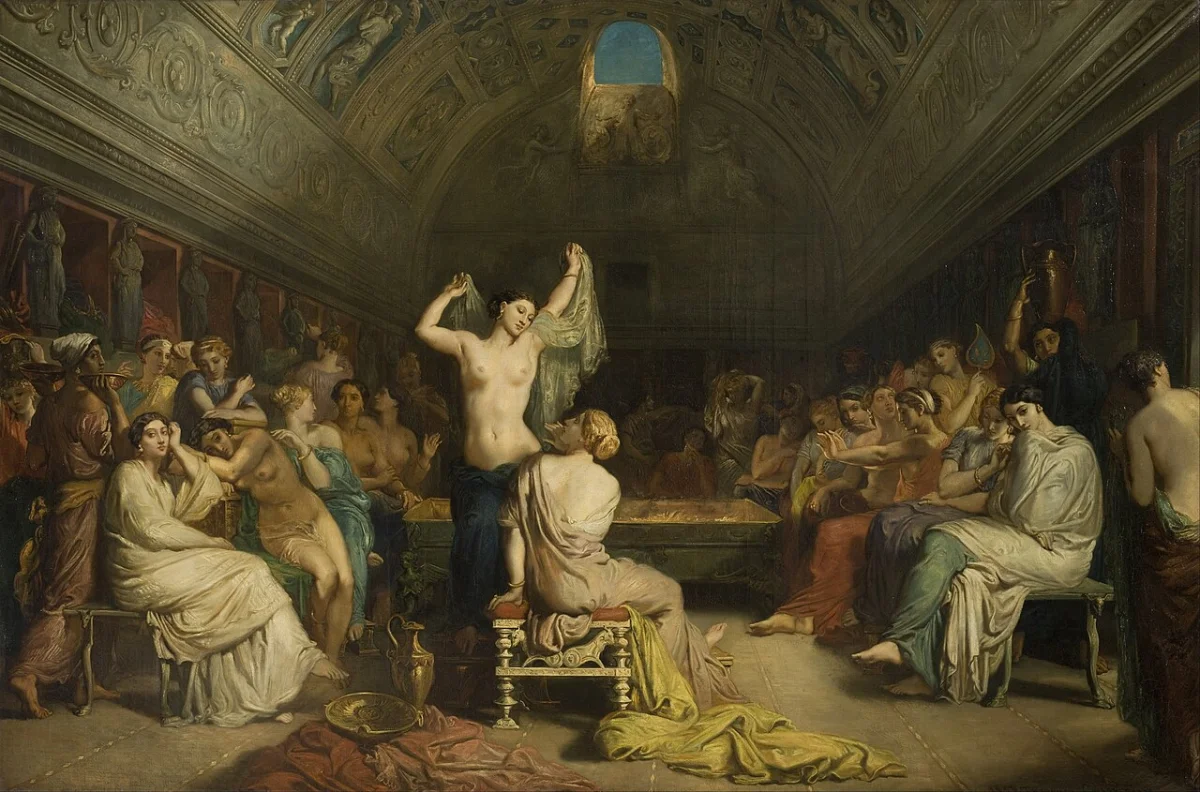
"Lycinna" is more than a fine art painting for sale; it is a window into the idealized world of ancient beauty and classical symbolism. Godward infuses his subject with subtle narratives, drawing viewers into a contemplative space reminiscent of his other works, such as "The Trysting Place" and "In the Tepidarium." Each element within the painting invites interpretation, reflecting the artist’s fascination with myth, history, and the enduring allure of the Neoclassical Academic Realism movement.
For collectors seeking a hand-painted oil painting that exemplifies sophistication, "Lycinna" by John William Godward is an exceptional choice. Its rich heritage within the Neoclassical Academic Realism movement, alongside related masterpieces like "Sweet Violets" and "On the Balcony," enhances its desirability. As a fine art painting for sale, "Lycinna" offers not only visual pleasure but also a valuable investment, resonating with those who appreciate historical and artistic excellence.
When Art Meets History
"Lycinna" by John William Godward stands as a testament to the Neoclassical Academic Realism movement, where ancient worlds are reimagined through meticulous craft. This hand-painted oil painting captures the grace and poise of its subject, echoing the elegance found in works like "The Death of Socrates" and "Napoleon Crossing the Alps." Godward’s approach pays homage to classical ideals, seamlessly blending historical inspiration with his own unique artistic vision.
Techniques That Speak
John William Godward’s "Lycinna" showcases the mastery of oil on canvas, a signature technique of Neoclassical Academic Realism. The artist’s delicate brushwork and keen attention to texture rival that of "Portrait of Antoine-Laurent Lavoisier and his wife." Godward’s use of light and shadow brings the subject to life, highlighting the timeless beauty present in this fine art painting for sale and connecting it to other masterpieces of the era.
Emotions on Display
In "Lycinna," John William Godward evokes a serene yet introspective mood, inviting viewers to contemplate the subject’s inner world. Through this hand-painted oil painting, subtle emotions are conveyed with the same sensitivity seen in "Consecration of the Emperor Napoleon I and Coronation of the Empress Josephine 1805-07." The artist’s ability to translate feeling onto canvas is a hallmark of Neoclassical Academic Realism, making each glance at the work deeply resonant.
Coveted by Collectors
As a celebrated example of Neoclassical Academic Realism, "Lycinna" by John William Godward is highly sought after among art enthusiasts. This oil on canvas masterpiece stands alongside renowned works like "Bonaparte, Calm on a Fiery Steed, Crossing the Alps 1801," making it a prized fine art painting for sale. Collectors value Godward’s meticulous technique and the painting’s ability to capture the refined spirit of a bygone era.
Related Neoclassical Academic Realism Hand-Painted Oil Paintings by Other Artists
Other Famous Neoclassical Academic Realism Artists:
Frequently Asked Questions About Lycinna
What is the historical context of "Lycinna"?
"Lycinna" was painted by John William Godward in 1895, during the late Victorian era, a time characterized by a revival of classical themes and aesthetics in art. This period saw a fascination with ancient Greece and Rome, which heavily influenced Godward's work.
What artistic techniques did Godward employ in "Lycinna"?
Godward is known for his mastery of color and light. In "Lycinna," he utilizes a rich palette and meticulous attention to detail, particularly in the rendering of fabrics and skin tones, to create a sense of realism and depth.
What themes are explored in "Lycinna"?
The painting explores themes of beauty, femininity, and the idealization of the female form. It reflects the artist's interest in portraying women as embodiments of grace and serenity, often set against classical backdrops.
Who is the figure depicted in "Lycinna"?
The figure in "Lycinna" is often interpreted as a representation of an idealized woman, embodying the classical beauty standards of the time. The name "Lycinna" itself is derived from ancient Greek, suggesting a connection to classical mythology.
What symbolism is present in "Lycinna"?
The painting is rich in symbolism, with elements such as the flowing drapery and the serene expression of the figure suggesting tranquility and timeless beauty. The use of classical motifs further emphasizes the connection to ancient ideals.
How does "Lycinna" reflect Godward's artistic style?
"Lycinna" exemplifies Godward's signature style, characterized by a blend of classical themes with a focus on the female figure. His works often highlight the interplay of light and shadow, enhancing the three-dimensionality of his subjects.
What influences can be seen in "Lycinna"?
Godward was influenced by the Pre-Raphaelite movement and the classical tradition. In "Lycinna," one can see the influence of both, particularly in the detailed depiction of the figure and the lush, idyllic setting.
What is the significance of the title "Lycinna"?
The title "Lycinna" is significant as it evokes a sense of classical heritage. It suggests a connection to ancient Greek culture, where names often held deep meanings related to beauty and mythology.
How does "Lycinna" compare to other works by Godward?
What impact did "Lycinna" have on art during its time?
"Lycinna" contributed to the late Victorian fascination with classical art and beauty, reinforcing the popularity of the aesthetic movement. It helped to establish Godward as a prominent figure in the genre of classical revival painting.























_GFM_Painting_(1).webp)

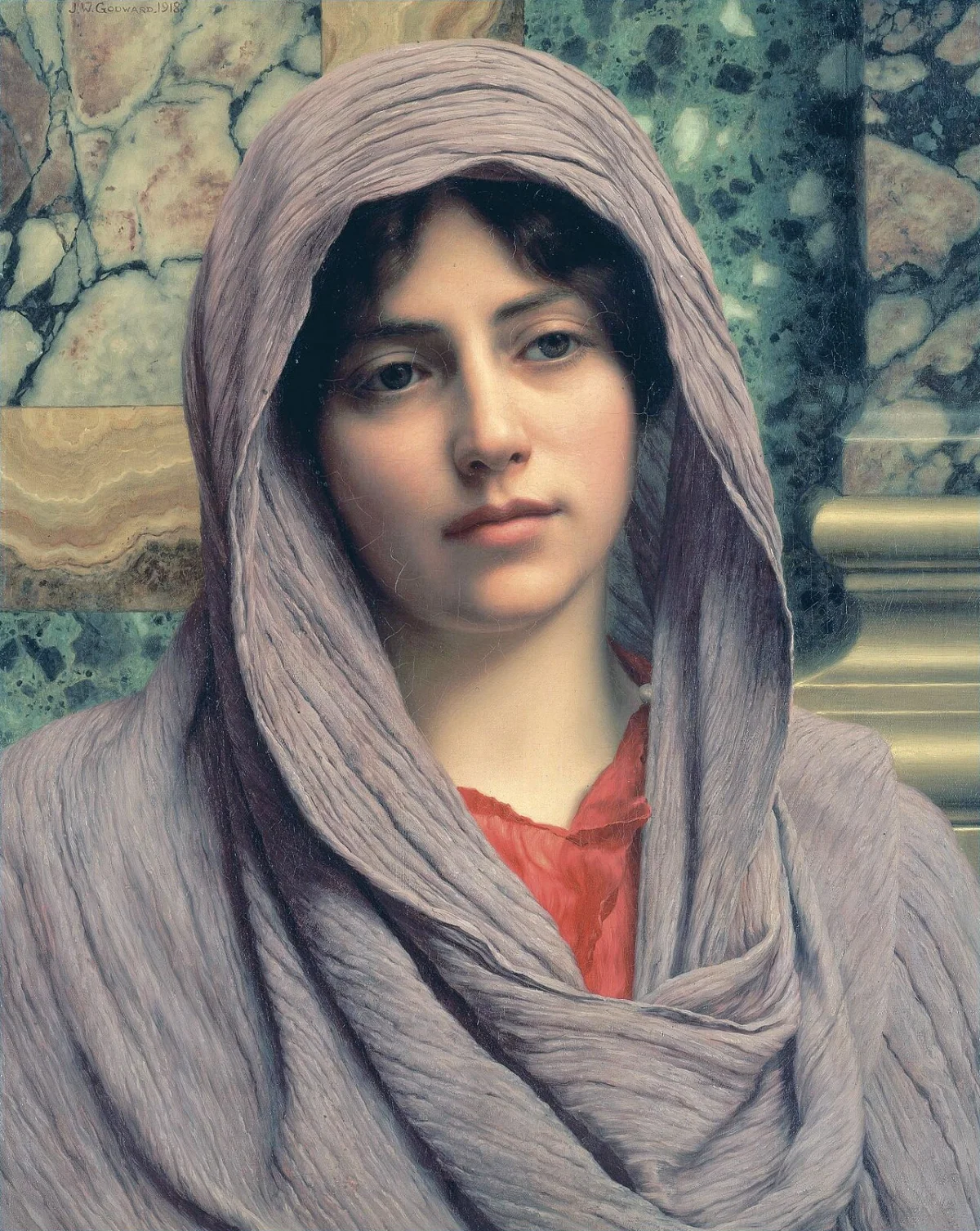

 100% Hand-Painted: Finished in 3-6 Weeks

.png)















_(1).webp)