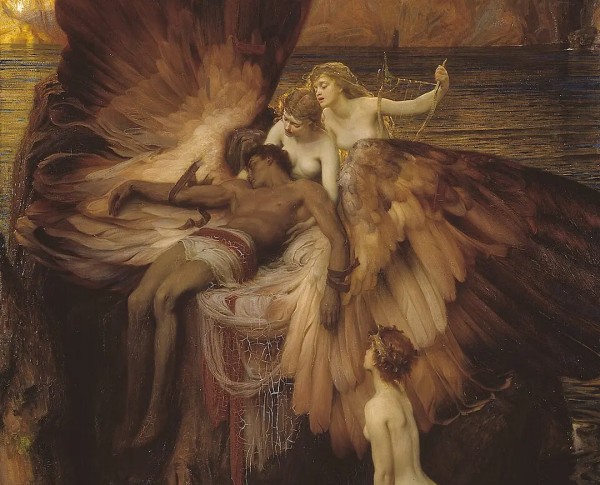
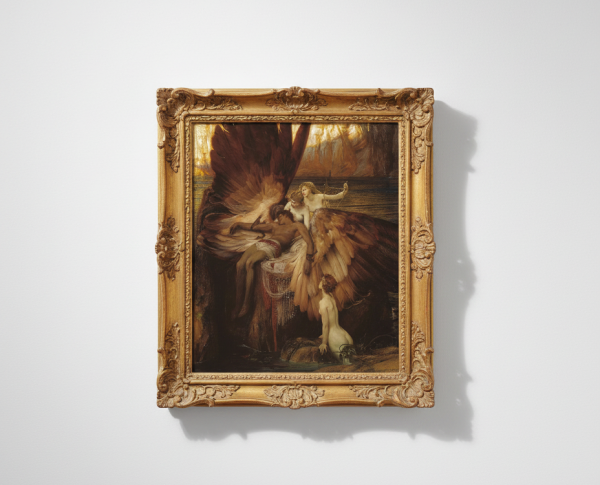
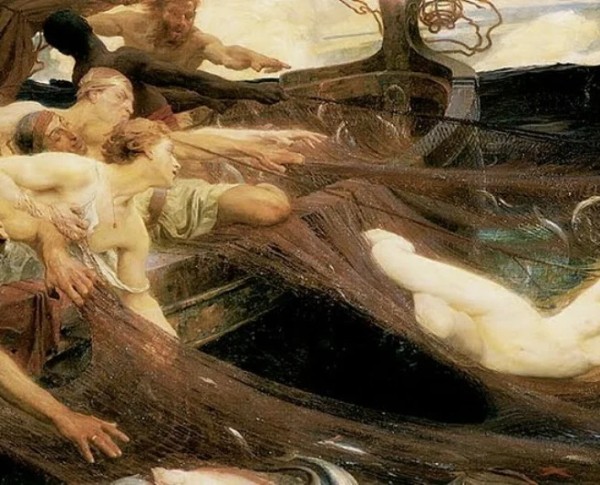
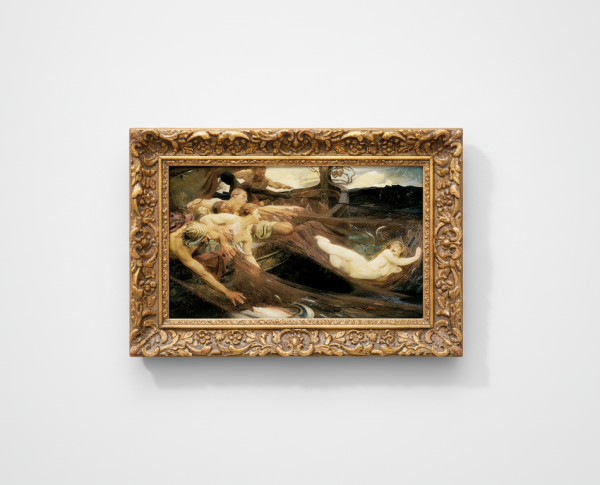
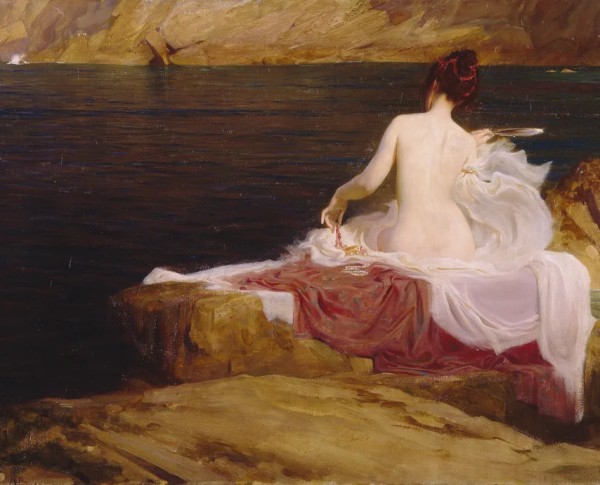
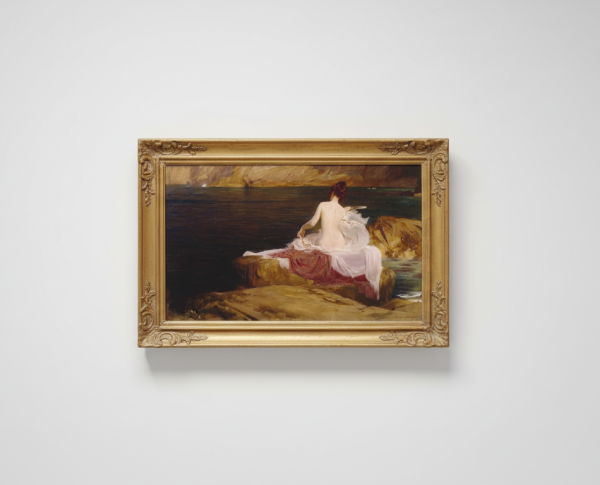
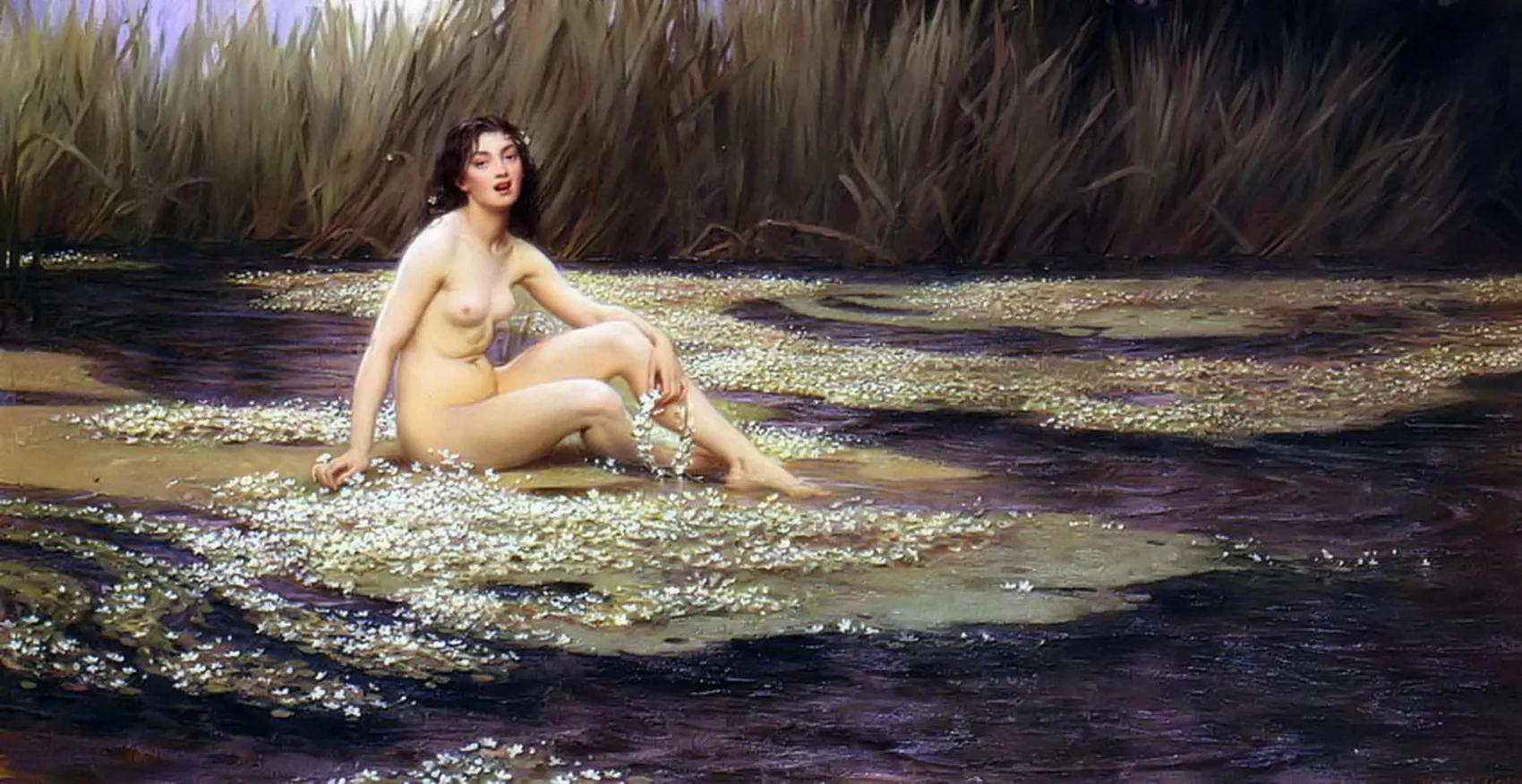
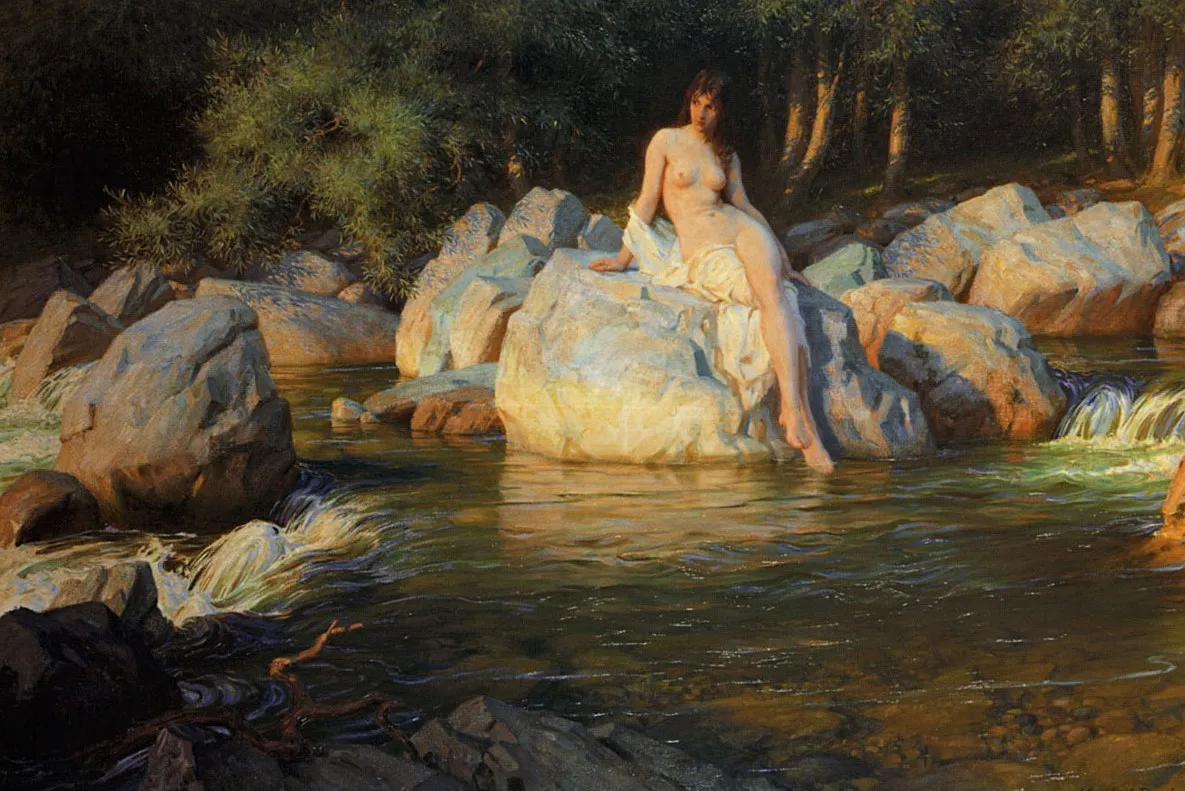
Draper’s skill is evident in every brushstroke of this remarkable oil on canvas, where the delicate interplay of light and water creates an ethereal effect. “La Nymphe Des Eaux” highlights the artist’s technical prowess, which is also seen in works like “The Golden Fleece” and “Tristan and Isolde.” The Neo-Classical movement’s ideals shine through the painting’s harmonious composition, making it a celebrated example of refined, classical technique.
“La Nymphe Des Eaux” weaves a narrative rich with mythical symbolism—a hallmark of Herbert James Draper’s approach within the Neo-Classical movement. This fine art painting for sale invites viewers to interpret the nymph’s enigmatic presence and the watery realm she inhabits, drawing intriguing parallels with other works such as “Clyties of the Mist” and “Bather.” Collectors are captivated by the romantic storytelling embedded in Draper’s iconic imagery.
For art enthusiasts seeking a distinguished addition to their collection, “La Nymphe Des Eaux” by Herbert James Draper is a coveted masterpiece. This hand-painted oil painting not only embodies the spirit of the Neo-Classical movement but also complements related products like “The Kelpie” and “The Pearls of Aphrodite.” Its timeless beauty makes it a prized possession for those who value the sophistication and narrative depth of classic fine art.
When Art Meets History
Herbert James Draper’s masterpiece, "La Nymphe Des Eaux," stands as a testament to the enduring allure of the Neo-Classical movement. This hand-painted oil painting captures the mythic beauty and historical depth that defined the era. Draper, known for his evocative works, draws inspiration from classical themes, much like in his other renowned pieces such as "Grenoble" and "The Roman Daughter." The painting’s narrative richness continues to fascinate art lovers and historians alike.
Techniques That Speak
Employing meticulous brushwork and masterful composition, Draper’s "La Nymphe Des Eaux" showcases the elegance of oil on canvas. The artist’s skillful rendering of light and texture is evident, a trait shared with his works like "The Augustus Bridge over the River Nera, near the City of Narni, Italy." Through layered glazes and refined color palettes, Draper elevates the Neo-Classical style, making this painting a true exemplar of technical excellence in the genre.
Emotions on Display
"La Nymphe Des Eaux" by Herbert James Draper evokes a profound sense of tranquility and mystique. The subject’s serene expression and flowing form invite viewers into a world of myth and emotion, reminiscent of scenes in "The Bridge at La Cava, Kingdom of Naples" and "Court of Death." This fine art painting for sale embodies the emotional depth characteristic of Neo-Classical works, resonating with collectors who seek art that touches the soul.
Coveted by Collectors
Collectors prize "La Nymphe Des Eaux" not only for its beauty but also for its place in Draper’s celebrated portfolio. As a hand-painted oil painting, it represents the pinnacle of Neo-Classical artistry, aligning with masterpieces such as "Grenoble" and "Court of Death." Its rarity and historical significance make it a sought-after addition to any fine art collection, appealing to those who appreciate the timeless elegance of oil on canvas from this remarkable era.
Related Neo-Classical Hand-Painted Oil Paintings by Other Artists
Other Famous Neo-Classical Artists:
Frequently Asked Questions About La Nymphe Des Eaux
What is the historical context of "La Nymphe Des Eaux"?
"La Nymphe Des Eaux," painted by Herbert James Draper in 1900, reflects the late Victorian and early Edwardian fascination with mythology and the natural world, showcasing the transition in art towards modernism while still embracing classical themes.
Who is the artist behind "La Nymphe Des Eaux"?
Herbert James Draper was a British painter known for his mythological subjects and allegorical works. He gained recognition for his ability to blend classical themes with a contemporary style, making him a prominent figure in the early 20th century art scene.
What are the main themes depicted in "La Nymphe Des Eaux"?
The painting explores themes of nature, femininity, and mythology. The nymph represents the spirit of water, embodying beauty and grace, while also symbolizing the connection between humanity and the natural world.
What artistic techniques are employed in "La Nymphe Des Eaux"?
Draper utilizes a combination of soft brushwork and vibrant colors to create a dreamlike quality in the painting. The use of light and shadow enhances the ethereal nature of the nymph, drawing the viewer into the serene aquatic environment.
What symbolism is present in "La Nymphe Des Eaux"?
The nymph in the painting symbolizes purity and the life-giving properties of water. Additionally, the surrounding flora and fauna represent fertility and the interconnectedness of life, reinforcing the theme of nature's beauty and vitality.
How does "La Nymphe Des Eaux" compare to other works by Draper?
This painting is representative of Draper's signature style, which often combines mythological subjects with a focus on the female form. Compared to his other works, "La Nymphe Des Eaux" showcases a more serene and contemplative approach, emphasizing harmony with nature.
What influences can be seen in "La Nymphe Des Eaux"?
Draper's work is influenced by the Pre-Raphaelite movement, which emphasized detailed realism and vibrant colors, as well as the Symbolist movement, which sought to express ideas through symbolic imagery. These influences are evident in the painting's lush details and emotive qualities.
What is the significance of the nymph in classical mythology?
In classical mythology, nymphs are often depicted as divine spirits associated with nature, particularly water, trees, and mountains. They symbolize the beauty and mystery of the natural world, serving as guardians of their respective domains.
What was the public reception of "La Nymphe Des Eaux" upon its completion?
Upon its unveiling, "La Nymphe Des Eaux" received acclaim for its technical skill and enchanting subject matter. It was well-received by critics and the public alike, contributing to Draper's reputation as a leading artist of his time.
How does "La Nymphe Des Eaux" reflect the values of its time?
The painting reflects the late 19th and early 20th-century values of romanticism and a growing appreciation for nature and mythology. It embodies the era's desire to reconnect with the natural world amidst the rapid industrialization of society.























_GFM_Painting_(1).webp)


 100% Hand-Painted: Finished in 3-6 Weeks

.png)
















_(1).webp)