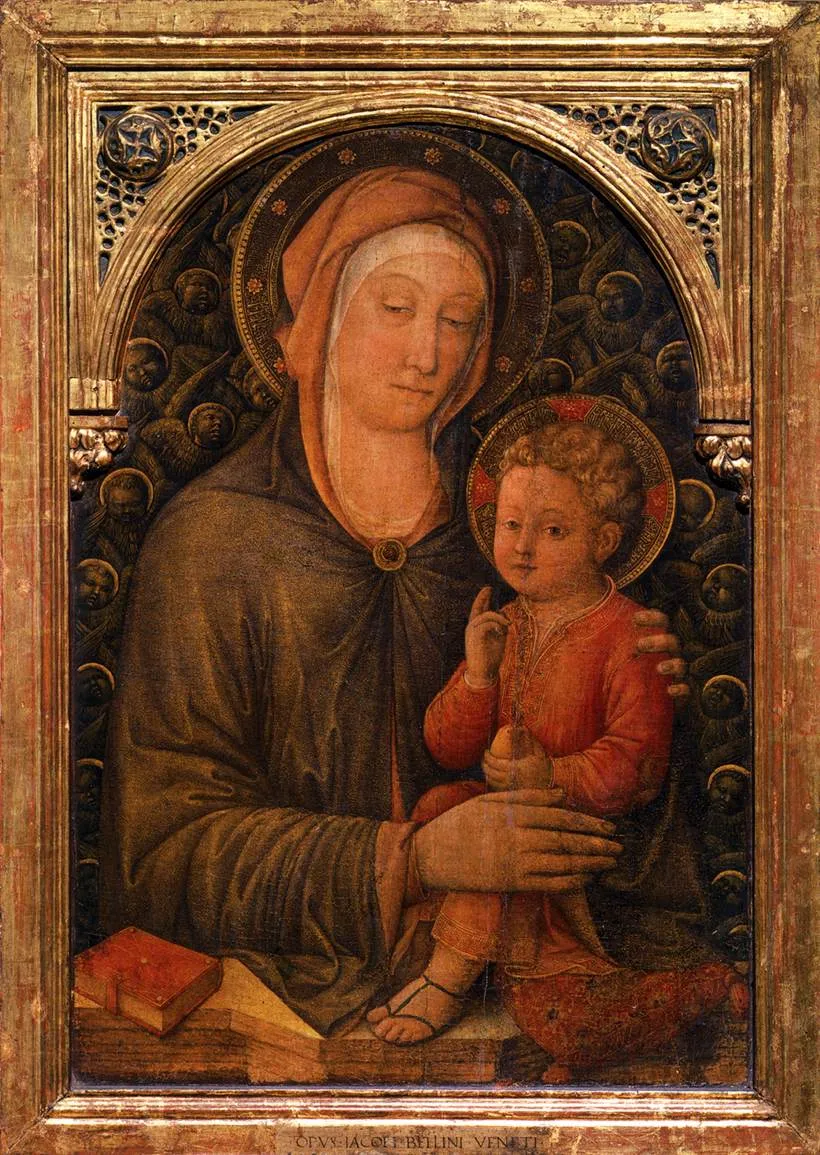
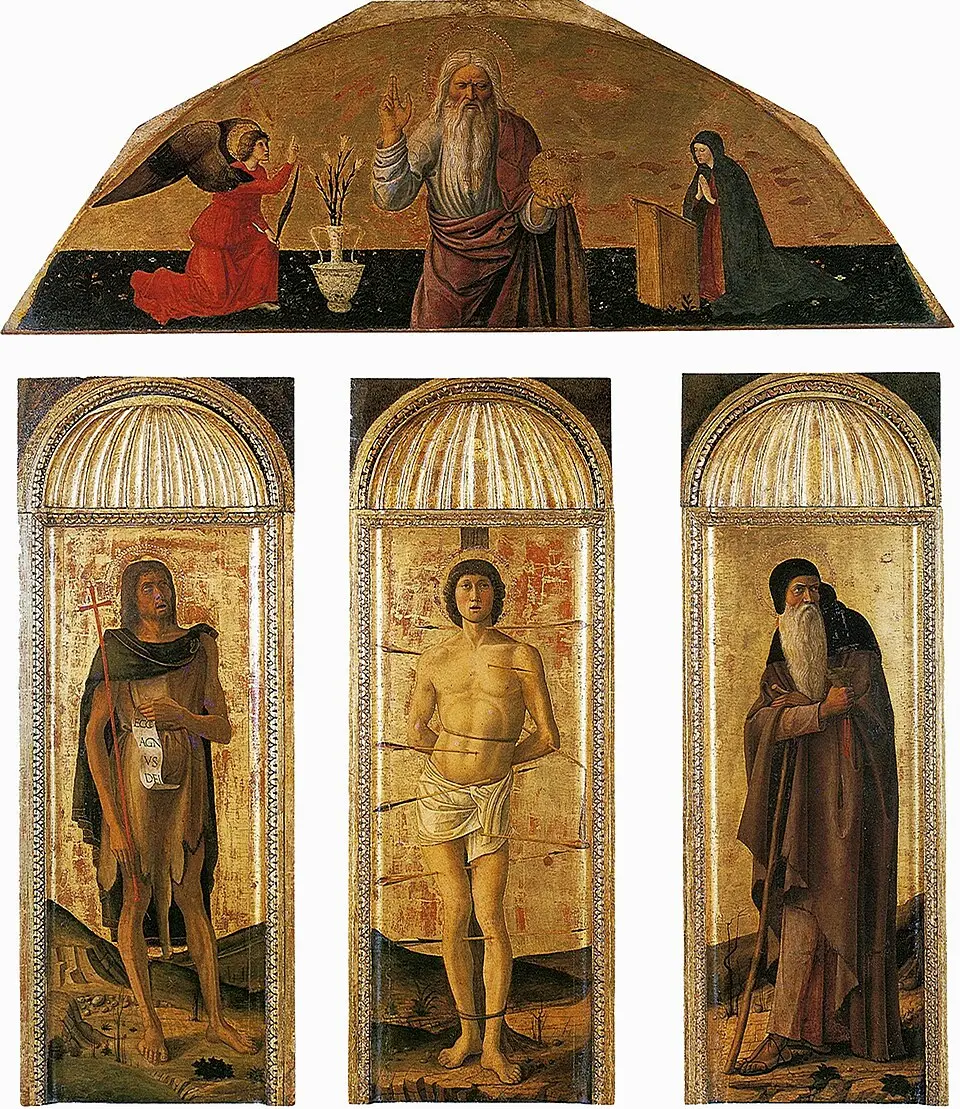
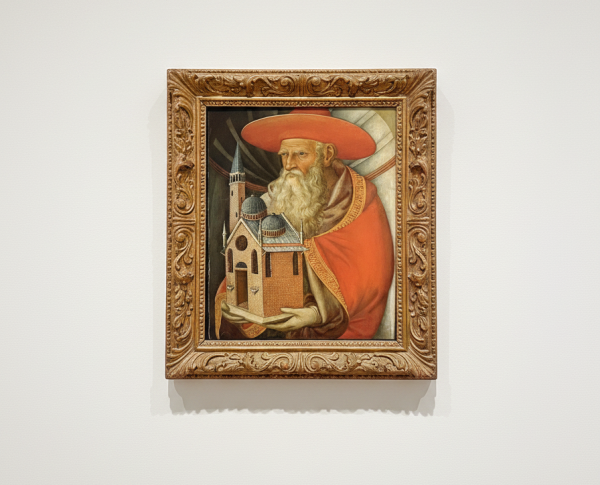
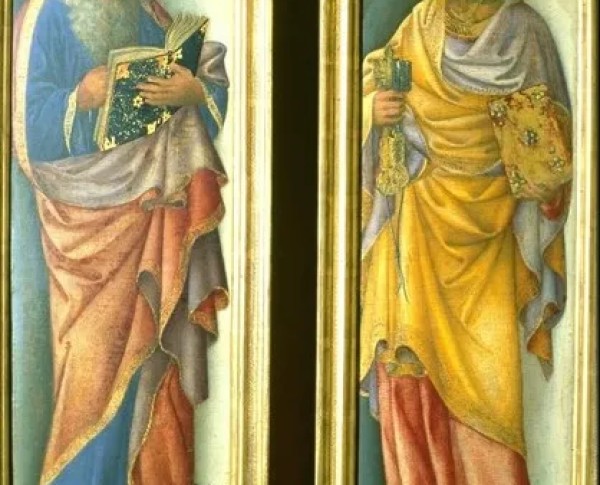
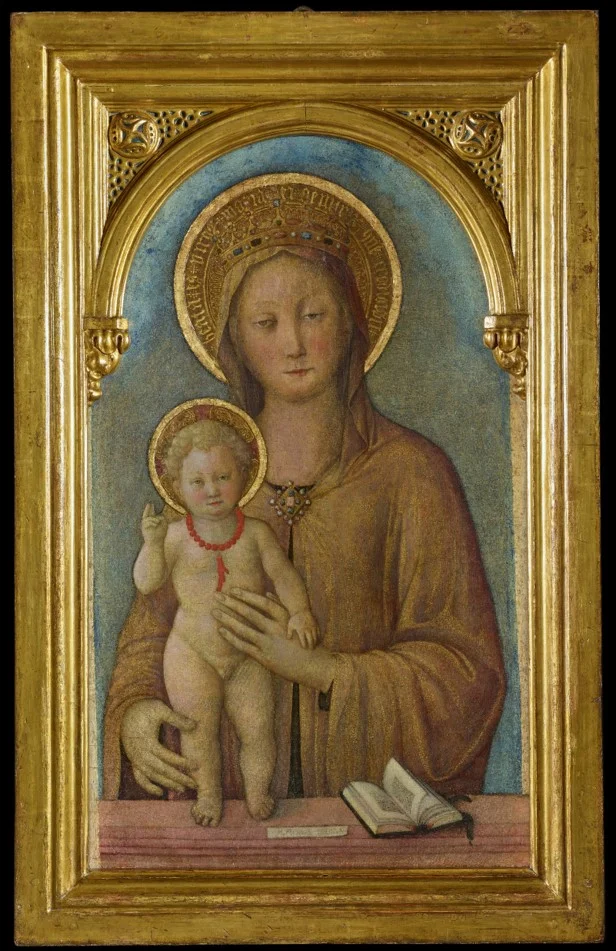
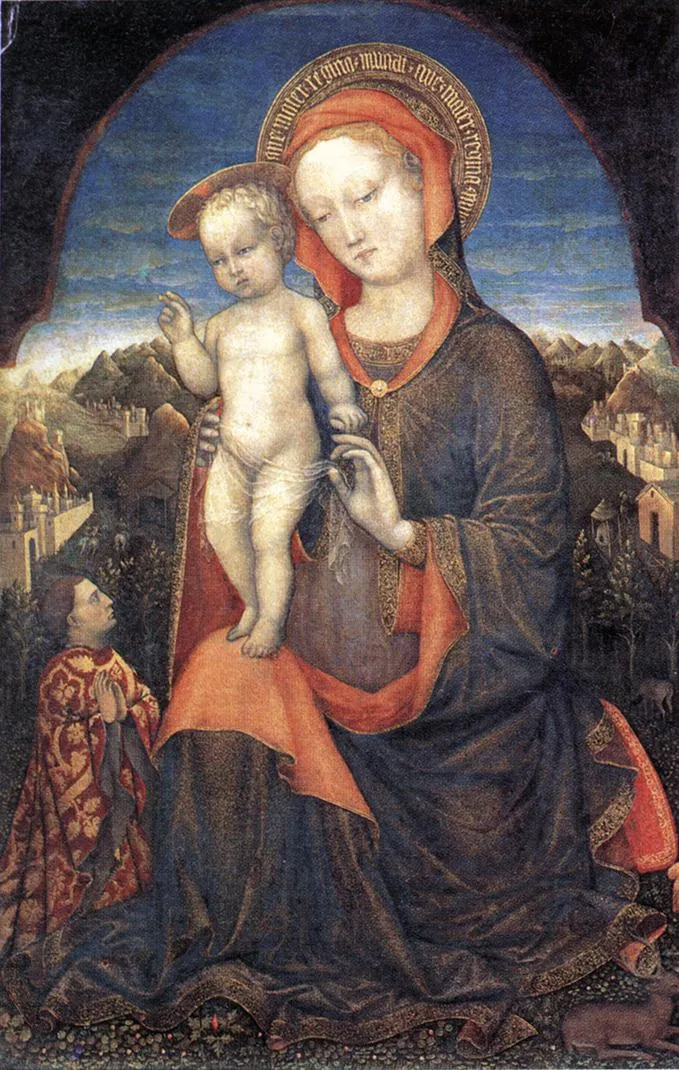
Jacopo Bellini’s technique in "Madonna Tadini" reveals his expertise with oil on canvas, a medium that defined much of the Early Renaissance. The delicate rendering of the Madonna’s features and the luminous color palette highlight Bellini’s mastery. Art lovers searching for oil on canvas masterpieces will find this painting’s quality unmatched. Comparable works like "Flagellation" and "Triptych of St Sebastian" demonstrate Bellini’s consistent attention to detail and innovation in composition.
"Madonna Tadini" is more than a fine art painting for sale; it is a visual narrative rich with symbolic meaning. Jacopo Bellini infuses the Early Renaissance masterpiece with elements that reflect both spiritual devotion and artistic storytelling. The Madonna’s serene expression and subtle gestures invite viewers to contemplate deeper themes. Similar symbolic depth can be found in Bellini's "The Madonna of Humility Adored by a Prince of the House of Este" and "John the Evangelist."
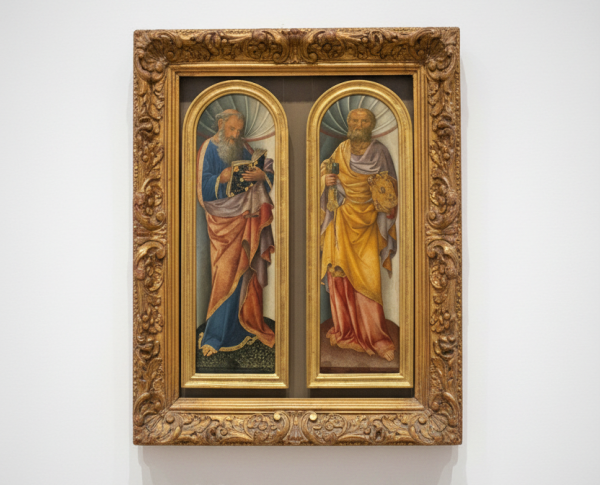
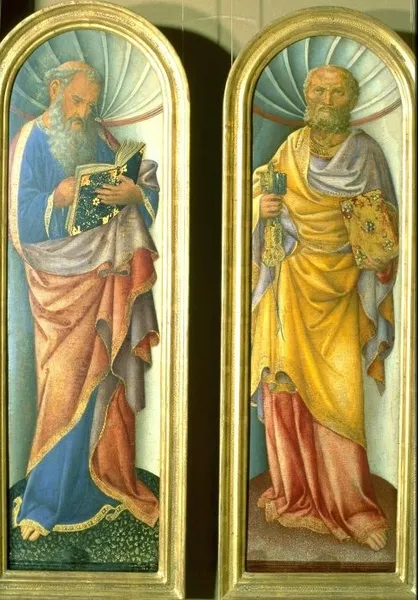
For collectors, acquiring "Madonna Tadini" means owning a hand-painted oil painting that represents the pinnacle of Early Renaissance artistry. Jacopo Bellini’s signature style and influence make this work highly sought after among fine art painting for sale listings. Its connection to other masterpieces, including "Apostle Peter" and "Triptych of St Sebastian," underscores its value. This painting’s timeless beauty and historical importance make it a true treasure in any art collection.
When Art Meets History
"Madonna Tadini" by Jacopo Bellini stands as a remarkable example of the Early Renaissance movement, blending religious reverence with historical significance. This hand-painted oil painting not only reflects Bellini’s mastery but also captures the evolving artistic techniques of his era. Alongside related works like "Fortitude" and "The Madonna of Mercy," "Madonna Tadini" serves as a bridge between medieval traditions and Renaissance innovation, making it an essential study for art enthusiasts and historians alike.
Techniques That Speak
Jacopo Bellini’s "Madonna Tadini" showcases his expertise in oil on canvas, a medium that was gaining popularity during the Early Renaissance. The artist’s delicate use of light and shadow, combined with intricate detailing, brings the figures to life. This painting shares stylistic elements with Bellini’s other works, such as "Madonna and Child" and "Madonna and Child with an Angel," demonstrating the evolution of composition and technique in early Renaissance fine art.
Emotions on Display
In "Madonna Tadini," Jacopo Bellini masterfully conveys deep emotion through the gentle expressions and subtle gestures of his subjects. The intimate portrayal of the Madonna evokes feelings of serenity and devotion, a hallmark of Early Renaissance fine art painting for sale. The emotional depth found here is echoed in related works like "Lamentation over the Dead Christ," highlighting Bellini’s ability to connect viewers to spiritual narratives through visual storytelling.
Coveted by Collectors
As a cornerstone of Early Renaissance art, "Madonna Tadini" by Jacopo Bellini remains highly sought after by collectors and institutions. Its historical value and exquisite execution as a hand-painted oil painting make it a prized addition to any collection. Collectors often seek out similar masterpieces, including "The Madonna of Mercy" and "Madonna and Child with an Angel," to celebrate the enduring legacy of Bellini and the transformative power of Renaissance artistry.
Related Early Renaissance Hand-Painted Oil Paintings by Other Artists
Other Famous Early Renaissance Artists:
Frequently Asked Questions About Madonna Tadini
Who is the artist of Madonna Tadini?
The artist of Madonna Tadini is Jacopo Bellini, a prominent Italian painter of the Early Renaissance known for his contributions to the development of Venetian painting.
What is the historical context of Madonna Tadini?
Madonna Tadini was created during the 15th century, a period marked by the transition from the Gothic style to the Renaissance, emphasizing naturalism and human emotion in art.
What are the main themes depicted in Madonna Tadini?
The painting primarily explores themes of motherhood, divinity, and the sanctity of the Virgin Mary, reflecting the spiritual and cultural values of the time.
What artistic techniques did Jacopo Bellini use in Madonna Tadini?
Jacopo Bellini employed techniques such as chiaroscuro to create depth, as well as a careful attention to detail and texture, which were innovative for his time.
What is the significance of the figures in Madonna Tadini?
The figures in the painting, particularly the Virgin Mary and the Christ Child, symbolize divine grace and maternal love, central themes in Christian iconography.
How does Madonna Tadini reflect the characteristics of the Renaissance style?
Madonna Tadini reflects Renaissance characteristics through its realistic portrayal of human figures, use of perspective, and emphasis on naturalism and emotional expression.
What influences can be seen in the composition of Madonna Tadini?
The composition of Madonna Tadini shows influences from both Byzantine art and the emerging Renaissance style, blending traditional iconography with a more humanistic approach.
Where is Madonna Tadini currently housed?
Madonna Tadini is currently housed in the collection of the Museo di Capodimonte in Naples, Italy, where it is preserved as an important example of early Renaissance art.
What role did Jacopo Bellini play in the development of Venetian painting?
Jacopo Bellini is considered a foundational figure in Venetian painting, influencing future generations of artists, including his sons, Gentile and Giovanni Bellini, through his innovative techniques and compositions.
What is the legacy of Madonna Tadini in the context of art history?
The legacy of Madonna Tadini lies in its representation of the transition to Renaissance ideals, serving as a critical bridge between medieval and modern artistic expressions, and influencing the portrayal of religious subjects in subsequent artworks.






















_GFM_Painting_(1).webp)


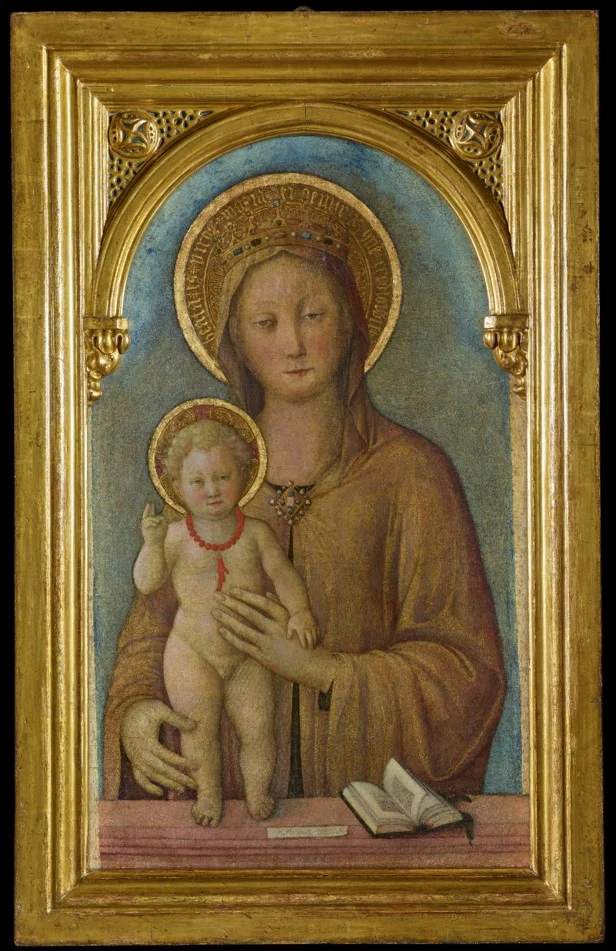
 100% Hand-Painted: Finished in 3-6 Weeks

.png)
















_(1).webp)