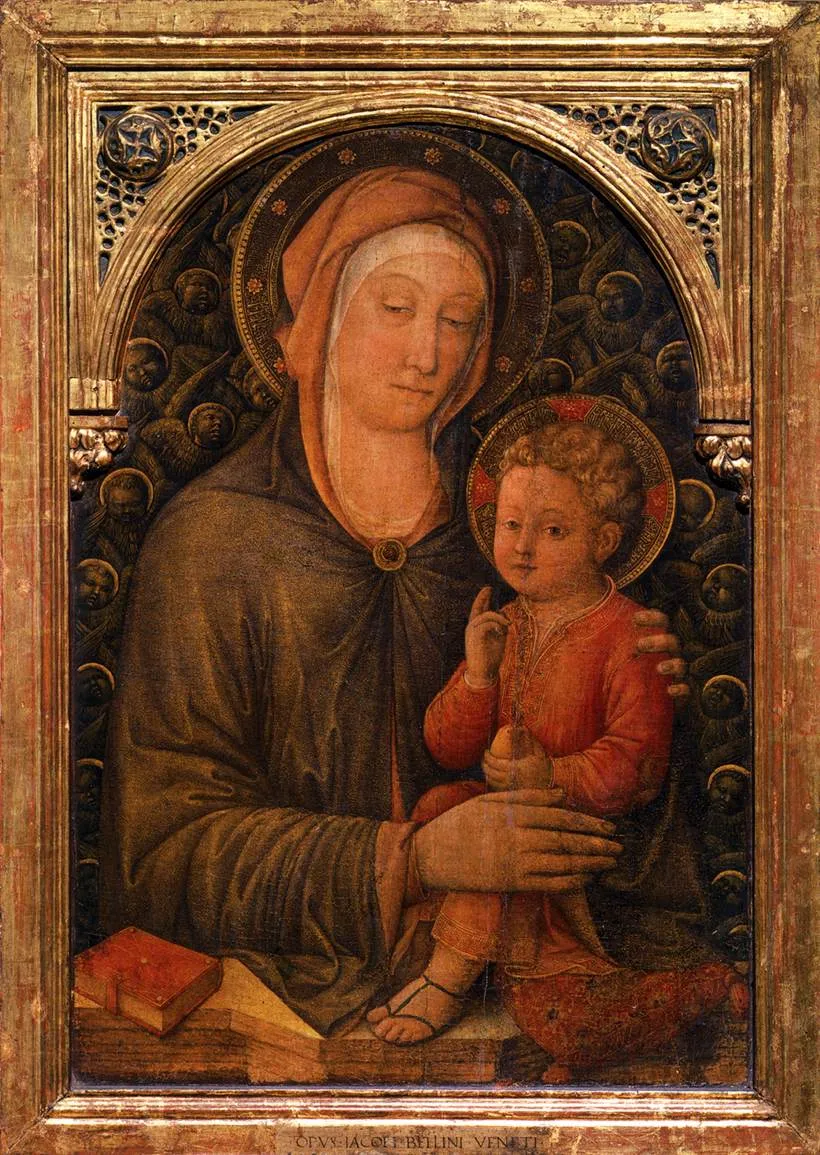
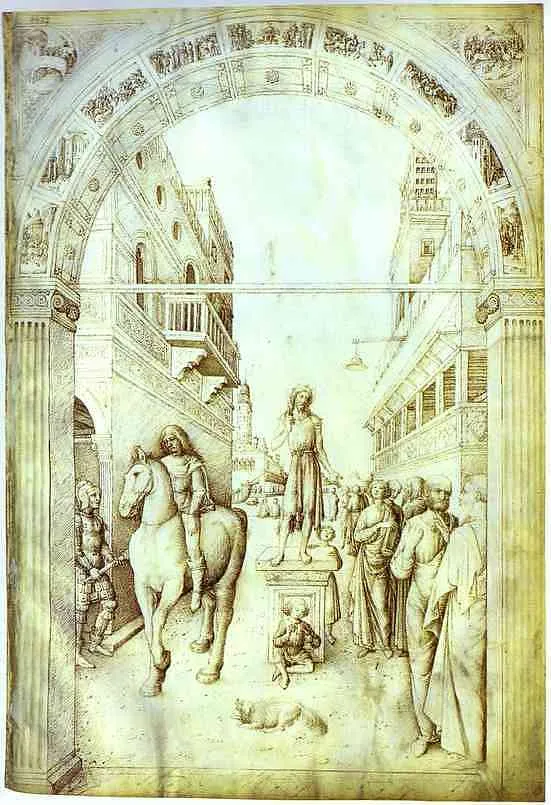
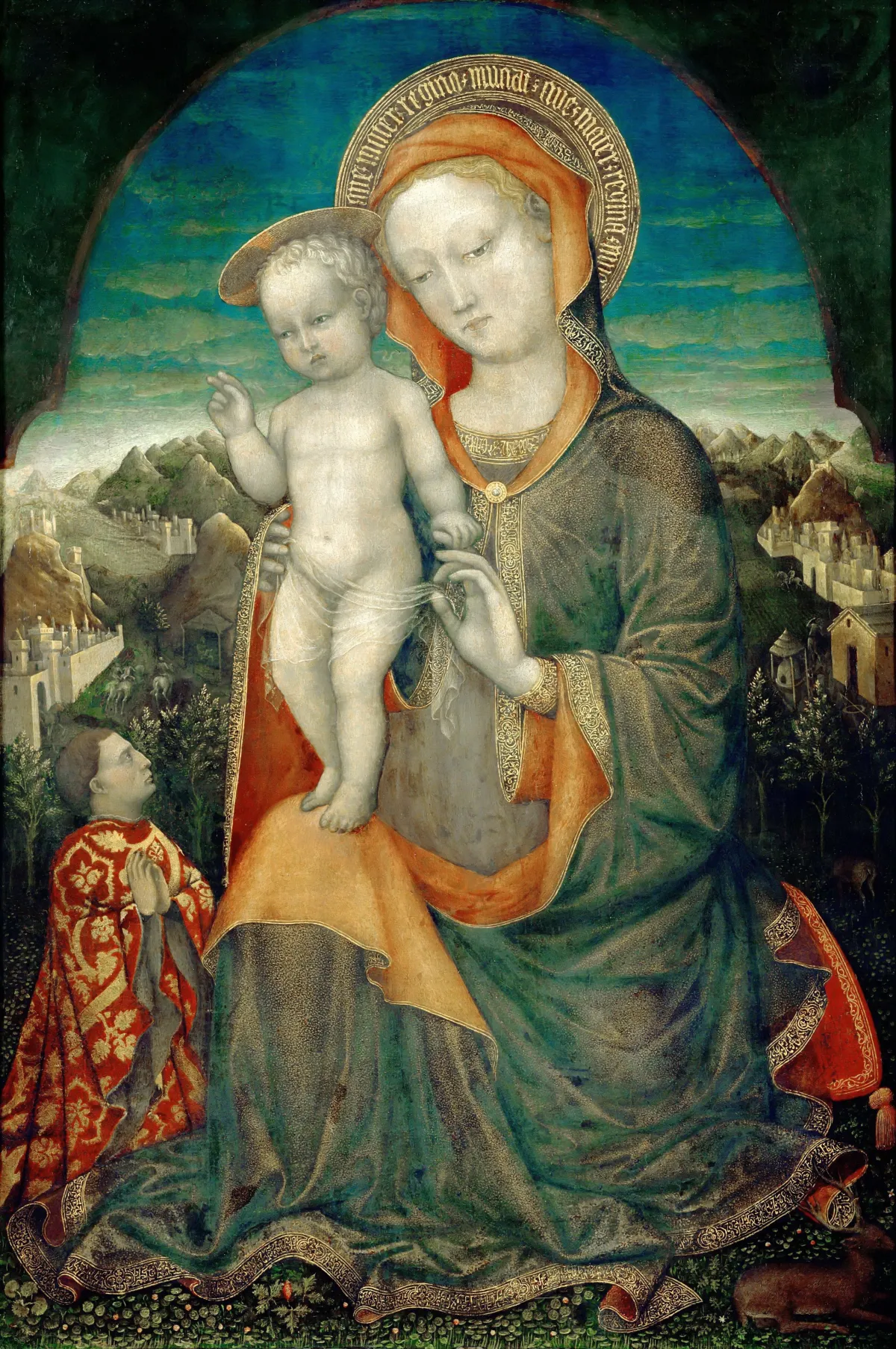
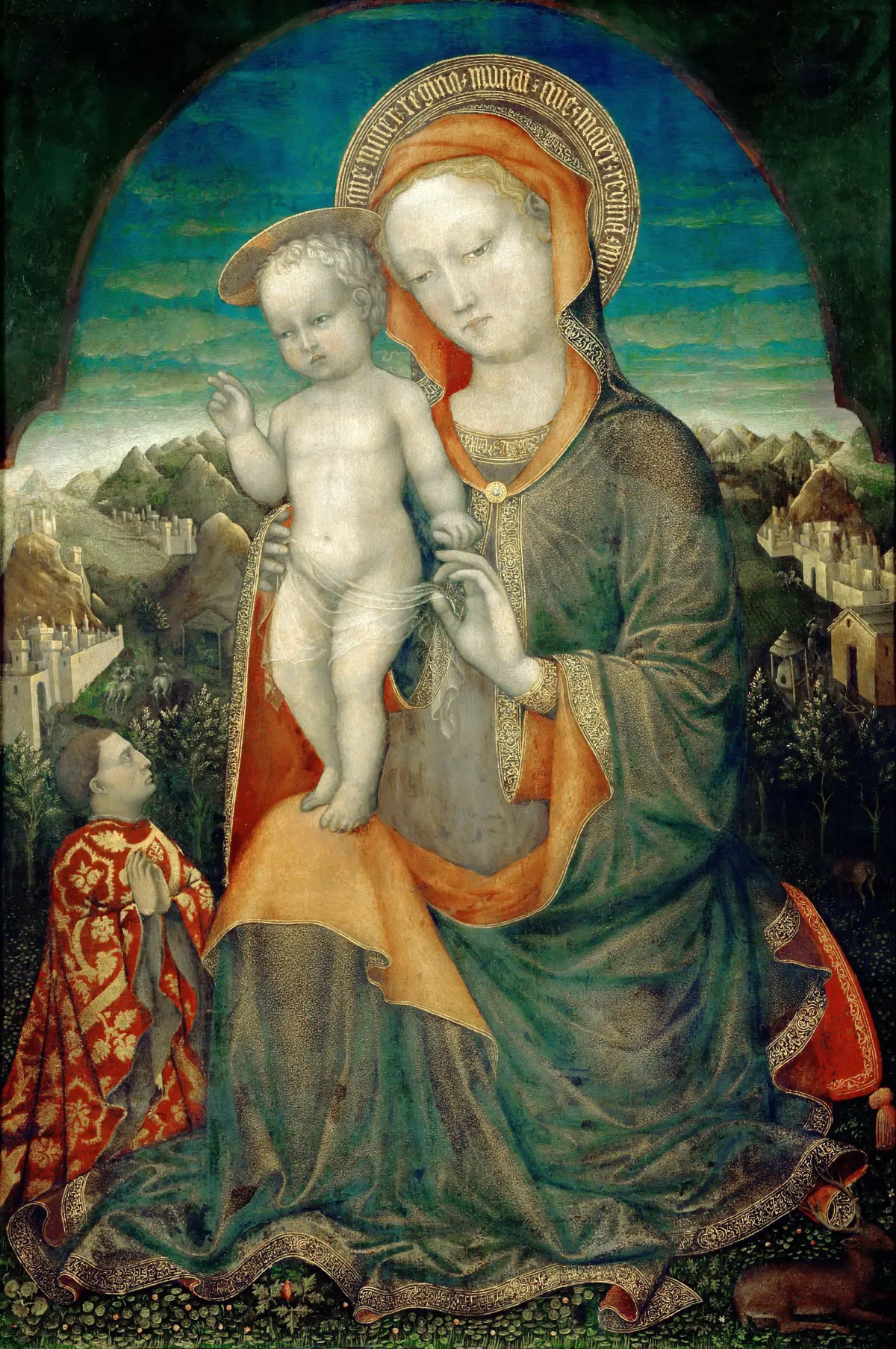
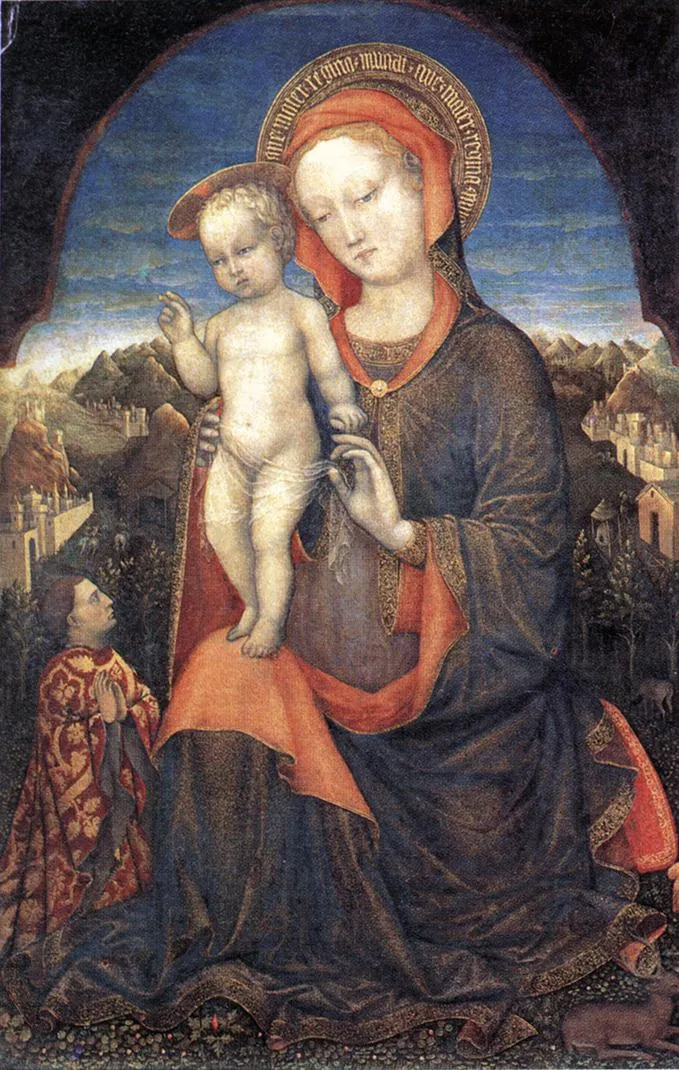
Bellini’s technique in "The Madonna of Humility Adored by a Prince of the House of Este" showcases the exquisite detail and luminous color characteristic of Early Renaissance oil on canvas. His delicate handling of light and texture reveals a mastery that art lovers admire. If you appreciate the craftsmanship of Jacopo Bellini, consider exploring related works like "St John the Baptist Preaching" and "The Agony in the Garden" for your collection.
Every element in this fine art painting for sale is rich with symbolism. The Madonna’s humility, the prince’s reverence, and the subtle background details speak volumes about faith and nobility during the Early Renaissance. Jacopo Bellini’s storytelling is echoed in other significant pieces such as "Saint Anthony Abbot and Saint Bernardino da Siena" and "Flagellation," making his oeuvre a fascinating journey through history and devotion.
For art collectors, "The Madonna of Humility Adored by a Prince of the House of Este" is a premier example of an Early Renaissance hand-painted oil painting. Jacopo Bellini’s works are highly sought after, not just for their beauty but for their historical value. Related products like "Album del Louvre, epigrafi e monete" complement this masterpiece, enhancing any fine art collection with timeless elegance and profound cultural significance.
When Art Meets History
"The Madonna of Humility Adored by a Prince of the House of Este" by Jacopo Bellini stands as a testament to the Early Renaissance movement. This hand-painted oil painting reflects the era’s shift toward naturalism and humanism, connecting viewers with the historical context of the Este family. Bellini’s work sits alongside masterpieces like "Sigismondo Malatesta" and "Madonna in Glory with Seraphim," offering rich insight into the period’s artistic innovations and the significance of religious iconography.
Techniques That Speak
Jacopo Bellini’s mastery is evident in his use of oil on canvas, a medium that allowed for delicate gradations of light and shadow. The Early Renaissance movement encouraged artists to experiment with perspective and realism, qualities that shine through in this piece. Similar to Bellini’s "Fortitude" and Botticelli’s "Primavera," this painting demonstrates careful attention to composition and detail, making it a standout example of technical skill and innovation in fine art.
Emotions on Display
In "The Madonna of Humility Adored by a Prince of the House of Este," Jacopo Bellini captures a profound sense of reverence and devotion. The gentle expressions and soft gestures evoke empathy, drawing the viewer into the spiritual narrative. This fine art painting for sale resonates with the same emotional depth found in works like "Madonna of the Rosegarden," inviting art lovers to experience the serene beauty and heartfelt emotion characteristic of the Early Renaissance.
Coveted by Collectors
Collectors greatly value "The Madonna of Humility Adored by a Prince of the House of Este" for its historical importance and exquisite craftsmanship. As an iconic Early Renaissance hand-painted oil painting, it appeals to those seeking both artistic excellence and cultural heritage. Alongside related works such as "Sigismondo Malatesta" and "Madonna in Glory with Seraphim," Bellini’s masterpiece remains a highly sought-after addition to prestigious collections of Renaissance art.
Related Early Renaissance Hand-Painted Oil Paintings by Other Artists
Other Famous Early Renaissance Artists:
Frequently Asked Questions About The Madonna of Humility Adored by a Prince of the House of Este
What is the historical context of "The Madonna of Humility"?
"The Madonna of Humility" was created during the early Renaissance, a period marked by a renewed interest in classical antiquity and humanism. This painting reflects the artistic innovations and cultural shifts of 15th-century Italy, particularly in Venice, where Jacopo Bellini was a prominent figure.
Who was Jacopo Bellini and what is his significance in art history?
Jacopo Bellini was an influential Venetian painter and a key figure in the development of the Venetian Renaissance style. His work laid the foundation for future generations of artists, including his sons, Gentile and Giovanni Bellini, and he is known for his innovative use of perspective and color.
What are the main themes represented in this painting?
The primary themes of "The Madonna of Humility" include devotion, humility, and the divine nature of motherhood. The painting emphasizes the tenderness of the Virgin Mary and her role as an intercessor between humanity and the divine.
What does the term 'Madonna of Humility' signify?
The term 'Madonna of Humility' refers to a specific iconographic type where the Virgin Mary is depicted seated on the ground, symbolizing her humility and accessibility. This representation invites viewers to connect with her maternal qualities and spiritual significance.
What is the significance of the Prince of the House of Este in the painting?
The inclusion of a prince from the House of Este highlights the connection between the divine and the secular. It underscores the importance of patronage in the Renaissance, where noble figures sought to associate themselves with religious themes and divine favor through art.
How does Bellini's use of color contribute to the painting's emotional impact?
Jacopo Bellini's masterful use of color enhances the emotional depth of the painting. The soft, muted tones create a serene atmosphere, while the contrasting colors of the figures draw attention to the Virgin Mary and her child, emphasizing their significance in the composition.
What artistic techniques did Bellini employ in this work?
Bellini utilized techniques such as chiaroscuro, which creates a sense of volume through light and shadow, and linear perspective, which adds depth to the composition. These techniques were innovative for the time and contributed to the realism of the figures.
What role does symbolism play in "The Madonna of Humility"?
Symbolism is integral to the painting, with elements such as the Virgin Mary's posture and the presence of the prince serving to convey deeper meanings about faith, humility, and the relationship between the earthly and the divine. Each detail invites contemplation and interpretation.
How does this painting reflect the artistic trends of the Renaissance?
This painting exemplifies Renaissance trends through its focus on naturalism, emotional expression, and the integration of religious themes with human experience. Bellini's work represents a shift towards a more personal and relatable portrayal of sacred subjects.
What is the current location of "The Madonna of Humility"?
"The Madonna of Humility Adored by a Prince of the House of Este" is housed in the collection of the National Gallery of Art in Washington, D.C. It remains a significant work for both its artistic merit and its historical context.






















_GFM_Painting_(1).webp)


 100% Hand-Painted: Finished in 3-6 Weeks

.png)
















_(1).webp)