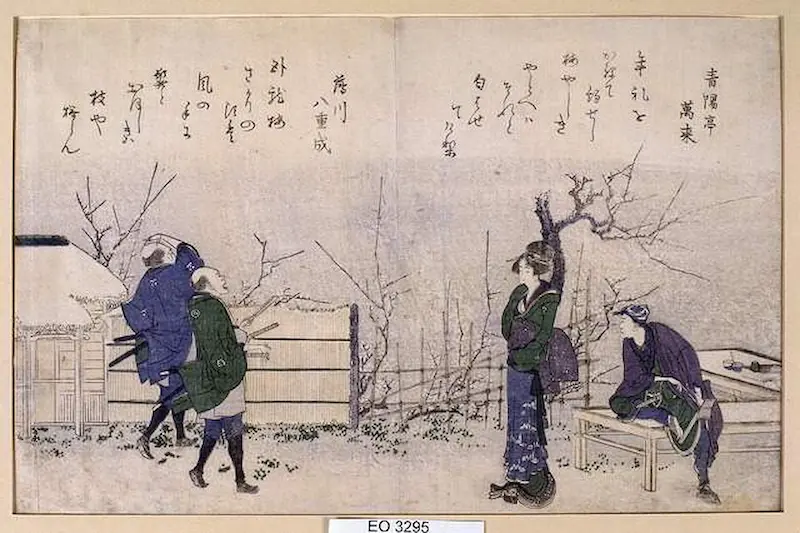
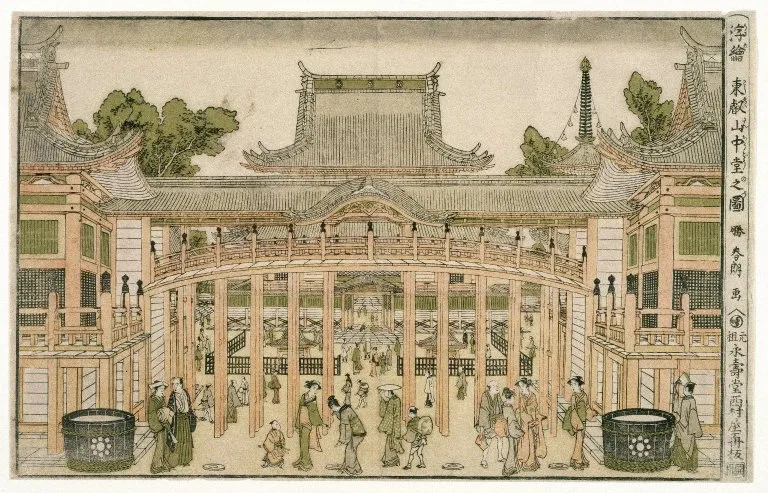
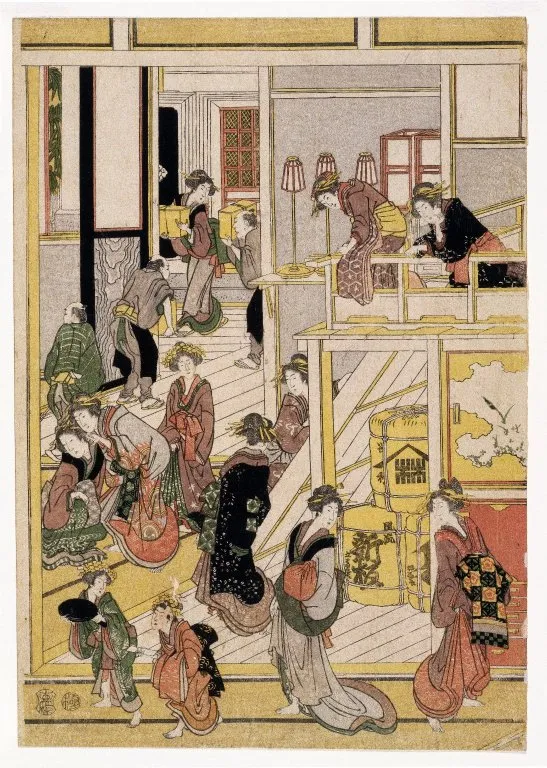
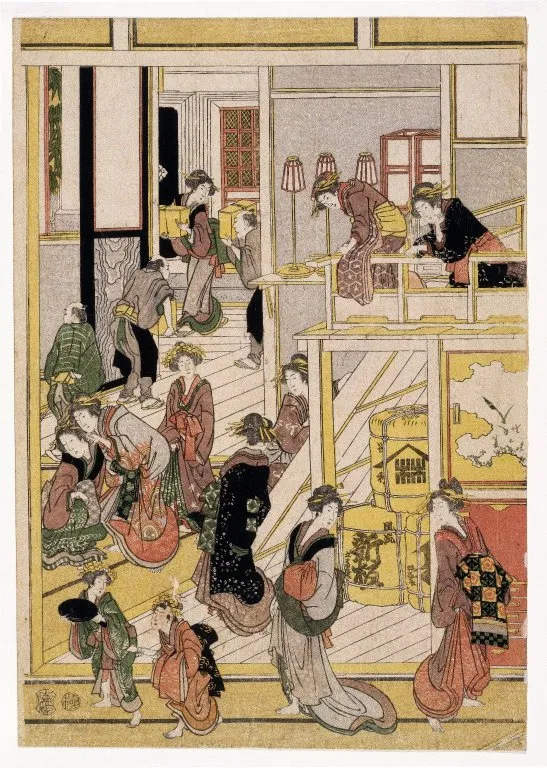
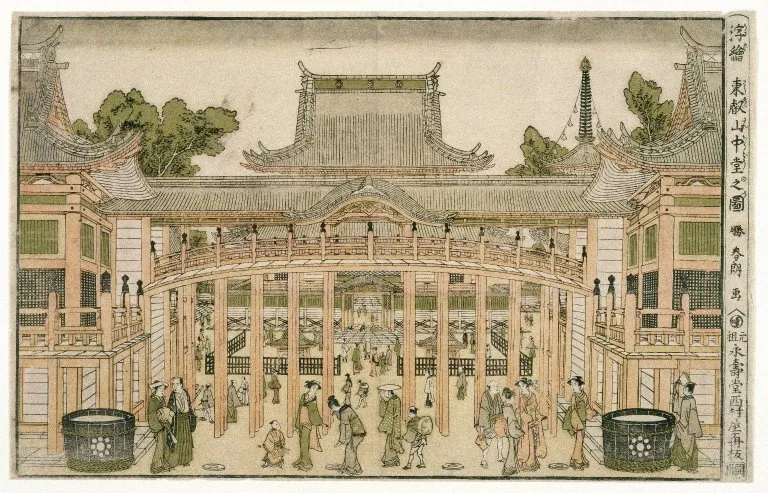
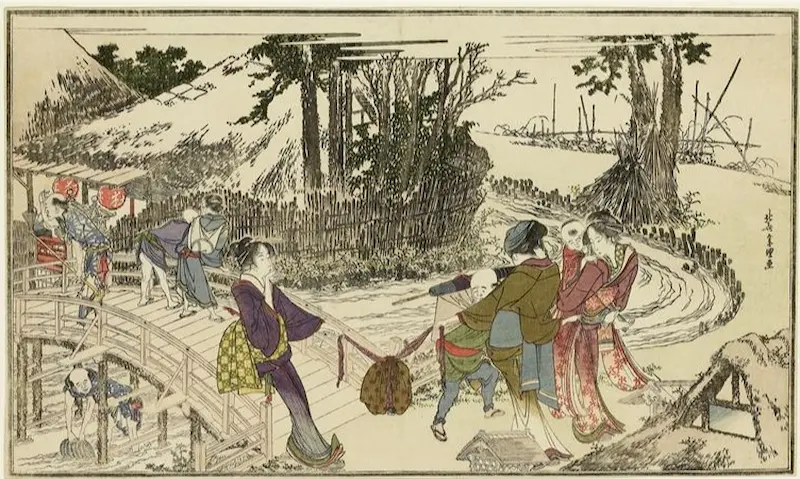
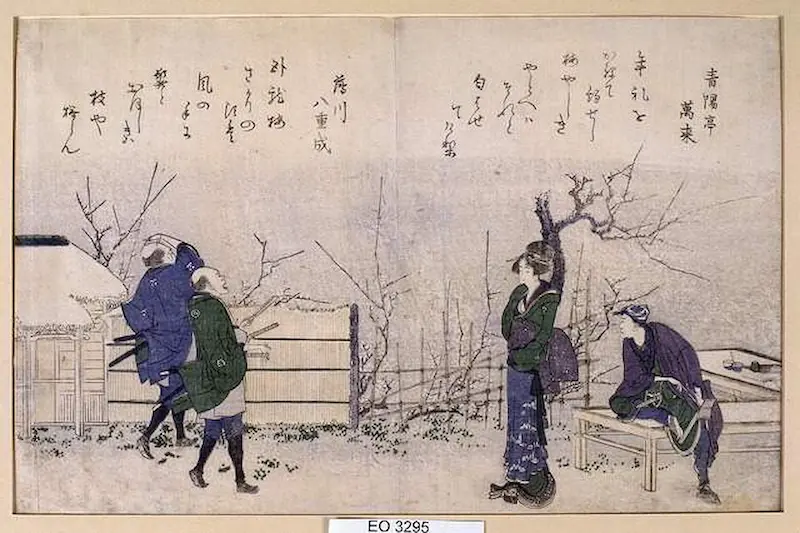
Katsushika Hokusai’s "New Year's Days of the Teahouse Ogi-ya" demonstrates his extraordinary skill with oil on canvas, blending traditional Japanese themes with exceptional technical precision. Each brushstroke reveals his dedication to the Ukiyo-e movement, much like his celebrated works "Women walking in a garden" and "Inside the Courtyard of the Toeizan Temple at Ueno." Collectors and enthusiasts admire the meticulous detail and vibrant colors that define Hokusai’s approach to oil on canvas masterpieces.
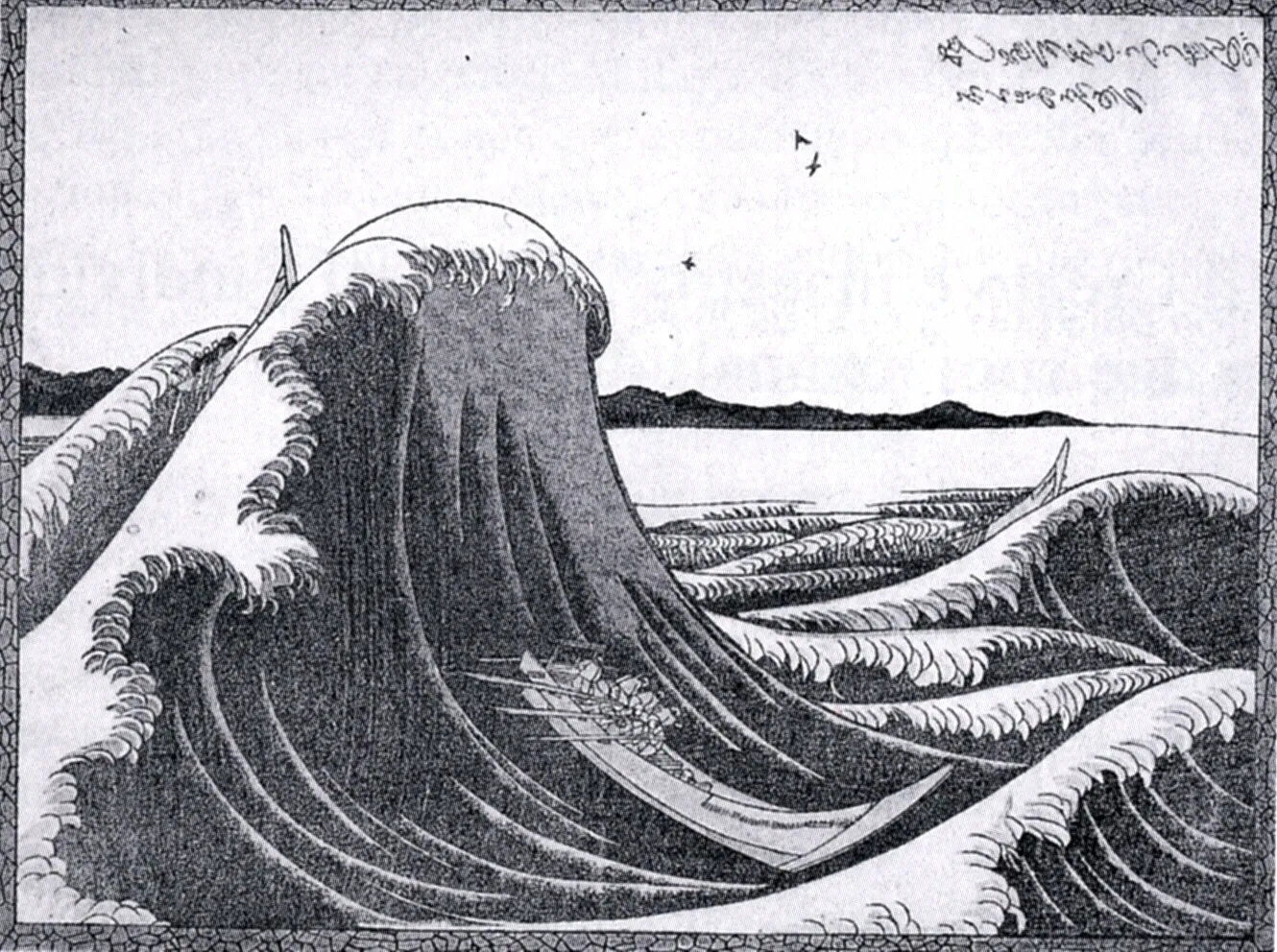
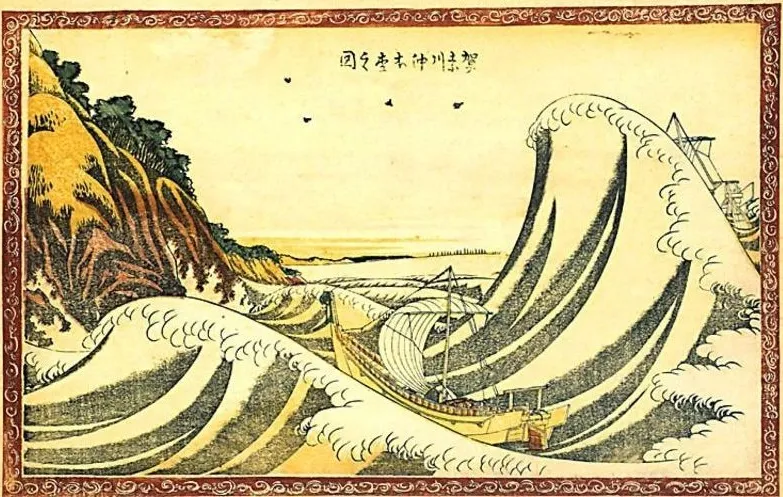
This fine art painting for sale is more than a visual delight; it is rich with stories and symbols. "New Year's Days of the Teahouse Ogi-ya" by Katsushika Hokusai captures moments of celebration, tradition, and community, hallmarks of the Ukiyo-e movement. Similar to "Cargo ship and wave" and "Onmyo Imoseyama," this painting invites viewers to explore the layers of meaning and cultural heritage embedded in every scene, making it a treasured narrative piece.
For art collectors, owning "New Year's Days of the Teahouse Ogi-ya" by Katsushika Hokusai is a rare privilege. This hand-painted oil painting stands as a testament to the artist’s enduring influence within the Ukiyo-e movement. Collectors often seek related works such as "Teahouse Umeyashiki" or "Women walking in a garden" to complement their collections, knowing that each piece is a true fine art painting for sale that enhances the value and prestige of any gallery.
When Art Meets History
"New Year's Days of the Teahouse Ogi-ya" by Katsushika Hokusai stands as a remarkable example of the Ukiyo-e movement, capturing the cultural vibrancy of Edo-period Japan. This fine art painting for sale immortalizes the festive atmosphere of the New Year, offering a glimpse into the traditions of the era. Hokusai’s masterful depiction connects viewers to the past, making his work as relevant today as it was centuries ago among collectors and art enthusiasts.
Techniques That Speak
Katsushika Hokusai’s expertise in the Ukiyo-e style is evident in this hand-painted oil painting, where delicate lines and vibrant colors bring the teahouse scene to life. His use of composition and perspective creates a dynamic yet harmonious visual narrative. The combination of traditional Japanese techniques with innovative artistic approaches sets this painting apart, making it a celebrated example of oil on canvas works from the period, admired alongside Hokusai’s other iconic creations.
Emotions on Display
In "New Year's Days of the Teahouse Ogi-ya," Hokusai masterfully conveys the joy and anticipation of the holiday through expressive faces and lively gestures. The oil on canvas medium enhances the depth and texture, drawing viewers into the lively scene. This painting, a highlight of the Ukiyo-e movement, captures the essence of communal celebration, echoing the emotional depth found in other notable pieces by the artist, and making it a cherished part of any art collection.
Coveted by Collectors
Katsushika Hokusai’s "New Year's Days of the Teahouse Ogi-ya" is highly sought after in the art world, particularly among those searching for a fine art painting for sale. As a standout work within the Ukiyo-e movement, its historical significance and artistic brilliance have cemented its desirability. Collectors prize Hokusai’s paintings for their unique perspective on Japanese culture, making this piece a valuable addition to any serious art collection.
Frequently Asked Questions About New Year's Days of the Teahouse Ogi-ya
What is the historical context of "New Year's Days of the Teahouse Ogi-ya"?
This painting by Katsushika Hokusai was created during the Edo period in Japan, a time characterized by a flourishing of arts and culture. The work reflects the social customs and festivities associated with the New Year celebrations in Japan during this era.
What artistic techniques did Hokusai employ in this painting?
Hokusai utilized ukiyo-e woodblock printing techniques, which allowed for vibrant colors and intricate details. His mastery of line work and composition is evident in the dynamic poses of the figures and the harmonious arrangement of elements within the scene.
What symbolism is present in "New Year's Days of the Teahouse Ogi-ya"?
The painting symbolizes renewal and celebration, reflecting the joy and hope associated with the New Year. The teahouse setting represents social gathering and community, emphasizing the importance of shared experiences during festive occasions.
How does Hokusai's work reflect the culture of the Edo period?
The painting captures the essence of Edo period culture, showcasing the leisure activities of the urban populace. It highlights the significance of teahouses as social hubs and the role of seasonal festivities in Japanese life.
Who are the figures depicted in the painting?
The figures in the painting represent patrons of the teahouse, likely including geisha and their clients. Their attire and expressions convey the festive spirit of the New Year, illustrating the social dynamics of the time.
What role did teahouses play in Edo period society?
Teahouses were central to Edo period society, serving as venues for entertainment, social interaction, and cultural exchange. They provided a space for patrons to enjoy performances, engage in conversation, and celebrate special occasions, such as the New Year.
In what ways does this painting reflect Hokusai's artistic evolution?
This work exemplifies Hokusai's evolution as an artist, showcasing his ability to blend traditional themes with innovative techniques. His focus on capturing the human experience and emotion marks a significant development in his artistic journey.
What is the significance of the New Year in Japanese culture?
The New Year is one of the most important celebrations in Japanese culture, symbolizing new beginnings and the hope for prosperity. It is a time for family gatherings, rituals, and festivities, all of which are encapsulated in Hokusai's depiction.
How does this painting compare to other works by Hokusai?
Compared to other works by Hokusai, "New Year's Days of the Teahouse Ogi-ya" emphasizes social interaction and festive themes, differing from his more famous landscapes and nature studies. It showcases his versatility and ability to capture various aspects of Japanese life.
What materials were used in the creation of this painting?
The painting was created using traditional ukiyo-e techniques, which involved hand-carved woodblocks, natural pigments, and washi paper. These materials contributed to the vibrant colors and fine details characteristic of Hokusai's work.























_GFM_Painting_(1).webp)


 100% Hand-Painted: Finished in 3-6 Weeks

.png)















_(1).webp)