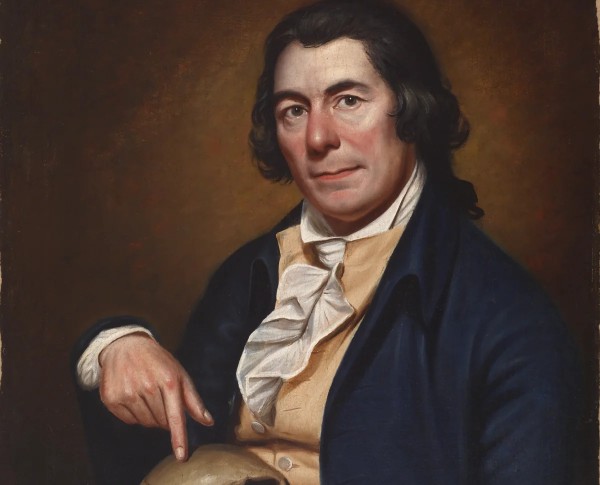
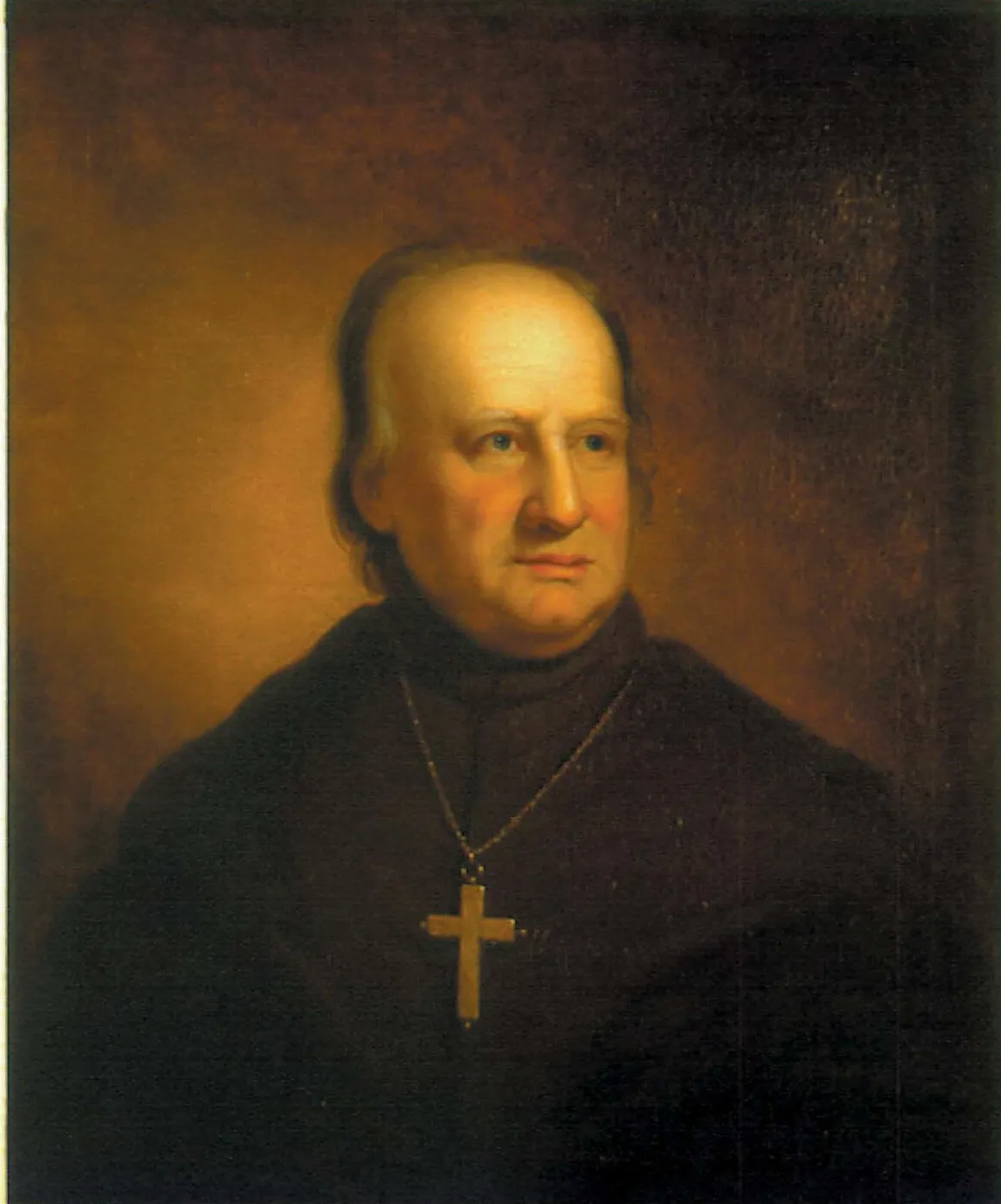
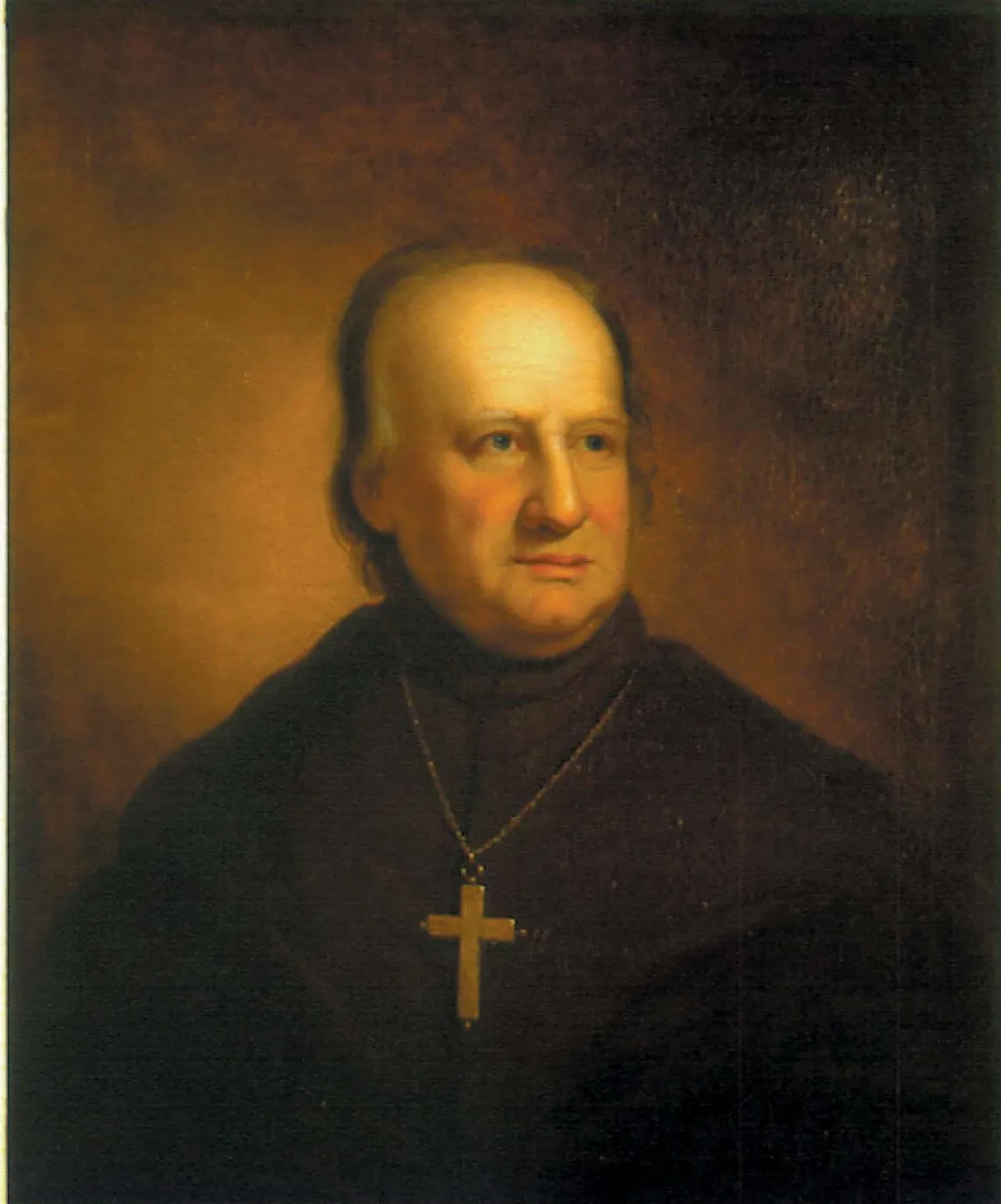
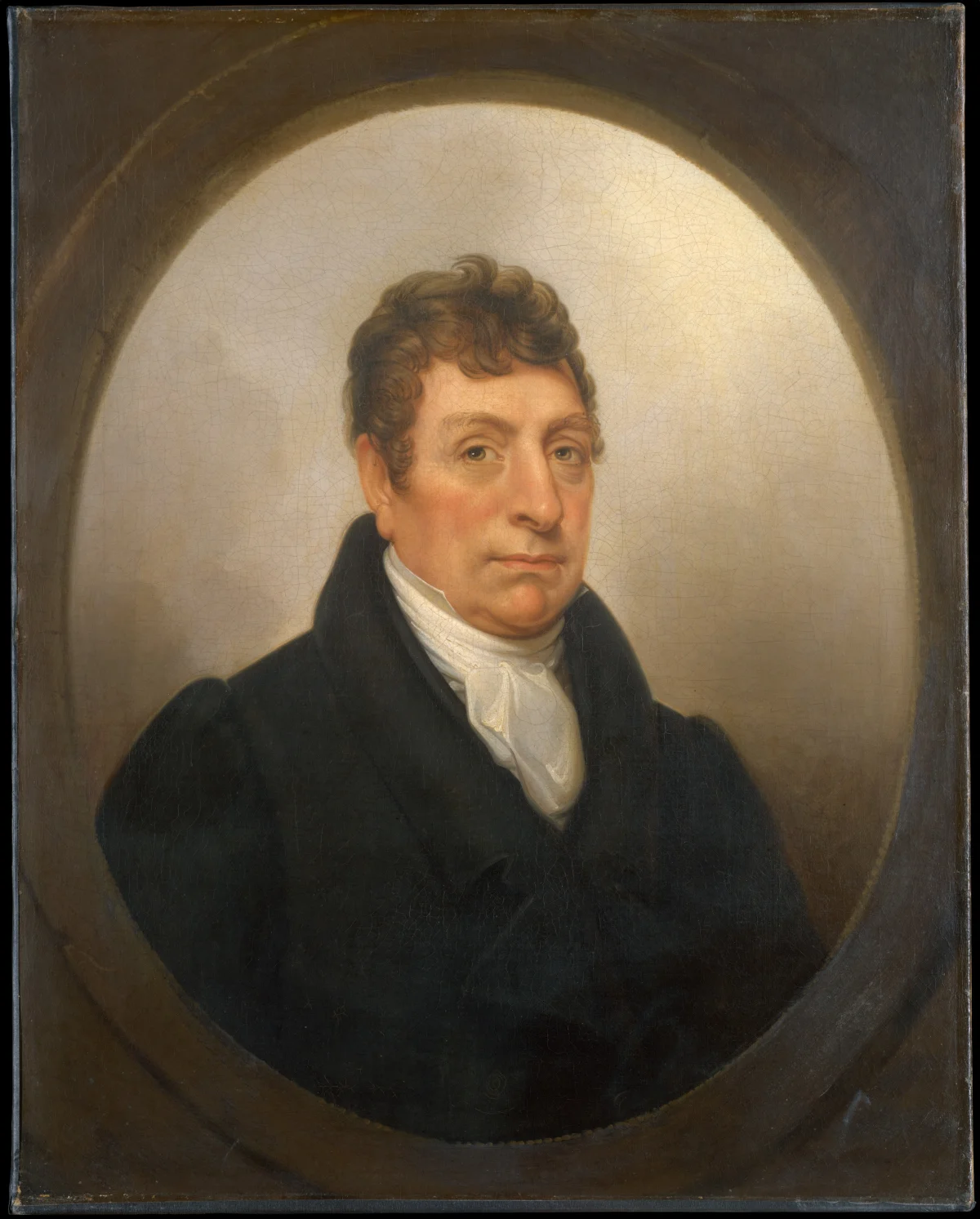
Rembrandt Peale's expertise shines in this oil on canvas masterpiece, where every brushstroke reveals his commitment to Neo-Classical aesthetics. The portrait's lifelike quality and balanced composition showcase Peale’s technical prowess, making it a prime example of early American portraiture. Art enthusiasts often compare it with related products such as "Samuel Fisher Bradford" and "Portrait En Buste De Trois-quart À La Mode Du Début Du Xixeme Siècle," all exemplifying the era’s refined artistry.
The painting is rich in symbolism, reflecting both the personal virtues and public achievements of John Carroll. As a fine art painting for sale, it embodies Peale's ability to convey narrative through visual elements—Carroll’s dignified pose and subtle background details speak volumes about his role in American religious history. Collectors interested in symbolic portraiture may also appreciate "The Roman Daughter" and "Portrait of Margaret Irvine Miller" for their narrative depth within the Neo-Classical movement.
Owning "Portrait of America's First Bishop and Archbishop, John Carroll" by Rembrandt Peale means possessing a significant piece of Neo-Classical heritage. The hand-painted oil painting is not only a visual delight but also an investment in American and art history. Discerning collectors often seek related products like "The Marquis de Lafayette" and "Portrait of Margaret Irvine Miller," making this portrait a valuable addition to any fine art collection.
When Art Meets History
Rembrandt Peale’s "Portrait of America's First Bishop and Archbishop, John Carroll" is a testament to the power of art in capturing pivotal moments in history. This hand-painted oil painting not only immortalizes John Carroll but also reflects the ideals of the Neo-Classical movement. Peale, renowned for works like "The Declaration of Independence" and "Surrender of Lord Cornwallis," skillfully connects viewers to America’s formative years through his meticulous artistry and historical insight.
Techniques That Speak
Peale’s mastery is evident in his use of oil on canvas, a medium that allows for exceptional depth and realism. The artist’s brushwork and attention to detail exemplify the Neo-Classical movement’s dedication to clarity and form. Similar to his "View of the Isle of Sora" and "View of the Waterfalls at Tivoli," Peale’s technique in this portrait demonstrates how classical methods can be used to convey both the dignity and humanity of his subject.
Emotions on Display
Through this fine art painting for sale, Rembrandt Peale captures the solemnity and resolve of John Carroll, America’s pioneering bishop. The Neo-Classical style, known for its emphasis on restrained emotion, is evident in the calm yet authoritative expression Peale imparts. As in "Beaumes De Venise," the artist’s ability to evoke a profound sense of character and purpose makes this painting resonate deeply with viewers, inviting reflection on leadership and faith.
Coveted by Collectors
Collectors highly prize Peale’s "Portrait of America's First Bishop and Archbishop, John Carroll" for its historical value and exquisite execution as a hand-painted oil painting. The work’s connection to the Neo-Classical movement and its relation to masterpieces like "Surrender of Lord Cornwallis" only enhance its desirability. As with all of Peale’s creations, this portrait stands as a remarkable example of American heritage and is a sought-after addition to any fine art collection.
Related Neo-Classical Hand-Painted Oil Paintings by Other Artists
Other Famous Neo-Classical Artists:
Frequently Asked Questions About Portrait of America's First Bishop and Archbishop, John Carroll
Who was John Carroll and why is he significant in American history?
John Carroll was the first Bishop and Archbishop of the Catholic Church in the United States. He played a pivotal role in establishing the Catholic Church in America and was instrumental in the founding of Georgetown University, making him a significant figure in both religious and educational history.
What artistic style is Rembrandt Peale known for?
Rembrandt Peale is known for his neoclassical style, which emphasizes clarity, symmetry, and the idealization of subjects. His portraits often reflect a blend of realism and idealism, capturing both the likeness and the character of his subjects.
What are the notable features of the painting?
The painting features John Carroll in ecclesiastical attire, symbolizing his authority and role within the Church. The use of light and shadow highlights his facial features, conveying a sense of wisdom and dignity, while the background is subdued to focus attention on the subject.
How does the painting reflect the values of the time period in which it was created?
Created during the early 19th century, the painting reflects the values of the Enlightenment, emphasizing reason, individualism, and the importance of leadership in society. Carroll's portrayal as a dignified and thoughtful leader aligns with the emerging American identity and the significance of religious freedom.
What is the significance of the color palette used in the painting?
The color palette is characterized by rich, deep tones that convey a sense of gravitas and authority. The use of dark colors in the background contrasts with the lighter tones of Carroll's face, emphasizing his prominence and the solemnity of his role as a religious leader.
What symbolism can be found in the depiction of John Carroll?
John Carroll is depicted with symbols of his ecclesiastical authority, such as his bishop's attire and the presence of religious iconography. These elements signify his role as a spiritual leader and the importance of faith in the formation of American society.
How does this painting compare to other portraits of religious figures from the same era?
This painting stands out due to its personal and intimate portrayal of Carroll, contrasting with more formal depictions of religious figures. Peale's approach captures the essence of Carroll's character and his connection to the American populace, rather than simply presenting him as a distant authority.
What techniques did Rembrandt Peale employ in this portrait?
Peale utilized techniques such as chiaroscuro to create depth and dimension, enhancing the three-dimensional quality of Carroll's face. His meticulous attention to detail in the textures of the clothing and the subtle play of light further contribute to the lifelike representation of the subject.
What impact did this painting have on the perception of Catholicism in America?
This painting helped to elevate the perception of Catholicism in America by portraying its leaders in a dignified and respectable manner. It contributed to the growing acceptance of Catholicism in a predominantly Protestant society during a time of significant social and religious change.
Where can I view the painting today?
The painting is part of the collection at the art gallery, where it is displayed to highlight its historical and artistic significance. Visitors are encouraged to view it in person to appreciate the details and context of this important work.























_GFM_Painting_(1).webp)


 100% Hand-Painted: Finished in 3-6 Weeks

.png)
















_(1).webp)