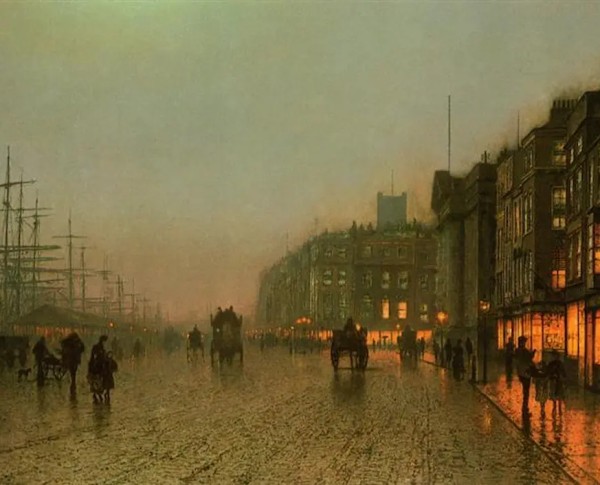
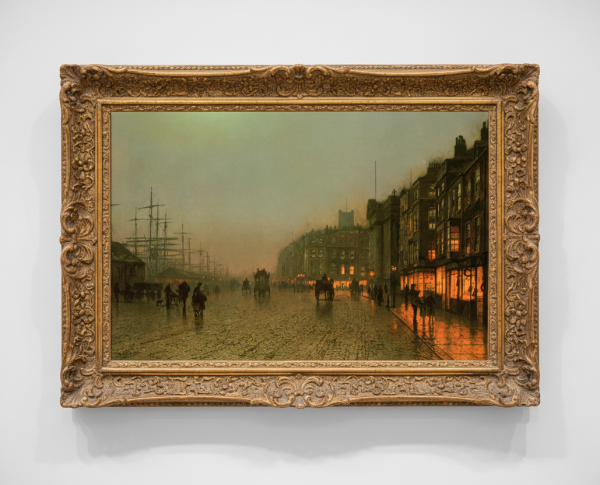
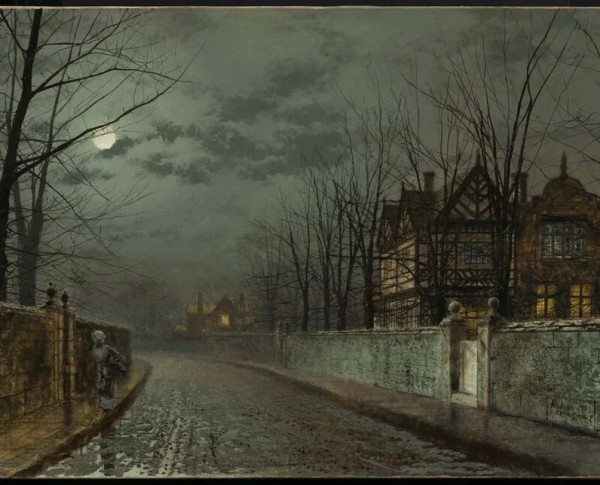
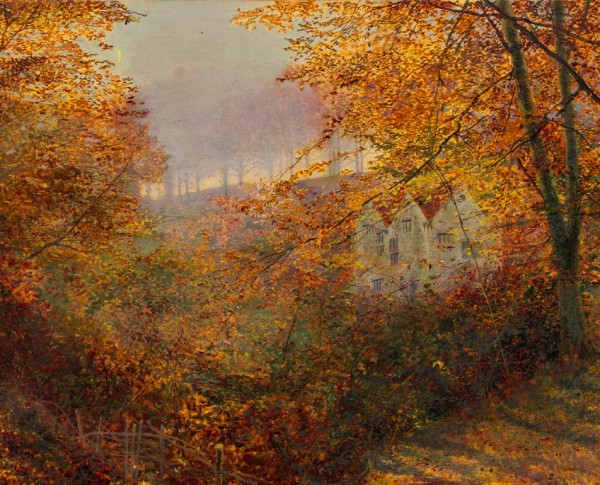
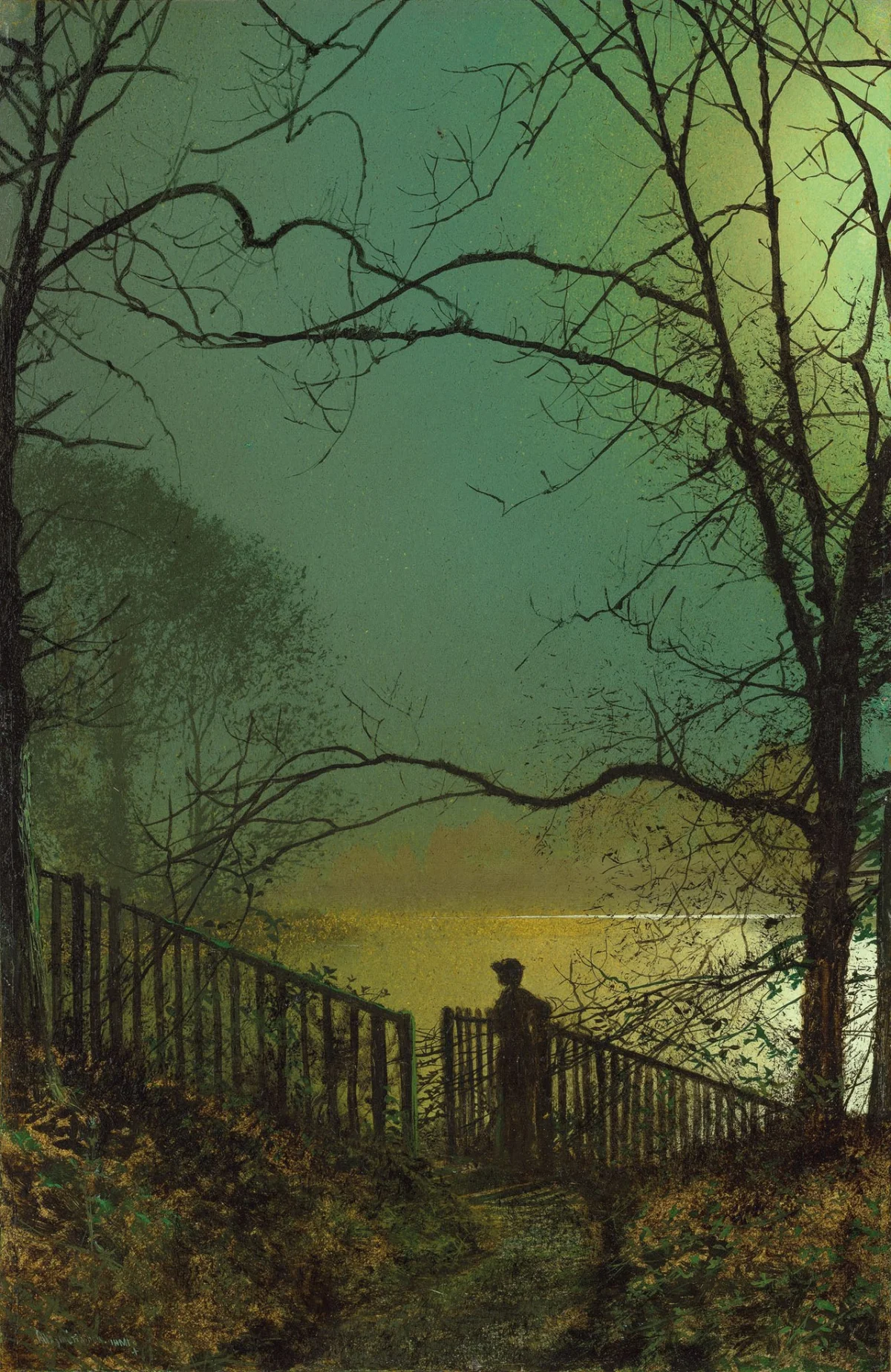
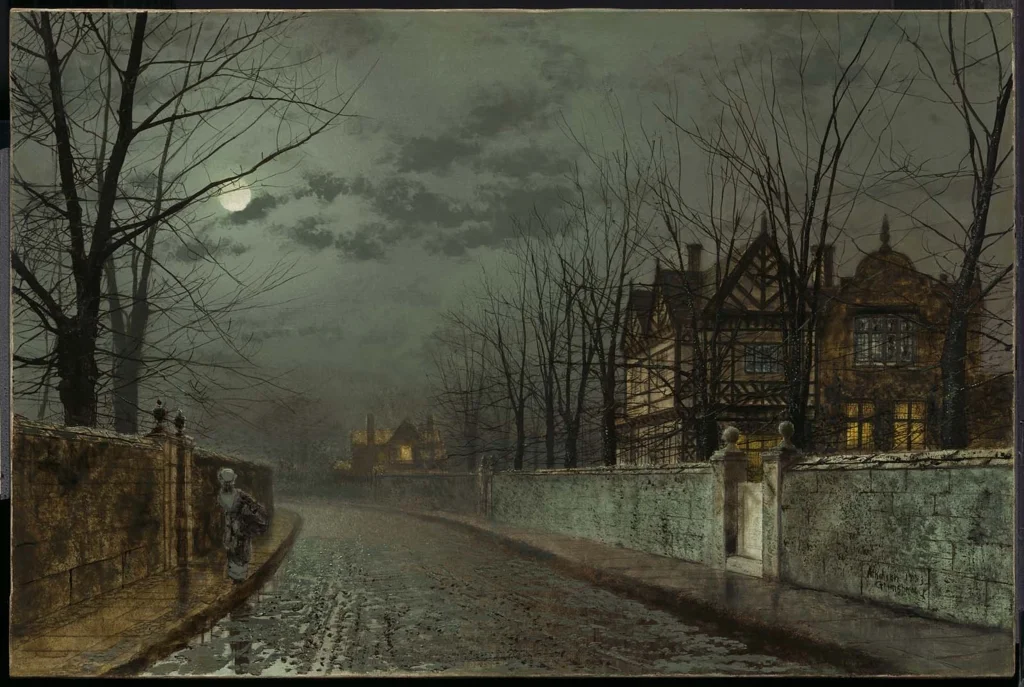
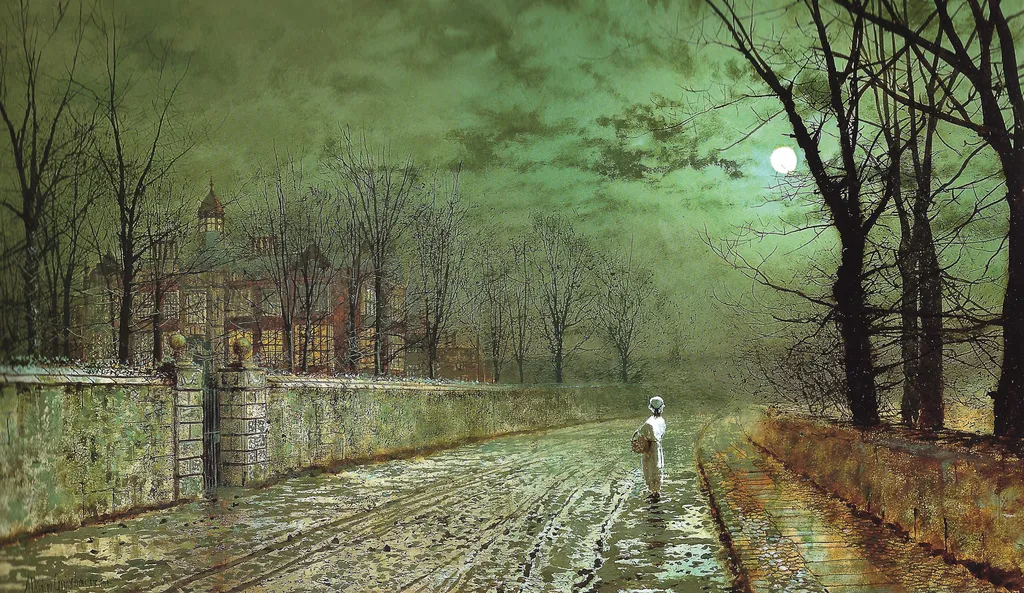
John Atkinson Grimshaw's mastery is evident in every detail of "Roundhay Park Lake." The oil on canvas technique allows for subtle gradations of light and shadow, creating a mesmerizing scene that exemplifies the aesthetics of the Aestheticism movement. The painting’s delicate brushwork and harmonious composition are reminiscent of Grimshaw's other works, such as "Under the Silvery Moonbeams" and "Old English House by Moonlight," showcasing his command over mood and atmosphere.
"Roundhay Park Lake" tells a quiet story set within the lush landscape, inviting viewers to ponder the serene world Grimshaw has created. Through his oil on canvas technique, the artist weaves symbols of peace and reflection, a hallmark of the Aestheticism movement. Much like his paintings "Bowder Stone, Borrowdale" and "'The Ironbound Shore'," Grimshaw’s narrative approach encourages art enthusiasts to delve deeper into the emotional resonance behind each fine art painting for sale.
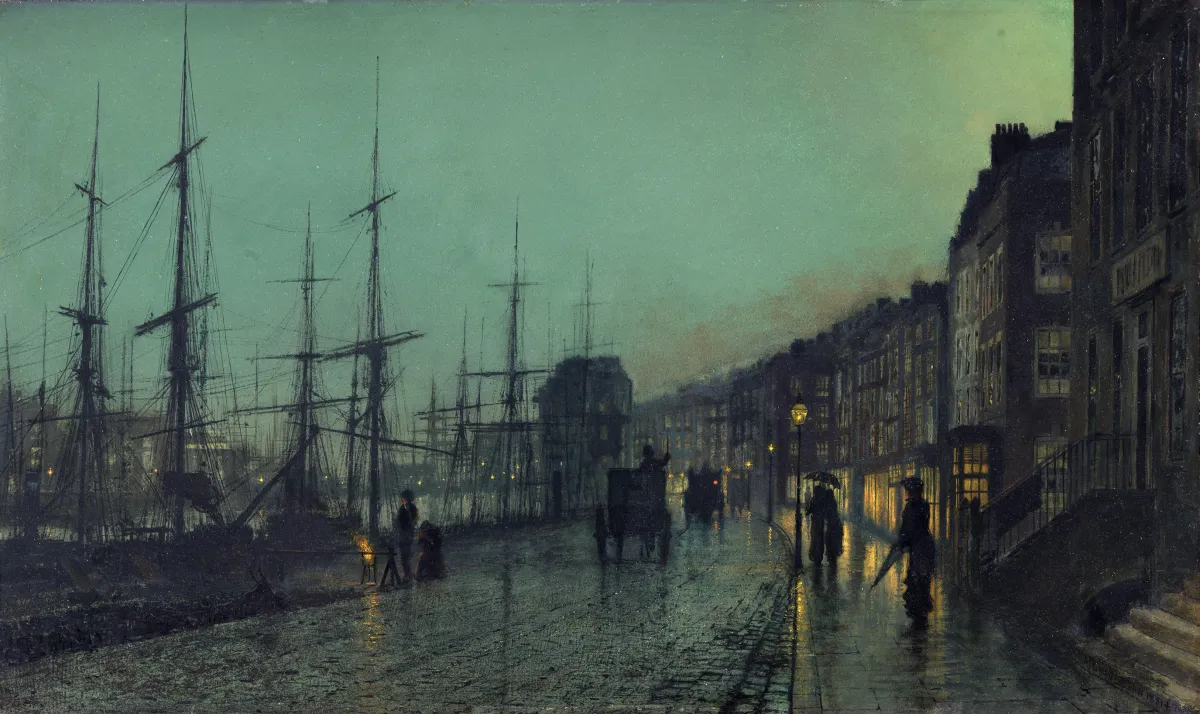
Owning "Roundhay Park Lake" is a privilege for any discerning collector seeking a fine art painting for sale that embodies the spirit of Aestheticism. John Atkinson Grimshaw’s evocative style and attention to detail make this hand-painted oil painting a prized addition to any collection. Collectors often seek out related works like "Whitby Harbor" and "The Lady of Shalott" to complement their appreciation for Grimshaw's enduring legacy and the movement he so beautifully represented.
When Art Meets History
"Roundhay Park Lake" by John Atkinson Grimshaw stands as a testament to the Aestheticism movement, capturing the tranquil beauty of Victorian England. This hand-painted oil painting transports viewers to the serene landscapes of Leeds, where Grimshaw found inspiration. Much like his related works—such as "Architectural study: a column" and "Fair Is My Love"—this piece reflects the artist’s commitment to both historical accuracy and visual poetry, melding art with the rich tapestry of history.
Techniques That Speak
John Atkinson Grimshaw’s mastery is evident in his use of oil on canvas, a medium that allows for breathtaking detail and luminous effects. In "Roundhay Park Lake," subtle layering and delicate brushwork evoke the soft glow of twilight. These techniques, also seen in his "Figure study: an Angel," highlight Grimshaw’s ability to infuse ordinary scenes with ethereal beauty, a hallmark of the Aestheticism movement and a signature of his celebrated artistry.
Emotions on Display
"Roundhay Park Lake" stirs a sense of calm and introspection, inviting viewers to lose themselves in the gentle interplay of light and shadow. Grimshaw’s fine art painting for sale resonates with the emotional subtlety characteristic of Aestheticism, where mood takes precedence over narrative. Similar feelings can be found in his "La reine dans Hamlet," where the artist’s palette and composition evoke deep emotional responses, making each viewing a personal and reflective experience.
Coveted by Collectors
Collectors highly prize Grimshaw’s "Roundhay Park Lake" for its blend of technical brilliance and evocative atmosphere. As a standout piece in the Aestheticism movement, it complements collections that feature works like "Architectural study" and "Figure study: an Angel." The enduring appeal of this hand-painted oil painting makes it a sought-after treasure, admired by those with a passion for 19th-century British art and the timeless allure of oil on canvas.
Related Aestheticism Hand-Painted Oil Paintings by Other Artists
Other Famous Aestheticism Artists:
Frequently Asked Questions About Roundhay Park Lake
What is the historical significance of "Roundhay Park Lake"?
"Roundhay Park Lake," painted by John Atkinson Grimshaw in the late 19th century, captures the serene beauty of one of Leeds' most famous parks, reflecting the Victorian era's appreciation for nature and leisure.
What artistic techniques did Grimshaw use in "Roundhay Park Lake"?
Grimshaw employed a unique combination of realism and atmospheric effects, utilizing chiaroscuro to create depth and a sense of tranquility, while his meticulous attention to detail highlights the natural beauty of the park.
What themes are explored in "Roundhay Park Lake"?
The painting explores themes of nature, tranquility, and the passage of time, inviting viewers to reflect on the peaceful coexistence of humanity and the natural world.
How does "Roundhay Park Lake" reflect the artistic style of the late 19th century?
This artwork embodies the Aesthetic Movement, which emphasized beauty and sensory experiences, showcasing Grimshaw's ability to capture the ephemeral qualities of light and atmosphere typical of the period.
What symbolism can be found in "Roundhay Park Lake"?
The lake itself symbolizes tranquility and reflection, while the surrounding trees and sky represent the harmony between nature and human emotion, evoking a sense of peace and contemplation.
In what ways did Grimshaw's background influence "Roundhay Park Lake"?
Grimshaw's upbringing in Leeds and his exposure to the industrial revolution influenced his work, as he often juxtaposed natural landscapes with urban elements, highlighting the contrast between nature and industrialization.
What role does light play in "Roundhay Park Lake"?
Light is a central element in "Roundhay Park Lake," as Grimshaw masterfully captures the changing qualities of natural light, creating an enchanting atmosphere that enhances the painting's emotional depth.
How does "Roundhay Park Lake" compare to Grimshaw's other works?
While many of Grimshaw's works feature urban scenes, "Roundhay Park Lake" stands out for its focus on natural beauty, showcasing his versatility as an artist and his ability to evoke emotion through landscape painting.
What impact did "Roundhay Park Lake" have on contemporary art?
The painting contributed to the growing appreciation for landscape art in the Victorian era, influencing future generations of artists to explore the relationship between nature and human experience in their works.
Where can "Roundhay Park Lake" be viewed today?
"Roundhay Park Lake" is part of a private collection and may not be on public display; however, it is frequently featured in exhibitions focusing on Grimshaw's oeuvre and the Victorian landscape tradition.























_GFM_Painting_(1).webp)


 100% Hand-Painted: Finished in 3-6 Weeks

.png)















_(1).webp)