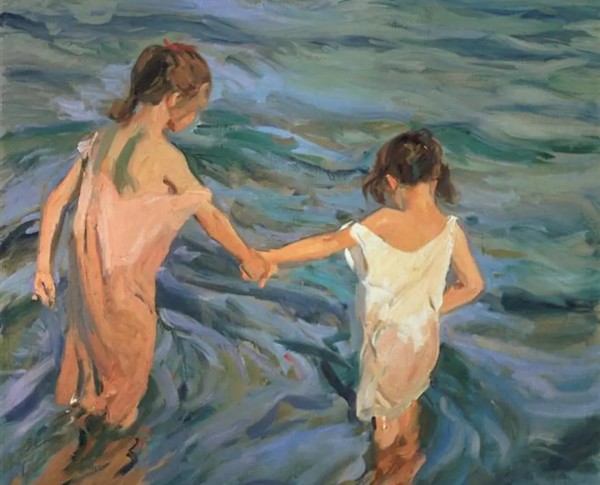
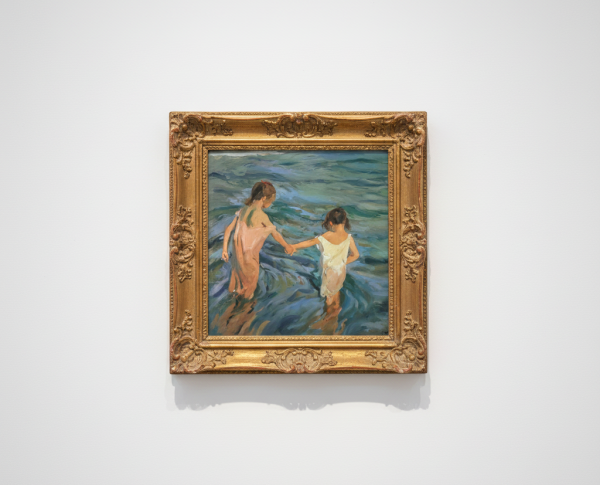
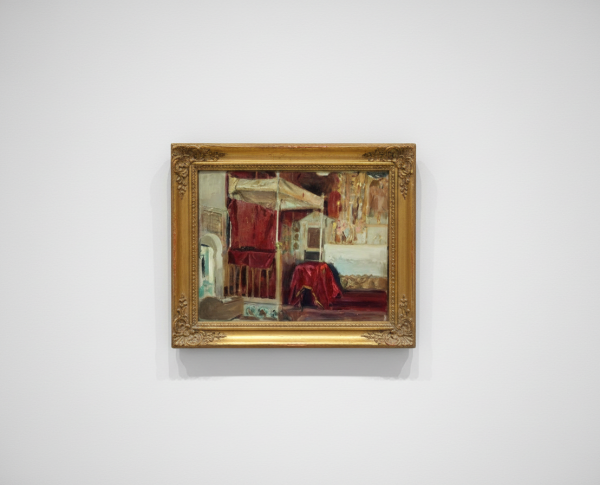
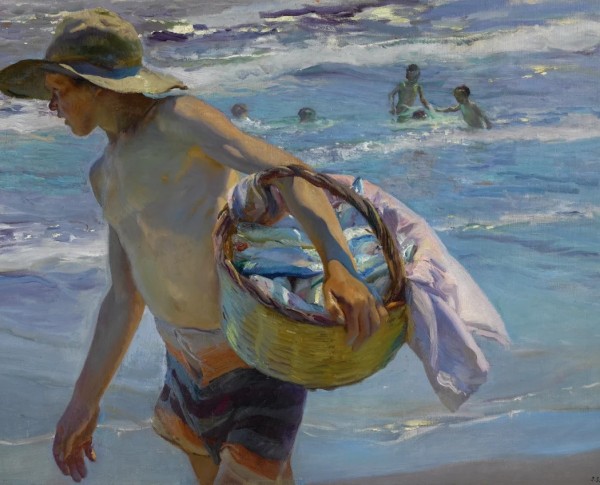
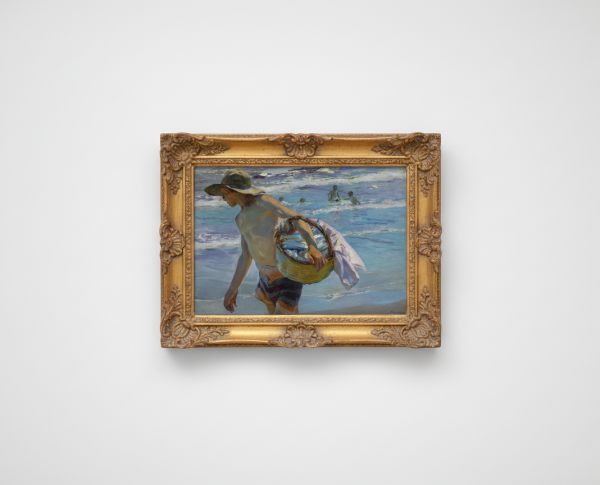
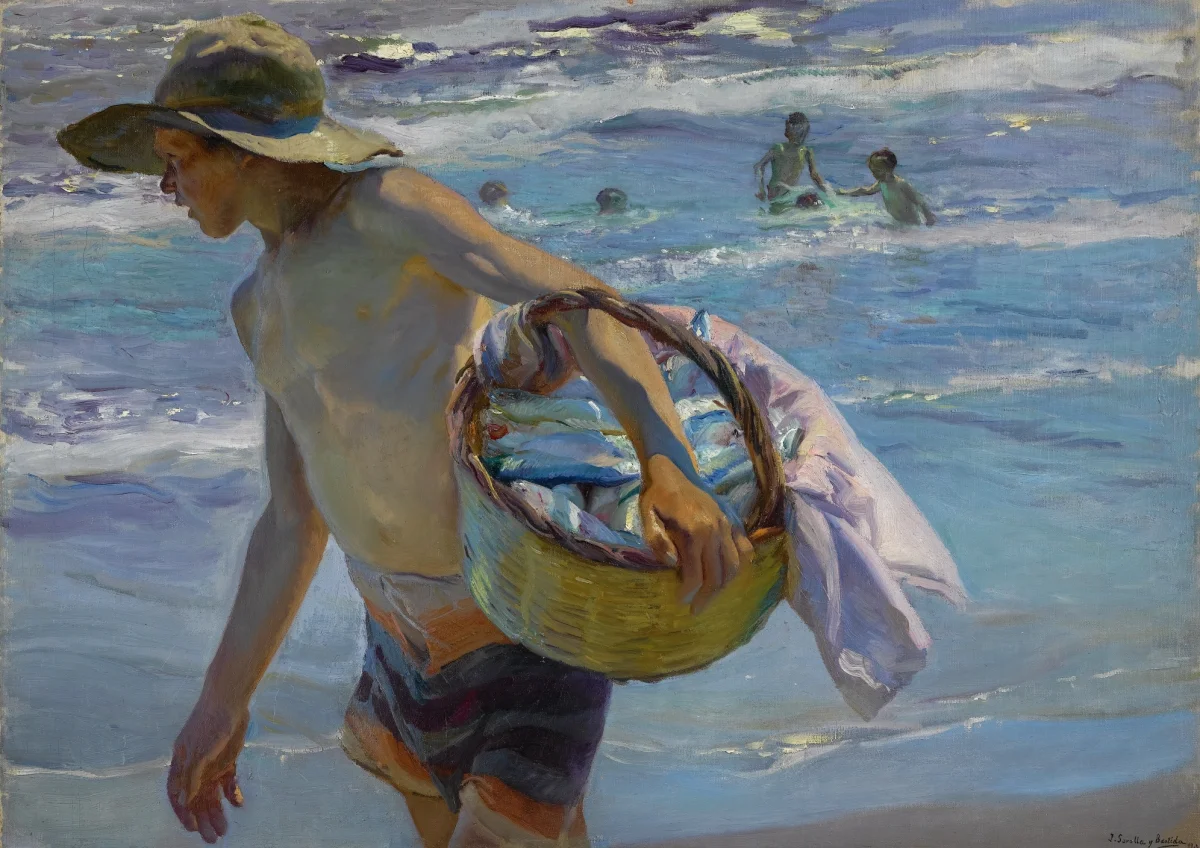
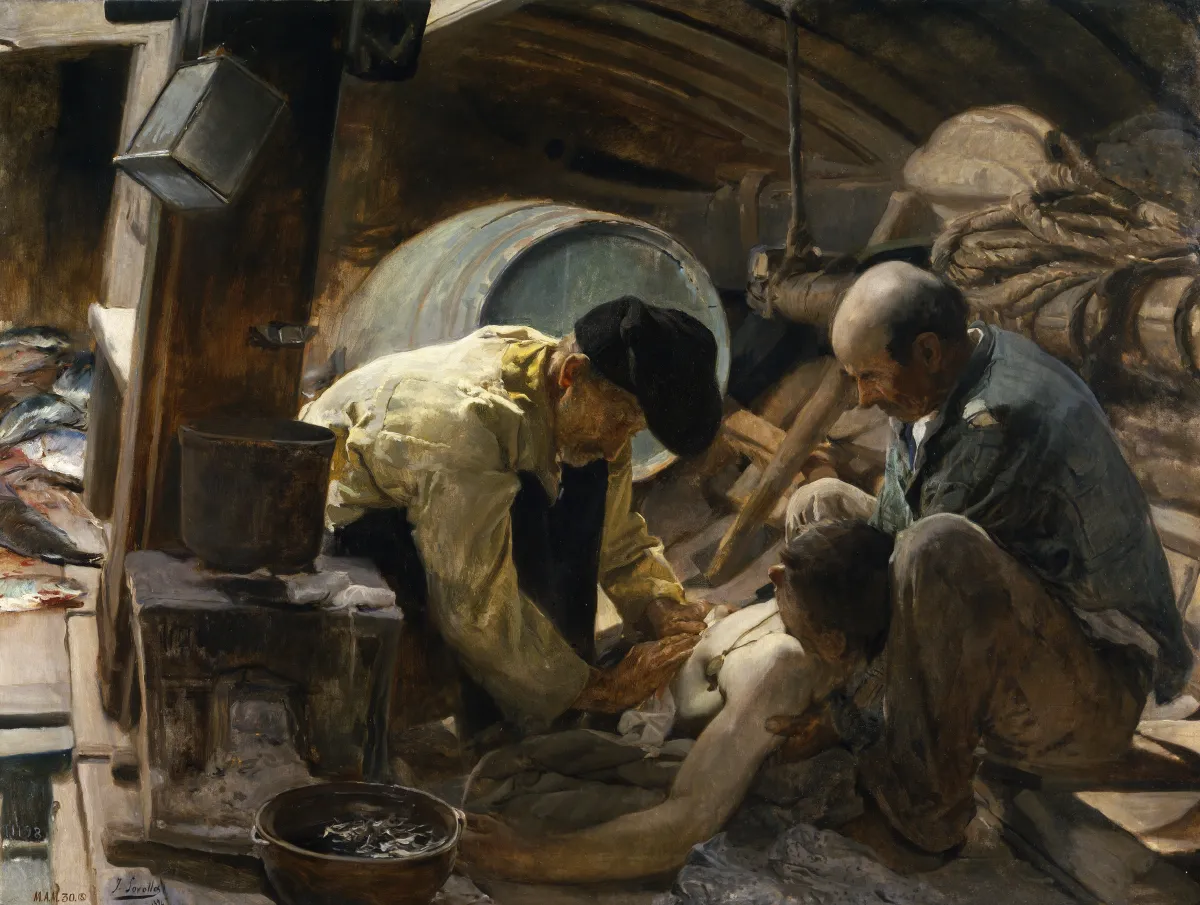
Sorolla’s technique in "The Fisherman" showcases his expertise with oil on canvas, bringing to life the dynamic interplay of sunlight and water. The painting’s fluid strokes and luminous palette embody the Impressionist ethos, making it a prime example of the movement. Collectors and enthusiasts often seek similar works, including "Chapel on the Láchar estate" and "Children in the Sea, 1909," to experience the artist’s remarkable ability to evoke emotion through texture and color.
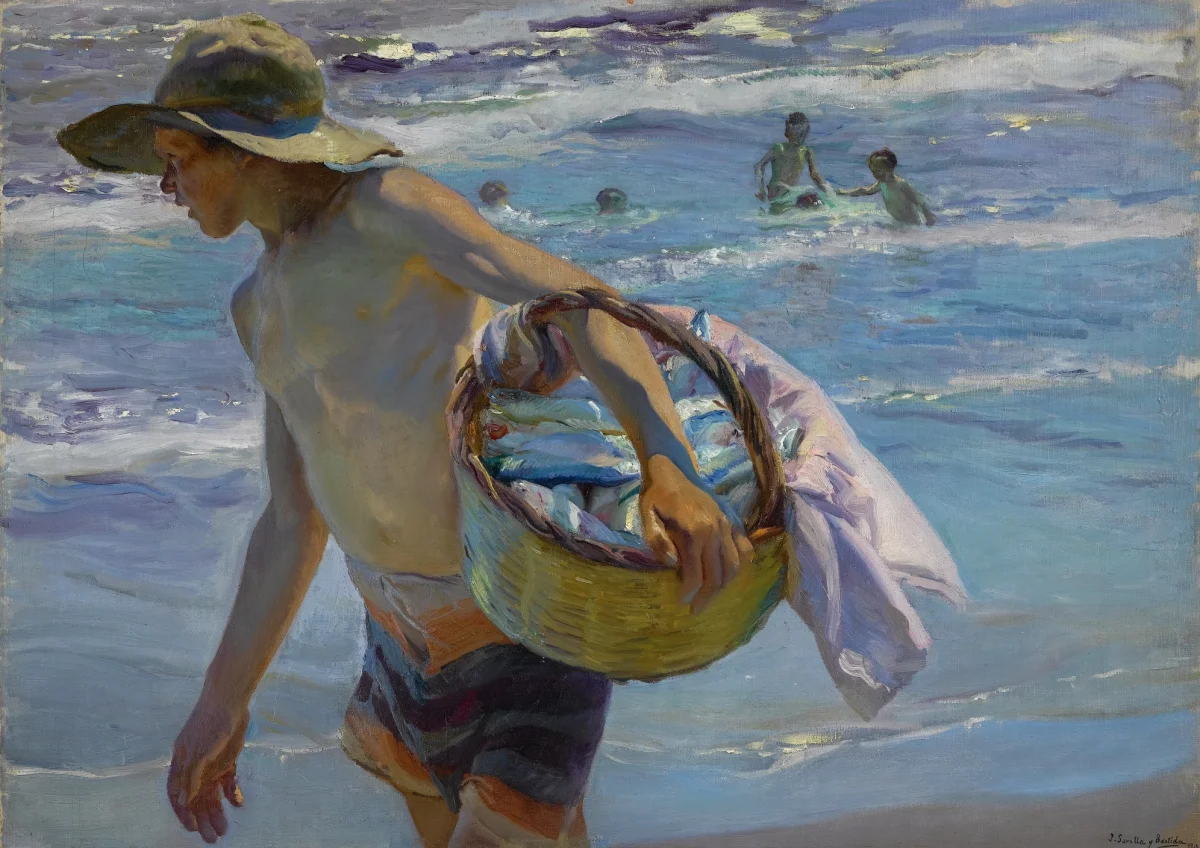
Every element in "The Fisherman" by Joaquín Sorolla y Bastida tells a story, from the fisherman’s poised stance to the shimmering sea. This fine art painting for sale resonates with symbolism, representing resilience and the harmony between man and nature. The Impressionism movement’s focus on everyday moments is evident here, connecting this masterpiece to related products like "Chapel on the Láchar estate" and "Children in the Sea, 1909."
For art collectors, "The Fisherman" is more than just a beautiful image—it’s a hand-painted oil painting that enhances any collection. Owning such a piece by Joaquín Sorolla y Bastida, a master of Impressionism, is a true privilege. Consider pairing it with related works like "Chapel on the Láchar estate" or "Children in the Sea, 1909" to create a stunning display of early 20th-century fine art painting for sale in your home or gallery.
When Art Meets History
"The Fisherman" by Joaquín Sorolla y Bastida stands as a remarkable example of the Impressionism movement, capturing the vibrant life of coastal Spain in the late 19th century. This hand-painted oil painting reflects the artist’s dedication to portraying everyday scenes with authenticity and light. Similar to masterpieces like "Irises In Monets Garden" and "Paris Street - Rainy Weather 1877," Sorolla’s work connects viewers to a pivotal era in art history.
Techniques That Speak
Joaquín Sorolla y Bastida’s mastery of oil on canvas is evident in "The Fisherman," where loose brushwork and a radiant palette evoke the shimmering Mediterranean atmosphere. This technique, shared by Impressionist peers in works like "Woman in the Garden" and "Terrace at the Seaside," brings movement and spontaneity to the scene. The artist’s unique application of color and light transforms an ordinary moment into an extraordinary visual experience.
Emotions on Display
"The Fisherman" is more than just a fine art painting for sale; it’s an emotional narrative rendered in color and texture. Sorolla’s brush captures the resilience and serenity of the fisherman, echoing the emotional depth found in "Sainte-Adresse" and "Haystacks." Through Impressionist techniques, the canvas radiates feelings of hope, labor, and harmony with nature, inviting viewers to connect with the everyday beauty of coastal life.
Coveted by Collectors
Today, "The Fisherman" by Joaquín Sorolla y Bastida is highly sought after by collectors who appreciate Impressionism and the allure of oil on canvas masterpieces. As with related paintings like "Terrace at the Seaside," owning such a work is a testament to refined taste and a love for art history. This hand-painted oil painting continues to inspire admiration, making it a prized addition to any fine art collection.
Related Impressionism Hand-Painted Oil Paintings by Other Artists
Other Famous Impressionism Artists:
Frequently Asked Questions About The Fisherman
What is the historical context of "The Fisherman"?
"The Fisherman" was painted by Joaquín Sorolla y Bastida in the early 20th century, a period characterized by the rise of Impressionism and a focus on capturing light and movement. Sorolla, a Spanish painter, was deeply influenced by the natural beauty of his homeland, which is reflected in this work.
What artistic techniques did Sorolla use in "The Fisherman"?
Sorolla employed loose brushwork and a vibrant color palette to convey the dynamic quality of light and water. His technique emphasizes the play of sunlight on the surface of the sea, creating a sense of immediacy and realism.
What themes are explored in "The Fisherman"?
The painting explores themes of labor, nature, and the relationship between humanity and the sea. It captures the essence of the fisherman's daily life, highlighting both the beauty and the challenges of working in harmony with nature.
How does "The Fisherman" reflect Sorolla's style?
The painting exemplifies Sorolla's signature style, which blends realism with Impressionistic elements. His focus on light, movement, and the human figure in natural settings is a hallmark of his work, making "The Fisherman" a quintessential example of his artistic vision.
What is the significance of the fisherman as a subject?
The fisherman symbolizes resilience and the connection between man and the sea. This subject matter reflects Sorolla's admiration for the working class and their intimate relationship with the natural world, showcasing the dignity of labor.
What influences can be seen in "The Fisherman"?
Sorolla was influenced by both Spanish traditions and the broader European art movements of his time. The use of light and color in "The Fisherman" demonstrates the impact of Impressionism, while the subject matter remains deeply rooted in Spanish culture.
How does the composition of "The Fisherman" contribute to its impact?
The composition features a dynamic arrangement of the fisherman against the backdrop of the sea, drawing the viewer's eye toward the action of fishing. This sense of movement enhances the painting's emotional resonance and invites viewers to engage with the scene.
What role does color play in "The Fisherman"?
Color plays a crucial role in "The Fisherman," with Sorolla using a bright and varied palette to evoke the warmth of the sun and the coolness of the sea. The interplay of colors not only captures the atmosphere but also reflects the emotional state of the subject.
In what ways does "The Fisherman" reflect the cultural identity of Spain?
The painting reflects the cultural identity of Spain through its depiction of traditional fishing practices and the natural landscape. Sorolla's work often celebrates Spanish heritage, showcasing the beauty of its coastal life and the spirit of its people.
What legacy has "The Fisherman" left in the art world?
"The Fisherman" is considered a significant work in Sorolla's oeuvre and has contributed to his reputation as one of Spain's foremost painters. Its blend of realism and Impressionism continues to inspire artists and art enthusiasts, highlighting the enduring appeal of Sorolla's vision.






















_GFM_Painting_(1).webp)


 100% Hand-Painted: Finished in 3-6 Weeks

.png)
















_(1).webp)