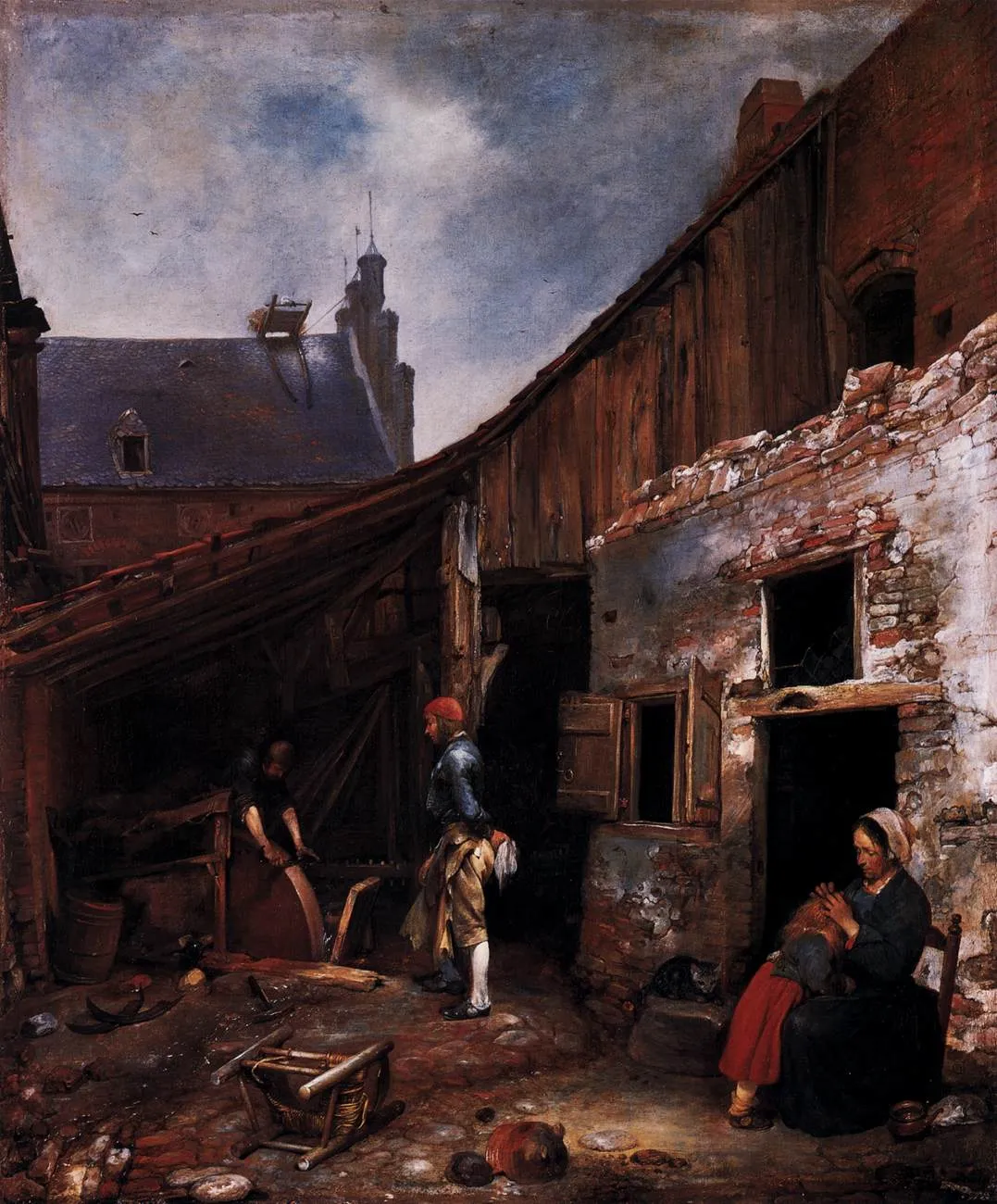
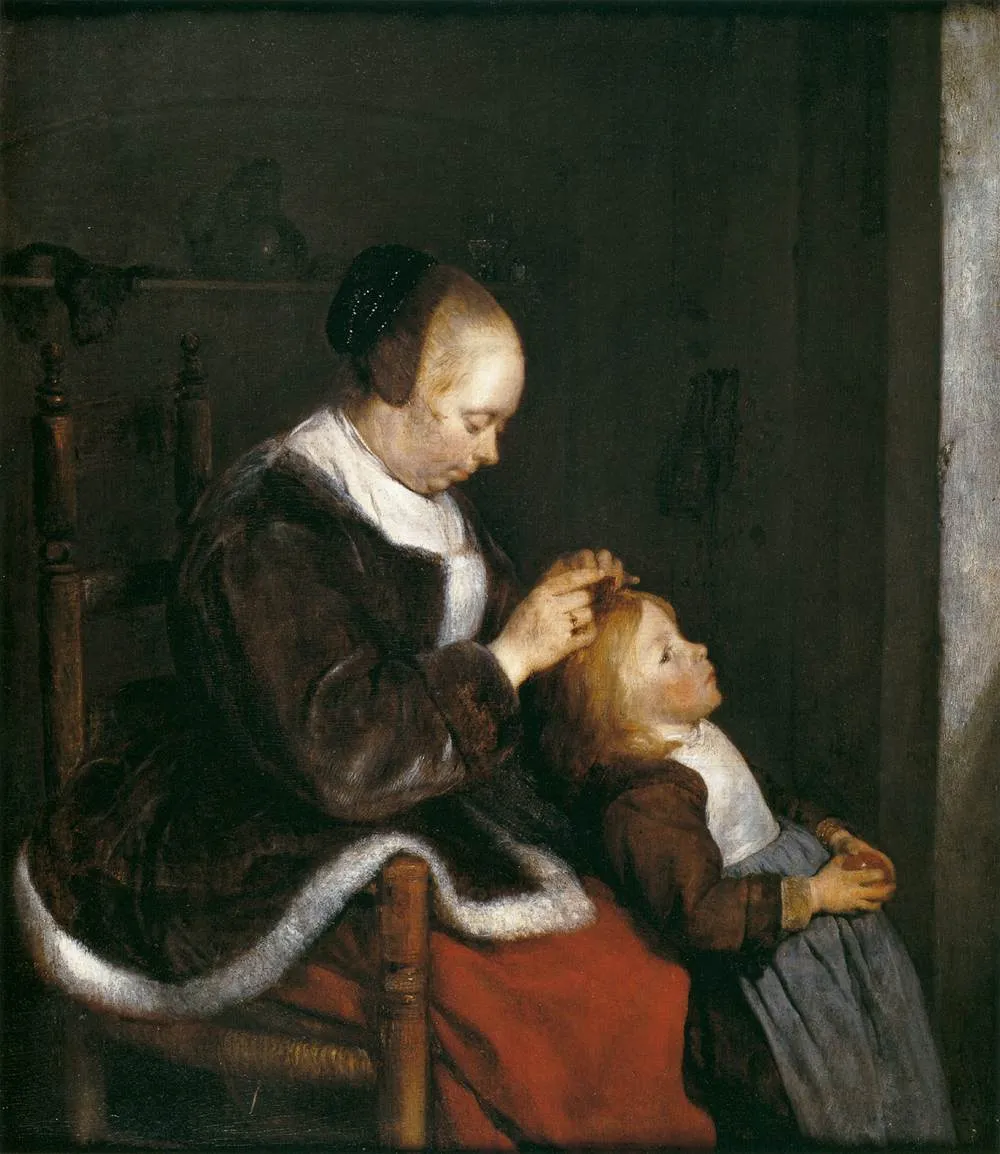
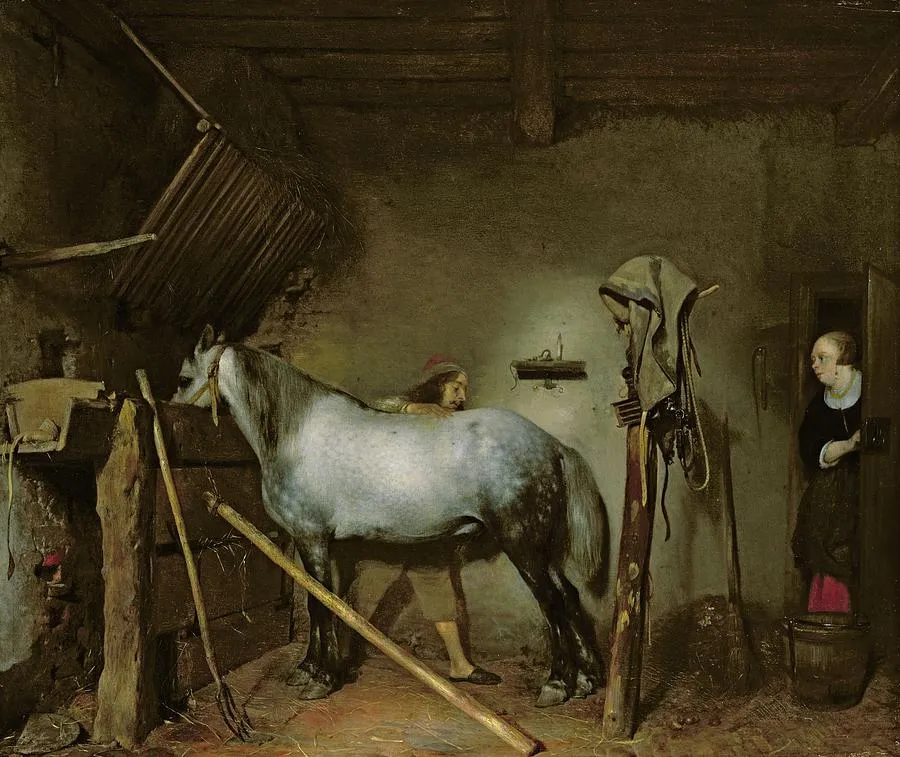
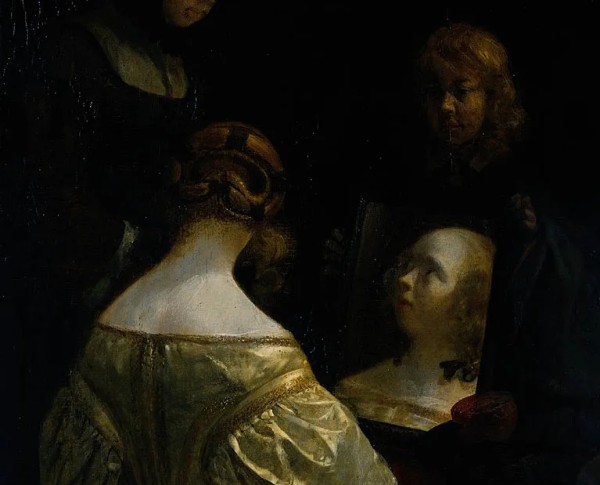
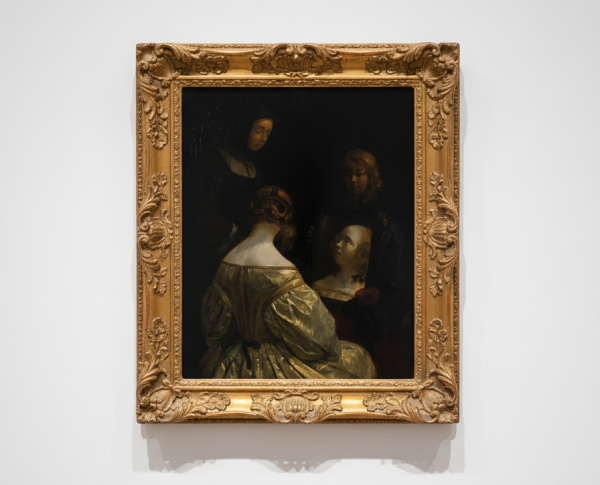
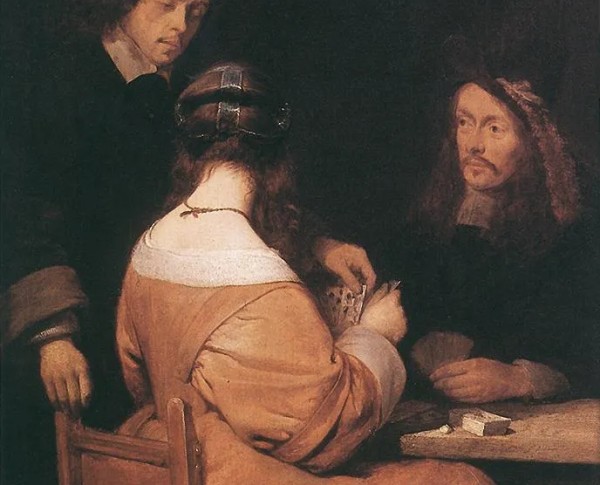
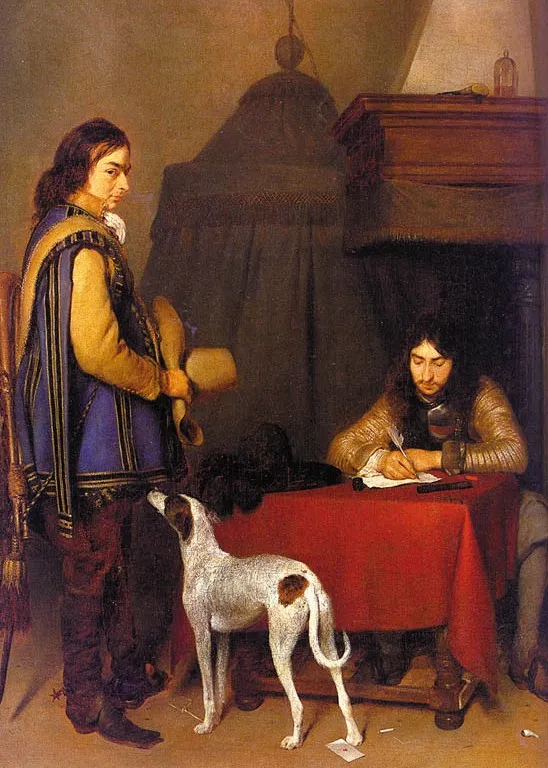
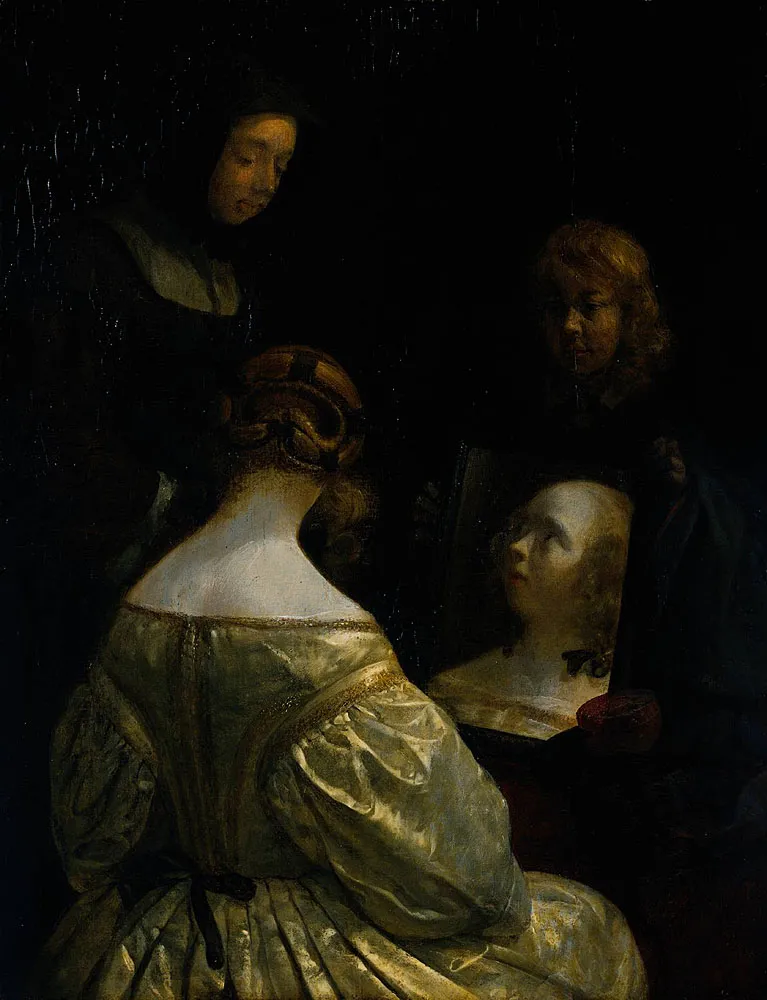
Gerard Terborch’s "Dispatch" reveals his exceptional skill with oil on canvas, a medium he mastered during the Baroque period. Every brushstroke is deliberate, creating lifelike textures and subtle lighting effects. Terborch’s meticulous approach can also be seen in works such as "Mother Combing the Hair of Her Child" and "Woman at a Mirror." These paintings, like "Dispatch," exemplify the depth and realism that define the Baroque movement and Terborch’s enduring appeal.
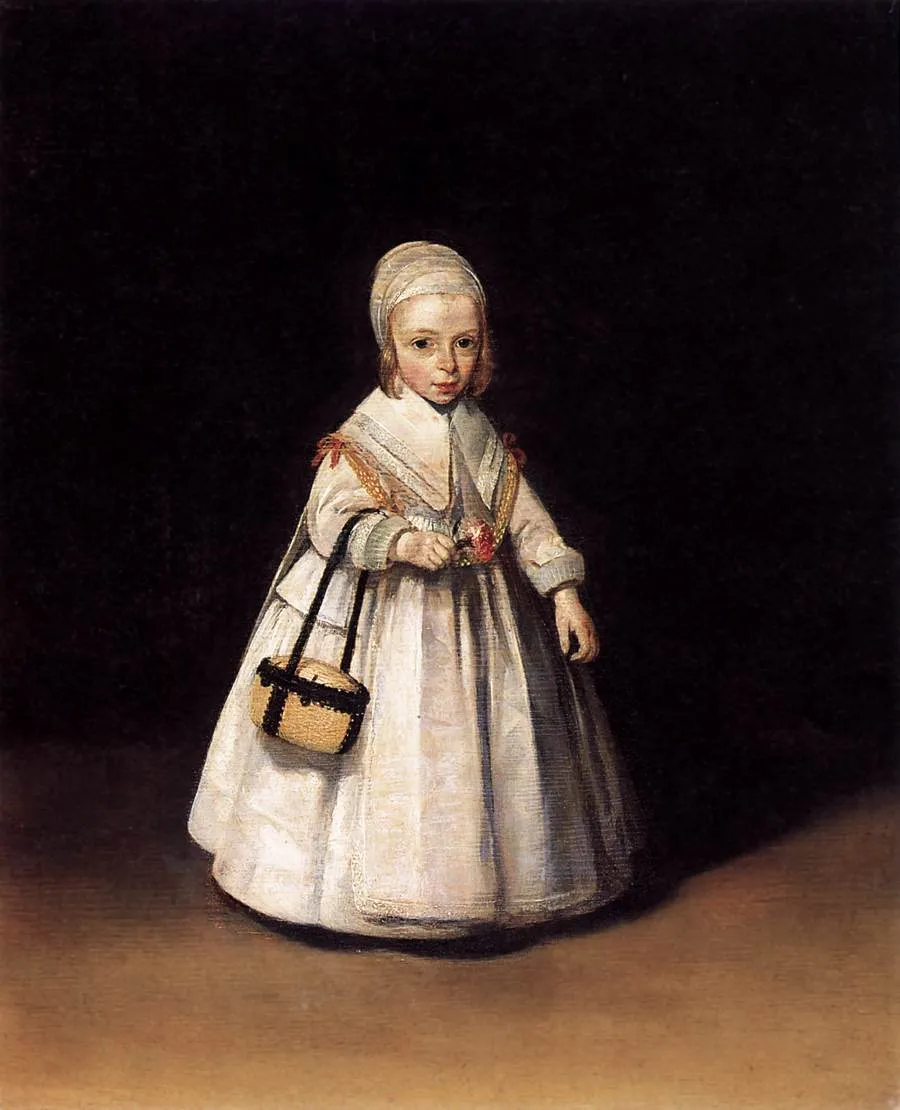
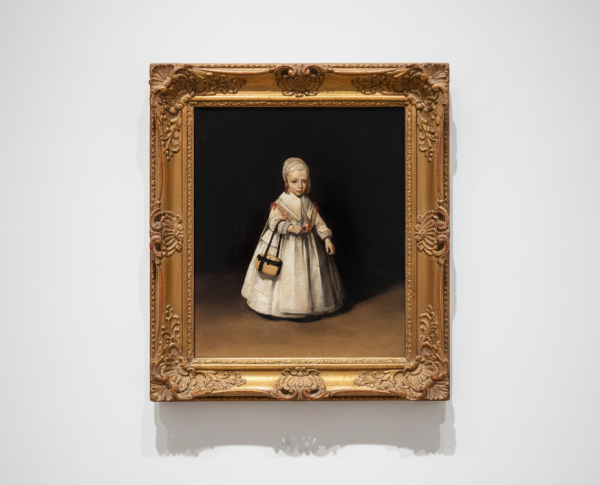
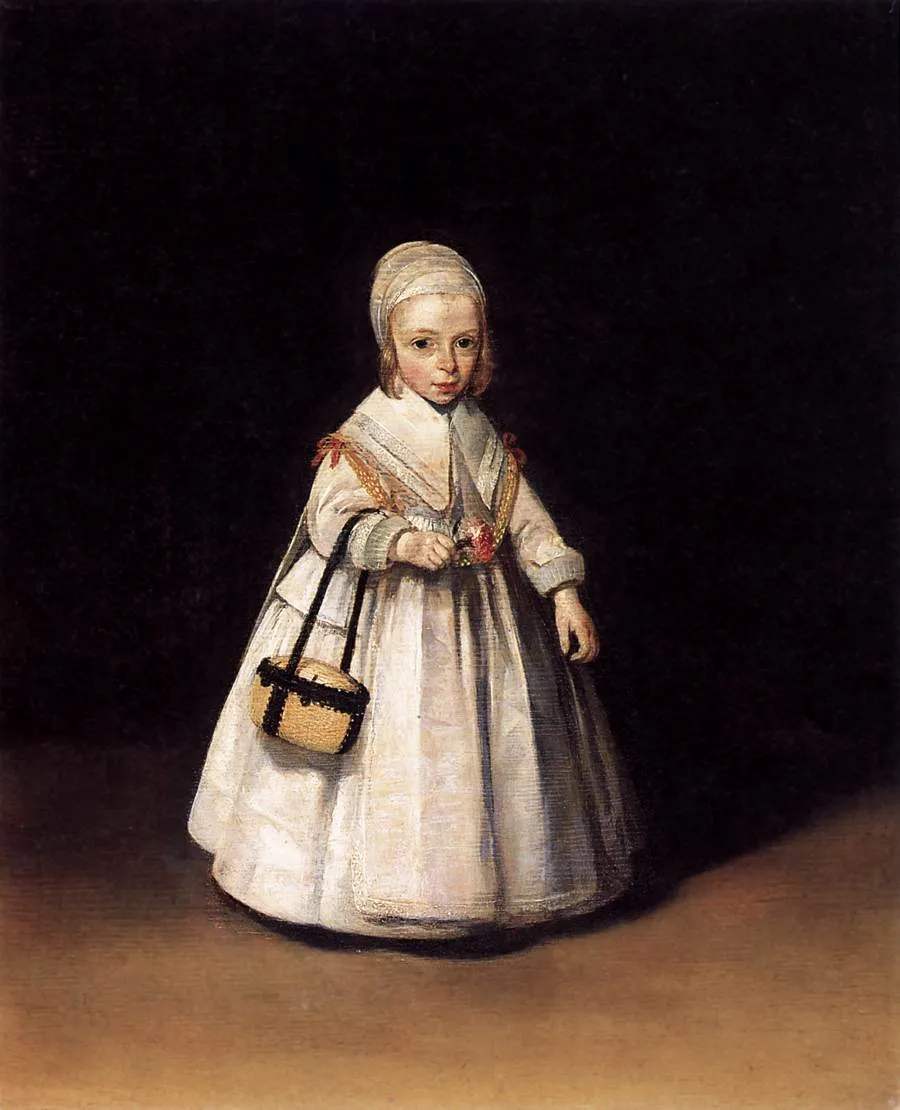
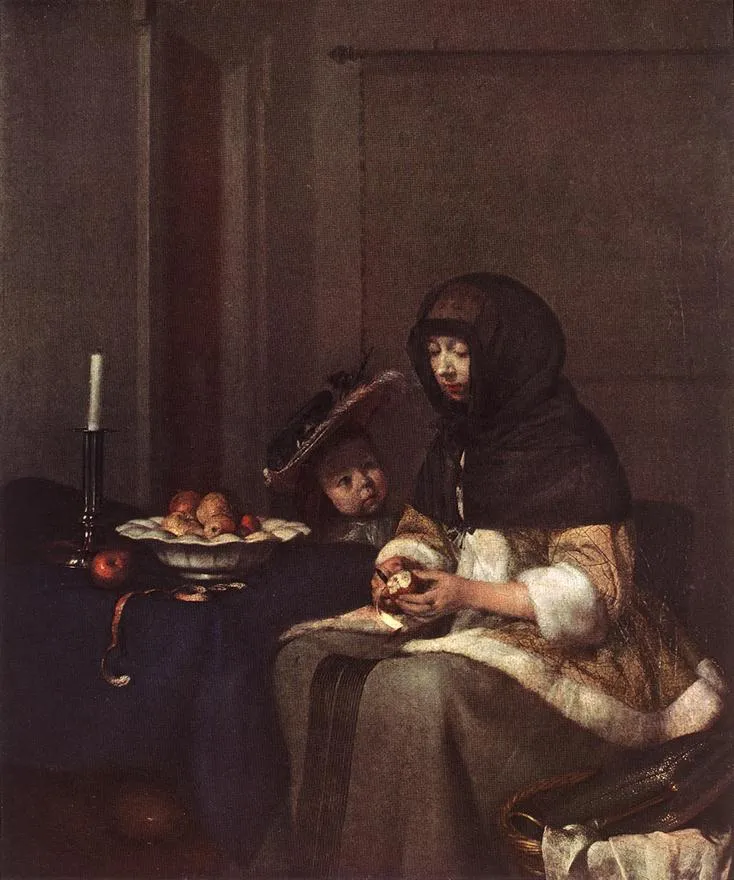
Within "Dispatch," the narrative is conveyed through gesture, attire, and setting, hallmarks of Gerard Terborch’s storytelling prowess. This fine art painting for sale invites viewers to interpret the scene’s subtle drama and social dynamics, much like his "Helena van der Schalcke as a Child." The Baroque movement’s characteristic symbolism and emotion are woven throughout, making "Dispatch" a compelling addition for collectors who appreciate art that tells a story.
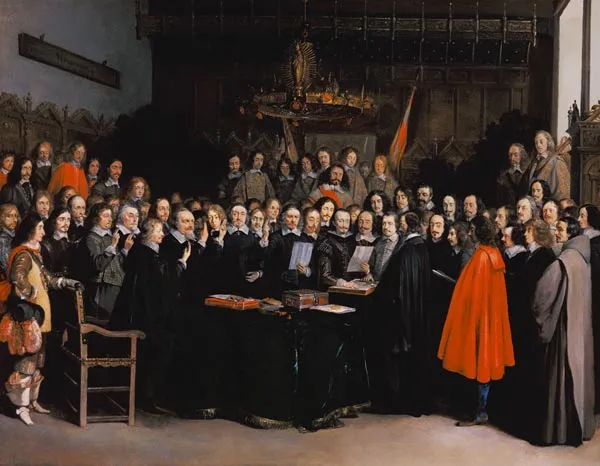
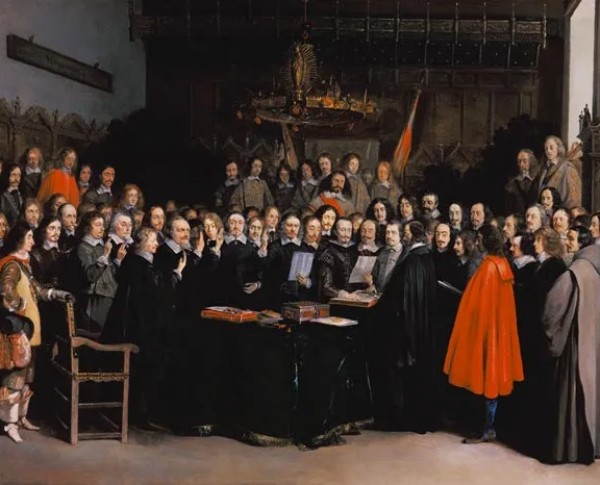
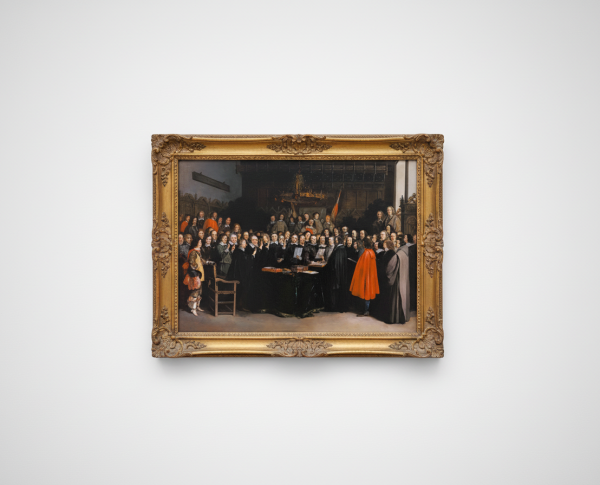
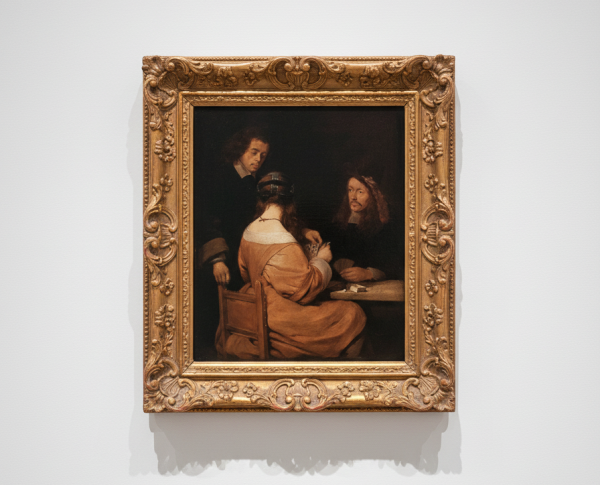
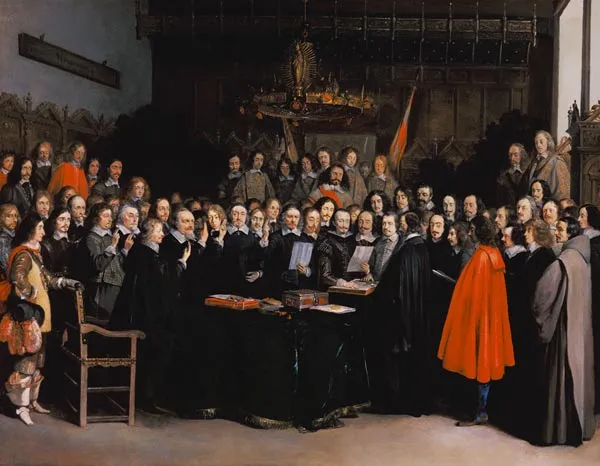
For art collectors, "Dispatch" by Gerard Terborch represents a pinnacle of Baroque artistry and historical significance. As a hand-painted oil painting, it offers both beauty and investment value. Those interested in expanding their collection may find other works such as "The Swearing of the Oath of Ratification of the Treaty of Munster" equally captivating. Owning such pieces ensures a connection to the rich legacy of Terborch and the timeless allure of the Baroque movement.
When Art Meets History
"Dispatch" by Gerard Terborch is a prime example of the Baroque movement, capturing a pivotal moment in 17th-century European life. This hand-painted oil painting not only reflects Terborch’s mastery but also serves as a historical document, illustrating the significance of communication in an age of political intrigue. Alongside related works like "Mercury and Battus" and "Repentant Mary Magdalene," "Dispatch" stands as a testament to the era’s fascination with narrative and realism.
Techniques That Speak
Gerard Terborch’s "Dispatch" showcases exquisite oil on canvas technique, a hallmark of Baroque artistry. The artist’s meticulous brushwork brings out rich textures in fabrics and subtle play of light, similar to his approach in "Boy Bitten by a Lizard" and "Medusa." Through delicate layering and glazes, Terborch achieves a lifelike depth, making each element of this fine art painting for sale a study in technical brilliance and visual storytelling that collectors and enthusiasts continue to admire.
Emotions on Display
With "Dispatch," Terborch masterfully conveys the heightened emotions of anticipation and tension, common themes in Baroque painting. The figures’ nuanced expressions and body language echo the emotional depth also found in "Musicians" and "Repentant Mary Magdalene." This hand-painted oil painting draws viewers into a world where gestures and glances speak volumes, highlighting Terborch’s gift for capturing the complexities of human interaction within the broader context of fine art painting for sale.
Coveted by Collectors
"Dispatch" remains a highly sought-after oil on canvas masterpiece among collectors of Baroque art. The painting’s provenance and connection to other celebrated works like "Mercury and Battus" and "Musicians" add to its allure. Gerard Terborch’s reputation for creating evocative, historically rich scenes ensures that "Dispatch" is a prized fine art painting for sale, cherished both for its artistic excellence and its enduring place in the history of European painting.
Related Baroque Hand-Painted Oil Paintings by Other Artists
Other Famous Baroque Artists:
Frequently Asked Questions About Dispatch
What is the historical context of "Dispatch"?
"Dispatch," painted by Gerard Terborch in the mid-17th century, reflects the socio-political climate of the Dutch Golden Age, a period marked by economic prosperity and cultural flourishing in the Netherlands.
What artistic techniques did Terborch employ in "Dispatch"?
Terborch is known for his meticulous attention to detail and use of light. In "Dispatch," he employs chiaroscuro to create depth and realism, enhancing the emotional impact of the scene.
What themes are explored in "Dispatch"?
The painting explores themes of communication, trust, and the complexities of human relationships, illustrating the significance of letters as a means of connection in the 17th century.
What symbolism can be found in "Dispatch"?
The letter in the painting symbolizes communication and the exchange of ideas, while the figures represent the social dynamics of the time, highlighting the importance of personal correspondence in society.
How does "Dispatch" reflect Terborch's artistic style?
"Dispatch" exemplifies Terborch's characteristic style, which combines realism with a serene, intimate atmosphere. His focus on domestic scenes and human interaction is evident in this work.
What is the significance of the setting in "Dispatch"?
The setting, typically a domestic interior, emphasizes the private nature of the communication taking place, suggesting that personal matters are often intertwined with broader societal issues.
How does "Dispatch" compare to other works by Terborch?
What role does color play in "Dispatch"?
The color palette in "Dispatch" is subdued yet rich, with warm tones that evoke a sense of intimacy and familiarity, enhancing the emotional resonance of the scene depicted.
What impact did "Dispatch" have on later artists?
"Dispatch" influenced later artists by demonstrating the power of genre painting to convey complex narratives and emotional depth, paving the way for subsequent explorations of everyday life in art.
How is "Dispatch" regarded in the context of Dutch genre painting?
"Dispatch" is highly regarded as a quintessential example of Dutch genre painting, showcasing Terborch's ability to blend technical skill with profound narrative, making it a significant contribution to the genre.






















_GFM_Painting_(1).webp)


 100% Hand-Painted: Finished in 3-6 Weeks

.png)















_(1).webp)