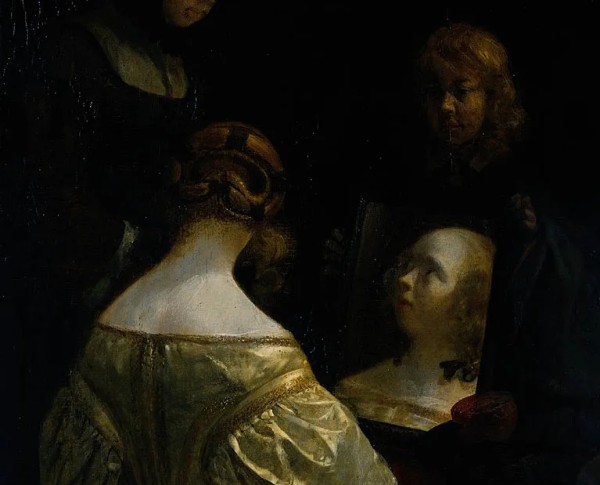
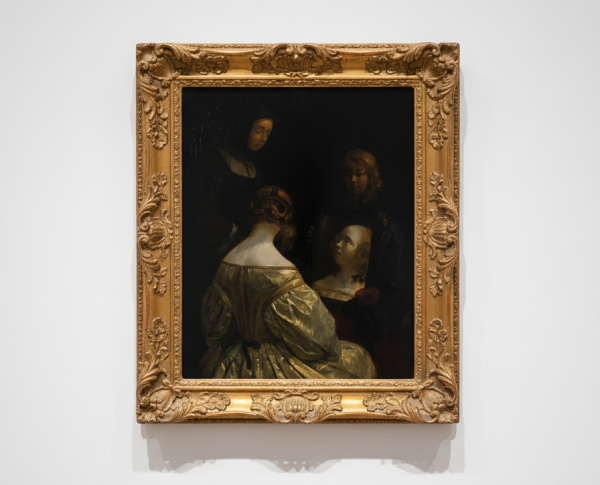
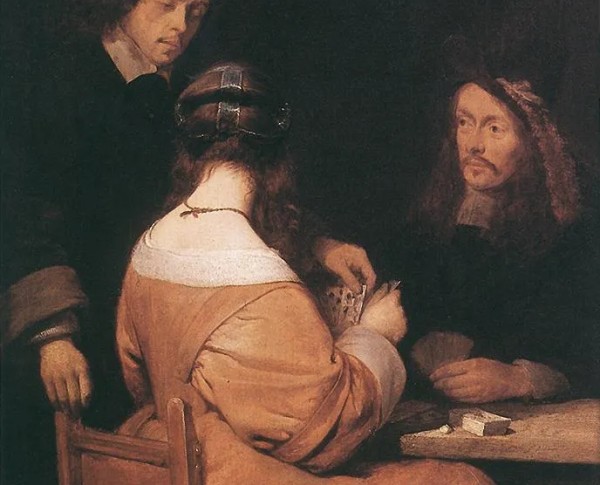
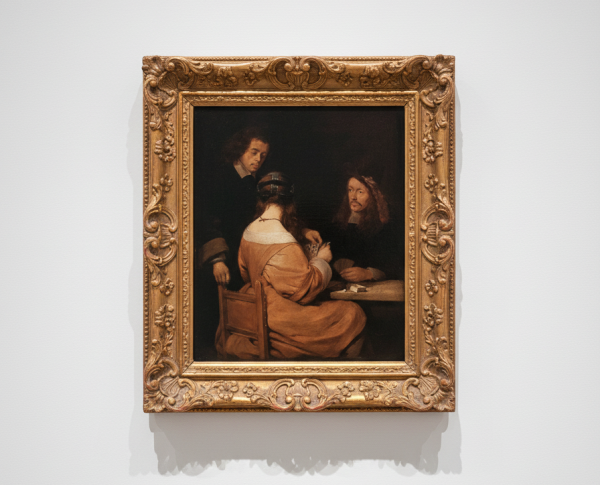
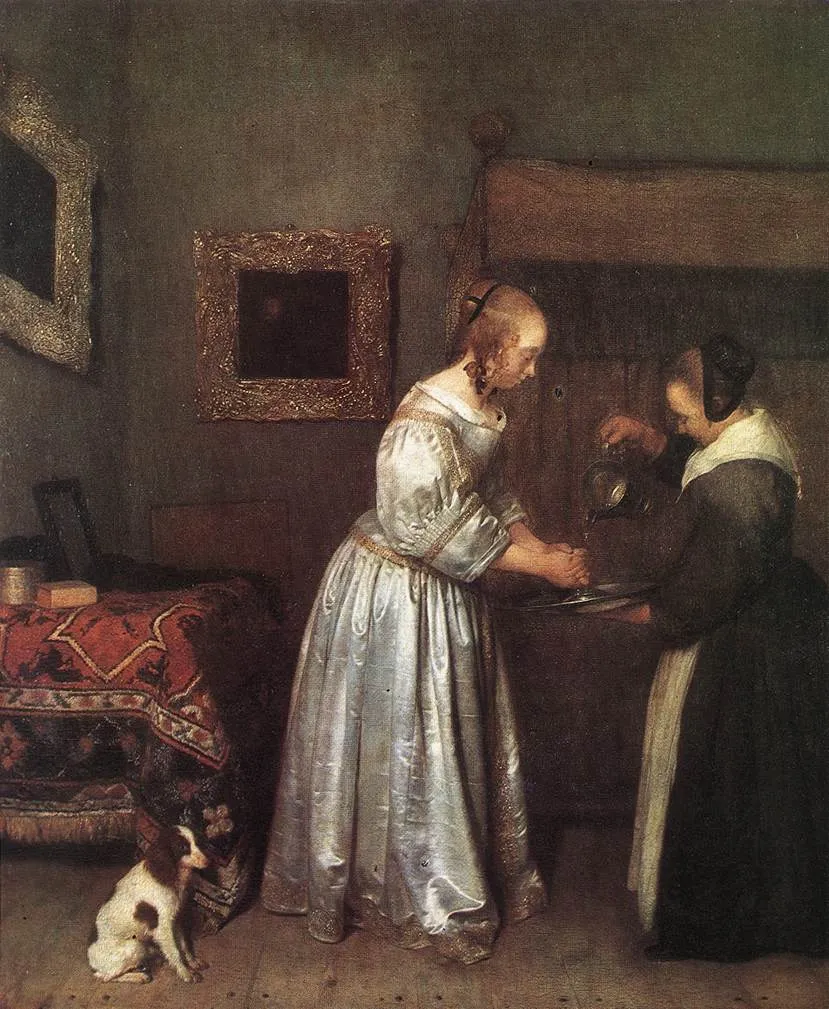
Terborch’s technique in "Woman Washing Hands" showcases his remarkable control of oil on canvas, a hallmark of Baroque artistry. Every brushstroke reveals delicate fabrics and the gentle play of light, demonstrating the artist’s meticulous attention to detail. This painting, much like "Gallant Conversation" and "A Woman Spinning," highlights Terborch’s skill in rendering textures and subtle gestures, making each composition a masterclass in realism. Collectors seeking exquisite oil on canvas pieces highly value this work.
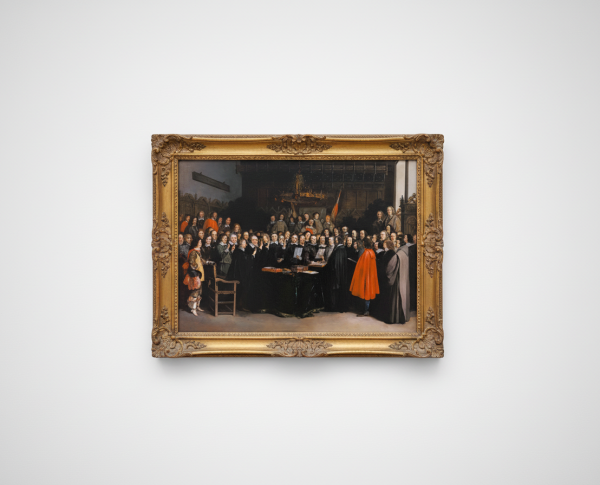
"Woman Washing Hands" invites viewers to ponder the hidden meanings behind daily rituals, a common theme in Baroque art. Terborch skillfully uses symbolism, such as the act of washing, to suggest themes of purity and renewal. Similar motifs appear in his other works, including "The Swearing of the Oath of Ratification of the Treaty of Munster." As a hand-painted oil painting, it offers more than visual appeal—it conveys the nuanced storytelling that defines fine art painting for sale from this era.
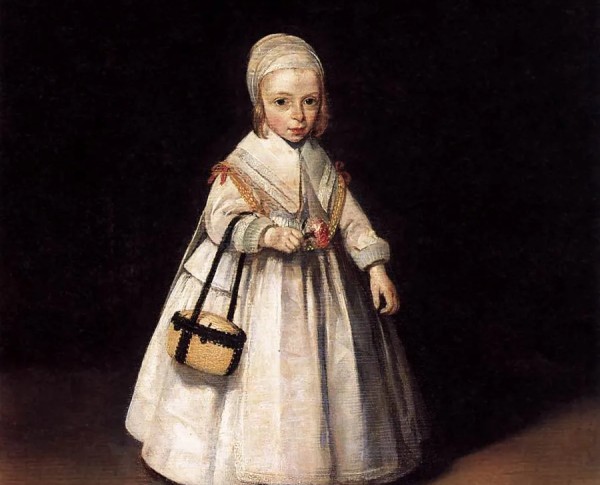
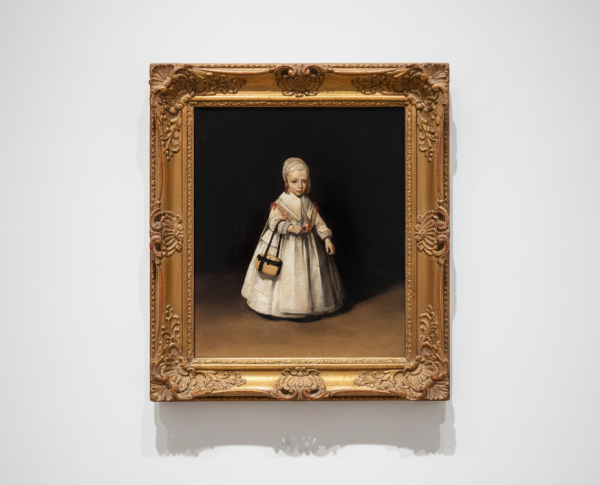
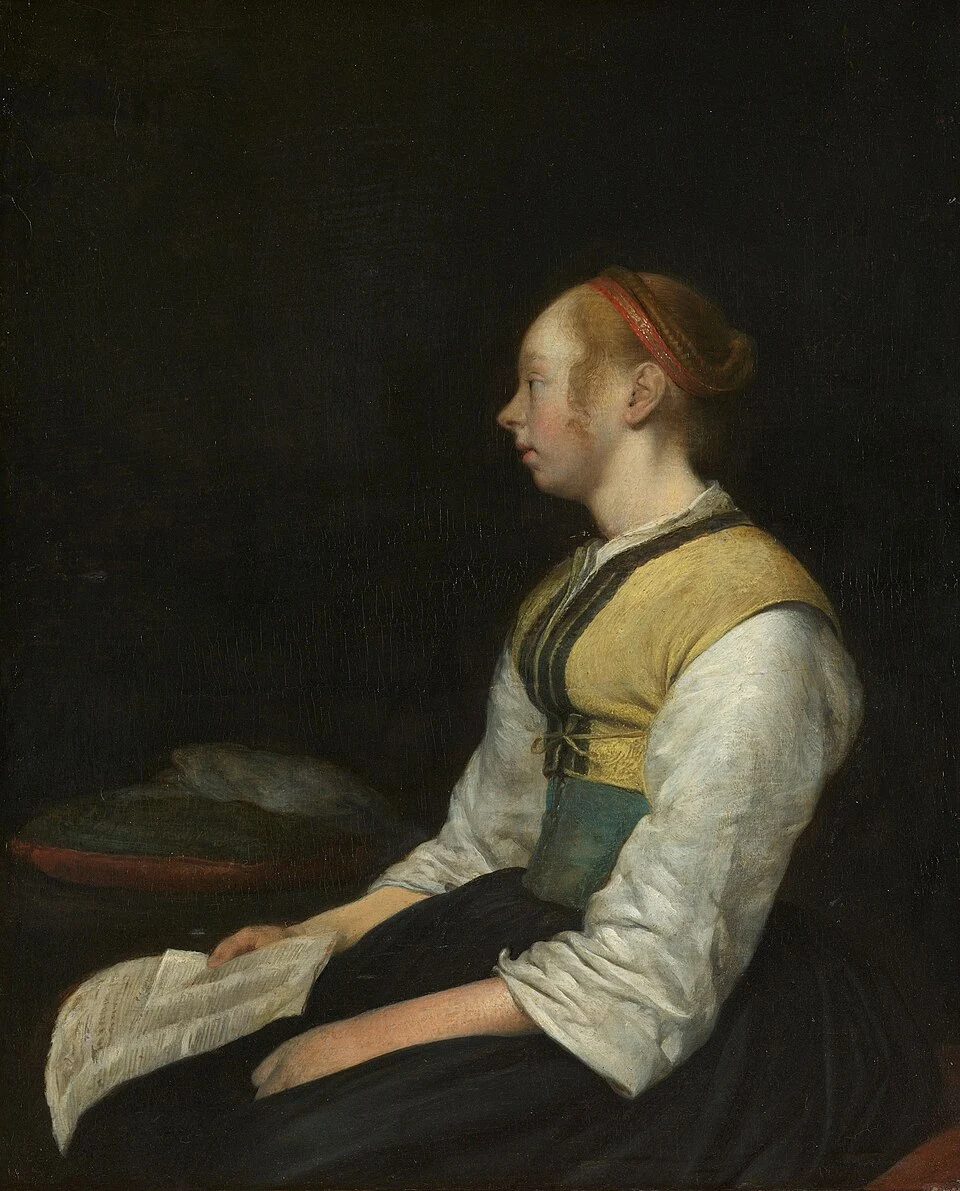
For art collectors, owning "Woman Washing Hands" is an opportunity to possess a piece of Baroque history by Gerard Terborch. This fine art painting for sale exemplifies the era’s elegance and the artist’s mastery. Its connection to other masterpieces like "Girl in Peasant Costume Probably Gesina the Painter's Half Sister" enhances its desirability. With its refined composition and historical significance, this painting remains a prized acquisition for anyone passionate about the enduring beauty of oil on canvas works.
When Art Meets History
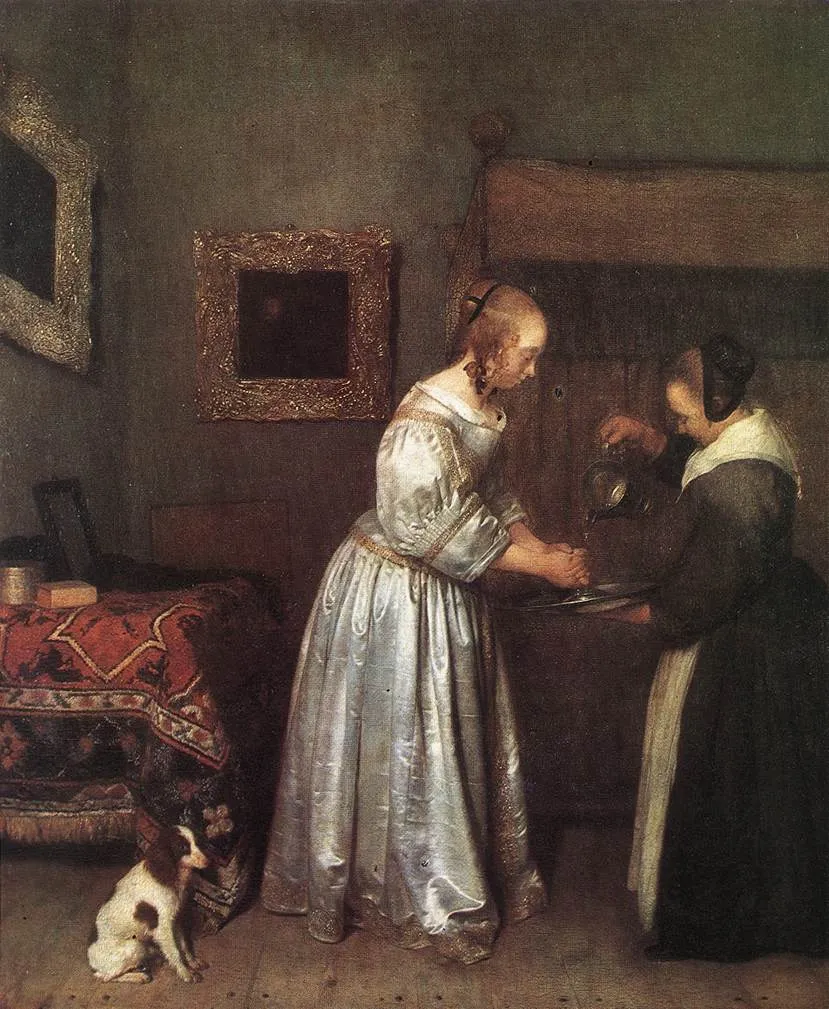
"Woman Washing Hands" by Gerard Terborch is a remarkable example of Baroque artistry, masterfully crafted in the 17th century. This hand-painted oil painting captures a quiet domestic scene, revealing both the customs and the elegance of its era. Terborch, a celebrated Dutch master, infuses his work with subtle social commentary, much like his contemporaries in "Cardsharps" or "Young Sick Bacchus." The painting stands as a testament to the transformative power of Baroque art.
Techniques That Speak
Gerard Terborch’s "Woman Washing Hands" showcases his signature oil on canvas technique, bringing to life the delicate textures of fabric, skin, and water. The artist’s attention to detail rivals that found in "Vision of St Peter Nolasco" and "Jupiter, Neptune and Pluto." Through nuanced brushwork and rich lighting, Terborch elevates a mundane moment into a scene of profound beauty, making this oil on canvas a standout in Baroque fine art collections.
Emotions on Display
In "Woman Washing Hands," Terborch captures a fleeting moment of introspection, emphasizing the subject’s grace and quiet dignity. The emotional depth found in this fine art painting for sale is akin to the psychological complexity in "Medusa" and "Young Sick Bacchus." The Baroque movement’s emphasis on realism and feeling is evident, with every gesture and expression thoughtfully rendered, inviting viewers to connect with the woman’s private world.
Coveted by Collectors
"Woman Washing Hands" remains highly sought after by collectors of Baroque masterpieces. Its status as a hand-painted oil painting by Gerard Terborch elevates its desirability, much like the allure of "Cardsharps" or "Vision of St Peter Nolasco." The painting’s subtle narrative and exquisite technique make it a prized addition to any collection, reflecting the enduring appeal of Baroque fine art painting for sale on the global art market.
Related Baroque Hand-Painted Oil Paintings by Other Artists
Other Famous Baroque Artists:
Frequently Asked Questions About Woman Washing Hands
What is the historical context of "Woman Washing Hands"?
"Woman Washing Hands" was painted by Gerard Terborch in the 17th century, a period marked by the Dutch Golden Age, where art flourished in the Netherlands, reflecting the era's social and cultural dynamics.
What artistic techniques did Gerard Terborch employ in this painting?
Terborch is known for his mastery of light and texture. In "Woman Washing Hands," he utilizes delicate brushwork and a subtle color palette to create a sense of realism and intimacy in the domestic scene.
What is the significance of the act of washing hands in the painting?
The act of washing hands symbolizes purity and domesticity. It reflects the moral and social values of the time, emphasizing cleanliness and the importance of household duties in the lives of women.
How does "Woman Washing Hands" reflect the role of women in 17th-century Dutch society?
The painting highlights the traditional role of women as caretakers of the home. It captures a moment of daily life, showcasing the responsibilities placed upon women during this period, while also hinting at their quiet strength and dignity.
What elements in the painting suggest a sense of tranquility?
The soft lighting, serene expression of the woman, and the harmonious color scheme contribute to an overall sense of tranquility. These elements invite viewers to appreciate the peacefulness of domestic life.
What does the composition of "Woman Washing Hands" reveal about Terborch's artistic style?
Terborch’s composition often features a central figure set against a simple background, allowing the viewer to focus on the subject's actions and emotions. This approach emphasizes narrative and character, hallmarks of his artistic style.
How does this painting compare with other works by Gerard Terborch?






















_GFM_Painting_(1).webp)


 100% Hand-Painted: Finished in 3-6 Weeks

.png)
















_(1).webp)