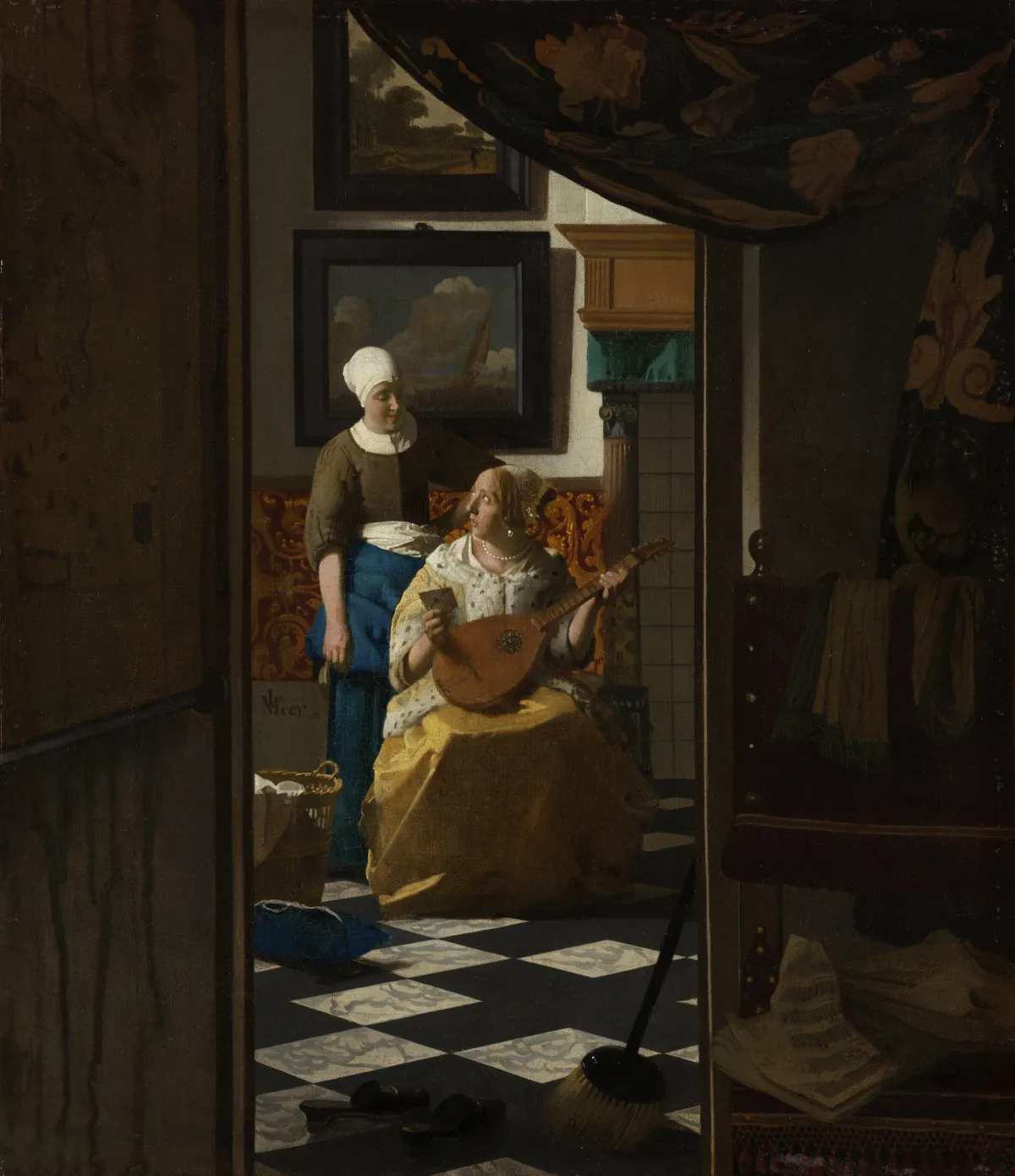
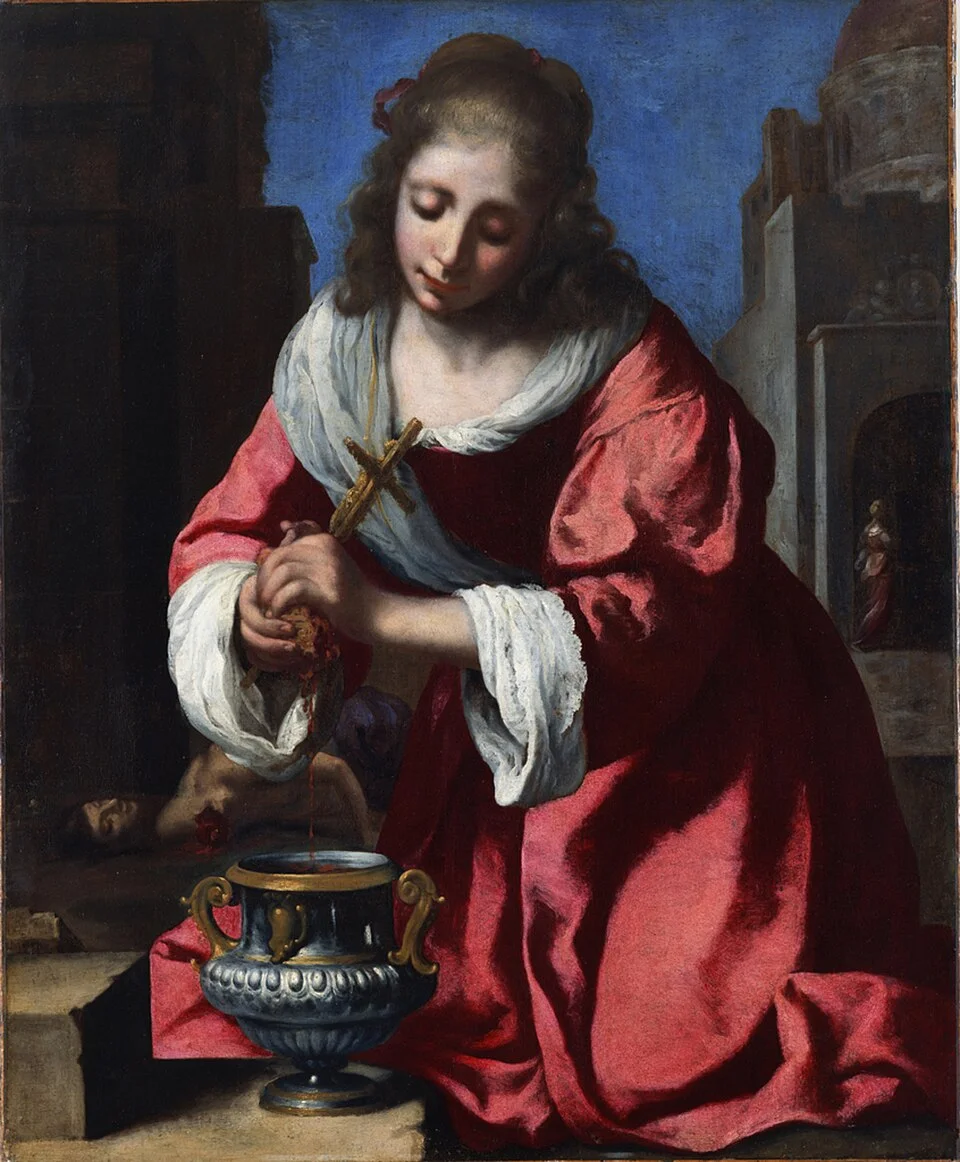
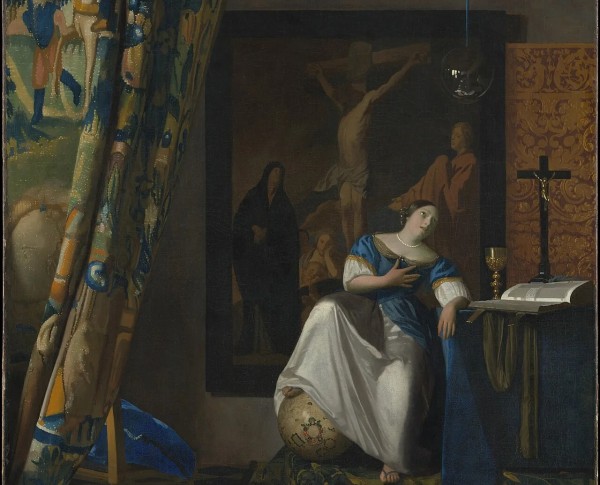
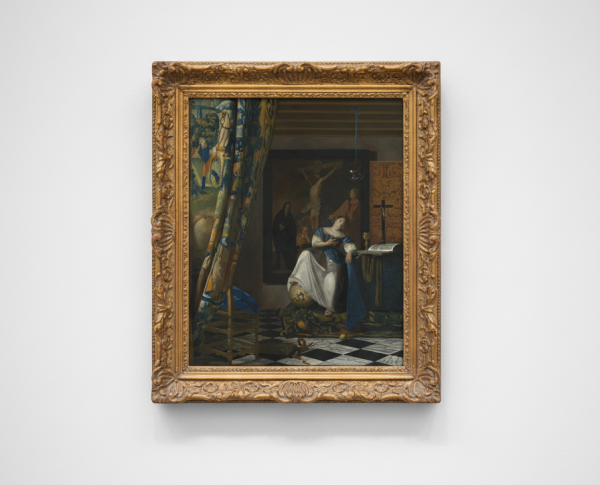
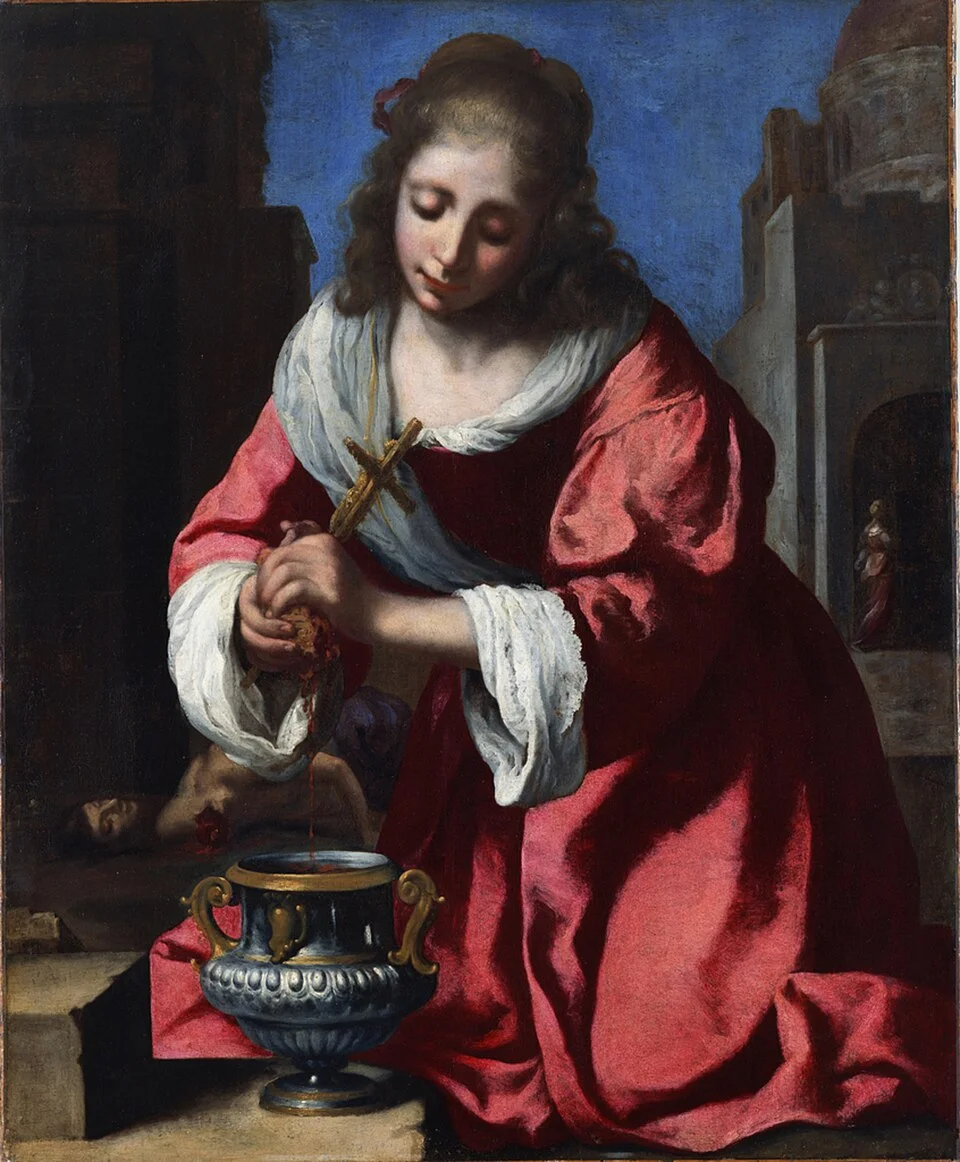
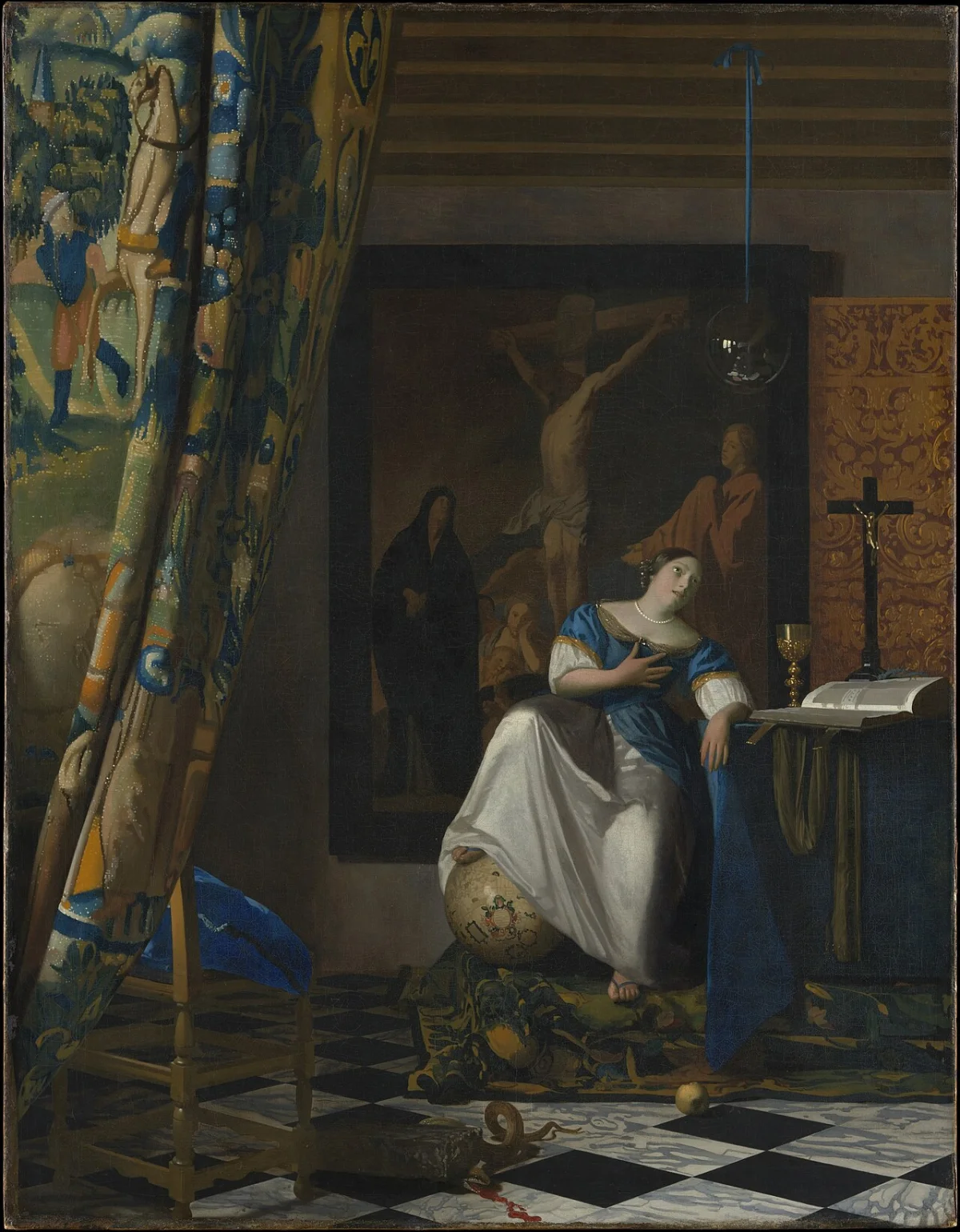
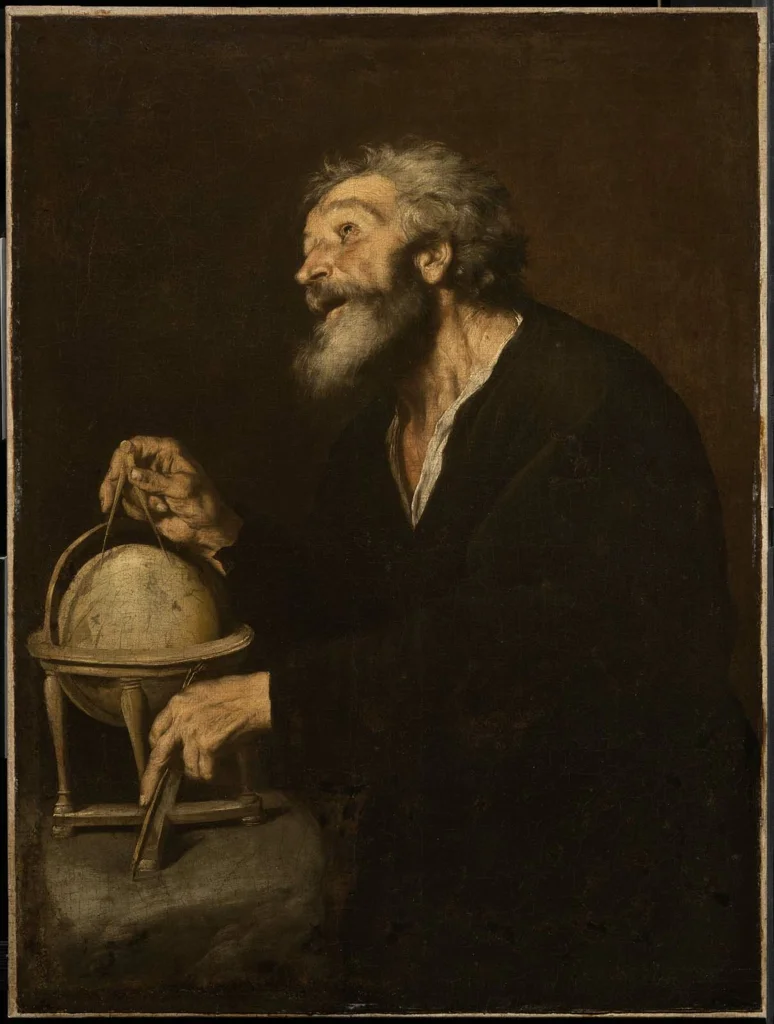
Jan Vermeer Van Delft’s use of oil on canvas in Saint Praxedis highlights his extraordinary ability to manipulate light and texture. The soft rendering of Praxedis’s features and the luminous quality of the composition are hallmarks of the Dutch Golden Age movement. This painting’s refined technique is echoed in masterpieces such as The Art of Painting and Woman with a Pearl Necklace, making Saint Praxedis a true testament to Vermeer’s enduring skill and attention to detail.
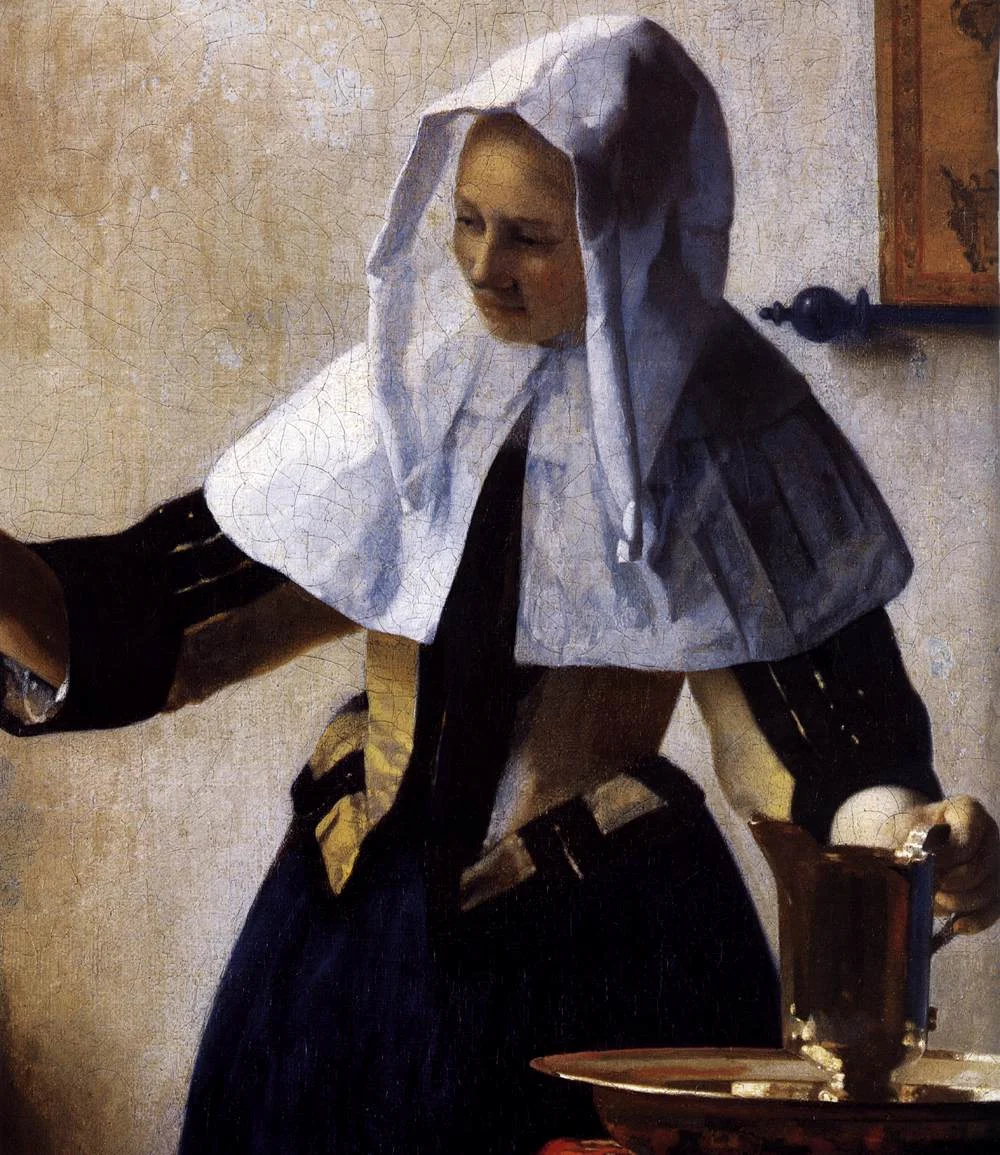
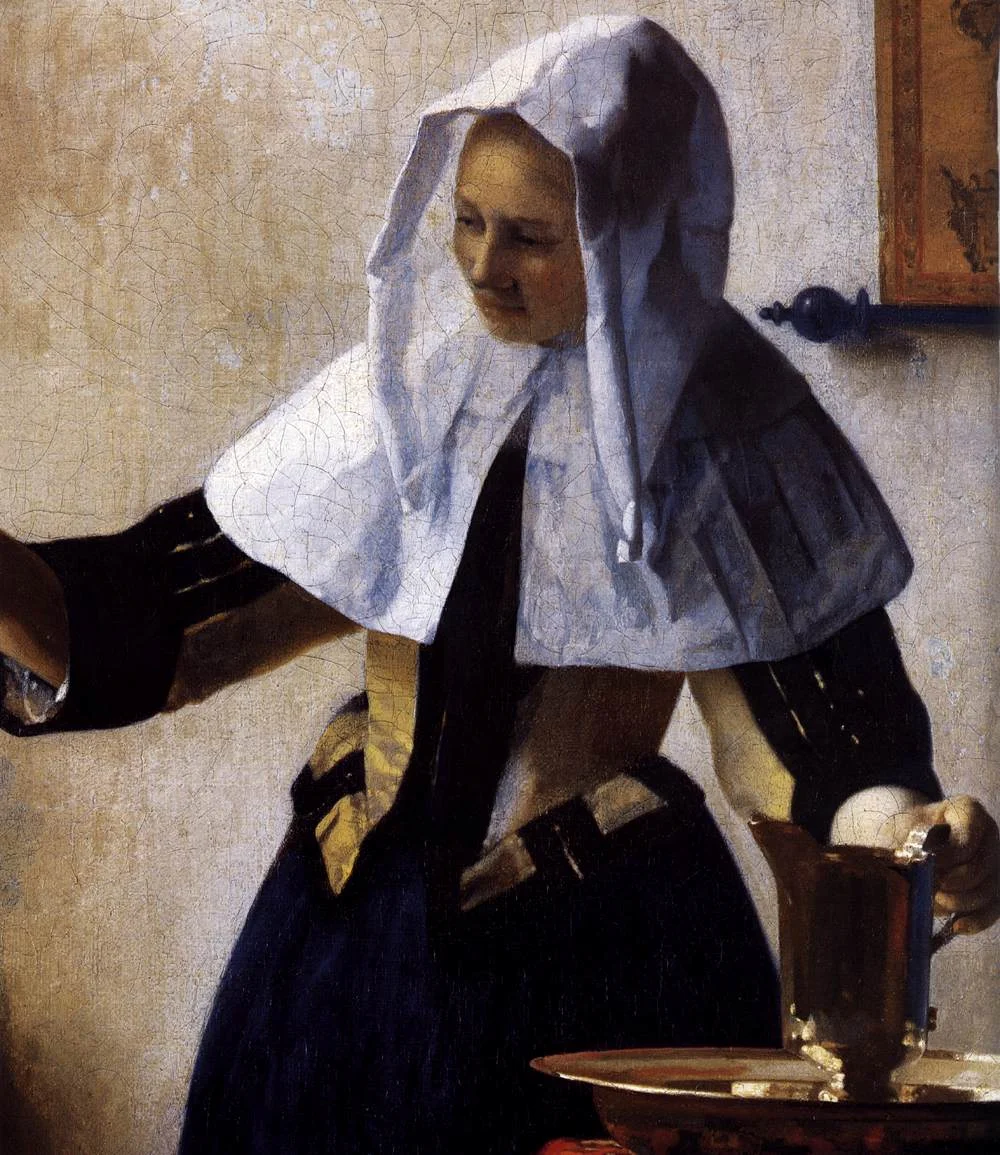
Every element in Saint Praxedis tells a story, revealing layers of meaning beneath its serene surface. As a fine art painting for sale, it draws viewers into the world of Dutch Golden Age symbolism, where each object—like the basin and cloth—signifies purity and devotion. Vermeer Van Delft’s narrative style can also be found in related pieces such as View of Delft and Woman with a Water Jug, each rich with allegory and historical context.
For art connoisseurs, acquiring a hand-painted oil painting like Saint Praxedis by Jan Vermeer Van Delft is a rare opportunity to own a piece of Dutch Golden Age history. Its meticulous craftsmanship and spiritual essence make it a sought-after addition to any collection, alongside works like Woman with a Lute and The Wine Glass. This masterpiece, and related products, continue to captivate those who appreciate the timeless beauty of fine art painting for sale.
When Art Meets History
"Saint Praxedis" by Jan Vermeer Van Delft stands as a remarkable example of the Dutch Golden Age, merging religious narrative with exquisite artistry. This hand-painted oil painting reflects the era's fascination with realism and spirituality, much like Vermeer’s contemporaries in works such as "The Raising of Lazarus" and "A Slaughtered Ox." As part of a rich tradition, "Saint Praxedis" bridges history and art, inviting viewers to experience the profound storytelling of seventeenth-century Dutch masters.
Techniques That Speak
Jan Vermeer Van Delft’s mastery is evident in the oil on canvas technique employed in "Saint Praxedis." His delicate brushwork and nuanced use of light echo the sophistication seen in "The Return of the Prodigal Son c. 1669" and "Mercury and Aglauros." The painting’s subtle textures and luminous tones exemplify the technical prowess of the Dutch Golden Age, making it a prime example of how oil on canvas can capture both detail and atmosphere with exceptional clarity.
Emotions on Display
In "Saint Praxedis," Vermeer Van Delft channels deep emotion through the saint’s serene expression and gentle gestures. The composition, typical of Dutch Golden Age masterpieces, radiates empathy and piety. This fine art painting for sale invites viewers to connect emotionally, much like the evocative scenes in "The Raising of Lazarus" or "The Return of the Prodigal Son c. 1669." Vermeer’s work resonates with timeless human sentiment, making it profoundly moving for art lovers.
Coveted by Collectors
Collectors worldwide seek out works like "Saint Praxedis" by Jan Vermeer Van Delft, drawn to the allure of a genuine Dutch Golden Age masterpiece. The hand-painted oil painting stands alongside celebrated works such as "A Slaughtered Ox" and "Mercury and Aglauros" in prestigious collections. Its rarity and historical significance ensure that "Saint Praxedis" remains a highly desirable fine art painting for sale, epitomizing the enduring value of Vermeer’s creative legacy.
Related Dutch Golden Age Hand-Painted Oil Paintings by Other Artists
Other Famous Dutch Golden Age Artists:
Frequently Asked Questions About Saint Praxedis
What is the historical significance of "Saint Praxedis"?
"Saint Praxedis" is significant as it reflects the Baroque period's emphasis on religious themes and the artist's ability to convey deep emotion through composition and color.
Who was Jan Vermeer Van Delft?
Jan Vermeer Van Delft was a Dutch painter known for his masterful use of light and color, and he is often associated with the Dutch Golden Age of painting.
What is the subject matter of "Saint Praxedis"?
The painting depicts Saint Praxedis, a Christian martyr, known for her compassion and dedication to the faith, often symbolizing purity and devotion.
What artistic techniques are employed in "Saint Praxedis"?
Vermeer employs chiaroscuro to create depth and dimension, along with meticulous attention to detail, particularly in the textures of fabrics and the play of light.
What symbols are present in "Saint Praxedis"?
The painting features symbols such as the palm branch, representing martyrdom, and the chalice, indicating the sacrificial aspect of her faith.
How does "Saint Praxedis" reflect the Baroque style?
The painting exemplifies the Baroque style through its dramatic use of light, emotional intensity, and the dynamic composition that draws the viewer's eye to the saint.
What influences did Vermeer draw upon for "Saint Praxedis"?
Vermeer was influenced by earlier Dutch masters and the Counter-Reformation's emphasis on religious themes, which sought to inspire devotion through art.
What is the significance of the color palette used in "Saint Praxedis"?
The color palette is characterized by rich, warm tones that evoke a sense of reverence and spirituality, enhancing the overall emotional impact of the piece.
How does "Saint Praxedis" compare to other works by Vermeer?
While "Saint Praxedis" showcases Vermeer's religious themes, it contrasts with his more secular works, highlighting his versatility as an artist in addressing various subjects.
What is the current location of "Saint Praxedis"?
"Saint Praxedis" is housed in a prominent art gallery, where it continues to be studied and admired for its artistic and historical value.






















_GFM_Painting_(1).webp)


 100% Hand-Painted: Finished in 3-6 Weeks

.png)
















_(1).webp)