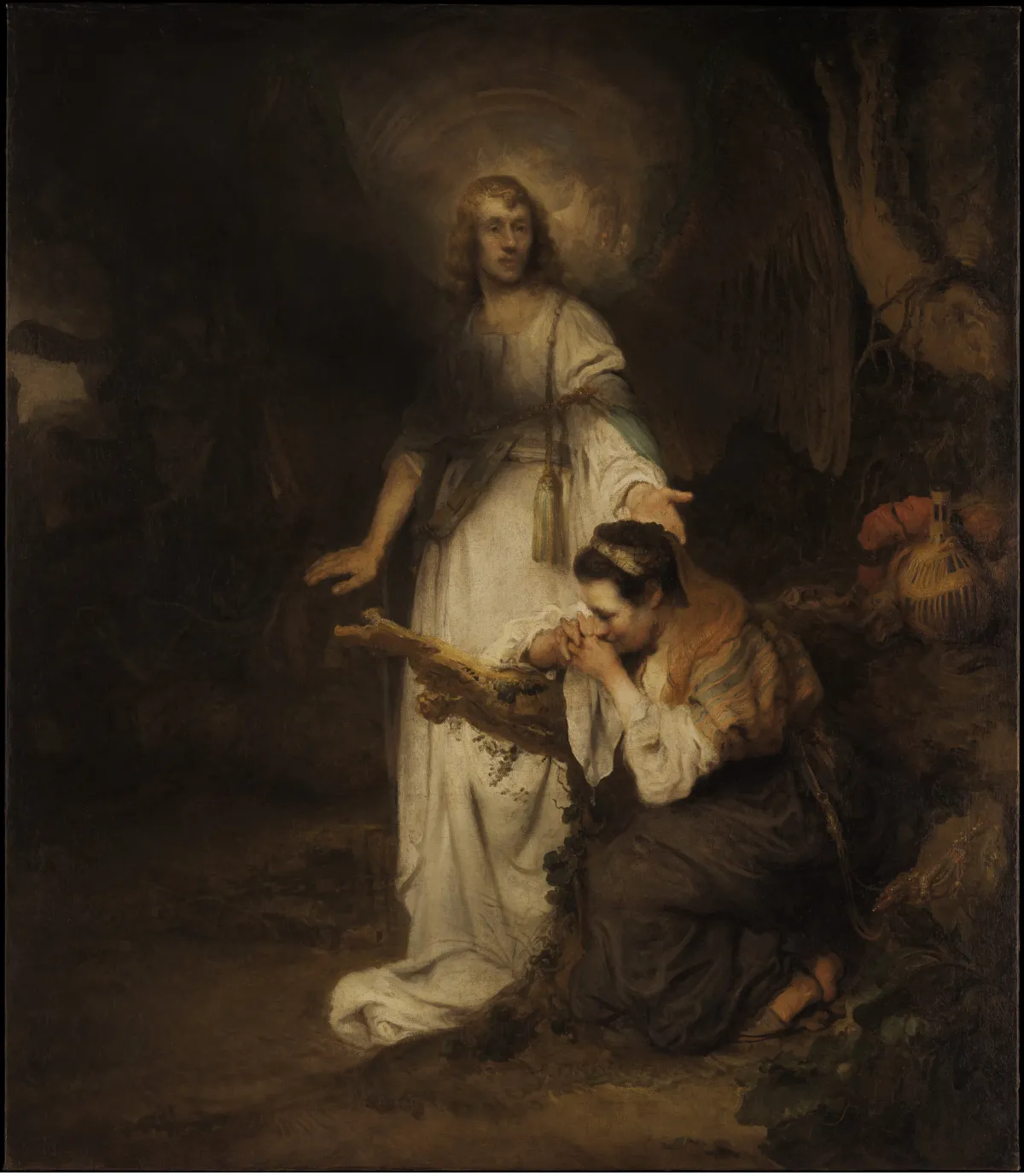
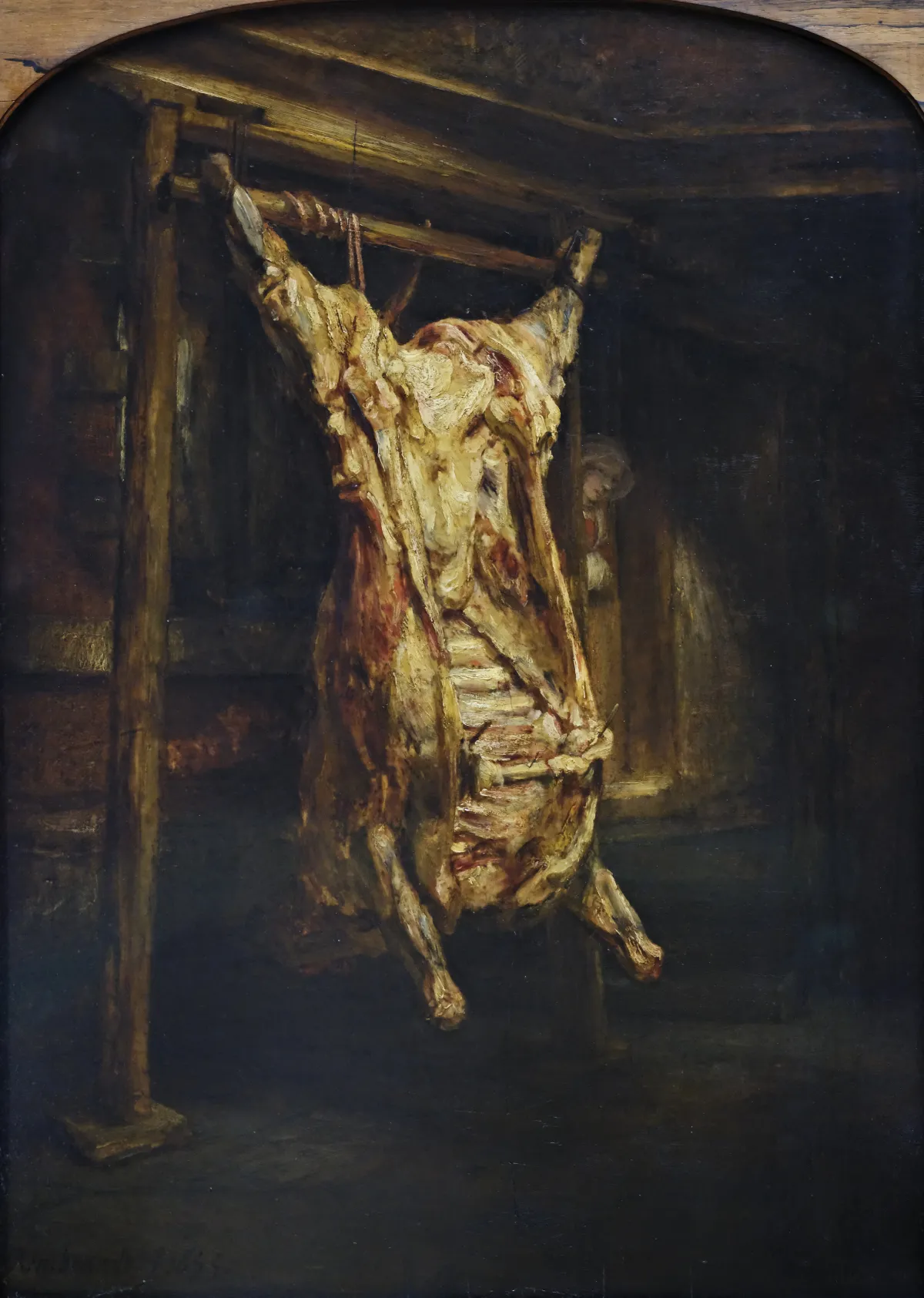
In "A Slaughtered Ox," Fabritius’s technique with oil on canvas showcases his exceptional skill in rendering textures and atmosphere. The Dutch Golden Age movement prized such technical brilliance, and this painting exemplifies the meticulous attention to light and form. For those seeking masterpieces of similar quality, works like "Hagar and the Angel" or "Portrait of Abraham de Potter" offer further insight into Fabritius’s remarkable artistry.
Beyond its striking realism, "A Slaughtered Ox" by Carel Fabritius is rich with symbolism, reflective of the Dutch Golden Age’s fascination with everyday life and deeper meanings. The painting’s somber mood hints at themes of mortality and sustenance. As a fine art painting for sale, it holds a narrative power that collectors also find in pieces like "Young Man in a Fur Cap" and "Portrait of a young student," both steeped in symbolic detail.
Owning a hand-painted oil painting such as "A Slaughtered Ox" connects collectors directly to the legacy of Carel Fabritius and the Dutch Golden Age. This masterpiece, along with related products like "The Raising of Lazarus" or "The Sentry," serves as a focal point in any collection. The enduring appeal of these works ensures their status as coveted treasures for anyone seeking a truly exceptional fine art painting for sale.
When Art Meets History
"A Slaughtered Ox" by Carel Fabritius stands as a striking example of the Dutch Golden Age, a period known for its mastery of realism and detail. This hand-painted oil painting offers viewers a window into 17th-century life, capturing both the everyday and the extraordinary. Like related works such as "The Astronomer" and "The Little Street," Fabritius’s painting reflects the era’s fascination with ordinary subjects, turning them into moments of profound artistic significance.
Techniques That Speak
Carel Fabritius employed oil on canvas to achieve remarkable depth and texture in "A Slaughtered Ox." His technique, characterized by delicate brushwork and careful attention to light, echoes the methods seen in other Dutch Golden Age masterpieces like "Allegory of the Catholic Faith." The richness of the oil medium allowed for vivid representation of textures, making the painting both lifelike and emotionally resonant, a testament to Fabritius’s technical prowess and innovative approach.
Emotions on Display
The emotional weight of "A Slaughtered Ox" is palpable, as Fabritius transforms a simple subject into a scene brimming with meaning. This fine art painting for sale not only depicts a moment of daily life but also explores deeper themes of mortality and existence. Like "Saint Praxedis" and "The Wine Glass," Fabritius’s work invites viewers to reflect on the transient nature of life, using visual storytelling to convey complex human emotions.
Coveted by Collectors
As with many Dutch Golden Age pieces, "A Slaughtered Ox" by Carel Fabritius is highly sought after by art collectors worldwide. The painting’s rarity and historical significance make it a prized example of hand-painted oil painting from the era. Collectors often compare its value and artistry to related masterpieces such as "The Astronomer" and "The Little Street," ensuring its place among the most esteemed works in fine art collections today.
Related Dutch Golden Age Hand-Painted Oil Paintings by Other Artists
Other Famous Dutch Golden Age Artists:
Frequently Asked Questions About A Slaughtered Ox
What is the historical context of "A Slaughtered Ox"?
"A Slaughtered Ox" was painted by Carel Fabritius in the mid-17th century, a time marked by the Dutch Golden Age, when Dutch artists were celebrated for their innovative techniques and exploration of light and shadow.
What artistic techniques did Carel Fabritius use in this painting?
Fabritius employed a technique known as chiaroscuro, which contrasts light and dark to create a three-dimensional effect. His meticulous attention to detail and texture also highlights his mastery of oil painting.
What is the significance of the slaughtered ox in the painting?
The slaughtered ox serves as a symbol of mortality and the cycle of life. It reflects the Dutch tradition of still-life painting, which often included themes of transience and the impermanence of life.
How does "A Slaughtered Ox" compare to other still-life works of the period?
Unlike many still-life paintings that focus on abundance and beauty, Fabritius's work presents a stark and raw depiction of death, inviting viewers to contemplate the deeper meanings behind life and consumption.
What materials did Carel Fabritius use for this painting?
Fabritius used oil on canvas, a common medium during the Dutch Golden Age, which allowed for rich color saturation and detailed textural effects.
What influence did Carel Fabritius have on later artists?
Fabritius's innovative use of light and composition influenced later artists, particularly those in the Baroque and Realist movements, who sought to capture realism and emotional depth in their works.
What role does symbolism play in "A Slaughtered Ox"?
The painting is rich in symbolism, with the slaughtered ox representing not only physical death but also the moral implications of consumption and the human relationship with nature.
How does this painting reflect the socio-economic conditions of 17th century Holland?
The depiction of a slaughtered ox can be seen as a commentary on the agricultural economy of the time, highlighting the importance of livestock in Dutch society and the ethical considerations surrounding food production.
What are the notable features of Fabritius's style in this painting?
Fabritius's style is characterized by a keen observation of natural forms, a subtle palette, and a unique ability to convey texture, particularly in the rendering of the ox's fur and the surrounding elements.
Where can "A Slaughtered Ox" be viewed today?
The painting is part of the collection at the Mauritshuis in The Hague, Netherlands, where it is displayed alongside other masterpieces of the Dutch Golden Age.






















_GFM_Painting_(1).webp)


 100% Hand-Painted: Finished in 3-6 Weeks

.png)


















_(1).webp)