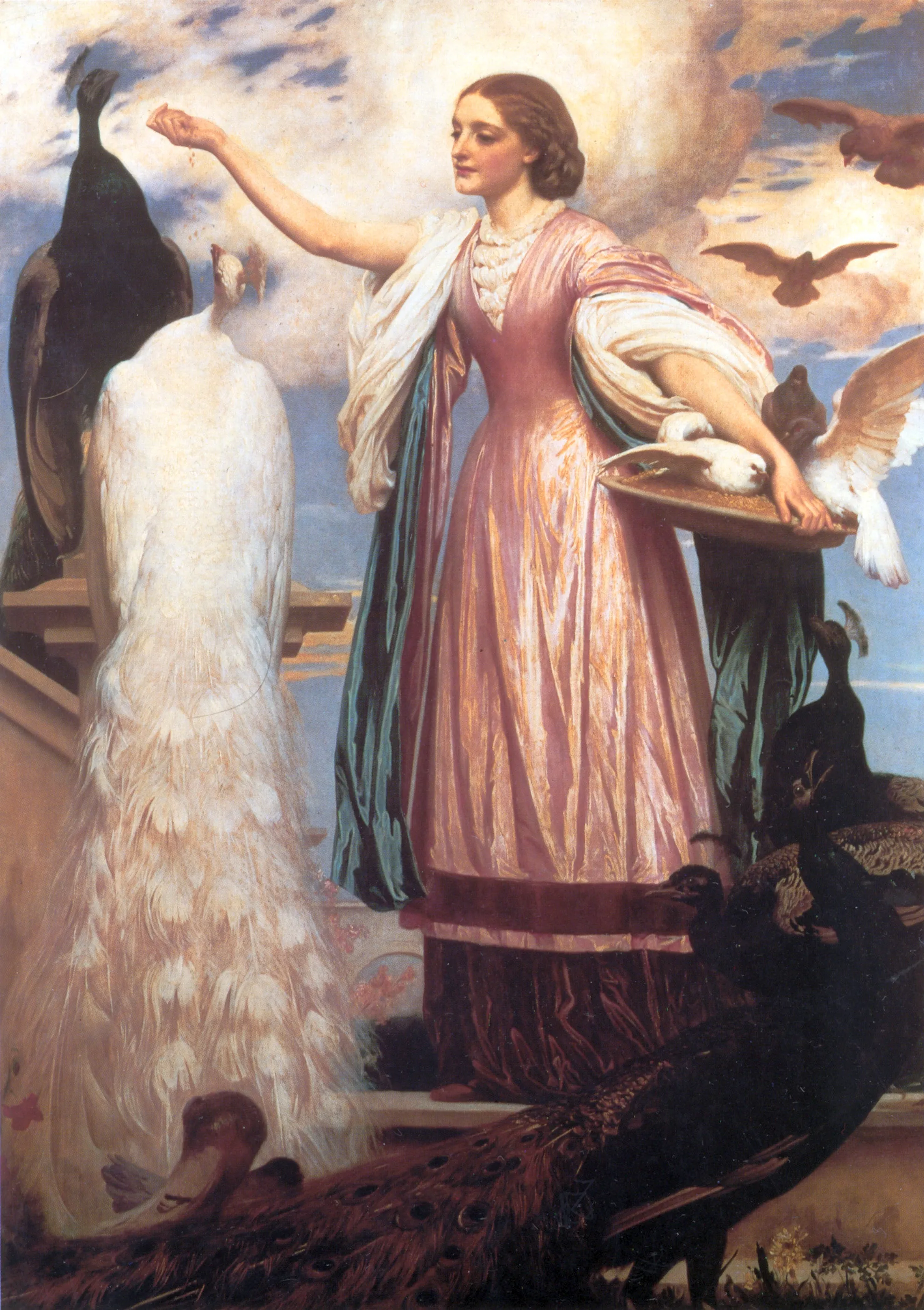
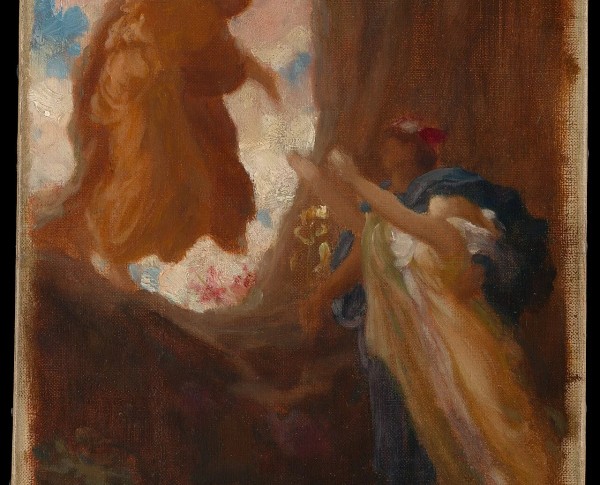
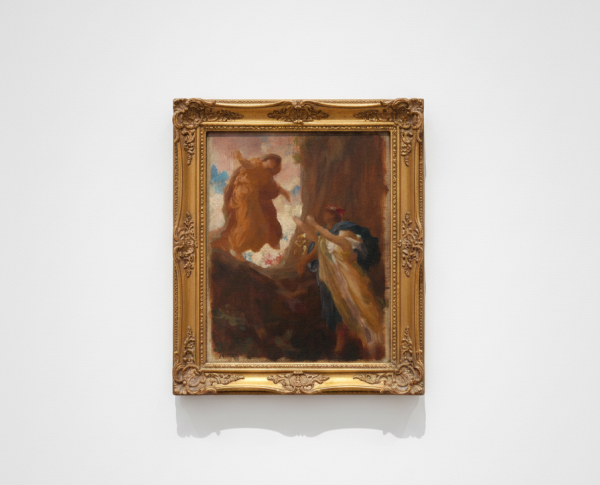
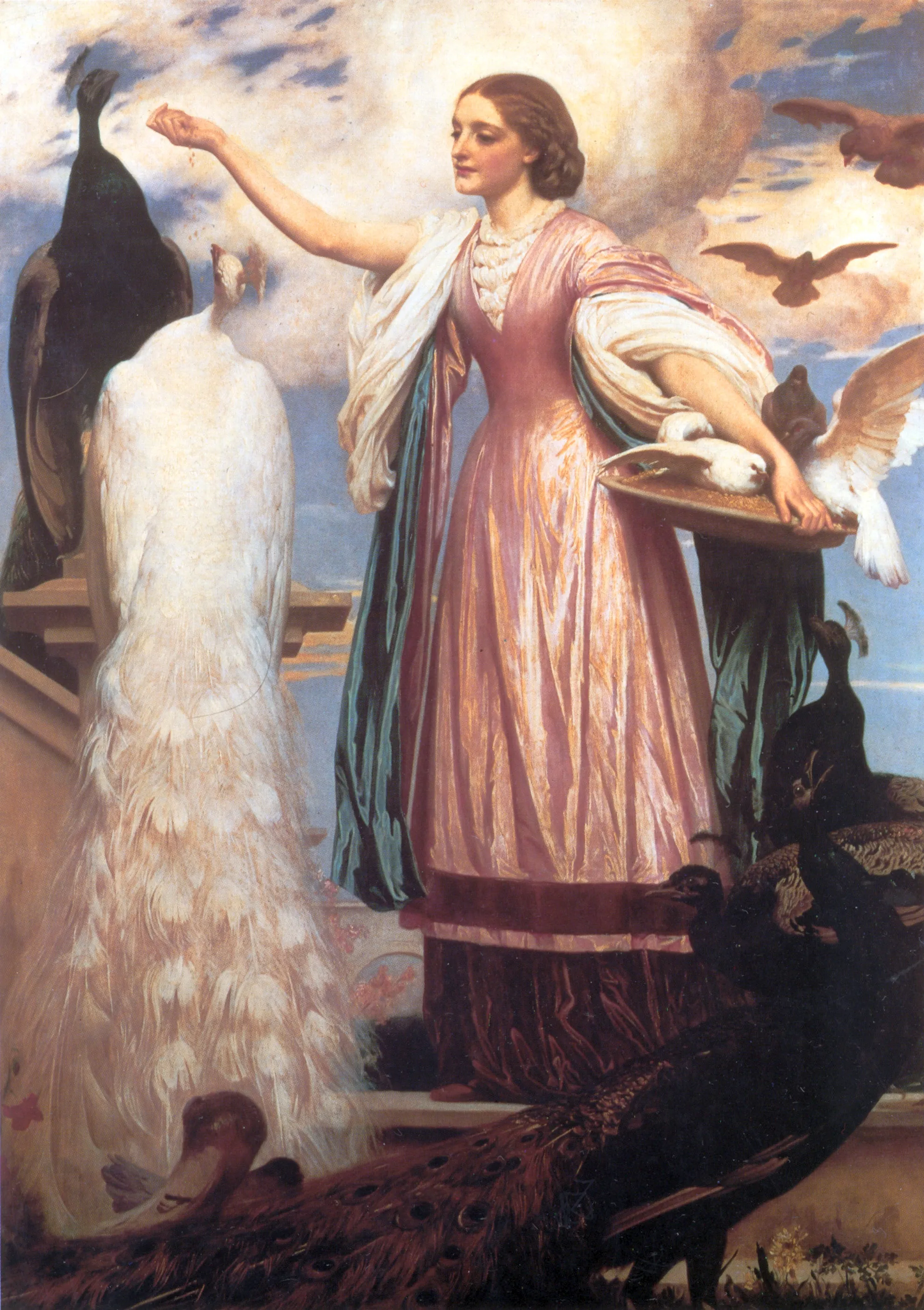
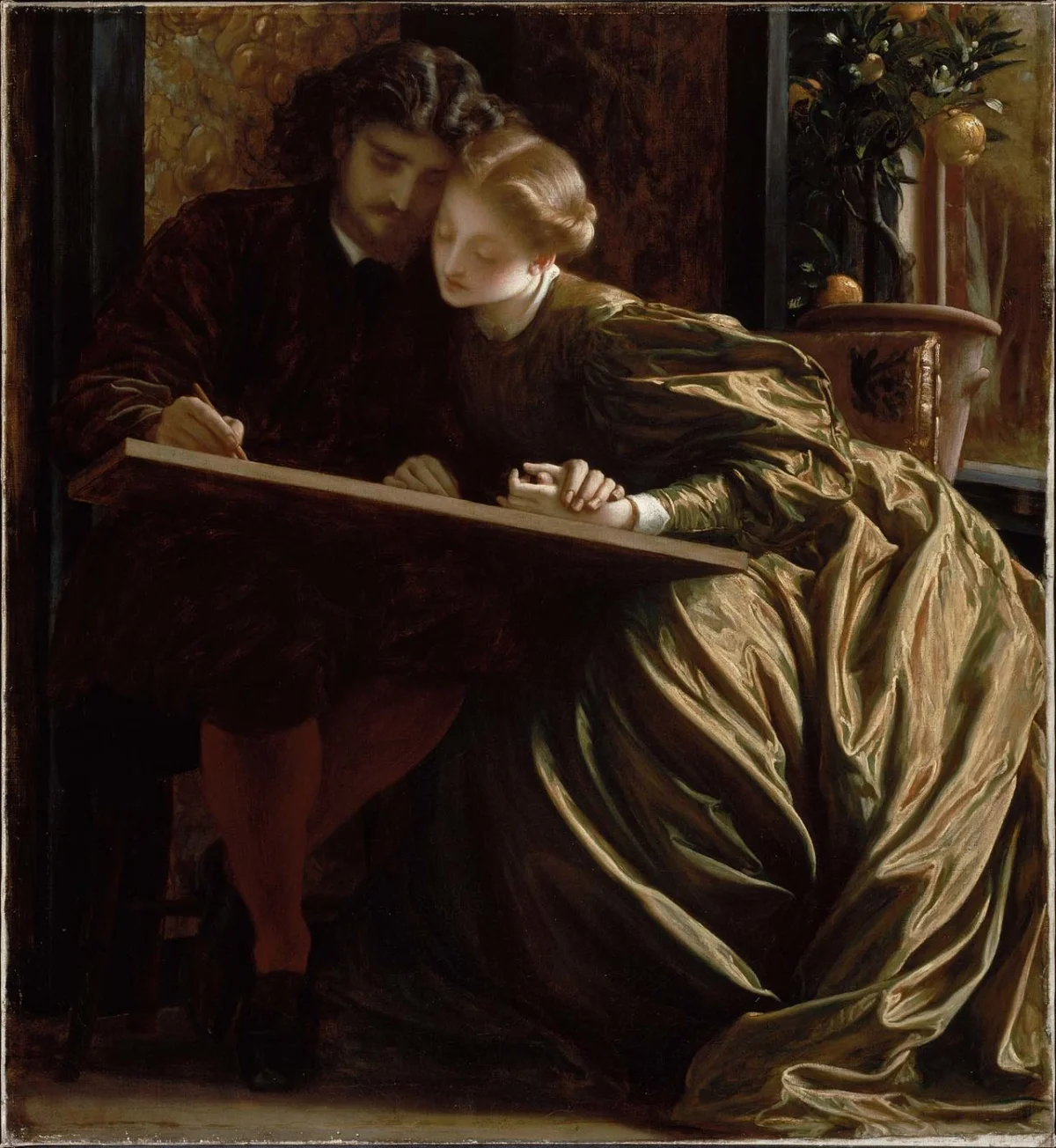
Lord Frederick Leighton’s "A Girl Feeding Peacocks" exemplifies the refined technique characteristic of Academic Classicism. Every detail in this oil on canvas radiates precision and elegance, from the intricate feathers of the peacocks to the flowing garments of the young girl. The painting’s luminous colors and balanced composition further demonstrate Leighton’s expertise. Collectors of fine art will appreciate this piece alongside related works like "Pavonia" and "The Painter's Honeymoon," all celebrated examples of masterful oil on canvas artistry.
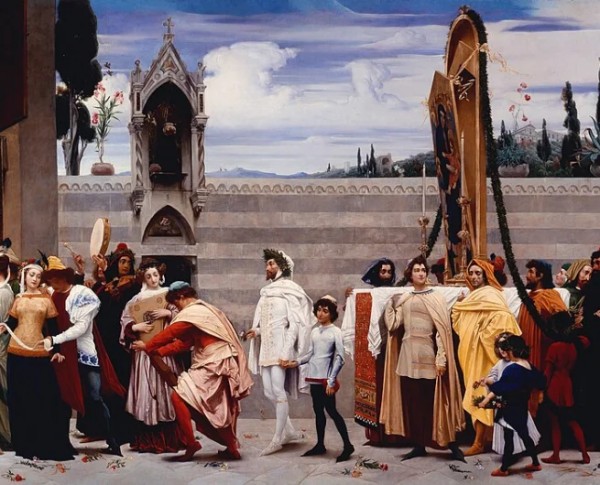
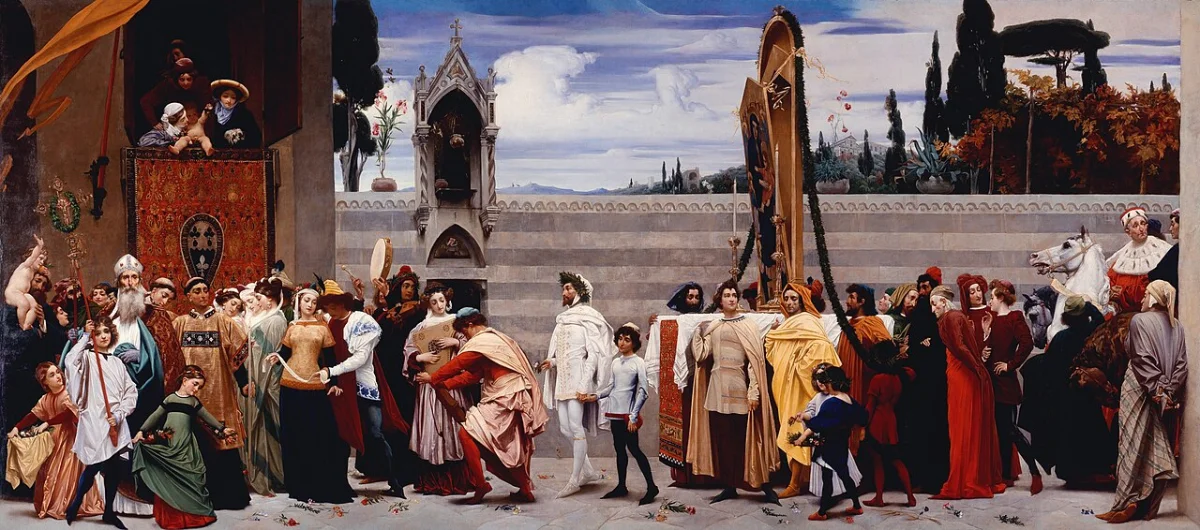
Leighton’s "A Girl Feeding Peacocks" is more than a visual delight—it tells a story through thoughtful symbolism. The peacocks, often representing beauty and immortality, interact gracefully with the girl, suggesting innocence and harmony in nature. This hand-painted oil painting invites viewers to interpret its subtle narrative, much like Leighton’s other works such as "Cimabue's Celebrated Madonna Carried in Procession Through the Streets of Florence." Each fine art painting for sale from this period carries a unique story and timeless appeal.
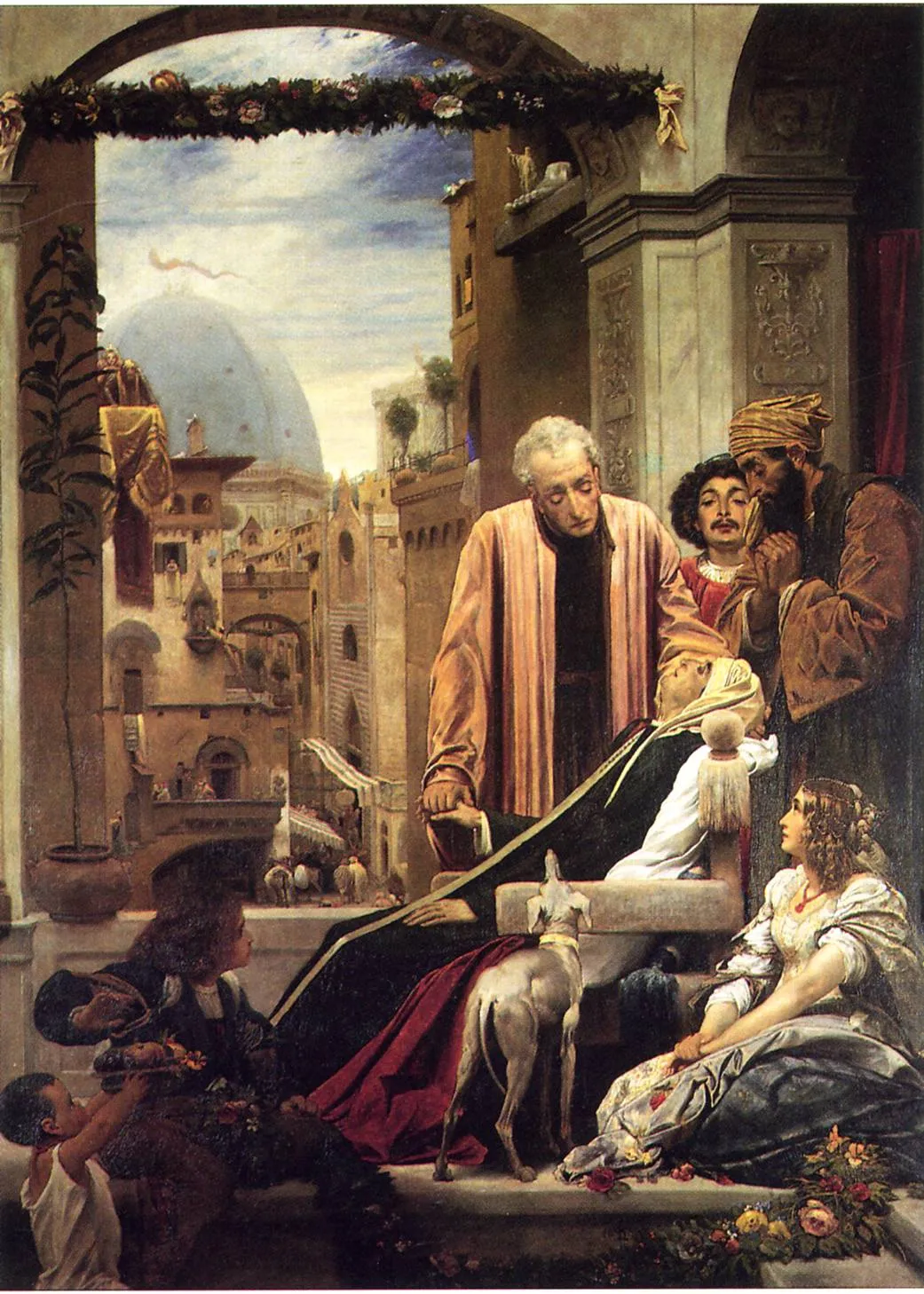
For art enthusiasts, "A Girl Feeding Peacocks" by Lord Frederick Leighton is a coveted addition to any collection. The painting’s status as a fine art painting for sale highlights its desirability among collectors of Academic Classicism. Its elegance and historical significance make it a centerpiece, complemented by other Leighton masterpieces like "The Death of Brunelleschi" and "Pavonia." Investing in such oil on canvas works ensures the preservation of artistic heritage and the enjoyment of timeless beauty.
When Art Meets History
"A Girl Feeding Peacocks" by Lord Frederick Leighton stands as a testament to the grandeur of the Academic Classicism movement. Painted in the late 19th century, this hand-painted oil painting captures a serene moment that reflects the era’s fascination with beauty, nature, and classical themes. Leighton's work, alongside masterpieces like "Equality before Death" and "Dionysia," continues to inspire art lovers and historians, illustrating the enduring legacy of Academic Classicism in fine art.
Techniques That Speak
Leighton’s "A Girl Feeding Peacocks" showcases masterful oil on canvas techniques, with meticulous attention to light, texture, and detail. The artist’s skill in rendering lifelike figures and vibrant peacock plumage exemplifies the technical prowess of Academic Classicism. Similar to his works "Springtime" and "Half Length Figure," Leighton’s brushwork and color palette in this piece highlight the movement’s dedication to realism and idealized beauty, making it a standout example of 19th-century artistry.
Emotions on Display
This fine art painting for sale radiates tranquility and gentle interaction, as the young girl’s tender gesture towards the peacocks evokes a sense of innocence and harmony with nature. Lord Frederick Leighton’s ability to convey emotion through posture and expression is evident, drawing viewers into the scene. Works like "Church Interior" and "Dionysia" similarly explore emotion and atmosphere, solidifying Leighton’s reputation as a master storyteller within the Academic Classicism movement.
Coveted by Collectors
"A Girl Feeding Peacocks" remains highly sought after by collectors of Academic Classicism, prized for its exquisite detail and historical significance. As a hand-painted oil painting, it represents the pinnacle of Leighton’s artistic achievements and stands alongside related pieces such as "Equality before Death" and "Springtime." This artwork’s rarity and beauty make it a coveted addition to any serious collection, reflecting the ongoing demand for timeless fine art paintings from this celebrated era.
Related Academic Classicism Hand-Painted Oil Paintings by Other Artists
Other Famous Academic Classicism Artists:
Frequently Asked Questions About A Girl Feeding Peacocks
What is the historical context of "A Girl Feeding Peacocks"?
"A Girl Feeding Peacocks" was painted by Lord Frederick Leighton in the late 19th century, a period characterized by the Victorian fascination with nature and beauty. This artwork reflects the era's romanticism and the growing interest in exotic themes and subjects.
What artistic techniques did Leighton employ in this painting?
Leighton utilized a combination of vibrant color palettes, intricate detail, and a focus on natural light to bring the scene to life. His mastery of oil painting is evident in the textures of the girl's clothing and the feathers of the peacocks.
What is the significance of the peacocks in the painting?
Peacocks are often symbols of beauty, pride, and immortality. In this painting, they may represent the allure of nature and the connection between humanity and the natural world, as well as the innocence of the girl interacting with them.
How does the composition of the painting contribute to its meaning?
The composition draws the viewer's eye towards the girl and the peacocks, creating a focal point that emphasizes the interaction between them. The use of space and arrangement highlights themes of harmony and coexistence within nature.
What role does the girl play in the narrative of the painting?
The girl serves as a bridge between the viewer and the natural world, embodying innocence and curiosity. Her gentle interaction with the peacocks suggests a theme of nurturing and the beauty of childhood exploration.
What influences can be seen in Leighton's style in this work?
Leighton's style is influenced by the Pre-Raphaelite movement, which emphasized detail and vibrant colors, as well as classical themes. This painting showcases his ability to blend these influences while maintaining his unique artistic voice.
How does "A Girl Feeding Peacocks" reflect Victorian ideals?
The painting reflects Victorian ideals of femininity, beauty, and the appreciation of nature. It encapsulates the era's romantic vision of women as gentle caretakers of the natural world, emphasizing their connection to beauty and grace.
What emotions does the painting evoke in viewers?
The painting evokes feelings of tranquility, joy, and nostalgia. The serene interaction between the girl and the peacocks invites viewers to reflect on their own experiences with nature and the innocence of childhood.
In what ways does this painting exemplify the genre of genre painting?
This painting exemplifies genre painting by depicting a scene from everyday life, focusing on the interaction between humans and animals. It captures a moment of leisure and harmony, characteristic of the genre's intent to portray relatable, intimate experiences.
What is the legacy of "A Girl Feeding Peacocks" in the art world?
The legacy of "A Girl Feeding Peacocks" lies in its celebration of beauty and nature, influencing subsequent artists to explore similar themes. It remains a significant work in Leighton's oeuvre, showcasing his technical skill and thematic depth.























_GFM_Painting_(1).webp)


 100% Hand-Painted: Finished in 3-6 Weeks

.png)















_(1).webp)