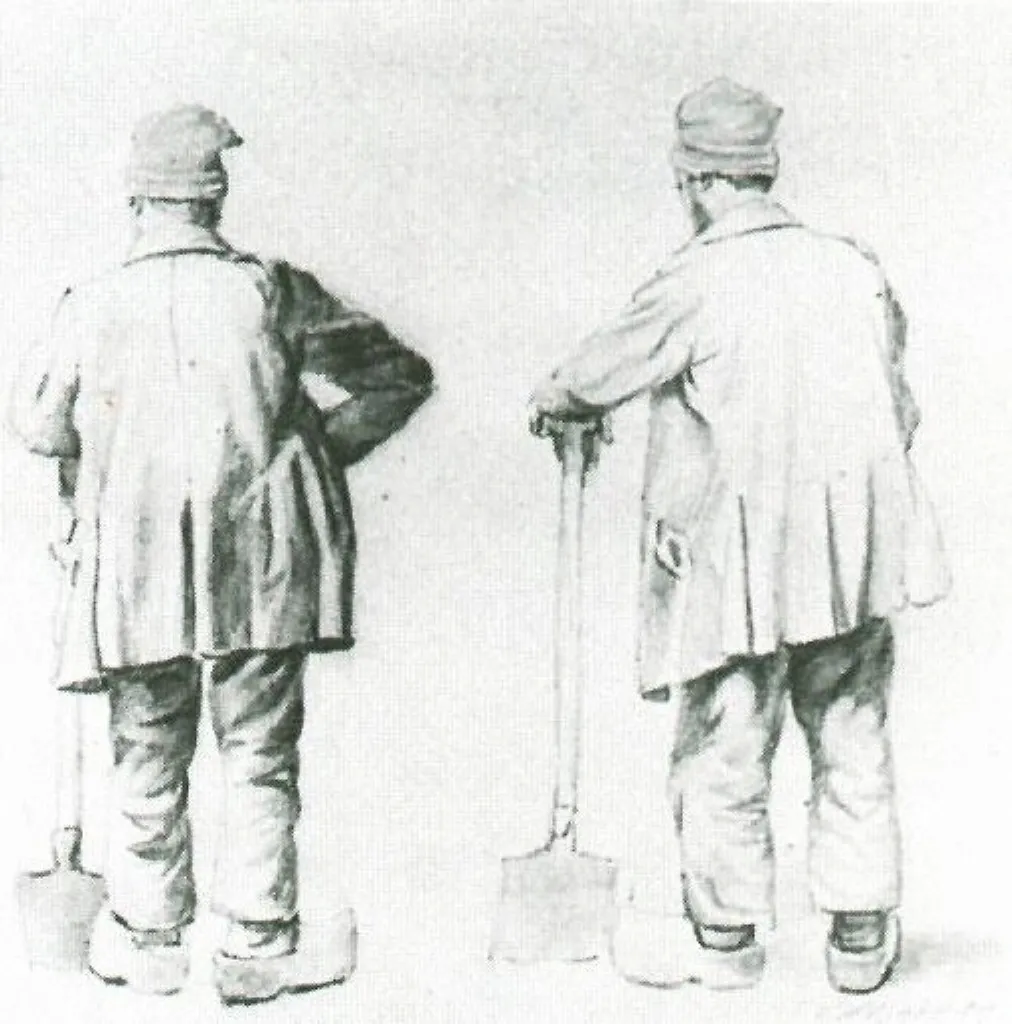
Van Gogh’s technique in this oil on canvas is unmistakable, with bold lines and expressive forms that define the Post-Impressionism movement. The artist’s ability to convey emotion through texture and color makes "Two Sketches of a Man Leaning on His Spade" a remarkable study in artistic mastery. Those interested in similar techniques might explore related products like "At Eternity’s Gate" or "Olive Trees With Yellow Sky And Sun," each demonstrating Van Gogh’s evolving style.
Every fine art painting for sale by Vincent Van Gogh tells a unique story, and "Two Sketches of a Man Leaning on His Spade" is no exception. The depiction of the solitary figure invites viewers to reflect on themes of perseverance and solitude, hallmarks of the Post-Impressionism movement. Collectors often pair this work with pieces such as "Young Fisherwoman From Scheveningen, Standing: Facing Left" to further explore Van Gogh’s narrative depth and symbolic artistry.
"Two Sketches of a Man Leaning on His Spade" remains a coveted piece among those seeking a hand-painted oil painting with historical significance. Van Gogh’s legacy in the Post-Impressionism movement ensures that his works, including related products like "Peatery in Drenthe," maintain enduring value. Owning this painting connects collectors to an era of profound artistic exploration, making it an exceptional addition to any fine art collection.
When Art Meets History
Vincent Van Gogh’s "Two Sketches of a Man Leaning on His Spade" is a remarkable hand-painted oil painting from the Post-Impressionism movement. Created during a period of artistic innovation, this work reflects Van Gogh’s fascination with rural life and the everyday laborer. Like his contemporaries in "The Yellow Christ" and "The Green Christ," Van Gogh found inspiration in the ordinary. This historical context enriches the appreciation of the painting and its place among fine art masterpieces.
Techniques That Speak
Van Gogh’s mastery is evident in his bold brushstrokes and textured application of oil on canvas, which bring "Two Sketches of a Man Leaning on His Spade" to life. The artist’s technique, similar to approaches seen in "Whitby Abbey" and "Honfleur," creates a dynamic sense of movement and depth. His innovative use of color and line, hallmarks of Post-Impressionism, make this piece a standout among his many celebrated works.
Emotions on Display
In "Two Sketches of a Man Leaning on His Spade," Van Gogh channels powerful emotion through his depiction of a solitary figure at work. This fine art painting for sale captures both the fatigue and dignity inherent in manual labor, inviting viewers to empathize with the subject. The emotional resonance found here echoes that in "End of the pier" and "Ia Orana Maria," making it a deeply human addition to the Post-Impressionist canon.
Coveted by Collectors
Vincent Van Gogh’s "Two Sketches of a Man Leaning on His Spade" remains highly sought after by collectors of Post-Impressionism. As a hand-painted oil painting, its rarity and historical significance contribute to its desirability. Collectors often compare its value to other works like "The Green Christ" and "The Yellow Christ," recognizing its importance in Van Gogh’s body of work and its enduring appeal in the world of fine art.
Related Post-Impressionism Hand-Painted Oil Paintings by Other Artists
Other Famous Post-Impressionism Artists:
Frequently Asked Questions About Two Sketches of a Man Leaning on His Spade
What is the historical context of "Two Sketches of a Man Leaning on His Spade"?
This artwork was created by Vincent Van Gogh in 1881, during a period when he was exploring themes of rural life and labor, reflecting his interest in the struggles of the working class.
What artistic techniques did Van Gogh employ in this painting?
Van Gogh utilized expressive line work and a loose sketching style to convey movement and emotion, emphasizing the figure's posture and the weight of the spade.
What does the figure in the sketches symbolize?
The man leaning on his spade symbolizes the toil and resilience of laborers, representing the connection between humanity and the earth, a recurring theme in Van Gogh's work.
How do these sketches relate to Van Gogh's broader body of work?
The sketches reflect Van Gogh's fascination with peasant life and his desire to portray the dignity of labor, which is evident in many of his later paintings, such as "The Potato Eaters."
What materials did Van Gogh use for these sketches?
Van Gogh likely used pencil and ink on paper for these sketches, allowing for quick, expressive lines that capture the essence of the subject with immediacy.
In what ways did Van Gogh's style evolve during the time he created this artwork?
During this period, Van Gogh's style was transitioning from realism to a more expressive approach, characterized by bold lines and emotive forms, which would later culminate in his iconic post-impressionist style.
What influence did Van Gogh's personal experiences have on this artwork?
Van Gogh's own struggles with mental health and his deep empathy for the working class influenced his portrayal of laborers, imbuing the sketches with a sense of connection and understanding.
How do these sketches compare to Van Gogh's other works featuring laborers?
Compared to his other works, such as "The Potato Eaters," these sketches are more raw and immediate, capturing the essence of labor without the narrative depth found in his later paintings.
What was Van Gogh's intention behind creating these sketches?
Van Gogh aimed to capture the spirit of the laborer and the beauty of rural life, using these sketches as a means to explore and express his admiration for the working class.
How has "Two Sketches of a Man Leaning on His Spade" been received by art historians?
Art historians regard this work as a significant exploration of Van Gogh's early style and thematic interests, noting its importance in understanding his evolution as an artist and his social consciousness.






















_GFM_Painting_(1).webp)


 100% Hand-Painted: Finished in 3-6 Weeks

.png)
















_(1).webp)