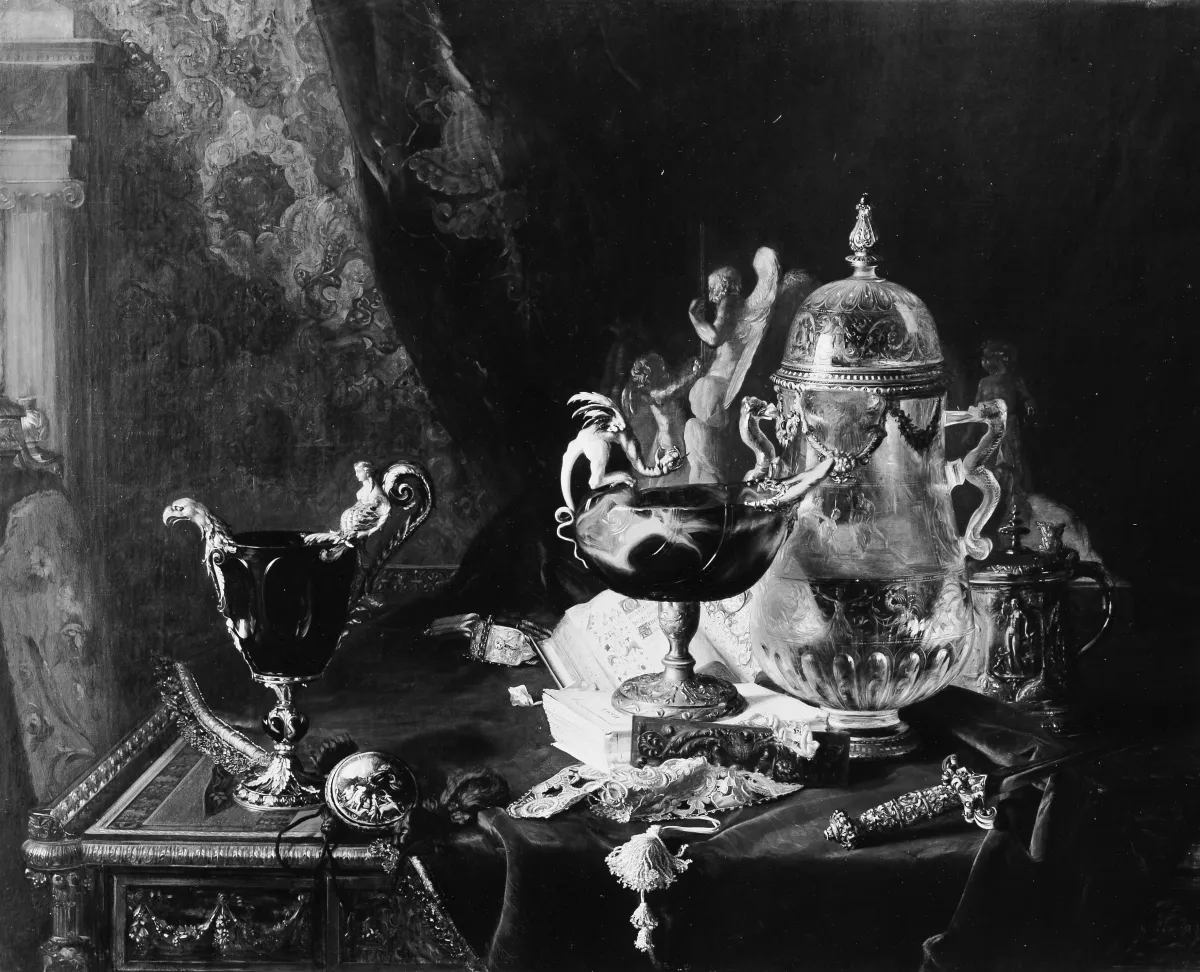
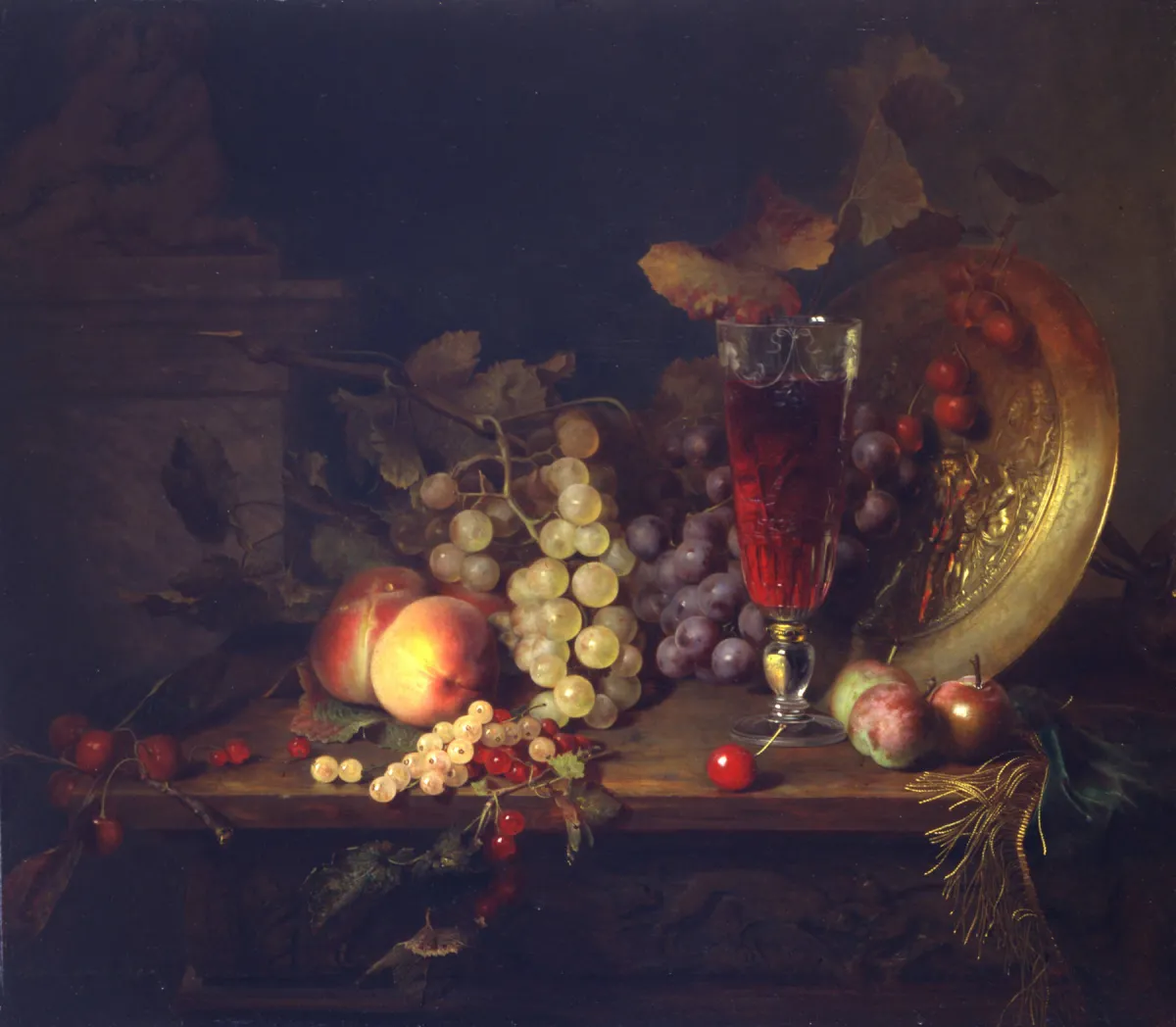
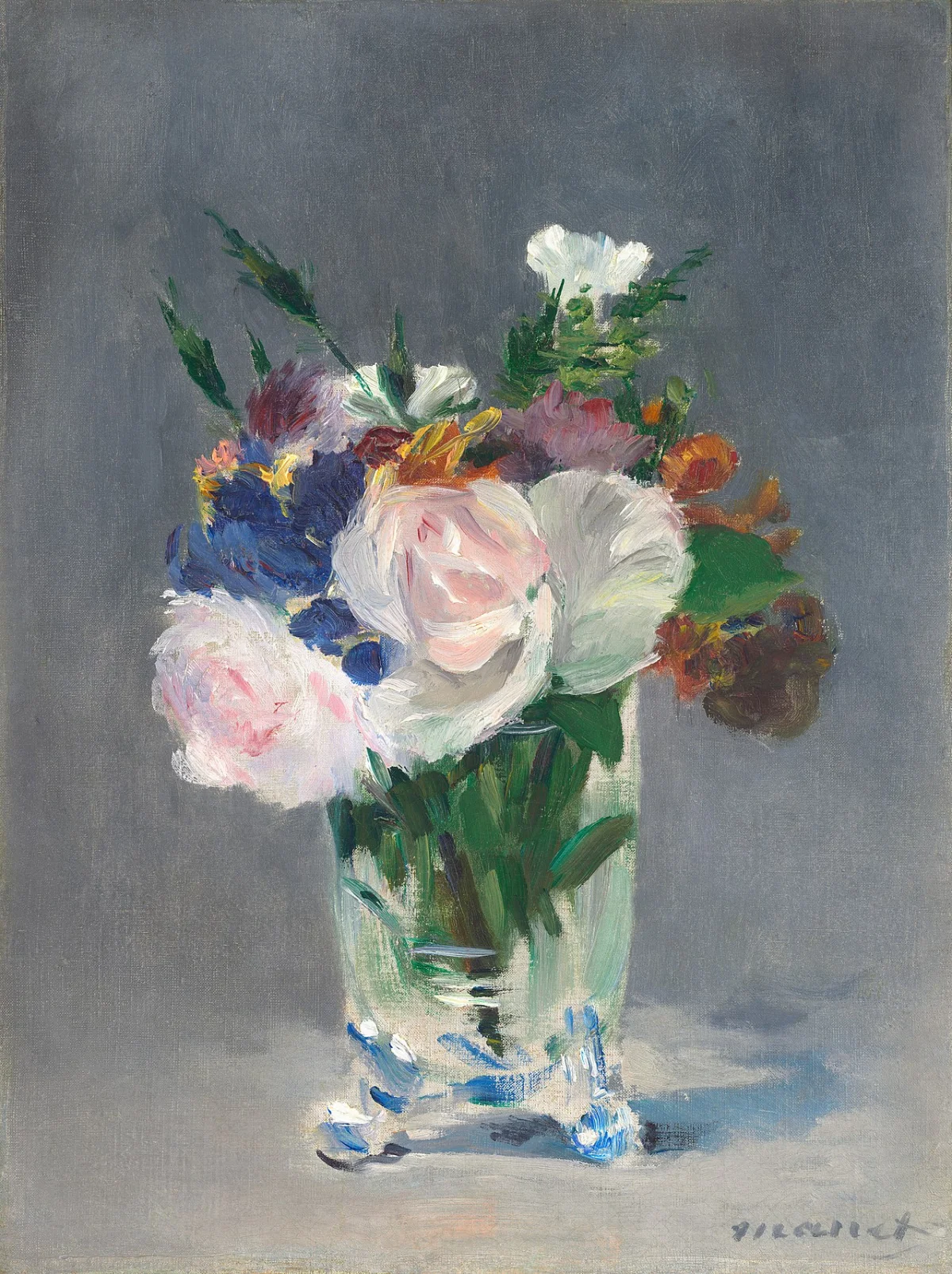
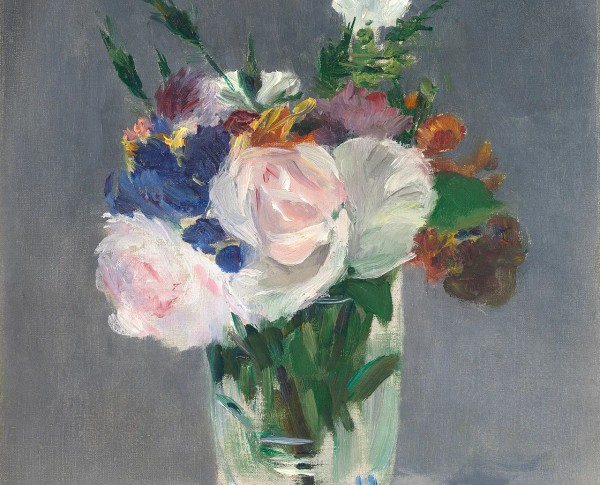
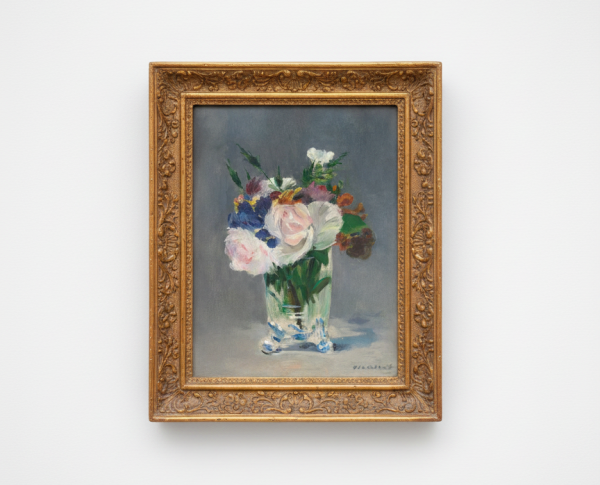
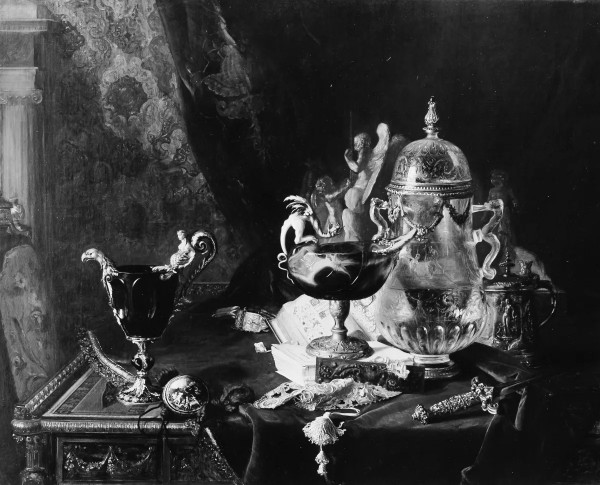
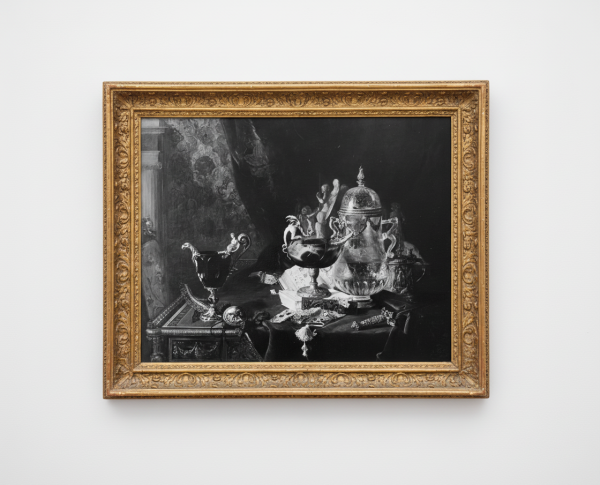
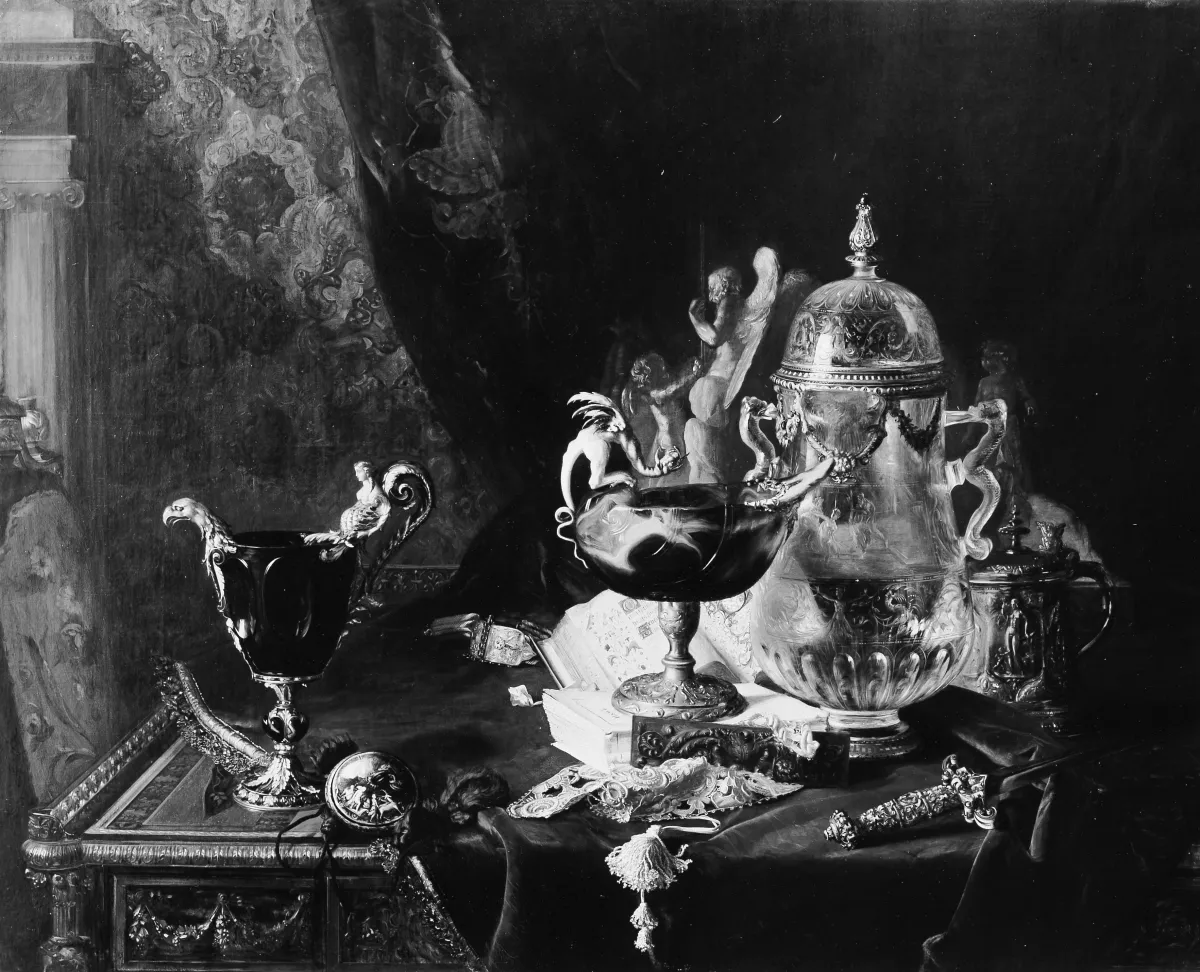
Desgoffe’s “A nautilus cup on a carved stand with a floral still life” demonstrates the exquisite precision of oil on canvas that defines the Academic Art movement. Every element, from the intricate carvings of the stand to the delicate petals of the flowers, reveals his technical brilliance. This painting shares a kinship with related products like “Still Life: Objects of Art” and “Urne et drapé sur un entablement,” showcasing Desgoffe’s skill in transforming everyday objects into timeless masterpieces.
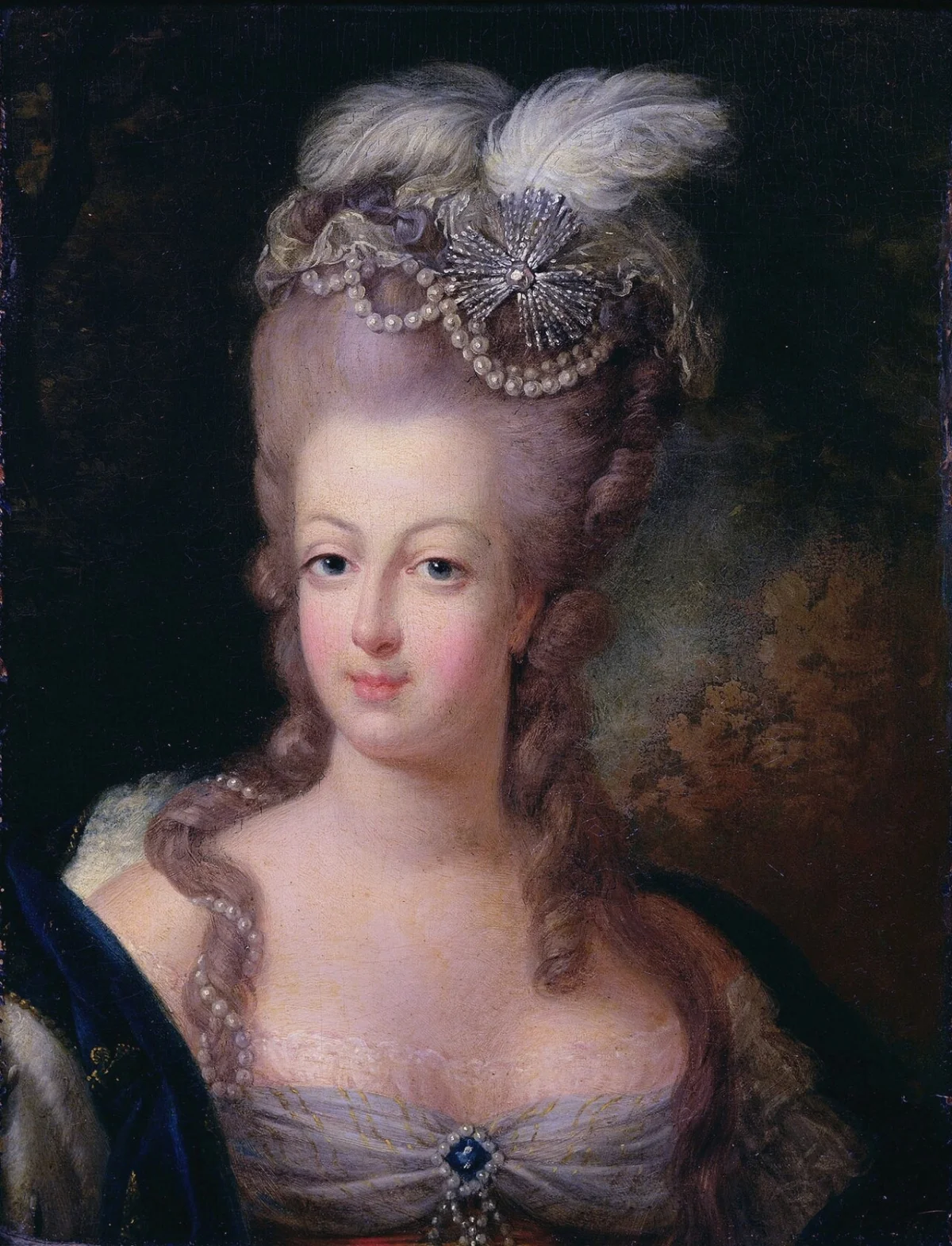
Within this fine art painting for sale, Desgoffe weaves a narrative rich with symbolism. The nautilus cup, a symbol of opulence, and the lush floral arrangement evoke themes of beauty and transience, hallmarks of Academic Art. Similar motifs can be seen in works such as “Objects of Art used by Marie Antoinette.” Each element in Desgoffe’s composition invites viewers to reflect on the stories hidden within everyday objects, elevating the still life genre.
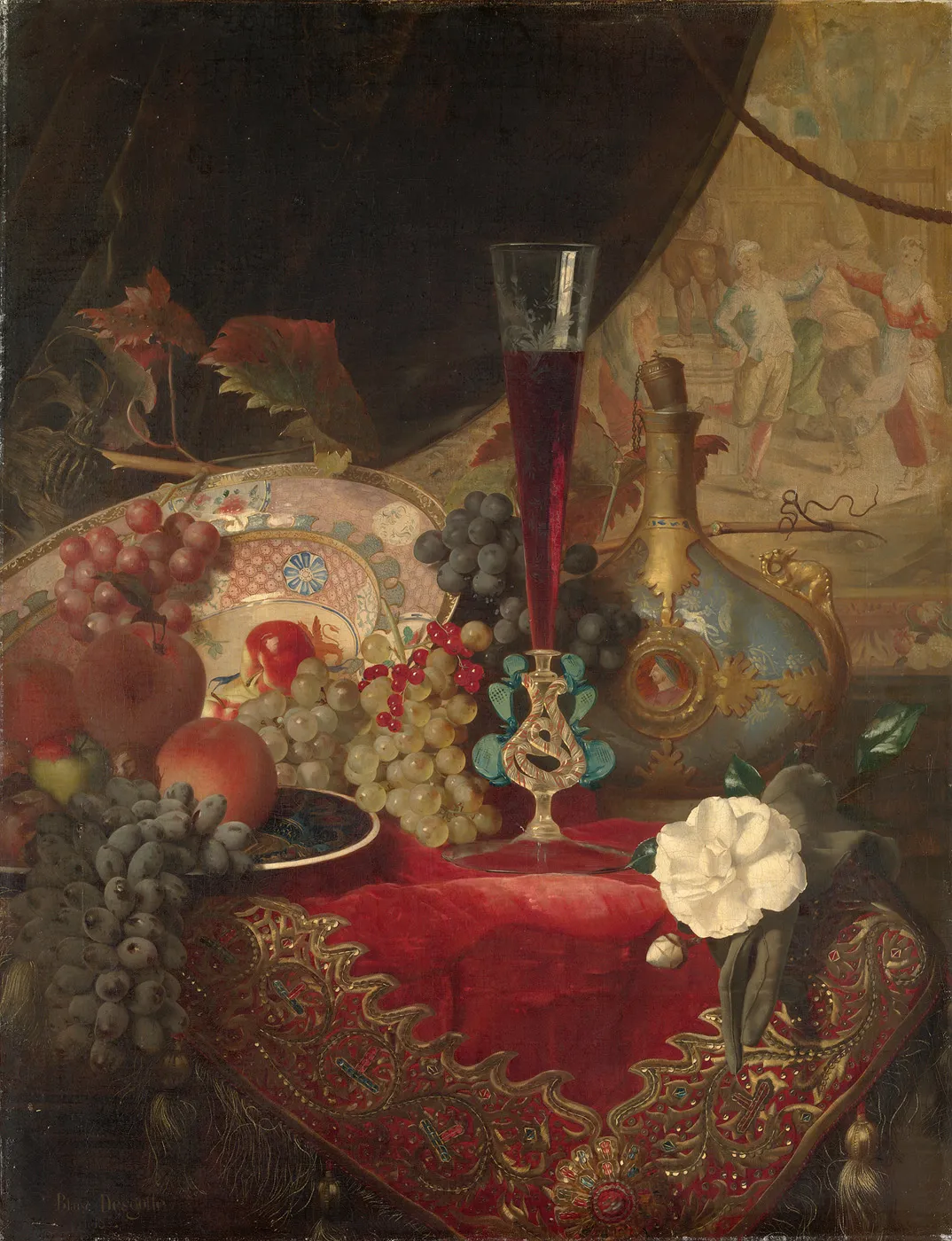
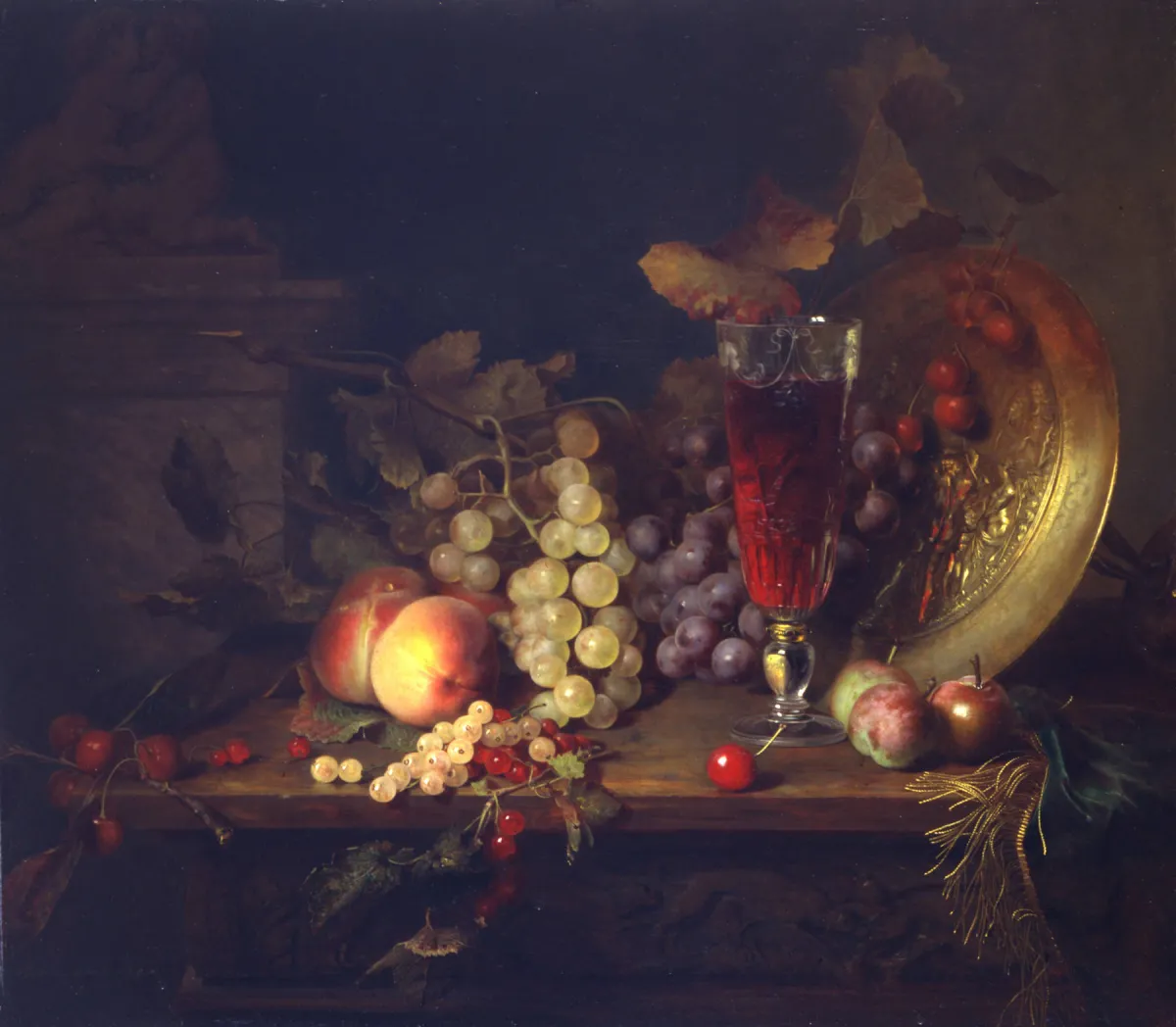
“A nautilus cup on a carved stand with a floral still life” by Blaise Alexandre Desgoffe stands as a prized addition to any collection of Academic Art. This hand-painted oil painting is highly sought after by connoisseurs who appreciate Desgoffe’s legacy and craftsmanship. Collectors often seek out related works like “Still Life with Fruit, Glass of Wine” and “Urne et drapé sur un entablement” to complement their collections and celebrate the enduring beauty of oil on canvas.
When Art Meets History
"A nautilus cup on a carved stand with a floral still life" by Blaise Alexandre Desgoffe is a prime example of the Academic Art movement, renowned for its refined realism and classical themes. This hand-painted oil painting captures the elegance and opulence of 19th-century still life, reflecting the artist’s meticulous attention to historical artifacts. Desgoffe, also known for related works like "Study for the Head of an Angel in Saint Isidore," masterfully bridges art and history in this exquisite composition.
Techniques That Speak
Blaise Alexandre Desgoffe’s "A nautilus cup on a carved stand with a floral still life" is rendered in oil on canvas, showcasing his technical prowess. The Academic Art movement emphasized precision, and Desgoffe’s handling of textures—such as the gleaming nautilus shell and delicate petals—demonstrates his exceptional skill. Similar attention to detail can be found in related paintings like "Vercingetorix Throwing down His Weapons at the feet of Julius Caesar" and "A Nymph by a Fountain," further highlighting his mastery.
Emotions on Display
This fine art painting for sale evokes a sense of awe and admiration through its harmonious composition and rich symbolism. Desgoffe’s "A nautilus cup on a carved stand with a floral still life" invites viewers to contemplate beauty and impermanence, themes common in Academic Art. The artist’s emotional depth is echoed in works like "Jeune femme denudée sur canape (Young woman naked on a settee)" and "Drunken peasants," which also explore human sentiment and elegance.
Coveted by Collectors
Collectors highly prize "A nautilus cup on a carved stand with a floral still life" for its refined execution and historical resonance. As a hand-painted oil painting by Blaise Alexandre Desgoffe, it represents the pinnacle of Academic Art, appealing to connoisseurs seeking timeless beauty. The painting’s connection to other masterpieces—such as "A Nymph by a Fountain" and "Study for the Head of an Angel in Saint Isidore"—further enhances its desirability among those searching for a fine art painting for sale.
Related Academic Art Hand-Painted Oil Paintings by Other Artists
Other Famous Academic Art Artists:
Frequently Asked Questions About A nautilus cup on a carved stand with a floral still life
What is the historical significance of the nautilus cup depicted in the painting?
The nautilus cup is a symbol of luxury and refinement, often associated with the wealth of the elite during the 18th century. It reflects the fascination with natural forms and the use of exotic materials in decorative arts during this period.
Who was Blaise Alexandre Desgoffe and what was his artistic style?
Blaise Alexandre Desgoffe was a French painter known for his still life compositions that often included intricate details and a rich color palette. His work is characterized by a meticulous attention to texture and light, emphasizing the beauty of everyday objects.
What does the floral still life in the painting symbolize?
The floral still life symbolizes the transience of beauty and life, a common theme in still life paintings. Flowers are often used to convey messages about the fleeting nature of existence and the importance of appreciating beauty in the moment.
How does the composition of the painting enhance its thematic elements?
The composition, with the nautilus cup prominently displayed on a carved stand surrounded by flowers, creates a harmonious balance that draws the viewer's eye. This arrangement emphasizes the relationship between nature and craftsmanship, highlighting the beauty of both the natural and the man-made.
What techniques did Desgoffe use to depict the textures in the painting?
Desgoffe employed techniques such as chiaroscuro to create depth and dimension, as well as fine brushwork to capture the intricate textures of the nautilus shell and the delicate petals of the flowers. This attention to detail enhances the realism of the still life.
What cultural influences are evident in Desgoffe's work?
Desgoffe's work reflects the influence of the Rococo style, characterized by ornate details and a celebration of nature. Additionally, the use of exotic objects like the nautilus cup indicates the impact of global trade and the European fascination with the natural world during the Enlightenment.
What role does light play in "A nautilus cup on a carved stand with a floral still life"?
Light plays a crucial role in the painting, as it highlights the contours of the nautilus cup and the vibrancy of the flowers. Desgoffe's skillful use of light not only enhances the three-dimensionality of the objects but also evokes a sense of warmth and intimacy within the composition.
How does this painting reflect the values of the 18th-century French society?
This painting reflects the values of 18th-century French society by showcasing the appreciation for beauty, craftsmanship, and the natural world. It embodies the ideals of the Enlightenment, where art was seen as a means to elevate culture and express the complexities of human experience.
What is the significance of the carved stand in the painting?
The carved stand serves not only as a functional base for the nautilus cup but also as a symbol of artistry and skill in woodworking. Its intricate design complements the elegance of the cup, reinforcing the theme of harmony between nature and human creativity.
In what ways does this painting exemplify the still life genre?
This painting exemplifies the still life genre through its focus on inanimate objects arranged in a visually pleasing manner. The careful selection of the nautilus cup and flowers, along with the attention to detail and composition, highlights the genre's exploration of beauty, symbolism, and the passage of time.






















_GFM_Painting_(1).webp)

.webp)

 100% Hand-Painted: Finished in 3-6 Weeks
.webp)

.png)















_(1).webp)