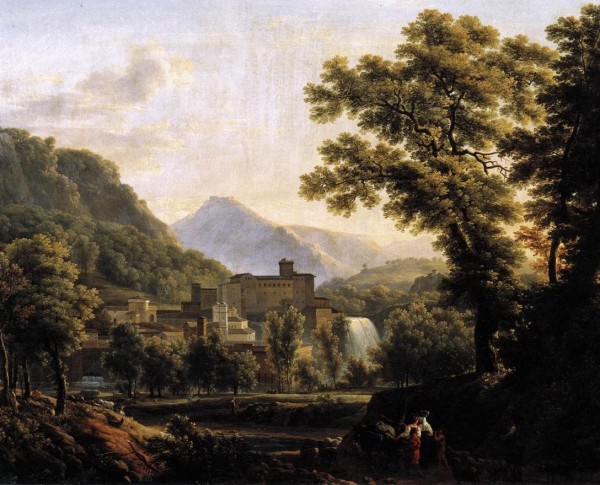
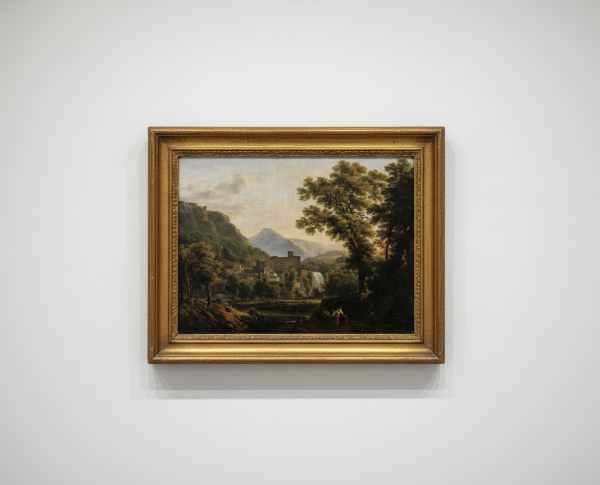
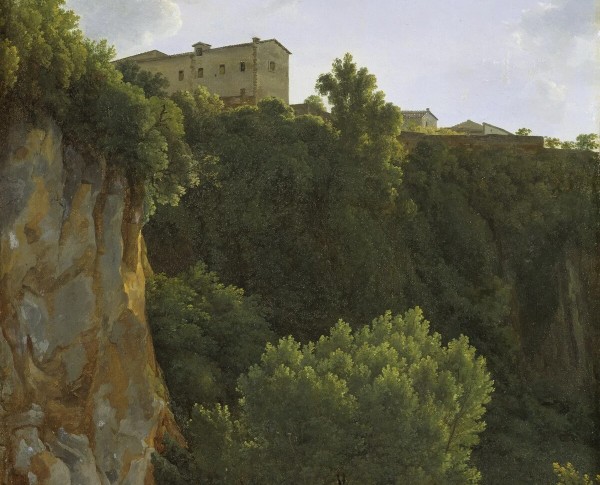
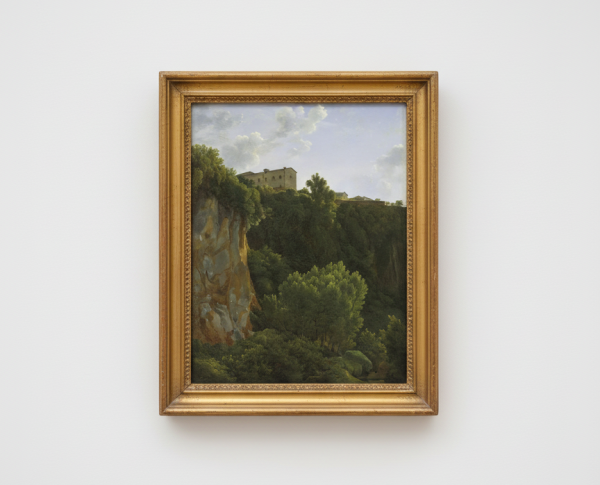
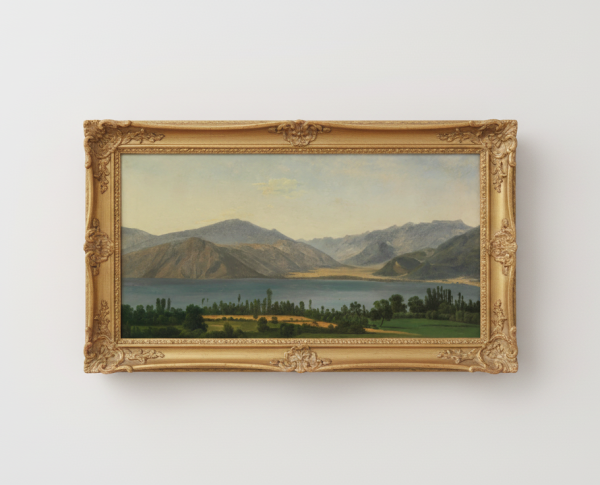
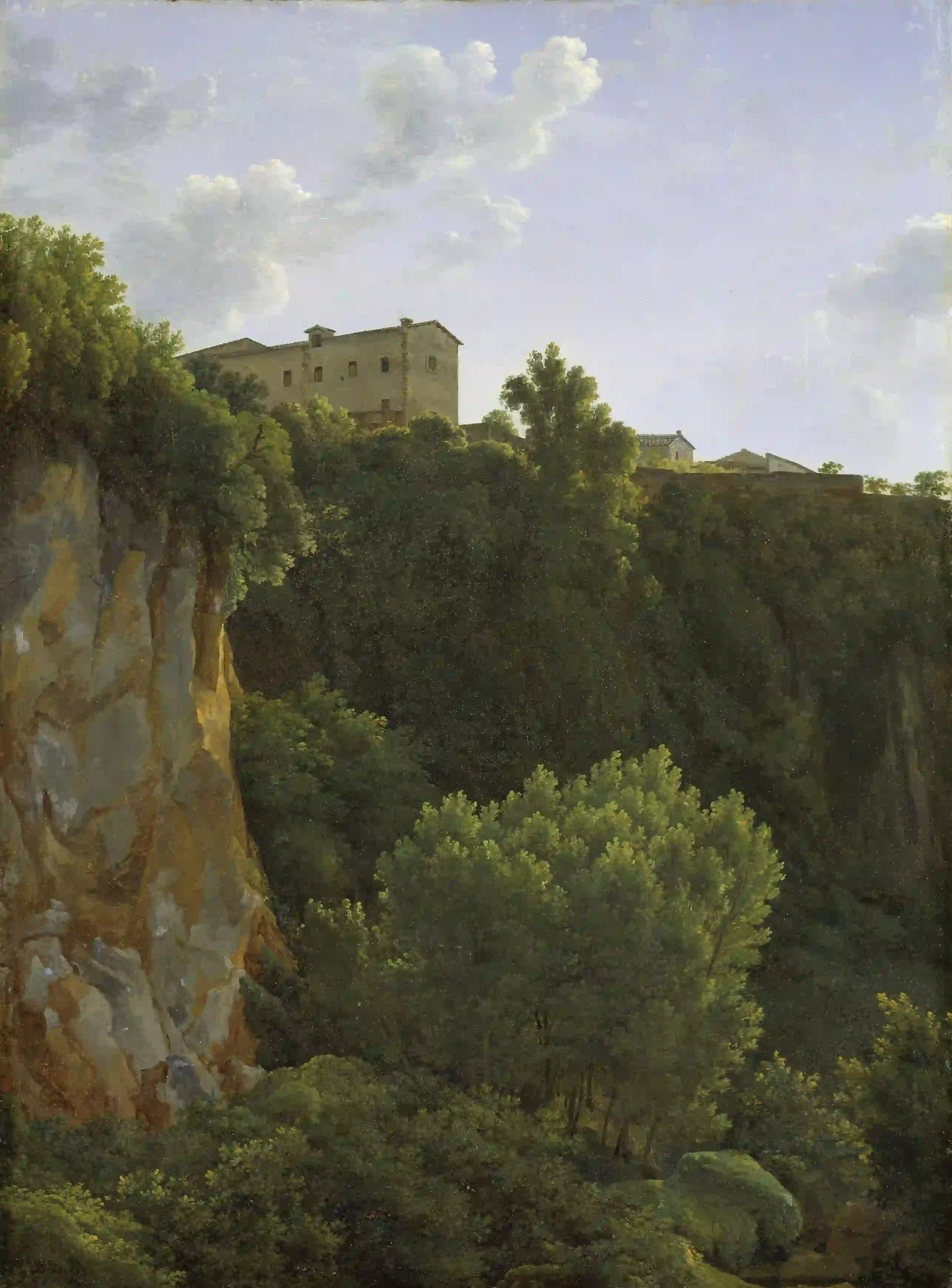
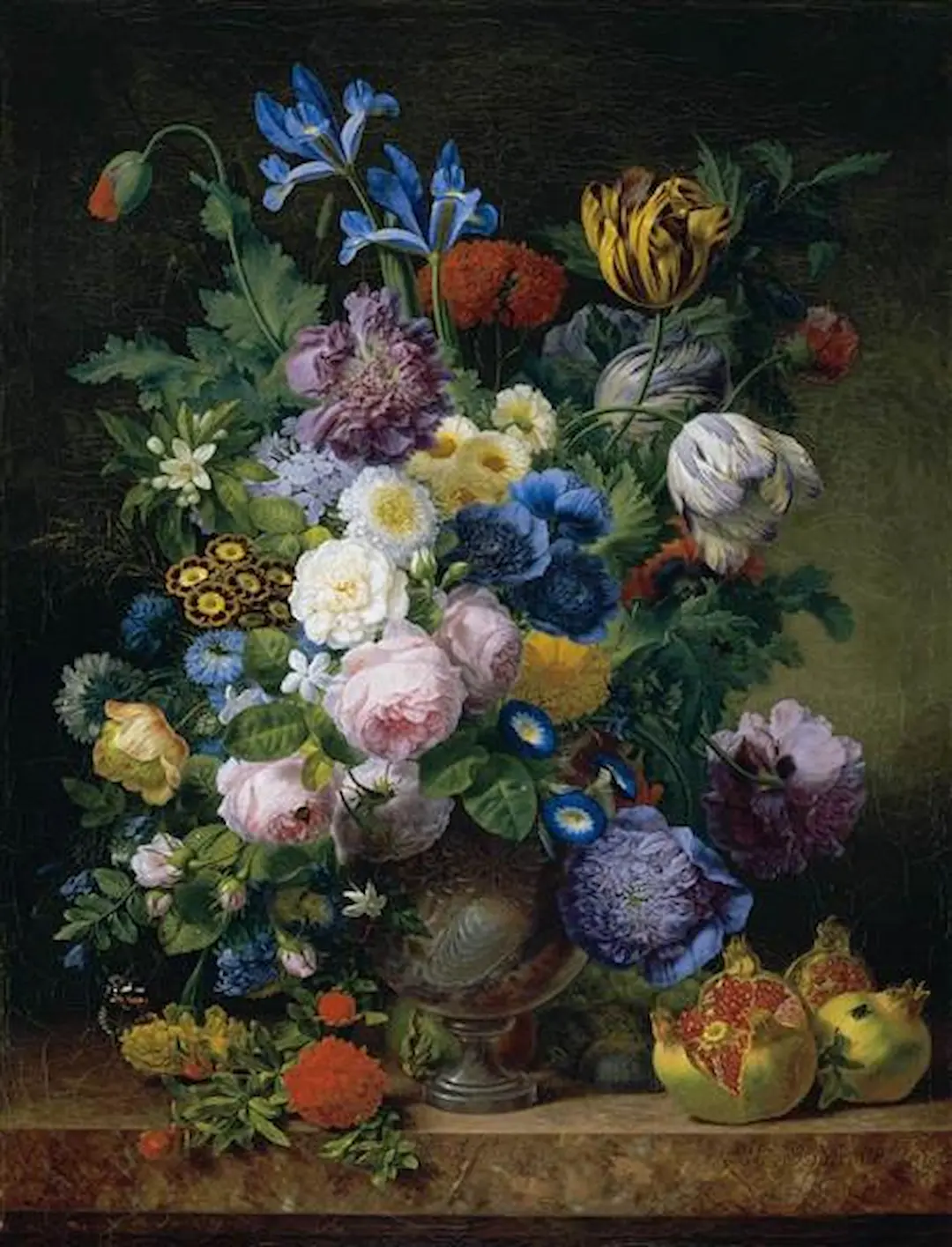
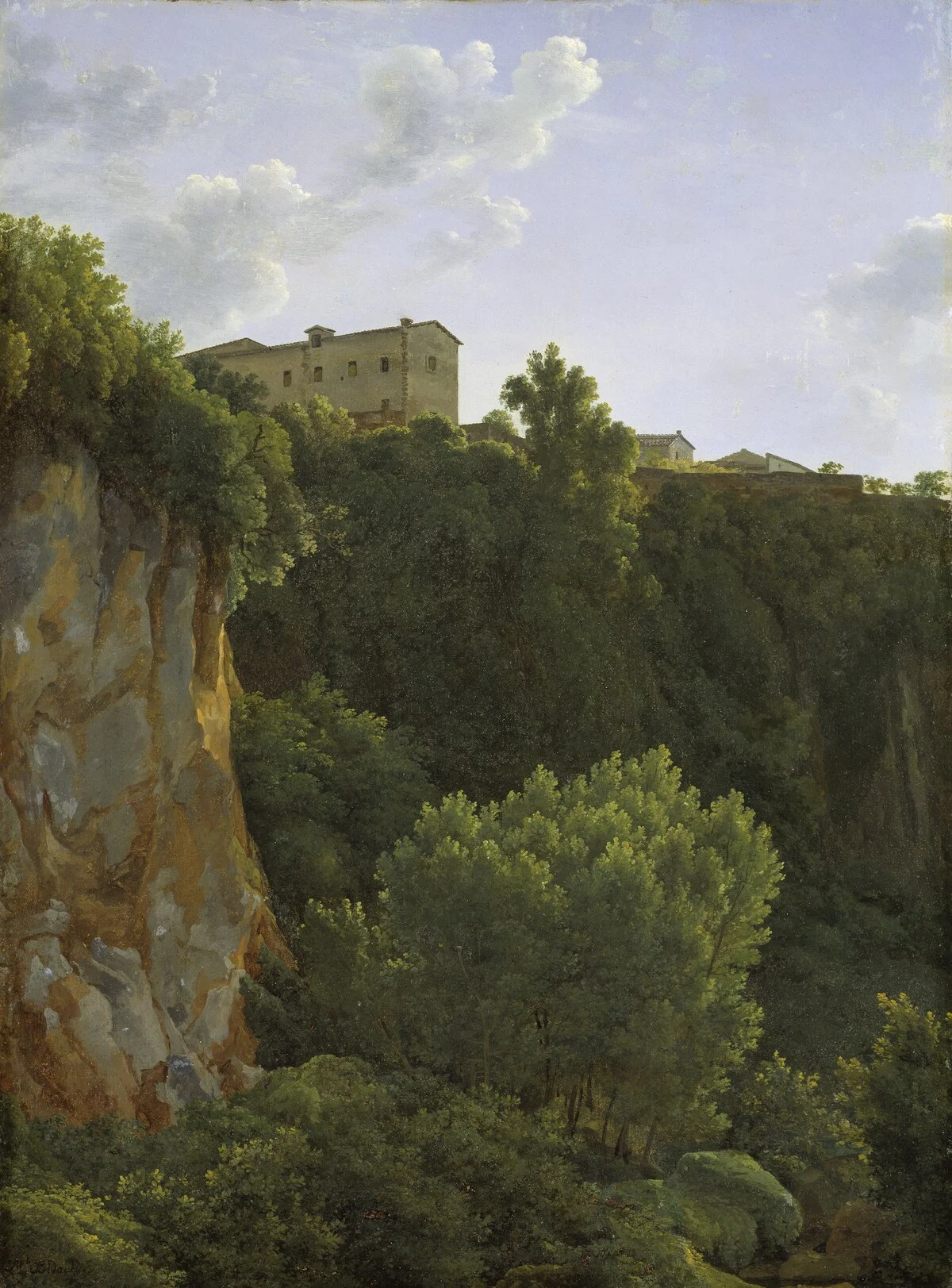
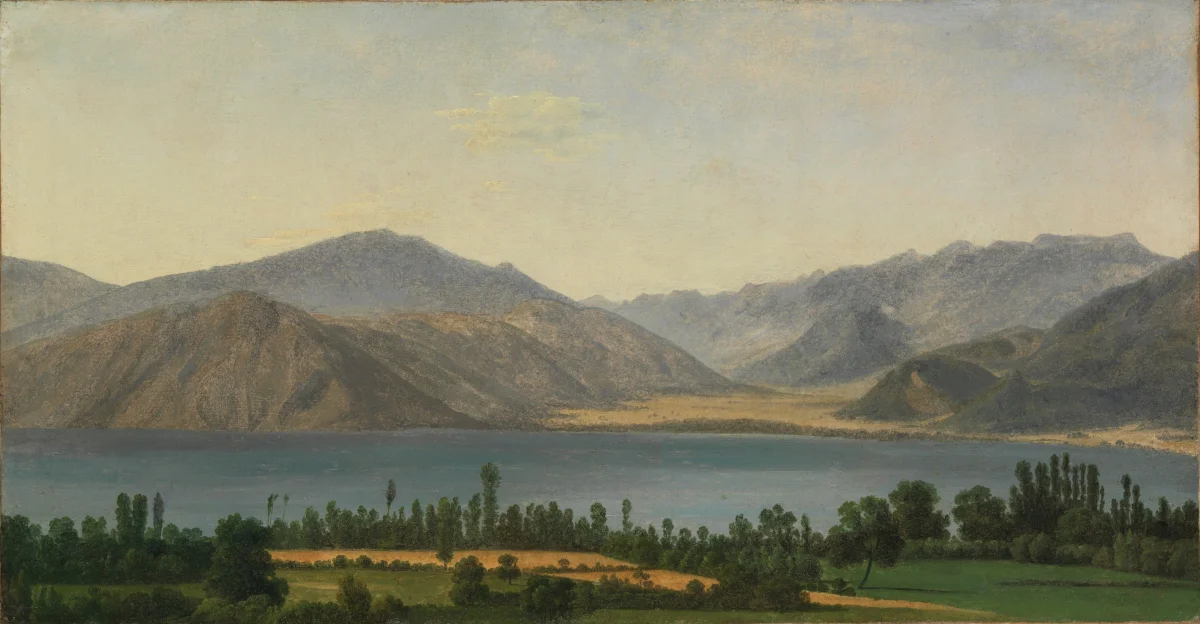
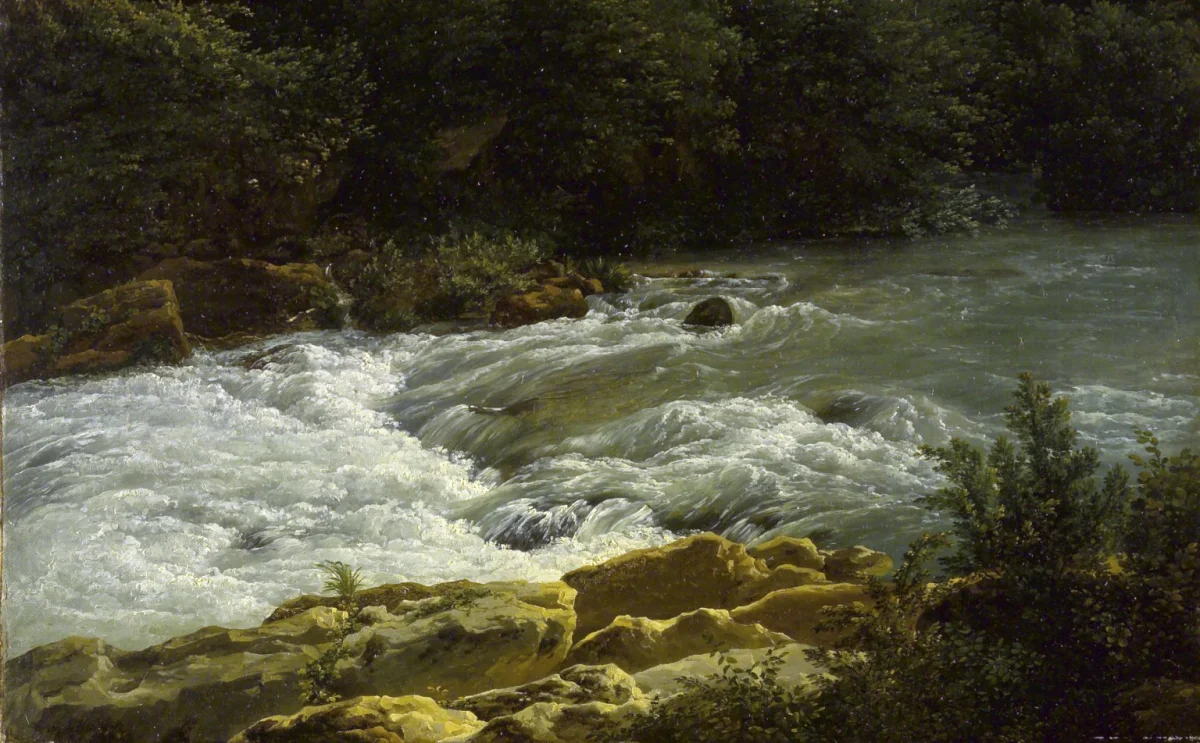
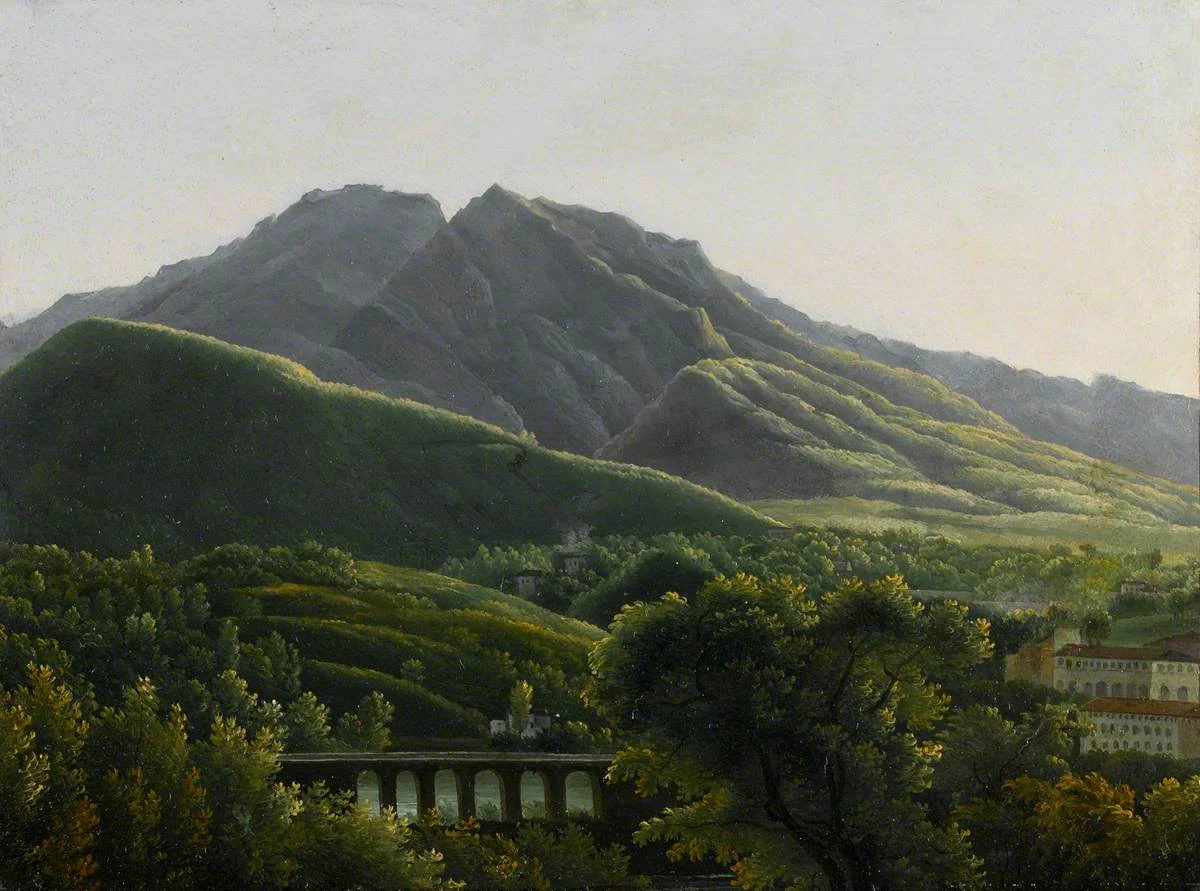
Jean-Joseph-Xavier Bidauld’s "Klippa Vid Cività Castellana" showcases exquisite technique and meticulous attention to detail through its oil on canvas medium. The artist’s brushwork brings rugged cliffs and lush scenery to life, embodying the Neo-Classical pursuit of balance and realism. Collectors often seek related masterpieces such as "Still-Life 1810" and "View of the Isle of Sora" for their remarkable execution and depth, each reflecting Bidauld’s enduring influence in fine art.
In "Klippa Vid Cività Castellana," every element tells a story, inviting viewers to explore the symbolism beneath the surface. This fine art painting for sale exemplifies the Neo-Classical tradition of infusing landscapes with meaning, as seen in Bidauld’s other works like "Grenoble" and "The park in Mortefontaine." The serene setting and balanced composition reflect an idealized vision of nature, making this piece a profound narrative within the artist’s celebrated repertoire.
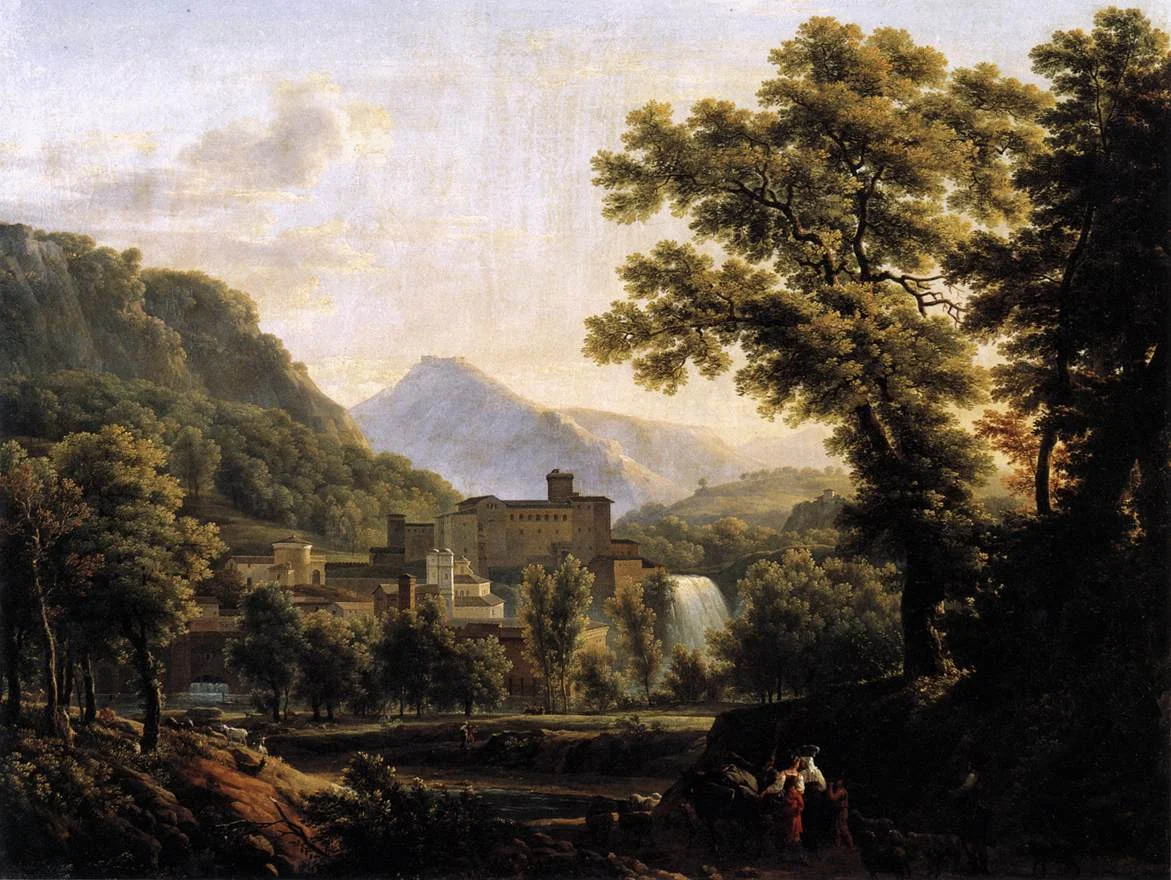
Owning "Klippa Vid Cività Castellana" by Jean-Joseph-Xavier Bidauld means acquiring a significant hand-painted oil painting from the Neo-Classical movement. Its historical and artistic value is heightened by its connection to related products such as "View of the Waterfalls at Tivoli" and "Gorge at Cività Castellana." For collectors, this masterpiece offers not only visual pleasure but also a tangible link to an era that shaped the course of European fine art.
When Art Meets History
"Klippa Vid Cività Castellana" by Jean-Joseph-Xavier Bidauld stands as a testament to the Neo-Classical movement, capturing a historic landscape with remarkable precision. This hand-painted oil painting immerses viewers in the Italian countryside, reminiscent of other masterpieces such as "Prince Vasili Vasiljevits Dolgoruki" and "Calypso's Isle." Bidauld’s work bridges the gap between history and art, making it a valuable addition to any collection of Neo-Classical art and a true celebration of artistic heritage.
Techniques That Speak
Jean-Joseph-Xavier Bidauld’s "Klippa Vid Cività Castellana" showcases his mastery of oil on canvas, a technique revered in the Neo-Classical movement. The artist’s meticulous brushwork and attention to detail echo through the rocks and sky, creating a harmonious composition. Similar technical prowess can be seen in works like "Ulysses and the Sirens" and "Lament for Icarus," where the medium brings depth and life to each scene, highlighting the enduring appeal of traditional oil painting methods.
Emotions on Display
The emotional resonance in "Klippa Vid Cività Castellana" is unmistakable, as Jean-Joseph-Xavier Bidauld infuses the landscape with tranquility and grandeur. This fine art painting for sale encapsulates the serenity of nature, inviting contemplation much like Robert Watson’s evocative pieces. Bidauld’s ability to convey mood through composition and light aligns with the ideals of the Neo-Classical movement, offering viewers a window into the artist’s world and the emotions that shaped his vision.
Coveted by Collectors
Collectors prize "Klippa Vid Cività Castellana" for its historical significance and exquisite artistry. As a hand-painted oil painting from the Neo-Classical era, it is often sought after alongside works like "Adventurer" and "Lament for Icarus." Jean-Joseph-Xavier Bidauld’s reputation and the painting’s enduring beauty make it a centerpiece in any fine art collection, appealing to those who appreciate both the technical mastery and timeless allure of this celebrated movement.
Related Neo-Classical Hand-Painted Oil Paintings by Other Artists
Other Famous Neo-Classical Artists:
Frequently Asked Questions About Klippa Vid Cività Castellana
What is the historical context of "Klippa Vid Cività Castellana"?
"Klippa Vid Cività Castellana" was created during the late 18th century, a period marked by the Romantic movement in art. This era emphasized emotion and nature, reflecting the changing attitudes towards landscape painting.
Who was Jean-Joseph-Xavier Bidauld?
Jean-Joseph-Xavier Bidauld was a French painter known for his landscapes and historical scenes. He was associated with the Romantic movement and is celebrated for his ability to capture the beauty of nature and the interplay of light and shadow.
What techniques did Bidauld use in this painting?
Bidauld employed a combination of oil painting techniques that included layering and glazing to achieve depth and luminosity. His meticulous attention to detail and use of color contribute to the overall atmospheric quality of the work.
What does the title "Klippa Vid Cività Castellana" signify?
The title translates to "Cliff by Cività Castellana," indicating the painting's focus on a specific geographical location in Italy. This reflects the Romantic fascination with nature and the sublime, as well as the artist's interest in capturing the essence of the Italian landscape.
What themes are explored in "Klippa Vid Cività Castellana"?
The painting explores themes of nature, solitude, and the sublime. It invites viewers to contemplate the relationship between humanity and the natural world, a common motif in Romantic art.
How does "Klippa Vid Cività Castellana" reflect Romantic ideals?
The painting embodies Romantic ideals through its emphasis on emotion, the beauty of nature, and the dramatic portrayal of the landscape. It evokes a sense of wonder and introspection, characteristic of the Romantic movement.
What is the significance of the landscape depicted in the painting?
The landscape in "Klippa Vid Cività Castellana" serves as a representation of the Italian countryside, which was a popular subject among Romantic artists. It symbolizes the connection between nature and the human experience, highlighting the beauty and power of the natural world.
What influences can be seen in Bidauld's work?
Bidauld was influenced by the works of earlier landscape painters, such as Claude Lorrain and Nicolas Poussin. His style reflects a blend of classical techniques and Romantic sensibilities, showcasing a deep appreciation for both tradition and innovation in landscape painting.
How does the composition of the painting contribute to its impact?
The composition of "Klippa Vid Cività Castellana" utilizes a balanced arrangement of elements that draws the viewer's eye through the landscape. The strategic placement of the cliff and surrounding foliage creates a sense of depth and invites exploration of the scene.
What can viewers learn from "Klippa Vid Cività Castellana" about the era it was created in?
Viewers can learn about the Romantic era's emphasis on individual perception and emotional response to nature. The painting serves as a testament to the evolving artistic values of the time, highlighting the shift towards personal expression and the celebration of the natural world.























_GFM_Painting_(1).webp)

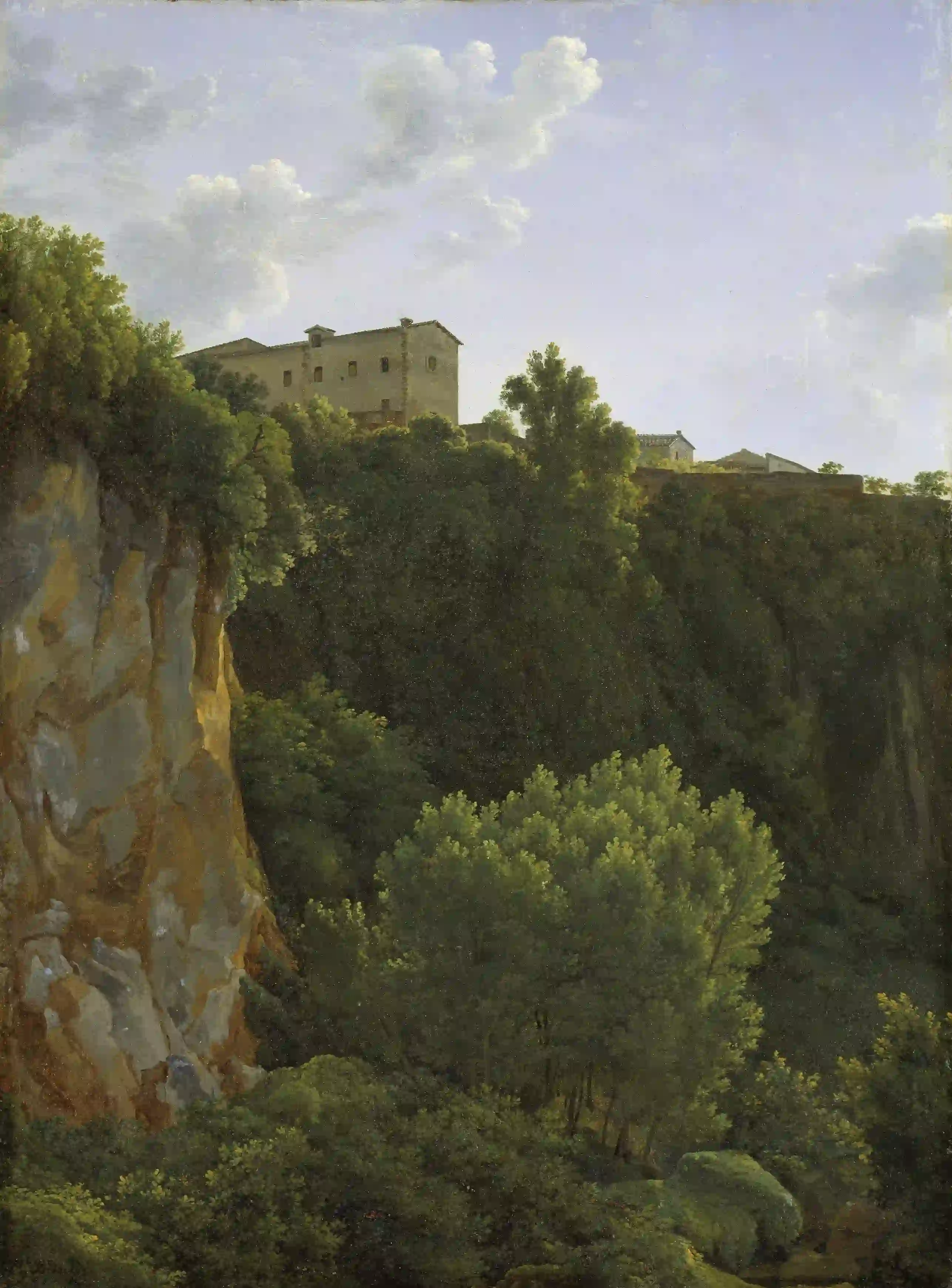

 100% Hand-Painted: Finished in 3-6 Weeks

.png)















_(1).webp)