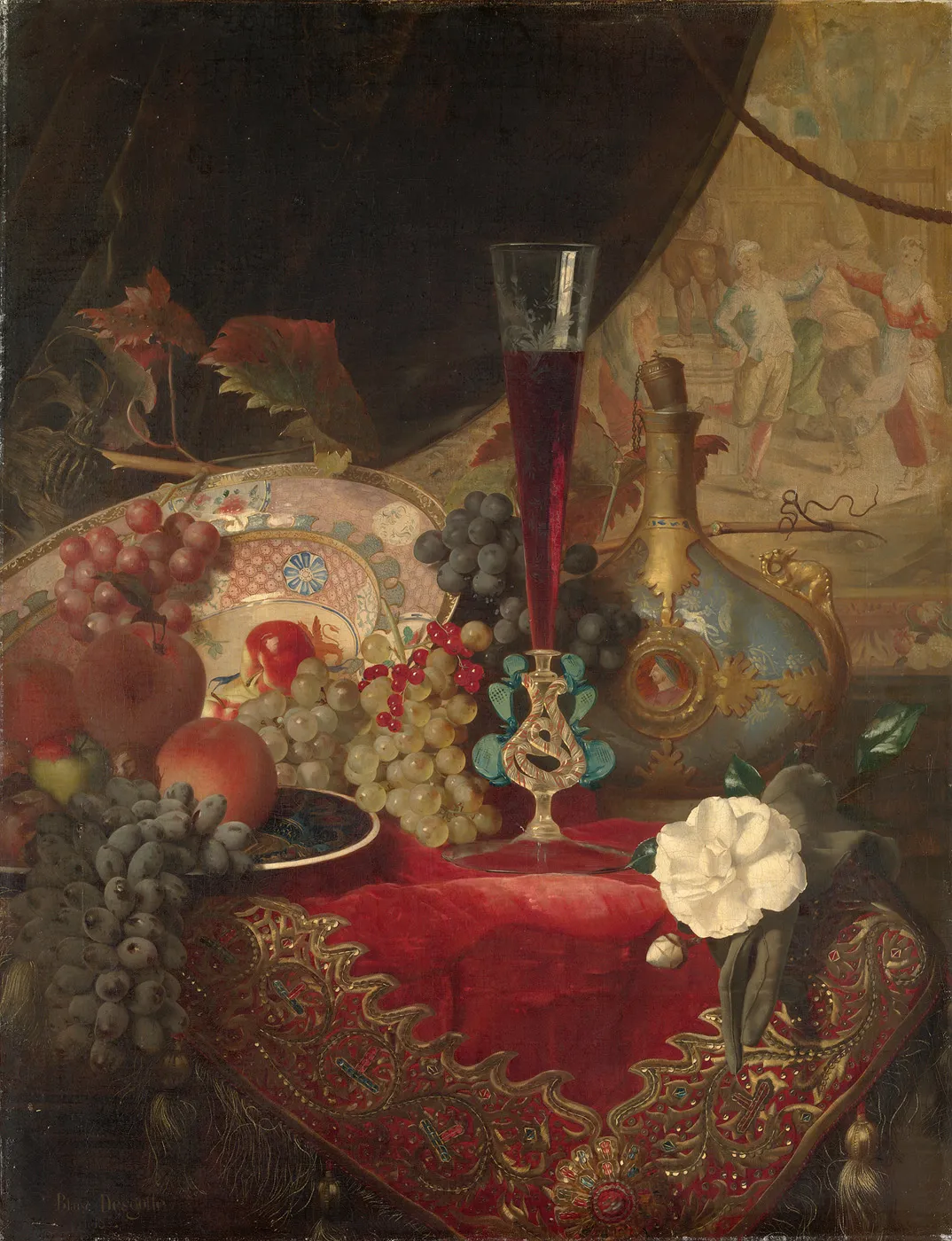
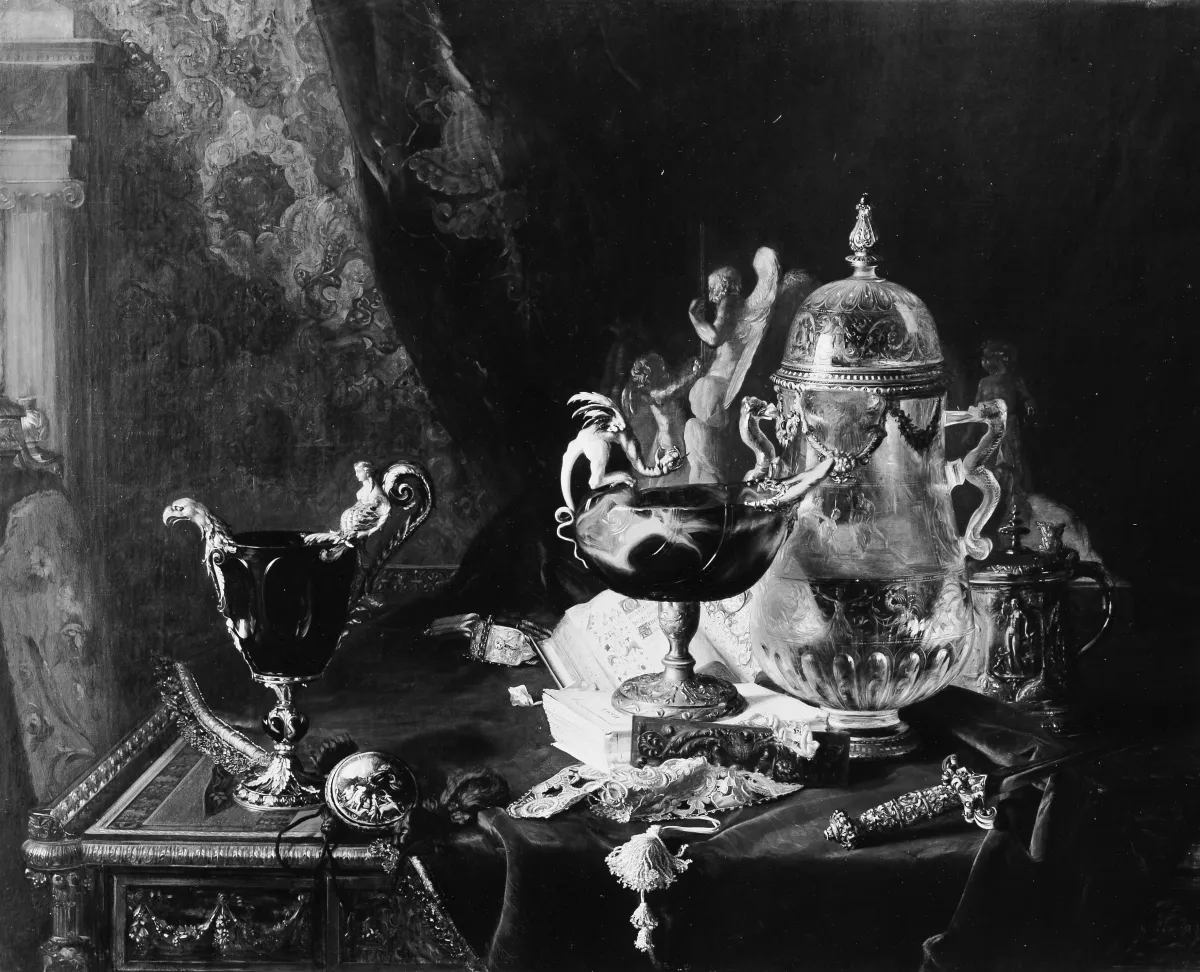
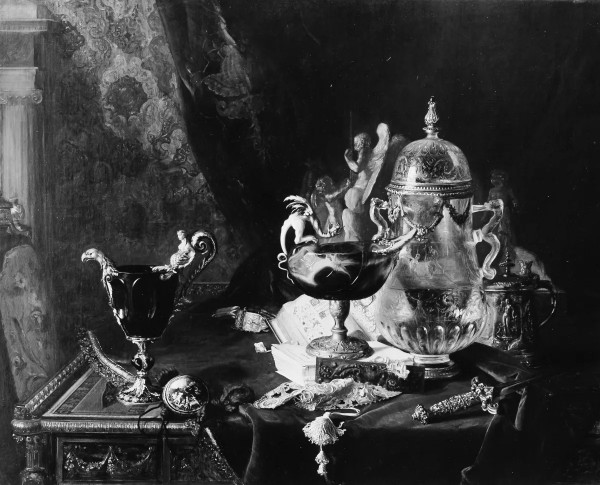
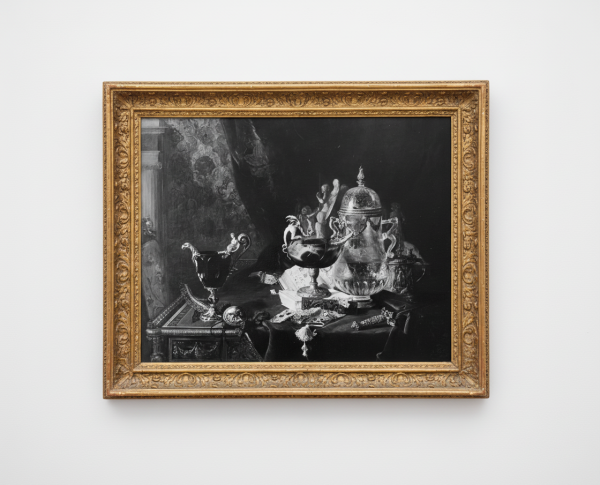
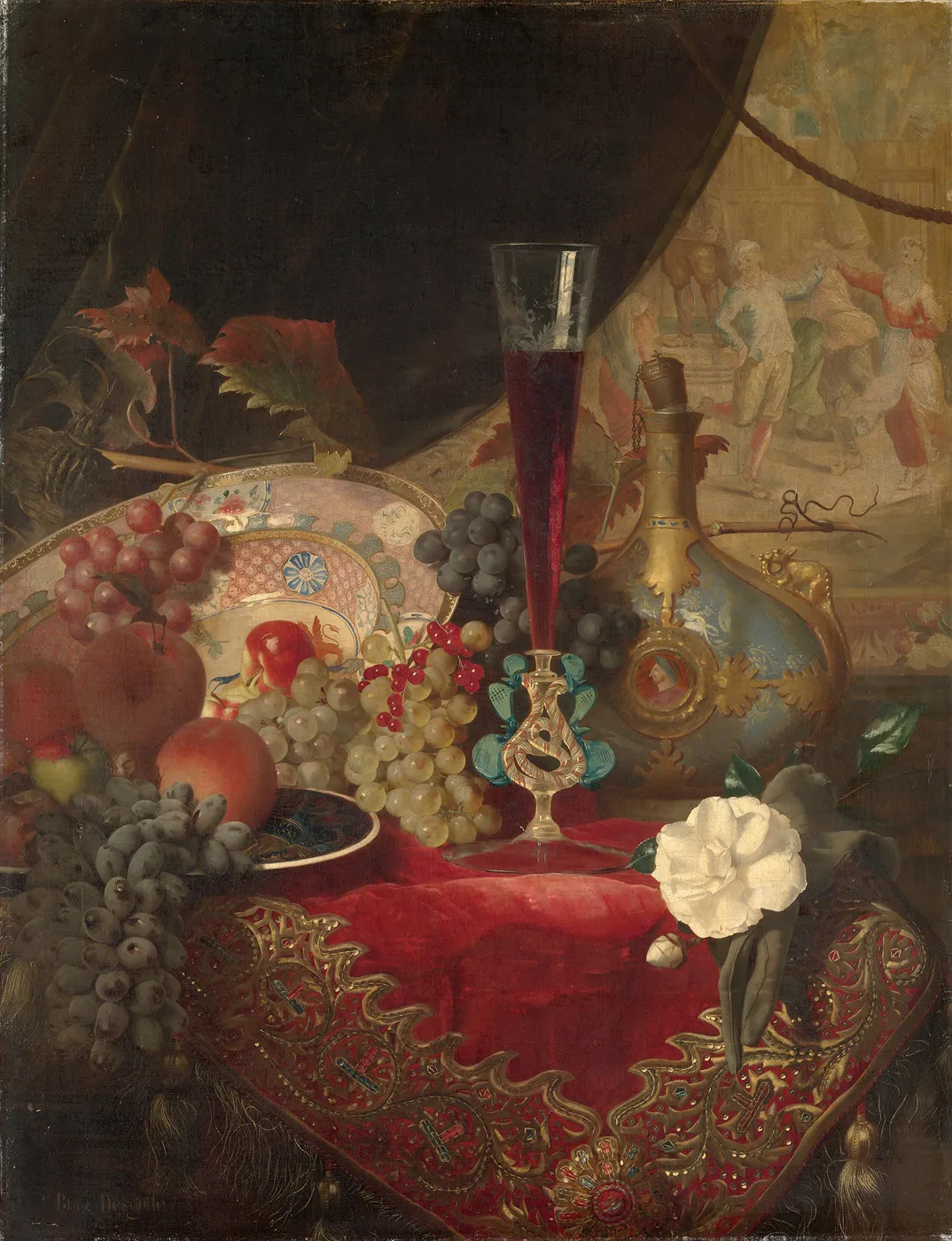
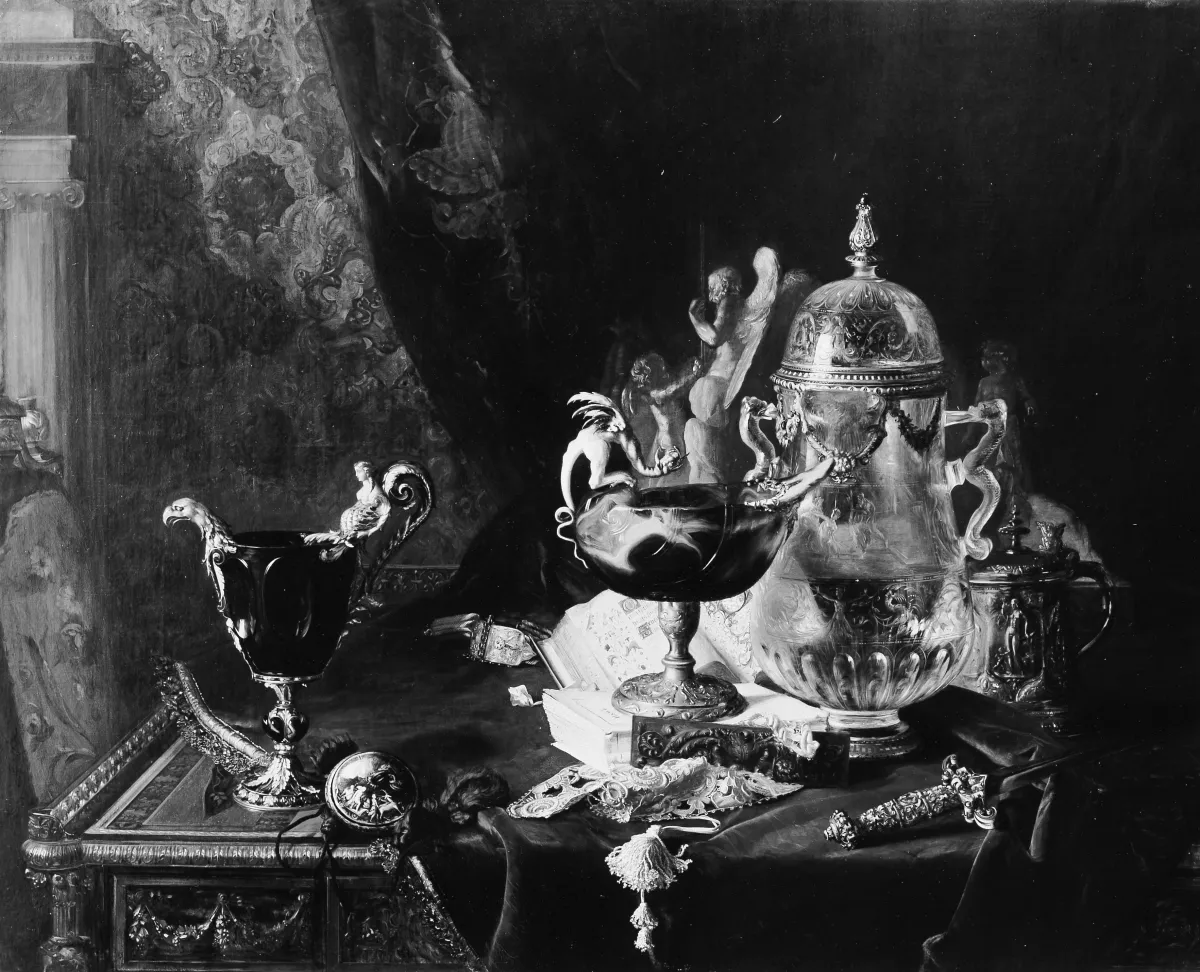
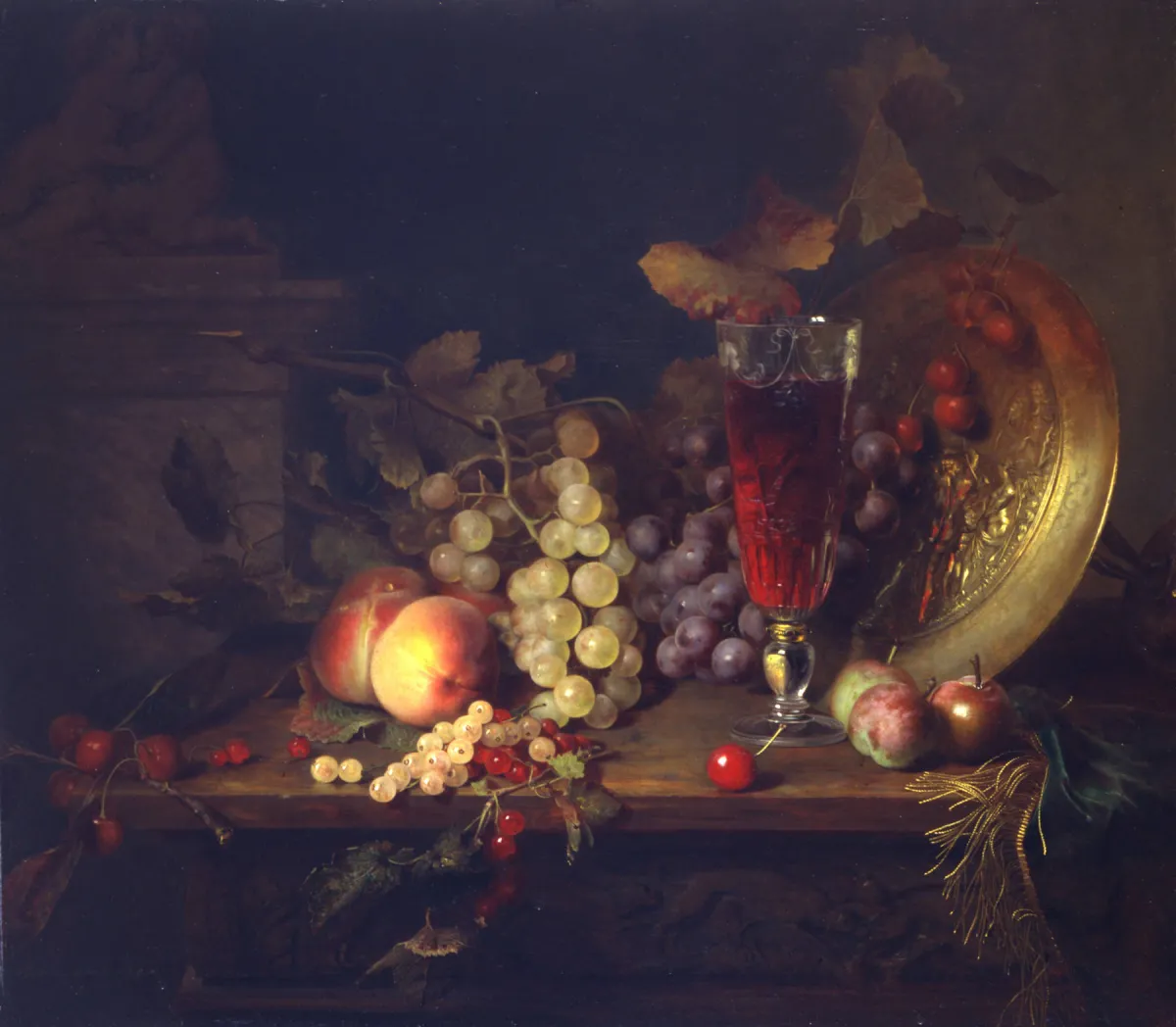
Desgoffe’s technique in this oil on canvas composition demonstrates his exceptional control over light, texture, and perspective. Each object, from the ornate ewer to the bureau plat, is rendered with meticulous precision, embodying the principles of Academic Art. Art lovers who admire this level of craftsmanship may find "Still Life with Fruit and Venetian Glass on a Table" or "Crystal vase" equally captivating examples of his oil on canvas mastery.
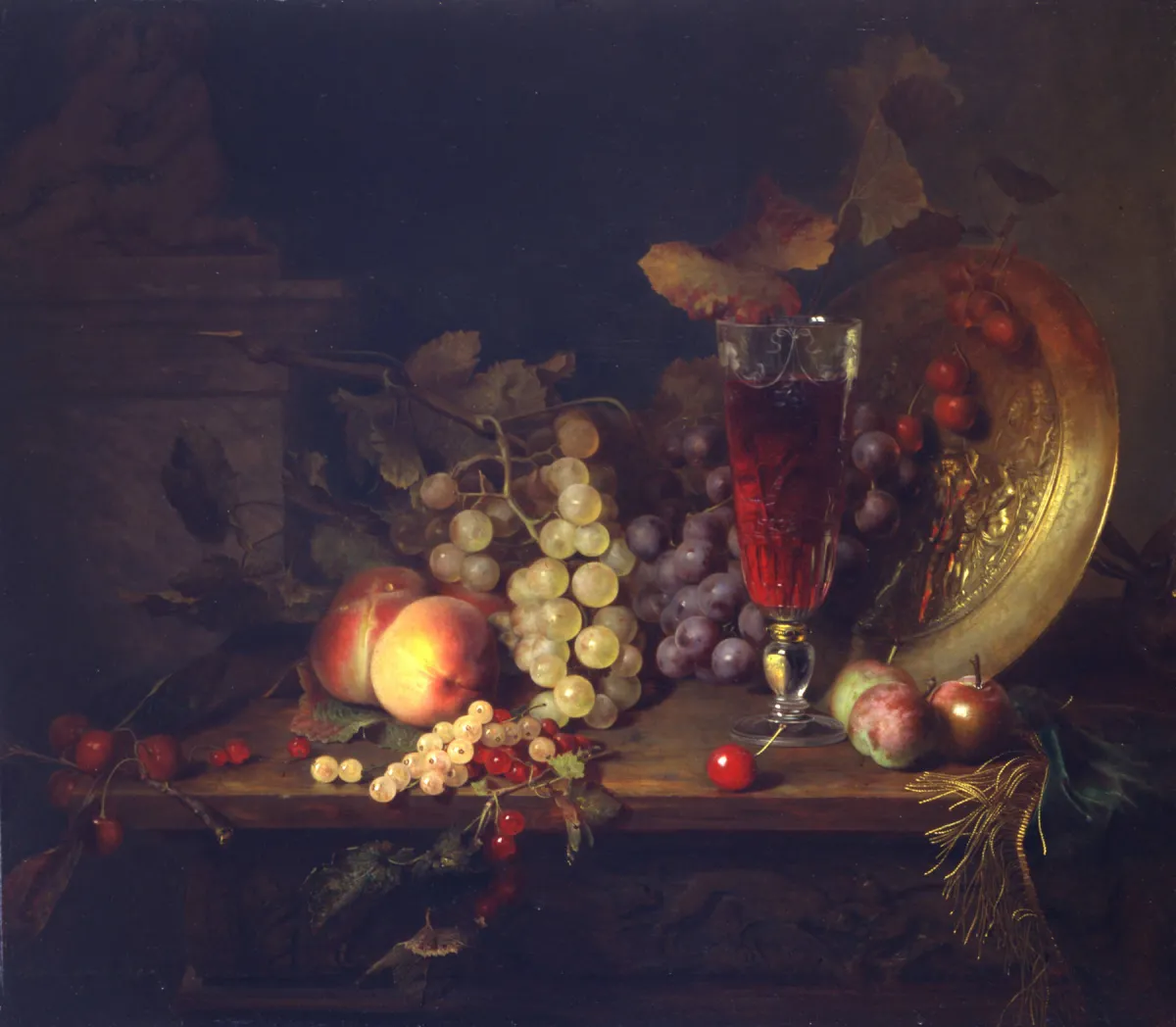
"STILL LIFE WITH EWER AND ACCOUTREMENTS ON GILT MOUNTED BUREAU PLAT" weaves a narrative through its carefully chosen objects, each symbolizing wealth, taste, and cultural sophistication. The painting’s arrangement invites viewers to ponder the stories behind each artifact. For those interested in symbolism within a fine art painting for sale, Desgoffe’s other works such as "Urne et drapé sur un entablement" and "Still Life with Fruit, Glass of Wine, 1863" offer further layers of meaning.
This remarkable fine art painting for sale by Blaise Alexandre Desgoffe remains a coveted piece among collectors of Academic Art. Its timeless elegance and intricate detail make it a standout addition to any collection. Those enchanted by its beauty may also consider exploring "Panneau de chêne, une planche, non parqueté Signé en bas à droite" or "Still Life with Fruit and Venetian Glass on a Table" to enrich their appreciation for hand-painted oil paintings.
When Art Meets History
Blaise Alexandre Desgoffe’s masterpiece, "STILL LIFE WITH EWER AND ACCOUTREMENTS ON GILT MOUNTED BUREAU PLAT," stands as a testament to the Academic Art movement’s reverence for tradition and craftsmanship. This hand-painted oil painting echoes the meticulous attention to historical authenticity found in works like "Vercingetorix throws down his arms at the feet of Julius Caesar, 1899." Desgoffe’s dedication to classical themes and refined detail brings history to life, offering viewers a glimpse into the opulence of a bygone era.
Techniques That Speak
Desgoffe’s "STILL LIFE WITH EWER AND ACCOUTREMENTS ON GILT MOUNTED BUREAU PLAT" showcases the artist’s mastery of oil on canvas. The Academic Art movement prized technical precision, and Desgoffe delivers with realistic textures and sumptuous lighting. Similar finesse can be seen in related paintings like "Odalisque" and "Diana the Huntress." Each brushstroke captures the luster of metal, wood, and fabric, demonstrating why this oil on canvas remains celebrated among art connoisseurs.
Emotions on Display
Though a still life, Desgoffe’s fine art painting for sale evokes a sense of luxury and contemplation. The careful arrangement of objects invites viewers to reflect on beauty, transience, and the passage of time. Like "Jeune femme denudée sur canape (Young woman naked on a settee)" and "A Beauty of Nature," this artwork elicits both admiration and introspection, making it much more than a decorative piece. Desgoffe’s genius lies in turning everyday objects into emotive symbols.
Coveted by Collectors
Collectors seeking a hand-painted oil painting rooted in the Academic Art tradition often pursue Desgoffe’s "STILL LIFE WITH EWER AND ACCOUTREMENTS ON GILT MOUNTED BUREAU PLAT." Its historical significance and technical brilliance align with sought-after works like "Odalisque" and "Diana the Huntress." The painting’s elegance and timeless appeal have ensured its status as a prized addition to any fine art collection, making it a highly desirable acquisition among discerning art lovers worldwide.
Related Academic Art Hand-Painted Oil Paintings by Other Artists
Other Famous Academic Art Artists:
Frequently Asked Questions About STILL LIFE WITH EWER AND ACCOUTREMENTS ON GILT MOUNTED BUREAU PLAT
What is the historical context of "Still Life with Ewer and Accoutrements on Gilt Mounted Bureau Plat"?
This painting was created during the 19th century, a period marked by a resurgence of interest in still life as a genre, reflecting both the artistic techniques of the time and the cultural significance of domestic objects.
Who is Blaise Alexandre Desgoffe and what is his significance in art history?
Blaise Alexandre Desgoffe was a French painter known for his exquisite still life compositions. His work is significant for its meticulous attention to detail and its ability to evoke a sense of luxury and refinement.
What artistic techniques are evident in this painting?
The painting showcases Desgoffe's mastery of light and shadow, as well as his skillful use of color and texture, which together create a lifelike representation of the objects depicted.
What symbols are present in "Still Life with Ewer and Accoutrements"?
The ewer and other accoutrements symbolize abundance and domesticity, reflecting the values of the era regarding home life and the importance of material possessions.
How does this painting reflect the characteristics of the still life genre?
This work exemplifies the still life genre through its focus on inanimate objects, careful composition, and the interplay of light and shadow, which are all hallmarks of this artistic style.
What materials and techniques did Desgoffe likely use in this painting?
Desgoffe likely employed oil paints on canvas, a common medium for still life paintings of the time, allowing for rich colors and detailed textures.
What role does composition play in this artwork?
The composition is carefully arranged to draw the viewer’s eye across the canvas, creating a harmonious balance between the various elements and enhancing the overall aesthetic appeal.
In what ways does this painting reflect the social status of its time?
The luxurious items depicted, such as the gilt-mounted bureau and fine accoutrements, reflect the wealth and status of the bourgeoisie during the 19th century, highlighting the importance of material culture.
How has "Still Life with Ewer and Accoutrements" influenced modern still life artists?
This painting has influenced modern still life artists by setting a high standard for composition, detail, and the emotional resonance of everyday objects, encouraging contemporary artists to explore similar themes.
What can viewers learn about 19th-century French culture from this painting?
Viewers can gain insights into the values of 19th-century French culture, particularly the appreciation for beauty in everyday life, the significance of domestic spaces, and the celebration of craftsmanship in household objects.






















_GFM_Painting_(1).webp)

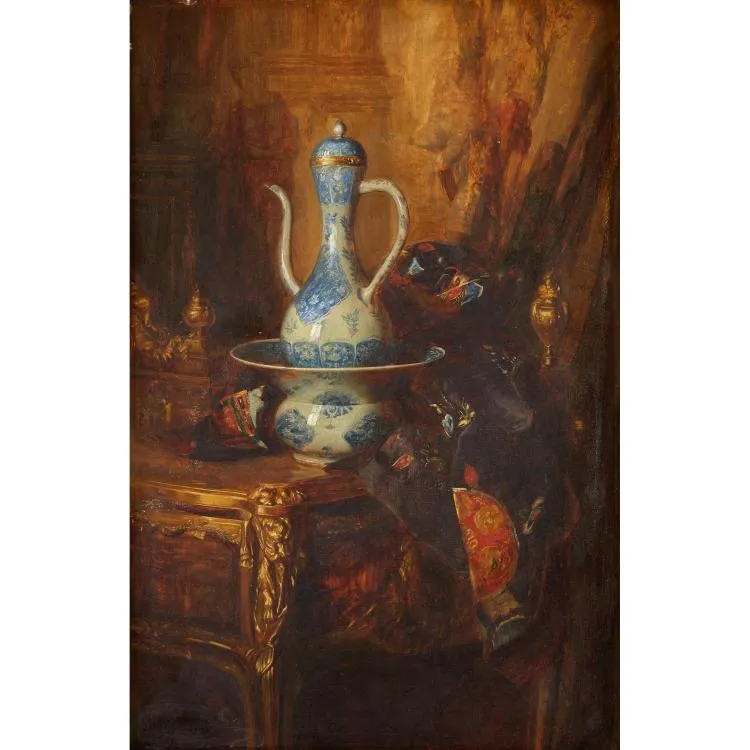

 100% Hand-Painted: Finished in 3-6 Weeks

.png)















_(1).webp)