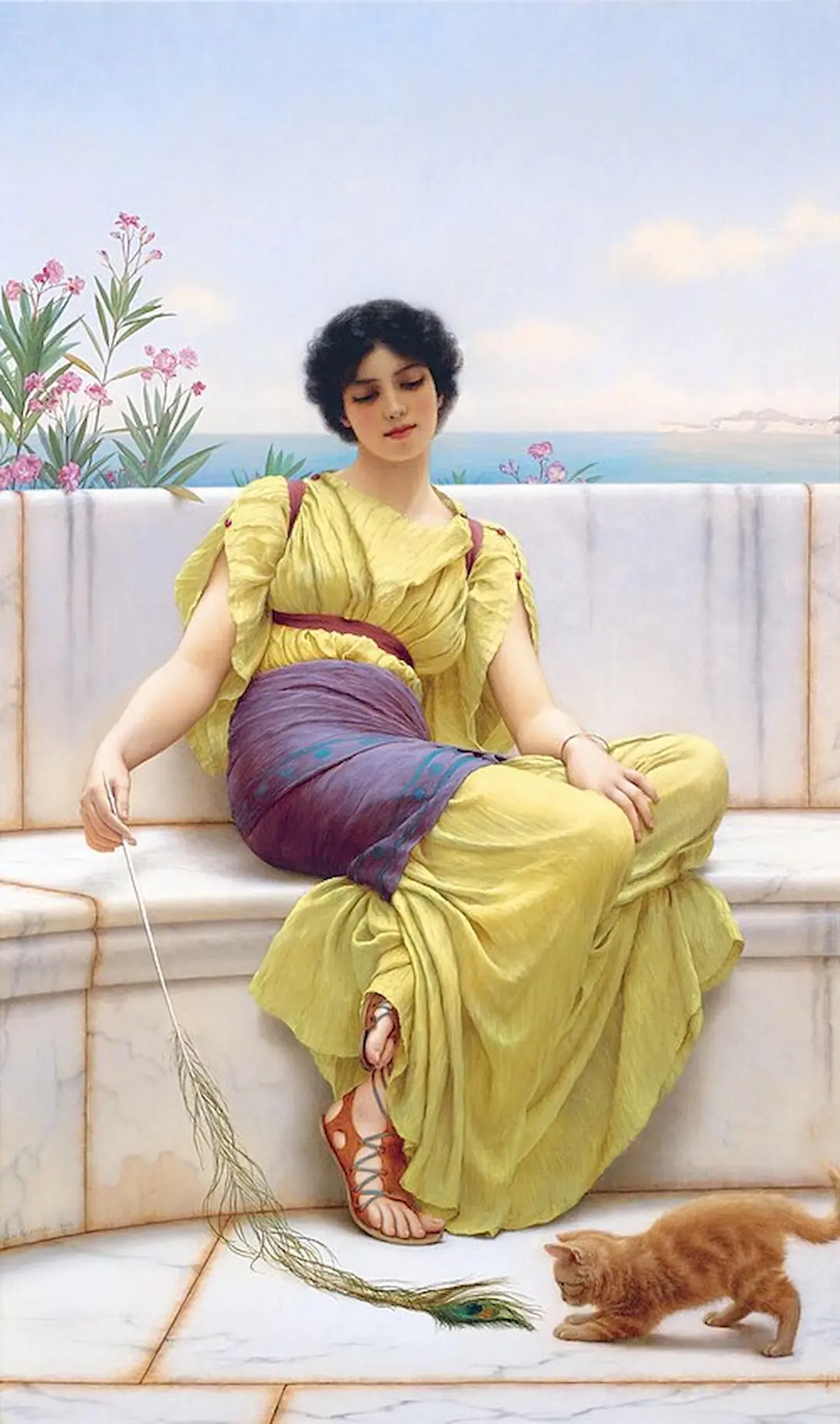
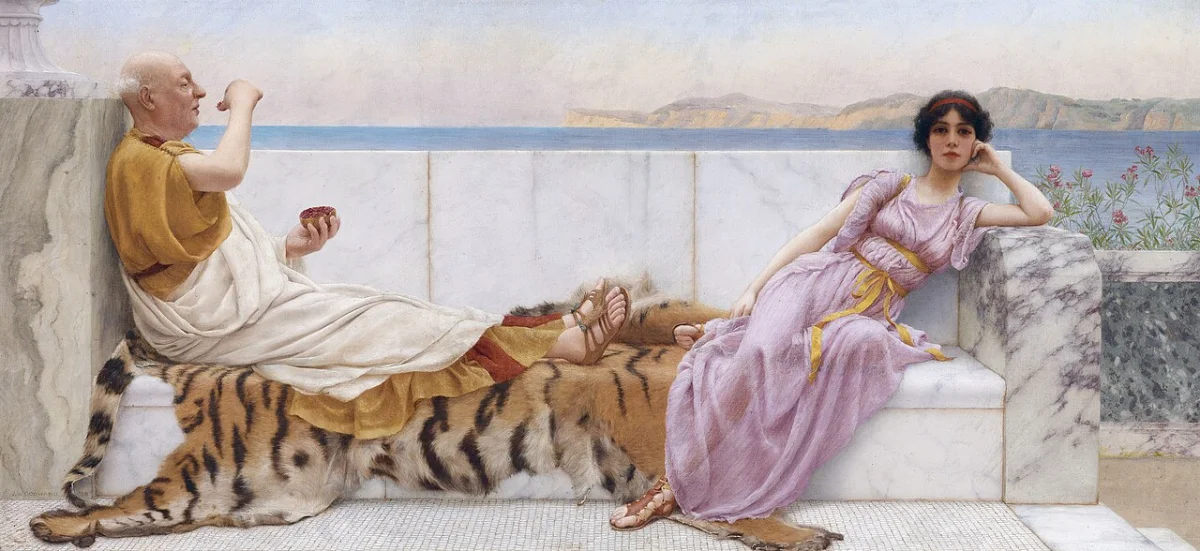
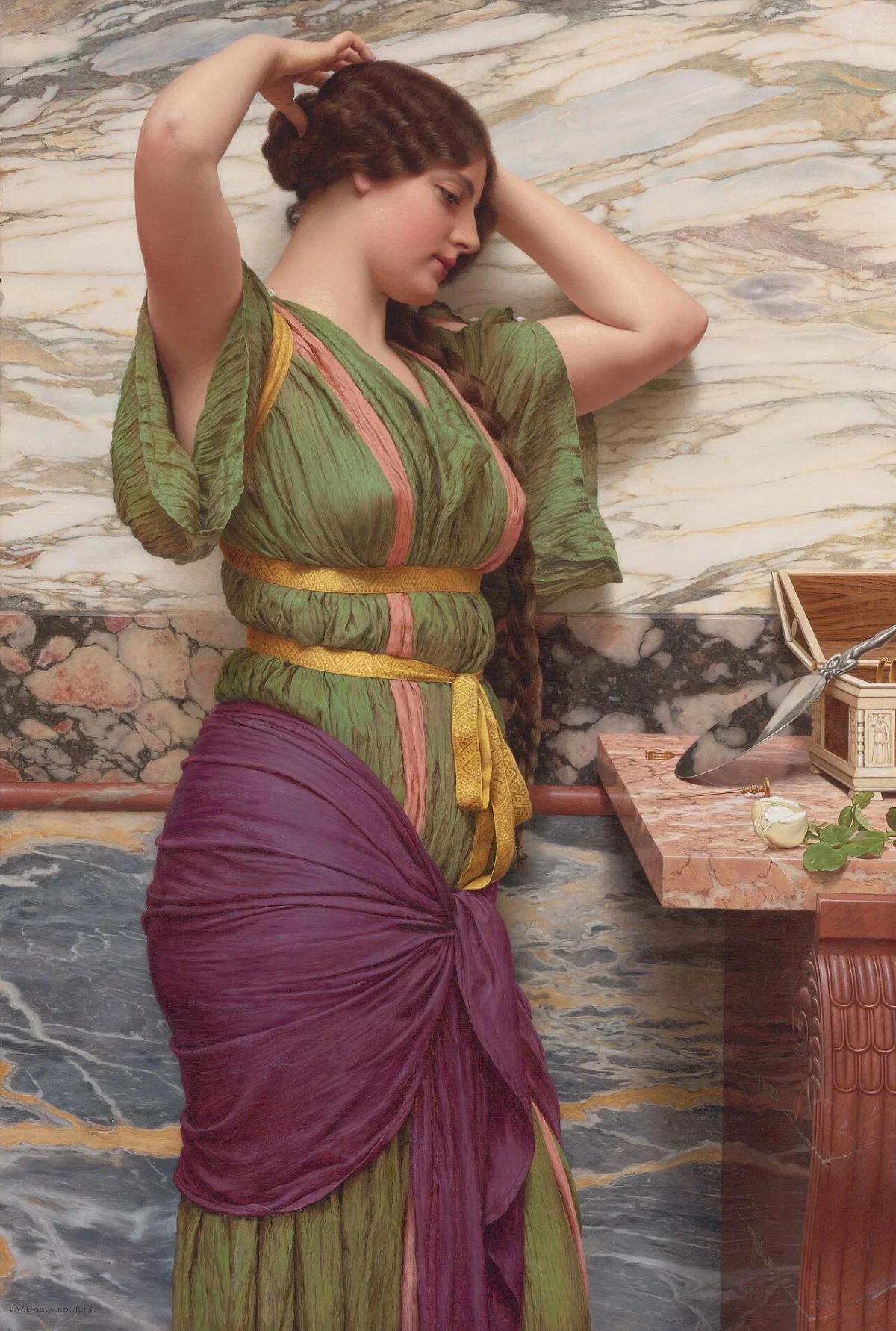
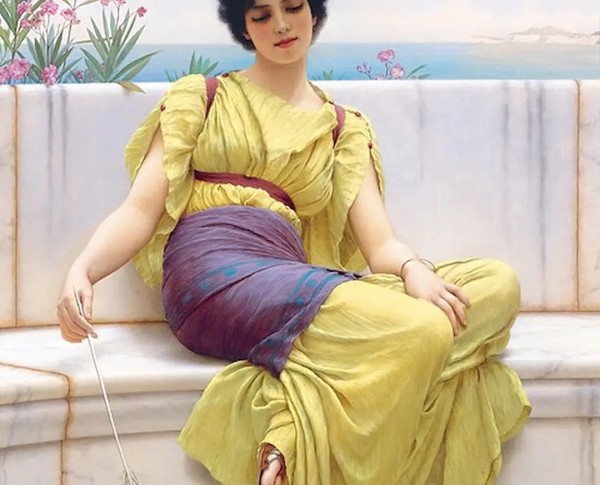
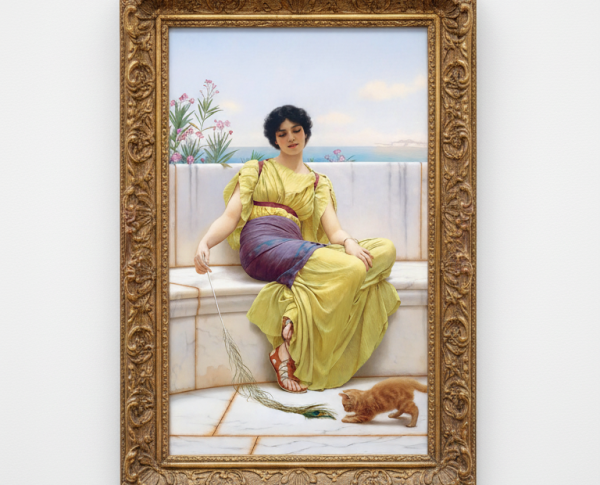
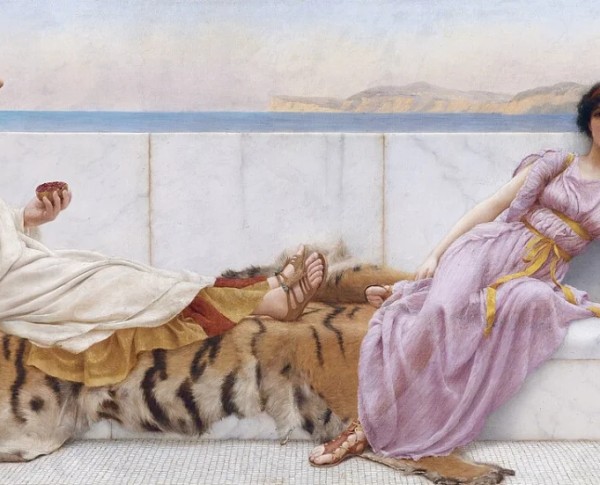
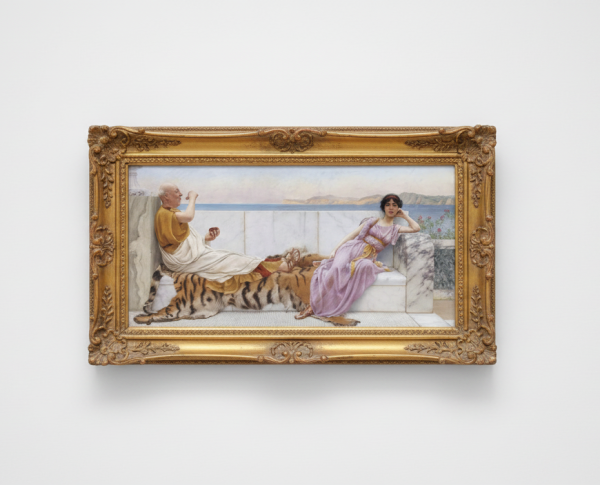
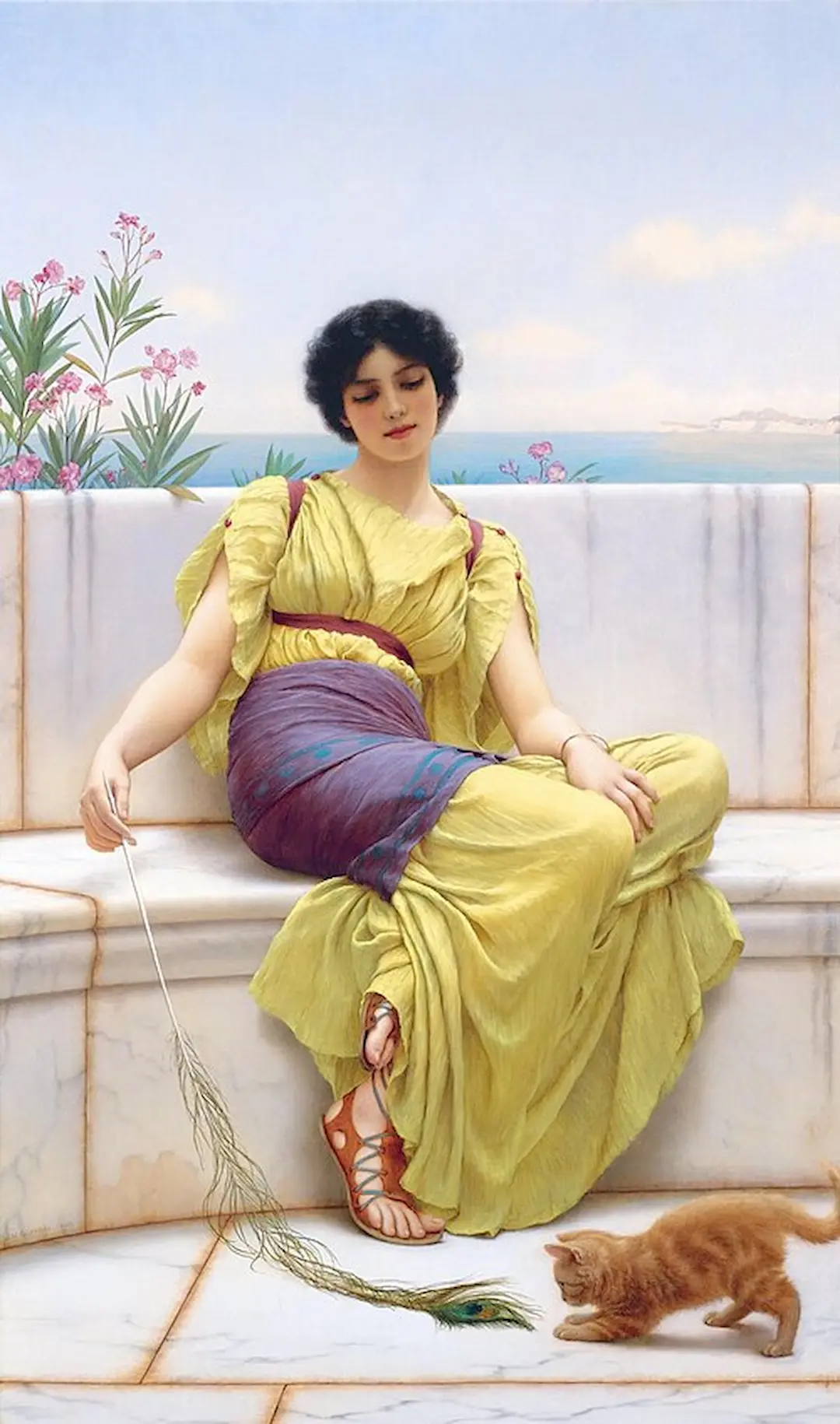
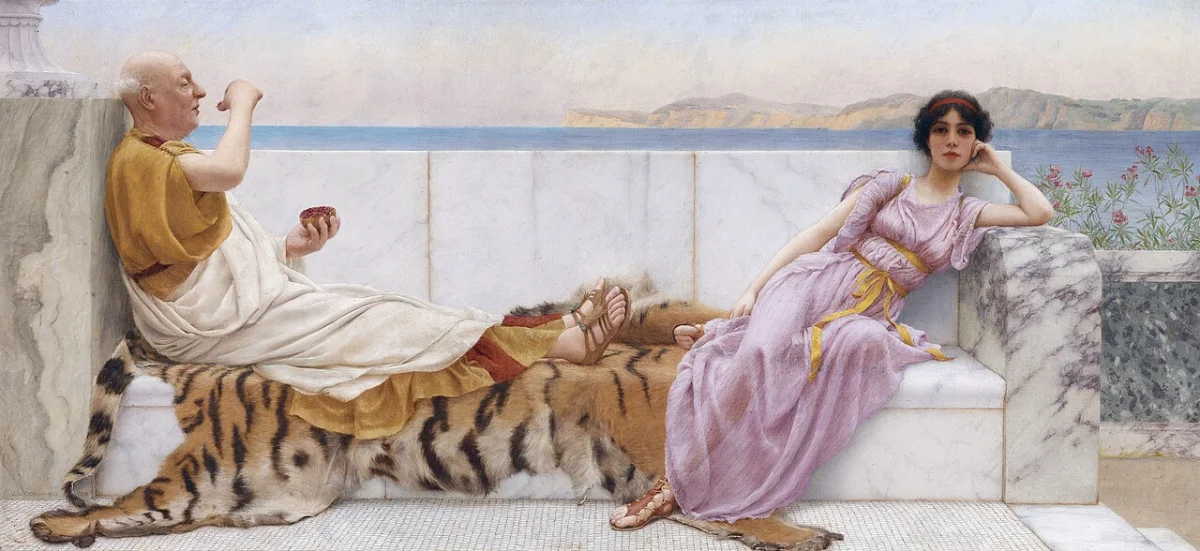
Godward’s "Summer Day" showcases his extraordinary skill with oil on canvas, capturing delicate textures and radiant light with remarkable precision. Each brushstroke reveals his expertise in rendering lifelike skin tones and flowing fabrics characteristic of Neoclassical Academic Realism. The painting’s harmonious palette and classical setting invite viewers into a world of tranquility. Fans of Godward’s artistry may also appreciate related pieces like "Idleness II," "The Trysting Place," and "The Quiet Pet" for their technical excellence.
Every element within "Summer Day" contributes to its narrative, from the contemplative pose of the subject to the lush, sunlit backdrop. This fine art painting for sale weaves subtle symbolism into its depiction of leisure and beauty, hallmarks of the Neoclassical Academic Realism movement. John William Godward’s careful attention to detail invites viewers to interpret the story behind the scene. Explore similar themes in his works "Mischief and Repose" and "The Trysting Place."
For collectors seeking a masterpiece, "Summer Day" offers both historical significance and visual delight. As a celebrated example of hand-painted oil painting from the Neoclassical Academic Realism era, it enriches any fine art collection. John William Godward’s works, including "The Quiet Pet" and "When the Heart is Young," remain highly sought after. Investing in such pieces ensures a legacy of beauty and sophistication that will be cherished for generations to come.
When Art Meets History
"Summer Day" by John William Godward stands as a testament to the Neoclassical Academic Realism movement, capturing the grace and serenity of antiquity. This exquisite hand-painted oil painting echoes the mastery found in related works like "Napoleon Crossing the Alps" and "The Death of Socrates." Godward’s meticulous attention to historical detail ensures that viewers are transported to a world where classical ideals and modern technique blend seamlessly on the canvas.
Techniques That Speak
John William Godward’s "Summer Day" showcases the artist’s refined approach to oil on canvas, a hallmark of the Neoclassical Academic Realism movement. His brushwork, lighting, and composition parallel the technical brilliance visible in paintings such as "Bonaparte, Calm on a Fiery Steed" and "Crossing the Alps 1801." Godward’s expert layering and subtle color gradations bring his subjects to life, capturing both the tactile beauty of fabric and the radiance of sunlit skin.
Emotions on Display
In "Summer Day," Godward evokes a quiet introspection and timeless elegance, characteristics often seen in Neoclassical Academic Realism. The painting’s gentle mood aligns with the emotional resonance found in "Consecration of the Emperor Napoleon I and Coronation of the Empress Josephine 1805-07." As a fine art painting for sale, "Summer Day" invites viewers to contemplate serenity and grace, making it a cherished addition to any collection that appreciates emotional depth and classical beauty.
Coveted by Collectors
Collectors prize John William Godward’s "Summer Day" for its impeccable artistry and historical allure. Like "Portrait of Antoine-Laurent Lavoisier and his wife," this hand-painted oil painting exemplifies the best of Neoclassical Academic Realism. Its enduring appeal ensures strong demand among those seeking a fine art painting for sale. For enthusiasts and investors alike, acquiring a Godward masterpiece means owning a piece of art history that continues to inspire admiration.
Related Neoclassical Academic Realism Hand-Painted Oil Paintings by Other Artists
Other Famous Neoclassical Academic Realism Artists:
Frequently Asked Questions About Summer Day
Who is the artist of Summer Day?
The artist of Summer Day is John William Godward, a prominent British painter known for his classical themes and exquisite depictions of the female form.
What year was Summer Day painted?
Summer Day was painted in 1904, during a period when Godward was celebrated for his neoclassical style and vibrant color palette.
What artistic style does Summer Day represent?
Summer Day exemplifies the neoclassical style, characterized by its emphasis on classical themes, idealized beauty, and meticulous attention to detail.
What are the main themes depicted in Summer Day?
The main themes of Summer Day include tranquility, beauty, and the celebration of nature, as well as the idealization of femininity in a serene outdoor setting.
What symbolism can be found in Summer Day?
The painting symbolizes the harmony between humanity and nature, with the figure representing an idealized woman in a peaceful summer landscape, evoking feelings of serenity and contentment.
What techniques did Godward use in Summer Day?
Godward employed techniques such as smooth brushwork, a vibrant color palette, and a keen attention to light and shadow to create a sense of depth and realism in Summer Day.
How does Summer Day reflect the cultural context of its time?
Summer Day reflects the cultural context of the early 20th century, where there was a resurgence of interest in classical antiquity and a desire for escapism through art, particularly in the wake of industrialization.
What influences can be seen in Godward's work, including Summer Day?
Godward's work, including Summer Day, shows influences from the Pre-Raphaelite Brotherhood and the classical art of ancient Greece and Rome, emphasizing beauty and idealized forms.
Where can I view Summer Day?
Summer Day is part of various private collections and may be exhibited in select galleries. Please check our exhibition schedule for any upcoming displays.
What is the significance of the title Summer Day?
The title Summer Day signifies a moment of blissful tranquility and the beauty of nature, encapsulating the essence of the scene and the emotions it evokes.























_GFM_Painting_(1).webp)


 100% Hand-Painted: Finished in 3-6 Weeks

.png)
















_(1).webp)