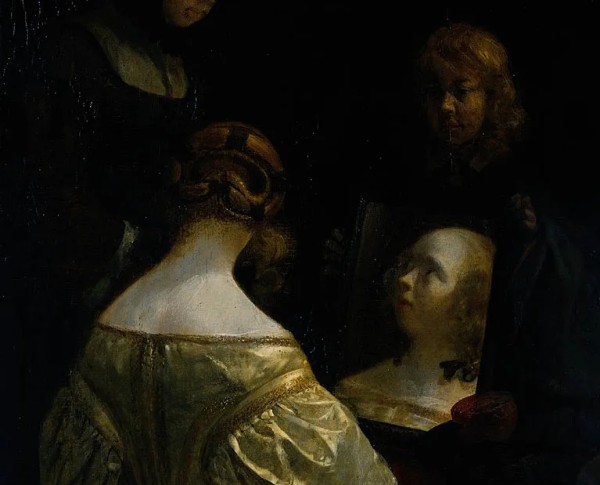
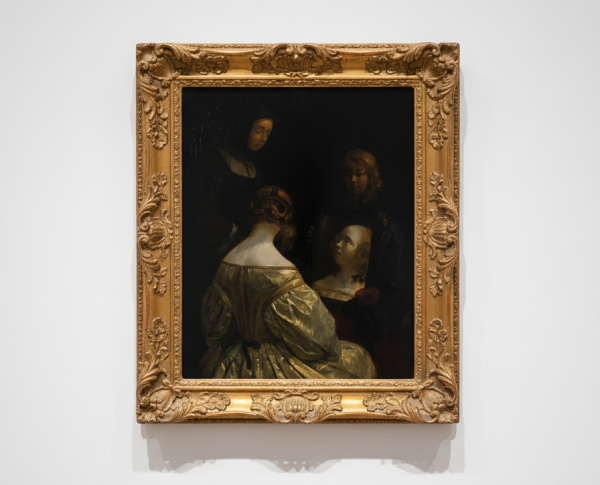
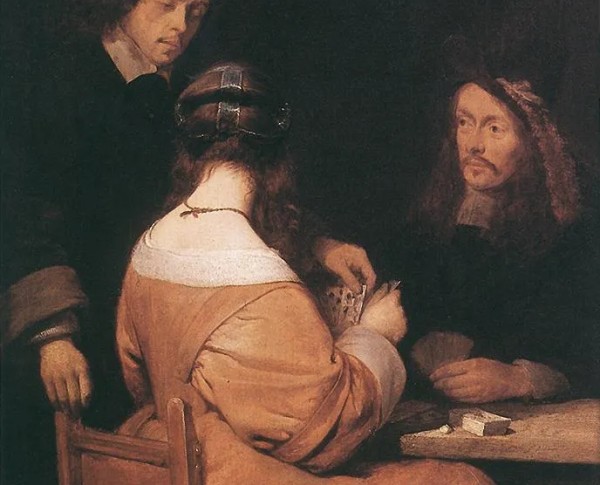
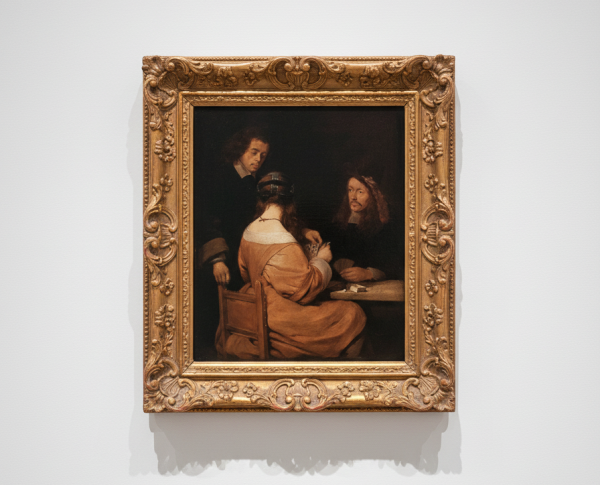
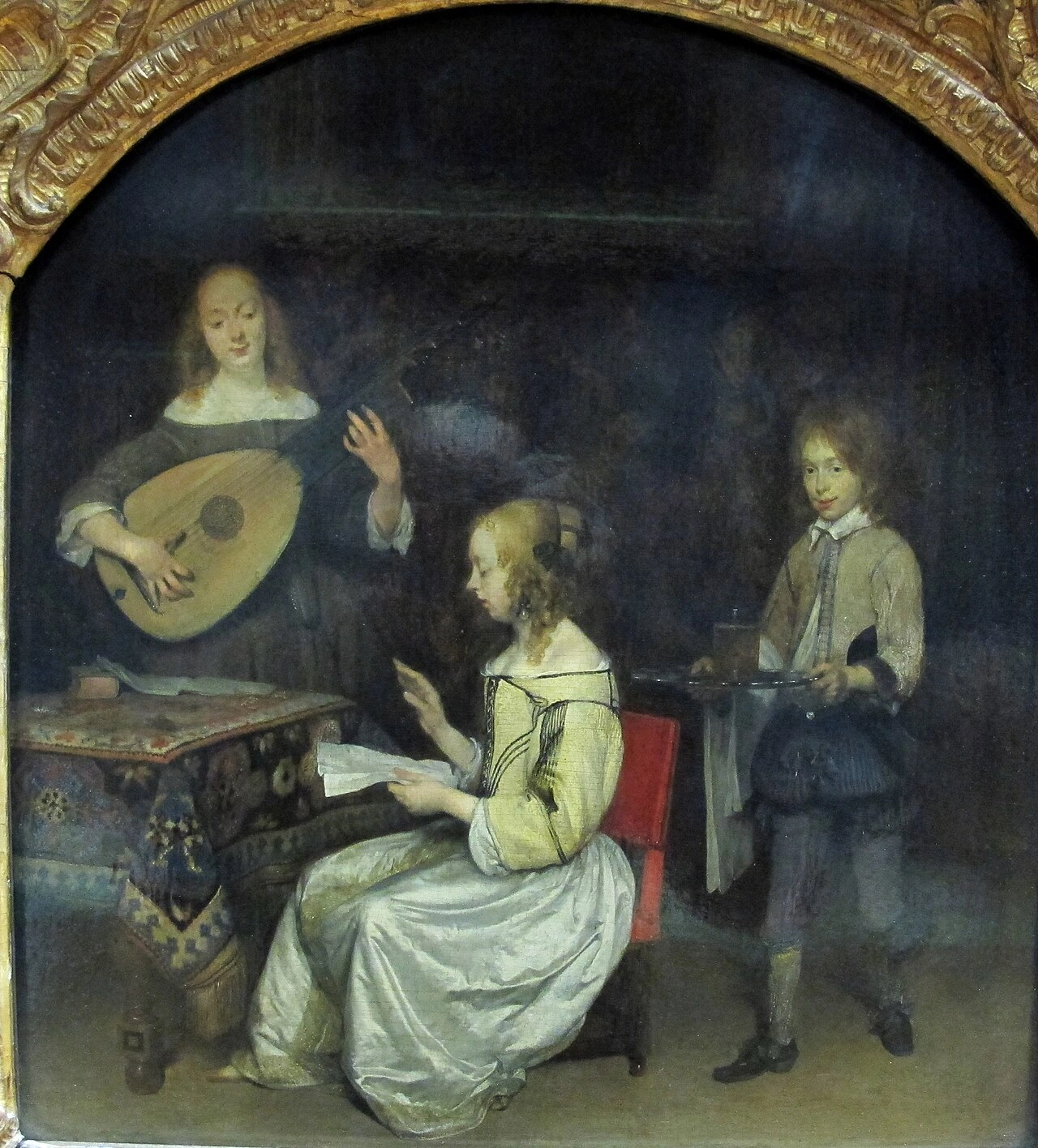
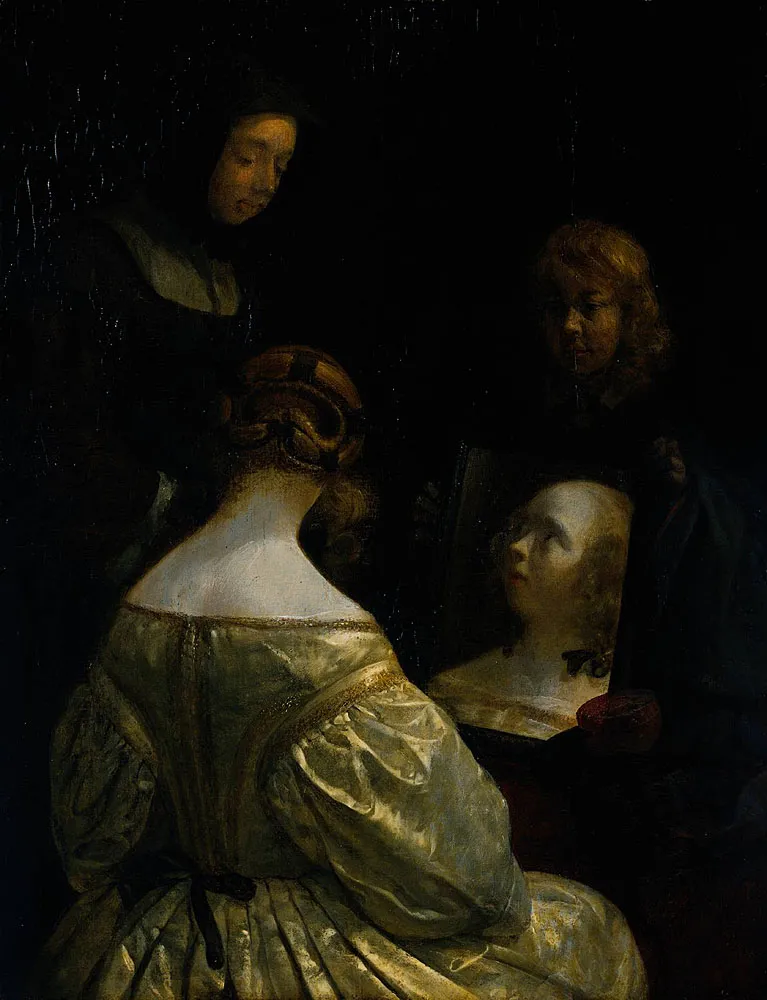
The delicate brushwork in "The Concert Singer and Theorbo Player" reveals Gerard Terborch’s unparalleled skill with oil on canvas. His attention to intricate details—the shimmer of silk, the subtle play of light—demonstrates the technical mastery that defines Baroque painting. This oil on canvas work shares a kinship with Terborch’s other celebrated paintings, such as "Woman at a Mirror" and "A Woman Spinning," all celebrated for their lifelike textures and emotive storytelling.
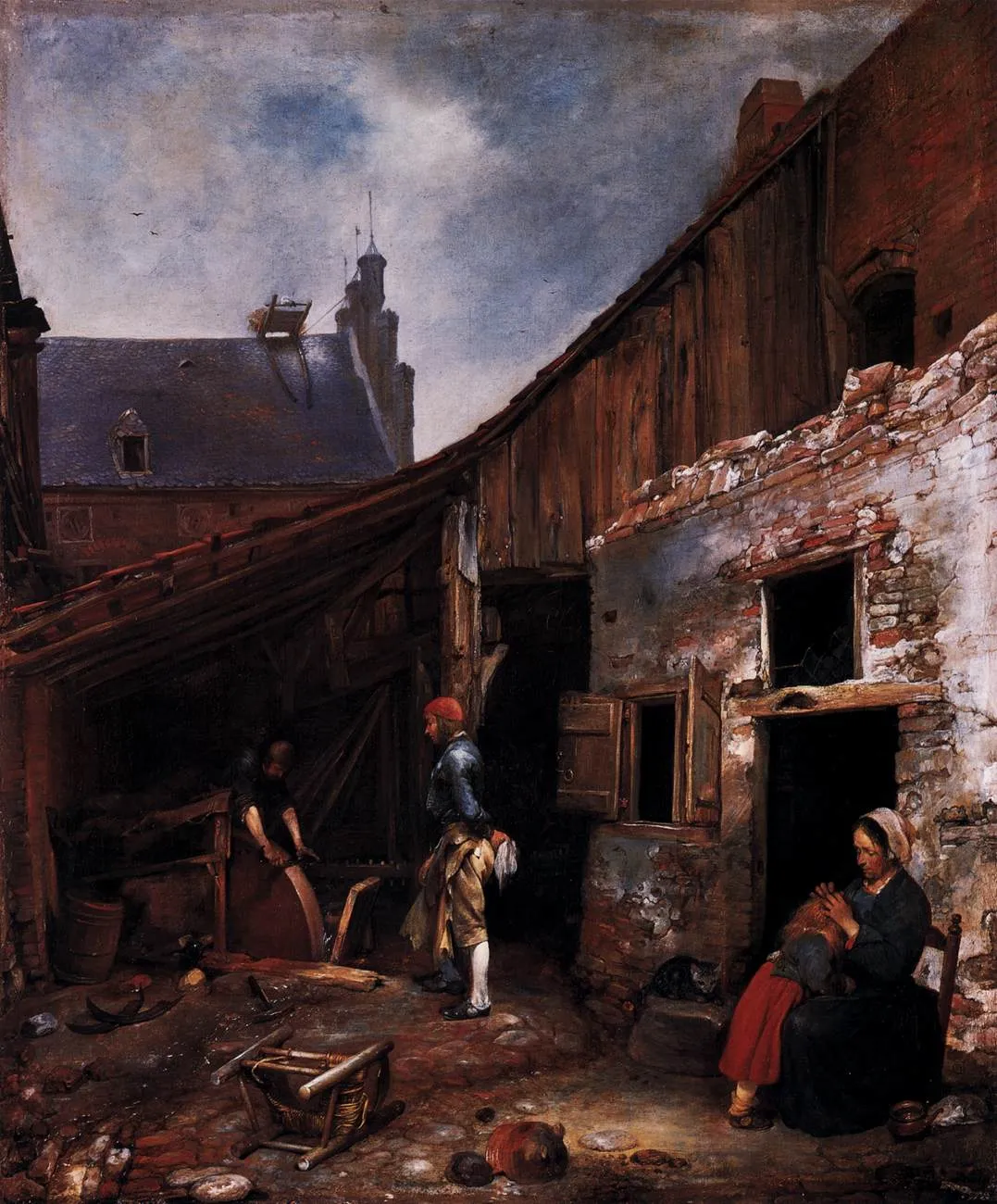
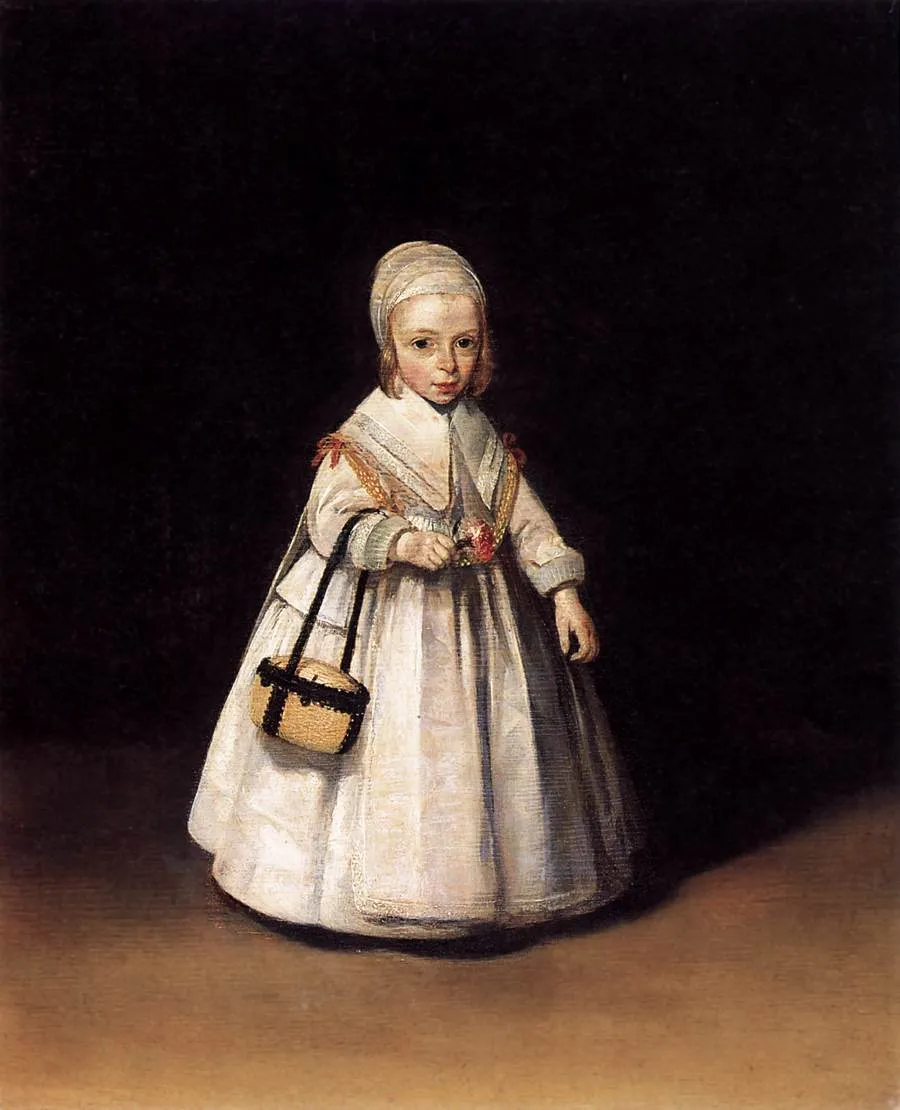
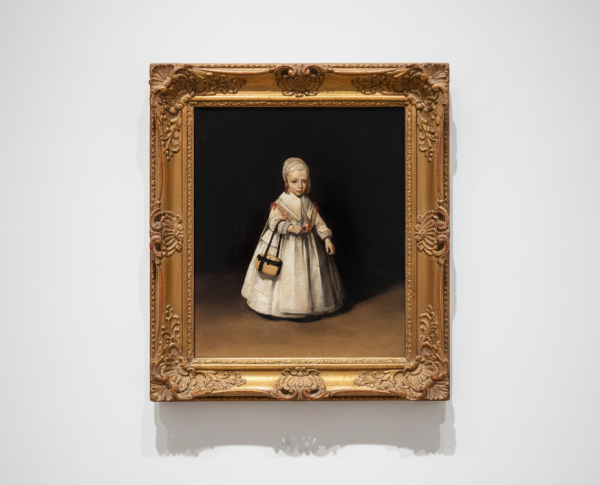
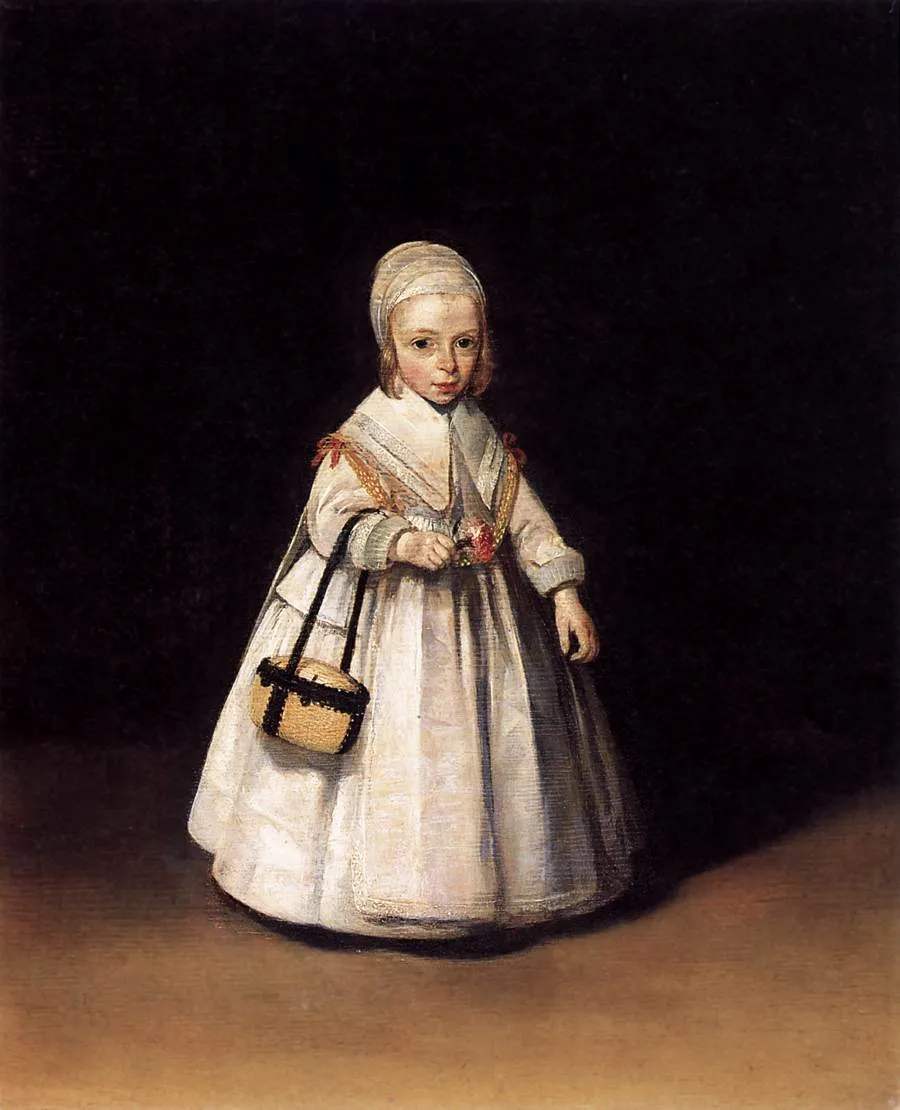
In "The Concert Singer and Theorbo Player," Terborch uses music as a symbol of harmony and refined society. The figures’ expressions and gestures evoke a narrative that invites viewers into the Baroque world. Each hand-painted oil painting by Terborch, including "The Knifegrinder's Family" and "Helena van der Schalcke as a Child," weaves subtle stories through composition and symbolism, making his works highly sought after by those who appreciate deeper meanings in art.
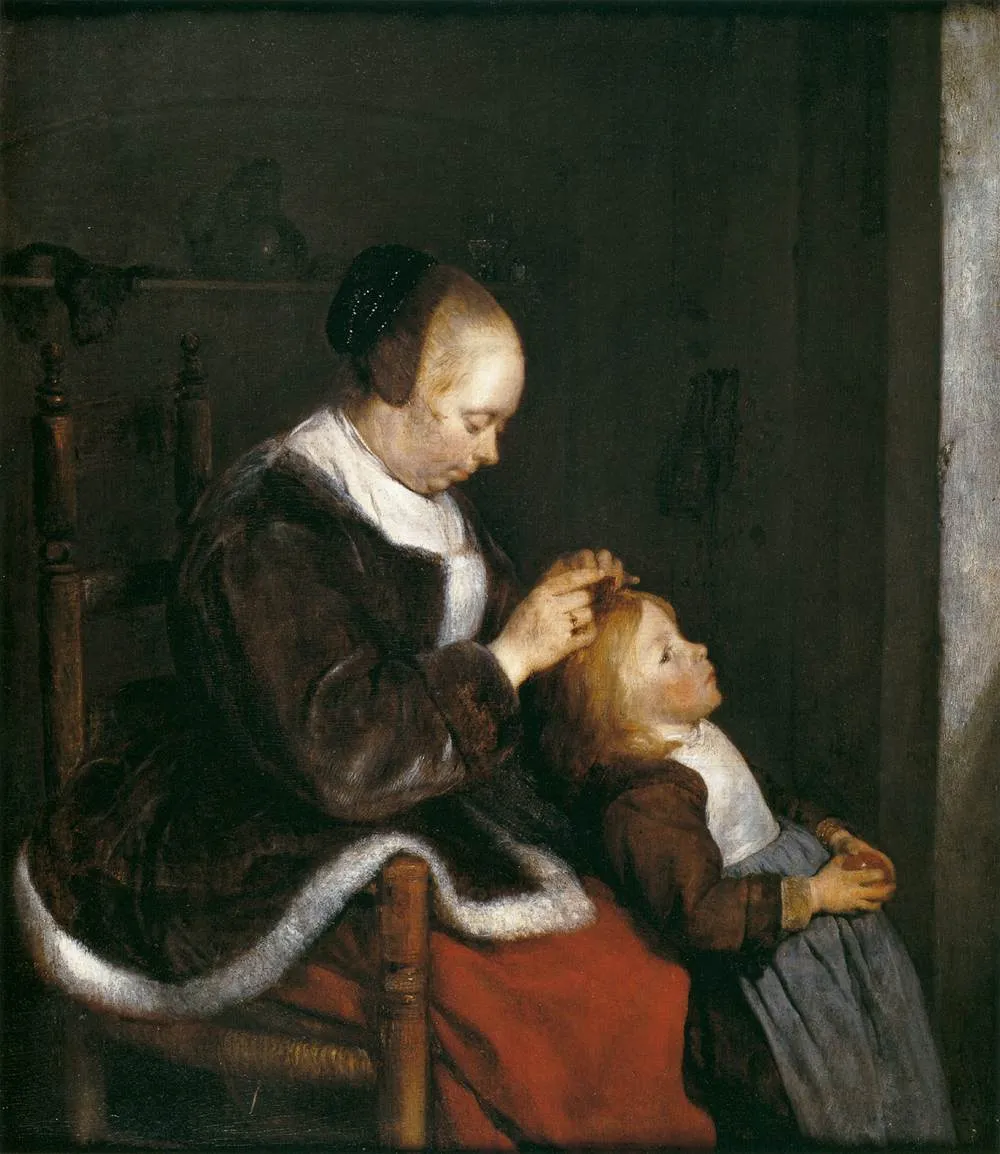
For collectors, "The Concert Singer and Theorbo Player" by Gerard Terborch is more than just a fine art painting for sale—it's a testament to the grandeur of the Baroque movement. This masterpiece, alongside related products like "Mother Combing the Hair of Her Child" and "A Woman Spinning," offers a glimpse into 17th-century life. Terborch’s work continues to captivate connoisseurs seeking oil on canvas paintings that combine historical significance with exquisite craftsmanship.
When Art Meets History
"The Concert Singer and Theorbo Player" by Gerard Terborch is a remarkable hand-painted oil painting from the Baroque movement. Created during a period when music and art were deeply intertwined, this masterpiece reflects the cultural richness of its era. Terborch, a Dutch artist, was renowned for capturing intimate moments, much like in his related works such as "Musicians" and "A lute player." His artistic legacy continues to influence the appreciation of Baroque art today.
Techniques That Speak
Gerard Terborch's masterful use of oil on canvas brings "The Concert Singer and Theorbo Player" to life, showcasing the intricate detailing and luminous textures characteristic of Baroque painting. His technique is comparable to other masterpieces from the movement, including Caravaggio's "Boy Bitten by a Lizard" and "Judith Beheading Holofernes." Terborch's exquisite brushwork and subtle color palette demonstrate his ability to capture both the mood and the realism that define Baroque art.
Emotions on Display
Within "The Concert Singer and Theorbo Player," the viewer is drawn into a world of emotion and musical harmony, hallmarks of any fine art painting for sale from the Baroque period. Terborch skillfully conveys the intimate exchange between the performers, allowing us to feel the passion and narrative of the moment. This emotional depth is also present in related works like "Beato Serapio," emphasizing the Baroque fascination with human expression and drama.
Coveted by Collectors
As a prized example of hand-painted oil painting from the Baroque era, "The Concert Singer and Theorbo Player" remains highly sought after by collectors and art enthusiasts. Gerard Terborch's legacy, alongside masterworks like "Musicians" and "A lute player," ensures that his paintings are treasured additions to any collection. The allure of this piece lies in its historical context, exquisite technique, and the enduring appeal of Baroque fine art.
Related Baroque Hand-Painted Oil Paintings by Other Artists
Other Famous Baroque Artists:
Frequently Asked Questions About The Concert Singer and Theorbo Player
What is the historical context of "The Concert Singer and Theorbo Player"?
This painting was created during the Dutch Golden Age, a period marked by great wealth and cultural achievement in the Netherlands, particularly in the 17th century. It reflects the era's fascination with music, art, and intimate social gatherings.
Who is the artist behind this painting?
"The Concert Singer and Theorbo Player" was painted by Gerard Terborch, a prominent Dutch genre painter known for his depictions of domestic interiors and social interactions, often highlighting the subtleties of human emotion and interaction.
What artistic techniques did Terborch employ in this work?
Terborch utilized a refined technique characterized by smooth brushwork and a careful attention to detail, particularly in the textures of fabrics and the play of light. His use of chiaroscuro enhances the three-dimensionality of the figures.
What themes are explored in "The Concert Singer and Theorbo Player"?
The painting explores themes of music, intimacy, and the social dynamics of 17th-century Dutch society. It captures a moment of artistic collaboration and the enjoyment of music as a communal experience.
What is the significance of the instruments depicted in the painting?
The theorbo, a type of lute, symbolizes the importance of music in social settings during the period. It represents both the artistic expression of the time and the cultural appreciation for musical performance as a form of entertainment.
How does Terborch portray the figures in the painting?
Terborch portrays the figures with a sense of intimacy and realism, capturing their expressions and gestures in a way that invites viewers into the scene. The singer's focused expression and the theorbo player's attentive posture suggest a deep engagement with the music.
What role does light play in this painting?
Light plays a crucial role in creating depth and highlighting the textures of the figures' clothing and the instruments. Terborch's careful manipulation of light enhances the overall mood and draws attention to the central interaction between the two musicians.
What can we learn about social customs from this painting?
The painting reflects the social customs of the Dutch elite, where music served as a form of entertainment and a means of social bonding. It illustrates the importance of cultural activities in fostering relationships and community among the upper classes.
How does this painting compare to other works by Terborch?
What is the current location of "The Concert Singer and Theorbo Player"?
The painting is housed in a prominent art collection, where it continues to be studied and appreciated for its artistic merit and historical significance, contributing to our understanding of 17th-century Dutch art and culture.






















_GFM_Painting_(1).webp)


 100% Hand-Painted: Finished in 3-6 Weeks

.png)















_(1).webp)