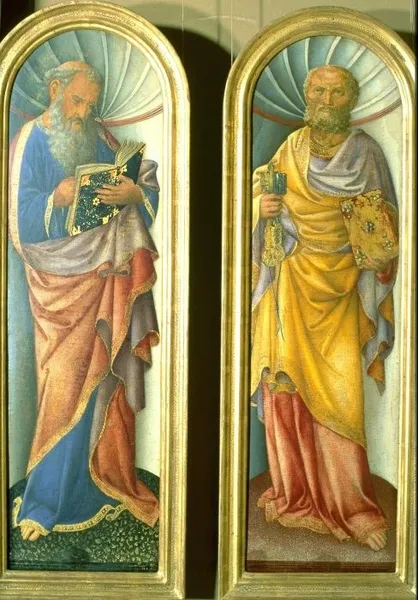
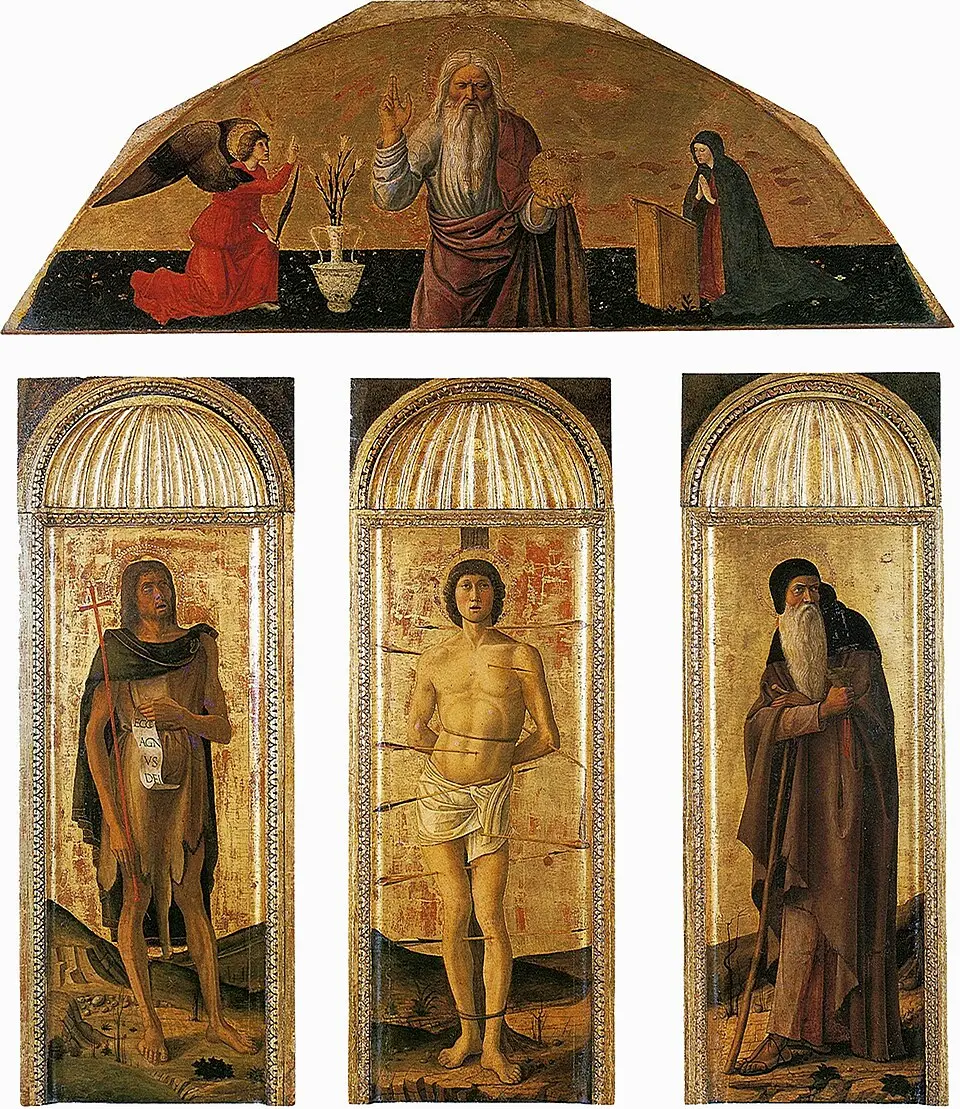
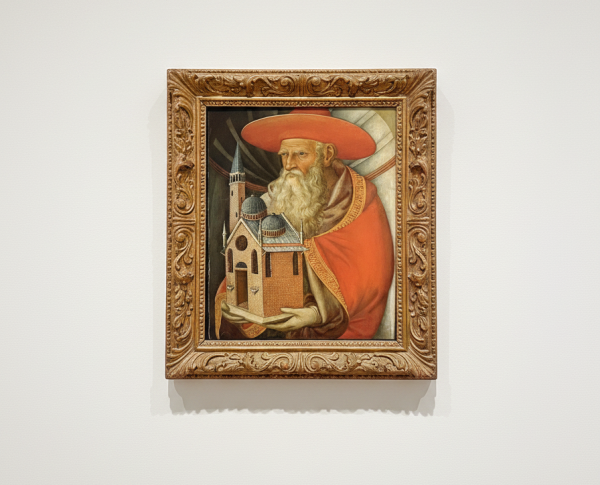
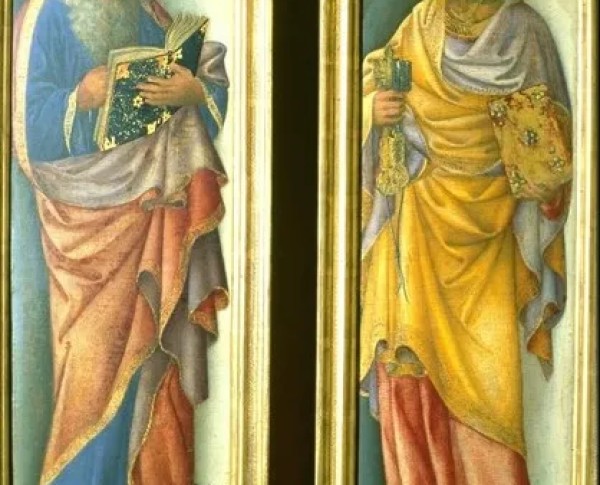
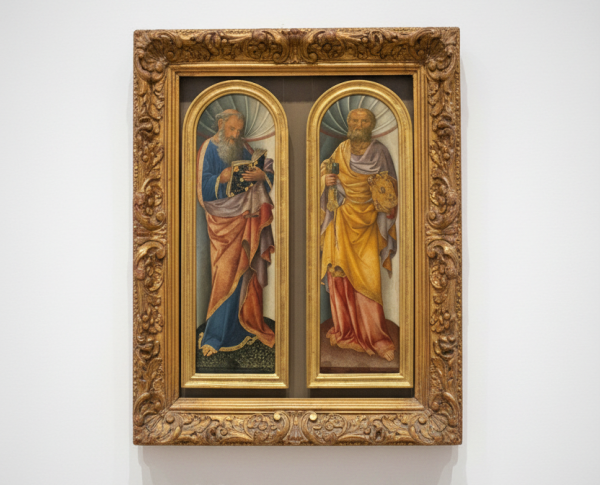
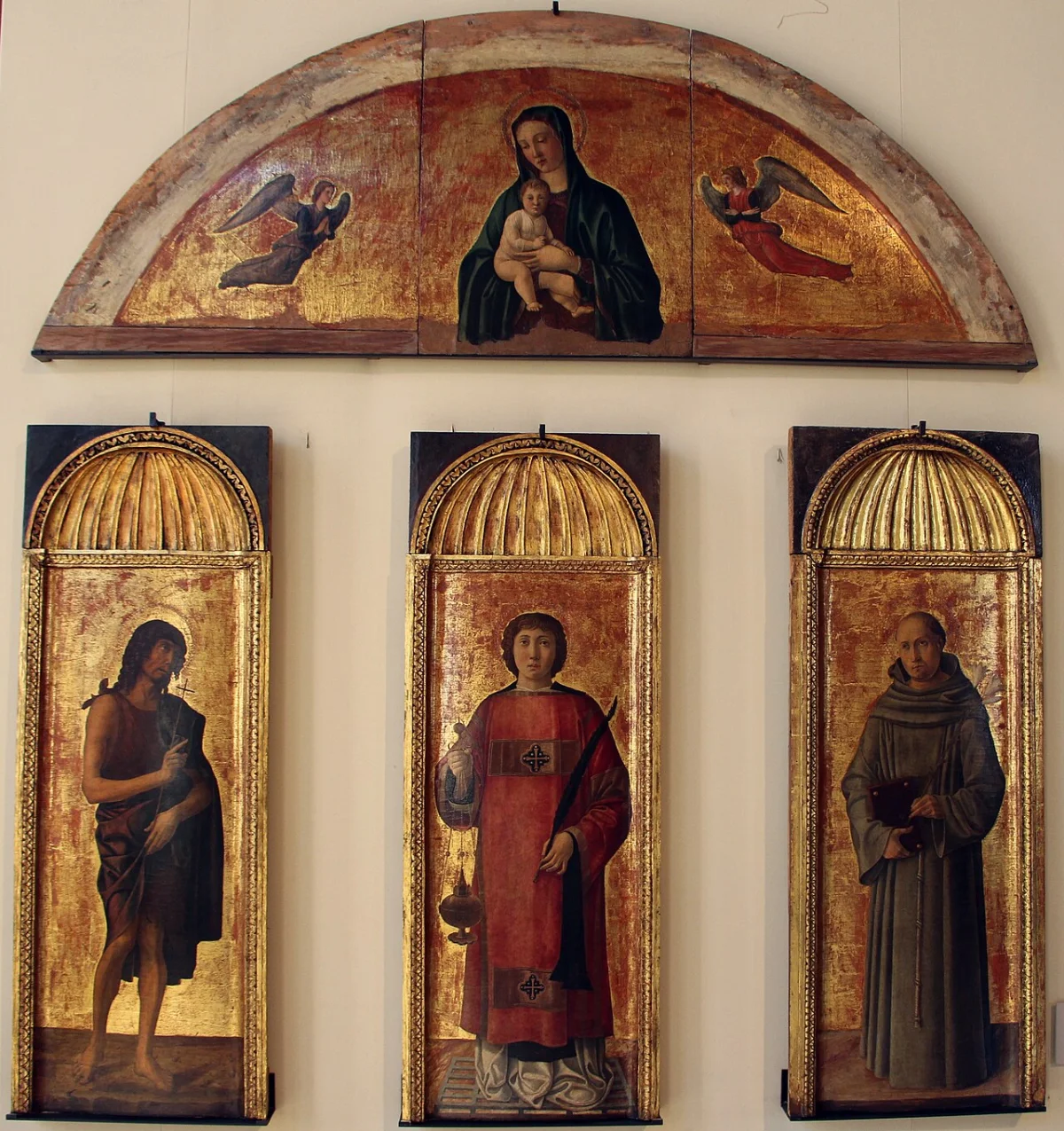
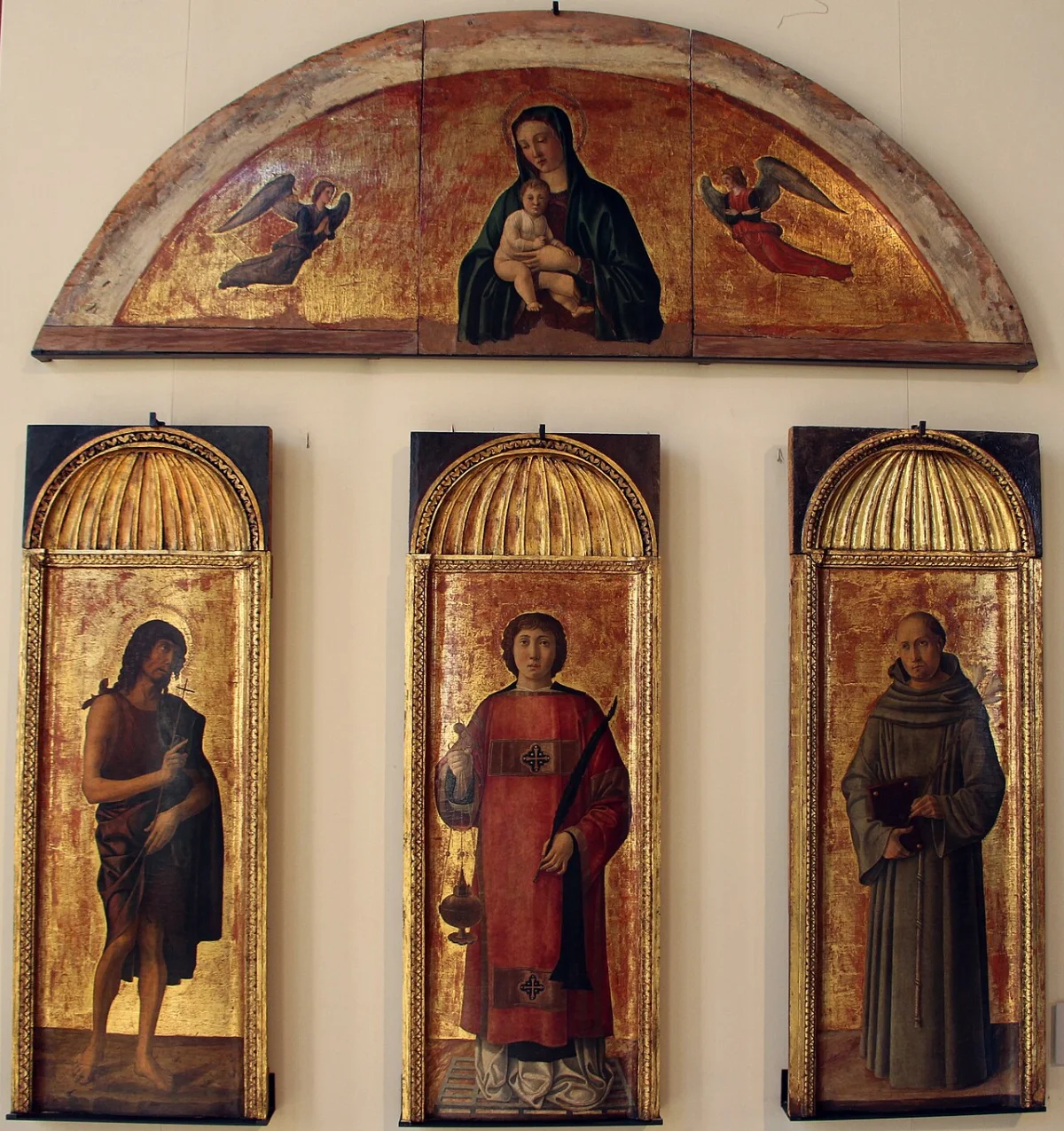
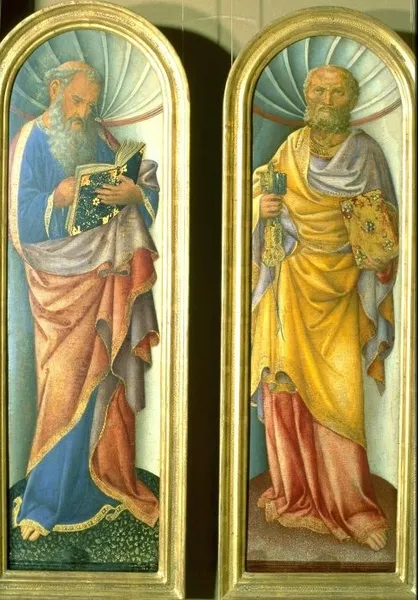
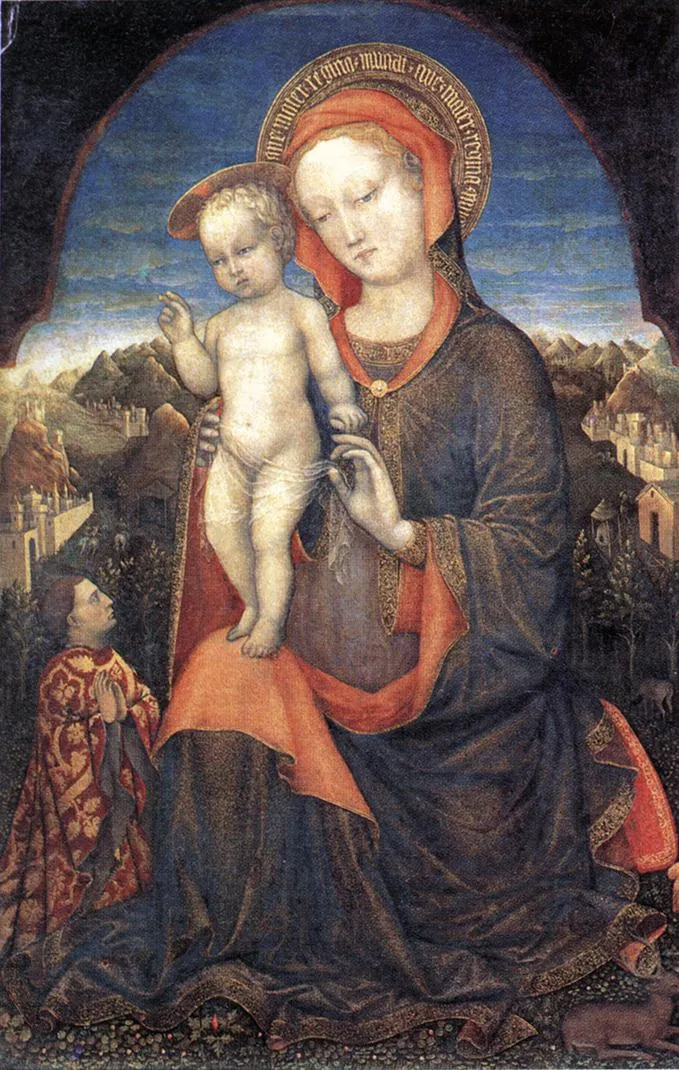
Jacopo Bellini’s technical prowess shines in the "Triptych of Saint Lawrence," where every detail is meticulously rendered in oil on canvas. The harmonious composition and delicate use of color reveal the hallmarks of the Early Renaissance movement. Bellini’s ability to blend realism with spiritual themes is evident throughout. Collectors and admirers may also appreciate similar masterpieces such as "John the Evangelist" and "the Apostle Peter," which showcase his remarkable skill.
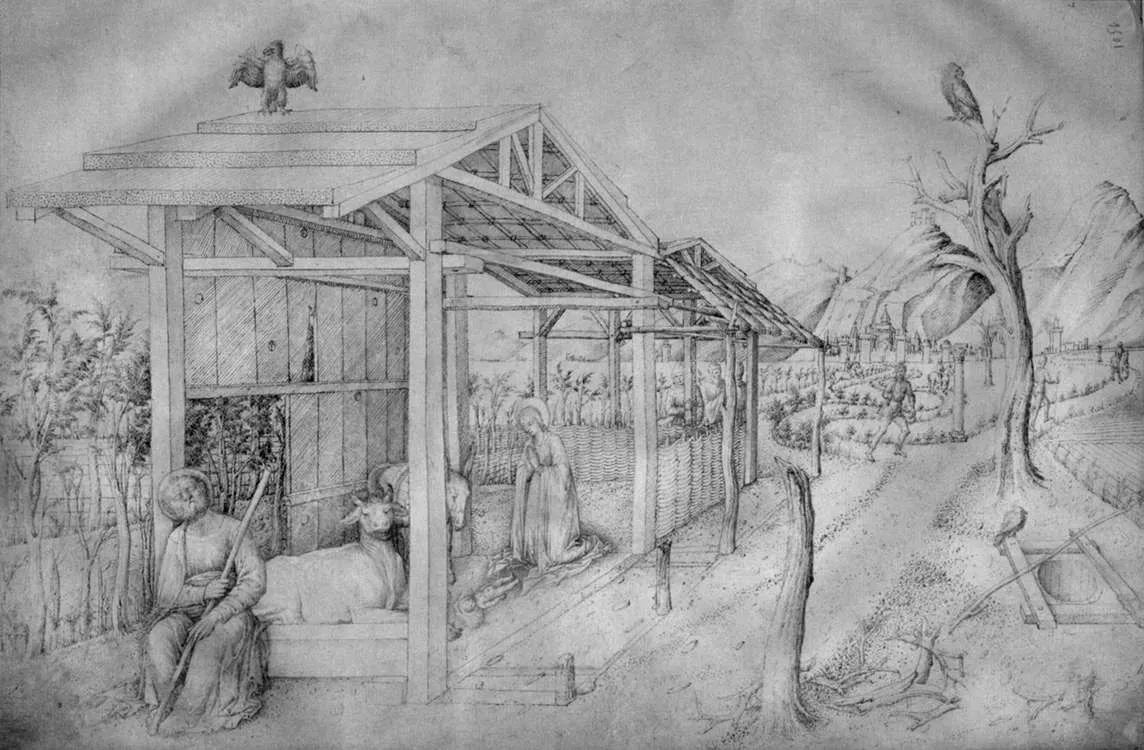
This fine art painting for sale tells the poignant tale of Saint Lawrence’s martyrdom, intricately woven through symbolic gestures and expressive figures. Jacopo Bellini’s narrative style invites viewers to decode the hidden meanings embedded within the triptych. The Early Renaissance focus on storytelling is mirrored in related Bellini pieces like "Album del Louvre" and "epigrafi e monete," where symbolism and faith converge to create compelling visual experiences.
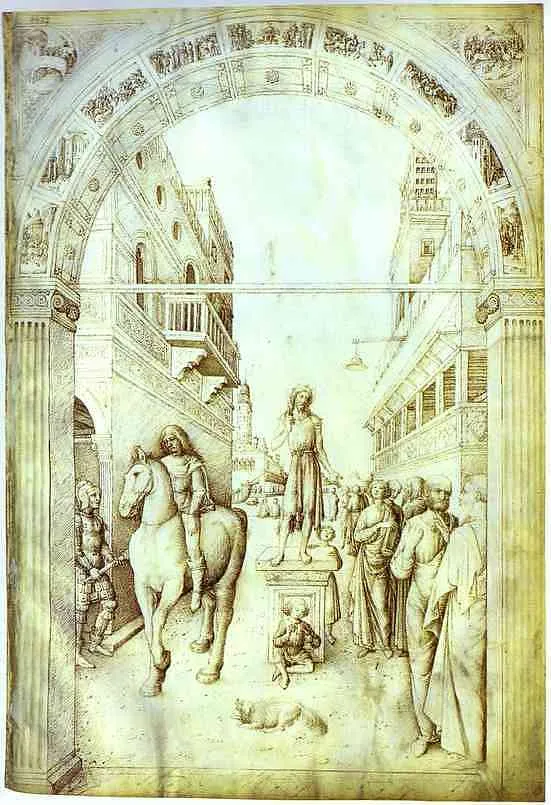
Owning the "Triptych of Saint Lawrence" means acquiring a significant piece of Early Renaissance heritage. Jacopo Bellini’s artistry elevates this hand-painted oil painting to a coveted status among collectors. Those seeking to expand their collection may look to related works such as "St John the Baptist Preaching" and "The Agony in the Garden," both exemplifying the timeless appeal and investment value of Bellini’s masterpieces in the world of fine art.
When Art Meets History
"Triptych of Saint Lawrence" by Jacopo Bellini stands as a testament to the transformative Early Renaissance period. This hand-painted oil painting captures the essence of religious devotion and artistic innovation of its time. Bellini, renowned for his contributions to Renaissance art, masterfully intertwines historical context with spiritual themes. Related works such as "Saint Augustine" and "The Annunciation" further demonstrate his ability to merge narrative and artistry, marking a pivotal era in art history.
Techniques That Speak
Jacopo Bellini’s "Triptych of Saint Lawrence" showcases exceptional oil on canvas techniques characteristic of Early Renaissance masters. The artist’s skillful use of perspective, light, and color creates depth and realism, inviting viewers into the sacred scene. Bellini’s approach influenced contemporaries and set new standards for religious art. His related paintings, including "The Flagellation of Christ," reflect similar technical brilliance, highlighting the evolution of oil on canvas during this influential movement.
Emotions on Display
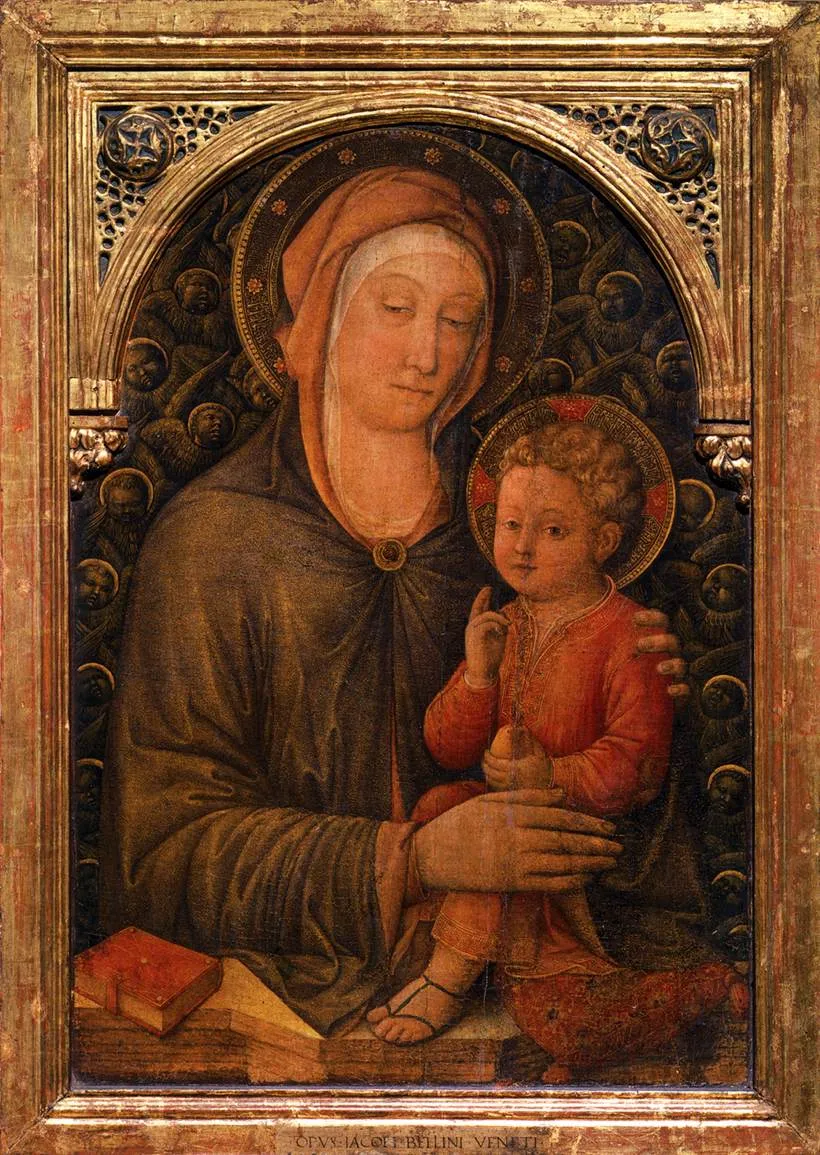
In "Triptych of Saint Lawrence," Jacopo Bellini conveys profound emotion through expressive figures and dynamic composition, hallmarks of the Early Renaissance. The painting’s narrative unfolds with palpable empathy and reverence, drawing viewers into Saint Lawrence’s story. This fine art painting for sale, like Bellini’s "Madonna with two angels," evokes a deep spiritual connection, making it a cherished piece for admirers of emotive and devotional art from the period.
Coveted by Collectors
Collectors value Jacopo Bellini’s "Triptych of Saint Lawrence" for its historical significance and artistic mastery within the Early Renaissance movement. As a hand-painted oil painting, it appeals to those seeking authentic works that bridge art and spirituality. The demand for similar pieces, such as "Punishment of the Rebels," underscores Bellini’s enduring legacy. Owning such a work offers a rare opportunity to possess a vital piece of art history and Renaissance innovation.
Related Early Renaissance Hand-Painted Oil Paintings by Other Artists
Other Famous Early Renaissance Artists:
Frequently Asked Questions About Triptych of Saint Lawrence
What is the historical significance of the Triptych of Saint Lawrence?
The Triptych of Saint Lawrence is significant as it reflects the religious and artistic values of the Renaissance period, showcasing the transition from medieval to early modern art. It highlights the importance of saints in Christian devotion during the time.
Who was Jacopo Bellini and what is his contribution to art?
Jacopo Bellini was a prominent Italian painter of the early Renaissance, known for his innovative use of perspective and color. He played a crucial role in the development of Venetian painting and influenced many artists, including his sons, Gentile and Giovanni Bellini.
What are the key artistic techniques used in the Triptych of Saint Lawrence?
The painting employs techniques such as linear perspective, chiaroscuro, and detailed anatomical representation, which were revolutionary at the time. These techniques enhance the three-dimensionality and realism of the figures depicted.
What does the triptych format symbolize in religious art?
The triptych format symbolizes the Holy Trinity and is often used in religious contexts to convey important narratives. It allows for a multi-faceted exploration of themes, inviting viewers to engage with the story on different levels.
What is the iconography present in the Triptych of Saint Lawrence?
The iconography includes Saint Lawrence, a martyr known for his charitable acts and his association with the gridiron, symbolizing his martyrdom. The side panels often depict scenes from his life, emphasizing his virtues and faith.
How does the Triptych of Saint Lawrence reflect the cultural context of its time?
The painting reflects the cultural context of 15th-century Venice, where there was a growing emphasis on individual piety and the patronage of the arts. It showcases the blending of religious devotion with humanistic ideals prevalent during the Renaissance.
What role did the Triptych of Saint Lawrence play in the worship practices of its time?
The Triptych served as a devotional object in churches, aiding in the worship practices of the faithful. It was intended to inspire contemplation and prayer, allowing worshippers to connect with the life and martyrdom of Saint Lawrence.
How does the color palette of the Triptych contribute to its overall impact?
The color palette of the Triptych is characterized by rich, vibrant hues that evoke a sense of divine presence. The use of gold leaf and deep reds and greens enhances the spiritual atmosphere, drawing the viewer's eye and elevating the narrative significance.
What influences can be seen in the style of the Triptych of Saint Lawrence?
The style of the Triptych shows influences from both Byzantine art and the emerging Renaissance techniques. This blend creates a unique aesthetic that bridges traditional religious iconography with the new emphasis on naturalism and perspective.
What is the significance of the figures depicted alongside Saint Lawrence in the Triptych?
The figures alongside Saint Lawrence often represent other saints or biblical characters, serving to contextualize his story within the broader Christian narrative. They highlight the interconnectedness of faith and the communal aspect of worship during the Renaissance.






















_GFM_Painting_(1).webp)


 100% Hand-Painted: Finished in 3-6 Weeks

.png)















_(1).webp)